Content Marketing Funnel: The Ultimate Guide

Welcome to the ultimate guide to the content marketing funnel!

In today’s digital age, content marketing has become a vital strategy for businesses to attract, engage, and convert potential customers.

The content marketing funnel, also known as the digital marketing funnel or marketing funnel, is a framework that guides the buyer’s journey, leading prospects from awareness to conversion.

In this comprehensive guide, we will explore the stages of the content marketing funnel, discuss practical ways to create content for each stage, and provide insights into driving traffic through the funnel.

Let’s dive in and uncover the secrets to building an effective content marketing funnel.

What is a Content Marketing Funnel?
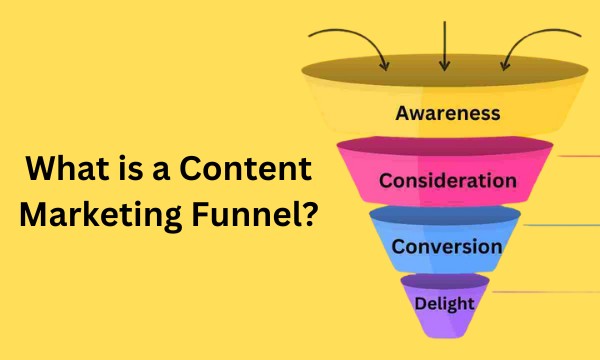
What is a Content Marketing Funnel?

A content marketing funnel is a way to attract and convert customers using different content types.

It starts with broader content to attract a wide audience and guide them through the buyer’s journey.

As potential customers engage, they move down the funnel where content becomes more focused on converting leads into customers.

The goal is to provide valuable information to build trust, establish authority, and drive profitable action. This nurtures leads until they become customers.

An effective content marketing funnel captures attention, generates interest, and guides potential customers toward the end goal.

How Does the Content Marketing Funnel Work?

Content marketing is like helping someone decide to buy your product without being pushy.

To do this, you must understand how people buy things. People don’t just randomly buy things; they look for recommendations and information online to help them make decisions.

The buyer’s journey has three main stages:

  1. identifying a problem or need,
  2. exploring options,
  3. and deciding what to buy.

Content is important at each stage, including customer success stories that showcase the benefits of your product and improve the user experience. It’s like a funnel that guides people from not knowing about your brand to choosing to buy from you.

Therefore, having a good plan for creating a single piece of content that fits each stage of the buyer’s journey is crucial for making sales.

Stages of the Content Marketing Funnel
Stages of the Content Marketing Funnel

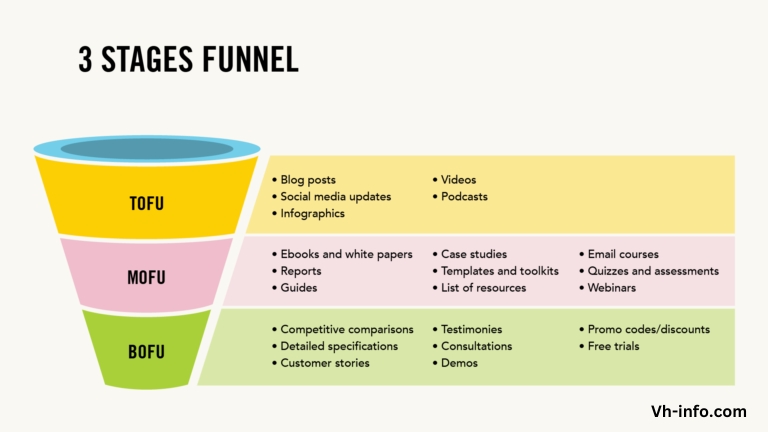
There are three stages of the content marketing funnel which I have mentioned below:

Top of the Funnel (TOFU): Sparking an Interest

At the top of the funnel, many people start their journey. They might not know about your brand or want to buy anything yet. Your job is to grab their attention and teach them about your brand.

We can measure success of the content marketing strategy by looking at organic traffic, referral traffic, total visitors, social media activity, and influencer/media mentions.

To be successful at this stage, create content that teaches something or provides value. This will attract more people to your website and increase engagement.

Middle of the Funnel (MOFU): Guiding and Educating

In the middle of the funnel, there are fewer people engaging with your stuff, but they’re more open to it if you give them a little nudge.

Your aim here is to guide the potential customer from just having an idea about your product to really understanding how it can solve their problems.

We measure the success of this stage by looking at how many people actually become leads or take action, like signing up or getting in touch. Usually, even in this stage, most of the traffic comes from people finding you through search engines without ads.

Bottom of the Funnel (BOFU): Propelling Conversions

At the bottom of a funnel, people are almost ready to decide. Your content can help by showing why your brand is better, building trust, and making people buy faster. To be effective, create content that answers questions about your product or service.

Keep it simple and explain how it works or what you need to use it. This straightforward approach boosts sales and helps customers make confident decisions.

What you’ll need to Start your Content Funnel?

To start your content funnel, you need to know your audience, their needs, and buying process. Set clear goals for content and consider competitors’ strategies. If new, focus on attracting interest (TOFU), bigger companies show expertise (thought leadership). Your strategy depends on goals and audience.

Why Creating Content for the Buyer’s Journey is Important?

Creating content for your audience is important to understand what they want. This helps you make content that matches their needs at each stage of the buyer’s journey. If you don’t know your audience well, they might lose interest in what you offer. By creating content that engages your audience and putting it in the right places, like on social media or your website, you can connect with them effectively.

Many marketers see content as a crucial part of their strategy because it helps attract and engage potential customers and guide them towards making a purchase. To create effective content, you need a strategy that plans what content to deliver and when.

By researching keywords and creating targeted blog content for each stage of the buyer’s journey, you can guide potential customers using different types of content towards making a purchase.

How to Build an Effective Content Marketing Funnel?
How to Build an Effective Content Marketing Funnel?

An effective content marketing funnel starts with awareness stage content like blogs, infographics created with the help of a random object generator with pictures to generate engaging and unique visual elements, and social media to attract a wide audience and build brand awareness.

Next is the consideration stage where content like ebooks, whitepapers and case studies nurture leads by addressing pain points and demonstrating expertise.

Further down the funnel, conversion stage content like free trials, product demos and pricing pages convert qualified leads into customers.

Businesses need to map customer journeys and create content for each stage of the funnel for effective marketing. Testing and optimizing messaging refines content to maximize results, leading prospects from brand discovery to becoming customers and brand advocates. Relevant content tailored to each stage generates and nurtures leads, driving conversions in a well-designed funnel.

Practical Ways To Create Content for Each Funnel Stage

The ultimate guide to content marketing funnel is here. Let’s talk about turning interested people into buyers with your content.

What kinds of content do you need for each step of the buyer’s journey? Consider from when they first hear about your brand up to when they decide to buy.

Start making that content right at the start of the funnel and keep in mind each business needs different kinds of content depending on what they want to achieve.

Creating Compelling Top-of-the-Funnel Content

To grab someone’s attention, offer useful information without expecting anything back. Begin your content funnel by being genuine and addressing the main problem. Respond to questions about the issue and suggest a solution. Briefly mention your products or services while including other helpful resources. Finally, pique people’s interest in your brand or product.

When sharing information, avoid being too pushy with sales. Provide helpful details and mention your product or service subtly to show your experience in the field. This will prove that your brand is knowledgeable and deserves attention.

Keep Drawing Them in With Middle-of-the-Funnel Content

Once you’ve captured someone’s interest, keep them interested by offering something for free. It’s a win for them and they may look for more from you. Highlight how your product helps the customer and makes their life easier. For example, Refinitiv offers a white paper with data to help businesses stop financial crime which proves their expertise and provides extra value.

Strategically Converting with Bottom-of-the-Funnel Content

After grabbing their attention, most people may lose interest. So, you need to convince them to choose you. One way is by using customer reviews which are trusted by 93% of buyers. Zendesk is a company that uses customer testimonials on its website as an example.

In this stage, you can focus your efforts on:

  1. Encouraging people to take action with CTAs.
  2. Offering free trials for a limited time.
  3. Comparing your product to competitors’.
  4. Giving demonstrations.
  5. Offering consultations.
  6. Showing real testimonials from happy customers.

You can also show off your product more by giving demos. For instance, you could follow up with people who attended a webinar and offer them a chance to try your product for free. This gives them a behind-the-scenes look at everything your product can do.

And at the end of the trial, you can offer a free trial for 14 days or a big discount for the first year to encourage them to buy.

Content Strategy for Top of the Funnel

To begin with content marketing, use top-of-the-funnel (TOFU) content to introduce your brand to people. This content provides helpful information that solves problems and answers questions. Research your audience to create good TOFU content. Understand their struggles and interests by creating customer profiles. Your TOFU content should be easy to understand, interesting, and enjoyable. It can be in different forms such as blog posts, videos, social media or graphics.

Your lasting TOFU content should attract new customers and continue serving your brand after creation. Modify your TOFU content by using appropriate keywords and phrases to improve visibility on search engines. This increases chances of appearing higher on search results and reaching more viewers. Make sure your TOFU content captures the audience’s interest by offering helpful information to encourage them to learn more about your brand.

Content Strategy for Middle of the Funnel

In the middle of the funnel (MOFU), your possible customers are checking out and thinking about your products or services.

This is a really important time, and you need to give them really good content that teaches them, tells them stuff, and convinces them to do something.

Here are some ideas to help you make your MOFU content:

Create Educational Content

At this point, people who might buy from you want to know a lot more about your brand. So, you should make content that teaches them, solves their problems, and gives them all the info they need to decide if they want to buy from you.

Use Case Studies and Testimonials

Stories from other customers and examples of their experiences are really helpful in making people trust you. They show that your stuff actually works and help others imagine how it could help them too.

Offer Free Trials and Demos

If you want to sell more, let people try your stuff for free. This lets them see how good your products are and reduces doubts. Offering a consultation or free trial can also ease anxiety about buying from you.

Personalize Your Content

Making your content personal can help you bond with the people who might buy from you. It makes them feel special and important. You can use things like their name, where they’re from, or other things that matter to them to make your content more interesting and relatable.

Use Retargeting Ads

Retargeting ads remind people of your services after they visit your website. They keep your brand in their minds and encourage them to buy from you. You can use these ads to promote your helpful content and nudge people towards buying.

Content Strategy for Bottom of the Funnel

At the BoFu, convert leads to customers. Create trust with content. Use case studies to show how your product helped others. Try offering free trials or demos. Testimonials and reviews from happy customers help new ones feel more comfortable.

Make content that builds trust and shows the value of what you offer to convince people to buy from you.

Examples of Content Marketing Funnel

Here are some examples of a typical content marketing funnel:

  1. Top of Funnel Content: Blog posts, infographics, webinars, and other educational content designed to attract new visitors and build awareness. This content should focus on addressing common pain points, questions and providing value rather than overtly promoting your product.
  2. Middle of Funnel Content: More detailed blog posts, guides, ebooks, and other content to nurture leads and continue providing value. This stage focuses on developing trust and credibility while guiding the prospect closer to a decision.
  3. Bottom of Funnel Content: Content aimed at customers ready to make a purchase, such as product comparisons, demos, free trials, pricing pages, and other conversion-focused assets. The goal here is to provide the final information needed to make a purchasing decision.
  4. Post-Purchase Content: Content to onboard customers such as implementation guides, user forums, tutorials, and customer success stories. This builds loyalty and may upsell customers on additional products and services.
  5. Nurturing Content: Email newsletters, promotions, and other ongoing content to nurture both new and existing customers. This reminds customers of your brand and offerings and may prompt additional purchases.

The goal of the funnel is to attract strangers and turn them into brand advocates by providing valuable information at each stage. The content focuses less on a hard sell and more on building awareness, trust and leadership in the early stages.

Driving Traffic Through the Marketing Funnel

After you’ve set up a good content marketing funnel, the next thing to do is to get people to go through it.

There are different ways to do this, like showing up in search results, using SEO to improve your visibility, being active on social media, and getting traffic from other websites that link to yours.

Organic Search

Organic search boosts your website’s visibility in search results. This happens when you use easy-to-understand content. By doing this, you’ll attract many visitors to your site and get more potential customers.

To make your content search-engine-friendly, find out the words your audience is searching for. Then include these words in your titles, descriptions, and main body text.

SEO

SEO (search engine optimization) means making your website better so it shows up higher in search results. More people visit a site that is easier for search engines to understand, giving you more potential customers.

You first need to check if there are any problems by conducting a technical SEO audit. Find issues that might be stopping your website from appearing higher in search results such as slow loading speeds or broken links. Fixing these problems can improve your website’s performance in search results.

Social Media

Social media is a great way to get more people to visit your website and become potential customers. When you share your content on social media, more people see it, and your brand becomes more popular.

To make the most of social media for getting traffic, you need a plan that works with your content marketing funnel.

This means figuring out which social media platforms your target audience uses, making content that’s perfect for social media, and interacting with your audience on social media.

Referral Traffic

Referral traffic happens when folks visit your site from other websites. You can get more referral traffic to your website by making friends with other websites and creating content that people want to share.

To get more referral traffic, you need excellent content that other websites will link to. This might mean making infographics, writing guest blogs, or creating helpful stuff that others want their readers to see.

What are the Three Pillars of Content Marketing?

Every content marketing funnel needs three important things to work well. Remember these as you make your content and plan your full content strategy.

The three pillars of content marketing are creation, optimization, and promotion.

1. CREATION: Content Creation

Are you missing out on customer engagement? It’s crucial to have a content plan with videos, podcasts, webinars, testimonials, and blog posts. Keep producing regular helpful content to maintain your online presence and customer loyalty. Consider what your customers want to learn in the next six months.

Will you write blogs or create guides about your industry?

Remember, the purpose of content marketing is to inform, connect, and excite your audience.

2. OPTIMIZATION: Search Engine Optimization (SEO)

In this guide, we didn’t discuss SEO much, but it’s crucial for people to find your content.

People use Google (or other search engines) when they need answers such as “best food blender.”

If you want people to find your blog post, it has to show up in search results. To do this, use the right words and images, write engaging content, and create catchy titles. Arrange your writing so that more people can see it.

The more views you get on your content, the greater the possibility of making sales. SEO is important, but there’s a lot of misinformation about it.

Here are some key points:

  1. Avoid Keyword Stuffing: To improve your content’s search ranking, avoid stuffing in too many keywords. Rather, focus on using 1 or 2 crucial keywords that customers often use when searching. Add these words in your title and blog post.
  2. Be Relevant: Relevance is key to creating good SEO content. Some companies see it as a means to increase rankings, but it’s not the main goal. Helpful information should be your priority to convert website visitors into customers.

3. PROMOTION: Social Media Marketing

Social media is super important for any business these days. It’s the top place to share your content and make people know about your brand. You can use lots of different platforms like Facebook, LinkedIn, YouTube, Twitter, Medium, and Instagram.

You can get people interested in your brand by posting fun videos or sharing your latest blog posts. It’s really important to guide customers through your content marketing journey.

Here are a couple of tips:

  1. Think about your style. Your writing and what you post should match your brand’s style. Posting silly stuff might not attract new customers if you’re a serious company, but it could work great if you sell something fun like marijuana.
  2. Keep improving. You should always change and fix your posts to get more attention. Try different things and see what works best – then do more of that.
  3. Use your time wisely. Most companies can’t be active on every social media platform out there. Figure out which ones are best for your business and focus on them. Don’t worry about the rest.

Conclusion

To sum up, a content marketing funnel is crucial for businesses that want to increase conversions and achieve marketing goals. By leading users through awareness, consideration, and conversion stages, you can nurture leads and build relationships with your audience.

Remember to create relevant content for each stage of the funnel, tailor strategies to user intent, and drive traffic through search engines, SEO, and social media.

Implementing these strategies and focusing on three pillars of content marketing will generate results for your business. Start implementing tactics today and watch your content marketing efforts soar!

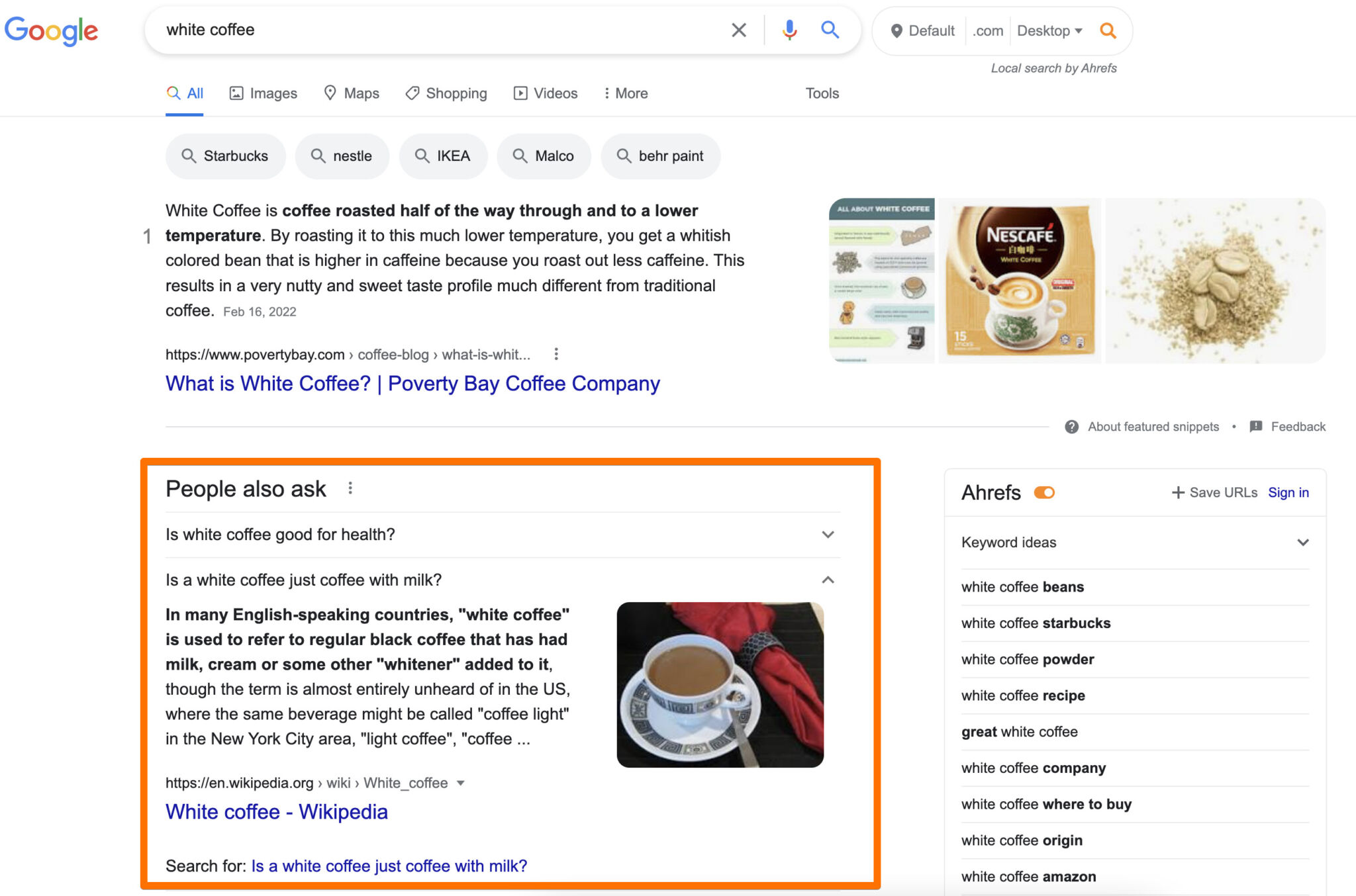
What is Google People Also Ask (PAA): Ultimate Guide

In today’s digital age, search engines have become an integral part of our lives, providing us with quick and relevant information at our fingertips.

When it comes to search engine giant Google, it constantly strives to enhance user experience by introducing new features. One such feature is the “People Also Ask” (PAA) section, which has gained popularity among users and content creators alike.

In this ultimate guide, we will explore the ins and outs of Google’s People Also Ask feature, its benefits, and how to optimize your content to rank in this coveted section.

What is “People Also Ask”?

What is “People Also Ask”?

People Also Ask is a feature you see on search engine results pages like Google. It shows a box with related questions that people often search for or ask about the main search topic, also known as the original search query. The questions in the People Also Ask box are generated automatically based on what other users frequently search for. The goal is to provide quick access to common questions and information related to the main search topic.

What Are “People Also Ask” Boxes?

What Are “People Also Ask” Boxes?

The “People Also Ask” boxes you see on Google search results pages are designed to show you related and popular questions that people are asking about the topic you searched for. They provide quick access to common questions and information connected to your main search topic.

The questions that appear are automatically generated by analyzing what real people frequently ask about or search for related to the main keyword. The goal is to give you helpful context and surface common queries to save you time finding answers.

What Types of Content Go in the “People Also Ask” Box?

Google’s “People Also Ask” box typically features short paragraphs of text, usually about 45 words long but sometimes up to 100 words. However, it can also include videos, tables, or lists. The type of content shown depends on the question and the information found on pages ranking for related keywords.

Why do Google’s search results have nothing to do with my question?

This is mainly because of search engine hijackers.

Search engine hijackers are harmful programs that redirect users to dangerous websites. These threats cause information leaks and change search settings. Search hijacking can occur when a third-party (such as malicious browser extensions from google chrome store or computer software) change your browser’s settings or replaces your default search provider. You can remove hijackers by installing a search engine hijacker removal tool like Guardio. It identifies and removes hijackers automatically by blocking malicious sites, browser extensions, and push notification providers inserting malware on your device. Be cautious when browsing the internet and use trusted sources to avoid harmful sites.

Where do the Answers in “People Also Ask” Come From?

Google’s “People Also Ask” section provides answers from related web pages and your search history. Pages on the second or third Google page can be featured as long as they’re relevant and high-quality. When a page ranks for a PAA question, it’s linked to that question across search results until another page outranks it, giving you a chance to reach your target audience.

The PAA section also expands dynamically with related topics users find interesting, providing valuable insights for new content ideas. You can create a list of questions based on proper keyword and question-based research, increasing your chances of appearing in the “People Also Ask” section.

Known Facts About “People Also Ask” Boxes

Like many of Google’s new search features, People Also Ask is both helpful and interesting. But for digital marketers and SEO experts trying to make the most of it, it can also be a bit mysterious.

Here are some important things to remember about People Also Ask boxes as you think about how to use them in your SEO plans.

They can appear anywhere on a SERP

While People Also Ask (PAA) boxes aren’t on every search results page, they show up on about 43% of them. But unlike other search features, they don’t always show up in the same spot every time.

For example, they might be near the top in some searches but lower down in others. Sometimes, you might even see them on search pages that aren’t the first one.

Their answers come in various formats

Lots of different content types can show up in various Google search result features, including People Also Ask boxes.

Most of the time, People Also Ask results have text, like lists with bullets, which are helpful. But sometimes, you might see tables, pictures, or even videos – whatever Google thinks might help you find what you’re looking for.

PAA questions appear to endlessly populate

When you click on one of the questions in the People Also Ask box, Google will show you more questions and answers. Clicking on those will show even more, and you can keep doing this to find lots of related info on a topic without searching again.

Questions appear to use the same answers consistently

Even if you see the same People Also Ask question on different search pages, Google often picks the same source for the answer each time.

Sometimes, these questions also show up in featured snippets, all in one search.

Just think about how great it would be if Google chose your website’s answer as the best one for a People Also Ask question!

Why is “People Also Ask” important?

Google’s “People Also Ask” is crucial for many reasons.

  1. Firstly, it helps users find answers to similar questions. This is especially useful if they are unsure how to ask.
  2. Secondly, it helps users refine their search terms. Additionally, it increases website traffic by appearing in SERPs.
  3. Lastly, “People Also Ask” offers insights into potential topics to cover on a website or blog.

These can expand content and enhance overall visibility and relevance.

How to Rank in “People Also Ask” Boxes?

To rank in “People Also Ask” boxes, follow these strategies:

Give a Short Answer Straight Away

To get featured in Google’s People Also Ask section, provide a brief answer to the question you’re addressing. Keep it short, about 2-3 sentences, and cover the main points of the topic. Adding an FAQ Schema Markup to your webpage’s source can also enhance your chances of being featured. This markup tells Google that your content is formatted as questions and answers, making it easier for search engine crawlers to understand and display your content.

Use Lists instead of Tables where possible

Sometimes, Google struggles to show tables properly in the People Also Ask and featured snippet sections. So, it’s smart to use lists, like numbered or bulleted ones, in your content when you can. But only if your information fits naturally into list format. If not, don’t force it. Keep in mind, Google can still pick up your content even if it’s in paragraph or image form for the People Also Ask section.

Use Questions in Subheadings

Using subheadings in your content is helpful because they show both users and search engines what your topic is about. If you put questions in your subheaders, it tells Google that section directly answers a question.

So, if you want to rank in the People Also Ask section, it’s better to use questions in your subheaders, even if they’re not as catchy or exciting.

How People Also Ask Questions Help You Improve Content?

Google’s People Also Ask (PAA) feature is not just useful for searchers; it can also help you create content that’s relevant to your audience.

With Google’s PAA feature, you can:

Cover Relevant Information​

People Also Ask (PAA) shows other questions people search for related to a topic. Answering these questions makes your article more relevant and boosts your chances of ranking well for that keyword.

Get New Content Ideas​

People Also Ask (PAA) keeps growing as you use it. When you click on one question, it shows more related PAA answers and questions. This gives you useful insights into what Google knows about search patterns and the topics people are interested in.

Get the Pulse of Your Audience​​

Imagine you search for your brand name or product. The related People Also Ask (PAA) questions show what people are curious about or want to know.

You can even add words like “price” to see what people think about that aspect of your business.

Why Should You Care About Ranking in “People Also Ask” Boxes?

Some people debate whether it’s worth it to rank in search engine result page (SERP) features like “People Also Ask” that don’t lead to clicks. They wonder if it’s fair that Google benefits from your effort without giving you traffic.

But usually, it’s still worth it because having a presence in the SERPs is valuable for other reasons besides just getting clicks.

Strengthen Branded Searches

Controlling search engine results for your brand’s keywords is essential, including answering questions about your brand. It’s tricky to control answers for questions, and competitors or unreliable sources can give incorrect info. This spreading of false information can harm your brand’s reputation. By giving accurate answers yourself, you maintain your brand reputation. Use social media and promotion strategies to provide correct information and engage with customers.

Take Over SERP Estate

Even pages that aren’t at the top of search results, like those on the second or third page, can appear in the People Also Ask (PAA) section.

This is good news for businesses because it means even if their content isn’t ranking highest, it can still get onto the first page of search results.

When your answers get linked with a question, they can show up for lots of related searches, giving your content more visibility and chances to be seen.

Boost SEO Branding

Google People Also Ask (PAA) questions can improve your brand recognition. Even if users don’t click on your content, they’ll still see your website and brand name. Being in Google’s special results gives you prestige and a good impression.

If your website is linked to many relevant PAA questions, users might view you as an expert. This could help improve your SEO and make your company look more trustworthy.

Attract Traffic

Even if “People Also Ask” questions don’t bring in lots of visitors, sometimes they can still get clicks.

So, if you rank for more questions, you’re likely to get more traffic overall.

How to Optimize for People Also Ask?

Find Relevant Question Keywords

When conducting research, it’s helpful to explore questions related to your industry and brand.

Your SEO tools can assist in identifying these questions, which allows you to determine if you’ve already addressed them in your content.

Additionally, there’s a tool called AlsoAsk that gets data from Google. It shows you the questions that come up for various searches and how topics are connected.

Provide Answers to Relevant Common Questions

If you want to rank high on Google search, create good content that answers common additional questions related to your topic. This is a quick way and can help in ranking on People Also Ask box and improve visibility. Good content improves your chances of appearing in related features too.

Feature the Answers on the Right Pages

If you have pages covering the topics you want to appear in the People Also Ask section, make sure to update them.

These pages probably already rank well. By adding suitable People Also Ask content, you might not only get featured in the questions but also improve the pages’ overall performance.

Format Your Questions and Answers Properly

To help Google find and understand your answers better, make sure they’re formatted properly.

Put the question (preferably as a heading) on your page, followed by the answer.

The question on your page doesn’t have to be exactly like the keyword or the question in the box. Even with slight differences, you can still rank.

Keep the Answers Concise and To-The-Point

As mentioned, answers in the PAA box are usually short, to the point, and accurate. The length depends on the question. Sometimes, a single word is enough, other times, you need more detail.

If you have a complex explanation, summarize the main points in the first paragraph. Then, give more details later.

This helps the algorithm find the information it needs. Users are more likely to click on your link for more info.

But be careful not to mislead with the main paragraph, as this can have the opposite effect.

Consider Optimizing with Question-Answer Schema Markup

While questions and answers might seem clear to people, it’s not always the same for robots like Google.

To make sure Google knows you have a question and answer on your page, use proper schema markup to optimize the content.

Create a FAQ Page to Answer Brand-Related Questions

Having a FAQ page is a great idea for addressing brand-related questions.

To improve your rankings, use the keywords you found in your research to optimize the questions. Then, give clear and simple answers.

Add FAQs to Your Google My Business Profile

On your Google My Business profile, you can share answers to common questions. This is another chance to appear in the People Also Ask box and provide all the important information in one spot.

Example of People Also Ask on Google

Best Tips for Ranking on Google’s People Also Ask

Google’s People Also Ask feature might help websites rank better on search pages, but it’s not clear how much it helps. However, it’s still worth trying. If Google sees that a site knows a lot about a topic, it might show that site on many search pages thanks to People Also Ask and similar features. To increase your chances of ranking better, here are some tips.

Carefully choose your topic

Google’s People Also Ask box can help others discover your solutions on the first page of google with relevant content, so pick your topic and words wisely. Think about what questions you can answer that your rivals can’t. Pay attention to keyword research as it will help you find related queries along with the primary keyword you wanted to target in your content creation process.

Do any queries in the PAA box fit your brand or website well? Which subjects fit with the SEO keywords you’re already targeting?

Write content that includes questions and answers

How you set up your content is important for ranking in People Also Ask, so remember that while you create it.

Write blog posts or pages like FAQs with questions and clear, useful answers, just like what you’d see in a PAA box.

Here are some tips:

  1. Keep your answers simple and easy to understand.
  2. Make sure your answers are true and totally related to the question.
  3. Don’t use words or phrases that sound like you’re trying to sell something.

Compile a List of Popular PAA Questions

Google often selects a website for a specific People Also Ask question. If the question is popular in many searches, it could bring traffic to that website. Use the People Also Ask box to list frequent questions with important search terms. Take note of alternative questions and additional information that come up and find answers to them. Think of creative ways to develop content that addresses these questions effectively. The People Also Ask box provides great ideas for creating useful content.

Pay Attention to your Headlines

Before you can get Google to pick your content as the best answer for a popular People Also Ask question, make sure it’s easy for search bots to understand.

Do this just like you would for a person – use clear headlines with good keywords.

Make the rest of your content easy to understand too, by using clear headings and subheadings to break it up.

Google likes content like this because it’s easy for people to read.

Start Simple before going Deeper

Google’s “People Also Ask” feature can help you rank higher in search results. To optimize for this, keep your introduction brief and focused on the main points. Provide more in-depth information in the subsequent paragraphs. For instance, if you’re writing about car detailing profits, touch on potential earnings before delving into related topics.

Make sure you’re covering all the essential questions

Google is smart and can understand your content without a Q&A format. Don’t write unnaturally to rank in People Also Ask. Cover important questions and be a trusted source. Check the box for common questions and include those answers.

Create how-to guides consisting of simple, logical steps

“How-to” guides help marketers rank on search engines by aiding people in making purchasing decisions, gaining knowledge about their purchases, and exploring their interests. They are also beneficial for ranking in People Also Ask since “how-to” questions are common.

The content must have simple, clear steps that are easy to follow. Creating numbered lists is useful because Google prefers this format.

Tools to Help You Rank in People Also Ask

You can use Google’s People Also Ask tool to find ideas for content that can bring in lots of traffic. But it’s also good to look at other tools. Here are three tools that can help you rank in People Also Ask.

Tool #1: Google Trends

Google Trends

Google Trends is a free tool that shows data for People Also Ask boxes. It displays what people search globally, including Trending Searches, Realtime Search Trends, and Daily Search Trends.

To use it, enter a keyword and check the graph to see its interest over time. This helps you find popular keywords and decide which ones to use.

Tool #2: SEMRush – Position Tracking

SEMRush

Position Tracking is a tool in SEMRush. It shows the search engine results pages (SERPs) for keywords. This helps you decide which keyword to focus on or look for other keywords. Position Tracking helps find which keywords show SERP features. You can also check the actual search results and choose to include Top Stories and Local Pack features. Check the SERP Features column in the Overview and Rankings reports to see which features your keywords trigger..

Tool #3: AlsoAsked.com

AlsoAsked

If you’re having trouble coming up with content ideas, the AlsoAsked tool is here to help. It uses data from Google’s People Also Ask (PAA) feature and shows you what comes up when you click on a question. You can use this tool to find ideas related to specific keywords. You can even obtain search results with generated PAA questions for your keyword.

This tool generates ideas for content and headlines using phrases that might trigger a PAA box. The key is to use the People Also Ask feature in order to get the most out of it.

FAQ’s:

Is there a Limit to how many Questions can be Displayed in the “People Also Ask” Section?

There is no strict limit to the number of questions displayed in the “People Also Ask” section. Google usually displays 3-8 related questions that people commonly ask about the topic. The number of questions shown can vary based on the search topic and availability of related questions that people have asked.

Does the “People Also Ask” Section appear for every search query, or only for certain types of queries?

The “People Also Ask” section does appear for most search query. It typically shows up for more informational or advice-based searches where Google detects there are likely related or follow-up questions that searchers also commonly ask.

The goal is to provide helpful supplemental information by answering other questions people have about the same topic.

Can I Suggest a Question to be added to the “People Also Ask” Section?

Google’s “People Also Ask” section generates questions based on common and related searches. Regular users cannot suggest new questions. To find unique topics, note down customer questions. Providing thorough content could make a section the most relevant answer, even if it’s not a heading. To influence questions, click on emerging ones to show Google their interest over time.

Can Businesses or Websites Influence the Questions shown in “People Also Ask”?

No, businesses and websites have no direct control over the questions displayed in the “People Also Ask” section. These are generated automatically by Google’s algorithms based on common searches and interests.

Conclusion

To rank higher in search engines, it’s important to understand and optimize for what users are looking for. This means creating good content that matches their search intent, using targeted keywords, and analyzing common search queries.

Consider factors like demographics and trends when tailoring your content strategy to enhance your website’s visibility. Focusing on user intent will attract engaged users and boost your organic traffic, SEO and digital marketing efforts for long-term success.

SEO Blog Writing: How to Optimize Content (& Beginner Examples)

In today’s digital era, establishing a strong online presence is crucial for businesses to thrive and succeed.

With millions of websites competing for attention, it is essential to optimize your content to stand out from the crowd.

One powerful tool that can significantly improve your website’s visibility and search engine rankings is SEO blog writing.

By incorporating SEO best practices into your blog content, you can increase organic traffic, attract relevant audiences, and enhance user experience.

What is SEO Blog Writing?

What is SEO Blog Writing?

SEO blog writing is a clever method of creating content that search engines like Google will take note of. The aim is to use simple words and phrases in your posts that will make your blog appear higher up on search results pages. This is done by researching the best keywords, writing well-crafted articles, and using techniques such as meta descriptions, internal links, and headings.

The ultimate goal is to ensure your posts are informative and engaging so they rank above other blogs on search engines and attract readers to your site. With the increasing importance of SEO content writing, mastering this skill can significantly contribute to website or blog success.

Why does Blogging improve Search Engine Optimization?

Blogging is not just a platform for self-expression; it is also a powerful tool for improving search engine optimization (SEO). When done right, blogging can significantly enhance your website’s visibility, organic traffic, and user experience.

Let’s explore how blogging can improve SEO by discussing the following factors

Increased Topical Coverage

SEO blog writing is an excellent way to succeed online. Writing posts on related topics helps cover a range of search queries and attract varied audiences. Conducting keyword research and targeting the right keyword(s) directly affects how much traffic your blog post can generate in the search engine results page (SERP). Optimized content is more likely to rank well for relevant queries, and high-ranking content is more likely to get clicks. Offering detailed information on a subject boosts user experience, establishes authority, and increases chances of ranking high in multiple search terms.

Organic Click-Through Rate

SEO blog writing is a powerful tool for digital success. Blogging helps create content for different search words, making more people visit your website. Landing pages immediately sell products- called “transactional intent.”

However, people search for various things online, and blogs can answer diverse questions. Blogs are helpful for navigation, information, or transaction searches. Creating content that fits all these searches boosts website clicks and improves search results.

Index Coverage

To show up in Google search results, your page should be indexed by Google. This means Google has found your content and added it to their list. When someone looks for related content, Google can display it. To get noticed by Google, create valuable content that other sites will link to.

Blogging is an excellent way to achieve this as it allows you to add new stuff regularly, making Google check your website more often. Be sure to include at least 2-3 links to other pages on your blog or main site in each new post.

Additionally, don’t forget to go back to older posts and link to your new post, as this can help boost your post’s visibility in search engines.

Backlinks

When other websites link to pages on your website, it tells search engines that your content is good and trustworthy.

It’s like getting a thumbs-up from others online. If your blog gets links from respected sites, your website is more likely to show up in search results.

Since blog posts often teach or inform people, they usually get better links from other sites.

Internal Links

Writing a blog on your website can help visitors easily find information and help search engines understand your content. The more pages you add to your website through blog posts, and link them via internal links, the easier it is to attract new customers and keep existing ones engaged and sending them to your landing pages. Additionally, blogging can build trust with your audience, increase leads and sales, and improve your search engine rankings.

What is Blog SEO strategy?

What is Blog SEO strategy?

Blog SEO is a plan to make your blog show up better in search results. It includes making lists of important words and figuring out how to make your blog better for search engines. Search engines change often, and so do business goals.

A few months are required for a post to show up well on Google. Without a strategy, you might not see much improvement in results. A strategy helps you use resources wisely and see if your ideas work. This post can help you make your own SEO strategy.

Blog SEO Best Practices

Identify the Target Audience for your Blog

SEO blog writing can be a powerful tool for digital success. To create an engaging blog, it’s important to understand your audience. Knowing who your readers are can help you write relevant content. A buyer persona is a helpful tool to understand your readers’ interests, age, and preferences. Writing without knowing your audience may result in good content that does not resonate with them personally, resulting in low readership.

Conduct Keyword Research

SEO blog writing can help your digital presence. Research keywords to improve your chances of being found by readers. Begin by identifying main topics for your blog and learn what words people use when searching for them. This will help you adjust your Content Plan accordingly.

Create a Content Outline & Write accordingly

Creating quality content requires effective organization of ideas. A well-structured Content Outline helps present main points logically, making the information easy to follow. Using the outline as a guide for writing ensures that relevant information is included, contributing to a seamless reader experience.

Add Visuals

SEO Blog Writing can be a great way to achieve digital success. One of the ways to improve your website’s visibility is by including pictures and videos that are interesting and unique. To ensure they show up in search results, provide a description called “alt text.”

This also helps people using screen readers understand the content. By adding good alt text, you improve the quality of your content for all users.

Write a Catchy Title

A blog title is crucial because it determines if people will read your article. Use numbers, questions, or curiosity to create a good title. A catchy title with power words has emotional and familiar words mixed together. This grabs attention and makes people want to read more.

Include an Enticing CTA

A call to action (CTA) is important for blog posts. It tells readers what to do next. A good CTA fits with the post and feels natural. You need a strong CTA in every post, no matter what it’s about.

CTAs can be in different forms – buttons, links, and gadgets are common ones. Each serves a different purpose.

For example, use a big button if you want readers to buy something or a simple link if you want them to check out another post.

Internal Linking your Relevant Content

Effective website structure and SEO strategy require internal linking, which increases audience engagement and session duration. Linking relevant content improves a domain’s overall SEO performance, distributing page authority across the website.

This helps search engine crawlers comprehend website content more effectively, driving organic traffic and improving visibility on search engine results pages. When adding internal links, it’s important to use relevant anchor text for the linked content. Doing so improves user experience and helps with SEO by providing search engines with relevant anchor text to understand the linked content.

Focus on the Reader’s Experience

SEO blog writing is a powerful tool that promotes digital success. Great blogs involve clear content, proper formatting, and fast page loading for an excellent reader experience. To help readers navigate easily, use headings and subheadings while limiting embedded videos and optimizing images to maintain page speed.

For improved credibility, readability, and accuracy of your blog posts, work on the page experience.

Fine-tune content while avoiding keyword stuffing and adherence to SEO best practices is a must. Content writing and content marketing must not be only about the search volume and the target keyword. It must align the piece of content to what the users expect to see. Useful information on the content’s topic, along with proper keyword optimization, is a must to increase search engine algorithm’s trust and gain search traffic.

Factors that affect Blog SEO

Making sure your blog shows up well in search results can be tough because Google often changes its rules. Some things have always helped blogs rank better, while others are outdated.

Here are some important factors that can affect how well your blog does in search rankings.

Dwell Time

Dwell time is mainly the session duration.

Dwell time is the time someone spends on your blog page before leaving. It’s important because it indicates if people find your content helpful. If they stay longer, search engines believe your content is good. However, dwell time isn’t always accurate because it depends on your content. So, although it’s important for SEO, don’t alter your content just for dwell time if it doesn’t match your strategy.

Page Speed

Blog writing can aid in digital success, but beware of slow loading times due to images, videos, code, and plugins. Eliminating excess code with HTML-Cleaner quickens page loading. Optimize on-page elements by reducing image sizes and limiting embedded videos on a single page. Assess which blog plugins are necessary for daily use and remove those causing front-end slowdowns. Fewer plugins could expedite site speed. It’s also important to check website spam score regularly to ensure your content and technical setup aren’t negatively impacting search visibility.

Content Quality

Content is the first step to get to the first page of google.

SEO blog writing is a powerful tool and one of the best way for digital success. Content quality is the #1 ranking factor in Google, as it engages readers and boosts search engine rankings. Quality content is informative, structured, relevant, and free of stuffing. It strives to provide readers with value and comprehensive answers to their questions.

Beyond the written article, the credibility shaped by user-generated content like customer reviews is a powerful quality signal. For businesses blogging about their services, efficiently managing this feedback is key; utilizing an AI Google review management system can help automate the collection and response process, ensuring positive sentiment and authentic social proof contribute consistently to the page’s authority and trustworthiness.

SEO blog writing is a powerful tool for digital success. To create good content, use relevant keywords naturally in the topic and context. This will improve readability and increase chances of ranking higher in Google searches.

Keep search intent in mind while creating informative content with the right keyword usage. Doing this can attract organic traffic and place your website on Google’s first page. An effective strategy can secure a featured snippet and outperform competitors in search engine rankings.

Content Depth

SEO blog writing is a powerful tool for digital success. Comprehensive content is important to improve user experience and show expertise. In-depth content gives valuable information, increases traffic, and improves search engine ranking. The writer’s authority in the subject matter is also established with comprehensive content that covers topics and answers user queries.

Mobile Responsiveness

SEO blog writing is a potent tool for digital success. To improve a website’s search engine ranking, blog writing is vital in digital marketing and content creation. Mobile optimization plays a vital role in website design and content creation for modern audiences.

Optimizing blog content for search engines is essential as it emphasizes the importance of mobile responsiveness. Working with an SEO-focused content creation team can help improve mobile responsiveness and overall success in search engine rankings.

Index Date

Search engines want to show the most accurate and up-to-date information. They use the date a page was indexed to help decide how relevant it is.

But is the indexed date the same as the publish date? Sometimes yes, sometimes no. When you publish a new blog post, it’s usually indexed the same day. But sometimes content is backdated, like when you update an old post.

To boost your SEO, you can try historical optimization. This means updating older posts with new info. This can improve your SEO without needing to write lots of new content. Search engines will notice the changes and give your page another chance to rank well. It’s a win-win!

How to Optimize Blog Content for Search Engines?

How to Optimize Blog Content for Search Engines?

Choose Blog Topics with Keyword Research

To make sure your blog gets seen by the right people, start by figuring out what they’re searching for. Use keyword research tools to find the exact words and phrases they use. These tools can also suggest new topics that might interest more people.

When picking keywords, think about what people are looking for. Some might be ready to buy, while others are just starting to explore. So, it’s smart to use a mix of different keywords.

By using keyword tools, you can find the best keywords to focus on and make sure your blog speaks to your target audience.

Write a Compelling Blog Post Title

Coming up with good titles can be hard. Some content writers finish their blog posts and then quickly come up with a title without much thought. But titles are really important as they ultimately decide if readers want to click on your post (or not).

Titles are vital for blog SEO. This is where you can use your keywords naturally. Google calls this the “title tag” in search results. To ensure that your title appears on the search page, put your keyword within the first 60 characters.

Google uses pixel width, not character count to measure a title’s length. It recently increased the width for organic search results from about 500 pixels to 600 pixels, which equates to around 60 characters. Long titles may get cut off in search results, making your article seem irrelevant. If your title is over 65 characters long, it’s best to place your keyword at the beginning.

When writing blog titles, check the search results page for your keyword. This helps you see popular results and know what people look for when they click on your post. Use words that make people feel something and numbers or statistics to make a point. Avoid language that sounds like you’re trying to sell something because it could seem like spam.

Outline your Blog Post with SEO in Mind

Writing SEO-friendly blog posts can seem scary, but an outline can be a great help. It lets you plan where to include videos, stats, quotes, and links. Your outline is like a roadmap for your post. Start with your title and then outline how you’ll cover the topic. You can make a detailed outline or a simple one, whichever works best for you. Writing headers at the outline stage can also help when drafting your post.

Use Keywords Strategically throughout the Blog Post

Now, let’s talk about where to put your keywords in your blog post so that your page ranks higher in search results.

Headers & Body:

Include your keywords naturally throughout your post, both in the body paragraphs and in the headers. It’s essential to use them in a way that sounds natural and is easy for readers to understand. Avoid overusing keywords, as this can lead to penalties from search engines.

URL:

SEO Blog Writing Can Help You Succeed Digitally. Your Post’s URL Is Important for SEO. Search Engines Use It to Understand Your Blog. The URL Should Include Main Keywords; For Example, “Positioning Statement.” Remember to Optimize Keywords While Providing Valuable Content That Answers Questions. Focus on Being Helpful and Engaging, and Your Content Will Naturally Optimize for Important Keywords.

Make sure your Blog Post Covers your Topic Completely

Blog SEO is more than just keywords.

Cover what readers want to know. A comprehensive post has many words.

Experts suggest a post of 2,100-2,400 words for SEO. Longer posts rank better in search engines but not all need to be super long.

The important thing is giving readers the info they want. Here are a few tips to help you create the best blogs for your audience:

  1. Understand who your audience is by checking your buyer personas.
  2. Do thorough research on your topic, both online and offline.
  3. Talk to customers and experts to get more insights into your topic.
  4. Stay focused on your topic as you write.
  5. Write in a consistent style or tone.
  6. Double-check any facts or statistics you include in your post to make sure they’re accurate, especially rewrite text from an accurate source is good for your blog writing.

Add SEO-Optimized Images and Videos

SEO blog writing needs more than just text. Pictures and other media help readers understand your ideas and make posts engaging. Videos and GIFs can also work for interactive content.

To improve SEO, remember important things when using pictures and media, such as file size and same picture sizes. It is vital to pick the right content for your brand’s voice. Funny GIFs are not appropriate for all audiences. Choose pictures that help people understand new information to enhance SEO and page usability.

Include Image Alt Text

Search engines don’t see images like we do, so alt text helps search engines understand what an image shows. Alt text makes images show up in search results and improves the user experience by describing the image when it can’t be seen. Alt text is like a short description that’s added to the image in the website’s code.

By adding alt text to an image, it changes the name from generic to descriptive. For example, “puppies playing in a basket.” When writing alt text, describe the image clearly and avoid starting with “image of.”

Be specific, keep it short, and use your keywords wisely. Use attributes like rel=”noopener” target=”_blank” hrefs to quickly check the alt text for existing images. Customers can use the SEO Panel to see if their images are optimized.

Link to Related Blog Posts

SEO can be improved by backlinks and internal links. Backlinks show your content is trustworthy, and internal links keep visitors on your site longer. Connecting posts within the same topic also helps improve search results visibility.

Relevant links are important, whereas unrelated backlinks can harm your reputation. Make sure that you link relevantly for your audience. This way, you can improve SEO and provide helpful information to readers faster.

Optimize the Meta Description

A meta description is a brief summary of your webpage that appears in search results. It helps people decide whether or not to click on your link. Nowadays, meta descriptions can be longer (up to 300 characters) and contain more information for searchers. Make sure your meta description is reader-friendly and includes the keyword you want to rank for.

Although Google might not always use your meta description in search results, optimizing it along with your post will help Google understand what your page is about.

Review Metrics Regularly

Google Search Console is a helpful tool that presents how folks find your website on Google. It reports which keywords individuals use to find your content. You can use this free tool to discover uncomplicated chances for enhancing your older blog posts to generate more traffic and leads. Keep in mind that it takes time for your blog posts to rank on Google, but with regular publishing and optimizing them for search engines, you’ll see more traffic and leads over time.

Conclusion

SEO blog writing is a powerful tool for digital success.

It improves your search engine optimization, boosts traffic, and helps you get more backlinks. You can follow best practices of blog SEO strategy by identifying your target audience, doing keyword research, creating outlines, and adding visuals.

Good content quality, page speed, dwell time, and mobile responsiveness also matter for blog SEO. Optimize your content strategically with keywords and structure to boost online visibility and attract more organic traffic to your site.

Apply these strategies today to see the positive impact it has on your digital success.

Content Marketing Blog: Meaning, Examples & Expert Insights

In today’s digital age, content marketing has become an essential strategy for businesses looking to attract and retain customers.

One of the most effective ways to engage with your target audience and establish your brand as an industry authority is through content marketing blogs.

In this blog post, we will explore what content marketing blogs are, how they work, and how they can benefit your business.

We will also provide expert tips to help you create successful content marketing blogs that drive results.

What is a Content Marketing Blog?

A content marketing blog is a blog used by businesses to publish valuable, consistent content to attract potential customers. This builds trust with readers by providing useful information, tips, advice, or entertainment.

It’s a way for businesses to build an audience and customer base without direct sales pitches or advertising. The business creates blog posts, video content, podcasts, and infographics that its target audience would find interesting.

Sharing this content via email marketing and breaking it into forms of interactive content builds the business’ reputation and authority in its field over time.

While content creation, the focus of the content ideas should be on the reader’s needs instead of the company’s services.

Top Content Marketing Blogs

Top Content Marketing Blogs

Here are some of the top content marketing blogs that provide great insights and examples of effective content marketing:

Copyblogger

Copyblogger

Copyblogger is a go-to resource for anyone seeking practical tips on content marketing, copywriting, and blogging. It offers valuable insights and advice on developing effective content marketing strategies that can help businesses grow their online presence.

The blog covers various topics such as SEO, social media marketing, email marketing, and much more. With its wealth of information and easy-to-understand writing style, this blog is a must-read for anyone looking to improve their content marketing efforts.

Moz Blog

Moz

Moz has established itself as one of the leading companies in the digital marketing domain, offering valuable insights on topics ranging from marketing advice to SEO and inbound marketing. It is widely recognized for its comprehensive suite of tools and resources that aid businesses in improving their online presence and search engine rankings. Moz’s team of experts provides top-notch guidance to organizations looking to enhance their digital marketing efforts, making it an essential resource for anyone looking to stay ahead in the competitive world of online marketing.

Orbit Media Studios

Orbit Media Studios

Orbit Media Studios blog maintained by a content marketing agency offers several posts that provide an in-depth analysis of their best-performing content. These posts aim to break down the elements that contribute to their success, such as the headline, structure, tone, and imagery. By dissecting these components, readers can gain valuable insights into how to create effective content that resonates with their target audience. Moreover, it is an excellent resource for marketers and content creators looking to enhance their skills and improve their content’s performance.

Social Media Examiner

Social Media Examiner

Social Media Examiner is a U.S.-based media company, founded by Michael Stelzner. It is a top social media marketing blog that covers a broader range of digital marketing and content strategies can be an excellent resource for businesses looking to enhance their online presence.

Such blogs usually provide valuable insights into the latest trends and best practices in social media marketing, as well as other crucial aspects of digital marketing, such as SEO, email marketing, and content creation.

Their marketing team focuses on the valuable content users must share in the form of social media posts.

Ahrefs Blog

Ahrefs

Ahrefs is an online platform that offers a range of features to enhance content marketing and improve organic traffic. In addition to providing strategic advice, it also features in-depth content marketing case studies that are useful for anyone looking to improve their online presence. One of its key offerings is keyword research, which can help businesses identify the most relevant keywords for their target audience.

Ahrefs also provides insights into different content types and Google Analytics, which can help businesses track their website’s performance and make data-driven decisions. Its focus on organic search makes Ahrefs a valuable tool for any business looking to improve their SEO strategy.

Smart Blogger

Smart Blogger

Smart Blogger is a leading source of valuable insights for bloggers who want to improve their content marketing skills and establish a successful blog.

It offers comprehensive guidance on various aspects of content marketing, including the creation of high-quality content, search engine optimization (SEO), social media marketing, and email marketing.

With a plethora of examples of successful content marketing strategies available on the platform, Smart Blogger provides inspiration and practical advice for bloggers looking to grow their audience and monetize their blog.

The site also features in-depth guides on how to write compelling blog posts, engage with your readers and build a loyal following.

Whether you’re just starting out or looking to take your blogging game to the next level, Smart Blogger is an excellent resource to help you achieve your goals.

Neil Patel Blog

Neil Patel

Neil Patel is a renowned online marketer who has shared his best content marketing strategies over time. He emphasizes the importance of creating high-quality blog content that provides value to your audience and establishing a consistent brand voice across all your channels. Patel also recommends using interactive content such as create a quizzes, polls, and surveys to increase engagement and generate leads. To create powerful and engaging quizzes effortlessly, try the WordPress Quiz Maker.

In addition to his own valuable insights, Patel offers a variety of content marketing resources on his website including free courses, webinars, and E-books. His expertise in search engine optimization (SEO) has helped numerous businesses improve their search engine results and drive successful marketing campaigns. He also publishes his own content in the form of blog articles as video series on his YouTube channel.

Reading these blogs regularly is a great way to get inspired and learn the latest tactics and strategies for effective content marketing.

How does Content Marketing Works using a Blog?

The goal of content marketing is to attract and engage with a target audience by creating and sharing valuable, relevant content. A blog serves as the central hub for publishing and distributing this content.

Here are some of the key ways a blog works for content marketing:

  1. It provides a consistent stream of new content – Blogs allow you to publish articles, tutorials, videos etc on a regular basis, which gives people a reason to keep coming back to your site.
  2. It helps build trust and authority – By regularly publishing high-quality, useful content, you demonstrate expertise and establish credibility in your niche. This builds an audience that trusts you.
  3. It generates leads and sales – Some blog posts directly enable sales, for example product reviews and comparison articles. Other content attracts visitors who may not be ready to buy yet, but the blog captures their contact info through subscriptions, downloads etc. This builds a sales funnel.
  4. It improves SEO and findability – Regular blogging keeps your website content fresh. Search engines index and rank new blog content quickly when you follow good SEO practices. This helps people find your content through search.
  5. It facilitates audience engagement – Blogs allow readers to comment on posts, furthering discussion. Bloggers can participate in the conversation and build community.
  6. It provides customer insight – The comment section and social media shares of blog posts give valuable feedback about what your audience responds well to. This insight helps create more engaging content.

How can Content Marketing Help you?

Content marketing offers numerous benefits to businesses of all sizes. It can help reduce customer acquisition costs, improve lead quality, build a stable lead pipeline, increase customer retention and loyalty, and enhance brand awareness.

In the following sections, we will explore each of these benefits in detail.

Reduce Customer Acquisition Costs

Creating high-quality and factually right content may cost more initially, but it pays off in the long run.

Think of it like rolling a snowball downhill: at first, it’s small, but as it rolls, it gets bigger and attracts more attention.

With this type of content, each piece of content you create adds to this snowball, reaching more people and delivering a better return on investment (ROI) over time.

Unlike paid ads, where results can be similar, strong content strategies can lead to much higher returns for each piece of content published.

Improve Lead Quality

Content marketing helps attract customers by tailoring content to their interests.

If you want to target CMOs, create content on topics like hiring strategies or provide industry reports. Paid ads rely on platform algorithms for targeting, which may be less accurate due to privacy concerns and lead to lower returns.

Build a Stable Lead Pipeline

Content marketing keeps getting better over time, especially if you create evergreen content.

Evergreen content stays relevant for years, continuing to bring in leads long after it’s published.

So, even if you pause creating new content, your evergreen pieces can still attract potential customers steadily.

Increase Customer Retention and Loyalty

Content marketing is like a secret trick to gain trust from lots of potential customers.

When people get to know what your brand stands for and who you are, they trust you more. This trust makes them more likely to keep buying from your brand.

Blog Content Examples

Here are some common types of blog content and examples that work well for content marketing:

  1. Educational posts – Blog posts should teach the audience valuable things with tutorials, how-tos, guides, or tips. For instance, an electronics company could write about taking better smartphone photos.
  2. Industry news and analysis – Commentary on developments in your industry provides insight. A business software company could analyze new tech affecting the future of work.
  3. Thought leadership content – Establish your company and employees as experts by sharing insights and opinions on industry trends. For example, a marketing agency can share predictions for the next big marketing strategies.
  4. Case studies – Show specific examples of how you solved a problem or added value for a customer. A construction firm could detail how they completed a complex project.
  5. Product updates – Provide information about new products, features, or uses for existing products. A SaaS company could demo a new feature.
  6. FAQs – Answering common customer questions in a blog post can serve as a helpful resource. For example, a food delivery firm could share tips for ordering vegetarian meals through their service. They could highlight how their streamlined route planning solutions ensure faster and more efficient deliveries.
  7. Lists/roundups – For example, the 20 best productivity apps for entrepreneurs. These engaging formats work well for a blog.
  8. Behind-the-scenes content – Give a sneak peek into your brand, team, or processes, which people find fascinating. A restaurant could post recipes or a profile of their chef.

The key is to consistently provide content tailored to your audience’s interests and needs, with a variety of formats mixed in to keep people engaged. The content should ultimately address questions, pain points, or needs related to your products/services.

Conclusion

Content marketing blogs are essential for growing your business and establishing your brand.

Consistently publishing valuable and relevant content can help lower customer acquisition costs, improve lead quality, build a stable lead pipeline, and increase customer retention and loyalty.

With content marketing, you can connect with your audience better while providing valuable information and positioning yourself as an expert in your field. Whether you’re new to marketing or not, incorporating content marketing in your strategy can yield significant results.

So start creating captivating blog content that resonates with your target audience and watch your business thrive.

Best Email Verification Tools for 2024

In today’s digital age, email marketing has become a crucial tool for businesses of all sizes.

However, to run successful email marketing campaigns, it is essential to ensure the accuracy and deliverability of your email list. This is where email verification tools come into play.

What is An Email Verification Service?

An email verification service checks if an email address is real, inactive, or fake, helping to keep accounts safe. It works by sending a confirmation link or code to the email, making sure it’s formatted right and the inbox is active in real time. This helps ensure you’re sending emails to real addresses, reducing bounce-backs and making sure your emails get delivered to the entire list—an approach often validated in a SaaS Link building Case study Email Verification Tool.

Why Use an Email Verification Tool?

Here are some of the main reasons to use an email verification tool:

  1. Verify email accuracy – Confirm email addresses in your database exist and are deliverable. Avoid wasting resources emailing invalid addresses.
  2. Maintain list hygiene – Identify inactive, outdated, and spam-trap emails to keep your lists clean and up-to-date. Improves deliverability.
  3. Reduce bounce rates – Verification reduces errors so more emails reach recipients rather than bouncing back. Protects the sender’s reputation.
  4. Save time – Checking emails manually is tedious and time-consuming. Automated tools are faster for large lists.
  5. Gain insights – Many tools provide additional data like role, validity score, syntax issues, etc. Useful for segmentation.
  6. Avoid spam penalties – Incorrect or invalid emails can hurt sender score and risk blacklisting. Verification helps avoid this.
  7. Improve engagement – Senders get better open and click rates when contacting valid, active emails. Boosts campaign ROI.
  8. Minimize costs – Bounced emails can incur fees (e.g. for transactional mailers). Verification reduces unnecessary costs.

How to Choose the Best Email Verification Tool?

When picking the best email verification tool, it’s crucial to find one that suits your needs and can spot invalid, undeliverable, and spam email addresses accurately.

Look for a service that can check for correct syntax, catch-all servers, domain authentication, and SMTP authentication.

Consider these factors:

  1. Accuracy: Ensure the tool has a high accuracy rate in identifying problematic email addresses.
  2. Speed: Check how quickly the service can process your mailing list and provide results.
  3. Ease of Use: Look for options that fit your workflow, whether you’re verifying a few addresses or doing bulk verification.
  4. Security: Ensure the provider follows data protection practices and complies with GDPR regulations to keep your data safe.
  5. Cost: Find a service with pricing that aligns with your budget. Some offer free or trial plans for starters, while others have subscription or pay-as-you-go options for larger campaigns.

Ultimately, the best email verification tool is one that meets your specific needs efficiently and reliably.

Best Email Verification Tools in the Market for 2024

Clearout

Clearout

Clearout is a one-stop solution for businesses to discover ideal customers, drive sustainable growth through enriched prospecting, email validation, and deliverability services.

It helps find B2B emails, LinkedIn leads, verify emails at capture, and bulk email list verification.

Key features include accurate results, cost-effectiveness, quick turnaround, guaranteed deliverability, and data security through encryption, retention policies, and compliance.

Clearout is a valuable tool for email marketers looking to streamline their email verification process and ensure the accuracy of their email lists.

Pros:

  1. Accurate email finding (98%+)
  2. Cost-effective pricing
  3. Fast turnaround time
  4. Guaranteed deliverability
  5. Encrypted data security
  6. Flexible data retention
  7. GDPR, SOC 2, ISO compliant

Cons:

  1. Mainly focused on B2B prospecting
  2. No free trial, only free credits
  3. Email finder limited to certain countries
  4. Potential privacy concerns with bulk data collection

ZeroBounce

ZeroBounce

ZeroBounce is an accurate, fast, and secure email validation service that helps find valid emails and improve deliverability for better email marketing ROI.

It offers 99% accurate real-time and bulk email verification through list cleaning, email scoring, an email finder, testing, and monitoring.

Key features include accuracy, security, 24/7 support, and integration with major platforms. Pricing starts at $20/month for 2k emails with volume discounts.

Pros:

  1. 99% accurate email verification
  2. Fast real-time and bulk validation
  3. GDPR, SOC 2, PCI compliant security
  4. 24/7 customer support
  5. Integrates with major platforms
  6. Volume pricing discounts

Cons:

  1. Only validates email deliverability, no prospecting
  2. Must pay per email validation credit
  3. No free trial, only 100 free monthly credits
  4. No custom pricing for mid-size volumes
  5. Requires contract for discounted rates

Findymail

logo findymail

Findymail is a robust tool designed to streamline the process of finding and verifying email addresses. Ideal for individual and bulk lookups, it helps businesses enhance their outreach efforts with precise and reliable data. Pricing starts at $49/month (~$0.049/credit) for 1,000 finder credits and 1,000 email verifications. This plan also includes 1,000 emails or 100 phone numbers. Key features include API access, Sales Navigator & Apollo export, over 10 native integrations, and no charge for duplicates.

Pros:

  • Accurate and efficient email verification.
  • Supports both individual and bulk searches.
  • User-friendly with a straightforward interface.
  • Seamless integration with major CRM platforms.
  • Reliable customer support.

Cons:

  • Basic plan may have limited functionality compared to higher tiers.
  • Higher-tier plans may be expensive for some users.
  • Custom pricing options for mid-sized volumes are not available.
  • Higher usage may lead to increased costs.

GetEmail

GetEmail

GetEmail.io finds email addresses using first name, last name, and company domain. It scans websites to find company email formats, then recreates professional email addresses. This saves manual searching time.

For example, knowing “mycompany.com” uses lastname_firstname@, GetEmail.io generates doe_john@mycompany.com for John Doe.

Pricing starts at free for 10 credits, then paid plans from $49/month for 300 credits to $399/month for 10,000 credits. All include CSV download, API access, and support levels from email to 24/7 phone. There’s also a free test to evaluate before committing.

Pros:

  1. Fast automated email finding
  2. Saves manual search time
  3. Free plan available
  4. API access and CSV download
  5. Scales from 300 to 10,000 credits
  6. 24/7 phone support (highest plan)

Cons:

  1. Limited to 10 free credits
  2. No accuracy guarantee
  3. Format guessing could create invalid emails
  4. Higher cost for more credits
  5. No custom mid-level plans
  6. Support varies widely by plan

Bouncer

Bouncer

Bouncer is an email verification service that cleans lists and improves deliverability to reach real people. It offers real-time and bulk email verification, toxicity checks, deliverability monitoring, and easy integrations.

Key features include high accuracy, speed, coverage, deep catch-all verification, a user-friendly UI, premium support, security, and SOC2 + GDPR compliance.

Pricing includes pay-as-you-go and monthly plans from $50/month for under 10k verifications, with volume discounts available. Bouncer has validated over 2 billion emails for thousands of happy customers across 6 continents.

Pros:

  1. Accurate and fast email verification
  2. Bulk and real-time validation
  3. Toxicity checks to identify risky emails
  4. Monitoring for deliverability
  5. Easy integrations with top platforms
  6. Premium support and great UI
  7. SOC2 and GDPR compliant security
  8. Pay-as-you-go model

Cons:

  1. Monthly minimums are expensive
  2. Limited transparency on data practices
  3. Details on sources lacking
  4. Mainly focused on email validation
  5. No free trial period
  6. Potentially invasive data collection

SendGrid

SendGrid

SendGrid provides email delivery and marketing campaigns for over 80,000 businesses, delivering 134 billion emails monthly.

Key features include 99% deliverability rate, an email API for developers, intuitive campaign builder for marketers, platform integrations like HubSpot and Salesforce, scalable SMTP relay service, email validation and testing, analytics, subuser management, and security.

Pricing ranges from free to custom enterprise plans, starting at $19.95/month for 100k emails.

As an industry leader trusted by major brands, SendGrid focuses on reliable and scalable email sending that gets to the inbox.

Pros:

  1. 99% industry leading deliverability
  2. Scalable SMTP relay service
  3. Email validation and testing
  4. Intuitive email campaign builder
  5. Platform integrations and APIs
  6. Deliverability insights and analytics
  7. Security features like MFA and encryption

Cons:

  1. Free plan limits at 100 emails per day
  2. Add-ons and overages can get expensive
  3. Minimums required for discounts
  4. Contracts required for some features
  5. Potential deliverability issues at largest scales
  6. Occasional bugs reported

NeverBounce

NeverBounce

NeverBounce provides real-time email verification and cleaning services trusted by over 125,000 users to improve email deliverability.

It offers bulk email list cleaning, real-time API validation, and automated list cleaning. Integrations are available through wrappers for various languages.

Features include free instant bounce analysis to test data before sending, free credits for new users to try services, and strong security and support.

Pricing starts at $49/month for 5,000 credits up to custom enterprise plans, with volume discounts available. There is also a free plan with 300 credits per month.

Pros:

  1. Real-time and bulk email verification
  2. Trusted by over 125,000 users
  3. Free bounce analysis and test credits
  4. Easy API integration
  5. Secure and helpful support
  6. Free plan available
  7. Volume pricing discounts

Cons:

  1. Pay per use credit model
  2. Limited free plan credits
  3. Requires contract for discounts
  4. Mainly just validates, doesn’t find emails

Hunter Email Verifier

Hunter

Hunter.io is an all-in-one email outreach platform used by over 4 million users to find and connect with prospects in seconds.

It offers domain searches, cold email campaigns with tracking and metrics, and integrations with Google Sheets, CRMs, and APIs.

Key features include AI-powered contact finding, campaign personalization and reporting, compliance, and flexible plans from free to custom enterprise.

Pricing starts at $34/month annually for 5k searches and 1k verifications. There are unlimited team seats and support levels by plan.

Pros:

  1. Fast AI-powered contact finding
  2. Personalized cold email campaigns
  3. Google Sheets and CRM integrations
  4. Compliance and privacy focus
  5. Flexible and scalable plans
  6. Unlimited team members
  7. Volume discounts available

Cons:

  1. Pay per use credit model
  2. Limited free plan
  3. Extra costs for more emails and features
  4. No transparency on data sources

Why Is Bulk Email Verifier So Important?

Bulk email verifiers allow you to validate hundreds or thousands of email addresses at once to keep your contact lists clean.

Verifying in bulk saves the tedious effort of checking emails one by one. It also ensures all your outreach and communication goes to valid inboxes, avoiding embarrassing bounces or errors. This optimizes your customer/user experience.

Additionally, bulk tools provide features like blacklist monitoring, syntax checks, catching disposable emails, and more to thoroughly validate your list. Maintaining an updated, verified contact list is essential for effective marketing and engagement.

Bulk verifiers make this easy through automation, improving the health of your emailing ecosystem.

FAQ’s:

How can an Email Verification Tool can Boost Open Rates?

You want everyone to open your marketing emails, right? Well, that can only happen if you make sure to get rid of any addresses that are spelled wrong or aren’t real.

That’s where an email service verification tool comes in handy. It helps you clean up your list and boost open rates for your email outreach efforts by improving your sender reputation.

By ensuring that your email list is accurate and up-to-date with the help of an email marketing platform and email verification software, you can greatly improve the success of your email marketing campaigns and reduce spam complaints.

How can I Verify an Email Address?

If you want to check if an email is real, you’ll need an email verifier or checker. Some websites, like ZeroBounce and MyEmailVerifier, offer this tool for free. You just type in the email address, and the tool tells you if it’s valid or not. Easy as that!

Are Email Verifiers Safe?

Many email verifiers make sure their process is safe. They use strong security measures, like super secure data encryption, and they follow the rules of GDPR. But before you try one, it’s a good idea to check out their privacy policy first.

What is the Difference between Email Verification and Email Validation?

Email verification and validation may sound similar, but they are actually different processes.

Email verification connects to the email server to confirm that an email address actually exists and can receive emails. It checks that the mailbox is real and active.

Email validation is simpler – it just checks that the email is formatted correctly by looking for an @ symbol, valid domain, and standard username. However, validation does not actually confirm the email is real or deliverable. It only verifies the syntax looks okay.

Most email checking tools today use a combination of both verification and validation. By adding verification on top of validation, you get an extra layer of assurance that an email is accurate and working.

So, verification confirms if real and deliverable, while validation just checks formatting. Verification gives more certainty of email accuracy.

How do I Validate Email Addresses?

You can check if email addresses are valid using an email validation service provider. These tools help clean up your email list by removing bad emails that don’t work anymore, including hard bounces.

By doing this, they reduce the number of invalid addresses and spam traps. This makes sure your emails get delivered properly and your campaigns work better.

Some good free services for this are Bouncer, MailerCheck, and ZeroBounce, which seamlessly integrate with popular marketing platforms such as Cloudflare, Mailchimp, and Constant Contact.

They usually give you around 100 or 200 free checks to start with, including verification of professional email addresses. Once you’ve used those up, you can buy more checks or sign up for a monthly plan.

Can I check if an Email Address is valid without actually sending an Email?

Yes, your aim is to make sure you’re not sending emails to addresses that don’t exist. You shouldn’t have to send any emails just to check if an address is valid. Our email checker makes sure of this by letting you verify an email address without actually sending any emails.

How many Emails can I Verify at Once?

Most email verification tools allow you to verify multiple emails at once, though the exact number varies.

Here are some examples of batch limits:

  1. Hunter allows you to upload and verify up to 1,000 emails at a time with its Chrome extension or API integration.
  2. NeverBounce supports batch processing of up to 10,000 emails per request.
  3. Kickbox’s API can verify up to 50 emails per request.
  4. MailTester’s bulk validator tool lets you verify up to 500 emails at once.

So, most tools support verifying hundreds or thousands of emails in bulk per request, making it easy to clean large contact lists. Just check the specific batch size limits for your preferred verification tool.

What Happens if my Email gets Blacklisted?

When your email gets blacklisted, a few things might happen. Usually, your emails end up in people’s spam folders, so they might not see them. But sometimes, your emails won’t get delivered at all.

To avoid this, using an email and bounce checker is smart. It helps protect your reputation as a sender and stops your emails from being blacklisted.

Additionally, regularly testing your MX records can ensure that your emails are being sent to an active SMTP server, further preventing your emails from getting blacklisted. To be on the safe side, regularly do an email blacklist check to ensure that you haven’t accidentally ended up on a banlist.

Conclusion

In conclusion, email verification tools are essential for maintaining a clean and effective email list.

They provide accurate metrics, improve deliverability, and make list cleaning easier. When choosing the best email verification tool, consider factors such as accuracy, customer support, and pricing options.

Some top options for 2024 include Clearout, ZeroBounce, GetEmail.io, Bouncer, Twilio SendGrid, NeverBounce, and Hunter Email Verifier. Bulk email verification is crucial for efficient email marketing campaigns. It ensures that your emails reach the intended recipients and helps prevent blacklisting.

If you have any questions about email verification, consult the FAQ section or reach out to the tool’s customer support. Start using an email verification tool today to enhance your email marketing efforts and achieve better results.

Best Email Finding Tools 2024

Welcome to the world of email-finding tools! In this digital age, finding email addresses has become an essential part of business communication and outreach.

Whether you’re a sales professional looking to connect with potential customers or a marketer aiming to reach a wider audience, having access to accurate and up-to-date email addresses is crucial.

Fortunately, there are numerous email finder tools available in 2024 to help you streamline your email search process. These tools utilize advanced algorithms and data points to deliver reliable results, saving you time and effort.

In this blog, we will explore the top email finder tools for 2024, their features, and how they can benefit your business.

Best Email Finding Tools in 2024

Snov.io

images

Snov.io, a versatile powerhouse in email marketing and lead generation tools, is tailored to the diverse needs of businesses in 2024. Its multifaceted capabilities, including email finding, verification, and cold email campaigns, are designed to streamline your workflow and boost your productivity.

The intuitive email finder extension and LinkedIn Extension make email sourcing a breeze, while the comprehensive sales tools and email warm-up feature ensure efficient lead generation and optimal deliverability and engagement rates, respectively.

Pros

  • Robust email finding and verification capabilities
  • Seamless integration with LinkedIn for enhanced prospecting
  • Comprehensive sales tools for lead generation and nurturing
  • Email warm-up feature to optimize deliverability

Cons

  • Pricing tiers may not be suitable for all budgets
  • Interface complexity may pose a learning curve for some users

Clearout

Clearout

Clearout is a one-stop solution for businesses to discover ideal customers, and drive sustainable growth through enriched prospecting, email validation, and deliverability services.

It helps find B2B emails, LinkedIn leads, verify emails at capture, and bulk email list verification.

Key features include accurate results, cost-effectiveness, quick turnaround, guaranteed deliverability, and data security through encryption, retention policies, and compliance.

Clearout is a valuable tool for email marketers looking to streamline their email verification process and ensure the accuracy of their email lists.

Pros

  1. Accurate email finding (98%+)
  2. Cost-effective pricing
  3. Fast turnaround time
  4. Guaranteed deliverability
  5. Encrypted data security
  6. Flexible data retention
  7. GDPR, SOC 2, ISO compliant

Cons

  1. Mainly focused on B2B prospecting
  2. No free trial, only free credits
  3. Email finder limited to certain countries
  4. Potential privacy concerns with bulk data collection

Kaspr

Kaspr

Kaspr provides accurate B2B contact data with a database of 500M+ emails and phone numbers.

Key features include a Chrome extension, CRM integrations, task management, email and dialing, unlimited emails, LinkedIn integration, and real-time verified data.

Pricing ranges from free forever to £85/user/month for large organizations. Volume discounts available.

Trusted by 50K+ companies globally, Kaspr is built for individual contributors and SMBs to find prospects and close deals faster. Focus is on easy and accurate data you can instantly use in your workflow.

Pros

  1. Fast, accurate contact data
  2. Chrome extension for easy prospecting
  3. Unlimited free B2B emails
  4. CRM and sales integrations
  5. LinkedIn integration
  6. Real-time data verification
  7. Free forever plan available
  8. Volume discounts for teams

Cons

  1. Limited capabilities on free plan
  2. Pay per use for some features
  3. No annual commitment pricing
  4. Unclear on data sources
  5. Mainly focused on contact data
  6. Potentially invasive data practices
  7. Limited transparency

GrowMe Organic

growmeorganic logo

GrowMeOrganic isn’t just another prospecting tool – it’s a complete suite for finding leads, automating outreach, and scaling your sales efforts. 

Its standout feature is unlimited email finding and verification, making it perfect for sales teams.

If you have a list of names and companies, just upload them and GrowMeOrganic will find verified emails in bulk. It’s straightforward and lets you focus on reaching out instead of manual searching.

Key features include access to 575M+ verified contacts, unlimited LinkedIn exports, Google My Business scraping, automated email sequences, email warmup, and CRM integration.

Pricing starts at $39/month for basic features, with the popular Growth plan at $79/month offering unlimited credits across all features. The Pro plan at $159/month adds unlimited seats.

GrowMeOrganic stands out for offering unlimited credits at a fraction of competitor prices, making it particularly attractive for growing sales teams.

Pros

  1. Unlimited LinkedIn email exports
  2. 575M+ contact database
  3. Automated email sequences
  4. Built-in email warmup
  5. Affordable unlimited credits
  6. Multiple user seats available
  7. Google My Business scraping
  8. API/webhook integration

Cons

  1. Has only 14-Day FREE Trial
  2. Lacks mobile app 

Clearbit

Clearbit

Clearbit is a B2B data platform that enriches records, scores and routes leads instantly, and reveals visitor intent. It gathers public, proprietary, and AI-generated data into precise, standardized data sets for leads, contacts, and accounts.

Key features include global coverage, lead scoring and routing, granular industry data, corporate hierarchies, normalized roles, and revealing anonymous website visitor intent.

Pricing includes flexible customized plans. Clearbit is the first HubSpot native data provider and powers data for many top B2B teams and enterprises.

Pros

  1. Precise, standardized B2B data
  2. Lead scoring and routing
  3. Reveals anonymous visitor intent
  4. Flexible customized plans
  5. Global coverage
  6. Granular industry categorization
  7. Normalized roles and seniority

Cons

  1. No self-service plans
  2. Must contact sales
  3. Not much detail on sources
  4. Limited free offering
  5. Unclear on minimums
  6. Potentially invasive data practices

AeroLeads

AeroLeads

AeroLeads is a software platform that provides sales and marketing teams with extensive databases of B2B contact data to enable more efficient prospecting and outreach campaigns.

With over 750 million verified business emails, phone numbers, LinkedIn profiles, and other information in its databases, AeroLeads aims to be a one-stop shop for finding and qualifying sales leads.

Its core features include real-time email verification, Chrome extensions for finding emails from LinkedIn, bulk contact data exports/imports, and tools for launching email outreach campaigns.

While focused primarily on supporting high-volume outbound sales tactics, AeroLeads does offer handy integrations with major CRMs and marketing platforms to streamline workflows.

The service is subscription-based with pricing tiers based on volume of contacts and data access required.

Pros

  1. Large database of 750M+ business and consumer contacts for lead prospecting.
  2. Real-time email verification to ensure accuracy and quality of data.
  3. Chrome extension allows easy email finding from LinkedIn profiles.
  4. Integrations with major CRMs like Zoho and Hubspot for workflow.
  5. Provides email outreach and campaign tools for swift prospecting.
  6. Guarantees a minimum number of valid emails and contacts at each pricing tier.
  7. Offers free trial with no credit card required to test it out.

Cons

  1. Database access requires monthly subscription fee that can get expensive.
  2. Contacts need further sales qualification, not guaranteed leads.
  3. Data sources are somewhat vague, lacks transparency.
  4. Privacy issues around collecting and reselling public professional contact data.
  5. Outbound focused features, more limited for inbound marketing.
  6. As a young startup, financial stability and roadmap uncertain.
  7. Could become over-reliant on third-party data platform.

Hunter

Hunter

To this: Hunter.io is an all-in-one email outreach platform used by over 4 million users for everything from finding and verifying emails to running cold outreach campaigns.

It offers data enrichment, B2B leads database, domain searches, email verification, and automated cold email campaigns with tracking and analytics, along with integrations with Google Sheets, CRMs, and APIs.

Key features include AI-powered contact discovery, campaign personalization, reporting, compliance, and flexible pricing plans ranging from free to custom enterprise solutions.

Pricing starts at $49/month (billed annually) for 5,000 searches and 1,000 verifications. All plans include unlimited team seats, with support levels varying by tier.

Pros

  1. Fast AI-powered contact finding
  2. Personalized cold email campaigns
  3. Google Sheets and CRM integrations
  4. Compliance and privacy focus
  5. Flexible and scalable plans
  6. Unlimited team members
  7. Volume discounts available

Cons

  1. Pay per use credit model
  2. Limited free plan
  3. No freemium trial period
  4. Extra costs for more emails and features
  5. No transparency on data sources
  6. Focus on email over other channels

LeadFuze

LeadFuze

LeadFuze provides an unlimited, automated B2B lead generation software to build targeted contact lists and sync to CRMs and outreach tools. It aggregates, matches, and verifies 500+ million people profiles in real-time.

Key features include hyper-targeted searches, complete automation, integrations, deduplication, and the highest accuracy and deliverability. Ideal for sales prospecting, recruiting, and marketing.

Pricing includes unlimited and scaling plans from $147/month for 500 monthly credits, with custom options available. There’s also an API coming soon for direct database access and enrichment. LeadFuze is a leading data intelligence solution since 2014.

Pros

  1. Unlimited, automated lead generation
  2. 500+ million verified profiles
  3. Targeted searches for sales and recruiting
  4. Automations and workflows
  5. Deduplication and deliverability
  6. API access coming soon
  7. Custom pricing available
  8. Leading solution since 2014

Cons

  1. Requires monthly commitment
  2. Limited free trial
  3. Scaling plan has credit limits
  4. Sales-focused features lacking
  5. No clarity on data sources
  6. Potentially invasive data practices

Apollo

Apollo

Apollo isn’t just about finding emails – it’s a whole package for sales, automation, and marketing. Its smart email finder makes finding accurate email addresses easy.

To find emails with Apollo, use the Searcher tool. Just go to “Search” at the top, then use the filters on the left to narrow down your search. With over 200 data options, you can search based on things like a person’s name, company, job title, and more.

If you know the person’s name, just type it in, and Apollo will find the email address for you. It’s simple and helps you focus on connecting with people instead of searching.

Apollo.io is an end-to-end sales platform used by over 1 million sales professionals to prospect, engage, and close more deals.

Key features include a database of 275M+ leads, lead scoring, sales intelligence, multi-channel sales engagement and automation, conversation intelligence, deal analytics, and data enrichment.

Pricing ranges from free to $149/user/month for organizations, with unlimited email credits and volume discounts.

Apollo is the fastest growing and most loved sales technology, named a leader in sales intelligence, engagement, and account intelligence on G2.

Pros

  1. 275M lead database
  2. Lead scoring and sales intelligence
  3. Multi-channel sales automation
  4. Conversation intelligence
  5. Data enrichment to CRMs
  6. Free plan available
  7. Volume discounts
  8. High user satisfaction

Cons

  1. Can get expensive for mid-size teams
  2. Limited functionality on free plan
  3. Pay per use for some features
  4. Mostly focused on outreach
  5. Mixed reviews on data accuracy
  6. Privacy concerns around massive data collection

Datanyze

Datanyze

Datanyze provides affordable, accurate B2B contact data to find and connect with sales prospects in minutes.

The Chrome extension grabs email addresses, direct dials, and mobile numbers from LinkedIn and websites.

Key features include 63M direct dials, 84M emails, 120M people profiles, top leads by industry, market share reports, and ethical data practices.

Pricing starts at free for 10 monthly credits, up to $55/month for 1,920 yearly credits. Datanyze focuses on availability, bulk exporting, and seamless prospecting to keep sales pipelines full.

Pros

  1. Affordable, accurate contact data
  2. Chrome extension for easy exporting
  3. 63M direct dials and 84M emails
  4. Leads from top companies by industry
  5. Market share reports on key technologies
  6. Commitment to ethical data practices
  7. Free basic plan available
  8. Bulk and individual prospecting

Cons

  1. Limited capabilities on free plan
  2. No annual commitment pricing
  3. Have to pay per credit used
  4. Details on sources lacking
  5. Mainly US-focused
  6. Potentially invasive data practices
  7. Mixed reviews on deliverability

RocketReach

[caption id=”attachment_10271″ align=”aligncenter” width=”1977″RocketReach RocketReach is the leading Professional Contact Search platform that is trusted by over 16 million users and 95% of the S&P 500.[/caption

RocketReach provides professional contact data to find B2B prospects with a database of 700M profiles and 60M companies.

Key features include verified emails with 90-98% deliverability, automated prospect list building, intent data, AI recommendations, CRM integrations, browser extensions, and API access.

Pricing starts at ₹3,237/month billed annually for unlimited personal and work emails. Volume discounts available.

Trusted by over 18M users worldwide, RocketReach focuses on accurate data seamlessly integrated into any workflow.

Pros

  1. Global email and phone data
  2. 90-98% deliverable verified emails
  3. Automated and customizable prospect lists
  4. Intent data on active buyers
  5. AI recommendations for new prospects
  6. CRM integrations and API access
  7. Free trial available
  8. Volume discounts for teams

Cons

  1. Limited capabilities on free trial
  2. Pay per use model after free lookups
  3. Few details on data sources provided
  4. Mainly focused on contact data
  5. Potentially invasive data practices
  6. Unclear minimums for enterprise plan
  7. Mixed reviews on overall accuracy

How Accurate are Email Finders?

Email finders can be pretty accurate if they’re getting email addresses from reliable sources like updated databases. But since email addresses can change a lot, sometimes the results can be wrong or outdated. If an email finder only looks at old websites, it might give you email addresses that don’t work anymore.

Some finders can check if an email address is valid to make sure your emails actually get delivered. Additionally, with access to social media profiles and other publicly available information, the top email finder software, such as Find That Email, can provide additional insights into your contacts, including the person’s name, allowing for enhanced outreach personalization and more accurate results.

How to choose the Right Email Finder Tool for your Business?

In today’s tech-savvy world, emails remain a cornerstone of professional communication, and choosing the right email finder tool for your business can significantly enhance your workflow.

Here’s a guide to help you make the best choice:

  1. Functionality and Ease of Use: Look for a tool with a user-friendly interface and versatile search options. It should allow you to find emails using various identifiers like names, company names, or social profiles. Bonus features like email tracking and automation can further boost productivity.
  2. Pricing: Consider your budget and the value offered by the tool. Some tools offer free versions or trials, while others come with a price tag. Choose one that fits your budget while fulfilling your essential requirements.
  3. Team Account and User Limitations: If you have a team, ensure the tool allows multiple users with minimal restrictions. Consider the frequency of usage and team size to select a tool that accommodates your needs.
  4. Reliability: Check user reviews and ratings to gauge the tool’s reliability. Email verification capability is crucial for ensuring the accuracy of your contact database, so prioritize tools with this feature.

By finding a tool that aligns with your business needs and offers the necessary features, you can streamline your workflow and maximize your return on investment. It’s all about striking the right balance between functionality, cost, and reliability to find the perfect email finder tool for your business.

What is the Best B2B Email Finder Tool?

Clearout stands out as an exceptional B2B email finder tool, renowned for its impressive accuracy. Leveraging a confidence scoring feature, it guarantees verified email addresses with an accuracy rate exceeding 98%. The tool is user-friendly, simplifying the process by requiring only the person’s name and company or domain for both individual and bulk searches.

Beyond its accuracy, Clearout offers an API for seamless and efficient instant or bulk searches, enriching data with additional valuable information. Although it doesn’t support direct email campaigns, its affordability and intuitive design make it adaptable for businesses of varying sizes.

Users can conveniently export results in Excel or .csv format, facilitating further analysis and application. Clearout’s commitment to accuracy, ease of use, and additional data enrichment capabilities solidify its position as a top choice for businesses seeking a reliable B2B email finder solution.

What is the Best Email Finder Tool that helps in Lead Generation?

When it comes to finding the best email finder tool for lead generation, it’s all about finding one that not only locates emails but also offers extra features to boost your lead generation efforts.

Look for a tool that not only finds emails but also verifies them in bulk, integrates with APIs for seamless data sharing, and can enrich your data by adding information directly to Google sheets.

Additionally, having the ability to launch email campaigns directly from the tool can be a game-changer for your lead generation strategy.

So, keep an eye out for these features when selecting the best email finder tool for your lead generation needs.

The Benefits of Using Email Finder Tools & Software

Email finder tools and software are advanced tools that help you find valid email addresses more easily. They offer many benefits to make the process faster and better.

Let’s explore some of the great things these top email finding tools can do for you.

  1. Time-Saver: Time is valuable, and good email finder tools help you save lots of it. Instead of spending hours searching for email addresses by hand, these tools do the hard work for you. Just a few clicks, and you’ve got the email address you need without all the guessing and dead-ends.
  2. Increase Productivity: Saving time means getting more done! With top email finding software, you can focus on important tasks instead of wasting time searching for emails. Spend your energy on writing great outreach messages, improving your marketing plans, or connecting with leads. When you’re more productive, you can tackle more projects and reach your goals quicker.
  3. Reach the Right People: In business and everyday life, success often depends on making good connections. Email finder tools make this easier by helping you find the right people to connect with. The best ones make sure you get accurate email addresses, so you can start important conversations quickly. With valid email addresses, you can pitch your products or services to the people who are most likely to be interested.
  4. Enhanced Outreach Personalization: The best email finder tools do more than just find email addresses – they give you extra details about your contacts too. By checking social media and other public info, you can learn more about the people you want to connect with. This helps you write emails that are personalized and meaningful, making them more likely to connect with your audience.
  5. Cost-Effective Marketing: Old-fashioned ways of marketing and finding leads can be expensive, like buying contact lists or paying people to find email addresses. But good email finder tools are a cheaper option. They save money by cutting down on the costs of finding leads and potential customers.
  6. Competitive Advantage: The top LinkedIn email extractor tools give you a big advantage by giving you accurate contact info quickly, beating your competition. This can make a big difference in different situations. You might be the first to reach out to clients, the fastest to respond to leads, or the best informed when reaching out to people.
  7. Global Reach: Email finder tools help you connect with people and businesses all over the world, no matter where you are. Whether you’re a small local business wanting to grow globally or a freelancer looking for clients from different countries, these tools open up a world of opportunities. With just a few clicks, you can reach out to potential partners, collaborators, or customers anywhere in the world.
  8. Easy Integration with Existing Tools: Many email finder tools work well with common email marketing software, CRM, and sales automation platforms, making your work easier. Whether you use tools like HubSpot, Salesforce, or Mailchimp, you can easily connect the best email finder tool to them. This saves you time and makes your outreach process smoother by keeping all your contact information in one place.

FAQ’s:

Which Email Finder is the Best?

The top choice for the best email finder overall is Hunter.io, known for its free plan and reasonable paid options, featuring accurate data, CRM integration, email campaign tools, and multi-user capabilities.

However, if you prioritize data accuracy, UpLead stands out, while FindEmails is renowned for its cost-effectiveness.

Is there a Free Email Finder?

Yes, there are several email finder tools offering free plans with limited features like searches, verifications, and data enrichment. You can start with these free plans to test the tool’s capabilities and upgrade to paid versions if they meet your requirements.

Some notable free email finder tools include Hunter, Seamless AI, Snov.io, AeroLeads, Minelead, RocketReach, and ContactOut.

How do I Find an Accurate Email Address?

Finding an accurate email address is crucial for successful communication, especially in business.

To ensure accuracy, opt for an email finder tool with robust verification processes. These tools typically employ multi-step and multi-source verification methods to confirm the legitimacy of email addresses.

Verifying business emails is particularly essential before launching any cold email campaigns. It helps minimize the risk of bounced emails or getting your domain blacklisted, ensuring your communication efforts are effective and professional.

So, choose an email finder tool that prioritizes accuracy to streamline your outreach efforts.

Conclusion

In conclusion, choosing the right email finder tool for your business is crucial for successful lead generation and outreach. The accuracy of email finders can vary, so it’s important to do your research and select a tool that best fits your needs.

These tools provide numerous benefits, including saving time, increasing productivity, reaching the right people, enhancing outreach personalization, cost-effective marketing, gaining a competitive advantage, global reach, and easy integration with existing tools.

With the right email finder tool, you can streamline your email prospecting process and maximize your chances of connecting with potential customers.

So take the time to explore the options available and find the tool that works best for you.

Nike Affiliate Program: Worth Signing up? High Payouts in USA?

If you’re looking to boost your revenue and monetize your online presence, the Nike Affiliate Program USA is the perfect opportunity.

As one of the leading brands in the sports and apparel industry, Nike offers a wide range of high-quality products that are highly sought after by consumers.

By becoming a Nike affiliate, you can earn commission on valid sales made through your affiliate links, allowing you to capitalize on the popularity of the brand and increase your earnings.

In this blog, we will explore everything you need to know about the Nike Affiliate Program and how you can get started today.

What Is the Nike Affiliate Program?

What Is the Nike Affiliate Program?

The Nike Affiliate Program is a program for people with online platforms, like websites, blogs and social media accounts. It allows them to earn money by promoting Nike products. As a Nike affiliate, you can promote apparel, shoes, accessories and equipment using your affiliate links. You will get a commission when someone buys something using your link. This program helps individuals make money by promoting one of the most well-known brands globally.

How to Get Started & approved with the Nike Affiliate Program?

To kick off your journey with the Nike Affiliate Program, follow these steps:

  1. To join Nike Affiliate Program in the USA, you need a website or YouTube channel. Ensure it’s active and approved. Your content should be high-quality and focused on written and photo content for your website, and videos for YouTube. Apply by visiting Nike Affiliate Program page. Use professional contact details with reachable phone number. Your website or channel should have an easy payment portal.
  2. Nike is looking for serious affiliates. Demonstrate a plan to attract targeted traffic. Visit Nike’s affiliate page and click “apply” to redirect to the suitable affiliate merchant for your location.

Where can I join the Nike Affiliate Marketing Program?

Nike’s affiliate program is easy to join. Rather than having its own program, Nike directs you to an affiliate network called AWIN. Applying for the program involves creating an account with your business and personal information.

After that, you choose the type of promotion and where you want to promote Nike’s products. Once you give some verification info and get approved, you can start promoting Nike’s cool products!

Who Can Join the Nike Affiliate Program?

If you have an online presence, you can apply, including marketers, bloggers, and influencers. You can apply to become a Nike affiliate partner if you have a website, blog or significant social media following.

Keep in mind, driving traffic to your links and having a strong online presence are essential factors for acceptance. By being a Nike affiliate partner, you can earn commission on valid sales of their products, helping you make money from your platform.

How To Promote The Nike Affiliate Program?

If you’d like to promote the Nike Affiliate Program, there are a few ways to do so. This will help Nike expand the program, which will benefit its members in the future.

Your Own Website

If you are talking about Nike products on your website, you can earn more trust from your audience by signing up for the Nike Affiliate Program USA. You can write a post or blog about the program to inform your readers that you are part of it and highlight its benefits. You can also share the perks of the program with your users and show them that you use the products that you talk about on your site.

Social Media

If you’ve got friends on social media, it could be cool to tell them about the program. Lots of folks check out social media folks for new brands and cool stuff. So, if you share the program on your social media, you’re helping it get bigger and better.

What Products can you Promote with the Nike Affiliate Program?

As a Nike affiliate, you get to advertise a wide range of things.

Plus, you can customize them to fit your website, blog, or business just the way you want!

Clothing

Nike has a bunch of different clothes, from comfy everyday wear to sports gear. You can find things like T-shirts, tank tops, sweatshirts, sweaters, socks, and running gear.

They’ve got a wide variety, covering everything from casual clothes to sporty outfits for running, basketball, skateboarding, soccer, and more.

Shoes

Nike has more than just clothes. They have many athletic shoes that are perfect for buying or promoting. Their shoe styles include running shoes, slides, basketball kicks, and sneakers. They even collaborate with famous people and other brands for special shoes like Nike Air Jordan, Nike Air Huarache, Nike Air Max, Nike SB, and Nike Slides. You have many choices to pick from.

Accessories

You also get to showcase lots of different accessories as a Nike affiliate. They make stuff for sports and everyday use. Think hats, headbands, and hijabs, along with backpacks, totes, waist-packs, gloves, and water bottles. Whatever accessory you’re into, chances are Nike has got just the thing for you!

Equipment

Nike is a sports brand with gear for various activities like running, basketball, and yoga. They have yoga equipment, protective gear, jump ropes, and sports balls you can promote on your website.

If you’re about clothes, sports, shoes or accessories, consider signing up for their affiliate program!

The Nike Affiliate Program Details and Commission Rates

Many sports bloggers like the Nike affiliate program because it gives good commission rates and keeps cookies active for a decent amount of time.

Program Categories:

  • Golf
  • Shoes
  • Sports

Commission Rate:

  • up to 11% Per Sale

Cookie Duration:

  • 7 Days

How to Make $1000 per Month as a Nike Affiliate?

Making $1000 per month as a Nike affiliate is all about bringing in customers and earning commissions.

Here’s a simple breakdown:

  1. Commission Calculation: Nike offers up to 11% commission on a $50 product. So, for each sale, you make a $5.50 profit.
  2. Target Sales and Visitors: To reach $1000 in commission, you aim for 182 sales in a month.
  3. Visitor Calculation: If your website or YouTube channel has a 1% conversion rate, you’d need 18,200 visitors in a month. 18,200 visitors x 1% conversion rate = 182 sales x $5.50 commission per sale = $1001.00
  4. Alternative with Higher Conversion Rate: If you have a 2% conversion rate, you’d need only 9100 visitors. 9100 visitors x 2% conversion rate = 182 sales x $5.50 commission per sale = $1001.00

Remember, these numbers can shift based on various factors:

  • The product’s cost.
  • The commission rate.
  • Your website’s or channel’s visitor count.
  • Your conversion rate.

Nike Affiliate Program USA is worth signing up for. To reach your $1000 monthly goal, you need to balance product cost, conversion rate, and the number of visitors you can attract. A higher-priced product requires fewer sales, but might have a lower conversion rate. A lower-priced product requires more sales but might have a higher conversion rate.

How does the Nike Affiliate Marketing Program Work?

How does the Nike Affiliate Marketing Program Work?

Alright, so the Nike Affiliate Marketing Program is pretty straightforward.

Firstly, it involves Nike paying eligible websites for promoting their products. Usually, this promotion happens through ads or banners on the affiliate’s website.

Now, here’s the thing: Nike doesn’t run its own affiliate program directly. Instead, you need to sign up with third-party programs that work with Nike.

Once you’ve signed up and you start bringing in sales through the Nike product ads on your site, Nike then pays you a commission as compensation.

So, the more people you guide to buy Nike stuff through your ads, the more commission you earn. That’s the basic deal with the Nike Affiliate Marketing Program.

Nike Commissions & Payouts

Here are the key details on Nike’s affiliate program commissions and payouts:

Multi Level Marketing

Nike does not offer a multi-level marketing structure. It is a single-tier affiliate program where you simply earn commissions on sales generated through your affiliate links. There is no recruiting of team members or complex commission layers.

Commission Rate

Nike on an average pays between 5-8% commission rates on qualifying sales. The exact percentage depends on the product category. Higher ticket items like shoes and apparel tend to pay out at 7-8% typically.

Commission Structure

Nike pays commissions on a per-sale basis. Each time someone clicks your affiliate link and completes a purchase, you earn a percentage of that order value. There are no recurring commissions or residuals.

Payout Frequency

Nike pays affiliate commissions on a monthly basis. They tally up all your earned commissions for the month and send payment approximately 6-8 weeks after the end of each calendar month.

Payout Methods

Nike offers PayPal and check payout methods. You must reach the $50 minimum to get paid by check though. PayPal has no minimum.

Minimum Payout

The minimum payout to receive your affiliate earnings is $50. You can accumulate earnings over multiple months until you hit the $50 threshold if needed. For PayPal, there is no minimum.

Nike Affiliate Program Campaigns

Here are the key details on Nike’s affiliate program campaigns:

Promotional Materials

Nike provides basic text links and banner ads, but no advanced product feeds or rich media. You’ll need to create reviews, comparison posts, and other custom content to promote their products effectively.

Affiliate Cookie Duration

Nike offers a 7-day cookie duration. This means you get credit for a sale for 7 days after a visitor clicks your affiliate link. This is a decent length to capture commissions.

Accepted Traffic Source

Nike accepts direct navigation, email marketing, organic search, social media, and display advertising. No incentivized or forced clicks are allowed. Content must be original.

Accepted Countries

Nike accepts affiliate sites from the US, UK, France, Germany, Italy, Spain, Netherlands, Poland and Sweden. Other countries may be approved on request.

Explicit Content

Nike does not allow its brand and products to be promoted alongside explicit, violent, illegal, or offensive content. Your site should be family-friendly.

Religious or Political Content

Nike prefers sites that do not contain strong religious or political messaging. Your content should have general mainstream appeal.

Is Nike’s Affiliate Program Worth It?

Nike’s affiliate program can be worthwhile for bloggers or influencers who frequently write about sports, fitness, and athletic gear. You earn a commission when someone clicks your Nike link and buys something. However, the commission rates are low, around 5-8% on an average.

So you need a high-traffic site to make decent money. Overall, it may be worth joining if your audience aligns with Nike’s products.

Pros

Here are some pros of Nike’s affiliate program:

  1. Global, well-known brand – Nike is one of the most recognizable brands in athletics and fitness, so it has broad appeal.
  2. High-quality products – Nike is known for making high-performance shoes, apparel and gear for athletes. As an affiliate, you’re promoting premium products.
  3. Generous cookie duration – Nike offers a 7-day cookie duration on their affiliate links, which is better than many affiliates.
  4. Low minimum payout – You can get paid out with as little as $50 in earnings, making it accessible to small sites.
  5. Large product selection – As a massive company, Nike has a huge catalog of products spanning many sports and activities to choose from. Lots of options for your audience.

Cons

Here are some potential downsides of Nike’s affiliate program:

  1. Low commission rates – Nike pays between 5-8% for apparel and shoes on an average. This is lower than many affiliate programs.
  2. High competition – As a popular brand, Nike has lots of affiliate competition. You’ll need a niche site or good SEO to stand out.
  3. Cookie restrictions – Nike’s cookies don’t track across devices. This makes it harder to get credit for sales.
  4. Limited promotional materials – Nike doesn’t offer much in terms of banners, text links, etc to promote their products. You have to be creative.
  5. Strict trademark rules – Nike is very protective of its trademarks and branding. You need to follow their guidelines closely when using their name.
  6. Slow payments – Nike pays out commissions 6-8 weeks after the end of each month. There’s a delay in getting your earnings.

Tips for Earning the Most Commissions from Your Affiliate Website

Maximize commissions from Nike’s affiliate program by following these tips:

  1. Promote high-ticket items like shoes, jerseys, and equipment that have 30-50% margins. Promote new releases and best-sellers.
  2. Create targeted content and reviews around specific products. Use search and SEO to rank for keywords like “best Nike running shoes.”
  3. Capture organic traffic and build an email list. Promote special deals through newsletters.
  4. Post affiliate links on social media when highlighting new arrivals or popular products.
  5. Create comparison posts like “Nike vs. Adidas cleats.” Utilize display banners and text links prominently on site.
  6. Publish DEALS content around holidays and events. Be patient. It takes time to see sales.

What is the Best Alternative to the Nike Affiliate Program?

I’ve got some info on other cool programs you might like if you’re into Fashion, Fitness, or Beauty. Check them out!

  1. Gucci Affiliate Program: Gucci is a luxury fashion brand offering high-end clothing, accessories and more. Their affiliate program provides attractive commissions on sales. I’ve written more details about the Gucci Affiliate Program and how to join in my article.
  2. Mango Affiliate Program: Mango is a popular fast fashion brand selling trendy women’s, men’s and kids’ clothing. Their Mango Affiliate Program offers competitive rates and I break things down further in my article.
  3. Zara Affiliate Program: Zara is one of the largest fast fashion brands globally. Their affiliate program provides a 4% commission rate on sales which is on the lower end but expected given the massive brand recognition. Zara’s stylish, inexpensive clothing and accessories still present nice earning potential for fashion bloggers and influencers. I have a full review of their program’s pros, cons, commission details and more in my article on Zara Affiliate Program.
  4. H&M Affiliate Program: H&M is another fast fashion retailer providing stylish, affordable clothes and accessories. As an affiliate you can earn commission referring customers. Check out my article on H&M Affiliate Program.
  5. Puma Affiliate Program: Puma specializes in athletic/casual wear, shoes and accessories. I break down their decent commission structure and other details in my article on Puma Affiliate Program.
  6. Adidas Affiliate Program: Similar to Nike and Puma, Adidas focuses on sports/athletic wear and has an appealing affiliate program. Check out my post on Adidas Affiliate Program to learn more about it.
  7. Shein Affiliate Program: Shein is an online fast fashion retailer selling very affordable women’s, men’s and kids’ clothing and accessories. Their affiliate program offers competitive commission rates that I explain more in my article on Shein Affiliate Program.
  8. Temu Affiliate Program: Temu is a newer e-commerce site selling discounted products across categories. Their affiliate program is still relatively new but offers nice potential commissions detailed in my article on Temu Affiliate Program.
  9. Chewy Affiliate Program: Chewy is the leading online pet supplies retailer. Their program provides good earning potential for pet enthusiasts that I break down in my post on Chewy Affiliate Program.
  10. Lego Affiliate Program: The Lego brand offers an affiliate program with commissions on their popular children’s building block sets and more. Check out my article on Lego Affiliate Program for specifics.
  11. Home Depot Affiliate Program: Home Depot operates an affiliate program providing commissions when referring customers to their online store or brick-and-mortar locations for home improvement supplies and materials. As one of the largest home improvement retailers, there is great earning potential. I break things down further including exact commission rates and how to join in my article on Home Depot Affiliate Program.

FAQ’s:

Does Nike have an influencer program?

Yes, Nike does have an influencer program. The Nike Affiliate Program allows influencers and athletes with a social media presence to earn commissions by promoting Nike products and linking to Nike.com. Influencers must apply and be approved to join the program.

Is the Nike Affiliate Program Legit?

Nike Affiliate Program in the USA is a real deal for affiliate marketing.

Joining the program means you can earn commission on sales made through your affiliate links. Nike provides tools, materials, and reports to track your performance and calculate your earnings accurately.

By following their rules, you can establish a successful partnership with Nike and make money from the program.

Can I join the Nike Affiliate Program if I don’t have a website?

If you don’t have a website, you can’t join Nike’s affiliate program. They want an active site or blog with original content and visitors.

Social media accounts aren’t enough; Nike only considers people with websites. It doesn’t need to be huge, just related to what you’re promoting.

To become a part of Nike’s affiliate program and share their products, having your own website is necessary. Social media won’t work.

How do I Find my Nike Affiliate Link?

To get your Nike affiliate link, go to Nike’s affiliate page, click “Apply Now,” and you’ll be directed to AWIN, an affiliate network.

Alternatively, you can apply through the CJ Affiliate page. Nike reviews applications based on your website’s traffic, content quality, aesthetics, audience fit, and alignment with the Nike brand.

If accepted, you can access Nike’s links and banners for your website and earn up to an 11% commission on valid sales.

Can I become a Nike Affiliate from any Location?

Yes, the Nike Affiliate Program is open to individuals from various locations. As long as you meet the program’s requirements and have a strong online presence, you can apply to become a Nike affiliate partner, regardless of your geographic location. The program offers global accessibility, allowing affiliate marketers from all over the world to join and monetize their online platforms.

Is the Nike Affiliate Program USA only?

No, the Nike affiliate program is not limited to the USA only. It is open to affiliate marketers from various countries, allowing individuals from around the world to join the program and promote Nike products. Whether you’re based in the USA, Europe, Asia, or any other location, you can apply to become a Nike affiliate partner and earn commission on valid sales of Nike products.

Can I Promote Nike Products on Social Media Platforms?

Nike Affiliate Program in the USA is a great way to earn money. You can promote Nike products on social media and earn up to 11% commission on valid sales. If accepted, you can use Nike’s links and banners. You can share Nike products on social media and YouTube using affiliate links to direct traffic to your site.

Can I Promote Nike Products on Websites or Platforms with Adult Content?

Nike has strict guidelines for affiliates who promote their products. You cannot market Nike products with explicit or illegal content. Your website must be family-friendly to comply with their program. If you promote Nike on adult sites, you risk removal from their program.

Can I use Nike’s Trademarked terms in my Domain Name or Social Media Handles?

Nike is very protective of their trademarks. You can’t use “Just Do It” or the Nike logo in your domain names or social media handles. If you violate this, you can be removed from the affiliate program. Your domain and handles should be unique without any Nike branding, slogans, or logos. It’s best to avoid their trademarks completely on your website, account names, and promotional materials.

Does Nike offer Affiliate Training or Support Materials?

Nike does not offer much in the way of direct training or support materials for affiliates. They provide basic text links and banners but no product data feeds or advanced assets. You will need to rely on your affiliate network for guidance and otherwise create custom content to effectively promote Nike products. Developing expertise around Nike’s products and promotions is key to success as an affiliate.

Can I Promote Nike Products through Email Marketing?

Yes, you can promote Nike products through email marketing as long as you follow the rules. Make sure your email list is legit, no spamming. Be honest in your messages, avoid making false claims, and include any needed disclosures about your affiliate links. Use images of Nike products the right way, linking them to your affiliate-coded URLs. Just keep it transparent and follow the guidelines when you’re promoting Nike through email.

What are the requirements to join the Nike affiliate program in the USA?

Here are the basic requirements to join Nike’s affiliate program in the USA:

  1. Your website must be based in the United States and targeted towards a US audience.
  2. Your site’s content should align with Nike’s brand and products (sports, fitness, athletic apparel, etc).
  3. You need to have an established site with decent traffic and engagement to get approved.
  4. Nike reviews each application and accepts affiliates on a case-by-case basis.

Are there any restrictions for promoting Nike products as an affiliate?

Yes, there are some restrictions to be aware of when promoting Nike products as an affiliate:

  1. You cannot use trademarked terms like “Just Do It” or the Nike logo without permission.
  2. No false or misleading claims about Nike products allowed. Must be truthful.
  3. Cannot bid on branded keywords like “Nike shoes” in search engines.
  4. Links must connect directly to Nike site, not redirect elsewhere.
  5. Cannot promote explicit, illegal, or controversial content alongside Nike.
  6. Must comply with Nike’s guidelines for image use, sales messaging, etc.
  7. No manipulating commissions through cookie stuffing or forced clicks.

Nike has fair policies to protect its brand image. Affiliates must comply with usage guidelines and promote Nike ethically and legally. Restrictions are typical for big brands, but the program is worth signing up for.

Conclusion

In conclusion, you can earn more by promoting Nike products through their Affiliate Program. There are various products, like clothes, shoes and accessories to choose from for your audience.

The program has excellent rates and a marketing structure that rewards you for successful referrals.

For maximum earnings, Nike provides a generous cookie duration and promotional materials.

Although there are some requirements to join the program, it’s worth considering if you want to make money from your site or social media accounts.

Take a look at our FAQ section if you have any queries.

PUMA Affiliate Program: Review, Commissions & How does it Work?

Looking to make money online? Then affiliate marketing may be for you.

Puma’s Affiliate Program is a great way to get started, especially if you’re into sports brands. You’ll be able to promote one of the biggest names in the industry and earn commissions.

Even if you’re not an expert, this program provides helpful resources and data to help you maximize profits.

The platform is powered by Rakuten Advertising, which makes it easy to use and transparent. With competitive rates and a wide range of products, this program offers a lot of potential for earning.

Let’s talk more about this now.

What is the PUMA Affiliate Program?

What is the PUMA Affiliate Program?

The Puma Affiliate Program is a partnership that allows you to earn money by promoting Puma products. When a visitor to your website, blog, or social media profile clicks on your unique affiliate link and makes a purchase on Puma’s site, you earn a commission on that sale.

The program is managed through the CJ Affiliate network, which provides the necessary tools for tracking, reporting, and payment processing. It is free to join and provides access to a wide range of marketing materials to help you succeed.

How to Get Started & approved with the PUMA Affiliate Program?

Here is a simple overview of how to get started and approved for the PUMA Affiliate Program:

  1. To apply for the PUMA Affiliate Program, go to their website and click “Apply Now“. You’ll give your contact information and provide details about where you’ll promote PUMA products. Agree to the program terms, submit your application, and wait for approval.
  2. Once approved, you’ll receive a welcome email with your unique ID and tracking links to place on your site or channels. Use advertising materials, deals, and promo codes provided by PUMA to showcase their products.
  3. You’ll earn a commission percentage on each sale made through your links.
  4. PUMA reports sales and commissions data through your affiliate account dashboard.

The approval process can take a few days to a week. Being patient and communicating with the PUMA team helps move the process along smoothly.

How does the Puma Affiliate Marketing Program Work?

The Puma Affiliate Program is a simple way to make money online. First, sign up and get approved. Then, promote Puma products on your website or blog. You can advertise Puma stuff in many ways, like making ads or banners. When people buy through your links, you get a commission rate of up to 10% of the sale. Even if they don’t buy right away, you can still earn money within 30 days thanks to a cookie that tracks link clicks. It’s an easy way to make extra cash while talking about things you enjoy!

Where can I join the Puma Affiliate Program?

You can join the Puma Affiliate Program directly through their website. Simply go to Puma Affiliate Program Website and click on the “Apply Now” button.

This will take you to the application page where you can submit your request to become a Puma affiliate. You’ll need to provide information about your website or social media channels and agree to Puma’s terms and conditions.

Once approved, you will gain access to your affiliate dashboard to retrieve promo codes, links, banners, and start earning commissions on sales. The entire application and joining process is done through the Puma Affiliate Program website.

Who Can Join the Puma Affiliate Program?

The Puma Affiliate Program is open to those in fashion, lifestyle, or sports niches. You can earn commissions on Puma product sales and get exclusive discounts and rewards. It’s perfect for influencers and content creators too; if you have a big social media following, you can promote Puma products and make money from sales.

How can I join the Puma Affiliate Program?

How can I join the Puma Affiliate Program?

Signing up for the Puma Affiliate Program is super easy. Just follow these simple steps, and you’ll be good to go!

Here’s a guide to walk you through it all:

  • Step 1: To join the Puma Affiliate Program, go to their official website. You can find it by searching online or on Puma’s site. Check out how much you can earn, what they need in affiliates and any rules. Look for “Sign Up” or “Join Now” button and complete the application form with correct information.
  • Step 2: After submitting your application, wait for approval. The affiliate network or Puma’s team will review it to ensure that it fits their criteria. Wait for their response before proceeding.
  • Step 3: Once approved, access helpful resources such as banners, links, catalogs and other materials to promote Puma products effectively. These materials act as tools to increase sales.
  • Step 4: Promote Puma products on your platform using the resources provided. Create engaging posts and use special links to excite your audience about buying Puma products.
  • Step 5: Check How You’re Doing: Most programs, like Puma’s, let you see how well you’re doing online. You can know how many people clicked your links, purchased something, and how much money you’re making.
  • Step 6: Get Paid for Sales: When people buy using links you shared, you earn money! But the amount and timing of payment can vary between programs. So check program details to know how much and when.
  • Step 7: Follow Rules: To keep making money with Puma Affiliate Program, follow their rules. Make sure your promotion follows their guidelines.

Affiliate Marketing Strategies For Puma

When you’re promoting Puma products as an affiliate, you want to use smart ways to make the most money.

Here are some great strategies that work well for promoting Puma stuff:

  1. To join the PUMA Affiliate Program, choose a unique area in sports or fashion to target your audience. Create excellent content of Puma products with pictures, videos, and reviews with relevant keywords for search engine optimization.
  2. Build an honest and trustworthy brand by collecting emails from subscribers to keep them updated about new Puma products. Make personalized emails to increase interest and sales with exclusive offers and promotional methods available to you.
  3. Use social media platforms like Instagram, Facebook, Twitter, and Pinterest. Share fun pictures with hashtags to attract more people. Create YouTube videos where you talk and demonstrate Puma products.
  4. Collaborate with social media stars and bloggers who focus on fashion and sportswear to advertise Puma products through PPC advertising and Influencer Partnerships.
  5. Monitor your affiliate marketing performance by regularly checking how many clicked on links, bought stuff, and the money earned.

What Products can you Promote with the Puma Affiliate Program?

With the Puma Affiliate Program, you’ve got a bunch of exciting products to promote.

First off, there’s Puma’s classic footwear lineup, from sneakers to sandals. Then, there’s their trendy apparel range, including cool t-shirts, comfy hoodies, and stylish leggings.

But wait, there’s more! Puma also offers sports equipment like footballs, basketballs, and tennis rackets. So, if your audience loves getting active, these are great options to push.

And hey, don’t forget about Puma’s services! You can promote their customization feature, letting folks add their personal touch to shoes and gear.

Lastly, there are Puma’s awesome events and collaborations. Whether it’s teaming up with other brands or hosting their own events like the Puma Cup, there’s always something exciting to promote.

So, spread the word and help drive traffic to Puma’s site while boosting your commissions.

The Puma Affiliate Program Details and Commission Rates

Lots of sports bloggers really like the Puma affiliate program. Why?

Well, it’s because they offer good commissions and their cookies stick around for a decent amount of time. Easy choice for many!

Program Categories:

  • Shoes
  • Sports

Commission Rate:

  • If you sign up for the PUMA affiliate program and successfully promote PUMA products, you will earn a commission of 4% for every sale made through your unique referral link.

Cookie Duration:

  • 14 Days

How to Make $1000 per Month as a Puma Affiliate?

To earn $1000 per month with the Puma Affiliate Program, start by doing keyword research using tools like Google Keyword Planner. Target popular keywords related to the program and ensure they match your audience.

By using the right keywords, you can attract more visitors who are likely to buy Puma products, increasing your chances of earning commissions.

Is Puma’s Affiliate Program Worth It?

The Puma affiliate program is for publishers, bloggers, and content creators. You can join for free and receive commission on sales driven through your custom links. When a visitor purchases through your link, you earn money. Payments are issued monthly when you exceed the $100 minimum threshold. Puma offers activewear, shoes, accessories, and sporting goods. With competitive commissions and monthly payments, it’s a great option for earning from your website or marketing efforts.

Pros

Here are some of the key pros of the Puma affiliate program:

  1. Generous commission rates – Puma offers 8-12% commissions on most product sales, which is higher than many fashion affiliate programs.
  2. Popular global brand – Promoting a well-known brand like Puma can lend credibility and appeal to your audience.
  3. Abundant promotional resources – You get access to custom links, banners, product feeds, email templates, and more marketing assets.
  4. Cookie duration – Cookies track visitor referrals and last for 30 days, giving visitors time to purchase.
  5. Coupon codes – Special coupon codes are provided to help drive conversions and sales through affiliate links.
  6. Dedicated support – Puma’s affiliate team is there to help answer any questions on the program, assets, and optimization.
  7. Established company – Partnering with a brand that’s over 70 years old provides stability and trust.
  8. Global reach – The ability to promote Puma products across multiple international markets is a major advantage.

Cons

Here are some potential cons to consider with Puma’s affiliate program:

  1. Limited to lifestyle/sports publishers – The products appeal most to activewear and sports fashion affiliates. Other niches may not see strong conversion rates.
  2. Low order value – Average order value in fashion affiliate programs tend to be lower compared to big ticket items.
  3. No recurring commissions – You only earn on the initial purchase, not on repeat customer sales.
  4. Brand restrictions – Promotions have to align with Puma’s brand image and cannot use damaging practices like coupon stacking.

Tips to Succeed in the Puma Affiliate Program

Here are some tips to succeed as a Puma affiliate:

  1. Using images and videos, showcasing their products on your website or social media can drive clicks to Puma’s site.
  2. Stay updated with the latest Puma releases and utilize their marketing assets like banners, product feeds, and promo codes provided in the affiliate portal.
  3. Run contests and giveaways of popular Puma items to build mailing lists. Offer exclusive coupon codes for extra savings on orders to incentivize purchases.
  4. Promote offers on social media, YouTube, and email newsletters.
  5. Be authentic by aligning recommendations with your audience’s interests.
  6. Monitor stats and other valuable insights in your dashboard to see which campaigns work best and connect with Puma’s Affiliate team for expertise and new product launches. This will give an idea of the diverse product range meeting your audience’s needs.

By putting in the effort to create targeted, optimized campaigns across multiple channels, Puma affiliates can yield great results just by merely having an online presence. You don’t have to be a seasoned affiliate marketer to take advantage of this lucrative opportunity.

What is the Best Alternative to the Puma Affiliate Program?

I’ve got some info on other cool programs you might like if you’re into Fashion, Fitness, or Beauty. Check them out!

  1. Gucci Affiliate Program: Gucci is a luxury fashion brand offering high-end clothing, accessories and more. Their affiliate program provides attractive commissions on sales. I’ve written more details about the Gucci Affiliate Program and how to join in my article.
  2. Mango Affiliate Program: Mango is a popular fast fashion brand selling trendy women’s, men’s and kids’ clothing. Their Mango Affiliate Program offers competitive rates and I break things down further in my article.
  3. Zara Affiliate Program: Zara is one of the largest fast fashion brands globally. Their affiliate program provides a 4% commission rate on sales which is on the lower end but expected given the massive brand recognition. Zara’s stylish, inexpensive clothing and accessories still present nice earning potential for fashion bloggers and influencers. I have a full review of their program’s pros, cons, commission details and more in my article on Zara Affiliate Program.
  4. H&M Affiliate Program: H&M is another fast fashion retailer providing stylish, affordable clothes and accessories. As an affiliate you can earn commission referring customers. Check out my article on H&M Affiliate Program.
  5. Nike Affiliate Program: The athletic brand Nike has an established affiliate program offering nice commission rates on their sportswear, shoes and gear. I explain the details of how to join and typical earnings in my article on Nike Affiliate Program.
  6. Adidas Affiliate Program: Similar to Nike and Puma, Adidas focuses on sports/athletic wear and has an appealing affiliate program. Check out my post on Adidas Affiliate Program to learn more about it.
  7. Shein Affiliate Program: Shein is an online fast fashion retailer selling very affordable women’s, men’s and kids’ clothing and accessories. Their affiliate program offers competitive commission rates that I explain more in my article on Shein Affiliate Program.
  8. Temu Affiliate Program: Temu is a newer e-commerce site selling discounted products across categories. Their affiliate program is still relatively new but offers nice potential commissions detailed in my article on Temu Affiliate Program.
  9. Chewy Affiliate Program: Chewy is the leading online pet supplies retailer. Their program provides good earning potential for pet enthusiasts that I break down in my post on Chewy Affiliate Program.
  10. Lego Affiliate Program: The Lego brand offers an affiliate program with commissions on their popular children’s building block sets and more. Check out my article on Lego Affiliate Program for specifics.
  11. Home Depot Affiliate Program: Home Depot operates an affiliate program providing commissions when referring customers to their online store or brick-and-mortar locations for home improvement supplies and materials. As one of the largest home improvement retailers, there is great earning potential. I break things down further including exact commission rates and how to join in my article on Home Depot Affiliate Program.

FAQ’s:

Is the Puma Affiliate Program Legit?

The Puma affiliate program is a great way to earn commissions. Publishers can earn 8-12% on sales with special links and promo codes. You get credit when your audience buys using your link. Puma is a major brand that pays reliably monthly after $100 commissions. They offer resources to help you promote effectively. You can make recurring income as long as you follow their policies. Many reputable publishers vouch for Puma’s program to monetize their content. The program is completely legitimate!

Is The Puma affiliate program USA only?

No, the Puma affiliate program is global and not limited to just the USA. As a Puma affiliate you can promote their products and earn commissions worldwide across all their international websites and markets. The program and benefits are open to publishers globally.

Is the Affiliate Program open to International Marketers?

Yes, Puma’s affiliate program is open to international marketers. You are not limited to promoting Puma products and earning commissions only within the USA. As a Puma affiliate you can take advantage of their global presence and promote across all their international websites and regions. Marketers from any country can apply and participate.

Can I Join the Puma Affiliate Program if I don’t have a Website?

Puma’s affiliate program is open to anyone, even without a website. Social media channels like Instagram, Facebook and YouTube can be used to promote Puma products. Approval is given to those with an audience on social media in niches like fashion, sports or fitness. Reaching out to the audience and driving traffic and sales are the main requirements.

How do I Find my Puma Affiliate Link?

After being approved, you can find your unique affiliate links in your account dashboard. Links for different products and campaigns will be available in the “Links” section. Copy these links to add them to your website, social posts, YouTube videos etc. The links track sales from your target audience. Understand their preferences and interests for effective promotions. Use only links from your dashboard to properly credit your account.

What Types of Marketing Materials are Provided to Puma Affiliates?

Puma likely provides its affiliates with a range of marketing assets including banner ads, text links, product images, logos, creatives, and customized URLs to track sales. These allow you to effectively promote Puma products across platforms, including popular social media platforms like Instagram, Facebook, Twitter, and Pinterest. You may also get access to data feeds, marketing collateral, special discounts and promos to share.

Can I Promote Puma Products on Websites or Platforms with Adult Content?

No, I would not recommend promoting Puma products on websites or platforms containing adult content. Puma is a major sportswear brand that targets a broad, mainstream audience. Associating their brand with adult content could damage their reputation and make their marketing messaging inconsistent. It’s best to promote Puma products on sports, fashion, lifestyle, and retail websites that fit their brand image.

Can I Promote other Brands or Products alongside Puma as an Affiliate?

Puma affiliate program allows you to endorse other brands but tell your audience which links are for puma products. Don’t put rival brands next to puma. Being transparent builds trust, increases conversions and helps you earn competitive commission rates. Check terms to avoid violating exclusivity clauses. Promoting other brands is okay as long as you don’t compete directly. Transparency is very important!

Can I use Puma’s Trademarked Terms in my Domain Name or Social Media Handles?

No, you should not use Puma’s trademarked terms like their logo or name as part of your own domain names or social media handles. Doing so could constitute trademark infringement. Create your own unique branding instead.

How Often are Affiliate Commissions Paid Out?

Puma typically pays affiliate commissions monthly when you reach the $100 minimum payout threshold. However, payment frequency and minimums can vary across affiliate programs, so check the specific details in the terms and conditions of the Puma affiliate program you join.

Does Puma offer Affiliate Training or Support Materials?

Yes, Puma provides training and support materials to help affiliates be successful at promoting their products. These resources likely include product images and descriptions, banner ads and text links, marketing guides, real-time reporting on clicks and sales, and dedicated affiliate managers to assist you.

Can I Promote Puma Products through Email Marketing?

Yes, you can promote Puma products through email marketing, but make sure subscribers have opted in to receive promotional messages. Clearly disclose your relationship as a Puma affiliate, provide an unsubscribe option, and ensure your emails follow anti-spam laws and marketing best practices.

What is the Minimum Age to Participate in the Puma Affiliate Program?

The minimum age to join Puma’s affiliate program is likely 18 years old. As a global sports brand marketed to adults, Puma probably requires legal adult status and the capacity to enter a legally binding affiliate agreement. Specific age requirements should be outlined in their affiliate program terms and conditions.

What are the Requirements to Join the Puma Affiliate Program in the USA?

The main requirements to join Puma’s affiliate program in the USA are having an established website, blog, or social media following related to sports, fashion, or lifestyle, being located in the USA, agreeing to their terms and conditions, and submitting an application to join. You need to be approved based on the size and quality of your audience and content before you can promote as an affiliate.

Are there any Restrictions for Promoting Puma Products as an Affiliate?

Yes, Puma likely imposes some restrictions on how affiliates can promote their products. This may include prohibiting false or misleading claims, comparative advertising against competitors, bidding on Puma trademarks as keywords, or disclosing confidential information. Read the affiliate agreement carefully and follow their guidelines to avoid issues.

How do I Track my Earnings from the Puma Affiliate Program?

Puma provides affiliates access to an online dashboard to track real-time stats on your clicks, impressions, sales, and earnings. You can log into your affiliate account to view up-to-date reports on how much commission you’ve earned from promoting Puma products across your websites, social media, or other channels. Use this affiliate data to your leverage and improve your order value on a monthly basis and earn higher commissions overall.

Conclusion

The Puma Affiliate Program is a great way to earn money through affiliate marketing. You can promote their products and make money with their attractive commission rates.

You don’t need to have a website to join, and you can promote them on social media or email. The program is open worldwide, making it accessible to anyone.

Of course, there are some rules about content and trademark usage, but following them will ensure a successful partnership with Puma. If you love Puma and want to make money, the Puma Affiliate Program is worth considering!

Lego Affiliate Program: Make Money with Legos

Are you a Lego enthusiast looking to turn your passion into profit? Look no further than the Lego Affiliate Program!

This unique opportunity allows you to earn money by promoting and selling Lego products through affiliate marketing.

With its global reach, competitive commission rates, and access to exclusive products, the Lego Affiliate Program is a dream come true for Lego fans and marketers alike.

In this blog, we will dive into the details of the Lego Affiliate Program, discuss the benefits of joining, and provide you with effective strategies to succeed in the program.

What is the Lego Affiliate Program?

What is the Lego Affiliate Program?

The Lego Affiliate Program allows people to earn commissions by promoting Lego products on their websites or social media platforms. When someone clicks on a Lego link on an affiliate’s site and makes a purchase on Lego.com, the affiliate earns a percentage of the sale. Affiliates can sign up for the program through affiliate networks like Commission Junction.

Once approved, affiliates get access to Lego banners, text links, and other promotional materials to put on their sites. When an affiliate’s referral results in a sale, the commission is tracked via affiliate links and cookies.

The Lego Affiliate Program provides an opportunity for website owners, bloggers, influencers, and others to monetize their online platforms by earning commissions for driving sales of Lego toys and merchandise.

Benefits of Joining This Lucrative Affiliate Program

Here are some of the key benefits of joining the lucrative Lego Affiliate Program:

  1. High commissions – Lego offers attractive commission rates, often 10% or more on qualified purchases. This enables affiliates to earn substantial income from their promotional efforts.
  2. Global brand recognition – Lego is an iconic toy brand recognized worldwide. Affiliates can leverage this brand equity to attract and convert customers more easily.
  3. Diverse product range – Lego offers hundreds of different sets and products spanning different ages, interests and price points. This allows affiliates to cater to a wide audience.
  4. Resources for affiliates – Lego provides affiliates with product images, text links, promo codes, and co-branded assets to help drive conversions. The program also offers reporting tools to track sales.
  5. Established program – Lego’s affiliate program has been around for years. It has fine-tuned the model to work effectively for publishers and the brand.
  6. High conversion rates – Shoppers on Lego.com tend to have high purchase intent. Affiliates enjoy higher conversion rates compared to other affiliate products.
  7. Recurring commissions – Lego customers often make repeat purchases. Affiliates continue to earn commissions on subsequent sales from the same referred users.
  8. No monthly minimums – Lego does not enforce any monthly sales quotas. Affiliates earn from each confirmed sale regardless of volume.

How does the Lego Affiliate Program Work?

The Lego affiliate program allows people to earn commissions by promoting Lego products on their websites and social media platforms.

To join the program, you sign up through an affiliate network partnered with Lego. Once approved, Lego provides you with special links to put on your site.

When someone clicks your link and buys something on Lego.com, you get credit for referring that sale. Lego uses cookies to track sales for 30 days, so you also get commission if someone buys later after clicking your link initially.

The standard commission rate is 5-10% of the sale amount. Lego gives access to performance stats so you can see your earnings and traffic. Earned commissions are paid out monthly as long as you comply with Lego’s affiliate program policies.

So by driving sales to Lego.com through your online promotions, you can monetize your platform through this affiliate partnership.

The Lego Affiliate Program Details and Commission Rates

Lots of toy bloggers really like the Lego affiliate program because it gives them good money and keeps track of referrals for a long time.

Program Categories:

  • Entertainment
  • Toy

Commission Rate:

  • 3% Per Sale

Cookie Duration:

  • 30 Days

How to Become a Lego Affiliate?

How to Become a Lego Affiliate?

Now that you understand the benefits, commission rates, and cookie duration of the Lego Affiliate Program, you may be eager to join.

Let’s explore how to become a Lego affiliate and start your journey towards earning money with Legos.

Join the Affiliate Program and Get Your Lego Affiliate Link

The first step to becoming a Lego affiliate is to create your affiliate account. Visit the Lego website and navigate to the affiliate program page. Fill out the necessary information, including your name, email address, and website (if applicable). Creating an affiliate account is free, and there is no minimum sales requirement to get started. Once you have submitted your application, you will receive a confirmation email with further instructions.

Add Your Referral Link to Relevant Content

Start making money from your content by putting your Lego link directly into your blog posts. Just pick posts where Lego fits what your audience likes.

Now, choose the most fitting part of the post and add your link with smart words. After that, keep making more content and wait for your audience to click your links. When they buy something, you get 3% for each sale.

Effective Promotion Strategies for Lego Affiliates

To be a good partner for Lego, you need to be creative, smart, and genuinely excited about Lego. This section will share some successful ways to make more money and reach more people.

You can create cool content, use promotions, and connect with other Lego fans on social media. There are lots of ways to show your love for LEGO and make some cash!

If you need ideas, take a look at the Lego website. It has lots of products you can talk about and get inspired by.

Content Marketing Ideas

Making content that people like is a great way to build trust and connect with your audience. Create interesting posts, reviews, and tutorials that show how awesome Lego products are. This can make more people click on your affiliate links.

Use simple words to explain how these sets make kids happy and boost their creativity. Add colorful pictures to show how versatile each set is – this will attract viewers to click those important affiliate links!

Once you’ve made cool and helpful content about Lego stuff, get ready for potential customers who want to click through the links. This can increase your commission rates and the money you make from sales!

Utilizing Promotional Tools and Resources

To make more money and reach more people, use everything the Lego Affiliate Program gives you. As an affiliate, you can use Lego logos, product pictures, text links, banners, and content made just for the program.

Create special content about Lego products and share your affiliate link on social media. This is important for earning commissions and reaching your goals with this venture. Using these tools will help you connect more with your audience. It can also bring more people to click on your referral links, which means more earnings for you!

Social Media and Community Engagement

Connecting with Lego fans on different social media platforms is a good way to build relationships, share pictures, and create a group of loyal fans. Show your love for Lego by sharing cool pictures and special content on popular platforms like Instagram, Twitter, and Facebook.

Responding quickly to questions and joining Lego-related groups will help you build strong connections with followers. Getting involved in these online activities and connecting with different age groups in the community focused on these products can increase your earnings as an affiliate and also make loyal supporters!

Monitoring and Optimizing Lego Affiliate Performance

If you’re working with Lego as an affiliate, it’s important to keep an eye on what you’re doing and check the data to make your marketing better. Use tracking tools to look at the information and make changes to get better results. This way, you can be more successful in terms of both money and reaching more people.

Let’s see how we can watch over our performance and make things better as a member of the Lego Affiliate program.

Tracking Tools and Metrics

With the Lego Affiliate Program and tools like Lasso Performance, affiliates get strong tracking tools to check how well they’re doing. These tools show exact details about how much money is coming in through referral links. They also give important ideas on how to improve strategies and make the business grow. Getting this detailed info helps affiliates have better control over their programs and know how well they’re doing.

Analyzing Data for Optimization

To do well with Lego affiliate campaigns, it’s important to use data and make smart decisions. Study marketing strategies and what others are doing to improve your own methods. Use search engine optimization (SEO) techniques carefully to make your content more visible online. This can bring in more people to see your stuff and potentially increase your earnings from Lego affiliates.

Complementary Affiliate Programs for Lego Affiliates

If you’re an affiliate marketer, it’s smart to have different ways to make money. Explore other programs that promote Lego products and are in the toy and children’s product category. This opens up more chances to earn money and reach more people interested in Lego. It makes your affiliate marketing business stronger, including other programs and companies that focus on toys or products for kids. If you want more success with Legos, think about joining these related programs.

LEGO Affiliate program campaigns

Promotional Materials

Lego provides affiliates with a range of promotional assets like text links, banners, buttons, and product images. Affiliates can use these creatives to showcase new products, deals, or customize them for their niche audience. All assets are available through the affiliate portal.

Affiliate Cookie Duration

Lego uses first-party cookies to track sales made by referred users. The cookie duration is 30 days from the initial click on an affiliate link. This allows affiliates to get credit for purchases made within 30 days even if the user doesn’t buy immediately.

Accepted Traffic Source

Lego accepts genuine organic traffic from websites, social media profiles, YouTube channels, podcasts, newsletters, and other platforms owned by the affiliate. Policy prohibits paid advertising and incentivized traffic sources.

Accepted Countries

The Lego affiliate program is open primarily to publishers based in the US, Canada, UK, France, Germany and other European countries. Affiliates from a few other countries may be accepted on request.

Explicit Content

Affiliates must ensure their platforms do not contain or promote any illegal, offensive, or adult content. Lego maintains a family-friendly brand image unsuitable for association with explicit content.

Religious or Political Content

Lego does not wish its brand and products to be directly associated with any particular religious faith or political leaning. Affiliates should avoid such contexts while promoting Lego.

Tips to Succeed in the Lego Affiliate Program

Here are some tips to succeed in the Lego affiliate program:

  1. Choose a niche – Focus your website or social media content around a Lego niche like Lego Technic, Lego Star Wars, Lego City, etc. This allows you to target engaged audiences.
  2. Create engaging content – Develop interesting blogs, videos, buying guides, product reviews etc. that provide value and inspire users to purchase. Unique content converts better.
  3. Use affiliate links wisely – Insert affiliate links in natural places within content to avoid being overly promotional. Use link Titles that encourage clicks.
  4. Promote new sets – When new Lego sets are released, feature them promptly before hype fades. New products bring in sales.
  5. Highlight deals and sales – Lego runs promotions on occasions. Prominently display affiliate links to capitalize on temporary higher commissions.
  6. Use promotional assets – Make use of banners, badges, buttons provided by Lego to capture user attention. Place them strategically.
  7. Build an email list – Offer opt-in forms and lead magnets to collect emails. Send targeted offers and new releases to subscribers.
  8. Post on social media – Share Lego creations, news and products on your social media profiles regularly. Insert affiliate links in posts.
  9. Monitor performance – Track clicks, sales, conversion rates through the affiliate platform to refine your promotional strategies.
  10. Be patient – It takes time to build traffic and rank for Lego-related keywords. Consistency is key for long term affiliate success.

What is the Best Alternative to the Lego Affiliate Program?

I’ve got some info on other cool programs you might like if you’re into Fashion, Fitness, or Beauty. Check them out!

  1. Temu Affiliate Program: Temu is a newer e-commerce site selling discounted products across categories. Their affiliate program is still relatively new but offers nice potential commissions detailed in my article on Temu Affiliate Program.
  2. Gucci Affiliate Program: Gucci is a luxury fashion brand offering high-end clothing, accessories and more. Their affiliate program provides attractive commissions on sales. I’ve written more details about the Gucci Affiliate Program and how to join in my article.
  3. Mango Affiliate Program: Mango is a popular fast fashion brand selling trendy women’s, men’s and kids’ clothing. Their Mango Affiliate Program offers competitive rates and I break things down further in my article.
  4. H&M Affiliate Program: H&M is another fast fashion retailer providing stylish, affordable clothes and accessories. As an affiliate you can earn commission referring customers. Check out my article on H&M Affiliate Program.
  5. Nike Affiliate Program: The athletic brand Nike has an established affiliate program offering nice commission rates on their sportswear, shoes and gear. I explain the details of how to join and typical earnings in my article on Nike Affiliate Program.
  6. Puma Affiliate Program: Puma specializes in athletic/casual wear, shoes and accessories. I break down their decent commission structure and other details in my article on Puma Affiliate Program.
  7. Adidas Affiliate Program: Similar to Nike and Puma, Adidas focuses on sports/athletic wear and has an appealing affiliate program. Check out my post on Adidas Affiliate Program to learn more about it.
  8. Zara Affiliate Program: Zara is one of the largest fast fashion brands globally. Their affiliate program provides a 4% commission rate on sales which is on the lower end but expected given the massive brand recognition. Zara’s stylish, inexpensive clothing and accessories still present nice earning potential for fashion bloggers and influencers. I have a full review of their program’s pros, cons, commission details and more in my article on Zara Affiliate Program.
  9. Shein Affiliate Program: Shein is an online fast fashion retailer selling very affordable women’s, men’s and kids’ clothing and accessories. Their affiliate program offers competitive commission rates that I explain more in my article on Shein Affiliate Program.
  10. Chewy Affiliate Program: Chewy is the leading online pet supplies retailer. Their program provides good earning potential for pet enthusiasts that I break down in my post on Chewy Affiliate Program.
  11. Home Depot Affiliate Program: Home Depot operates an affiliate program providing commissions when referring customers to their online store or brick-and-mortar locations for home improvement supplies and materials. As one of the largest home improvement retailers, there is great earning potential. I break things down further including exact commission rates and how to join in my article on Home Depot Affiliate Program.

FAQ’s:

Is the Lego Affiliate Program Real?

If you become part of the official Lego Affiliate Program, you can earn money by getting commissions from sales and clicks on the links, banners, and text they give you. Just by signing up, you can start making money from any traffic you send to LEGO.

What happens if a customer returns a product I referred?

Most of the time, if a Lego sale is canceled, you won’t get your commission. But if you talk to them and work out a deal, especially after showing consistent sales, it might not always be the case.

Can I join the Lego Affiliate Program if I don’t have a website?

Yes, having a website is good, but Lego might also approve other online platforms like social media or YouTube if you have a lot of followers and share content that fits with Lego.

How do I find my Lego affiliate link?

Go to the bottom of LEGO.com product pages, find your affiliate link, and earn money when people use it to buy things!

Is the Lego Affiliate Program open to International Affiliates?

Yes, the Lego Affiliate Program welcomes international affiliates. Lego’s Affiliate Program is open to people all around the world. It’s meant for Lego fans no matter where they are.

Can I Promote Lego Products on Social Media Platforms?

Yes, you can share about Lego products on your social media. Just make sure you follow Lego’s rules for fair marketing and don’t do anything tricky or misleading.

Are there any specific rules for using Lego’s brand images and logos?

Yes, if you’re a Lego affiliate, you can use their official marketing materials. Just make sure to use them the way Lego wants, following their brand rules, to keep everything consistent and true to the brand.

Can I promote Lego products on websites or platforms with adult content?

No, Lego doesn’t allow promoting its products on websites or platforms that have adult content, offensive stuff, or content not good for kids. They have strict rules about that.

Is there a Minimum Sales Requirement to remain an Active Lego Affiliate?

Lego usually doesn’t ask for a certain number of sales. But it’s good to stay active and keep telling people about Lego products to have a successful partnership with them.

Can I use Lego’s trademarked terms in my domain name or social media handles?

No, using words that belong to Lego in your website name or social media name might cause problems with Lego’s ownership rights. To be safe, don’t use those terms to avoid possible legal trouble.

Does Lego offer Affiliate Training or Support Materials?

Yes, Lego offers lots of help to affiliates. They give training guides, things to promote, and a team that’s there just for affiliate support.

Can I Promote Lego Products through Email Marketing?

Yes, you can tell people about Lego products through emails. But make sure you follow the email rules and get permission from people before sending them promotional emails.

Are there restrictions on where I can promote Lego affiliate links?

Yes, there are certain restrictions on where you can promote Lego affiliate links. The Lego Affiliate Program has specific guidelines in place. You cannot use these links in paid search ads or on coupon and deal websites. It is recommended to promote them on websites that are relevant to toys, education, and family-friendly content.

Can I use Lego’s product images on my website?

Yes, you can incorporate Lego’s product images on your website if you are a part of their affiliate program. However, it is crucial to adhere to Lego’s guidelines for image usage, including size, placement, and attribution. Not following these guidelines may result in the termination of your affiliate account.

Can I use my affiliate link to make purchases for myself or friends?

Using your affiliate link to make purchases for yourself or friends is against the rules of the Lego Affiliate Program. Doing so can lead to termination of your account. Affiliate links are intended to be shared with others to generate sales and earn commissions. Review the program’s terms and conditions before participating.

How can I track the performance of my Lego affiliate links?

To track the performance of your Lego affiliate links, utilize the provided dashboard that tracks clicks, conversions, and earnings. Additionally, you can employ third-party tools like Google Analytics for more comprehensive monitoring. Properly tag your affiliate links with UTM parameters to enhance tracking accuracy. Regularly analyze data to optimize your Lego affiliate marketing strategy.

Conclusion

The Lego Affiliate Program is a great way to earn money by promoting Lego products. You can earn lots of money due to their high commission rates and long cookie duration.

To make the most of this opportunity, create fun content, use promotional tools and connect with the Lego community. Analyzing your data is essential for optimizing your strategies and making more money.

Expanding earning potential by exploring related affiliate programs is a good idea. Make sure you follow the guidelines provided and be careful not to violate promotional platform rules or create restricted content.

Check out the FAQ section if you have any questions. Become a Lego affiliate today and turn your love for Legos into a profitable venture!

Best 11 Digital Marketing Books 2024

In today’s hyper-competitive digital landscape, staying ahead of the curve is crucial. That’s where the wisdom of experienced marketers, distilled into insightful books, comes in. vh-info, a leading link building agency, understands the power of knowledge and is proud to present the ultimate reading checklist for digital marketing masters in 2024.

Forget endless scrolls of blog posts! This curated selection of 11 must-read books dives deep into strategies, tactics, and mindsets that will transform your approach.

What is the Best book for your digital marketing 2024 ?

What-is-the-Best-book-for-your-digital-marketing-2024

It’s not quite true that everyone reads digital marketing books, but they are certainly popular among people working in that field, and for good reasons! Here are some of the key motivations for reading digital marketing books.

It’s important to remember that reading books alone won’t make you a successful digital marketer. You need to apply what you learn and gain practical experience. However, using a reading tracker can be a powerful tool for accelerating your learning, broadening your understanding, and staying ahead of the curve in this fast-paced field.

So, while not everyone reads digital marketing books, there are numerous compelling reasons why many people in the field find them valuable. Consider your own goals and areas of interest within digital marketing to see if picking up a book might be the right step for you.

Remember, there are many different digital marketing books available, so it’s important to choose ones that are relevant to your interests and needs.

Best 11 Digital Marketing Books 2024

1. Hooked : How to Build Habit-Forming Products

hooked Book

It is a popular book written by Nir Eyal. That delves into the psychological and technological mechanisms behind products that capture our attention and form habits. Whether you’re a product designer, marketer, entrepreneur, or simply curious about technology’s influence on our behavior.

Success in marketing is sometimes not the effort of marketing. In fact some fastest growing brands are the result of word of mouth, vision of brand etc. But how is that possible to grow a successful brand with one word?

Forget pushing, start pulling. The best marketing doesn’t shout, it resonates. Forget chasing customers, create products so compelling they chase each other. Turn users into loyal advocates: the longer they stay, the stronger their voice, the wider your reach. It’s a snowball effect powered by passion, not advertising dollars, where satisfied customers become your most effective marketing channel.

2. Breakthrough Advertising

Breakthrough-Advertising book

Breakthrough Advertising is one of the popular books, especially for ad runners or influential. This book was written by Eugene M. Schwartz in 1996.

This book, hailed by founders and marketers for its wealth-building potential, dives deep into the psychology of customer awareness, offering practical guidance on crafting effective marketing messages that resonate.

This book reads more like a reference tome than a gripping narrative. While valuable for its dense information, its weightiness often led me to pause and take notes instead of being swept away by the prose.

3. Blue Ocean Strategy

Blue-Ocean-Strategy book

Blue ocean strategy is a successful and most useful strategy. It’s written by W. Chan Kim and Renée Mauborgne. The book explains based on go-to-market strategy.

The book is similar to Play Bigger, the Blue Ocean Strategy challenges the traditional view of competition and proposes a framework for creating new market spaces where you can thrive without rivals.

Ditch the zero-sum game and create a market where everyone wins, especially you, with the largest share of the spoils.

4. How to launch a Brand

How-to-launch-a-Brand book

How to launch a brand is written by Fabian Geyrhalter, and is a must read. If you are looking to start a new startup or helping a new business, branding, naming or positioning this book will help you. It explains step by step guides to build strong brand identification.

While understanding branding may not be crucial for every marketing role, this book stands out as a valuable resource for anyone building a brand, especially for early-stage startups struggling to define and communicate their message. It’s not just for founders – even if you’re not currently crafting your own brand, this book offers timeless insights worth keeping on hand whenever branding conversations arise.

5. The 1-Page Marketing Plan

The-1-Page-Marketing-Plan book

The 1 Page Marketing Plan book  written by Allan Dib. It’s not only a marketing book, it’s a business planning book. Author explained all necessary things like how to make handsome money with acquisition quality customers in high competition.

If you’re grappling with strategic marketing for your startup, look no further than this concise and actionable book. It offers invaluable insights to propel your quarterly planning efforts. Just as businesses need well-crafted strategies to attract the right audience, students and professionals seeking high-quality written content can benefit from structured support. Whether it’s crafting compelling marketing copy or academic papers, a strategic approach ensures the best outcomes. For those needing expertly written content, it’s often a wise choice to hire professional essay writers to ensure clarity, engagement, and effectiveness in their writing.

6. Invisible Influence

Invisible-Influence book

In Jonah Berger’s “Invisible Influence,” delve into the hidden forces that subtly shape our beliefs, behaviors, and even our life choices. This book explores the unseen puppeteers pulling the strings of our daily decisions, from the clothes we wear to the careers we pursue.

From everyday purchases to major life decisions, this book uses diverse examples to illuminate the hidden psychology behind consumer behavior.

Marketing professionals and curious minds alike will benefit from the book’s rich tapestry of examples, shedding light on the unseen forces influencing consumer choices.

Jonah Berger’s another popular book, “Contagious: Why Things Catch On,” explores similar themes of social influence and virality, and might be a good alternative if you’re looking for something different.

7. The One Thing. 

The-One-Thing Book

While Gary Keller’s book, The ONE Thing (co-authored with Jay Papasan), might not be categorized as pure marketing, it delves into the realm of productivity. Though not strictly a marketing manual, The ONE Thing by Gary Keller and Jay Papasan offers practical strategies for boosting your productivity.

While the book’s central idea (finding your key to success) may seem straightforward, its nuanced approach to daily prioritization is what truly resonated with me. This depth, along with its actionable advice, earned it a spot on my list.

Instead of drowning in a sea of details, the book helps you navigate towards a crystal-clear island of strategic focus. It prompts you to reassess your priorities, streamline your efforts, and ultimately achieve more with less. Prepare to shed unnecessary baggage and discover the power of intentional action.

As a busy entrepreneur, I was constantly overwhelmed by endless to-dos. But after reading this book, I implemented its actionable strategies and saw my daily task list shrink like magic. If you’re drowning in work, this book is your lifeline to a more efficient and productive future.

8. The Big Data Driven Business

The-Big-Data-Driven-Business Book

Move over, ‘growth hacking’! The buzzword in town is data science. Why? Because companies are hungry for deeper understanding. They’re diving into the ocean of data, wielding powerful tools to uncover hidden patterns and unlock growth potential. It’s like having a crystal ball for your business, and the best part? Everyone can learn to read it.

9. Art of SEO 

art-of-seo book

Boost your website’s visibility and attract more qualified traffic with this essential SEO guide. Learn how to optimize your content, build powerful backlinks, analyze key metrics, and assemble a winning SEO team to achieve your online goals.

Don’t judge a book by its cover… especially not this SEO encyclopedia. While intimidating at first glance, it’s the ultimate weapon for conquering search rankings.

10. The Whole Marketer

The-Whole-Marketer book

The whole Marketer book provides a great knowledge of the mounting demands that marketers need to face in the modern industry. It provides a detailed overview of the soft and leadership abilities required for you to lead teams and enterprises.  

Empower your marketing journey with Abigail’s practical guide. This book is your roadmap for bridging skill gaps and achieving success. Packed with real-time insights and actionable tools, it unveils your potential and sets you on the path to marketing mastery. Abigail’s wealth of experience, from leading teams to training hundreds, equips you with the knowledge and techniques you need to thrive.

11. Play Bigger

Play-Bigger book

While driving awareness is crucial to bringing products to market, the most daring marketers go beyond mere entry. They wield marketing as a tool for sculpting entirely new markets, carving out spaces where their offerings not only fit, but ignite demand and redefine expectations.

Play Bigger, by Al Ramadan, Dave Peterson, Christopher Lochhead, and Kevin Maney, is a book that teaches you how to create categories and dominate your industry.

Move beyond the endless battle for scraps. This book empowers you to become a market architect, crafting the category that perfectly aligns with your vision and claiming its crown as your own.

Are you tired of playing catch-up in a crowded marketplace ? Ditch the competition and become the pioneer. The future belongs to those who dare to define new categories, build thriving ecosystems around them, and rule the roost for years to come. Think Shopify for online stores, Google for searching the web, Twitch for live streaming. These companies didn’t just join the game; they created the entire playing field and became the undisputed kings.

These firms are sector leaders, and Play Bigger explains how to become a category creator. 

This is an excellent book to read if you are a marketer for a rapidly developing firm or one that is looking to scale.

Conclusion

The ever-evolving landscape of digital marketing demands constant learning and adaptation. In 2024, staying ahead of the curve is crucial for maximizing your online presence and reaching your target audience. This list of the top 11 digital marketing books provides a treasure trove of insights, strategies, and practical tips to equip you for success.

Whether you’re a seasoned marketer seeking fresh perspectives or a newbie just starting your journey, these books offer something for everyone. From mastering social media mastery to crafting compelling content, optimizing conversions, and navigating the latest trends, each book delves into a specific area of expertise.

So, grab your reading glasses, pick a book that sparks your interest, and dive headfirst into the world of digital marketing. With these valuable resources at your fingertips, you’ll be well-equipped to navigate the ever-changing digital landscape and achieve your marketing goals in 2024 and beyond.