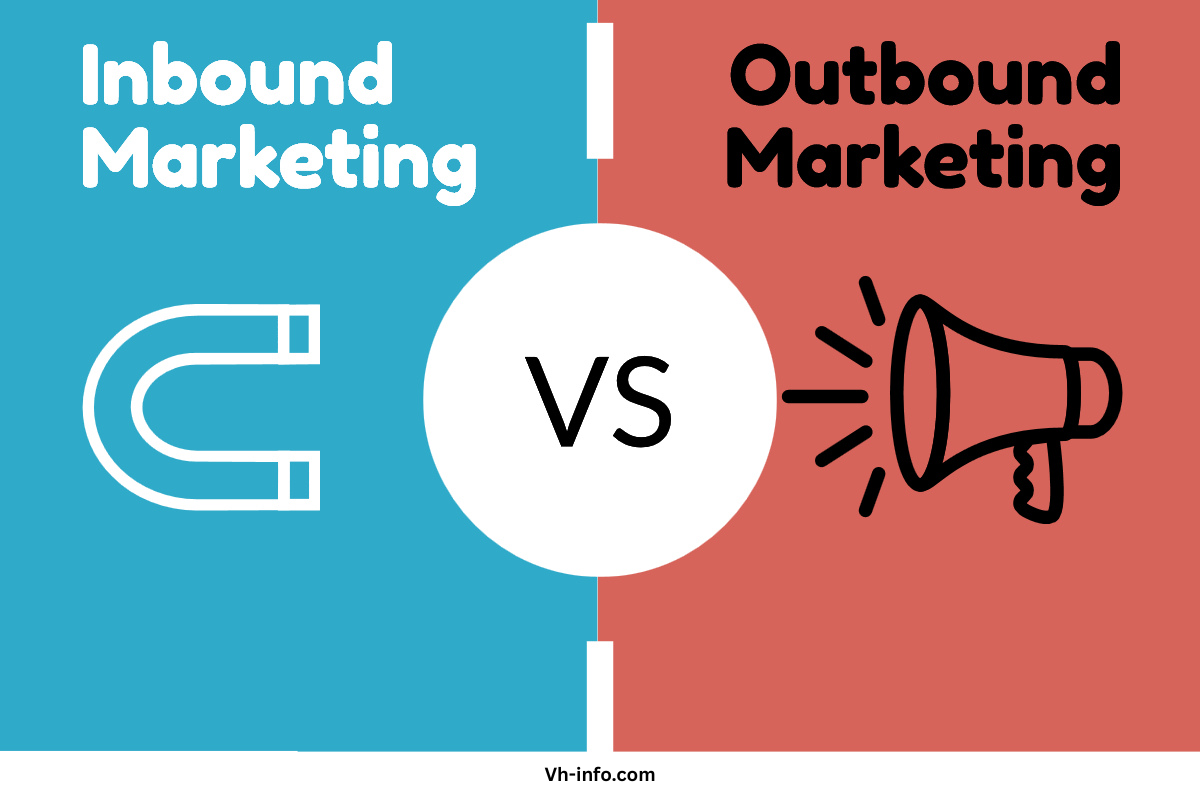
Inbound Vs Outbound Marketing: Finding Your Best Strategy In 2025

The balance between inbound and outbound marketing can greatly impact your business growth. Both ways try to reach your target audience. However, they are different in method, cost, and results.

At VH-info, we have seen how the right marketing plan changes lead generation for SaaS firms. It also helps with customer acquisition efforts.

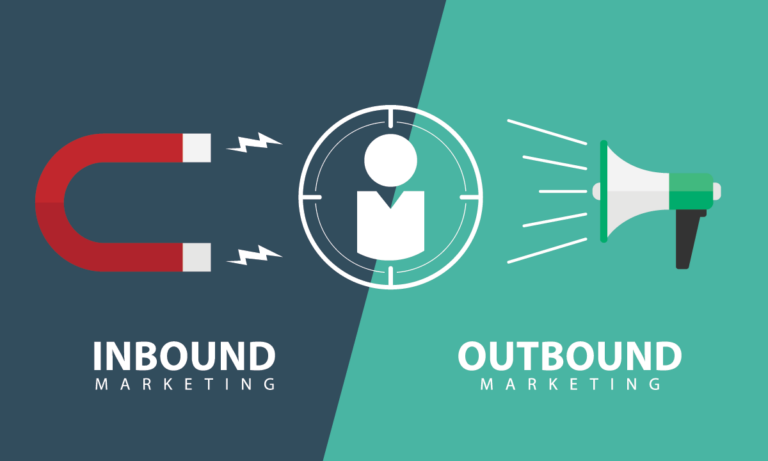
Inbound Vs Outbound Marketing
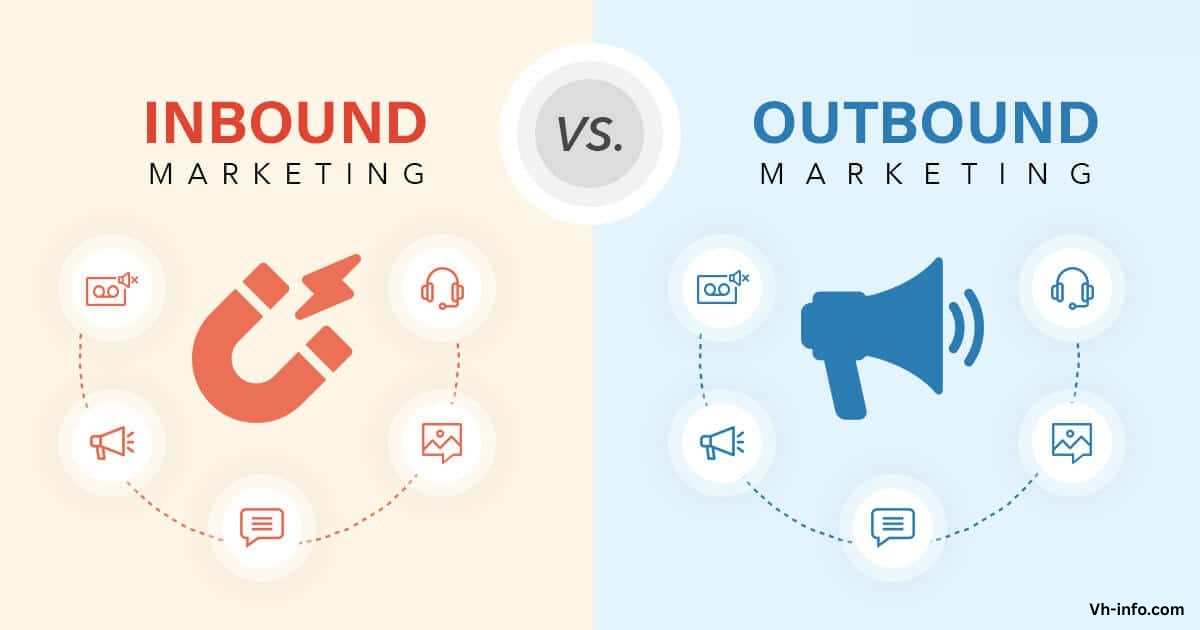
Inbound Vs Outbound Marketing

What Is Inbound Marketing?

Inbound marketing focuses on making useful content. This content attracts potential customers. Instead of pushing messages out, it pulls in prospects. It does this through helpful content, SEO, and social media. This method targets users who are looking for solutions.

By creating useful blog posts, videos, and other online materials, businesses build trust. They establish themselves as reliable sources in their field. When done correctly, inbound marketing brings leads over time. This happens long after the first piece of content is made.

What Is Outbound Marketing?

Outbound marketing is also known as “push marketing.” It tries to reach potential customers with your message. This method includes cold calls, direct mail, TV ads, radio ads, print ads, and trade shows.

Outbound marketing is different from inbound marketing strategies. It makes contact without knowing if people are interested first. This approach can create quick awareness. However, it needs ongoing money to keep visibility and results.

Key Differences Between Inbound and Outbound Marketing
Key Differences Between Inbound and Outbound Marketing

The key difference between these marketing strategies is their approach to customer engagement.

Inbound marketing attracts prospects with valuable content that meets their needs, earning attention organically through search engines and social media where audiences are active.

Conversely, outbound marketing pushes messages to a broader audience, seeking attention from potential customers who may not be actively looking for solutions.

While inbound builds relationships gradually, outbound creates immediate visibility but can disrupt customers’ routines.

Additionally, cost structures vary: outbound tactics require larger upfront investments in advertising and sales resources, whereas inbound strategies demand more time but often yield better long-term results as content continuously draws leads without extra costs.

Pros and Cons of Inbound Marketing

Pros and Cons of Inbound Marketing

Pros:

Inbound marketing has many benefits for businesses that want to grow. It brings in good leads because customers find solutions themselves.

This results in higher conversion rates and better ties with customers. It is also cost-effective; while making good content costs money, the long-term benefits can be great. Inbound marketing helps build brand awareness and shows your company as a leader. Its growth potential is very helpful—adding more content can attract new customers without raising costs a lot.

Furthermore, inbound methods give useful data about what audiences like and how they behave. For SaaS companies, inbound marketing works well with longer sales times and the need for trust before buying.

At VH-info, we have helped many SaaS firms use smart inbound plans to boost their marketing efforts.

Cons:

Inbound marketing has many benefits, but it also has some challenges.

One main challenge is the time it takes to see results. Often, it can take months for results to show up.

Creating quality content regularly needs a lot of work and skill. If the content is not optimized well, it may not rank high on search engines. This can lessen its effect. The content market is crowded, so only great quality will get noticed.

Also, good inbound marketing needs knowledge of SEO and other tech tools like content systems and analytics. This can be hard for companies that do not have these skills on their team.

Pros and Cons of Outbound Marketing

Pros and Cons of Outbound Marketing

Pros:

Outbound marketing helps you get quick visibility and impact. This makes it great for launching new products. It also works well for entering markets fast. Outbound methods create awareness quicker than inbound ways. This speed is key for campaigns that need to act fast.

Moreover, outbound plans can reach big audiences quickly. TV ads and radio spots are useful for certain business goals. These methods give you control over when and where your message appears. You can make sure your marketing shows at the right time and place.

Lastly, events like trade shows allow face-to-face talks. These talks help build strong relationships with key people, unlike just digital ways.

Cons:

The high cost of outbound marketing is a big drawback. TV, mail, and radio ads need large budgets.

These costs come with risky returns, creating stress for fast results. Many people do not like these ads anymore. They skip TV commercials, block online ads, and ignore cold calls. This pushed outbound methods to try harder to get noticed.

Also, there are limits when it comes to targeting with outbound strategies. Digital ads are better at reaching the right audience now. But old ways like print and radio still miss many ideal customers. This wastes money on marketing efforts.

Finally, outbound marketing gives fewer chances for people to engage or build connections. It mainly uses one-way communication and lacks the interaction found in inbound content.

Inbound Vs Outbound Marketing: Based On Audience Behaviour
Inbound Vs Outbound Marketing: Based On Audience Behaviour

Outbound Marketing (Audience Behaviour)

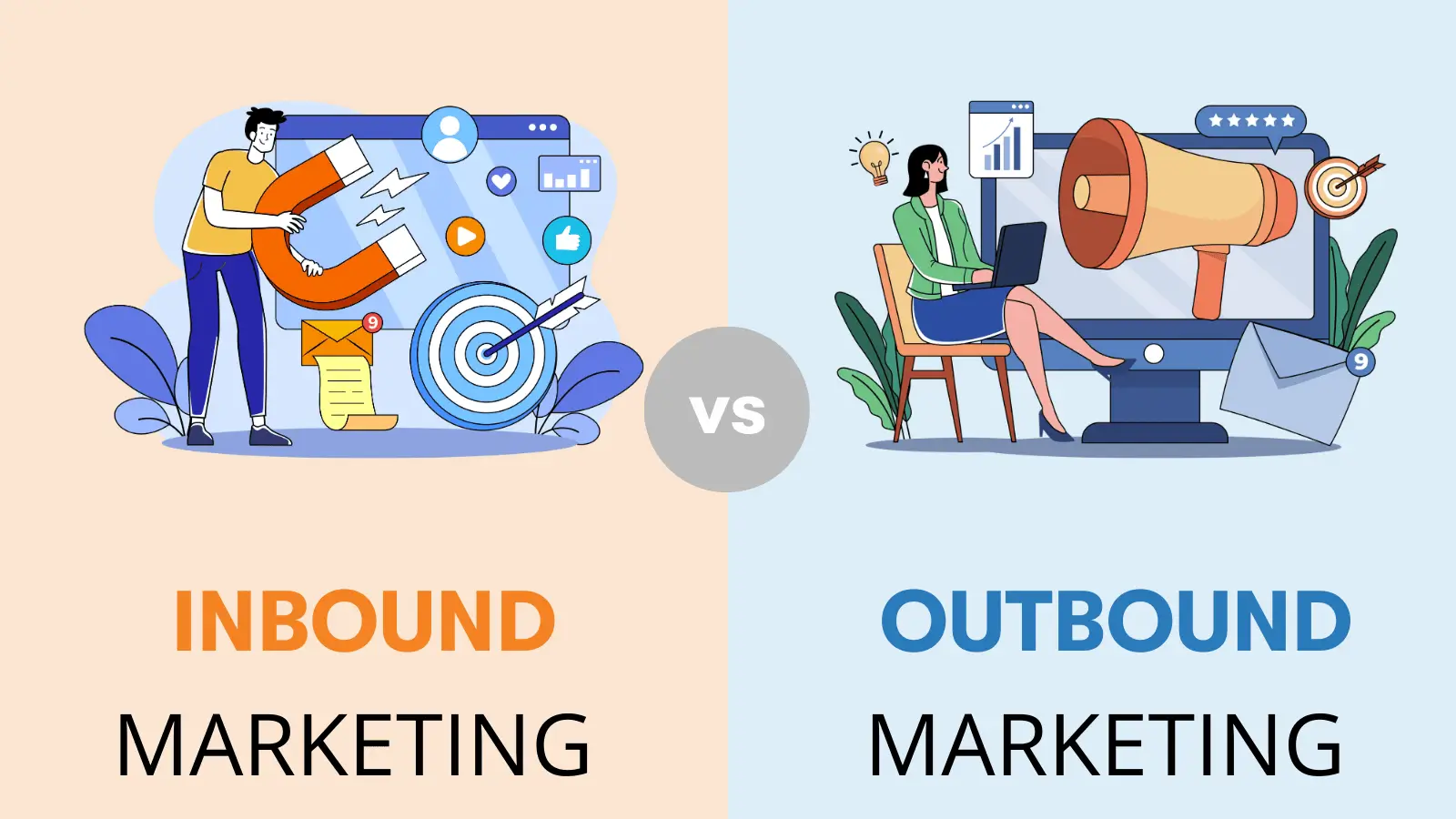
Outbound marketing means that businesses contact possible customers, no matter how interested they are. The audience usually pays little attention. They may see ads while watching TV, checking mail, or answering calls. This leads to low engagement rates.

Since these ads interrupt their activities, they need strong content to grab attention fast. This content must show value right away. Responses to outbound marketing can be quick but not deep. People may react quickly or just ignore the ads.

This makes it hard to create strong customer bonds and brand loyalty with this method alone.

Inbound Marketing (Audience Behaviour)

Inbound marketing uses the actions of the audience.

When people search for answers, read articles, or use social media, they connect differently with businesses. These users usually have certain needs and are more open to your message. Their choice in how and when to engage helps build stronger ties.

Useful content brings them back for more visits, sign-ups, and further discovery.

As time goes on, these good interactions create trust and loyalty to the brand. This builds a loyal group of customers.

Inbound Vs Outbound Marketing: Based On Technology
Inbound Vs Outbound Marketing: Based On Technology

What Technologies Impact Inbound Marketing?

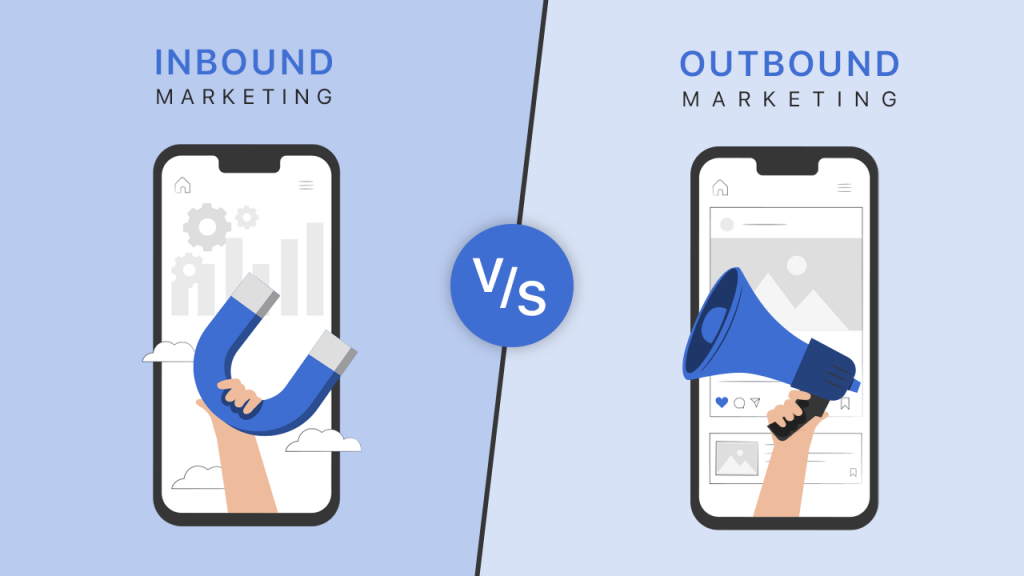
Inbound marketing uses digital tools for making, sharing, and measuring content. Content management systems help with easy publishing and control of online content. SEO tools make content easier to find. Social media sites help with sharing and getting people involved.

Marketing automation makes it more effective by guiding leads with tailored content paths. Analytics tools give details on how well things are working and how the audience acts for ongoing improvement. CRM systems keep track of talks all through the marketing process.

This gives a full picture of the customer path. Email marketing tools help inbound plans with automatic follow-ups and personal messages based on user actions. New tech in AI and machine learning is changing how we share content through smart insights and suggestions.

At VH-info, we have seen that using the right tech can greatly boost inbound marketing results for SaaS firms by creating smooth customer experiences.

What Technologies Impact Outbound Marketing?

Technology has changed outbound marketing. Customer data tools help target the right people. This reduces waste in large campaigns. Programmatic ads buy media automatically. This makes the process faster and better. Sales tools also help with cold calls and outreach.

They track results to see what works. Marketing systems keep messages the same across different channels. Analytics check how well each part is doing. Digital ads now have better targeting and real-time updates. They provide detailed performance data compared to older methods.

CRM systems track how prospects interact with brands. This creates a smooth experience, even with interruptive outbound tactics.

Inbound Vs Outbound Marketing Channels
Inbound Vs Outbound Marketing Channels

Key Channels Of Inbound Marketing

Web Content With Virality Factor

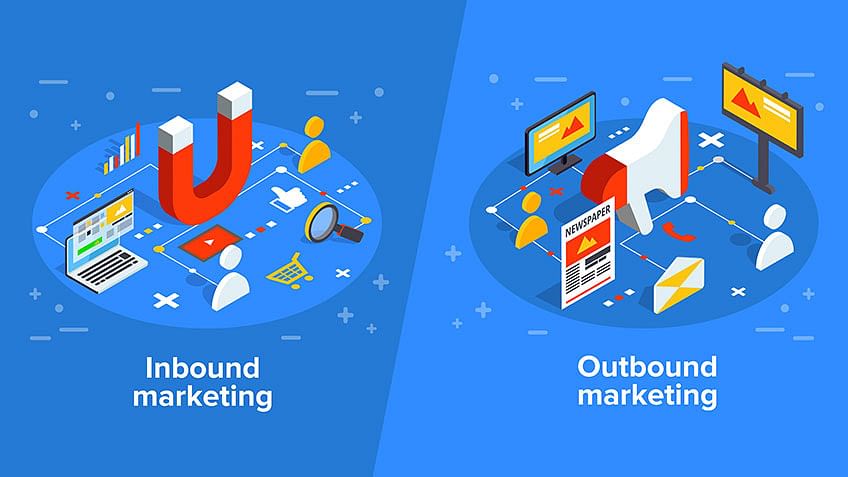
Content meant for wide sharing can significantly expand reach at no extra cost. Blog posts, infographics, and videos on trending topics or unique insights often gain organic traction through social sharing.

To create content with “virality potential,” understand what drives your audience to share. Successful viral content usually evokes strong emotions, presents surprising information, or delivers exceptional utility.

While virality isn’t guaranteed, analyzing successful industry examples can reveal patterns that enhance sharing chances. When it succeeds, viral content can lead to substantial visibility and valuable link-building opportunities, amplifying your inbound marketing efforts.

Web Content With Search-Ranking Factor

Search-engine-optimized content is vital for sustainable inbound marketing.

Blog articles, guides, and case studies targeting specific keywords ensure your business appears in relevant searches. Prioritize both search engine requirements and user value.

Effective content answers questions thoroughly, includes keywords naturally, and offers unique insights.

Additionally, technical factors like page speed, mobile responsiveness, and schema markup enhance visibility. When executed effectively, this content generates traffic and leads for years, delivering significant long-term value.

Social Media Posts, Hashtags, and Groups

Social media channels are strong for sharing content and connecting with people.

Each platform needs a special method. What works on LinkedIn may not work on Twitter or Instagram. Using hashtags can increase visibility. Joining the right groups can improve community presence. Success comes from giving value, not just promoting products.

By sharing helpful content, answering questions, and starting talks, businesses can grow a loyal audience. This audience helps boost inbound marketing efforts. Regularly checking engagement metrics helps to improve social strategies over time.

OOH and DOOH

Out-of-home (OOH) and digital out-of-home (DOOH) advertising typically fall under outbound marketing, but innovative strategies can include inbound elements.

By adding QR codes, memorable URLs, or social media handles to physical ads, businesses can connect offline and online experiences. This hybrid approach uses outbound channels to drive traffic to inbound resources, fostering a cohesive marketing ecosystem.

While initial exposure is outbound, engagement shifts to inbound as people seek more information online.

Key Channels Of Outbound Marketing

Broadcast Media

Television and radio ads still reach many people, even with changes in media.

They are great at creating quick awareness for products that many people want. The mix of sound and visuals makes strong impressions that text ads usually do not have. While using broadcast media needs a lot of money, placing ads in the right shows can make it work better.

For SaaS companies, broadcast ads might not seem like a good fit. However, specialized business shows can effectively reach key decision-makers when other options are full.

Digital Advertising

Paid search, display ads, social media ads, and video pre-rolls are new ways to do outbound marketing. These digital channels allow for precise targeting and measuring that old methods do not offer.

Programmatic ads improve placement by focusing on how well they work. The best part of digital ads is their flexibility and size.

Campaigns can start fast, test different options at the same time, and change based on live data. This quick adjustment makes digital ads good for short-term goals like getting leads and long-term goals like building brand awareness.

Exhibitions and Outdoor Events

Trade shows, conferences, and industry events provide valuable face-to-face interaction with potential customers.

These settings allow for product demonstrations, relationship building, and competitive intelligence gathering. The personal connections formed at events often accelerate the sales process, particularly for complex B2B solutions.

While the upfront costs of event participation are high, the quality of interactions can justify the investment. Strategic pre-show outreach and post-show follow-up maximize returns by creating touchpoints before and after the in-person connection.

Email Marketing (One To One)

Personalized emails to specific prospects are a direct form of outbound marketing. When these emails are based on research and fit the needs of the recipient, they can get much higher response rates than mass emails. This method works best for important B2B connections.

Good one-to-one email marketing needs careful research and clear value points. It also requires real personalization, not just adding the recipient’s name.

When done right, this targeted method links outbound and inbound ideas by starting relationships that matter and add value.

Email Marketing (One To Many)

Broadcast emails to bought or rented lists show a more old-fashioned outbound method. Open rates are usually low.

However, the large reach and low cost can make these campaigns useful for some goals. Success relies on the list quality, catchy subject lines, and clear actions for the reader.

To boost results, dividing the list by age, job, or other factors helps make emails more relevant. Testing different subject lines, content, and send times can also improve outcomes.

Even with these changes, companies should know that mass email is often just one part of a larger marketing plan.

What’s More Effective, Inbound Or Outbound Marketing?
What's More Effective, Inbound Or Outbound Marketing?

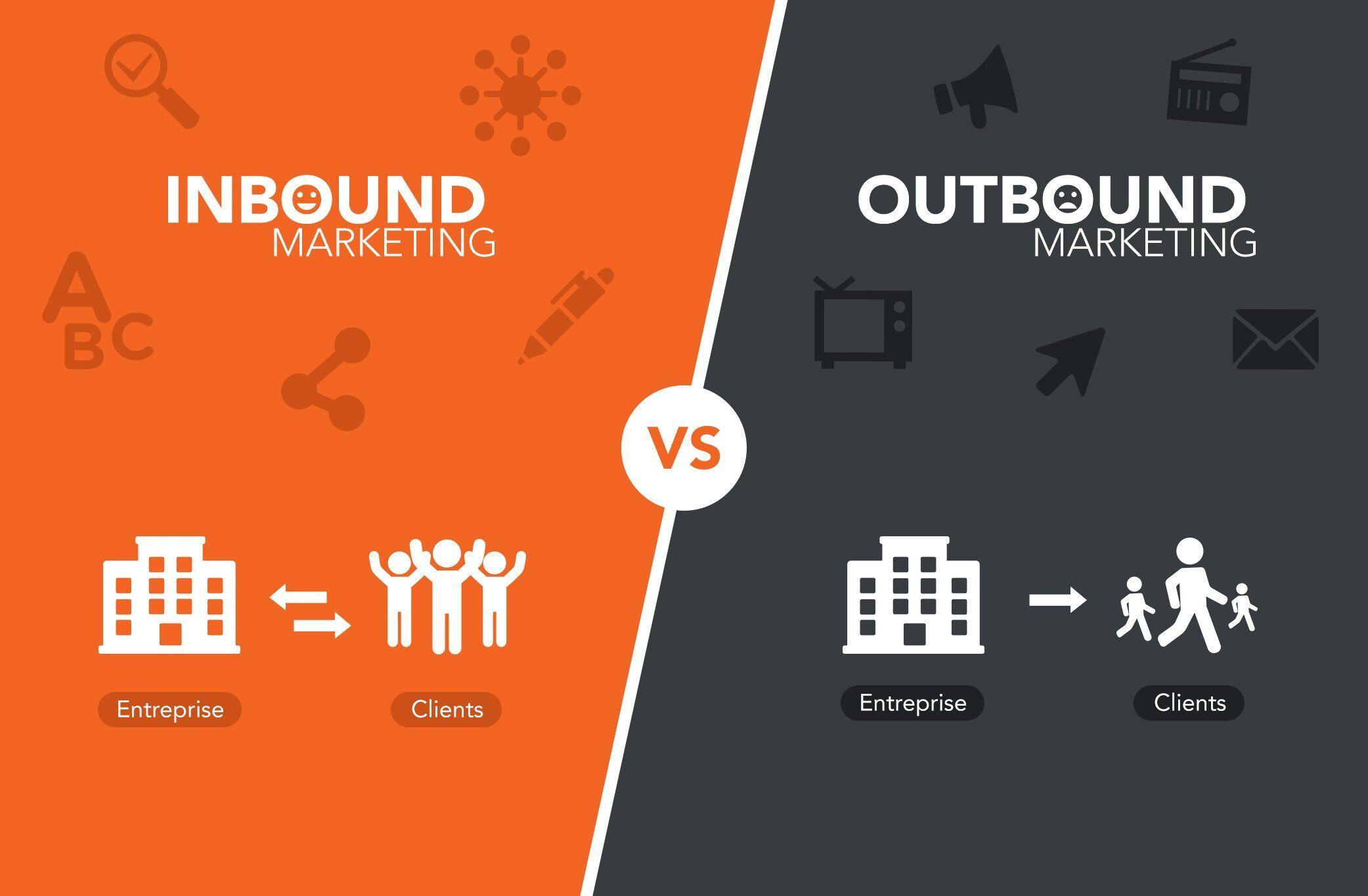
The success of inbound and outbound marketing depends on your business needs, goals, and tools. Inbound marketing often brings better leads at a lower cost. However, it takes time and requires steady content creation. These leads usually convert better because they are looking for solutions. On the other hand, outbound marketing gives faster results and more awareness. But it generally costs more per lead.

For new businesses that need quick visibility or firms launching products in crowded markets, this speed may be worth the price. The reliability of outbound also helps firms with strict growth goals. The best approach often uses both methods together.

Outbound tactics can improve inbound content, while inbound efforts can raise outbound lead conversions.

At VH-info, we see that SaaS companies get great results by mixing both strategies based on their marketing goals, sales cycles, and customer costs. The right mix changes as a company grows.

New startups may depend mostly on outbound to gain early traction before moving to inbound as they build their brand. Established companies often keep key inbound efforts while running focused outbound campaigns for certain goals.

Is Content Marketing Inbound Or Outbound Marketing?

Is Content Marketing Inbound Or Outbound Marketing?

Content marketing follows inbound marketing rules. It creates and shares useful content to draw a specific audience. This is different from old outbound methods that disturb potential customers. Instead, it provides resources that people want, making your business look trusted.

The base includes blogs, videos, podcasts, and whitepapers. These attract people using search engines and social media. This method earns attention instead of buying it. This value helps build ties during the customer journey. Yet, sharing may use some outbound methods too.

For example, you can promote blog posts through paid social ads or boost videos using ads. This mixes inbound content with outbound reach.

When Content Marketing Becomes Outbound Marketing?

When Content Marketing Becomes Outbound Marketing?

Content marketing becomes outbound when it pushes content instead of attracting audiences naturally.

Tactics like paid ads, content sharing, and sudden promotions focus on outbound methods. This often occurs when businesses get tired of slow growth. They then choose to use paid channels to gain quick visibility. However, this can change how the audience views the content.

Another problem happens when promotion takes over content quality. If resources focus more on sharing than creating useful information, the strategy looks like old-fashioned ads. The key difference is if the content meets audience needs or just business goals.

The best content programs mix inbound ideas (audience-focused, useful information) with smart outbound sharing. This helps increase reach while keeping content value and supporting business growth.

Can You Use Inbound And Outbound Marketing Together For Content Marketing?

Can You Use Inbound And Outbound Marketing Together For Content Marketing?

Combining inbound and outbound approaches creates powerful synergies for content marketing. This integrated strategy uses the strengths of each approach while mitigating their individual weaknesses.

Here’s how they work together effectively:

Creating Engaging Content With Paid Promotion

High-quality content is essential for inbound marketing, but initial visibility often needs a boost.

Paid promotion via social media ads, sponsored content, and other outbound channels can quickly build your audience while your organic presence matures. As organic traffic increases, you can reduce or redirect paid efforts to new initiatives.

This strategy is especially beneficial for SaaS companies in competitive markets where organic visibility takes time. Ensure that promoted content provides real value rather than just selling products, upholding inbound principles even with outbound methods.

Using Influencer Marketing

Influencer partnerships combine inbound and outbound strategies by using established audiences. Collaborating with respected industry voices allows you to access their followers while maintaining content quality.

These relationships thrive when the influencer’s audience aligns with your target demographic, ensuring relevance.

Successful collaborations create co-branded content that benefits both audiences, respecting inbound principles by providing value while utilizing the influencer’s platform as an outbound channel to reach new customers.

Using Ads

Strategic advertising enhances inbound content by directing targeted traffic to valuable resources. Instead of promoting products, this approach highlights helpful content.

Retargeting campaigns nurture relationships with previous engagers, advancing them through the marketing funnel.

The most effective ads address specific pain points and position your content as the solution, maintaining the helpful spirit of inbound marketing while utilizing outbound channels.

Measurement should focus on not just clicks but also engagement with your content and movement toward conversion.

Using Inbound and Outbound Calling

For B2B SaaS companies, integrating calling strategies with content marketing creates a cohesive experience. Inbound calls from prospects who’ve engaged with your content receive personalized follow-up based on their specific interests.

Meanwhile, outbound calling becomes more effective when representatives reference relevant content during conversations.

This integration transforms cold calling into “warm calling” by providing representatives with insights about prospect interests and challenges.

When calls focus on understanding needs and recommending helpful resources rather than pushing immediate sales, they maintain the helpful spirit of inbound marketing despite using an outbound channel.

Analytics and Optimization

The true power of combining inbound and outbound approaches emerges through integrated analytics.

By tracking how prospects move between channels and content types, businesses can identify the most effective combinations for different segments. This data-driven approach continuously refines both content creation and distribution strategies.

Key metrics to monitor include channel-specific conversion rates, multi-touch attribution patterns, and content engagement across different audience sources. These insights help optimize resource allocation between inbound content development and outbound distribution channels.

The Future Of Inbound and Outbound Marketing

The Future Of Inbound and Outbound Marketing

Technological Advancements:

Artificial intelligence and machine learning are revolutionizing inbound and outbound marketing.

For inbound, AI content optimization tools enhance relevance and search visibility, while predictive analytics pinpoint high-impact topics before creation. Automated personalization tailors content to individual user behavior.

In outbound marketing, AI improves targeting precision by identifying promising prospects through complex data patterns.

Automated outreach adapts based on recipient responses, fostering natural conversations. Voice recognition and natural language processing provide real-time guidance for representatives in phone-based outreach.

As these technologies evolve, the distinction between inbound and outbound will blur, leading to hyper-personalized experiences that seamlessly integrate proactive outreach with relevant content delivery.

Emerging Channels and Tactics:

Voice search optimization is a growing frontier in inbound marketing. With the rise of smart speakers and voice assistants, optimizing content for conversational queries is essential.

Similarly, visual search demands new strategies for image optimization and visual content creation.

For outbound marketing, interactive video and immersive experiences like augmented reality allow for active engagement with prospects, transforming traditional interruptive advertising into memorable participatory experiences.

Conversational marketing through chatbots and messaging platforms merges inbound and outbound strategies by facilitating proactive engagement alongside helpful resources.

These channels support both customer-initiated and business-initiated conversations, adapting to evolving user preferences.

Changing Consumer Behavior and Expectations:

Customers today demand personalization, relevance, and value in every interaction. Generic outbound messages struggle to capture attention, while superficial inbound content fails to meet information needs.

Future success hinges on understanding specific audience segments and developing sophisticated content. Privacy concerns are reshaping these strategies; as third-party data declines, first-party data from inbound channels becomes more valuable.

Outbound methods must prioritize permission and transparency while offering clear value.

A significant shift is toward community-centric approaches that foster connections among customers and prospects, creating ecosystems where value flows bidirectionally rather than solely from business to customer.

How LinkedIn Can Help Your Marketing?

LinkedIn has transformed from a networking site into a robust platform for inbound and outbound marketing. Its publishing feature allows businesses to share industry insights with professional audiences, while the algorithm prioritizes meaningful content over promotional material.

For outbound marketing, LinkedIn’s targeting options enable precise audience selection by job title, industry, and company size. Sponsored content and InMail facilitate direct access to decision-makers.

Additionally, the platform’s analytics provide insights into content performance and audience engagement, helping businesses refine their strategies based on what resonates most with their audience.

Inbound Or Outbound Marketing For Your Business? Which One To Choose?
Inbound Or Outbound Marketing For Your Business? Which One To Choose?

Choosing the right marketing plan needs a clear look at your business. Think about your situation, resources, and goals.

Start by checking your sales cycle. Complex processes do better with inbound marketing, which builds relationships. Simpler sales work better with direct outbound methods.

Next, consider where you stand in the market. New businesses may need visibility from outbound marketing.

In contrast, well-known brands can use their name through inbound content. The competition also plays a role. Crowded markets often need unique content to stand out. Resource limits are very important too.

Inbound marketing requires regular content and tech updates. Yet, it usually costs less for each lead in the long run.

Outbound methods need more money at first, but need less ongoing work for content. Most businesses succeed when they focus on one area only. Spreading resources too thin can end up with poor results.

For SaaS companies, a good plan mixes different methods based on goals and customer needs. Use targeted outbound tactics to raise awareness first. Then apply strong inbound resources during the decision stages.

This mix uses strengths while fixing each method’s problems effectively.

FAQ’s:

Can Small Businesses Benefit From Inbound Marketing?

Yes, small businesses often achieve great results with inbound marketing. Its lower cost per lead compared to traditional methods makes it ideal for limited budgets.

By targeting specific niches and creating relevant content, small businesses can effectively compete with larger competitors. Success hinges on starting with focused content that addresses customer needs rather than broad coverage.

Consistently publishing quality resources builds audience and authority over time. As results improve, the content program can expand into related topics based on performance data and feedback.

What Industries Still Use Outbound Marketing Successfully?

Several industries excel in outbound marketing. Financial services, especially for high-net-worth offerings, effectively use direct mail and personal outreach to target prospects. Healthcare tech companies leverage trade shows to showcase complex solutions to decision-makers.

B2B services with high contract values find outbound calling and direct email efficient, particularly with clearly defined territories or accounts. Manufacturing firms reach niche buyers through trade publications and industry directories.

The key to successful outbound marketing isn’t the industry but clear audience definition and tailored messaging. When businesses identify who needs their solutions and why, outbound strategies can yield strong returns, even amid a shift toward inbound methods.

How Long Does It Take To See Results From Inbound Marketing?

Inbound marketing typically takes 3-6 months to show significant results.

Initially, businesses focus on foundational content, SEO, and online presence. Traffic and leads may improve slowly at first. Growth usually accelerates around months 4-6 as content begins to rank and awareness increases.

By months 6-12, compounding effects lead to better performance of existing content and wider reach with new materials.

The full potential often unfolds after 12+ months of consistent effort. This timeline varies by industry competition, content quality, frequency, and brand authority; less competitive niches may see faster results.

Is It Necessary To Use Both Inbound and Outbound Marketing?

Integrated approaches often yield the best results, but businesses can succeed with either inbound or outbound marketing depending on their situation. Companies with limited resources should focus on one method.

The choice should align with the business model, target audience, and growth goals.

B2B companies targeting specific accounts may excel with outbound strategies that emphasize direct relationships, while information-heavy businesses may thrive using inbound methods. As complexity and competition grow, combining strategies becomes essential.

For mature organizations, integrated approaches are typically more effective for diverse customer acquisition and relationship management.

How Can I Measure The Success Of My Inbound Marketing Efforts?

Effective inbound marketing measurement involves tracking metrics throughout the customer journey, not just traffic or leads.

Start with content performance indicators like organic traffic growth, engagement metrics (time on page, bounce rate), and social shares to assess visibility and resonance. Then, monitor conversion metrics such as newsletter subscriptions, content downloads, and webinar registrations for deeper engagement. Evaluate lead quality through qualification rate, sales acceptance rate, and conversion-to-opportunity metrics to ensure you attract suitable prospects.

Finally, analyze business impact using inbound customer acquisition cost, conversion rates by content source, and customer lifetime value by acquisition channel to determine the true ROI of your programs.

Conclusion

Choosing between inbound and outbound marketing is not a simple choice. Both methods have valuable benefits. These benefits work best when they match business goals and customer needs. Inbound marketing helps with steady growth. It does this by using useful content and building real relationships. Outbound marketing provides quick visibility and direct responses from customers.

For SaaS companies, the best plan starts with inbound content. This content should solve customer problems and encourage organic discovery. It also helps start sales talks.

Next, smart outbound efforts can boost important messages to reach high-value groups quickly. As technology changes, the marketing world mixes old ways. Success today depends on making smooth experiences across different channels. It is no longer about keeping methods separate.

By delivering value at every stage—initiated by either customers or businesses—companies can build stronger connections and achieve sustainable growth. At VH-info, we assist SaaS companies in developing integrated marketing strategies that use both inbound and outbound techniques. Our expertise in SaaS link building establishes a solid foundation for effective inbound programs, and our guides aid clients in aligning their approaches to fulfill particular business objectives.

What Is SEO For Financial Services & How To Do It For Beginners?

In today’s digital age, standing out online is tougher than ever for financial services. With strict regulations, complex topics, and fierce competition, simply having an online presence and a website isn’t enough. That’s where SEO for financial services steps in.

A strategic approach to search engine optimization helps banks, credit unions, and financial advisors implement efficient digital marketing strategies that cut through the noise, boost online visibility, and connect with their target audience searching for everything from retirement planning to investment strategies.

Unlike generic SEO, financial services SEO demands a blend of technical SEO precision and high-trust content creation. Why?

Because when potential clients look up terms like “best mortgage rates” or “wealth management,” they’re not just browsing—they’re making life-changing decisions. Your site needs to rank high in search engine results while balancing user experience, local SEO for branch visibility, and E-E-A-T (Expertise, Authoritativeness, Trustworthiness) to meet Google’s strict standards.

This guide breaks down actionable SEO strategies tailored for the financial sector, helping you drive organic traffic, build brand awareness, and turn visitors into loyal clients. Let’s dive in.

What Is SEO For Financial Services?

What Is SEO For Financial Services?

SEO for financial services is the process of optimizing a financial institution’s website to improve its visibility in organic search engine results.

This specialized form of search engine optimization focuses on helping banks, credit unions, investment firms, and other financial service providers rank higher when potential clients search for relevant financial topics.

Unlike general SEO practices, financial services SEO must address the unique compliance requirements and trust factors critical in the financial sector. This includes demonstrating expertise and authority in financial content, maintaining strict accuracy standards, and ensuring secure user experiences.

Financial services SEO encompasses keyword research, technical SEO implementation, content creation, and link building strategies specifically tailored to meet the needs and expectations of financial audiences and search engines evaluating financial content.

What Are The Benefits Of Improving SEO For Financial Services?

What Are The Benefits Of Improving SEO For Financial Services?

Increased Traffic

Using good SEO strategies helps financial service companies show up in search results. This is for words that potential clients look for.

As your website moves up the search list, your traffic will grow. Financial firms with strong SEO can attract people looking for certain financial help. They can become the main source for these clients and build long-term financial ties.

Financial services SEO is a smart way to get visitors to your website without spending much money on ads. Paid ads need ongoing money to stay visible. In contrast, organic traffic keeps coming even when budgets are tight.

Better Conversions

SEO helps bring more visitors to your financial services website. It also helps turn these visitors into customers. Users find your site through search engines. These users are often looking for help related to your services.

This makes them more likely to become leads or customers. When financial sites rank higher in search results, they gain trust from potential buyers. This boost in trust, along with good content, helps create a better chance for sales.

Also, making SEO better usually means improving user experience and site speed. These things all help increase conversion rates.

Improved Branding

When your financial company shows up at the top of search results, it builds brand awareness and drives SEO success. This helps your business be seen as a leader in the field. When people trust your financial terms, they see you as a reliable source.

Good SEO makes your firm stand out in the finance world.

By making helpful content for common questions, you show your skills. This helps to earn trust from future clients even before they reach out. Better visibility and trust lead to stronger brand recognition in financial services.

How To Do SEO For Financial Services?

How To Do SEO For Financial Services?

Use HTTPS

Implementing HTTPS is non-negotiable for financial services websites. This secure version of the standard HTTP protocol adds an essential layer of security to guard against malware and hackers – particularly critical when handling sensitive financial information.

Beyond security benefits, HTTPS is also a ranking factor that helps financial websites rank higher in search results.

Google explicitly favors secure sites, making this technical SEO element a baseline requirement for financial services SEO. Site visitors also recognize the padlock icon in browsers, providing an immediate trust signal for potential clients evaluating your financial services.

Build Content Around Your Specific Services

While broad financial topics have their place, your SEO strategy should focus on content specifically related to your service offerings.

If you’re a lender, create content addressing common lending questions. Credit unions should explain how their model differs from traditional banks. Financial advisors should outline their consultation process.

This targeted approach helps attract more relevant traffic to your website as part of your financial services SEO program.

People searching for specific financial solutions are more likely to convert than those looking for general information. Service-specific content also helps search engines better understand your financial institution’s specialties and relevance to particular queries.

Earn Authoritative Backlinks

Earning quality backlinks from reputable websites significantly improves your financial services SEO.

When authoritative financial or business sites link to your content, Google interprets this as a vote of confidence in your expertise. This directly impacts your search rankings for financial keywords.

For financial institutions, focus on obtaining links from respected sites within the financial services industry rather than pursuing quantity over quality.

One effective approach is identifying broken links on authoritative financial websites and suggesting your relevant content as a replacement. This provides value to the site owner while earning your institution a valuable backlink.

Optimize Your Page Load Times

Page speed is a critical ranking factor for financial websites. If your pages load too slowly, potential clients may abandon your site, increasing bounce rates and negatively impacting your search rankings. Financial services sites should aim for load times under three seconds.

Improving page speed involves optimizing images, using browser caching, minimizing code, and using a reliable hosting service.

For financial institutions, working with your web development team to implement these technical SEO improvements is essential for maintaining competitive search visibility.

Make Your Site Mobile-Friendly

Mobile optimization is essential as most financial services searches now occur on mobile devices. A responsive website design ensures your content displays properly across all screen sizes, providing a seamless user experience.

Google uses mobile-first indexing, meaning it primarily uses the mobile version of your site for ranking and indexing.

Financial institutions with non-mobile-friendly websites will struggle to rank well, regardless of other SEO efforts. Testing your site’s mobile performance should be a regular part of your financial services SEO maintenance.

Claim Your Google Business Profile

For financial institutions with physical locations, claiming and optimizing your Google Business Profile is important for local SEO. This free business listing appears in Google Search and Maps, helping potential clients find your branch locations.

Complete your profile with accurate information including your business name, address, phone number, website URL, business hours, and financial services offered. Regularly update this information and encourage satisfied clients to leave positive reviews, as these factors influence your local search rankings.

What Are The SEO Challenges Within Financial Services?

What Are The SEO Challenges Within Financial Services?

Increasingly Competitive Landscape

The financial services field is growing fast. New fintech companies and special software services are joining the market. They are working alongside traditional banks and firms. This change leads to strong competition for search visibility in finance.

To get noticed in search results, financial firms need to make great content. This content must meet the needs of clear target groups. Basic financial content is not enough anymore. Your work must show unique value and skill to compete well.

Increased Focus On SEO For Lead Generation

As more financial service firms see how SEO can help get good leads, the fight for top spots has grown.

Big Finance companies are spending a lot on SEO plans to catch the eye of potential clients. This trend shows that financial firms need to try harder to rank for important words. Just using simple SEO tricks won’t work anymore.

A full and steady plan for search engine optimization is needed to compete well in this tough market.

High Topic Complexity

Financial topics can be hard to understand. They often involve complex ideas that confuse many people. This makes it tough to write content. You want content that pleases search engines and your audience at the same time.

The special nature of financial topics means SEO teams have a task. They must fill the gap in knowledge. They should think ahead about questions and give clear answers while staying accurate.

This requires a lot of knowledge about the industry. It also needs good skills in making content.

It is not easy to combine these two in financial services.

Stricter Content Quality Requirements

Financial content is part of Google’s “Your Money Your Life” (YMYL) group within the financial services sector. This group faces tougher quality checks than other types of content. These pages affect readers’ money situations directly. Therefore, accuracy and trust are very important.

Being in the YMYL group means Google uses stricter rules for ranking. They focus on expertise, authoritativeness, and trustworthiness (E-E-A-T). Mistakes or false information can hurt your rankings a lot.

This makes careful fact-checking and strong editorial rules very important for SEO in financial services.

16 Proven Strategies For Implementing SEO For Financial Services

Strategies For Implementing SEO For Financial Services

Check Your Current SEO

Before you start new SEO plans, check how your financial website is doing now. Use tools like Google Search Console.

Also, use Google Analytics to find your site’s strengths and weaknesses. Look at your current keyword rankings. Check the trends in organic traffic and any technical SEO stats. This review will help you decide what to improve first.

It will also let you see how well your SEO efforts are working over time.

Build Trust and Topical Authority

Financial choices need a lot of trust. You can build trust by sharing clear and accurate content.

This content should show your skill in financial subjects. Use clear E-E-A-T signals on your website. This means you should include detailed author bios that show their financial skills.

Also, cite good sources and share any industry certificates or memberships.

Perform A Content Audit

Look at your current content to find ways to make it better. Check which financial topics do well and which ones need work. Get rid of old financial info and update it. Combine similar content to make it clearer. Find missing pieces in your financial services library.

This will help make sure all your content is up to date and meets the needs of your audience.

Understand Your Target Audience

Create clear profiles of your real customers. Use surveys to find out their needs and wants.

This includes their problems, preferred words, and the financial help they want. Doing this research helps you make content that speaks to future clients. It also meets their specific money issues. This can boost how much they engage with you and improve sales rates.

Earn Reputable External Links Through Link-Building

Develop a strategic approach to acquiring backlinks from authoritative financial websites.

Quality backlinks signal to search engines that your content is trustworthy and authoritative. Focus on creating linkable assets such as original research, financial tools, or comprehensive guides that naturally attract links from other financial websites.

Do Your Keyword Research

Identify the specific terms your target audience uses when searching for financial services. Look beyond obvious and relevant keywords to find long-tail variations that indicate higher search intent. Financial services SEO should focus on relevance over keyword density.

Research shows top-ranking financial pages often contain target keywords just once, prioritizing context and value instead.

Make A Competitor Analysis

Analyze competitors’ SEO strategies to identify opportunities and gaps.

Examine their top-performing content, backlink profiles, and keyword targets. Remember that your SEO competitors include not just direct business rivals but also financial blogs, media companies, and other content publishers competing for the same search visibility.

Create Educational Content For Your Users

Develop helpful resources that address common financial questions and concerns.

Educational content establishes your authority while providing genuine value to potential clients. Focus on creating comprehensive guides, explanatory articles, and practical tools that help users better understand complex financial topics relevant to your services.

Improve Your E-A-T

Enhance your Experience, Expertise, Authoritativeness, and Trustworthiness signals throughout your website.

For YMYL financial content, these factors significantly impact search rankings. Demonstrate experience through case studies and client success stories. Showcase expertise via staff credentials and detailed, accurate content.

Build authority through industry recognition and trustworthiness via security certifications and transparent policies.

Check Your Technical SEO

Ensure your website’s technical foundation supports your content efforts.

Technical SEO issues can undermine even the best financial content strategy. Regular technical audits should address site structure, crawlability, indexing issues, and schema markup implementation specific to financial services.

Focus On Speed and Mobile Optimization

Optimize your website for fast loading and seamless mobile experience.

Page speed directly impacts both user experience and search rankings. Implement responsive design, compress images, minimize code, and use browser caching to improve performance across all devices.

Identify New Opportunities Through Keyword Research

Continuously expand your keyword research to discover emerging financial topics and questions.

Tools like Google’s “People Also Ask sections can reveal valuable content opportunities. Look beyond transaction-focused keywords to include informational queries that attract potential clients earlier in their financial decision-making process.

Find Your Main Organic Competitors

Find the websites that often rank for your keywords. These sites might not be your direct rivals.

Still, they are your SEO rivals. Look at their content plans. See how they get links to their sites. Check their technical setup as well. This can help you create your own SEO plan for financial services.

Improve Your Local SEO

For financial institutions with physical locations, local SEO drives branch visits.

Optimize your Google Business Profile with accurate information and encourage client reviews. Create location-specific pages for each branch, including local keywords and providing specific information valuable to local clients.

Optimise Technical Aspects Of Your Website

Address technical SEO fundamentals including site architecture, XML sitemaps, robots.txt configuration, and proper use of redirects.

Implement schema markup specific to financial services to help search engines better understand your content and potentially gain rich snippets in search results.

Track and Improve Your Off-Page SEO

Monitor your backlink profile, online mentions, and social media signals.

Off-page factors significantly impact how search engines evaluate your site’s authority. Develop a proactive strategy for building quality links through content outreach, financial industry directories, and partnership opportunities.

SEO KPIs For Financial Services

SEO KPIs For Financial Services

Effective financial services SEO requires tracking the right key performance indicators (KPIs) to measure success and guide optimization efforts. Focus on metrics that directly relate to business objectives rather than vanity metrics.

Primary KPIs should include organic conversions (tracking users from organic search who complete desired actions), search visibility (measuring how often your site appears for target financial keywords), keyword rankings (monitoring position changes for strategic terms), and organic click-through rates (showing the percentage of searchers who click your results).

Also track technical SEO metrics like page speed, mobile usability, and crawl statistics. For local financial institutions, monitor local pack appearances and Google Business Profile engagement metrics.

How To Implement Financial Services SEO That Gets Results?

How To Implement Financial Services SEO That Gets Results?

  1. Base Your SEO Content Strategy On Customer Research: Develop quality content that directly addresses real questions and concerns from your target audience. Use customer surveys, service team feedback, and search query analysis to identify topics that matter to potential clients. This research-based approach ensures your content resonates with real financial concerns rather than assumptions about what clients want to know.
  2. Create Content For the Level of Your Reader: Adjust your content complexity based on your target audience’s financial literacy. Some topics require simplification while others benefit from technical depth. Balance accessibility with accuracy, ensuring content is understandable without oversimplifying complex financial concepts that could mislead readers.
  3. Create Content Based on Interviews With Experts: Use your internal financial experts to create authoritative content. Expert interviews provide unique insights while strengthening your E-E-A-T signals. This approach adds credibility to your content while ensuring technical accuracy on complex financial topics.
  4. Track the Results of Your Content: Implement comprehensive analytics to measure each content piece’s performance. Track not just traffic but engagement metrics and conversion actions. Use these insights to refine your content strategy, doubling down on formats and topics that drive meaningful business results.

FAQ’s:

What Is The Role of E-E-A-T in Financial Services SEO?

E-E-A-T (Experience, Expertise, Authoritativeness, and Trustworthiness) is particularly important for financial services SEO because financial content falls under Google’s YMYL (Your Money Your Life) classification.

Google holds this content to higher standards because inaccurate information could negatively impact readers’ financial wellbeing.

For financial websites, demonstrating E-E-A-T involves showcasing author credentials, citing reputable sources, providing comprehensive, accurate information, and maintaining a secure website with proper certifications.

These signals help Google recognize your content as trustworthy, directly impacting your search rankings for financial terms.

How Does Local SEO Benefit Financial Institutions?

Local SEO helps financial institutions appear prominently when potential clients search for services in their area. This visibility is important as many financial decisions still involve in-person consultations or branch visits.

Key local SEO elements include optimizing Google Business Profiles with accurate information (name, address, phone number, hours), creating location-specific website content, and generating positive client reviews.

These strategies help financial institutions appear in local map packs and location-based searches, driving both website traffic and physical branch visits.

How Long Does It Take To See Results From SEO For Financial Services?

Most financial institutions begin seeing initial SEO improvements within 3-6 months of consistent implementation, though significant results typically take 7-12 months to materialize.

The timeline depends on several factors, including your website’s current authority, competitive landscape, and implementation quality.

By month four, you should notice early traction with improvements in keyword rankings and organic traffic. Between months 7-12, these efforts compound as your site gains authority, often creating an inflection point where traffic and conversions increase more rapidly.

Financial services SEO requires patience but delivers long-term value.

Can SEO Improve My Financial Service’s Local Visibility?

Yes, SEO can significantly enhance your financial institution’s local visibility through targeted local SEO strategies.

Optimizing your Google My Business profile, creating location-specific website content, and building local citations all help your business appear in local search results.

For financial services with physical locations, local SEO drives both online visibility and in-person visits. Research shows that many consumers search online before visiting financial institutions, making local search optimization essential for branch-based businesses.

Is SEO Worth The Investment For Small Financial Firms?

SEO provides substantial ROI for small financial firms when implemented strategically. While it requires upfront investment and ongoing maintenance, effective SEO delivers sustained traffic without the recurring costs of paid advertising.

Small financial businesses benefit from SEO’s ability to level the playing field with larger competitors.

By focusing on specific niche services or local markets, smaller firms can achieve strong visibility for targeted & specific keywords, attracting highly relevant prospects at a lower cost per acquisition than many other content marketing channels.

How Does Google’s E-A-T Principle Apply To Financial Services SEO?

Google’s E-A-T principle (now E-E-A-T with the addition of Experience) directly impacts how financial content is evaluated. As YMYL content, financial services websites face heightened scrutiny regarding the expertise, authoritativeness, and trustworthiness of their content.

Financial institutions should implement clear E-E-A-T signals, including detailed author biographies with financial credentials, citations from reputable sources, comprehensive, accurate information, and technical trust signals like secure connections and privacy policies. These elements help search engines recognize your content as reliable and authoritative, directly influencing your rankings for financial keywords.

Conclusion

SEO for financial services requires a specialized approach that addresses the unique challenges and opportunities in this highly regulated sector. By implementing the strategies outlined in this guide—from technical optimization to content creation and authority building—financial institutions can improve their online visibility and implement powerful financial SEO tactics to attract more qualified leads.

Successful financial services SEO balances technical excellence with content quality and user experience. Focus on building trust through E-E-A-T signals, creating valuable content that addresses real client needs, and maintaining a secure, fast website experience.

SEO is a long-term investment. It builds returns over time. You might see some gains in 3 to 6 months. However, the best results usually come after 7 to 12 months. This happens when you keep working at it consistently.

For financial institutions willing to make this investment, the reward is a sustainable source of qualified leads and enhanced brand authority in an increasingly competitive digital landscape.

At VH-info, our specialized approach to SEO for financial services has helped numerous clients achieve page one rankings for competitive financial terms.

Our team understands the unique requirements of financial content and can develop a tailored strategy for your specific institution.

Contact us today to learn how we can help improve your financial services SEO performance.

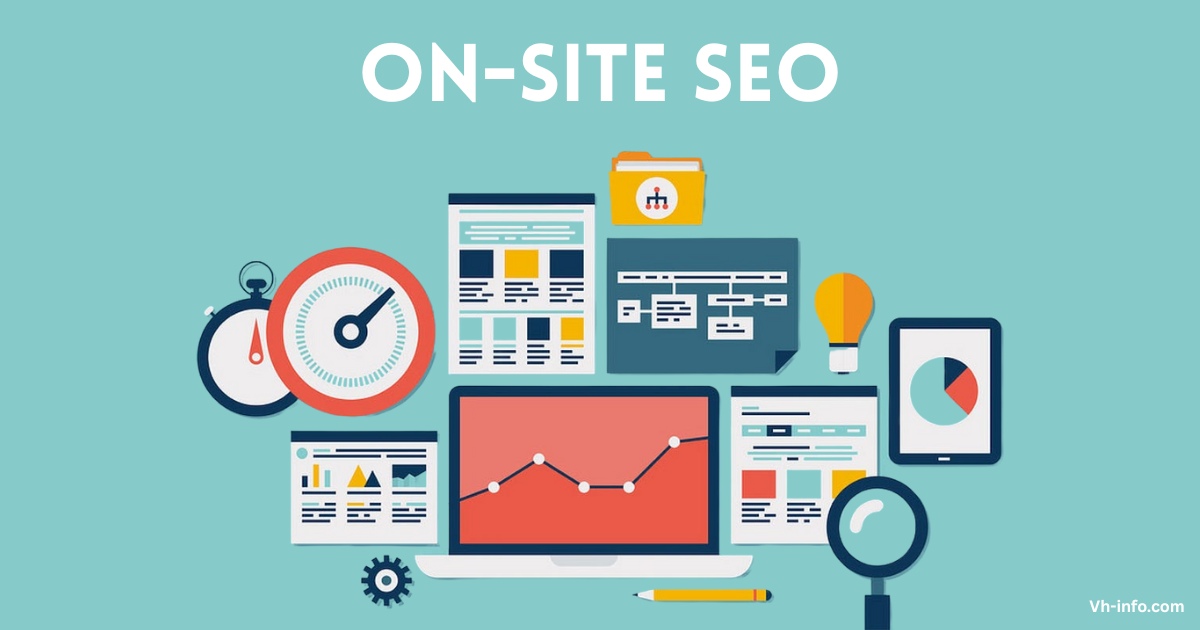
On-Site SEO: What is it, Importance, Key Elements, Best Practices

Search engine optimization (SEO) is your secret weapon for standing out online, especially if you’re running a SaaS business.

Think of on-site SEO as tuning up your website’s engine—it’s all about tweaking elements like title tags, meta descriptions, and content quality to help Google understand (and love) your pages.

While link-building grabs headlines, ignoring on-site SEO is like baking a cake without flour: it just won’t rise.

At VH-info, we’ve boosted SaaS brands by focusing on basics—mobile-friendly designs, faster page speeds, and keyword-rich headers that align with what real users search for.

This guide cuts through the jargon to show you how small tweaks to your site’s structure, internal links, and even image alt text can lead to big jumps in organic traffic and better rankings. Let’s make your website work smarter, not harder.

What is On Site SEO?

What is On Site SEO?

On-site SEO (also called on-page SEO) is the practice of optimizing elements on your website and within your HTML source code to improve search engine rankings. Unlike off-page SEO, which focuses on signals from other websites (like backlinks), on-site SEO deals with factors you can directly control on your own web pages.

On-site optimization encompasses everything from content quality and keyword placement to technical elements like site structure, URL optimization, and page speed.

The goal is to make it easier for search engines to:

  • Understand what your web page is about
  • Determine its relevance to specific search queries
  • Assess whether it provides value to users

Effective on-page optimization targets both the content users see and the backend elements search engines analyze when crawling your site. This dual focus helps create a seamless experience for both human visitors and search engine algorithms.

Importance of On Site SEO

Importance of On Site SEO

On-site SEO is vital for any website aiming to improve its online visibility and drive qualified traffic.

Search engines like Google use complex algorithms to determine which pages best answer a user’s search query, and proper on-page optimization helps these algorithms understand your content’s value and relevance.

Key reasons why on-site SEO matters:

  • Improved Search Rankings: Well-optimized pages have a better chance of ranking higher in search engine results, increasing your visibility to potential customers.
  • Enhanced User Experience: Many on-page SEO factors, like page speed and mobile-friendliness, directly impact how users interact with your site.
  • Higher Click-Through Rates: Optimized title tags and meta descriptions can significantly improve your click-through rates from search results pages.
  • Better Content Relevance: On-page SEO helps align your content with search intent, ensuring you attract visitors genuinely interested in your offerings.
  • Increased Organic Traffic: The cumulative effect of these improvements leads to more organic traffic, reducing your dependence on paid advertising.

For SaaS companies specifically, on-site SEO creates a foundation that supports all other marketing efforts, from content marketing to paid campaigns. When your pages are properly optimized, every marketing dollar stretches further.

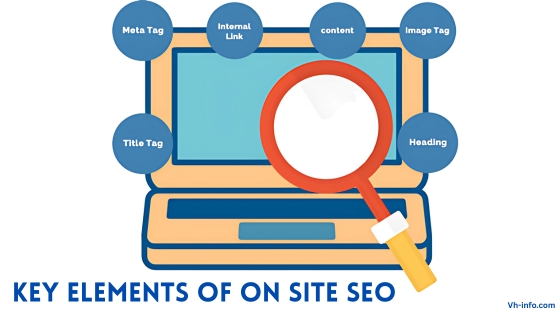
Key Elements of On Site SEO

Key Elements of On Site SEO

A good on-site SEO strategy needs several key parts.

Title Tags and Meta Descriptions

Title tags and meta descriptions are critical on-page SEO elements that appear in search engine results and significantly impact click-through rates.

Your title tag should:

  • Include your target keyword near the beginning
  • Stay under 60 characters to avoid truncation in search results
  • Be unique for each page on your site
  • Clearly describe the page’s content

The meta description, while not a direct ranking factor, serves as your page’s advertisement in search results. An effective meta description:

  • Summarizes the page content in 150-160 characters
  • Includes relevant keywords (which appear bolded in search results)
  • Contains a clear call-to-action
  • Gives users a reason to click

Both elements should be crafted with search intent in mind, addressing what users are looking for when they type a particular query.

Header Tags (H1, H2, H3)

Header tags provide structure to your content while signaling importance to search engines. They create a hierarchy that helps both users and search engines understand your content’s organization.

Best practices for header tags include:

  • Using only one H1 tag per page (typically matching or closely related to your title tag)
  • Including target keywords in H2 and H3 tags where natural
  • Creating a logical hierarchy (H1 → H2 → H3)
  • Using headers to break up text and improve readability

Header tags are particularly important for accessibility, as they help screen readers navigate content properly. Search engines also use them to determine the main topics and subtopics of your page.

URL Structure Optimization

Clean, descriptive URLs contribute to a better user experience and provide search engines with additional context about your page content.

An effective URL structure includes:

  • Short, descriptive URLs (under 60 characters when possible)
  • Keywords relevant to the page content
  • Hyphens to separate words (not underscores or spaces)
  • Avoiding parameters, session IDs, or unnecessary numbers

A well-structured URL hierarchy also helps search engines understand the relationship between different pages on your site, improving overall site architecture.

Internal Linking Strategy

Internal links connect your content and help distribute page authority throughout your site. They also help users navigate between related pages, increasing engagement and time on site.

An effective internal linking strategy:

  • Uses descriptive, keyword-rich anchor text
  • Links from high-authority pages to important content
  • Creates a logical site structure
  • Helps users find related content
  • Avoids excessive links that could appear spammy

Internal linking is particularly valuable for distributing the value of any external backlinks you receive, helping boost rankings across your entire site.

Image Optimization and Alt Text

Images enhance user engagement but can slow down your site if not properly optimized. Image optimization includes:

  • Compressing files to reduce size without sacrificing quality
  • Using descriptive, keyword-rich file names
  • Adding alt text that describes the image for accessibility and SEO
  • Implementing lazy loading for images below the fold

Alt text is especially important as it helps screen readers describe images to visually impaired users while giving search engines additional context about your content.

Effective alt text is descriptive, concise (under 125 characters), and naturally includes keywords when relevant.

Mobile-Friendliness and Page Speed

With Google’s mobile-first indexing, having a mobile-friendly website isn’t optional—it’s essential. Mobile optimization involves:

  • Responsive design that adapts to different screen sizes
  • Touch-friendly navigation elements
  • Readable text without zooming
  • Properly sized content that doesn’t require horizontal scrolling

Page speed is equally critical, affecting both rankings and user experience. Key page speed factors include:

  • Core Web Vitals metrics (Largest Contentful Paint, Cumulative Layout Shift, First Input Delay)
  • Server response time
  • Browser caching implementation
  • Image and script optimization

Google’s PageSpeed Insights tool can help identify specific areas for improvement on your site.

Common Mistakes in On Site SEO

Common Mistakes in On Site SEO

Not paying attention to the basics can make on-site SEO much less effective.

Common mistakes are easy to make.

Overstuffing Keywords

Keyword stuffing—the practice of excessively using keywords in content—can trigger search engine penalties. Instead of focusing on keyword density, prioritize creating natural, high-quality content that addresses user needs.

Signs of keyword stuffing include:

  • Unnaturally repeating phrases
  • Lists of keywords without context
  • Hidden text containing keywords
  • Content that reads awkwardly due to forced keyword insertion

Modern SEO focuses on topics rather than individual keywords, with search engines sophisticated enough to understand semantic relationships between terms.

Ignoring Mobile Optimization

Failing to optimize for mobile users significantly impacts both rankings and user experience.

Common mobile optimization mistakes include:

  • Non-responsive design
  • Touch elements are placed too close together
  • Font sizes are too small to read without zooming
  • Content wider than the screen requires horizontal scrolling
  • Intrusive interstitials that block content

With mobile traffic accounting for over half of all web traffic, these issues can severely limit your site’s effectiveness.

Neglecting Technical SEO Aspects

Many website owners focus solely on content while overlooking technical SEO elements that affect crawling and indexing.

Common technical SEO mistakes include:

  • Improper use of canonical tags
  • Missing or duplicate title tags and meta descriptions
  • Poor site architecture
  • Slow loading times
  • Broken links
  • Uncrawlable JavaScript content

A comprehensive site audit can help identify these issues before they impact your rankings.

Best Practices For On Site SEO

Best Practices For On Site SEO

Putting out good-quality content is a key part of strong on-site SEO. To do this, follow these steps below:

Conducting Keyword Research

Effective keyword research forms the foundation of successful on-site SEO. This process involves:

  • Identifying terms and phrases your target audience uses
  • Analyzing search volume and competition
  • Understanding the search intent behind keywords
  • Grouping related keywords into topics
  • Prioritizing keywords based on business goals

Tools like SEMrush, Ahrefs, or even Google’s Keyword Planner can help identify valuable keyword opportunities. At VH-info, we focus on finding relevant keywords that align with the specific needs of SaaS companies.

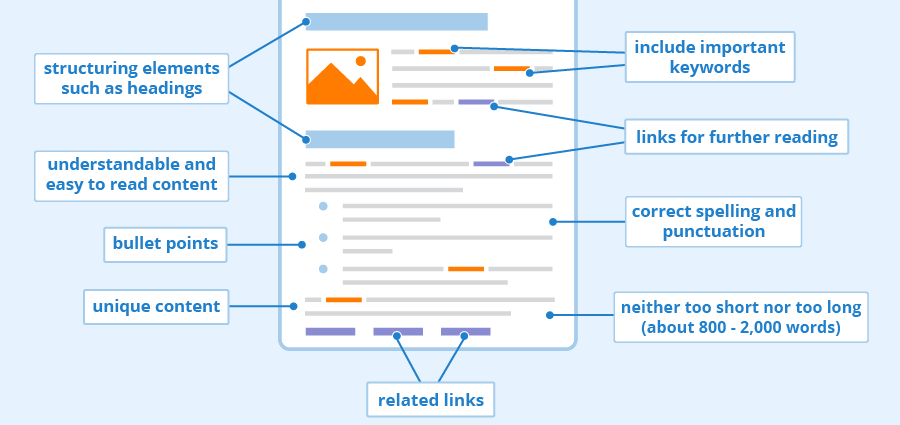
Maintaining Content Relevance and Quality

High-quality, relevant content remains the cornerstone of effective on-page SEO. Quality content:

  • Addresses the search intent behind target keywords
  • Provides comprehensive information on the topic
  • Includes supporting media (images, videos, charts) where appropriate
  • It is well-structured with clear headings and short paragraphs
  • Gets updated regularly to maintain freshness

Content should be created primarily for users, not search engines, focusing on providing value and answering questions comprehensively.

Ensuring Proper Indexing By Search Engines

For your on-page optimizations to matter, search engines need to properly crawl and index your content. Best practices include:

  • Creating and submitting an XML sitemap
  • Using robots.txt properly to guide crawlers
  • Implementing canonical tags to avoid duplicate content issues
  • Ensuring important pages aren’t blocked from crawling
  • Using Google Search Console to monitor indexation status

Regular monitoring helps identify and fix indexing issues before they impact your rankings.

Content Freshness – Why Does It Matter?

Content Freshness - Why Does It Matter?

Content freshness refers to how recently content was published or updated, and it can significantly impact rankings for certain queries. Google’s Freshness Algorithm, introduced in 2011, specifically targets time-sensitive searches.

Content freshness matters most for:

  • News and current events
  • Regularly recurring events
  • Topics that change frequently (like product reviews or industry trends)

Keeping content fresh doesn’t always mean creating new pages. Updating existing content with new information, examples, and statistics can signal to search engines that your content remains relevant and accurate.

At VH-info, we regularly audit and update our SaaS link building content to ensure it reflects current best practices and industry trends.

Tools For On Site SEO

Tools For On Site SEO

Tools for On-Site SEO are as follows:

Google Search Console

Google Search Console

Google Search Console provides valuable insights into how Google views your site and identifies potential issues affecting your performance in search results. Key features include:

  • Performance reports showing clicks, impressions, and average positions
  • Index coverage reports highlighting crawling issues
  • Mobile usability reports
  • Core Web Vitals assessment
  • Rich results testing

Regular monitoring of Search Console data helps identify and address issues before they significantly impact rankings.

Yoast SEO Plugin

Yoast SEO Plugin

For WordPress users, the Yoast SEO plugin simplifies many on-page optimization tasks. This popular tool offers:

  • Content analysis based on your target keyword
  • Readability assessment
  • Meta title and description editing
  • XML sitemap generation
  • Schema markup implementation
  • Social media preview optimization

While plugins like Yoast provide valuable guidance, they should complement rather than replace a comprehensive SEO strategy.

Screaming Frog SEO Spider

Screaming Frog SEO Spider

Screaming Frog SEO Spider is a powerful crawling tool that helps identify technical SEO issues across your site. It can:

  • Find broken links and redirect chains
  • Identify duplicate content
  • Analyze title tags and meta descriptions
  • Check for missing alt text
  • Create visualizations of your site structure
  • Audit internal linking patterns

This tool is particularly valuable for larger sites where manual checks would be impractical.

Measuring the Success of On Site SEO

Measuring the Success of On Site SEO

Looking at how well your on-site SEO works means checking a few important things.

Analyzing Organic Traffic Growth

Increased organic traffic is one of the clearest indicators of successful on-page SEO.

When analyzing traffic growth, consider:

  • Overall organic sessions
  • Traffic to specific optimized pages
  • New vs. returning visitors
  • Traffic segmented by device type
  • Geographic distribution of traffic

Look beyond raw numbers to understand whether the traffic increase correlates with your target keywords and business goals.

Tracking Keyword Rankings

Monitoring your positions for target keywords helps assess the effectiveness of your on-page optimizations.

When tracking rankings, pay attention to:

  • Position changes over time
  • Ranking distribution (how many keywords in top 3, top 10, etc.)
  • Keyword visibility in different geographic locations
  • Featured snippet and rich result appearances
  • Competitor ranking movements for the same terms

Rankings should be monitored as trends rather than absolute positions, as they can fluctuate day to day.

Monitoring Bounce Rates and Dwell Time

User engagement metrics provide insights into whether your content meets the needs of visitors coming from search engines.

Key metrics to track include:

  • Bounce rate (percentage of single-page sessions)
  • Average session duration
  • Pages per session
  • Scroll depth
  • Conversion rates from organic traffic

High engagement signals to search engines that your content satisfies user intent, potentially leading to ranking improvements over time.

Future Trends In On-Site SEO

Future Trends In On-Site SEO

The Growing Importance of User Experience (UX)

User experience signals are increasingly influencing search rankings, with Google’s Core Web Vitals now directly included into ranking algorithms. Future-focused on-page SEO will prioritize:

  • Page loading performance
  • Interactive elements that respond quickly
  • Visual stability during page load
  • Accessible design for all users
  • Intuitive navigation patterns

As search engines become more sophisticated at measuring real user experiences, technical optimization that improves UX will become even more critical.

Predictive Search and SEO: Preparing For The Next Wave

Search engines are increasingly anticipating user needs before they even complete their queries.

This shift toward predictive search affects on-page SEO by:

  • Placing greater emphasis on entities and topics rather than keywords
  • Requiring content that answers related questions
  • Prioritizing comprehensive coverage of topics
  • Rewarding structured data that helps algorithms understand content relationships

Content strategies should focus on answering the full spectrum of questions users might have about a topic.

How AI and Machine Learning Are Shaping SEO Strategies?

AI and machine learning are fundamentally changing how search engines understand content.

These technologies impact on-page SEO through:

  • More sophisticated natural language processing
  • Better understanding of content quality and depth
  • Improved ability to match content to search intent
  • Enhanced detection of manipulative SEO tactics
  • More personalized search results based on user behavior

Successful on-page SEO will increasingly focus on creating genuinely helpful content rather than trying to manipulate algorithms.

FAQ’s:

What Is the Difference Between On-Site and Off-Site SEO?

On-site SEO is about improving parts of your website that you can control.

This includes content, HTML code, and how your site is built. Off-site SEO is different. It focuses on things outside your website. This mainly involves getting links from other sites and keeping a good online reputation.

Both on-site and off-site SEO are key parts of a strong SEO plan.

How Often Should I Update My On-Site SEO?

On-site SEO is not just a one-time job. It is an ongoing process that needs care.

Key parts, like site structure and technical setup, should be checked every three months. Content should be looked at at least twice a year. This helps keep it accurate and relevant.

By using tools like Google Search Console, you can spot problems. This way, you can fix issues that need quick action.

Can On-Site SEO Improve My Site’s Load Time?

Yes, many on-site SEO methods can improve page speed. These methods include optimizing images and using browser caching. You can also minify CSS and JavaScript files. It helps to reduce server response time too. Page speed is important for ranking well and for user experience.

These changes can help with search visibility. They can also increase conversion rates.

Can I Do On-Site SEO Without Technical Expertise?

On-site SEO has some parts that need technical know-how. However, many basic updates can be done easily. Most website owners can improve content and make simple changes to meta tags. They can also work on images without any trouble.

For the harder parts of SEO, there are easy tools available, like WordPress plugins. These tools can make things simpler for you. You can also team up with SEO experts. Our team at VH-info can take care of the tricky parts for you.

Are There Any Free Tools For On-Site SEO Analysis?

Yes, there are many useful free tools for on-site SEO checks.

Google Search Console shows how Google views your site. PageSpeed Insights looks at your site speed and offers tips for better performance. Screaming Frog SEO Spider has a free option that scans up to 500 URLs. Yoast SEO provides a strong free version for WordPress sites. Google’s Mobile-Friendly Test checks if your site works well on mobile phones.

These tools can find many common on-site SEO problems without any cost.

How Do I Know If My On-Site SEO Efforts Are Working?

Successful on-site SEO leads to several clear results. These include better rankings for your target keywords. It also brings more organic traffic. You will see higher click-through rates from search results.

Engagement metrics will improve too, showing a lower bounce rate and longer time on the site. More conversions will come from the organic traffic you receive. Track these metrics over time.

Usually, this takes about 3 to 6 months. This helps you see if your changes are working well.

Conclusion

On-site SEO is the base of a strong search engine plan.

When you improve your web pages’ content, layout, and tech parts, you build a good foundation. This leads to better search visibility and a better user experience. You need to work on title tags, meta descriptions, mobile use, and page speed. These parts all help search engines understand and rate your content. The secret to good on-site SEO is mixing tech fixes with useful and relevant content that helps users.

At VH-info, we have seen how smart on-site SEO can change SaaS companies’ online views.

Implementing the strategies in this guide can improve your rankings and increase traffic, leading to more business leads. Remember that SEO is not merely a one-off task; it requires continuous efforts in fixing, testing, and adjusting.

As search rules change and user habits shift, your on-site SEO plan needs to change too. Start with the basics here, check your results, and keep working to improve based on what you find out.

For SaaS companies wanting to boost their on-site SEO even more, our team at VH-info has special SEO services for software firms. Reach out today to see how we can help make your website more visible and bring in more organic traffic.

MSP Marketing: Meaning, Importance, Key Components & Tactics

Running an MSP business today? You’re not alone—thousands of providers compete for the same clients. Standing out requires more than great IT services. That’s where MSP marketing shines.

This guide cuts through the noise to show how strategic marketing efforts—like SEO, content marketing, and social media—can boost your online presence, attract qualified leads, and turn prospects into new customers.

Whether you’re refining your marketing plan or starting fresh, we’ll break down tactics to align with your target audience’s needs, from lead generation to closing deals. Let’s transform how you connect with businesses needing your expertise.

What Is MSP Marketing?

What Is MSP Marketing?

MSP marketing encompasses all activities aimed at promoting managed service provider businesses and their IT services to target audiences. It involves creating awareness, demonstrating expertise, and positioning your MSP business as the ideal solution for specific client needs.

Unlike generic marketing, MSP marketing focuses specifically on highlighting technical capabilities, security expertise, and business continuity solutions that appeal to organizations seeking technology support.

Effective MSP marketing combines multiple marketing channels including SEO, content marketing, social media marketing, and email campaigns to reach potential customers at various stages of their buyer’s journey.

The ultimate goal is to create a marketing message that resonates with business owners who need managed services, converting them from prospects into qualified leads and, eventually, new customers.

What Is The Difference Between MSP Sales and MSP Marketing?

What Is The Difference Between MSP Sales and MSP Marketing?

MSP marketing and MSP sales are often mixed up. However, they have different jobs that help a business grow. Marketing helps to create interest and awareness. It provides chances for the sales team to turn interest into money.

MSP marketing works on building brand awareness. It creates good content, improves search engine results, and nurtures leads. The goal is to reach your audience with messages that show your services in a good light.

On the other hand, the MSP sales process involves talking directly with leads. This means understanding their problems and giving them tailored solutions. The sales team guides them through the steps needed to close deals.

The sales team uses marketing work to connect with people who are already interested in your MSP services. A successful MSP business needs both strong marketing and an effective sales process working together.

Marketing brings leads at the top of the sales funnel, while the sales team turns those leads into paying customers.

Why Do You Need MSP Marketing?

Why Do You Need MSP Marketing?

In today’s competitive landscape, MSP marketing is essential for several compelling reasons:

  • First, it builds visibility in a crowded marketplace. Without strategic marketing efforts, even the most capable MSP will struggle to stand out among competitors. Effective marketing places your business at the top of search results when potential customers look for IT services.
  • Second, MSP marketing establishes credibility and expertise through content marketing, social media presence, and thought leadership. This positions your business as a trusted service provider rather than just another vendor.
  • Third, it creates a consistent flow of new leads. Rather than relying solely on referrals or cold outreach, strategic marketing generates inbound leads from potential customers actively seeking the solutions you provide.
  • Fourth, marketing helps articulate your unique selling proposition (USP), clarifying why clients should choose your MSP over others. This differentiation is important in a market where services often appear similar to prospective clients.
  • Finally, effective marketing shortens the sales cycle by educating prospects before they engage with your sales team, making conversations more productive and increasing conversion rates for qualified leads.

Important MSP Marketing Phrases You Should Know

Important MSP Marketing Phrases You Should Know

  1. MSP Email Marketing: Email marketing for MSPs means making targeted email campaigns. These campaigns help to engage leads, share useful content, and promote services. Email is a strong way to connect with both new and current clients.
  2. Leads: Leads are people who might buy your MSP services. They are the base of your marketing work and sales plan. Leads can be seen as marketing qualified leads (MQLs) or sales qualified leads (SQLs) based on their buying readiness.
  3. Call-To-Action (CTA): A call-to-action encourages website visitors to take steps in their buying journey. This could mean signing up for a trial, booking a meeting, or downloading a paper. Good CTAs are key to turning website visits into real leads.
  4. Conversion Rate Optimization (CRO): CRO is about improving your website and marketing materials. The goal is to raise the number of visitors who take actions you want. For MSPs, this means getting more visitors to become leads and customers.
  5. Key Performance Indicators (KPIs): KPIs are ways to measure how well your MSP meets its marketing goals. Common KPIs include website visits, lead rates, email opens, and costs for gaining new customers.
  6. Customer Relationship Management (CRM): A CRM tool helps keep track of talks with potential buyers and clients during sales and after. It helps your teams work together better and keeps detailed records of customer contacts.
  7. Service Level Agreement (SLA): SLAs are mainly about operations but impact marketing too. They set the quality and range of service provided. Marketing uses SLA terms as selling points to show trust and dependability.
  8. Unique Selling Proposition (USP): Your USP explains what makes your MSP stand out from others. It is the heart of your marketing message and should tackle the

Key Components Of MSP Marketing

Key Components Of MSP Marketing

Content Marketing For MSPs

Content marketing involves creating and distributing valuable, relevant content to attract and engage a target audience.

For MSPs, this includes technical blog posts, case studies, whitepapers, and guides that demonstrate expertise and address common pain points. Effective content marketing establishes your MSP as a thought leader while improving your search engine results.

SEO For MSPs

Search engine optimization ensures your MSP website appears prominently in organic search engine results when potential customers search for IT services. This involves optimizing web pages with relevant keywords, building quality backlinks, and creating valuable content that answers your target audience’s questions.

Ranking well in Google search results is important for MSPs looking to generate new business opportunities.

Social Media Marketing For MSPs

Social media platforms offer MSPs ways to build brand awareness, share content, and engage with potential customers.

LinkedIn is particularly valuable for MSPs targeting business owners and IT decision-makers. An effective social media marketing strategy includes regular posting, engagement with industry conversations, and promotion of your MSP services and expertise.

Email Marketing For MSPs

Email remains one of the most direct and effective marketing channels for MSPs.

Strategic email campaigns can nurture leads through the sales funnel by providing valuable information, promoting new services, sharing case studies, and offering limited-time promotions.

Segment your email lists to deliver targeted messages based on industry, company size, or position in the buyer’s journey.

Creating A Content Marketing Strategy For MSPs

Creating A Content Marketing Strategy For MSPs

Target Industry and MSP Content Alignment

Successful MSP marketing requires tailoring your content to specific industries you serve.

When your blog posts, case studies, and other marketing materials address the unique challenges of particular sectors, they resonate more deeply with potential customers in those industries.

For example, content for healthcare clients should address HIPAA compliance, while manufacturing clients might be more concerned with operational uptime.

Content Marketing Client Journey

Content marketing should guide prospects through the buyer’s journey from awareness to decision.

  • At the awareness stage, educational blog posts help potential customers identify their challenges.
  • In the consideration stage, comparison guides and case studies demonstrate solutions.
  • In the decision stage, specific service descriptions and testimonials help convert leads into customers.

Mapping content to each stage ensures you’re supporting prospects throughout their journey.

Generating Leads With MSP SEO

Generating Leads With MSP SEO

Effective SEO is important for MSPs looking to generate quality leads.

Begin by conducting keyword research focused on terms your target audience uses when searching for IT services. Include these keywords naturally throughout your website, particularly on service pages and in blog posts.

Local SEO is especially important for MSPs serving specific geographic areas. Optimize your Google Business Profile, encourage client reviews, and ensure consistent NAP (Name, Address, Phone) information across all online directories.

Technical SEO factors like page speed, mobile responsiveness, and secure connections (HTTPS) also impact your rankings. Regular SEO audits help identify opportunities for improvement and ensure your MSP website remains competitive in search engine results.

Content creation should be a cornerstone of your SEO strategy. Publishing regular, in-depth articles about managed services topics helps establish authority while creating more opportunities to rank for relevant search terms.

Optimizing Your MSP Website’s Web Pages

Optimizing Your MSP Website's Web Pages

Your MSP website is the main part of your online marketing plan. Each page must be easy for search engines and people to use. Start with a nice website design that shows your brand well.

This will help build trust with potential clients. Service pages should explain what you offer clearly. Focus on the specific benefits that clients will get. Every page needs clear calls-to-action.

These should guide visitors to contact your team, set up a meeting, or ask for a quote. Page load speed is very important for user satisfaction and search results. To make loading faster, compress images and use browser caching.

Also, cut down on extra code. Make special landing pages for certain marketing campaigns or services you offer. These pages should focus on one thing and have few navigation choices to boost conversion rates from email marketing or Google Ads. It is also key that your website works well on mobile devices. Many business owners look for service providers on their phones. Test your site on different devices and browsers to check how it looks and works.

What Is in an MSP Marketing Plan?

What Is in an MSP Marketing Plan?

A comprehensive MSP marketing plan includes several key components:

  1. Market analysis identifying your target audience, competition, and market opportunities
  2. Clearly defined marketing objectives aligned with business goals
  3. Budget allocation across various marketing channels
  4. Content calendar outlining blog posts, social media content, and email campaigns
  5. Lead generation strategies specifying how you’ll attract potential customers
  6. Conversion optimization plans for turning website visitors into leads
  7. Defined KPIs and measurement methods to track marketing effectiveness
  8. Timeline for implementation with specific milestones and responsibilities

Your marketing plan should balance short-term lead generation activities with long-term brand building efforts. Review and adjust the plan quarterly based on performance data and changing market conditions.

What Are The Marketing Tactics Available To MSPs?

What Are The Marketing Tactics Available To MSPs?

MSPs have many marketing tools they can use. Digital marketing methods include search engine optimization and pay-per-click ads on Google. They also use social media marketing on sites like LinkedIn and Twitter.

Content marketing includes blog posts and free resources that people can download.

Email marketing works well for keeping in touch with leads and current clients. It is important to divide your lists and tailor content to the traits of the recipients.

Video marketing is becoming more important too. It helps explain hard IT ideas and shows services clearly. You might think about making explainer videos, client reviews, and how-to guides.

Old-school marketing ways like direct mail, print ads, and trade shows can work well with digital methods. This is especially true when you focus on local areas or specific industries.

Referral programs use happy customers to find new business. Set up these programs with rewards and clear steps to follow.

The best MSPs usually use a mix of marketing tactics together. This way, they keep their message the same across all channels while also using each one’s strengths effectively.

The Cold, Hard Truth About MSP Marketing Scope

The Cold, Hard Truth About MSP Marketing Scope

Effective MSP marketing needs a lot of time, skill, and money. Many MSP owners do not see what is needed for real success. Here’s the truth: Results take time to appear. SEO and content marketing often need 6-12 months before they show good results.

There are no quick wins in MSP marketing.

Quality is more important than quantity. One good, focused marketing campaign will do better than many weak ones.

Marketing is not just a one-time job; it is an ongoing task that needs regular focus and resources. Irregular marketing work gives mixed results. The MSP marketing world is very competitive, especially online.

To stand out, you need both creativity and hard work. Most successful MSPs either hire a marketing team or work with experts who know how to market IT services well.

Future Trends in MSP Marketing

Future Trends in MSP Marketing

The Rise Of AI and Machine Learning

Artificial intelligence and machine learning are transforming MSP marketing. AI-powered tools now help optimize marketing campaigns, personalize content at scale, and identify patterns in prospect behavior.

Marketing automation platforms increasingly use these technologies to improve lead scoring, content recommendations, and customer journey mapping. Forward-thinking MSPs are already including these capabilities in their marketing efforts.

The Importance Of Cybersecurity In Marketing

As cybersecurity becomes a primary concern for businesses of all sizes, MSP marketing increasingly emphasizes security expertise. Marketing materials now highlight security certifications, compliance capabilities, and protection services.

Case studies demonstrating successful security implementations are particularly valuable marketing assets. MSPs that effectively communicate their cybersecurity value proposition gain significant competitive advantage in the marketplace.

FAQ’s:

How Much Does MSP Marketing Cost?

MSP marketing costs vary widely based on scope, markets, and objectives.

Monthly investments typically range from $2,000 for basic efforts to $10,000+ for comprehensive campaigns. Digital marketing costs include website maintenance, content creation, SEO services, and paid advertising.

The most effective approach is establishing a realistic budget based on your growth goals and market opportunity.

Are There Contracts Or Terms?

Most MSP marketing services require contracts, typically ranging from 6-12 months. This commitment allows for proper strategy implementation and meaningful results measurement.

Month-to-month options exist but may cost more and limit strategic planning. Always clarify contract terms, cancellation policies, and deliverables before engaging marketing services.

Do You Offer Inbound Or Outbound MSP Marketing?

A balanced approach combining both inbound and outbound marketing typically yields the best results. Inbound marketing (content, SEO, social media) builds long-term authority, while outbound methods (email campaigns, direct mail) generate immediate opportunities.

The optimal mix depends on your specific business goals, target market, and timeline for results.

Do I Need To Hire A Marketing Person Just To Manage You?

While having an internal marketing coordinator can improve results, it’s not always necessary. Many marketing services providers offer account management as part of their service.

The best arrangement depends on your MSP’s size, internal resources, and marketing scope. Clear communication channels and regular reporting are essential regardless of structure.

Am I Guaranteed Results With My MSP Marketing?

No ethical marketing provider can guarantee specific results due to numerous external factors affecting outcomes.

However, reputable providers establish clear KPIs, provide transparent reporting, and continuously optimize campaigns based on performance data. Focus on partners with proven track records in the MSP space rather than those promising specific guarantees.

Do You Provide Custom Content Or Syndicated (Canned) Content?

Custom content tailored to your specific audience and services almost always outperforms syndicated content. While syndicated content is more affordable, it rarely differentiates your MSP from competitors who may use the same material.

The best approach often combines mostly custom content with selective use of high-quality syndicated resources.

Do You Offer Custom Website Design Services For MSPs?

Many MSP marketing firms provide custom website design services tailored to IT service providers.

These specialized designs include industry best practices for conversion optimization while highlighting your unique services. When evaluating providers, review their MSP website portfolio and confirm they offer ongoing optimization, not just initial design.

How Can MSPs Stand Out In A Competitive Market?

Differentiation comes from identifying and communicating your unique strengths.

Focus marketing efforts on specific industries or technical specialties where you excel. Develop a clear value proposition addressing particular pain points of your target audience.

Consistent messaging across all marketing channels reinforces your position. Client testimonials and case studies demonstrating specific outcomes provide powerful social proof.

Conclusion

Effective MSP marketing needs good planning and regular work. It also needs ongoing improvement.

By using the steps in this guide, MSPs can boost their online presence. They can also get quality leads and grow their business faster. The best managed service providers see marketing as an important part of their work. They know it needs the right resources and skills. Whether they build their own team or hire experts, good marketing brings benefits. It leads to a stronger sales path and a better market place.

It’s important to remember that success in marketing takes time. It comes from steady, smart work that matches your business goals. Start with clear aims and use the best marketing methods for your audience. Keep track of your results and adjust your plans as needed.

For MSPs who want to improve their marketing and get more quality leads, VH Info offers special help and support. Our team knows the unique challenges of MSP marketing well. We can help you create plans that match your specific business goals.

Domain Rating (DR): Your #1 Guide To Build Good Website Authority

Domain rating stands as a key metric in the SEO world that measures the strength and authority of your website.

As search engines continue to refine their algorithms, understanding domain rating has become essential for anyone looking to improve their website’s visibility in search results. For SaaS companies particularly, a strong domain rating can mean the difference between getting found by potential customers or getting lost in the digital noise.

At VH-info, we’ve helped numerous SaaS brands improve their domain rating through strategic link building services. We’ve seen firsthand how improved domain rating correlates with better search engine rankings, increased organic traffic, and ultimately, more conversions.

What is Domain Rating (DR)?

What is Domain Rating (DR)?

Domain Rating (DR) is an SEO metric developed by Ahrefs that measures the strength of a website’s backlink profile on a scale from 0 to 100. In simple terms, it indicates how authoritative your website appears to search engines based on the quality and quantity of websites linking to yours.

The higher your domain rating, the stronger your website’s backlink profile is considered to be. This metric takes into account the number of unique domains linking to your site, as well as the quality of those external links.

Domain rating serves as a reliable indicator of a website’s ability to rank in search engine result pages (SERPs). While it’s not directly a Google ranking factor, it correlates strongly with websites that perform well in search results.

For SaaS companies, domain rating is particularly valuable as it helps quantify your website’s authority compared to competitors in your niche. At VH-info, we’ve observed that SaaS websites with higher domain ratings typically achieve better keyword rankings and attract more organic traffic.

Why Does Domain Rating Matter In SEO?

Domain rating matters significantly in SEO for several reasons that directly impact your website’s performance in search results:

  1. Stronger Ranking Potential: Websites with higher domain ratings generally have an easier time ranking for competitive keywords. While domain rating itself isn’t a direct Google ranking factor, the quality backlinks that contribute to a high DR are valued by search engines.
  2. Increased Trust: A high domain rating signals to both users and search engines that your website is trustworthy and authoritative. This increased trust can lead to better user experience metrics, which do influence your SEO performance.
  3. Better Link Equity Distribution: When you have a high domain rating, any internal links you create distribute more “link equity” throughout your site, helping more of your pages rank well.
  4. Competitive Advantage: In competitive SaaS markets, domain rating often separates top-performing websites from the rest. When two pieces of content are equally valuable, search engines typically favor the one from the site with stronger overall authority.
  5. Faster Indexing: Search engines tend to crawl high-authority websites more frequently, meaning your new content gets indexed and ranked faster.

At VH-info, our SaaS link building services focus heavily on improving domain rating because we’ve seen the direct impact it has on search traffic. When we help clients increase their domain rating, we consistently observe corresponding improvements in their organic visibility and keyword rankings.

How Does Domain Rating Work?

How Does Domain Rating Work?

Domain rating works on a logarithmic scale, which means that increasing your score becomes progressively more difficult as you move up the scale. Moving from DR 10 to DR 20 requires fewer quality backlinks than moving from DR 60 to DR 70.

The system considers several factors when calculating domain rating:

  1. Quality of Backlinks: Links from websites with high domain ratings pass more authority than links from low-rated sites.
  2. Number of Unique Referring Domains: Domain rating values the number of different websites linking to you more than the total number of links. Ten links from ten different websites will typically boost your domain rating more than 100 links from a single website.
  3. Relevance of Linking Domains: Links from websites in similar industries or niches tend to carry more weight for your domain rating.
  4. Link Attributes: Follow vs. nofollow links are evaluated differently, with followed links passing more authority to your domain rating.
  5. Link Profile Diversity: A natural mix of link types from various sources contributes to a healthier domain rating growth.

The algorithm behind domain rating continually evolves, using machine learning to better assess the quality and relevance of backlinks. This ensures that the domain rating remains a meaningful reflection of a website’s authority in the eyes of search engines.

For SaaS companies, understanding how domain rating works helps inform more effective link building strategies. At VH-info, we focus on acquiring links from relevant, high-authority domains to maximize the impact on our clients’ domain ratings.

What Is A Good Domain Rating?

What Is A Good Domain Rating?

Determining what constitutes a “good” domain rating is a relative term that depends largely on your industry, competitors, and business goals.

However, we can provide some general guidelines:

  • DR 0-20: Typical for new or small websites with few backlinks
  • DR 21-40: Average for established small to medium businesses
  • DR 41-60: Strong rating indicating significant authority
  • DR 61-80: Excellent rating achieved by well-established websites with robust backlink profiles
  • DR 81-100: Elite level typically reserved for major brands and authoritative institutions

Rather than fixating on reaching a specific domain rating number, the more practical approach is to benchmark against your direct competitors. If the top-ranking websites in your SaaS niche have domain ratings between 40-50, then your goal should be to reach and exceed that range.

For context, most successful SaaS companies maintain domain ratings between 30-70, depending on their size and market presence.

Major players like Salesforce or HubSpot have ratings in the 80+ range, while newer SaaS startups might operate effectively with ratings in the 20-40 range.

At VH-info, we help our SaaS clients establish realistic domain rating goals based on competitive analysis. We focus on steady, sustainable growth rather than quick spikes that might trigger algorithmic penalties.

How Is Domain Rating Calculated?

How Is Domain Rating Calculated?

Domain rating calculation involves a complex algorithm that assesses multiple aspects of your website’s backlink profile. While the exact formula used by Ahrefs remains proprietary, we can outline the key factors that influence the calculation:

  1. Backlink Quality: The domain rating of websites linking to yours significantly impacts your score. A few links from websites with high domain ratings can have more impact than many links from low-rated sites.
  2. Link Quantity From Unique Domains: The algorithm places more emphasis on the number of unique referring domains than the total number of links. This prevents manipulation through excessive linking from a single source.
  3. Link Relevance: Links from websites in your industry or niche carry more weight in the calculation.
  4. Link Attributes: The calculation distinguishes between follow links (which pass authority) and nofollow links (which generally don’t).
  5. Outbound Links: How many external sites the linking domain connects to affects how much authority passes to you. A site that links to hundreds of external sites passes less authority per link than one that links selectively.

The domain rating calculation also employs normalization techniques to create a 0-100 scale.

This logarithmic scale makes it increasingly difficult to move up as your score improves. The difference in backlink quality needed to move from DR 10 to DR 20 is much less than moving from DR 70 to DR 80.
It’s worth noting that domain rating calculations are periodically updated by Ahrefs, so scores may fluctuate when their algorithm is refined. This doesn’t necessarily reflect changes in your website’s actual authority in the eyes of search engines.

How To Improve Your Domain Rating (i.e., “Authority” Score)

How To Improve Your Domain Rating (i.e., Authority Score)?

Improving your domain rating requires a strategic approach to building quality backlinks and enhancing your overall SEO performance.

Here are effective strategies to boost your website’s authority score:

  1. Focus On Quality Over Quantity: Earning one link from a high-authority website in your niche is often more valuable than dozens of links from low-quality sources. At VH-info, we prioritize acquiring links from websites with strong domain ratings themselves.
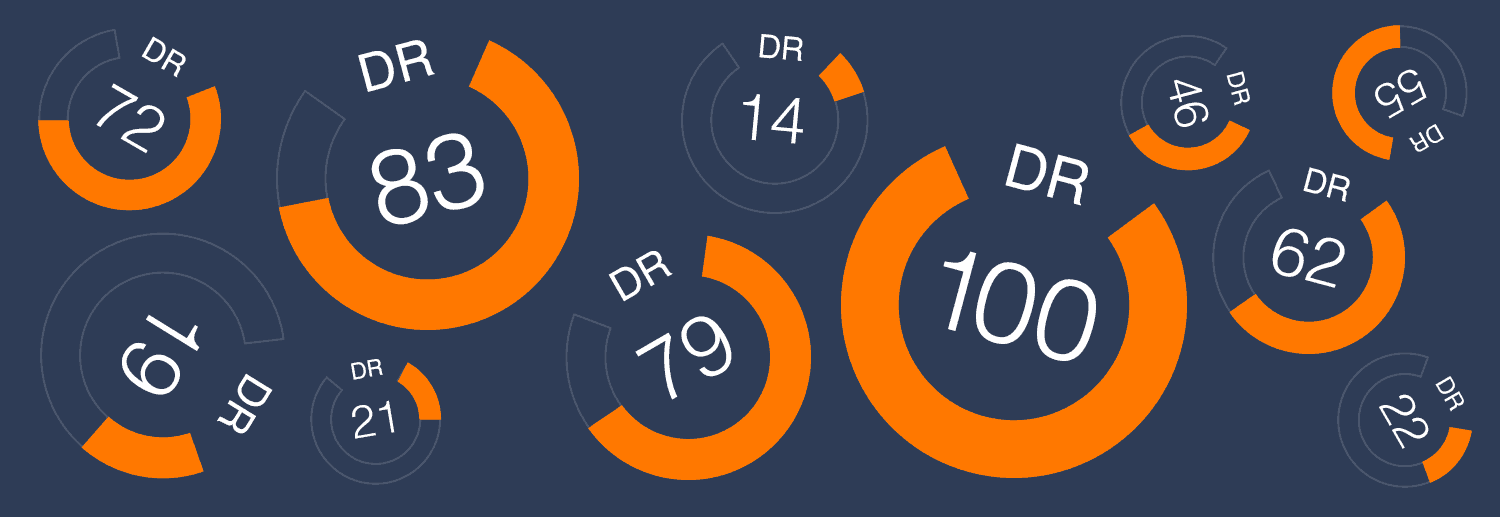
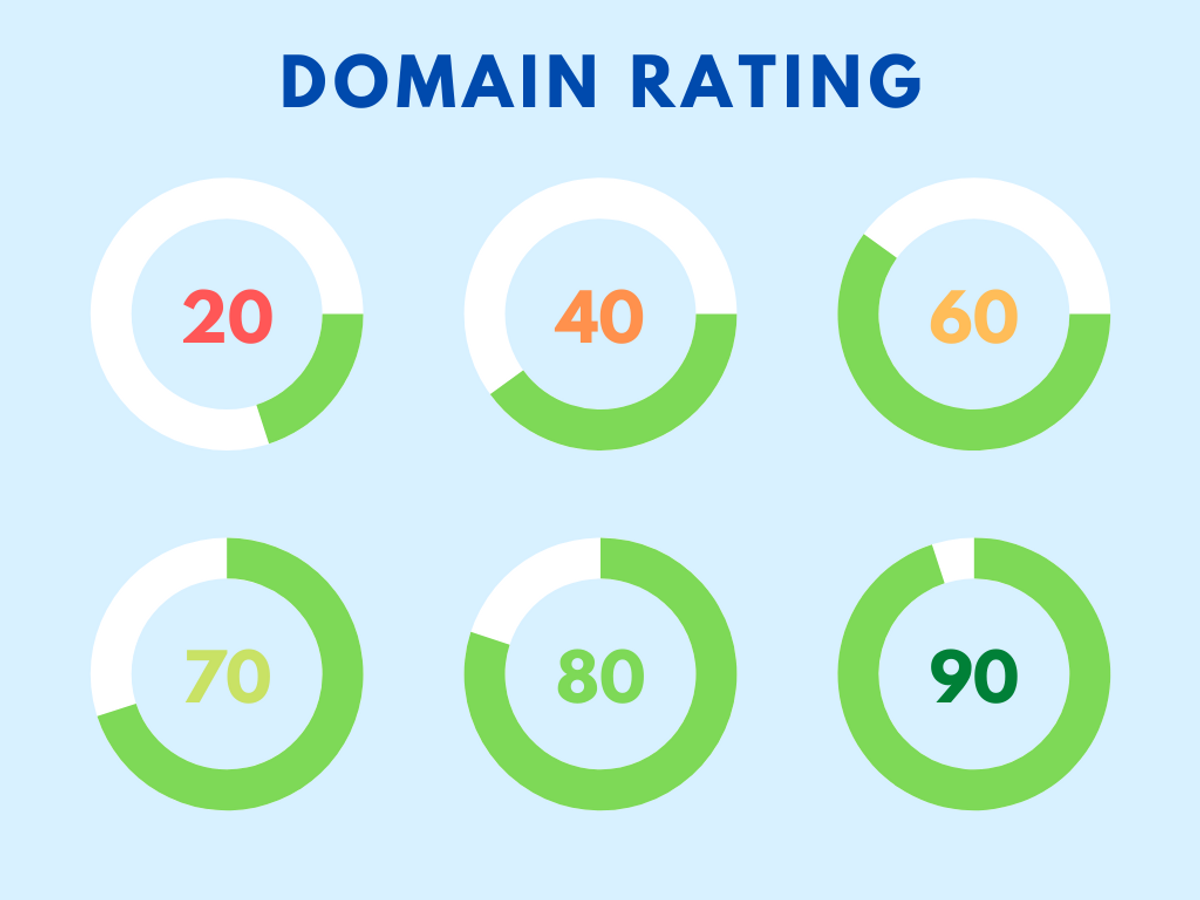
  2. Create Linkable Assets: Develop high-quality content that naturally attracts backlinks. This includes original research, comprehensive guides, unique data visualizations, and tools that provide value to your audience.
  3. Guest Posting On Authoritative Sites: Contributing valuable content to reputable sites in your industry helps build quality backlinks while establishing your expertise. Ensure your guest posts are substantive and relevant to maximize their impact on your domain rating.
  4. Build Relationships With Industry Influencers: Networking with thought leaders can lead to natural link opportunities. Engage authentically through social media, events, and collaborative projects.
  5. Reclaim Lost Or Broken Backlinks: Monitor your backlink profile regularly and reach out to website owners who have removed links to your site or have broken links pointing to your domain.
  6. Optimize Internal Linking: While external links have the most direct impact on domain rating, a strong internal linking strategy helps distribute link equity throughout your site, improving the overall strength of your domain.
  7. Remove Toxic Backlinks: Disavow links from spammy or low-quality websites that could potentially harm your domain rating.
  8. Improve Your Content Quality: Search engines and website owners are more likely to link to high-quality, authoritative content. Regularly update your existing content to maintain its relevance and value.
  9. Promote Your Content Strategically: Share your content through appropriate channels to increase its visibility and likelihood of attracting natural backlinks.
  10. Monitor and Adapt Your Strategy: Use SEO tools to track changes in your domain rating and adjust your approach based on what’s working best for your specific situation.

At VH-info, we’ve helped numerous SaaS companies implement these strategies to significantly improve their domain rating over time. Our approach combines technical expertise with content marketing to build natural, high-quality backlink profiles that boost domain authority sustainably.

How To Use “Website Authority”?

How To Use Website Authority?

Understanding and using your website’s authority effectively can give you significant advantages in your SEO strategy.

Here’s how to make the most of your domain rating:

Benchmarking Against Your Competitors

One of the most practical uses of domain rating is comparing your website’s authority to that of your competitors.

This comparison provides valuable context and helps set realistic goals:

  • Identify Your Main Competitors: Create a list of websites that compete directly with yours for the same keywords and audience.
  • Analyze Their Domain Ratings: Use SEO tools to check the domain ratings of each competitor.
  • Identify Authority Gaps: Determine how far ahead or behind you are compared to industry averages and top performers.
  • Set Strategic Goals: Based on this analysis, establish realistic targets for improving your domain rating.
  • Study Successful Competitors: Examine the backlink profiles of higher-rated competitors to identify potential link opportunities and content strategies that might work for your site.

This benchmarking exercise helps you understand what’s possible in your niche and provides a roadmap for improvement. At VH-info, we conduct these competitive analyses for our SaaS clients to develop tailored link building strategies that close authority gaps efficiently.

Vetting Link Prospects

Domain rating serves as an excellent filter when evaluating potential websites for your link building efforts:

  • Prioritize Prospects By Authority: Focus your outreach efforts on websites with higher domain ratings to maximize the impact of each new backlink.
  • Balance Authority With Relevance: A moderately rated website in your exact niche often provides more value than a high-rated site with minimal topical relevance.
  • Identify Authority Thresholds: Set minimum domain rating requirements for your link building campaigns based on your current authority level and goals.
  • Evaluate Link Value: Use domain rating to assess whether a particular link opportunity is worth the resources required to secure it.
  • Track Authority Trends: Monitor how a prospect’s domain rating changes over time to identify rising sites worth building relationships with early.

By using domain rating to vet potential link sources, you can allocate your resources more effectively and focus on opportunities with the greatest potential impact on your own website’s authority.

How To Check Domain Rating/Authority (3 Methods)

How To Check Domain Rating/Authority?

Regularly monitoring your domain rating helps you track progress and make informed decisions about your SEO strategy.

Here are three reliable methods to check your website’s authority:

Loganix DA Checker

Loganix offers a user-friendly domain authority checker that provides quick insights into your website’s authority:

  • Easy Access: Their free tool requires no account creation for basic checks.
  • Multiple Metrics: Beyond domain authority, it provides additional useful SEO metrics.
  • Bulk Checking: You can check multiple domains simultaneously, making competitor analysis efficient.
  • Historical Data: Some versions of the tool allow you to track changes in your domain authority over time.

The Loganix tool uses Moz’s domain authority metric, which works on a similar 0-100 scale as domain rating but employs a different calculation methodology.

Ahrefs Website Authority Checker

As the creator of the domain rating metric, Ahrefs offers the most accurate tool for checking your DR:

  • Official Source: This is the definitive tool for domain rating as it’s calculated directly by Ahrefs.
  • Comprehensive Data: Beyond domain rating, it provides information about referring domains, backlinks, and organic traffic.
  • Detailed Insights: The free version gives basic information, while the paid version offers deep analysis of your backlink profile.
  • Regular Updates: Ahrefs frequently updates its database, ensuring you get current information.

The Ahrefs Website Authority Checker is available in both free (with limitations) and paid versions, with the latter providing more detailed insights and historical data.

Moz Domain SEO Analysis Tool

Moz pioneered the concept of domain authority and offers a robust tool for analyzing your website’s strength:

  • Domain Authority (DA) Metric: While not the same as domain rating, Moz’s DA is another respected measure of website authority.
  • Spam Score Analysis: Moz uniquely provides a spam score that helps identify potentially toxic links.
  • Link Explorer Integration: The tool connects with Moz’s Link Explorer for deeper backlink analysis.
  • Keyword Rankings Integration: Some versions of the tool allow you to see how authority correlates with keyword performance.

Moz’s tool is particularly valuable for analyzing how your site might be viewed by search engines and identifying potential issues that could be holding back your authority growth.

At VH-info, we regularly use all three of these tools to provide our clients with a comprehensive view of their website’s authority. Each offers unique insights that, when combined, give you a more complete understanding of your domain’s strength.

Common Misconceptions About Domain Rating

Common Misconceptions About Domain Rating

Despite its importance in SEO, domain rating is often misunderstood.

Let’s clarify some common misconceptions:

  1. Domain Rating is a Direct Google Ranking Factor: While domain rating correlates with search rankings, Google doesn’t directly use Ahrefs’ metric in its algorithm. Instead, Google has complex systems for evaluating site authority, which domain rating attempts to approximate.
  2. Higher is Always Better: While a higher domain rating generally indicates a stronger site, context matters. A DR 40 site with highly relevant content and backlinks might outperform a DR 60 site with less relevant signals for specific keywords.
  3. Quick Increases Are Possible: Due to its logarithmic scale, domain rating typically improves gradually. Sudden large jumps are rare and might indicate artificial manipulation that could lead to penalties.
  4. All Backlinks Increase Domain Rating: Low-quality or spammy backlinks can harm your domain rating and SEO performance. Quality matters more than quantity.
  5. Domain Rating is the Same as Page Authority: Domain rating measures the strength of your entire domain, while page authority (or URL Rating in Ahrefs) measures individual pages. A site can have a high domain rating but still have pages with low page authority.
  6. You Need Thousands of Backlinks For a Good Score: Some sites achieve respectable domain ratings with relatively few, but extremely high-quality, backlinks. It’s about the authority of the linking sites, not just numbers.
  7. Domain Rating Perfectly Predicts Rankings: While there’s a correlation, many other factors influence rankings, including content quality, user experience, and technical SEO aspects.
  8. All SEO Tools Measure Authority The Same Way: Different tools use different methodologies. Ahrefs’ domain rating is not identical to Moz’s domain authority or Semrush’s authority score.

Understanding these nuances helps you approach domain rating more strategically. At VH-info, we educate our clients about these misconceptions to set realistic expectations and develop more effective SEO strategies.

Our Top Tips For Improving Your Domain Rating

Our Top Tips For Improving Your Domain Rating

If you want to increase your website’s authority, there are many steps you can take. These steps can be big or small, but all can help. You should focus on things like creating content and improving technical aspects. A variety of strategies is important.

Here are some helpful tips to begin:

  1. Create Your Own Research and Data: Publishing original research or unique data is a great way to attract quality backlinks. For example, you could conduct surveys, analyze industry trends, or share performance metrics that others in your field will find valuable. Websites often link to such content as a trusted source, improving your backlink profile and increasing your domain rating.
  2. Rank Organically For Data-Based Keywords: Targeting data-focused keywords like “SEO statistics” or “content marketing metrics” can help you rank higher in search engine results. Create detailed blog posts or reports around these terms and include relevant content that adds value. Ranking for such keywords not only drives organic traffic but also attracts inbound links from other reputable sites.
  3. Get Links From Easy Sources: Start by securing backlinks from straightforward sources like business directories, partner websites, or industry associations. For example, listing your SaaS business in software directories or collaborating with integration partners can help build your link profile. These easy wins contribute to a higher domain authority score over time.
  4. Create A Community Of Writers: Encourage guest writers or industry experts to contribute to your blog. This not only diversifies your content but also increases the chances of earning backlinks when contributors share their articles on social media or their websites. Building relationships with writers strengthens your overall link-building efforts.
  5. Improve Your Existing Content: Audit your current blog posts and web pages to ensure they provide relevant content and align with SEO best practices. Update outdated information, add new insights, and optimize for keyword rankings. High-quality content is more likely to attract backlinks from similar sites, boosting your website’s authority.
  6. Look At Your Technical SEO: Technical SEO issues can hold back your domain rating growth. Fix broken links, improve page load speed, and ensure mobile-friendliness to enhance user experience. A technically sound website is more likely to rank higher in Google search results and attract quality backlinks.
  7. Implement An Internal Linking Strategy: Internal links help distribute link equity across your site and improve the strength of individual web pages. Use descriptive anchor text to connect related pages within your site. For example, link blog posts about “SEO tools” to related pages about “keyword research” or “content strategy.” This not only improves navigation but also strengthens the overall authority of your website.

Domain Rating Vs. Domain Authority: What’s The Difference?

Domain Rating Vs. Domain Authority What’s The Difference?

Domain Rating (DR) and Domain Authority (DA) are similar metrics created by different SEO tools to measure website authority.

Understanding their differences helps you interpret SEO data more accurately:

Origin and Calculation:

  • Domain Rating (DR): Developed by Ahrefs, using their own proprietary algorithm and link database.
  • Domain Authority (DA): Created by Moz, using a different methodology and database of links.

Scale and Updates:

  • Both metrics use a 0-100 logarithmic scale
  • Ahrefs typically updates Domain Rating more frequently than Moz updates Domain Authority

Focus Areas:

  • Domain Rating: Places greater emphasis on the number and quality of unique referring domains
  • Domain Authority: Includes additional factors beyond backlinks, including on-page elements and perceived spam factors

Correlation With Rankings:

  • Domain Rating: Often shows a stronger correlation with rankings for newer or highly competitive keywords
  • Domain Authority: Sometimes better predicts rankings for established websites in less competitive niches

Usage in the Industry:

  • Many SEO professionals use both metrics for a more complete picture
  • Some industries tend to favor one metric over the other based on historical correlation with their specific ranking patterns

While both metrics aim to predict a website’s ability to rank in search results, they approach this prediction from slightly different angles.

At VH-info, we analyze both Domain Rating and Domain Authority for our clients to provide a more comprehensive view of their website’s standing in the SEO landscape.

Neither metric is inherently better than the other—they’re simply different tools trying to approximate the complex authority calculations that search engines perform. Using them in combination provides the most complete picture of your website’s authority.

FAQ’s:

How Often Should I Check My Domain Rating?

You should check your domain rating approximately once per month.

Domain rating typically doesn’t change dramatically over short periods, making weekly checks unnecessary for most websites. Monthly monitoring allows you to identify trends while giving your SEO efforts enough time to show results.

For websites actively engaged in link building campaigns, checking bi-weekly might be warranted to track progress more closely.

At VH-info, we provide our clients with monthly domain rating reports as part of our SaaS link building services, with additional checks following major link acquisition milestones.

Can Domain Rating Guarantee Higher Search Rankings?

No, domain rating alone cannot guarantee higher search rankings.

While there’s a strong correlation between domain rating and search performance, many other factors influence rankings, including:

Domain rating is best viewed as a foundational element that makes it easier to rank, rather than a guarantee of rankings. A site with high domain rating but poor content or technical issues will still struggle to rank well.

Can A New Website Achieve A High Domain Rating Quickly?

It’s extremely challenging for a new website to achieve a high domain rating quickly through legitimate means.

Due to the logarithmic nature of the domain rating scale and the time it takes to build quality backlinks, most new websites require 6-12 months of consistent SEO work to reach a domain rating of 30+.

Attempts to rapidly increase domain rating often involve risky tactics that violate search engine guidelines and can result in penalties.

At VH-info, we focus on sustainable growth through white-hat link building strategies that build authority gradually but securely.

How Do Changes In Domain Rating Affect My Site’s Traffic?

Changes in domain rating don’t directly cause traffic fluctuations, but they often correlate with traffic changes for several reasons:

  • The same quality backlinks that boost domain rating also tend to improve rankings for specific keywords
  • Higher domain rating makes it easier to rank for new keywords, potentially expanding your traffic sources
  • Increased domain rating can help your content rank more quickly after publication

However, it’s important to note that small domain rating changes (1-3 points) rarely result in noticeable traffic differences. Significant traffic impacts typically follow larger authority shifts or occur when domain rating improvements push you past competitors for valuable keywords.

Is Domain Rating A Google Ranking Factor?

No, domain rating is not directly a Google ranking factor. Domain rating is a metric created by Ahrefs to approximate how Google might evaluate site authority. Google has confirmed they don’t use third-party metrics like domain rating in their algorithm.

However, many of the elements that contribute to a high domain rating—quality backlinks from relevant sites, strong link profile diversity, natural link patterns—are indeed factors Google considers when determining rankings.

This creates a strong correlation between domain rating and search performance, even though the metric itself isn’t used by Google.

At VH-info, we focus on building the kinds of high-quality backlinks that both improve domain rating and send positive ranking signals to Google, addressing the underlying factors rather than just the metric.

Conclusion

Domain rating serves as a valuable metric for measuring your website’s authority and backlink strength in the competitive SEO landscape. While not a direct ranking factor, it provides critical insights into your site’s potential to perform well in search results.

For SaaS companies, investing in improving domain rating offers multiple benefits: enhanced visibility in search results, increased credibility with potential customers, and a stronger foundation for all your content marketing efforts. The strategies outlined in this guide—from creating original research to implementing proper internal linking—provide a roadmap for sustainable domain rating growth.

Remember that domain rating improvement is a marathon, not a sprint. Focus on building high-quality backlinks from relevant sources rather than pursuing quick gains through questionable tactics. Patience and consistency yield the most durable results.

At VH-info, we specialize in helping SaaS companies build strategic link profiles that boost domain rating while driving targeted traffic.

Our approach combines technical expertise with content marketing to create sustainable authority growth that translates into better rankings and increased organic traffic.

Whether you’re just starting your SEO journey or looking to break through a ranking plateau, giving proper attention to your domain rating—alongside content quality and technical optimization—will help position your SaaS website for long-term success in an increasingly competitive digital landscape.

Google Ranking Factors: What Truly Matters For SEO Success in 2025

Want to rank higher on Google in 2025? It’s all about mastering the most important Google ranking factors.

As Google’s algorithm evolves, staying ahead means focusing on what truly matters: high-quality content that matches user search intent, a technically sound website (think site speed and mobile-friendliness), and earning backlinks from trusted sources.

For SaaS businesses, cracking this code can boost organic traffic and visibility in search engine results.

At VH Info, we help companies nail these elements—whether it’s optimizing title tags for target keywords, fixing website structure, or building domain authority through strategic link building.

Forget chasing trends; success lies in balancing technical SEO basics with content quality that keeps users engaged.

Let’s break down what Google cares about this year.

What Is A Google Ranking Factor?

What Is A Google Ranking Factor?

A Google ranking factor refers to any element that Google’s algorithm considers when determining how to rank web pages in search engine results.

These factors are essentially signals that help Google evaluate a page’s relevance, authority, and quality relative to a specific search query.

Google uses over 200 ranking factors in its algorithm, though the exact number and weight of each factor remains proprietary information.

Some ranking factors are officially confirmed by Google, while others are based on SEO experts’ observations and testing. Each ranking signal contributes differently to your overall ranking, with some carrying significantly more weight than others.

As a website owner or SEO professional, focusing on the most important Google ranking factors allows you to prioritize efforts that will have the greatest impact on your search engine rankings and organic traffic.

What Does Google Look For In SEO?

What Does Google Look For In SEO?

How Do Google Search Rankings Work?

Google’s search engine works through three primary processes: crawling, indexing, and ranking.

Googlebot crawls the web, following links to discover new content and changes to existing web pages. Once crawled, pages are processed and added to Google’s index, a massive database of web content.

When a user enters a search query, Google’s ranking algorithm sorts through billions of indexed pages to determine which ones best answer the query. The algorithm analyzes hundreds of ranking signals, including keywords, website speed, mobile friendliness, and backlink profiles, to deliver the most relevant results to users.

This complex system aims to match the user’s search intent with the most helpful content available, prioritizing pages that demonstrate expertise, authority, and trustworthiness related to the search terms.

What Is E-A-T and Why Does It Matter?

E-A-T stands for Expertise, Authoritativeness, and Trustworthiness—three important elements Google uses to evaluate content quality. While not a direct ranking factor itself, E-A-T reflects Google’s broader goals of providing users with reliable information from credible sources.

For websites in YMYL (Your Money or Your Life) sectors—financial, medical, legal, and safety-related topics—E-A-T carries even greater importance. Google holds these sites to higher standards because inaccurate information could potentially harm users.

To improve E-A-T, focus on creating accurate, well-researched content written by subject matter experts. Build your site’s reputation through high-quality backlinks from authoritative sources, clear author credentials, and transparent information about your company.

At VH Info, we help SaaS companies establish their E-A-T through strategic content development and link building that signals expertise to Google’s algorithm.

What Is On-Page SEO and Off-Page SEO?

On-page SEO encompasses all optimizations you make directly on your website.

This includes keyword optimization in title tags and content, internal links, schema markup, high-quality content creation, and technical elements like page speed and mobile friendliness.

These factors are largely within your control and form the foundation of any effective SEO strategy.

Off-page SEO refers to external ranking signals that happen away from your website, with backlinks being the most significant component.

When authoritative websites link to your content, they pass “link juice” that boosts your domain authority and signals to Google that your content is valuable and trustworthy.

Social media mentions, while not direct ranking factors, can increase visibility and drive traffic that indirectly supports SEO performance.

Both on-page and off-page SEO work together to create a comprehensive strategy. Even the best on-page optimization won’t reach its full potential without quality backlinks, while off-page efforts may fall flat if they lead users to poorly optimized pages.

How To Monitor Search Engine Rankings?

Tracking your website’s performance in Google search results requires consistent monitoring using reliable tools.

Google Search Console provides free insights directly from Google, showing how your site appears in search results, which queries drive traffic, and identifying technical issues that might affect rankings.

Third-party rank tracking tools like Ahrefs, SEMrush, and Moz offer more comprehensive tracking capabilities, allowing you to monitor specific keywords, analyze competitors, and track ranking changes over time.

These tools also provide metrics like domain authority that correlate with ranking potential.

When monitoring search engine rankings, track both your overall organic traffic and positions for target keywords.

Pay attention to ranking fluctuations after Google algorithm updates, content changes, or new link building campaigns to understand what impacts your specific website’s performance in search engine results.

Our Top Google Ranking Factors For Boosting Page Rankings

Our Top Google Ranking Factors For Boosting Page Rankings

High-Quality Content

High-Quality Content

High-quality content remains the foundation of Google ranking success. Google’s algorithm evaluates content quality through various signals, including comprehensiveness, accuracy, originality, and how well it satisfies search intent.

Quality content answers users’ questions thoroughly and provides genuine value beyond simple keyword matching.

Google’s sophisticated language processing can identify content that covers related topics and synonyms (latent semantic indexing), making keyword stuffing not only ineffective but potentially harmful to rankings.

To create content that ranks well:

  • Focus on addressing user search intent completely
  • Include relevant keywords naturally throughout the page’s content
  • Use proper headings, images with alt text, and well-structured information
  • Create original content that offers unique insights or perspectives
  • Update existing content regularly to maintain freshness and accuracy

Backlinks

Backlinks

Backlinks will remain among the most important Google ranking factors in 2025.

Quality inbound links from authoritative sites signal to Google that other websites consider your content valuable and trustworthy. The impact of backlinks on search engine rankings has been repeatedly confirmed by Google and verified through countless SEO studies. Not all backlinks are equal—a few high-quality links from relevant, authoritative websites carry more weight than numerous low-quality links.

Google’s algorithm evaluates:

  • The linking domain’s authority and relevance to your niche
  • The context surrounding the link (anchor text and surrounding content)
  • The diversity of your backlink profile
  • The relevance between the linking page and your content

Link building requires a strategic approach focused on earning links through valuable content, targeted outreach, and relationship building.

VH Info specializes in creating effective link building campaigns for SaaS companies, securing relevant, high-quality backlinks that improve domain authority and search engine rankings.

Search Intent and Content Relevancy

Search Intent and Content Relevancy

Search intent—the reason behind a user’s query—has become a central Google ranking factor. Google’s algorithm has become increasingly adept at identifying what users are looking for when they enter search terms.

The four primary types of search intent are:

  • Informational (wanting to learn something)
  • Navigational (looking for a specific website)
  • Commercial (researching products before purchase)
  • Transactional (ready to buy)

To rank well, your content must align with the search intent behind your target keywords. This means analyzing the top results for those keywords to understand what type of content Google considers most relevant.

Creating content that matches a user’s search intent requires research into the questions and needs of your target audience.

Tools like Google’s “People also ask boxes and related searches can provide insights into related topics to cover for comprehensive content that thoroughly addresses user needs.

Website Loading Speed

Website Loading Speed

Site speed is a confirmed Google ranking factor that impacts both search rankings and user experience. Fast-loading pages keep visitors engaged and reduce bounce rates, while slow sites frustrate users and send negative signals to Google.

Google’s Core Web Vitals, introduced as ranking signals, measure key aspects of user experience related to loading performance:

  • Largest Contentful Paint (LCP): loading speed
  • First Input Delay (FID): interactivity
  • Cumulative Layout Shift (CLS): visual stability

To improve website speed:

  • Optimize image sizes and formats
  • Implement browser caching
  • Minimize CSS and JavaScript
  • Use a content delivery network (CDN)
  • Consider server response times

Mobile Friendliness

Mobile Friendliness

With Google’s shift to mobile-first indexing, mobile friendliness has become an essential ranking factor. This means Google primarily uses the mobile version of a site for indexing and ranking.

Mobile optimization includes:

  • Responsive design that adapts to different screen sizes
  • Touch-friendly navigation elements
  • Readable text without zooming
  • Properly spaced buttons and links
  • Fast loading times on mobile connections

Google’s Mobile-Friendly Test tool can help identify issues with your site’s mobile experience. Ensuring your website performs well on mobile devices isn’t optional—it’s a fundamental requirement for good rankings in today’s mobile-dominated search landscape.

Domain Authority

Domain Authority

While not an official Google ranking factor, domain authority strongly correlates with ranking ability. This third-party metric, popularized by tools like Moz, measures the overall strength of a website based on its backlink profile, content quality, and other factors.

Websites with higher domain authority tend to rank more easily for competitive keywords.

Building domain authority requires a consistent approach to:

Keyword Optimization

Keyword Optimization

Effective keyword optimization remains fundamental to SEO success. While keyword stuffing is detrimental, the strategic placement of target keywords and related terms helps Google understand your content’s relevance.

Key areas for keyword optimization include:

  • Title tags (with primary keywords near the beginning)
  • Meta descriptions (though not direct ranking factors, they affect click-through rates)
  • URL structure (clean URLs with keywords when relevant)
  • Heading tags (H1, H2, H3, etc.)
  • First paragraph of content
  • Image alt text
  • Natural distribution throughout the content

Modern keyword optimization also involves using LSI keywords (latent semantic indexing), which are terms semantically related to your primary keywords. This helps Google understand the context and depth of your content.

Website Structure

Website Structure

A logical website structure helps both users and search engines navigate and understand your content. Good site architecture distributes link equity throughout your site and helps establish topical authority.

Important structural elements include:

  • Clear navigation menus
  • Logical category organization
  • Effective use of internal links to connect related content
  • Proper URL hierarchy
  • XML sitemaps
  • Breadcrumb navigation

Internal linking is particularly valuable for SEO as it helps search engines discover and understand the relationships between your pages.

Strategic internal links pass link equity to important pages and help establish content hierarchies that signal to Google which pages are most important.

Website Security

Website Security

Website security has become an increasingly important ranking factor. Google has explicitly confirmed that HTTPS is a ranking signal, giving a slight advantage to secure sites over non-secure ones.

Key security elements that impact SEO include:

  • SSL certificate implementation (HTTPS)
  • Protection against malware and hacking
  • Regular security updates and patches
  • Safe browsing experience

Beyond the direct ranking benefit, security measures build trust with users and prevent security issues that could lead to penalties or de-indexing. Implementing HTTPS is now standard practice for any website serious about SEO.

On-Page Experience

On-Page Experience

Google’s focus on user experience has intensified with the introduction of Core Web Vitals as ranking signals. These metrics measure aspects of user experience including loading performance, interactivity, and visual stability.

Other on-page experience factors include:

  • Intuitive navigation
  • Mobile responsiveness
  • Limited ads and intrusive interstitials
  • Clear, readable content
  • Accessible design elements

Google’s Page Experience signals combine Core Web Vitals with existing user experience signals like mobile-friendliness, HTTPS, and safe browsing. Together, these factors help Google promote pages that offer excellent user experiences in search engine results.

3 Things Mistaken For Google Ranking Factors

3 Things Mistaken For Google Ranking Factors

Many things affect Google rankings. However, some common ideas about them are not true. These misunderstandings can lead website owners to waste their time and money on strategies that don’t work.

Bounce Rate

Contrary to popular belief, bounce rate is not a direct Google ranking factor. Google has repeatedly stated that they don’t use Google Analytics data as a ranking signal, and bounce rate can be misleading as a quality indicator.

A high bounce rate doesn’t necessarily indicate a poor user experience—it might simply reflect that users found exactly what they needed quickly. For example, a page answering a specific question might naturally have a high bounce rate but still provide excellent value.

While bounce rate itself isn’t a ranking factor, the user behaviors that contribute to bounce rates may indirectly impact rankings through other metrics. Pages that don’t satisfy user search intent likely won’t perform well in rankings over time, regardless of bounce rate.

Social Signals

Despite common misconceptions, social media signals like likes, shares, and comments are not direct Google ranking factors. Google has consistently stated that they don’t use social signals in their ranking algorithm.

The confusion arises because content that performs well on social media often also ranks well in search. However, this correlation doesn’t imply causation.

Instead, the connection likely stems from:

  • Popular content attracts more backlinks
  • Increased visibility leading to higher engagement metrics
  • Content that resonates on social media is often high quality

While social media activity doesn’t directly impact rankings, social platforms can amplify content visibility, leading to more backlinks and traffic—factors that do influence search engine rankings.

Content Length

Content length alone is not a Google ranking factor.

Google representatives, including John Mueller, have repeatedly stated that word count is not a quality signal used in ranking algorithms.

The misconception stems from correlation studies showing longer content often ranking higher.

However, this correlation exists because comprehensive content that thoroughly addresses topics tends to be longer by nature. It’s the comprehensiveness and quality—not the length itself—that matters.

Rather than focusing on arbitrary word counts, create content that thoroughly addresses the user’s search intent. Some topics require detailed explanation (naturally resulting in longer content), while others can be completely covered in a concise format.

The Grey Zone: Ranking Factors, Tactics, Or Myths?

In SEO, some factors are unclear. They often cause discussions about how they affect search engine rankings. These gray areas can lead website owners to feel confused about where to put their attention.

Let’s take a closer look at two of these factors — domain age and user interactions. We will see how they might impact your website’s visibility in search results.

Domain Age and Domain Authority

Domain Authority

Domain Authority (DA) is a third-party metric created by Moz that predicts how well a website will rank in search engine results. While not an official Google ranking factor, it correlates strongly with ranking ability.

Google doesn’t use Moz’s Domain Authority score in its algorithm, but many of the factors that contribute to a high DA score (quality backlinks, content depth, technical SEO) are important ranking signals.

This creates a correlation between DA and ranking potential without direct causation.

For SaaS companies, building domain authority through consistent content creation and link building creates a foundation for better rankings across all pages.

At VH Info, we help SaaS brands improve their domain authority through strategic link building campaigns and content optimization.

Domain Age

Domain age itself is not a significant ranking factor, as confirmed by Google’s John Mueller.

However, older domains often have advantages that indirectly impact rankings:

  • More established backlink profiles
  • Greater content depth and breadth
  • Longer history of user interactions
  • More indexed pages

Rather than worrying about domain age, focus on building the qualities that established domains naturally develop over time: authority, trust, and comprehensive content that satisfies user search intent.

User Interactions

The influence of user interaction signals (like click-through rate and dwell time) on rankings remains debated in the SEO community. Google has denied using these as direct ranking factors, yet many SEO professionals observe correlations between user engagement and rankings. The reality is likely nuanced—Google may use anonymized user interaction data to validate ranking quality without directly including these metrics into their core algorithm.

High engagement may indirectly benefit rankings through:

  • Increased likelihood of links and mentions
  • Lower bounce rates leading to more pageviews
  • Positive brand signals and repeat visits

While optimizing solely for user metrics shouldn’t be your primary strategy, creating content that genuinely engages users aligns with Google’s goals and likely supports ranking improvements over time.

Google Ranking Factors? What Has Changed During 2025?

Google Ranking Factors? What Has Changed During 2025?

In 2025, Google’s ranking algorithm continues to evolve with several notable changes:

  1. AI-driven content evaluation has become more sophisticated, with Google better distinguishing between AI-generated content and genuinely helpful, original human insights. The focus isn’t on whether content is AI-assisted but whether it provides unique value and expertise.
  2. Core Web Vitals have gained importance, with Google introducing additional metrics focused on interaction responsiveness and visual stability. Technical SEO factors now carry more weight than in previous years.
  3. The mobile experience has become even more critical with Google’s continued emphasis on mobile-first indexing. Sites that offer superior mobile experiences now see greater ranking benefits.
  4. E-A-T signals have expanded beyond traditional YMYL sectors, with Google applying higher standards across more topics. Demonstrating expertise through content depth and authoritative sources is now essential across all industries.
  5. Link quality over quantity has intensified, with Google’s link analysis becoming more sophisticated at identifying manipulative link building versus genuine editorial endorsements.

For SaaS companies, these changes mean prioritizing technical excellence, authoritative content creation, and earning high-quality backlinks from relevant industry sources. VH Info’s link building services have adapted to these changes, focusing on securing truly valuable backlinks that signal authority in the SaaS space.

FAQ’s:

Which Factors Affect Google Ranking The Most?

The biggest factors are high-quality content that matches search intent, backlinks from authoritative sites, technical SEO basics like site speed and mobile friendliness, user experience metrics (Core Web Vitals), and E-A-T.

These work together to boost organic search visibility.

How Can You Increase Traffic On Your WordPress Site?

Use SEO plugins like Yoast for keyword optimization, fix website speed with caching, create original content targeting related keywords, build internal links, and earn high-quality backlinks. Regular new content updates also help improve search engine rankings.

Is Content Length An SEO Ranking Factor?

No, Google cares about content quality, not word count. A 300-word page that answers a user’s search intent can outrank longer, generic content. Focus on covering topics thoroughly using LSI keywords and relevant content instead of forcing length.

How Often Does Google Update Its Ranking Algorithms?

Google makes thousands of tweaks yearly, including 3-4 major core updates (like 2025’s EAT expansion). Smaller updates happen weekly, while AI tools like RankBrain adjust rankings in real time. Focus on sustainable SEO to stay ahead.

Can Small Websites Compete With Large Companies On Google?

Yes! Target long-tail keywords with less competition, optimize for local SEO, create deeper authoritative pages than competitors, and build niche backlinks. A fast, mobile-friendly site with user-friendly navigation can outperform bigger players.

How Important Is Content Freshness For Google Rankings?

Critical for trending topics but less so for evergreen content. Update old posts with new data, schema markup, or original research to maintain relevance. Regular updates signal content quality and improve organic traffic over time.

Conclusion

Understanding and optimizing Google’s ranking factors is essential for SEO success in 2025.

While Google’s algorithm continues to evolve, the fundamental principles remain consistent: create high-quality content that satisfies user search intent, build a technically sound website that offers an excellent user experience, and earn authoritative backlinks that signal trustworthiness.

The most successful SEO strategies focus on sustainable practices that align with Google’s core mission of delivering the most relevant, helpful results to users. This means prioritizing genuine value over manipulation, technical excellence over shortcuts, and comprehensive content over keyword-stuffed pages.

For SaaS companies looking to improve their search engine rankings, VH Info offers specialized link building services designed to boost domain authority and increase organic traffic through strategic backlink acquisition.

Our approach focuses on earning relevant, high-quality links that signal expertise and authority to Google’s algorithm, supporting sustainable ranking improvements across your most important keywords.

SEO For Blockchain: The Ultimate Guide to Crypto SEO in 2025

The blockchain industry has grown quickly. It has changed from a small tech into a big force in many fields.

As more blockchain solutions appear, the competition grows among companies.

This includes cryptocurrency platforms and service providers. In this tough market, search engine optimization (SEO) is not just nice to have. It is a must for blockchain businesses that want to stand out and reach their audience.

At VH-Info, we see how special blockchain SEO can help clients grow online. This guide shows how blockchain businesses can use good SEO techniques. These techniques work well with the complex nature of blockchain tech and today’s search engine rules.

This will help improve their online presence and bring in more quality visitors.

What Is SEO For Blockchain?

What Is SEO For Blockchain?

SEO for blockchain is about using search engine tips for sites related to blockchain tech and digital money. It also covers apps that run on a blockchain. Blockchain SEO uses basic SEO rules but looks at special parts of the blockchain world to achieve long term effectiveness.

This includes terms that are hard, fast changes, and what users want to find.

It needs content to fit complex search words while making tough ideas easy for all kinds of readers. This is important since the audience ranges from smart experts to new users who want to learn about digital money or blockchain tools.

Unlike regular SEO, blockchain SEO must change with fast-moving terms and tech.

What works well today can be old news in just a few months as new protocols and digital coins come out. This means we need a flexible plan for finding keywords, making content, and keeping up with SEO work.

At VH-Info, our link building services focus on creating strong content that meets the deep needs of blockchain users. We also make sure it is clear enough to help attract new customers who want to learn more.

Why Is SEO Important For Blockchain?

Why Is SEO Important For Blockchain?

The blockchain industry faces unique challenges that make SEO particularly valuable:

  1. High Competition: With thousands of blockchain projects, cryptocurrencies, and crypto companies vying for attention, standing out requires strategic optimization. Effective SEO helps blockchain businesses cut through this noise and reach their target audience.
  2. Restricted Advertising Options: Many crypto businesses face limitations on paid advertising platforms, making organic traffic through SEO even more important for sustainable growth. Quality content optimization becomes a primary channel for attracting users.
  3. Trust Building: The blockchain space has, unfortunately, seen its share of scams and failed projects. Strong SEO helps establish credibility through authoritative content, quality backlinks, and consistent online presence, which builds trust with potential users and investors.
  4. Educating the Market: Many blockchain solutions require educating users about new concepts and technologies. SEO-optimized content helps explain complex ideas and demonstrates thought leadership, converting curious visitors into informed customers.
  5. Global Reach: Blockchain technology transcends geographical boundaries. SEO helps blockchain businesses reach international audiences through properly optimized content that appears in search results worldwide.

For blockchain firms, SEO is not only about being seen. It is also about gaining respect and trust. It helps to teach the market about new ideas. Firms that spend time on long-term SEO plans often grow steadily.

They also spend less money to gain new customers. This is better than firms that only use paid ads.

Key Elements of Blockchain SEO

Key Elements of Blockchain SEO

Role of Keywords in Blockchain SEO

Keywords form the foundation of any SEO strategy, but blockchain keywords present unique challenges and opportunities.

Blockchain terminology often includes technical jargon, acronyms, and newly coined terms that might have limited search volume but high conversion potential.

The blockchain space uses highly specific terminology that signals user expertise and intent.

For example, someone searching for “consensus mechanism comparison” likely has technical knowledge and specific research goals, while someone searching for “what is blockchain” is earlier in their journey.

Identifying and targeting the right keywords for your blockchain business requires understanding these different user segments.

Effective blockchain keyword strategies include:

  • Industry-Specific Technical Terms: Keywords like “smart contract auditing,” “Layer 2 scaling,” or “decentralized oracle solutions
  • Educational Keyphrases: Terms like “how blockchain works” or “benefits of DeFi
  • Product-Specific Terms: Keywords related to your unique blockchain solution or cryptocurrency
  • Problem-Solution Phrases: Terms describing problems your blockchain technology solves

At VH-Info, we help clients find good keywords. These keywords match search needs and business aims. We create content that helps users at various levels of awareness.

Long-Tail Keywords For Niche Targeting

Long-tail keywords are particularly valuable in blockchain SEO because they often indicate high user intent and face less competition. These longer, more specific phrases typically have lower search volume but higher conversion rates because they capture users with clear goals.

Examples of effective blockchain long-tail keywords include:

  • “Ethereum gas fee optimization techniques”
  • “Cross-chain DeFi yield farming strategies”
  • “NFT marketplace for game developers”
  • “Private blockchain solutions for supply chain”

These specific phrases help blockchain companies link with users who have clear needs. This makes users more likely to use your site or services. When making content about long-tail keywords, focus on quality instead of quantity.

Provide detailed answers to specific questions. VH-Info’s way of finding long-tail keywords looks at competitor gaps. They also find new trends and use industry forums. This helps them see questions and issues that are not well-covered in search results.

Keyword Research Strategies For Blockchain

Keyword Research Strategies For Blockchain

Tools For Blockchain Keyword Research

Finding the right keywords and search terms for blockchain SEO requires specialized approaches and tools.

Some particularly effective tools for blockchain keyword research include:

  1. SEMrush and Ahrefs: These comprehensive SEO platforms help identify competitor keywords and search volumes for blockchain terms. Their keyword difficulty metrics are particularly useful for prioritizing opportunities.
  2. Google Search Console: For existing blockchain websites, this tool provides insights into which terms already bring traffic, revealing unexpected keyword opportunities.
  3. Google Trends: Helps track interest in blockchain topics over time, identifying seasonal patterns or rising interest in specific technologies.
  4. Reddit and Discord: While not traditional keyword tools, these platforms are goldmines for blockchain terminology and user questions that can inform content creation.
  5. AnswerThePublic: Generates questions people ask about blockchain topics, which is excellent for creating FAQ content and addressing user concerns.

When using these tools, pay special attention to the search intent behind blockchain keywords. Users searching for technical terms often want in-depth information rather than promotional content.

Examples of High-Intent Keywords

High-intent keywords in the blockchain space often indicate users who are ready to take action, whether that’s trying a platform, investing in a project, or implementing a solution. These keywords typically convert at higher rates than informational terms.

Examples of high-intent blockchain keywords include:

  • “Buy [specific cryptocurrency with a credit card”
  • “Best DeFi staking platforms 2025”
  • “Enterprise blockchain implementation services”
  • “NFT minting platform comparison”
  • “Blockchain wallet with lowest fees”

These terms signal specific user needs and often indicate advanced stages in the buyer’s journey. Creating content and landing pages optimized for these high-intent keywords can significantly improve conversion rates.

At VH-Info, we help clients identify high-intent keywords by analyzing search patterns, competition levels, and user behavior metrics to determine which terms have the best potential for business impact.

On-Page SEO Techniques For Blockchain Websites

On-Page SEO Techniques For Blockchain Websites

Optimizing Meta Tags and Descriptions

Meta tags and descriptions plays an important role in blockchain SEO by improving click-through rates and helping search engines understand your content. For blockchain websites, these elements should balance technical accuracy with accessibility.

Effective meta title practices for blockchain pages include:

  • Including primary keywords near the beginning of titles
  • Adding specific value propositions (e.g., “Step-by-Step Guide” or “Real-Time Analysis”)
  • Keeping titles under 60 characters to prevent truncation in search results
  • Using blockchain-specific terminology to signal relevance to technical audiences

Meta descriptions should expand on titles with:

  • Secondary keywords naturally included
  • Clear calls to action
  • Solution-focused language addressing user needs
  • Brief explanations of complex blockchain concepts when appropriate

For example, a strong meta description might read: “Implement blockchain solutions for supply chain transparency with our proven framework. Reduce costs and improve traceability through smart contracts and distributed ledger technology.”

Using Header Tags Effectively

Header tags (H1, H2, H3, etc.) organize content and signal importance to search engines. For blockchain content, headers should guide readers through complex topics in a logical progression.

Best practices for blockchain header tags include:

  • Using one H1 tag that includes your primary keyword
  • Structuring H2 tags as main concepts or sections
  • Using H3 and H4 tags to break complex blockchain concepts into digestible parts
  • Including secondary keywords in relevant headers
  • Making headers descriptive enough to stand alone as mini-summaries

For technical blockchain content, consider using headers as questions that address common user concerns. This approach aligns with how many users search and helps search engines understand your content’s value.

Image Optimization Best Practices

Images enhance blockchain content but require proper optimization for SEO benefits:

  • Descriptive file names: Use keyword-rich names like “ethereum-consensus-mechanism-diagram.jpg” instead of “image001.jpg
  • Alt text: Include descriptive alt text that incorporates keywords while accurately describing the image
  • Image compression: Optimize file sizes to improve page speed without sacrificing quality
  • Responsive images: Ensure images display properly across devices, particularly mobile devices
  • Relevant visuals: Use diagrams, infographics, and charts to explain complex blockchain concepts

Well-optimized images not only improve SEO but also enhance user experience by making technical blockchain concepts more accessible through visual learning.

Off-Page SEO Strategies For Blockchain

Off-Page SEO Strategies For Blockchain

Building Backlinks in the Crypto Space

Backlinks remain one of the most powerful ranking factors, and in the blockchain industry, they also serve as trust signals.

Building quality backlinks for blockchain websites requires specialized approaches:

  1. Technical content contributions: Creating technical guides, whitepapers, or research for respected blockchain publications can earn valuable backlinks while establishing authority.
  2. Industry partnerships: Collaborations with other blockchain companies can lead to natural link exchanges through case studies, integration announcements, or joint research.
  3. Speaking engagements: Participating in blockchain conferences and webinars often results in profile links from event websites and coverage.
  4. GitHub contributions: For blockchain development companies, contributing to open-source projects can generate relevant links from technical communities.
  5. Data-driven content: Creating original research, surveys, or market analysis that others will reference naturally attracts backlinks, which are essential for effective content marketing.

The quality of backlinks matters more than quantity in blockchain SEO. Links from established crypto news sites, academic institutions, industry organizations, and reputable blockchain companies carry more weight than numerous links from low-authority sources.

At VH-Info, our link building services for blockchain clients focus on earning contextually relevant links that not only improve search rankings but also drive qualified traffic from related websites.

Using Social Media For Blockchain Visibility

While social media signals aren’t direct ranking factors, they indirectly benefit blockchain SEO by:

  • Amplifying content reach, increasing potential for natural backlinks
  • Building community around your blockchain brand
  • Providing channels for content distribution
  • Creating opportunities for engagement with industry influencers
  • Driving referral traffic that complements organic search

Effective social platforms for blockchain companies include:

  • Twitter: The primary hub for cryptocurrency and blockchain discussions
  • LinkedIn: Valuable for B2B blockchain solutions and enterprise applications
  • Reddit: Home to numerous cryptocurrency and blockchain technology communities
  • Discord and Telegram: Important for community building and technical discussions
  • YouTube: Excellent for explaining complex blockchain concepts through visual content

Content shared on these platforms should align with your SEO strategy, using similar keywords and topics while adapting to each platform’s specific format and audience expectations.

Technical SEO Considerations For Blockchain Platforms

Technical SEO Considerations For Blockchain Platforms

Enhancing Crawlability and Indexing

Blockchain platforms often have tricky content. This makes it hard for search engines to understand.

To help, use XML sitemaps. These will list important pages like whitepapers and developer documents. This makes it easier for Google to find them. Keep your site structure simple. Make sure users and bots can reach key pages in three clicks or fewer.

Use clear menus and internal links to help with this. Fix problems like duplicate content by using proper tags. This is important for mirrored pages on decentralized networks.

Also, make your site friendly for mobile devices. About 60% of crypto research is done on phones. Google likes sites that work well on mobile. Regularly check Google Search Console for crawl errors. Update your sitemaps when you add new content.

Implementing Schema Markup For Blockchain

Schema markup is like a translator. It helps Google understand blockchain terms better. Use the Article schema for blog posts. This is great for explaining NFTs or DeFi protocols. Make sure to add keywords naturally.

For how-to guides, like “How to create a crypto wallet,” use the HowTo schema. This helps get featured snippets in voice searches.

Tag crypto services with the Product schema. This shows live prices and features right in search results. Boost your trust with the Organization schema on team pages. Link to LinkedIn profiles and certifications to build trust.

Tools like Google Tag Manager make adding schema easy. You just need to paste the JSON-LD snippet and trigger it on the right pages. This structured data helps your content stand out in busy search results.

Common Challenges in Blockchain SEO and How to Overcome Them?

Common Challenges in Blockchain SEO and How to Overcome Them

Blockchain SEO has its own set of problems. Some of these include:

Dealing With Decentralized Content

The decentralized nature of blockchain presents unique SEO challenges across multiple platforms and nodes. Common issues include:

  • Duplicate content: Identical information across multiple nodes.
  • Canonical issues: Identifying the primary indexed version.
  • Attribution challenges: Crediting original content creators.
  • Updating decentralized content: Ensuring all instances are updated.

Solutions involve using canonical tags, blockchain timestamps for original content verification, and creating centralized hubs that reference decentralized resources while adhering to SEO best practices. For user-generated content on blockchain platforms, implementing quality guidelines and moderation systems helps maintain SEO value while upholding decentralization.

Establishing Trust In A Competitive Market

Trust signals are important in blockchain SEO due to the industry’s volatility and fraudulent history. Effective strategies include:

  • Transparent team information: Showcase team credentials and verified social profiles.
  • Security certifications: Highlight security audits and compliance measures.
  • Partnership verification: Document relationships with established organizations.
  • Case studies: Provide examples of successful implementations.
  • Community engagement: Demonstrate active participation in blockchain communities.

These signals boost user confidence and align with Google’s E-A-T guidelines (Expertise, Authoritativeness, Trustworthiness), especially for blockchain sites in YMYL (Your Money or Your Life) categories.

Real-World Applications For Blockchain In SEO

Real-World Applications For Blockchain In SEO

  1. Decentralized Search Engines: These blockchain-powered alternatives to Google store search data across distributed networks instead of central servers. Platforms like Presearch reward users with crypto tokens for searching, while giving websites fairer ranking opportunities through community-driven algorithms. They appeal to privacy-focused users tired of targeted ads.
  2. Tokenized Loyalty Programs: Blockchain lets companies create crypto tokens that reward users for SEO-friendly actions, like sharing content, leaving genuine reviews, or referring friends. , enhancing user engagement. Holders might get exclusive access to premium guides or voting rights on which blog topics to cover next, boosting engagement metrics search engines love.
  3. Content Verification: Blockchain timestamps prove who created content first, fighting plagiarism. A news site could use this to verify exclusive stories, making them more credible to search engines. It’s also used to confirm influencer partnerships are real, not fake backlink schemes – building trust with both users and algorithms.

Future Trends in Blockchain SEO

Future Trends in Blockchain SEO

  1. AI and Machine Learning in Blockchain SEO: Artificial intelligence helps predict which blockchain topics will trend, automatically optimizes technical content for better search rankings, and analyzes user behavior to create personalized experiences. Machine learning models can spot patterns in how people search for crypto terms, helping businesses stay ahead of keyword trends.
  2. Voice Search Optimization: As more people use voice assistants to ask about blockchain, optimizing for natural phrases like “How does Bitcoin work?” becomes important. This means creating FAQ-style content that answers common questions conversationally and targeting featured snippets that voice devices often read aloud.
  3. Core Web Vitals and User Experience: Google now prioritizes fast-loading, mobile-friendly web pages. Blockchain sites must optimize page speed (especially for data-heavy dashboards), ensure smooth navigation on phones/tablets, and minimize layout shifts during wallet connections or transactions.
  4. Integration of Blockchain in SEO Analytics: Blockchain technology could create tamper-proof records of website traffic and backlink sources, making SEO data more trustworthy, ultimately helping to improve keyword rankings. Some tools now use crypto tokens to reward users for sharing genuine engagement data, improving analytics accuracy.
  5. The Rise of Visual and Video SEO: Infographics explaining DeFi protocols or video tutorials demonstrating NFT creation help people grasp complex concepts. Optimizing these visuals with proper alt text, transcripts, and schema markup helps them appear in image/video search results.
  6. Evolving Search Algorithms and Personalization: Search engines now show different blockchain content to developers versus casual investors based on their search history. Algorithms prioritize content showing deep expertise about specific cryptocurrencies or smart contract development over generic articles.

FAQ’s:

What Makes Blockchain SEO Different From Traditional SEO?

Blockchain SEO is not the same as regular SEO. It has some key differences. It needs the right use of tech words. However, it must still be easy to read. The blockchain field changes fast. This means content needs to be updated often.

Keyword checks are also important. Blockchain SEO targets a global audience. This audience has different levels of tech skills. There are special trust issues to consider too. These issues come from the ups and downs of cryptocurrency and scams.

Because of this, special plans are needed for creating content. These plans help with building links and fixing tech problems.

Can Blockchain Technology Impact SEO Tactics?

Yes, blockchain tech can change SEO methods in many ways. It helps check if the content is real and who owns it. This could become a factor for ranking since search engines want to stop false information.

Blockchain makes clear link systems by keeping track of links on unchangeable lists. It also allows new ways for users to join in through tokens. This may affect the data that search engines look at.

As new search choices come up, blockchain might change how web content is found and ranked.

How Often Should Blockchain Websites Update Their SEO Strategy?

Blockchain websites need to check their SEO plan at least every three months. They should also watch their performance closely. The blockchain field changes very fast. New tech, words, and user needs come up all the time.

Big updates to search rules also require changes in the strategy. Plus, it is important to look at competitors each month. This can help find new keyword opportunities and gaps in content. This flexible way of handling SEO helps blockchain firms take advantage of new trends early.

How Do I Find The Right Keywords For My Blockchain Business?

Finding the right words for a blockchain business is very important. You need to mix old word research with new ideas.

Start by looking at what words your rivals use. You can use tools like SEMrush or Ahrefs for this. Check blockchain forums and social media to find new terms and questions. Read tech papers from related protocols to learn the developer’s way of speaking.

Lastly, try out different groups of keywords using small test content. This will help you see how well they work before using them more widely. Good blockchain keywords should match search volume, meaning, and accuracy well.

Can Blockchain Content Rank Well Without Backlinks?

Great blockchain content can sometimes rank well without strong backlinks. But this is not common in tough areas.

Backlinks are important trust signs for search engines. This is especially true in the blockchain field, where trust matters a lot. Still, businesses can boost their rankings. They can do this by focusing on long-tail keywords with less competition.

Creating useful resources that help users is also key. Plus, having great technical SEO is important too. As more users engage, content often gets backlinks. These backlinks can help improve rankings even more.

What Are The Best Tools For Blockchain Keyword Research?

The best tools for keyword research in blockchain are SEMrush, Ahrefs, and Moz. These tools help with checking competition and search data. There are also special tools like CryptoRank and CoinMarketCap. They show trending topics and popular cryptocurrencies.

Google Trends can find seasonal patterns and local interest. Reddit’s subreddit stats and Discord groups give clues about user questions and terms. For tech words, GitHub search data shows keywords used by developers. Using all these sources creates a strong keyword plan.

How Does Technical SEO Impact Blockchain Websites?

Technical SEO is very important for blockchain websites. These sites have a complex layout. Site speed is key because they often use heavy elements. These elements include things like real-time data and interactive dashboards. Mobile optimization is also necessary.

Many crypto users look for information on their phones. Proper JavaScript rendering helps search engines index changing content. International targeting matters too, as there are users from all over the world. Using structured data helps search engines grasp complex blockchain ideas. If you ignore these technical points, even great blockchain content may not rank well.

Conclusion

SEO services for blockchain is a special field. It combines basic rules of optimization with specific strategies.

These strategies are made for the unique issues of blockchain tech. As the blockchain field grows, good SEO services are very important. They help businesses stand out and reach their target customers who want blockchain solutions.

Key points from this guide include the need for technical accuracy along with easy access.

Trust signals play a big role in blockchain SEO as well. Creating helpful content for different knowledge levels is also valuable. It is also important to keep up with new trends and changes in algorithms in this fast-moving area.

For blockchain companies wanting to boost their online presence, using these SEO methods requires regular effort and special skills. At VH-Info, we have helped many blockchain firms grow through our custom link-building services and SEO skills tailored for the blockchain space.

The future of blockchain SEO may see more links between blockchain technology and search engines. This can create new chances for growth and visibility.

Companies that build strong SEO foundations now will be ready to take advantage of these changes as the blockchain world keeps growing.

MQL Meaning: How To Define And Convert Marketing Qualified Leads?

Let’s face it: in the crowded world of SaaS, not every lead is worth your sales team’s time. That’s where Marketing Qualified Leads (MQLs) come in. Think of MQLs as your “hot leads”—prospects who’ve moved beyond casual interest and shown real signs they might buy.

They’ve downloaded your ebook, attended a webinar, or maybe visited your pricing page multiple times. These actions signal they’re not just browsing; they’re genuinely interested in what you’re selling.

At VH Info, we’ve helped SaaS companies like yours turn messy lead generation into a streamlined sales funnel.

By defining clear MQL criteria, you stop wasting effort on unqualified leads and focus on prospects who match your ideal customer profile, like decision-makers at mid-sized companies or teams with specific needs.

This isn’t just about boosting conversion rates; it’s about making your marketing efforts smarter and your sales process more efficient.

In this guide, we’ll break down how to spot MQLs, why they matter, and how to nurture them into paying customers.

Whether you’re tweaking your lead scoring system or aligning your marketing and sales teams, we’ve got actionable tips to help you turn interest into revenue. Let’s dive in!

What Is A Marketing Qualified Lead (MQL)?

What Is A Marketing Qualified Lead (MQL)?

A marketing qualified lead (MQL) is a prospect who has engaged with your marketing content and exhibits behaviors indicating they’re more receptive to sales outreach than the average lead.

Unlike unqualified leads, an MQL has demonstrated a level of interest through specific actions like downloading an ebook, attending webinars, or completing a contact form.

The MQL definition varies between companies based on their specific needs, sales process, and target market. What qualifies as an MQL for a large enterprise SaaS company may differ from what works for a startup.

However, the core concept remains consistent: these are leads that your marketing team has vetted and deemed worthy of further nurturing before they’re ready for direct sales conversation.

MQL leads aren’t necessarily ready to buy immediately—they’re positioned somewhere in the middle of your funnel, showing potential but requiring additional touchpoints before they convert to sales qualified leads (SQLs).

Why MQLs Matter In Marketing?

Why MQLs Matter In Marketing?

MQLs serve as an important bridge between your marketing efforts and sales outcomes. They help your team focus resources on the most promising leads rather than wasting time on prospects who aren’t likely to convert.

Properly identified MQLs lead to:

  • Higher conversion rates as your sales team engages with pre-qualified prospects
  • Improved sales pipeline quality with fewer dead-end leads
  • Better alignment between marketing and sales departments
  • More accurate sales forecasts and resource planning
  • Increased ROI on your marketing strategies and campaigns

For SaaS companies specifically, MQLs help prioritize prospects who fit your ideal customer profile (ICP) and show genuine interest in your solutions. This targeted approach is especially valuable when marketing complex products with longer sales cycles.

Characteristics Of An MQL

Characteristics Of An MQL

What separates an MQL from other types of leads?

While exact MQL criteria vary by organization, several common characteristics help identify these valuable prospects:

  • Demographic Fit: They match your buyer personas in terms of job title, company size, industry, and other relevant data points.
  • Engagement Level: They’ve interacted meaningfully with your marketing content through multiple email opens, website visits, or social media engagement.
  • Behavioral Signals: They’ve taken specific actions that indicate interest, such as requesting product comparisons, viewing pricing pages, or downloading middle-of-funnel content.
  • Lead Score Threshold: They’ve accumulated enough points in your lead scoring system to qualify for MQL status.
  • Timing Indicators: They’ve shown recent or increased activity, suggesting current interest rather than passive browsing.

These qualifications help separate casual visitors from serious prospects worth your marketing and sales efforts.

10 Steps To Define Marketing Qualified Leads

Steps To Define Marketing Qualified Leads

  1. Understand Your Ideal Customer Profile (ICP): Start by clearly defining who your best customers are. Analyze your existing client base to identify common attributes like company size, industry, budget range, and specific needs. Your ICP forms the foundation of your MQL criteria, ensuring you target leads with the highest potential value.
  2. Collaborate With Sales Teams: Effective MQL definition requires input from both marketing and sales departments. Establish a shared definition of what makes a qualified lead by gathering feedback from sales reps about which lead characteristics correlate with successful closes. This collaboration improves the quality of handoff between teams.
  3. Identify Key Engagement Metrics: Determine which actions truly indicate buying intent. Track metrics like time spent on product pages, number of site visits, content downloads, and email engagement. Not all interactions carry equal weight—focus on behaviors that historically lead to sales conversations.
  4. Establish A Lead Scoring System: Implement a point-based scoring system where leads earn points for different activities and attributes. For example, downloading an ebook might be worth 5 points, requesting a demo might be worth 20 points, and having a job title of “Director” might add 15 points. Set a threshold score that qualifies a lead as an MQL.
  5. Define Explicit and Implicit Criteria: Explicit criteria include information directly provided by leads (job title, company size, budget). Implicit criteria cover observed behaviors (website visits, content engagement). Combining both types creates a more robust qualification framework.
  6. Regularly Review and Adjust Criteria: MQL criteria shouldn’t remain static. Schedule quarterly reviews to analyze which MQLs are converting to customers and adjust your qualification standards accordingly. This ongoing refinement improves lead quality over time.
  7. Implement Lead Nurturing Strategies: Develop specific content journeys for different MQL segments. Not all MQLs are ready for sales outreach—some need additional nurturing through targeted content marketing that addresses their specific position in the funnel.
  8. Establish Clear Lead Scoring Criteria: Beyond basic scoring, define clear rules for when leads are downgraded or upgraded. For instance, inactive MQLs might revert to regular lead status after 30 days without engagement, while increased activity might accelerate their path to SQL.
  9. Implement Automation For Efficiency: Use marketing automation tools and CRM software to track lead behaviors and automatically adjust scores. This reduces manual work and ensures consistent application of your MQL criteria across all prospects.
  10. Regularly Refine Criteria Through Analysis: Track which MQLs convert to customers and analyze their common characteristics. Use this data to continuously refine your definition of a good fit, improving the precision of your qualification process.

How To Identify Marketing Qualified Leads?

How To Identify Marketing Qualified Leads?

Identifying MQLs requires a systematic approach combining technology and human judgment:

  1. Set Up Lead Tracking Tools: Implement analytics that monitor prospect interactions across your website, email campaigns, and social media channels.
  2. Create Lead Scoring Matrices: Assign point values to different actions and attributes based on their correlation with sales success.
  3. Monitor Engagement Patterns: Look for trends like multiple website visits, engagement with bottom of the funnel content, or viewing product comparisons.
  4. Track Form Submissions: Pay special attention to prospects who complete contact forms, request demos, or download gated content.
  5. Analyze Email Interactions: Monitor open rates, click-through rates, and responses to outreach emails.
  6. Consider Time Factors: Recent engagement often indicates higher interest than actions taken months ago.
  7. Implement Progressive Profiling: Gather additional information over time to build a more complete picture of each lead.

Using a combination of these approaches helps separate hot leads worthy of sales attention from those that need more nurturing before they’re ready for direct outreach.

MQL Vs. SQL Vs. PQL

MQL Vs. SQL Vs. PQL

MQL (Marketing Qualified Lead)

As we’ve established, an MQL is a lead vetted by the marketing team that meets predefined criteria indicating potential interest.

MQLs typically require further nurturing before they’re ready for direct sales engagement. They sit in the middle of your funnel—interested but not yet ready to buy.

SQL (Sales Qualified Lead)

A sales qualified lead (SQL) has progressed beyond the MQL stage and shown clear buying intent. SQLs have been accepted by the sales team as ready for direct outreach and personalized attention.

They typically have:

  • Budget authority
  • Clear timeline for purchase
  • Expressed direct interest in your solution
  • Engaged in sales conversations or requested demos

The transition from MQL to SQL represents a critical handoff point between marketing and sales departments.

PQL (Product Qualified Lead)

A product qualified lead (PQL) is specific to companies offering free trials or freemium models.

PQLs have experienced your product firsthand and demonstrated value through usage patterns. They’ve moved beyond theoretical interest (MQL) and shown practical engagement with your solution.

PQLs often convert at higher rates than other lead types because they’ve already experienced your product’s benefits directly.

Strategies For Converting MQLs

Strategies For Converting MQLs

Converting MQLs into SQLs and eventually customers requires strategic approaches:

  • Targeted Content Delivery: Provide MQLs with content that addresses their specific pain points and position in the buying journey.
  • Personalized Email Sequences: Create automated but personalized email campaigns that nurture MQLs with relevant information.
  • Retargeting Campaigns: Use digital advertising to keep your solution top-of-mind for MQLs across different platforms.
  • Educational Webinars: Offer deeper insights through live or recorded webinars focused on solving specific problems.
  • Case Studies and Social Proof: Share success stories from similar companies to build confidence in your solution.
  • Limited-Time Offers: Create appropriate urgency with special pricing or bonus features for decisions made within a specific timeframe.

Direct outreach at the right moment: Time sales contact precisely when engagement metrics indicate peak interest.

How Do You Calculate An MQL?

How Do You Calculate An MQL?

Calculating MQL performance involves several key metrics:

MQL Conversion Rate: The percentage of leads that qualify as MQLs.

  • Formula: (Number of MQLs / Total number of leads) × 100

MQL to SQL Conversion Rate: The percentage of MQLs that convert to SQLs.

  • Formula: (Number of SQLs / Number of MQLs) × 100

Cost Per MQL: The marketing spend required to generate each MQL.

  • Formula: Total marketing spend / Number of MQLs generated

MQL Velocity: The average time it takes for a lead to reach MQL status.

  • Formula: Sum of (MQL date – Lead creation date) / Total number of MQLs

MQL Quality Score: A composite metric that factors in conversion rates, sales cycle length, and average deal size.

These calculations help measure the effectiveness of your marketing efforts and provide data points for ongoing optimization of your qualification criteria.

FAQ’s:

What Criteria Define An MQL In Today’s Digital Landscape?

Modern MQL criteria typically include engagement with key content pieces, specific behavioral patterns on your website, demographic alignment with your ICP, and reaching a predetermined score in your lead scoring system.

Digital indicators like social media engagement and email interaction rates have become increasingly important metrics.

Why Are MQLs Important For A Sales and Marketing Team?

MQLs serve as an important filtering mechanism that ensures sales teams focus on the most promising opportunities. They help marketing teams demonstrate ROI by connecting marketing activities to sales pipeline growth.

The MQL framework creates alignment between departments and establishes a shared language for lead quality.

How Do You Qualify Leads To Become MQLs?

Lead qualification typically involves a combination of demographic fit (matching your ideal customer profile), behavioral signals (engagement with your content and website), and explicit interest (requesting information or downloads).

Most companies use a lead scoring system that assigns point values to different actions and attributes.

How Can Businesses Effectively Nurture MQLs Into Becoming Customers?

Effective MQL nurturing requires personalized content delivery based on the lead’s specific interests and challenges.

Email marketing sequences, targeted webinars, case studies, and periodic direct outreach all play important roles. The key is providing relevant information that moves the prospect closer to a buying decision.

What Role Does Marketing Automation Play In Managing MQLs?

Marketing automation tools track lead behaviors, manage lead scoring, trigger appropriate follow-up actions, and provide insights on engagement patterns.

They enable scalable management of the MQL process without requiring manual intervention for every lead action, while ensuring consistent application of your qualification criteria.

How Can Tracking MQL Conversion Rates Help Improve Overall Sales Performance?

MQL conversion metrics provide visibility into which marketing efforts generate the highest-quality leads.

Analyzing the MQLs that convert to customers most effectively allows you to enhance your targeting, content strategy, and qualification criteria. This ongoing refinement not only boosts efficiency but also lowers the cost per acquisition.

Conclusion

Understanding MQL meaning and implementing effective qualification processes transforms how SaaS companies approach lead generation and management.

Clearly defining what makes a marketing qualified lead enhances efficiency in your sales funnel and strengthens the alignment between marketing and sales teams.

At VH Info, we’ve seen how strategic MQL identification and nurturing directly impacts link building success for SaaS companies.

The structured approach outlined in this guide provides a starting point for developing your own MQL framework tailored to your specific business needs.

Remember that MQL criteria should evolve as your business grows and market conditions change. Regular analysis of which leads convert to customers will help you continuously refine your qualification process, improving both marketing ROI and sales outcomes.

For more insights on how effective lead qualification can enhance your SaaS link building strategy, connect with our team at VH Info. We specialize in helping SaaS companies implement conversion-focused approaches that drive measurable business growth.

Marketing Automation Implementation: Easy Steps For Success

Marketing automation implementation has become essential for businesses aiming to streamline repetitive marketing tasks, improve customer engagement, and drive business growth.

It allows companies to automate complex marketing processes like email campaigns, lead scoring, and customer journey mapping, saving time and boosting efficiency.

At VH-info, we’ve seen how SaaS companies benefit from using marketing automation tools to nurture leads, enhance customer retention, and optimize their sales funnel. These platforms enable personalized experiences at scale while freeing up your marketing team to focus on high-value activities.

With advanced features like campaign performance analytics and omnichannel marketing capabilities, implementing the right automation strategy can transform your digital marketing efforts.

This guide will provide practical steps and insights to help you successfully implement marketing automation in 2025 and achieve measurable results.

What is Marketing Automation Implementation?

What is Marketing Automation Implementation?

Marketing automation implementation refers to the process of integrating automation software into your marketing processes. This involves setting up tools and workflows that handle repetitive marketing tasks such as email campaigns, social media posts, and lead nurturing.

By using a marketing automation platform, businesses can optimize their sales funnel, track customer behavior, and deliver personalized experiences at the right time.

How Does Marketing Automation Work?

How Does Marketing Automation Work?

Marketing automation works by using automation tools to manage and execute various marketing tasks.

These tools rely on customer data and predefined workflows to trigger actions such as sending push notifications, delivering dynamic content, or scoring leads based on customer interactions.

For example:

  • Email Workflows: Automate email campaigns based on customer behavior.
  • Lead Scoring: Qualify leads by analyzing their interactions with your brand.
  • Social Media Marketing: Schedule posts and track engagement across platforms.
  • Customer Journey Mapping: Tailor content to key touchpoints in the sales funnel.

By streamlining these processes, marketing automation lets businesses focus on strategy rather than manual execution.

Benefits Of Marketing Automation Implementation

Benefits Of Marketing Automation Implementation

Implementing marketing automation delivers numerous advantages that directly impact your marketing effectiveness and business growth.

The most significant benefits include:

  1. Increased Efficiency and Productivity: Marketing automation helps cut out repetitive tasks that take up time. Your marketing team can focus on important goals instead of doing manual work like sending emails or updating lists. This can lead to a 20% boost in how much marketing teams get done.
  2. Enhanced Lead Generation and Qualification: Automation helps find leads by always sharing the right content with potential customers based on what they like. Lead scoring tools pick out and rank good leads, so sales teams can work with those most likely to buy.
  3. Improved Lead Nurturing: Automated workflows help move leads through the sales process with the right content at each step. This method keeps prospects interested and helps them decide to buy more than random outreach.
  4. Better Sales and Marketing Alignment: Marketing automation links marketing and sales teams with shared data and smooth handoffs. Sales reps get good leads with full history, which helps them have better talks and increases the chances of a sale.
  5. Personalized Customer Experiences: Even though it is automated, modern marketing automation allows for personal chats. Custom content and messages triggered by actions create relevant experiences for each customer on a large scale.
  6. Data-Driven Decision Making: Marketing automation tools give clear data on how campaigns perform. This helps marketing teams get insights to make better plans. The focus on data leads to ongoing growth in marketing success.
  7. Consistent Multi-Channel Marketing: Automation makes sure your messages stay the same across email, social media, and other channels. This creates a unified brand experience no matter how customers connect with your business.
  8. Improved Customer Retention: Automated ways of engaging help keep connections after a sale. They provide right content and offers that encourage repeat buying, which reduces loss—very important for SaaS companies that want subscription renewals.
  9. Scalable Marketing: These benefits combine to create a more effective, efficient marketing operation that delivers better results while consuming fewer resources—a compelling value proposition for businesses of all sizes.

Key Steps For Successful Marketing Automation Implementation

Key Steps For Successful Marketing Automation Implementation

Planning and Strategy

The key to successful marketing automation is good planning and a clear plan.

Start by finding your business goals. These could be getting more leads, keeping customers, or making common tasks easier. Next, map out the customer journey. This will help you see important points where automation can boost engagement.

For example, think about email campaigns or social media posts. Focus on areas that need quick help first.

Then, make a step-by-step plan to add automation slowly. Work with team members from marketing, sales, and IT to stay on the same page. This way, your automation plan will stay focused and meet your business goals.

Technology Selection

Selecting the right marketing automation platform is critical for achieving your goals.

Look for features like email marketing, lead scoring, campaign performance analytics, and social media management. Ensure the platform integrates seamlessly with your existing tools like CRM systems or analytics software to maintain a unified workflow.

Choose a scalable platform that grows with your business and fits within your budget. Platforms like HubSpot, Marketo, or ActiveCampaign are popular options depending on your needs.

Test platforms with free trials or demos to evaluate usability and ensure they meet your team’s technical expertise. A well-chosen platform simplifies marketing processes and enhances customer experience.

Data Migration and Integration

Data migration and integration are essential steps for creating a unified system that connects all your tools.

Start by cleaning up existing customer data—remove duplicates, update outdated information, and ensure consistency in formatting.

Integrate the marketing automation software with key systems like CRM tools, social media accounts, e-commerce platforms, and website analytics tools. This ensures smooth data flow across platforms and helps in tracking customer interactions effectively. During platform upgrades or CRM changes, teams can minimize downtime by using data migration software to clone OS and files to a new HDD/SSD or securely to the cloud, preserving assets and ensuring clean, validated imports into your automation stack.

Proper data governance practices should also be established to comply with privacy regulations like GDPR or CCPA. Testing the integration thoroughly ensures workflows trigger correctly based on customer behavior.

Campaign Setup and Testing

Once the platform is integrated, begin by setting up simple automated workflows like welcome emails for new customers or re-engagement campaigns for inactive leads.

Create templates for emails, landing pages, or social media posts to maintain brand consistency while saving time.

Define triggers, such as website visits or email clicks that initiate these workflows. Before launching campaigns, conduct thorough testing to ensure emails display correctly, links work properly, and workflows function as intended. Use A/B testing to refine elements like subject lines or content formats for better campaign performance. Document all settings for future reference.

Training and Onboarding

Proper training ensures that your team can fully utilize the marketing automation tool’s capabilities. Offer role-specific training tailored to marketers handling campaigns, sales teams managing qualified leads, and content creators developing dynamic content for workflows.

Use hands-on workshops, video tutorials, and quick-reference guides to help the team understand the system’s features like lead scoring or email workflows. Designate internal experts who can provide ongoing support and answer questions as they arise.

Regular training updates are important as new platform features are introduced or business needs evolve.

Monitoring and Optimization

Marketing automation is a process that needs ongoing checks and changes. You should track important numbers like email open rates and lead conversion rates. Also, look at how well your sales funnel is working to see how your campaigns are doing.

Use tools in the automation platform to find trends in what customers do. This will help you make better workflows.

Regularly test different parts of your content, such as calls-to-action or send times, to boost engagement. It is also good to check your active workflows often. This way, they match with your current business goals and messages.

By always improving based on data insights, you can get more from your marketing work.

These steps will make sure your marketing automation runs well and meets your business goals. This helps you get better results in getting leads, engaging customers, and growing your business!

Common Challenges in Marketing Automation Implementation

Common Challenges in Marketing Automation Implementation

Despite its benefits, marketing automation implementation comes with several common challenges that organizations must address to achieve success.

  1. Data quality issues can hurt automation success. When customer information is wrong or old, it leads to bad messages. This also causes missed chances. To keep data clean, use regular checks and rules. Think about using data services to improve customer profiles.
  2. Integration problems can happen when joining marketing tools with current systems like CRMs and websites. These issues can slow down the process and cause data gaps. To solve this, check integration options well before choosing a platform. Consider using middleware for tough integrations.
  3. User adoption may face pushback from team members. They might not want to use new tools because they do not see the benefits or fear losing their jobs. To change this, offer strong training and clear talks about how automation helps people, not replaces them. Celebrate early wins to show value.
  4. Over-automation can also be a problem. Some groups might automate too many tasks at once, making things hard to manage and losing personal touch with customers. Start with simple automations that have a big impact and slowly add more as your team learns.
  5. When marketing and sales teams have different goals or terms, it can create confusion. This makes automation less effective instead of helpful. Set shared terms for things like “qualified lead” and make sure both teams work together in planning.
  6. Resource limits like budget or time can make implementation hard. Many groups do not plan enough for what is needed for good automation. Make realistic plans that consider costs, possible help needed, and time from staff. Think about doing steps that fit your resources.
  7. Measuring ROI is another tough issue for many groups. They find it hard to see the results of their marketing automation spending. Set clear starting metrics before starting work and build ways to connect actions to results like money made or costs saved.

How To Create A Marketing Automation Strategy?

How To Create A Marketing Automation Strategy?

Step 1: Define Your Goals

Start by identifying clear and measurable goals for your marketing automation strategy. These could include increasing lead generation, improving conversion rates, or enhancing customer retention.

For example, you might aim to boost email campaign open rates by 20% or reduce the time it takes to qualify leads. Align these goals with your overall business objectives to ensure they deliver meaningful results.

Having specific targets helps your marketing team focus on the right tasks and provides benchmarks to measure success. Clear goals also make it easier to prioritize automation workflows that address key marketing processes.

Step 2: Set Benchmarking and Measurement

Before implementing automation, establish baseline metrics for your current marketing efforts.

Track data like email open rates, lead conversion rates, and customer engagement levels. These benchmarks allow you to measure the impact of your automation efforts accurately. Set up a framework for ongoing measurement using tools within your marketing automation platform.

For example, monitor campaign performance metrics like click-through rates or lead scoring improvements. Regularly review these metrics to identify areas for optimization and ensure your automation strategy is delivering value.

Step 3: Map Your Customer Journey To Uncover Needs

Know your customer journey by outlining each step a potential buyer takes. This starts from first learning about your brand to buying and more. Find important points where marketing automation can improve the experience.

This could be sending custom emails or alerts at the right moment. Search for trouble spots in your sales process where leads stop or slow down. Then, create automated workflows to fix these problems.

For example, use automated follow-ups after a lead downloads a resource or visits a pricing page. A well-mapped customer journey ensures your automation strategy meets customer needs effectively.

Step 4: Find The Right Marketing Automation Tools

Choosing the right marketing automation software is key to success. You should find platforms that have good features.

Look for tools that include email marketing and lead nurturing. They should also help with social media and analytics. It is important that the tool works well with your current systems like CRM software. Make sure it supports all types of marketing efforts.

Good options are HubSpot, Marketo, or ActiveCampaign. Your choice will depend on your business size and needs.

Try out different platforms with free trials. This way, you can see which one fits best with your marketing plans and team’s skills. The right platform makes tasks easier and boosts campaign performance.

Step 5: Implementation and Review

Start your work by using simple tasks like welcome emails or replies when forms are filled out. Use steps to add automation, starting with parts that matter most, like lead checks or email plans. Test every task well before you start it.

This helps make sure triggers, content, and timing all work right. After you launch, keep an eye on how the campaign does. Look at numbers like conversion rates or how customers engage with you.

Check results often to find ways to do better and adjust your tasks as needed. Making changes over time helps your marketing plan grow with customer needs and business aims.

How To Implement Marketing Automation?

How To Implement Marketing Automation?

Design Workflow Triggers

Workflow triggers are the starting points for your automated processes. These triggers are specific actions or conditions, such as a customer downloading a resource, clicking on an email, or visiting a pricing page.

For example, if a lead submits a form on your website, the automation platform can send a follow-up email or notify your sales team.

Define clear criteria for each trigger to ensure workflows activate at the right time. Use customer behavior data to personalize responses, improving customer engagement and lead nurturing.

Properly designed triggers ensure your marketing automation workflows align with key touchpoints in the customer journey.

Monitor and Adjust Workflows

Once your workflows are running, it is key to watch how they perform. You need to track signs like email open rates and click rates.

This helps you see how well workflows reach potential customers. Look for spots where leads might stop or not move forward in the sales process. Change things based on what you learn from data tools. This could mean changing content or timing for better results.

Check your workflows often to make sure they stay useful and fit with your marketing plans. Keeping things updated helps improve campaign success and makes the customer experience better.

Measure and Analyze Success

Measuring how well your marketing automation works is important. You need to track both small details and big results.

Key signs of success are lead qualification rates. You should also look at customer engagement, like email clicks. Check conversion rates at different points in the sales process. Use tools in your automation system to link these actions to bigger goals.

These goals can be making more money or keeping customers longer. Compare your findings to the targets you set before. This helps you see if you are getting a good return on investment (ROI). Regular checks will show trends and spots that need work.

This way, your automation plan can keep helping your business grow and improve campaign results.

Best Practices For Marketing Automation Implementation

Best Practices For Marketing Automation Implementation

Implementing these best practices will help you maximize the value of your marketing automation investment and avoid common pitfalls.

  1. Start With Strategy, Not Technology: Begin with clear goals for your business and the needs of your customers. Focus on what you want to achieve instead of just the features of a platform. The technology should help your strategy, not limit it. Set specific goals and use cases before picking tools.
  2. Focus On Data Quality: Clean and accurate customer data is key for good automation. Set data standards and rules to check data quality. Also, create steps for keeping data updated. Even the best automation will not work with bad data.
  3. Begin With Simple Workflows: Start with easy automations that provide quick benefits before making complex ones. This method helps build team trust and shows value to stakeholders. It also offers chances to learn with less risk.
  4. Prioritize Personalization: Stay away from generic messages that fit everyone. Use segmentation and personalized content to give relevant experiences based on customer traits and actions. Personalization can greatly boost engagement and conversion rates.
  5. Balance Automation With Human Touch: Find moments in the customer journey where human contact is most helpful. Design workflows that support these connections, rather than cut them out. Good automation enhances human relationships instead of removing them.
  6. Create Cross-Functional Alignment: Make sure marketing, sales, customer support, and IT teams share the same goals for your automation plan. Set clear definitions, processes, and handoff methods that go beyond departments.
  7. Invest in Team Training: Put enough resources into building your team’s skills in automation through formal training and ongoing learning. Even the best platform will not work well without skilled users.
  8. Design For The Complete Customer Lifecycle: Expand your automation efforts beyond just getting new customers. Include stages like onboarding, keeping customers engaged, growth, and loyalty as well. Full lifecycle automation offers more long-term value than only focusing on

Measuring The Success Of Your Marketing Automation Implementation

Measuring The Success Of Your Marketing Automation Implementation

To measure the success of your marketing automation implementation, focus on metrics that connect automation activities to business outcomes.

  1. Efficiency Metrics: Track hours saved on repetitive marketing tasks, faster campaign setup times, and increased productivity per marketing team member. These metrics show how automation improves your marketing processes.
  2. Lead Management Metrics: Measure lead volume growth, better lead qualification rates, faster progression through the sales funnel, and reduced cost per lead. This highlights how automation supports lead nurturing and lead scoring.
  3. Conversion and Revenue Metrics: Analyze improvements in conversion rates, shorter sales cycles, higher deal sizes, and revenue directly influenced by automated workflows. This links automation to business growth.
  4. Customer Engagement Metrics: Monitor email open rates, website engagement, customer retention improvements, and repeat purchase rates. These metrics reflect enhanced customer experience and engagement.
  5. ROI Calculation: Compare platform costs (like subscription fees) with financial benefits such as increased revenue and reduced costs. Include long-term value like higher customer lifetime value and improved brand equity.
  6. Comparative Analysis: Benchmark performance against historical data or industry standards to evaluate progress.

Use dashboards to visualize trends and share insights with stakeholders. Conduct quarterly reviews to refine workflows and ensure your automation strategy aligns with business goals.

FAQ’s:

What is The Best Way For A Beginner To Start With Marketing Automation?

Beginners should start small by automating simple tasks like email workflows or lead nurturing campaigns. Focus on using marketing automation software to handle repetitive tasks such as sending welcome emails or scheduling social media posts.

Learn the platform’s features through tutorials, training resources, and hands-on practice. Begin with clear goals, like improving lead generation or streamlining marketing processes, and gradually expand to more complex workflows as you gain confidence.

What is The Typical Timeline For Implementing Marketing Automation?

The timeline for implementing marketing automation depends on your business size and complexity.

Basic implementation, like setting up workflows and integrating CRM systems, typically takes 3-6 months.

This includes platform setup, data migration, campaign creation, and team training. Advanced strategies like lead scoring and omnichannel marketing may take 12-18 months as you refine workflows and optimize campaign performance.

Can Marketing Automation Work For Small Businesses As Well As It Does For Larger Companies?

Yes, marketing automation is highly effective for small businesses.

Platforms like ActiveCampaign or Mailchimp offer affordable solutions tailored to smaller teams. Automation helps small businesses save time on repetitive marketing tasks, improve customer engagement with personalized email campaigns, and manage leads efficiently.

It allows small businesses to compete with larger companies by delivering professional and scalable marketing strategies.

How Do I Measure The ROI Of My Marketing Automation Efforts?

Measure ROI by comparing the costs of your automation platform (like subscription fees and training) with the benefits it delivers.

Track metrics such as increased lead generation, higher conversion rates, reduced customer acquisition costs, and revenue growth from automated campaigns. Use analytics tools within your automation software to evaluate campaign performance and calculate long-term value improvements like customer lifetime value.

Is There Ongoing Support Available For Marketing Automation Platforms?

Most marketing automation platforms offer ongoing support through tutorials, help centers, community forums, and customer service teams.

Many platforms also provide onboarding assistance, regular updates, and advanced training resources to help your marketing team maximize their use of the software. Some vendors offer dedicated account managers or premium support plans for more personalized guidance.

Conclusion

Marketing automation is a great way to make your marketing better. It helps you engage with customers and grow your business.

By automating tasks like email sends, lead care, and social media posts, you save time. This lets you focus on important goals for your business. With the right tools for automation, you can make customer interactions personal.

You can also improve the sales process and track how well your campaigns work. Both small shops and big companies can use these tools. They help everyone work more efficiently and see good returns on investment.

Keeping an eye on results, using data to make changes, and training your team are key to making automation work well.

If you follow good methods and match automation to your goals, you can build processes that help in getting leads, keeping customers, and achieving growth over time.

Contrast Ratio: Meaning, Formula, Standards, Tools & Best Practices

Have you ever squinted at a screen? Sometimes text blends into the background. That’s where contrast ratio helps a lot. It is a number that shows how well text or images stand out against their background. This is very important for web accessibility and display technology.

For SaaS companies and digital platforms, getting the right contrast ratio matters. It is not just about looks; it helps everyone read the content, even those with visual problems. Think of it as a link between good design and inclusion.

By following standards like the Web Content Accessibility Guidelines (WCAG), businesses can make user interfaces that look good and follow rules. Whether you change your website’s text color or improve a monitor’s range, knowing contrast ratios helps create inclusive platforms. These platforms work well on different devices and in various lighting conditions.

Let’s learn how this simple number can lead to better digital experiences for all users.

What Is A Contrast Ratio?

What Is A Contrast Ratio?

The contrast ratio is a way to measure how different two colors are. It is shown as a ratio from 1:1 to 21:1. This ratio helps users see the differences between items on a screen. It is especially important for reading text against its background color.

A higher contrast ratio means there is a bigger difference between the colors. This leads to better readability and makes things easier to use.

In display systems, the contrast ratio is very important. It shows how well the screen can show bright whites and dark blacks. The calculation uses relative luminance values. These values show how bright colors look on a scale from 0 (darkest black) to 1 (brightest white).

Importance of Contrast Ratio

High contrast ratio measurements are important in digital design. They help make content easier to see.

This is especially true for users with color blindness or trouble seeing. Good contrast makes text easy to read. Users do not need extra tools for help. This importance carries over to normal lighting too.

Brightness and screen quality can change how colors look. SaaS platforms gain a lot from good contrast ratios.

These ratios affect both user experience and rules they need to follow. Companies like VH-info see that smart design helps reach more people. It also leads to happier users from different groups.

Formula For Calculating Contrast Ratio

The contrast ratio formula follows a standardized mathematical approach defined by WCAG specifications: (L1 + 0.05) / (L2 + 0.05), where L1 represents the relative luminance of the lighter color and L2 represents the relative luminance of the darker color.

The addition of 0.05 to both values prevents division by zero when dealing with pure black backgrounds and ensures the maximum possible ratio reaches 21:1.

Relative luminance calculations require converting color values through specific mathematical transformations.

For RGB color values, the formula involves: L = 0.2126 R + 0.7152 G + 0.0722 * B, where R, G, and B represent linearized color components. This calculation accounts for human visual perception, weighting green values more heavily than red or blue components.

What Is A Good Contrast Ratio?

What Is A Good Contrast Ratio?

A good contrast ratio depends on the specific application and accessibility requirements.

For web content, WCAG guidelines establish minimum thresholds that ensure readability across different user groups. The standard considers factors including text size, font weight, and intended audience when determining appropriate contrast levels.

Level AA conformance requires a minimum contrast ratio of 4.5:1 for normal text and 3:1 for large text. These ratios provide sufficient distinction for most users, including those with moderate visual impairments.

For enhanced accessibility, Level AAA standards demand higher ratios of 7:1 for normal text and 4.5:1 for large text. Modern color contrast analyzers and accessibility tools help designers verify these requirements during development.

VH-info emphasizes the importance of testing contrast ratios early in the design process, particularly for SaaS applications where user interface clarity directly affects user adoption and satisfaction.

Contrast Ratio Standards and Guidelines

Contrast Ratio Standards and Guidelines

Web content accessibility guidelines establish comprehensive standards for contrast ratio implementation across digital platforms.

WCAG 2.1 introduces additional requirements for non-text elements, mandating a 3:1 contrast ratio for user interface components and graphics. These standards ensure that interactive elements remain distinguishable from background content.

The success criteria for contrast measurements encompass various content types and presentation contexts.

Level AA compliance serves as the standard requirement for most commercial websites and applications, providing a balanced approach between accessibility and design flexibility. Organizations pursuing Level AAA conformance must meet more stringent requirements, particularly beneficial for platforms serving users with significant visual impairments.

International regulations increasingly include WCAG standards in legal requirements.

The French RGAA 3.0 regulation mirrors WCAG contrast requirements, establishing minimum ratios of 4.5:1 for normal text and 3:1 for enlarged text. These regulatory frameworks highlight the global importance of contrast accessibility in digital content.

Applications of Contrast Ratio in Design

Applications of Contrast Ratio in Design

Contrast ratio applications span multiple design disciplines, from web development to graphic design and user interface creation. In web design, proper contrast ensures text readability across different devices and viewing conditions.

SaaS platforms particularly benefit from consistent contrast implementation, as users often access applications under varying lighting conditions and on different display types.

Color accessibility extends beyond basic text and background combinations.

Modern applications must consider contrast in buttons, form elements, icons, and other interactive components. The dynamic range of display systems affects how contrast ratios appear to users, making testing across different devices essential for comprehensive accessibility.

Graphics and data visualization require special attention to contrast ratios, as these elements often convey critical information through color alone. Charts, graphs, and infographic elements must maintain sufficient contrast to ensure information remains accessible to users with color blindness or other visual impairments.

Tools to Test Contrast Ratio

Tools to Test Contrast Ratio

Multiple contrast ratio checker tools provide developers and designers with accessible methods for verifying compliance.

Browser-based tools like Coolors contrast checker offer real-time feedback as designers adjust color values. These tools calculate contrast ratios automatically and indicate whether combinations meet WCAG standards.

WebAIM’s contrast checker provides comprehensive testing capabilities, including support for alpha transparency and RGB hex values.

The tool evaluates both AA and AAA compliance levels, helping teams choose appropriate contrast levels for their specific accessibility goals. Advanced features include color picker functionality for extracting colors directly from existing designs.

Dedicated contrast ratio calculators offer precise mathematical calculations for complex color combinations. These tools prove particularly valuable when working with custom color palettes or when precise luminance calculations are required for specialized applications.

How Is Contrast Ratio Measured?

How Is Contrast Ratio Measured?

Contrast ratio measurement starts by finding the brightness of each color in the comparison.

This requires changing color values from their original form, like hex or RGB, into brightness numbers between 0 and 1. The change takes into account gamma correction and how humans see colors.

Tools for professionals use screens that are set up correctly and controlled testing to give precise results. But web development often depends on math calculations that mimic real-life viewing situations. The WCAG formula makes changes for usual viewing setups, including light around that affects how contrast is seen. Monitor specs usually show static and dynamic contrast ratio measurements.

Static contrast ratio looks at brightness differences at the same time. Dynamic contrast ratio checks brightness changes over time. These measurements help users choose displays that are best for accessibility needs.

What is Contrast Finder?

What is Contrast Finder?

Contrast Finder is a handy tool for web designers and developers. It helps find good color pairs for accessibility rules.

When current color pairs do not meet WCAG standards, Contrast Finder offers new colors. These new colors keep the design looking nice while ensuring they have the right contrast. The tool solves common design problems when chosen colors do not meet accessibility needs.

Instead of trying many options by hand, Contrast Finder quickly finds valid choices. This makes the design work easier while keeping it accessible. This feature is very useful for SaaS companies like VH-info. They need to keep brand colors while also meeting accessibility rules.

Contrast Finder can handle different types of color inputs, such as color names, hex codes, and RGB values. The tool’s system focuses on color choices that look close to the original but still meet contrast needs.

How To Use This Tool?

How To Use This Tool?

The Contrast Finder interface consists of five mandatory fields that guide users through the color validation process. The systematic approach ensures comprehensive testing while providing clear feedback about compliance status and suggested improvements.

  1. Text Color / Foreground: The foreground color field accepts the text color that will appear over the background. This field supports multiple input formats, allowing designers flexibility in specifying colors. The tool provides real-time preview functionality, showing how the specified color appears in the interface.
  2. Color Keyword: Standard CSS color keywords provide convenient shortcuts for common colors. Examples include “Black,” “Silver,” “YellowGreen,” and “MediumPurple“. These keywords correspond to standardized color values defined in CSS specifications from Level 1 through Level 4.
  3. Color With RGB values: RGB color specification follows the format RGB(255,255,255) or simplified notation like 255,255,255. This format provides precise control over individual red, green, and blue color components, essential for exact color matching and brand consistency requirements.
  4. Color With Hexadecimal Values: Hexadecimal color notation uses formats like #AABBCC or abbreviated #ABC. The tool automatically expands abbreviated notation and accepts values with or without the # symbol. Hex values provide web-standard color specification compatible with CSS and HTML implementations.
  5. Minimum Ratio: Three ratio options correspond to WCAG compliance levels: 3, 4.5, and 7. The choice depends on text size, font weight, and desired accessibility level. Large text (24px) requires a 3:1 ratio for AA compliance, while normal text demands 4.5:1. AAA compliance increases these requirements to 4.5:1 and 7:1, respectively.
  6. Background Color: The background color field functions identically to the foreground color input, supporting the same range of input formats. This color serves as the base against which the text color contrast is measured.
  7. Text Size Understanding: Text size categories determine appropriate contrast ratio requirements. Large text, defined as 24px normal weight or 19px bold weight, requires lower contrast ratios than normal text. These specifications align with WCAG definitions that consider both pixel size and font weight in accessibility calculations.
  8. All Details About The Contrast Ratio: The tool provides comprehensive feedback, including the calculated contrast ratio, compliance status for different WCAG levels, and specific recommendations for improvement. This detailed output helps designers make informed decisions about color combinations while maintaining brand consistency and accessibility requirements.

Disclaimer and Additional Info

Contrast ratio calculations are important for following the rules about accessibility. They help to ensure that designs are easy to use.

However, designers need to think about other things too. These factors can change how easy a design is to read in real life.

For example, font choice matters. Background patterns also play a role. Additionally, animated effects can make text harder to see. All these elements affect readability more than just contrast measurements do.

Required Contrast Ratios For WCAG Conformance

WCAG conformance levels establish minimum standards for different accessibility requirements.

These levels provide structured approaches to accessibility implementation, allowing organizations to choose appropriate compliance targets based on their user needs and regulatory requirements.

  1. Level AA – Text: Level AA compliance requires a 4.5:1 contrast ratio for normal text and 3:1 for large text. Large text specifications include 18pt (typically 24px) regular weight or 14pt (typically 18.66px) bold weight text. These requirements serve as standard benchmarks for most commercial websites and applications.
  2. Level AA – Non-Text: Non-text elements including user interface components and graphics require 3:1 contrast ratio under Level AA standards. This requirement ensures that buttons, form controls, and informational graphics remain distinguishable from background elements for users with visual impairments.
  3. Level AAA – Text: Level AAA standards demand a 7:1 contrast ratio for normal text and a 4.5:1 for large text. These enhanced requirements provide maximum accessibility for users with significant visual impairments but may limit design flexibility in some applications.

Conclusion

Contrast ratio is key for good digital design. It provides rules to make content easy to read for all users. A clear method for checking contrast ratios helps designers and builders make sure their work is open to everyone. They can also keep the look nice and match their brand.

Companies like VH-info do well by using contrast tests in their work processes. Good contrast ratios help with user experience and meet legal needs. They also help products reach a wider audience.

As rules for accessibility change, knowing about contrast ratios is very important for making great digital sites. The tools and rules in this guide give clear steps to use effective contrast methods. Simple calculators and better color checkers help teams confirm they are meeting standards while keeping the design nice. Regular checks make sure that accessibility is part of the design from the start, not just added later.

New tech and changing rules will keep updating contrast needs. Keeping up with WCAG changes and new best practices helps ensure that digital products are accessible while giving great user experiences for all kinds of users and devices.