Link Building vs. Content Marketing: Which is Better for E-commerce?

1. Introduction to Link Building and Content Marketing in E-commerce

Link building and content marketing are two essential strategies used by e-commerce websites to increase their online presence and drive traffic to their website.

Link building involves acquiring backlinks to a website from other high-quality websites, whereas content marketing focuses on creating and distributing valuable content to attract and engage an audience.

In e-commerce, link building, and content marketing serve different purposes but are both vital for success.

Link building helps e-commerce websites improve their search engine rankings, as search engines view backlinks as a sign of credibility and relevance.

On the other hand, content marketing helps e-commerce websites build brand awareness and establish themselves as thought leaders in their industry.

While both strategies are effective, there are differences in their approach and effectiveness.

In this article, we will compare and contrast the effectiveness of link building and content marketing in e-commerce, analyze their impact on SEO, traffic, and conversion rates, and provide recommendations for e-commerce websites on which strategy to prioritize based on their goals and budget.

2. Link Building in E-commerce

Link building is an essential aspect of e-commerce that involves acquiring high-quality backlinks to a website. 

Backlinks are links from other websites to a website; search engines view them as an endorsement of the website’s credibility and relevance.

In ecommerce link building helps websites improve their search engine rankings, drive traffic to their website, and increase their visibility in their industry.

There are various effective link-building strategies for e-commerce websites. One strategy is to create high-quality content that is shareable and relevant to the audience.

This can include blog posts, infographics, and videos that provide value to the audience and encourage them to share the content on their website or social media platforms.

Another strategy is to build relationships with other websites and offer guest posting opportunities.

This involves reaching out to other websites in the industry and offering to write a guest post in exchange for a backlink to the e-commerce website.

Overall, link building is an important aspect of e-commerce that can help websites improve their search engine rankings, drive traffic, and increase their credibility and visibility in their industry.

3. Content Marketing in E-commerce

Content marketing is a crucial strategy for e-commerce websites that involves creating and distributing valuable content to attract and engage an audience.

In e-commerce, content marketing helps websites build brand awareness, establish themselves as thought leaders in their industry, and increase customer loyalty.

Effective content marketing for e-commerce involves creating content that is relevant, valuable, and engaging for the audience.

This can include blog posts, product reviews, videos, and social media posts that provide value to the audience and encourage them to engage with the e-commerce website.

One effective content marketing strategy for e-commerce is to create buyer personas and tailor content to their specific needs and interests.

This involves identifying the target audience and creating content that resonates with them and addresses their pain points and interests.

Another strategy is to leverage user-generated content, such as customer reviews and social media posts, to showcase the e-commerce website’s products and services and encourage customer engagement.

Overall, content marketing is an essential aspect of e-commerce that can help websites build brand awareness, engage their audience, and increase customer loyalty.Bonus Read : What Does NFS Mean On Instagram?

4. Link Building vs. Content Marketing: Which is Better for SEO?

When it comes to SEO, both link-building and content marketing are effective strategies for improving website visibility and search engine rankings. However, each strategy has its advantages and limitations.

Link building can be a powerful tool for improving website authority and domain strength, which can positively impact SEO.

By acquiring high-quality backlinks from reputable websites, e-commerce websites can demonstrate their credibility and relevance to search engines.

Content marketing, on the other hand, can help websites improve their rankings by creating valuable, shareable content that attracts links naturally.

When other websites link to a website’s content, it signals to search engines that the content is valuable and relevant, which can improve search engine rankings.

Ultimately, link-building and content marketing should be used together to achieve the best SEO results.

While link building can improve website authority, it requires valuable content to attract and maintain backlinks. Similarly, content marketing needs links to increase its reach and visibility.

In conclusion, the best SEO strategy for e-commerce websites is a combination of effective link-building and content-marketing techniques.

5. Link Building vs. Content Marketing: Which is Better for Driving Traffic?

When it comes to driving traffic to an e-commerce website, both link-building and content marketing can be effective strategies. However, each strategy has its own advantages and limitations.

Outsource Link building can help drive traffic to an e-commerce website by increasing its visibility in search engine results pages (SERPs).

When a website has high-quality backlinks from reputable sources, search engines recognize it as a credible and trustworthy source of information, and this can lead to improved search engine rankings and increased traffic.

Content marketing, on the other hand, can drive traffic to an e-commerce website by providing valuable, engaging, and shareable content.

By creating content that resonates with the target audience and promoting it through social media and other channels, e-commerce websites can attract visitors to their website and encourage them to stay and explore the site.

Ultimately, link-building and content marketing can effectively drive traffic to an e-commerce website.

However, it’s important to understand the target audience and select the strategy that will resonate with them the most. In many cases, a combination of both strategies can yield the best results for driving traffic to an e-commerce website.

6. Link Building vs. Content Marketing: Which is Better for Conversion?

When it comes to conversion, both link building and content marketing can play a role in driving sales and revenue for an e-commerce website. However, each strategy has its advantages and limitations.

Link building can indirectly contribute to conversion by improving search engine rankings and driving traffic to the e-commerce website.

When a website has high-quality backlinks from authoritative sources, it can signal to search engines that the website is a credible and trustworthy source of information, which can lead to higher search engine rankings and more traffic.

This increased traffic can lead to more potential customers and, ultimately, more conversions.

Content marketing, on the other hand, can directly contribute to conversion by creating content that is informative and persuasive.

By creating content that resonates with the target audience and addresses their pain points, e-commerce websites can build trust and credibility with their audience, which can lead to more conversions.

Ultimately, link-building and content marketing can effectively drive conversions for an e-commerce website.

However, it’s important to understand the target audience and select the strategy that will resonate with them the most.

In many cases, a combination of both strategies can yield the best results for driving conversions for an e-commerce website. Bonus Read : What are PBN Backlinks

7. Link Building vs. Content Marketing: Which is More Cost-Effective?

When it comes to cost-effectiveness, content marketing is generally considered to be more cost-effective than link building.

Content marketing relies on creating valuable and engaging content, which can be done with a lower budget compared to link building, which often involves outreach and acquiring backlinks from other websites.

Additionally, content marketing has the potential to attract organic links and social media shares, which can help improve search engine rankings and drive traffic without additional costs.

Link building can be a costly strategy comparing to content marketing services, especially when it involves paying for sponsored content or link placements on other websites. 

It can also require a lot of time and effort to identify and reach out to potential websites for backlinks.

On the other hand, content marketing can be more cost-effective and sustainable in the long run.

By investing in creating high-quality content that resonates with the target audience, e-commerce websites can attract organic traffic and build a loyal following over time.

Additionally, content marketing can be repurposed and reused in different formats, which can maximize its impact and value.

Overall, while HARO link building can be effective for improving website authority, it can be more expensive and time-consuming compared to content marketing, which can be a more cost-effective and sustainable strategy for many e-commerce websites.

8. Link Building vs. Content Marketing: Which is More Sustainable?

When it comes to sustainability, content marketing is generally considered to be more sustainable than link building.

Content marketing relies on creating valuable and engaging content, which can be repurposed and reused in different formats, allowing e-commerce websites to maximize their impact and value.

Additionally, content marketing has the potential to attract organic links and social media shares, which can help improve search engine rankings and drive traffic without additional costs.

Link building, on the other hand, can be a less sustainable strategy. While acquiring high-quality backlinks is important for improving website authority and search engine rankings, link building can be a continuous process that requires ongoing outreach and investment.

Furthermore, relying too heavily on link building can result in a lower quality of backlinks, which can negatively impact search engine rankings.

Overall, content marketing can be a more sustainable and long-term strategy for e-commerce websites.

By investing in creating high-quality and engaging content that resonates with the target audience, e-commerce websites can build a loyal following over time and attract organic traffic.

While link building can be a useful strategy in improving website authority, it should be complemented with a sustainable content marketing strategy for the best results.

9. Link Building and Content Marketing: Complementary Strategies for E-commerce

Link building and content marketing are both important strategies for e-commerce websites, but they can also be complementary to each other.

While link building can improve website authority and search engine rankings, content marketing can provide valuable and engaging content that attracts traffic and engages visitors.

For example, link building can help e-commerce websites acquire high-quality backlinks from authoritative sources, which can signal to search engines that the website is credible and trustworthy.

This can lead to improved search engine rankings, more traffic, and higher conversion rates. However, to maximize the value of these backlinks, e-commerce websites must also provide valuable content that engages visitors and keeps them on the site.

Content marketing can provide this valuable content, whether through blog posts, videos, infographics, or other formats. By creating content that resonates with the target audience and addresses their pain points, ecommerce websites can build trust and credibility with their audience, which can lead to more conversions and repeat business.

Ultimately, link building and content marketing can be complementary strategies for ecommerce websites, providing a well-rounded approach to improving website authority, driving traffic, and increasing conversions.Bonus Read : What is the da and dr metrics ?

10. Conclusion: Link Building vs. Content Marketing in Ecommerce

In conclusion, both link-building and content marketing are important strategies for ecommerce websites, and each has its benefits and drawbacks.

Link building can effectively improve website authority and search engine rankings, while content marketing can provide valuable and engaging content that attracts traffic and engages visitors.

However, the best approach for ecommerce websites is to use a combination of both strategies in a way that is tailored to their specific goals and target audience.

By combining link building and content marketing, ecommerce websites can improve their search engine rankings, attract traffic, engage visitors, and ultimately increase conversions.

It’s important to note that while link building can be effective, it should not be relied on solely for improving website authority.

Content marketing provides a sustainable and long-term approach to attracting traffic and building a loyal following.

By creating high-quality and engaging content that resonates with their audience, ecommerce websites can build trust and credibility with their visitors, leading to more conversions and repeat business.

Overall, a combination of link building and content marketing can provide a well-rounded approach to ecommerce marketing that can help ecommerce websites achieve their goals and grow their business.

Vishal Ambani

Vishal is a Founder & CEO of vh-info . He loves to talk about SEO, Link building and Digital marketing tactics. In his free time, he likes to read and stay updated on Link building. You can always reach out to Vishal on linkedin.
Why is link building important for every SaaS company?

Link building is a crucial aspect of search engine optimization (SEO) for every SaaS company. It refers to the process of acquiring hyperlinks from other websites to your own website. Link building plays a critical role in increasing website traffic, improving search engine rankings, and building brand awareness.

For SaaS companies, link building is particularly important as it helps to establish credibility and authority in the industry. By acquiring links from reputable and relevant websites, SaaS companies can demonstrate to search engines that their website is trustworthy and relevant. This, in turn, can lead to higher search engine rankings, increased website traffic, and ultimately, more customers. Therefore, link building should be an integral part of every SaaS company’s marketing strategy.

What is link building?

Link building is the process of acquiring hyperlinks from other websites to your own website. It is a crucial aspect of search engine optimization (SEO) and plays a critical role in improving website traffic and search engine rankings.

Links are a signal to search engines that other websites consider your content to be valuable and relevant. Therefore, the more high-quality links you have pointing to your website, the more likely it is that search engines will view your website as authoritative and trustworthy.

Link building can be achieved through a variety of tactics, such as guest blogging, broken link building, and resource page link building. The goal is to acquire links from reputable and relevant websites that will enhance your website’s online visibility and reputation.

Benefits of link building for SaaS companies

Link building is a critical component of search engine optimization (SEO) and can bring numerous benefits to SaaS companies. Here are some of the key benefits of link building for SaaS companies:

  1. Improved search engine rankings: Acquiring high-quality links from reputable websites can help to boost your website’s search engine rankings, making it more visible to potential customers.
  2. Increased website traffic: By improving your search engine rankings, link building can also increase website traffic, as more people are likely to click on your website when it appears at the top of search engine results pages.
  3. Enhanced credibility and authority: Acquiring links from respected and relevant websites can help to establish your SaaS company’s credibility and authority in the industry, which can be particularly important for attracting new customers.
  4. Brand awareness: Link building can also help to build brand awareness by increasing the visibility of your SaaS company’s website across the internet.

Overall, link building is a powerful tool for SaaS companies to increase their online visibility, attract new customers, and establish themselves as credible and authoritative players in their industry.

Types of link building

There are several types of link building strategies that SaaS companies can use to acquire links from other websites. Here are some of the most common types of link building:

  1. Guest blogging: This involves writing articles or blog posts for other websites in exchange for a link back to your own website.
  2. Broken link building: This involves finding broken links on other websites and reaching out to the website owner to suggest a replacement link to your own website.
  3. Resource page link building: This involves finding resource pages on other websites that are relevant to your SaaS company’s industry and requesting that your website be added to the page.
  4. Skyscraper content: This involves creating high-quality content that is better than existing content on a particular topic and reaching out to other websites to request that they link to your content.
  5. Infographics: This involves creating visually appealing and informative infographics that other websites may be interested in sharing, thereby generating links back to your website.

These link building strategies can help to improve your website’s search engine rankings, increase website traffic, and establish your SaaS company as a credible and authoritative player in your industry.

How to build backlinks for your SaaS company

Building backlinks for your SaaS company can be a challenging task, but there are several effective strategies that can help you acquire high-quality links. Here are some tips for building backlinks for your SaaS company:

  1. Develop high-quality content: Creating high-quality, informative, and engaging content is the foundation of any successful link building campaign. By creating content that others find valuable, you increase the chances that they will link to it.
  2. 2. Outreach to relevant websites: Identify websites that are relevant to your SaaS company’s industry and reach out to the website owners or editors to request a link back to your website.
  3. Use social media: Share your content on social media platforms and engage with others in your industry. This can help to increase the visibility of your content and encourage others to link to it.
  4. Guest blogging: Write articles or blog posts for other websites in your industry and include a link back to your website in your author bio.
  5. Participate in online communities: Participate in online communities related to your industry, such as forums, groups, or online communities. This can help to build relationships with others in your industry, and potentially lead to link building opportunities.

By implementing these strategies, your SaaS company can build high-quality backlinks that can help to improve your search engine rankings, increase website traffic, and establish your company as a credible and authoritative player in your industry.

Best practices for link building

Link building can be a powerful strategy for improving your SaaS company’s search engine rankings, increasing website traffic, and establishing credibility and authority in your industry. However, it’s important to follow best practices to ensure that your link building efforts are effective and sustainable. Here are some best practices for link building:

  1. Focus on quality over quantity: Acquiring a few high-quality links from authoritative and relevant websites is more valuable than many low-quality links.
  2. Diversify your link profile: Aim to acquire links from a variety of sources, such as guest blogging, broken link building, and resource page link building, link building outsource to ensure a diverse and natural link profile.
  3. Avoid black hat techniques: Avoid using manipulative tactics, such as buying links or participating in link exchanges, as this can harm your website’s reputation and lead to penalties from search engines.
  4. Provide value: Focus on creating high-quality content and resources that others find valuable, which can increase the likelihood of others linking to your website.
  5. Build relationships: Building relationships with others in your industry can lead to link building opportunities, as well as other benefits such as partnerships and collaborations.

By following these best practices, your SaaS company can build a strong and sustainable link profile that can improve your search engine rankings, drive website traffic, and establish your company as a credible and authoritative player in your industry.

Tools and resources for link building

There are several tools and resources available to help SaaS companies with their link building efforts. Here are some popular tools and resources for link building:

  1. Ahrefs: A popular SEO tool that includes a link analysis tool, allowing you to analyze your own link profile as well as those of your competitors.
  2. Moz Link Explorer: A link analysis tool that allows you to research your link profile, analyze your competitors’ link profiles, and identify link building opportunities.
  3. SEMrush: A comprehensive SEO tool that includes a backlink analysis tool, allowing you to research your link profile, track your backlink progress, and identify link building opportunities.
  4. HARO (Help a Reporter Out): A service that connects journalists with sources for their articles, providing opportunities for SaaS companies to get dofollow backlinks from authoritative media outlets.
  5. Broken Link Checkers: These are tools that scan web pages for broken links and help you identify broken links on your website or others’ websites, providing opportunities to offer replacement links.

By utilizing these tools and resources, your SaaS company can streamline your link building efforts and identify high-quality link building opportunities that can help to improve your search engine rankings, increase website traffic, and establish credibility and authority in your industry.

How to track link building efforts

Tracking your link building efforts is important to ensure that you are making progress towards your goals and to identify areas where you may need to adjust your strategy. Here are some tips for tracking your link building efforts:

  1. Set goals: Identify specific goals for your link building efforts, such as acquiring a certain number of links from authoritative websites within a certain timeframe.
  2. Use tracking tools: Utilize tools like Google Analytics or Moz to track the number of backlinks you acquire over time, as well as other metrics such as referral traffic and search engine rankings.
  3. Keep a record: Keep a record of the websites you have reached out to and the status of each outreach effort. This will help you to avoid reaching out to the same website multiple times, and to follow up on outreach efforts that haven’t yet resulted in backlinks.
  4. Monitor your link profile: Regularly monitor your link profile to ensure that you are acquiring high-quality backlinks from authoritative and relevant websites.

By tracking your link building efforts, you can identify what is working and what isn’t, adjust your strategy as needed, and ensure that your link building efforts are effective in improving your SaaS company’s search engine rankings, increasing website traffic, and establishing credibility and authority in your industry.

Tips for successful link building

Link building can be a challenging process, but by following these tips, you can increase your chances of success:

  1. Understand your target audience: Before you start reaching out to websites for pbn backlinks, make sure you understand your target audience and the types of websites they frequent. This will help you to identify relevant and authoritative websites for outreach.
  2. Create high-quality content: Creating high-quality content that others find valuable is a powerful way to attract backlinks naturally. Focus on creating content that solves your audience’s pain points and provides useful insights.
  3. Build relationships: Building relationships with others in your industry can lead to link building opportunities, as well as other benefits such as partnerships and collaborations. Reach out to influencers in your industry and engage with them on social media.
  4. Be persistent: Link building can be a time-consuming and challenging process, but don’t give up. Persistence is key when it comes to link building, and it often takes multiple outreach efforts before you secure a backlink.
  5. Measure your results: Measure the success of your link building efforts by tracking your backlinks, referral traffic, and search engine rankings. This will help you to adjust your strategy and improve your results over time.

By following these tips, your SaaS company can improve your link building efforts, increase your search engine rankings, and establish credibility and authority in your industry.

Link building services

Link building services are companies that specialize in helping businesses and websites acquire backlinks from other websites. These services can be especially helpful for SaaS companies that want to improve their search engine rankings and establish credibility and authority in their industry.

  1. Link building services typically offer a variety of services, such as:
  2. Link prospecting: Identifying potential websites for outreach and backlink acquisition.
  3. Outreach and relationship building: Reaching out to websites to establish relationships and secure backlinks.
  4. Content creation: Creating high-quality content that can be used to attract backlinks naturally.

Monitoring and reporting: Monitoring backlink acquisition and reporting on the success of link building efforts.

When choosing a link building service, it’s important to do your research and choose a reputable provider that has a track record of success. Look for a provider that uses ethical and effective link building strategies, and that has experience working with businesses in your industry.

While link building services can be a helpful resource for SaaS companies, it’s important to remember that building high-quality backlinks is a long-term process that requires ongoing effort and attention.

Conclusion

In conclusion, link building is an essential strategy for every SaaS company that wants to improve its search engine rankings, increase website traffic, and establish credibility and authority in its industry. By acquiring high-quality backlinks from authoritative and relevant websites, SaaS companies can demonstrate to search engines that their website is a trustworthy and valuable resource for their target audience.

 While link building can be a time-consuming and challenging process, the benefits are well worth the effort. By following best practices and utilizing tools and resources, SaaS companies can build a strong backlink profile that supports their overall marketing goals and drives long-term success.

Author Bio

Kashish Mehta is a Digital Marketing Expert and an Outreach Specialist at Brandveda. She loves to talk about SEO, content marketing & digital marketing strategies. In her free time, she likes to read & stay updated on the latest digital marketing trends!

You can always reach out to kashish on LinkedIn

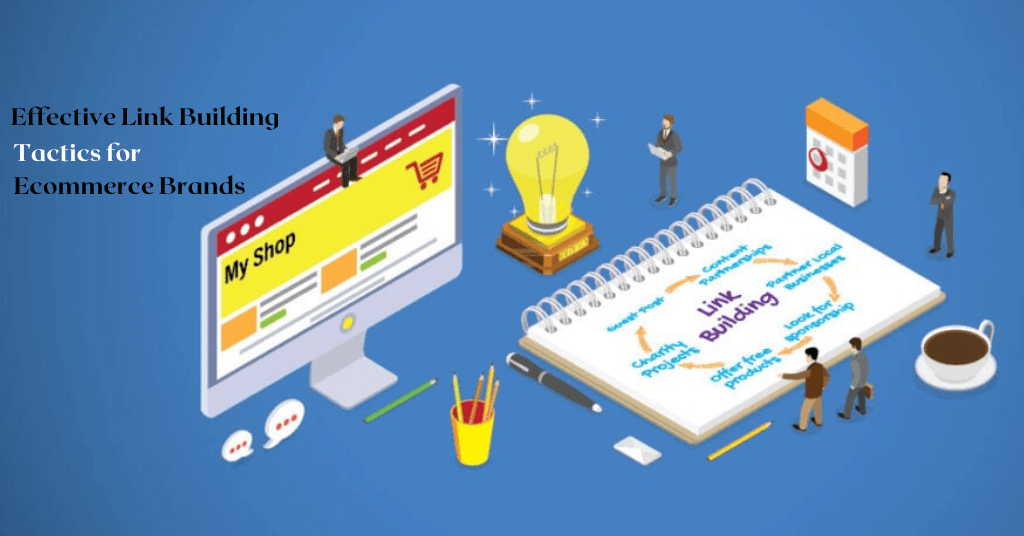
6 Effective Link Building Tactics for Ecommerce Brands

You own an eCommerce store and want to build links, but you don’t have time to launch a full-fledged SEO link building campaign.

We understand how you feel because we’ve been there! That’s why we’ve compiled a list of seven effective link-building strategies that are simple to implement and will help your eCommerce site rank higher in search engine results pages.

Implementing even one of these strategies can significantly increase the amount of traffic to your website. And if you combine all seven, you’ll have even more success!

So, what are you holding out for? Let’s get started on improving your rankings right away!

What Is ECommerce SEO Link Building?

Before we get started with the strategies, let’s make sure everyone is on the same page.

Building links to your website or blog can have a significant impact on your search engine ranking (SERPS).

More traffic for you means higher rankings! And when you build backlinks with strategically placed keywords, you’ll see an increase in not only organic traffic but also conversions (which means more money).

However, not all links are created equal.

Google recognizes this and will reward you for natural backlinks from within your niche.

Google, on the other hand, despises unnatural links that appear to be manipulative in nature (link schemes) and penalizes the sites that use them.

In a nutshell, link building is the process of obtaining backlinks from websites and blogs that have a natural relationship with your target audience.

When it comes to link building, there are three factors to consider:

Link Authority

The ranking authority of the site that is linking back to your website or blog is referred to as link authority.

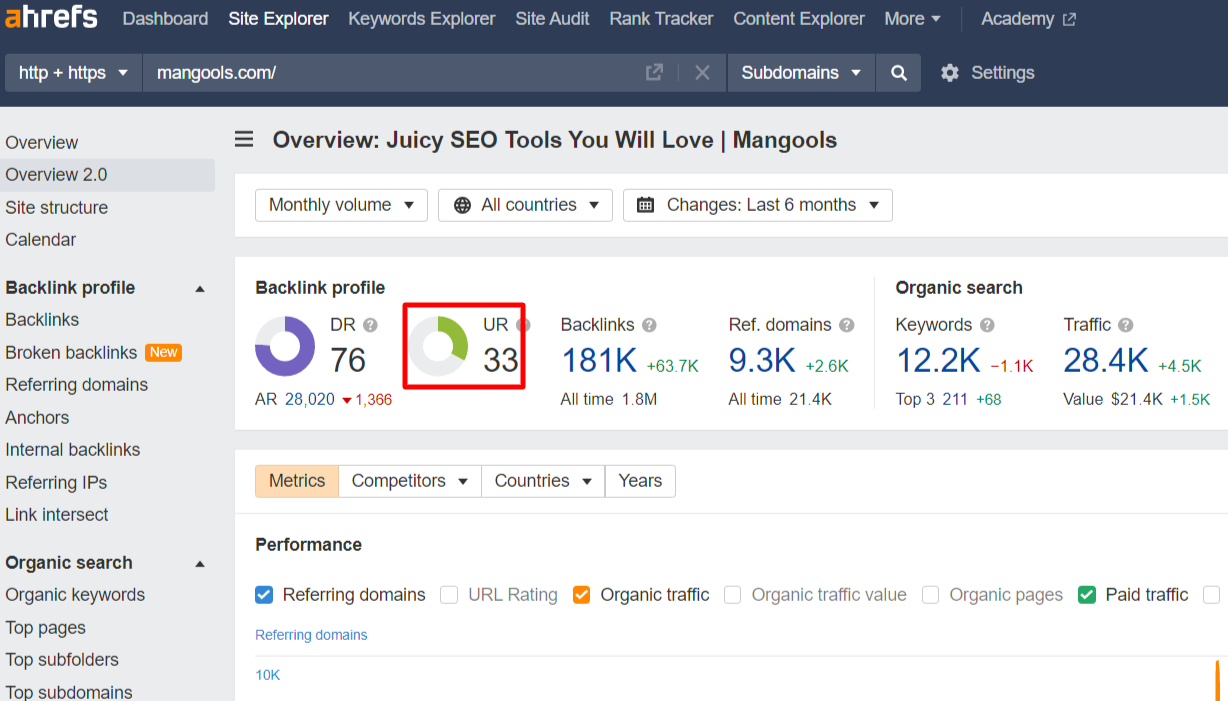
Using Ahrefs’ Site Explorer, you can determine a domain’s authority.

Effective Link Building 1

To summarize, the higher the authority of the site linking back to you, the better.

Link Relevancy

It’s extremely crucial that the content on your website or blog and the content of other websites and blogs (from which you’re building links) are both relevant.

The topical relevance of a link is a good indicator of its quality.

If your website contains links from unrelated websites, it is more likely to be penalized for unethical link building practices.

However, if you build links from high authority sites that are relevant to your eCommerce site’s niche, you will see a much higher return on investment (more traffic, higher rankings, and more conversions).

Trustworthiness

You want to build links from reputable websites. It is also the level of trust that Google’s search engines have in your domain.

In general, adhering to Google’s webmaster guidelines will assist you in developing a natural, trustworthy link profile.

If your site contains a high number of irrelevant or low-quality inbound links, you will experience the consequences of Google’s penalty for manipulative practices.

E-Commerce Link-Building Tactics

It is common knowledge that creating links for e-commerce websites is difficult. Developing links for an eCommerce site presents some unique challenges, whether you’re an SEO building links for a client or a website owner looking to increase the visibility of your site.

Issues such as

  • Extremely competitive markets
  • Increased impact of technological errors
  • Commercial orientation causes suspicion and mistrust
  • There is a scarcity of link-worthy pages and informative content

These factors increase the difficulty of creating links for these types of websites. Despite all of these issues, e-commerce link building is still very much possible; however, you must have the right expectations and goals in order to be successful.

It will be difficult (unless you are a well-known, significant company) to build links to your product pages and rank them for the most important terms.

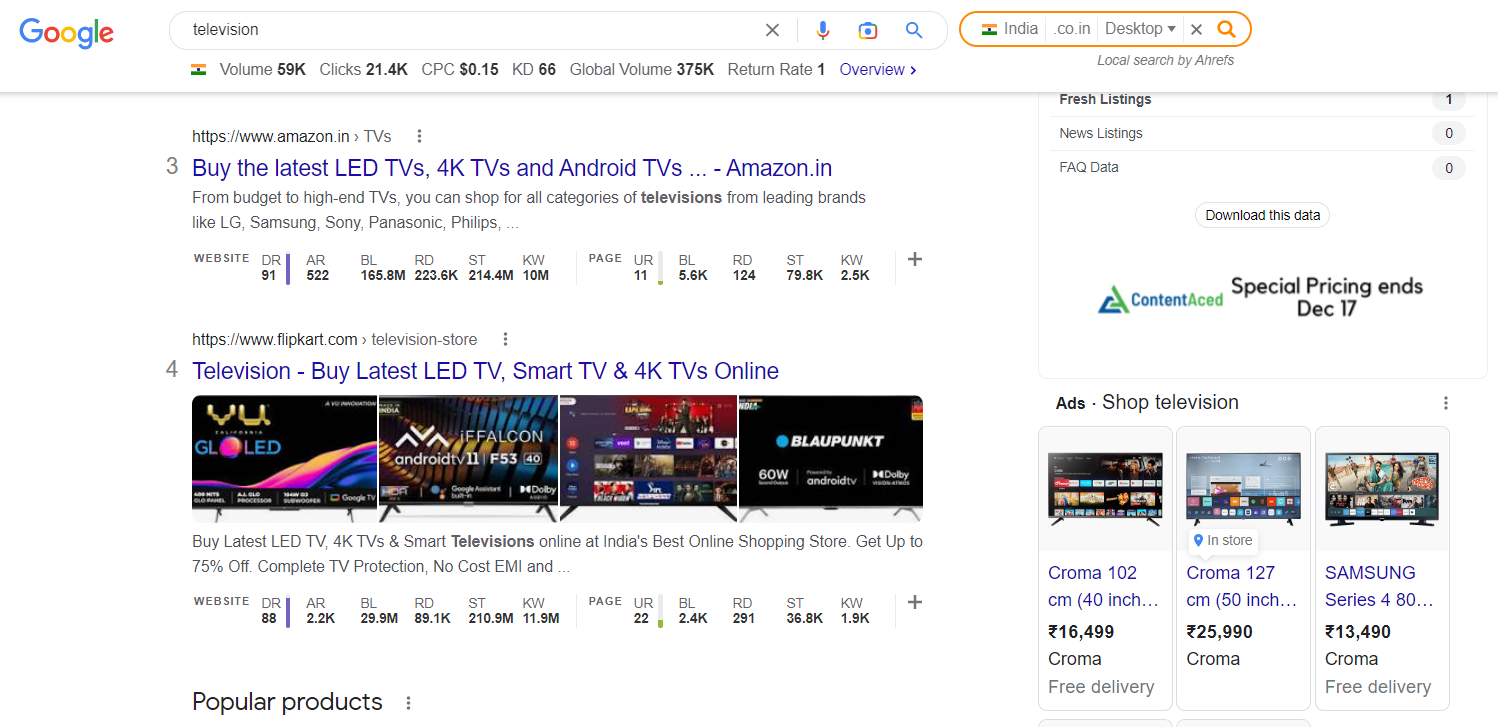
For example, here are the organic results for [Television]:

television

A small to medium-sized beauty eCommerce website will struggle to compete with Amazon, Flipkart, and Croma. Link building, on the other hand, can help smaller e-commerce businesses compete in certain niches and SERPs.

The key metrics that most eCommerce businesses should try to influence with link development are branding and awareness. Although link-building can indirectly increase sales (having more visitors can lead to more conversions), eCommerce link-building initiatives should not be judged based on the number of sales generated.

Rather than product pages that convert well, link acquisition efforts should be focused at educational pages that can expose top-funnel visitors to your brand. If you use outsource link building as a branding strategy to expand the audience for your website, you will be successful.

7 Ways to Build Links to Your ECommerce Store

1. Video Promotion

If you want to build high-quality links, video marketing could be just what your eCommerce store needs.

It’s critical to keep your target audience in mind when creating video content. Make your content interesting and engaging by personalising it to your audience.

You can accomplish this by producing how-to videos, humorous stories, or slapstick comedy (depending on the niche of your store).

Video content ranks well on Google. This means you may be able to get featured snippets for your videos.

Once you’ve gotten some traffic to your videos, make sure to check the analytics to see who embeds them on their website.

This can provide you with outreach opportunities to link back to your eCommerce store.

Additionally, you can use video content to conduct video outreach in order to obtain high DR backlinks.

Because this strategy is relatively unknown among eCommerce store owners, you will face little competition when attempting to rank your video content.

2. Use Shareable Content to Build Links

When you create share-worthy content, it’s a win-win situation for your business.

Not only will you get more organic traffic from search engines from people sharing your awesome products, but you’ll also get relevant links back to your eCommerce store!

One of the best ways to increase the chances of getting a high DR backlink is to craft a “how-to” or listicle article about how to use your product.

For example, if you are selling a smartphone case that has a unique feature, create an article that tells people how to take advantage of that specific feature.

You could even use Reddit to build links for eCommerce stores by participating in relevant subreddits and posting memes about your products. This content idea is applicable to almost any eCommerce store.

After you’ve created the content, it’s time to find places to share it.

3. Contacting Existing Partners

Every eCommerce store has some kind of connection that they can use.

Consider suppliers, loyal customers, local businesses, sponsored organizations, business directories, community pages, and so on… Don’t be afraid or shy about trying to obtain backlinks.

You’ve probably heard it before, but the key is to provide value.

You can add value by thinking about and producing content that other businesses in your industry will find interesting and shareable.

4. Discovering Unconnected Mentions of Your Brand

In an ideal world, you’d have a list of all the websites that mention your brand.

The truth is, given how many resources exist on the internet that may mention your brand without providing a link to it, this could be quite time-consuming.

But don’t worry, there is an easy way!

That is by using Google Alerts to find relevant brand mentions to your eCommerce store!

Set up alerts to monitor the web for mentions of your brand and easily track down the source and contact them to get a link back to your store.

Furthermore, Google Alerts can be used to monitor for any negative feedback, to which you can respond and attempt to reconcile.

This is an excellent way to not only generate additional links but also demonstrate to your customers that you value them and their opinions.

6. Supporting a Cause

Donating to a cause is a great way to gain charitable branding as well as a link from that website.

Many charitable organizations have their own websites, and a link from those websites can provide you with a wealth of information.

They will gladly provide a link to your website as long as you donate something meaningful.

Donating to a worthy cause also demonstrates your company’s concern for the well-being of others. Making your brand look fantastic.

7. Creating Content Assets With Influencers For Marketing Purposes

Influencers are people who have a large online following, particularly on social media.

You can use them to help you achieve your marketing goals as a brand by collaborating with them on content promotion.

This could include asking them to write a blog about your brand, share an Instagram photo, or post a product review on their YouTube channel. Additionally, managing brand assets effectively ensures that influencers use consistent visuals, logos, and messaging that align with your eCommerce brand.

You should do a good deed in exchange for collaborating with the influencer by providing value to them.

This will make it easier for you to collaborate with other influencers, resulting in the development of a strong reputation for your brand.

Final Thoughts

Here are 6 methods to make sure your online store receives more traffic and backlinks.

Keeping in mind that giving value is the most crucial aspect of this type of marketing.

So… How do you feel? I hope you found this essay useful, and if so, thanks. Share it with your friends and anybody else you know who might need it by clicking the button below.

Look at what we did there.

We can assist you if you need assistance with SEO link building. At VH-Info, we have a highly talented team.

We specialize in developing links using white hat SEO, and we can help your company rank. You may check out our client case studies online, so you know we get results.

We also provide a free link building strategy consultation during which we review your website and offer practical suggestions that can increase traffic, leads, and sales.

What say you, then? Let’s speak soon.

Frequently Asked Questions (FAQ)

What is a natural backlink profile?

A website with a natural backlink profile would have links created from content that is relevant to your business. This indicates that the websites connecting to you do so because they consider your material to be important and engaging. Your SEO efforts will benefit more from the links you have from these websites because they will be given greater authority.

Is link building for ecommerce SEO still applicable in 2023?

Yes, link building for eCommerce SEO will still be important in 2023. In actuality, its significance has increased.

To give users the greatest experience possible, search engines’ algorithms are always being improved. And one of the most crucial elements that goes into creating a positive user experience is having a dependable website with useful and relevant content.

Therefore, your website will perform better in search engine results pages (SERPs) the more high-quality websites link to it. More direct traffic as well as referrals from other websites will result from this. resulting in a higher return on investment for digital marketing activities.

Author Bio

Bharat Baghel

Bharat Baghel is a Digital Marketing Expert and also a SAAS content marketer. He loves to talk about SEO, content creation and Digital marketing tactics. In his free time, he likes to read and stay updated on digital marketing trends and travel to remote places on his bike. You can always reach out to Bharat on LinkedIn.

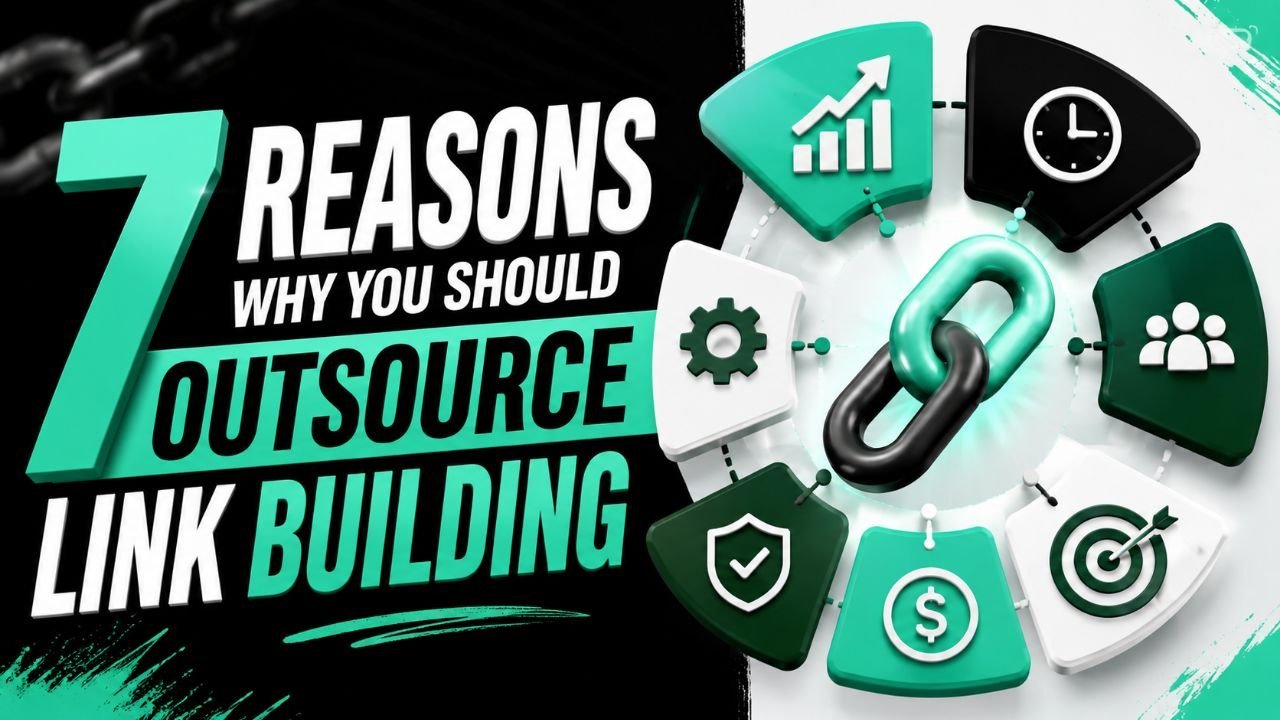
7 Reasons Why You Should Outsource Link Building

TL;DR

  1. Quality backlinks matter more than quantity, so focus on relevant, trustworthy, high-authority websites.
  2. Outsourcing link building can save time, reduce costs, and provide access to experienced specialists.
  3. In-house link building requires salaries, tools, training, and time before producing consistent results.
  4. Agencies can outsource link building to scale faster while keeping their team focused on strategy.
  5. Choose providers carefully by checking case studies, transparency, reviews, link quality, and outreach methods.

Introduction

Link building matters more than most business owners realize. It’s also one of the parts of SEO that people get wrong most often.

The usual mistake is thinking that more links are always better. They aren’t. A few relevant, high-quality links can do more for you than a thousand low-quality ones.

Another mistake is thinking that anyone can do it. Link building may look simple from the outside, but it isn’t. Someone with years of experience knows which sites are worth reaching out to, how to write an email that an editor will actually reply to, and how to keep getting good links month after month.

Not every team can handle this, and there’s no shame in that. That’s where outsourcing comes in. Let’s look at why you should outsource link building, what it costs, and how to find a provider that won’t waste your money.

What’s In This Guide

  1. How link building in SEO works
  2. What is link building?
  3. How do you earn a link?
  4. What makes a link valuable?
  5. Advantages of outsourcing link building
  6. Outsource link building vs hiring in-house
  7. What it costs to outsource link building
  8. 7 top reasons to outsource link building
  9. Outsource link building for agencies
  10. How to choose a trustworthy provider
  11. FAQs

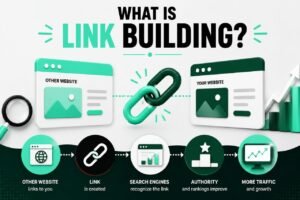
What is Link Building?

What is Link Building?

Link building is an SEO process where one website adds a link to another website. When a trusted website links to your article, it tells search engines that your page is useful and worth considering. This can help you rank higher, appear more often in search results, and eventually bring in more sales.

Whether you hire someone or outsource link building, the process usually involves finding relevant websites, checking whether they are a good fit, reaching out personally, and monitoring the links you earn. Most outsource link building services handle all of these steps, but some only manage outreach, so it’s worth asking about this upfront.

Example: If a popular marketing website links to your SEO guide, that backlink can help search engines see your content as more trustworthy and relevant.

How Link Building in SEO Works

One clear reason to outsource link building is that you may not have the right skills in-house. That’s completely fine.

But before you outsource link building, it’s still important to understand the basics. You don’t need to become an expert. You just need to know enough to:

  1. Understand how link building works and why it matters for SEO.
  2. Recognize a good outreach pitch from a poor one.
  3. Check whether a link-building strategy makes sense for your website.
  4. Spot low-quality or risky tactics before they cause problems.
  5. Know when a provider is making unrealistic promises or trying to sell you something you don’t need.

This basic knowledge helps you choose the right provider and avoid wasting your money.

How do you earn a link?

There are several ways to earn links, and any team you outsource link building to should know the main methods. Three of the most common methods are editorial links, guest blogs, and link-for-link exchanges.

Editorial links: These are links that websites add naturally when they find your content useful as a source. If your page genuinely adds value to someone’s article, you can reach out and ask them to consider linking to it.

Guest blogs: You write a useful article for another website, and in return, you usually get exposure and a link back to your website. When done properly, guest blogging can help you earn links from relevant, authoritative websites.

Link for link: You ask another website to link to you and offer to link back to them. Google may not like excessive link exchanges, and doing this at scale can lead to penalties. If you use this method, research it carefully and don’t rely on it as your main strategy.

The link-building services market is projected to grow from $25.97 billion to $57.07 billion by 2030.

What makes a link valuable? 

John Mueller from Google has pointed out that one good link from a relevant page can be worth more than millions of poor-quality links. Many vendors still focus on the number of links they can deliver, but if you outsource link building, quality should always come first.

A good link usually ticks at least one of these boxes:

  1. It comes from a website with real authority.
  2. It passes decent link juice, meaning the PageRank value that flows through a backlink.
  3. It’s a dofollow link, which can pass SEO value to the linked page.
  4. It’s placed naturally within the main article rather than in a footer or sidebar.
  5. The anchor text clearly explains what the linked page is about.

Relevance is just as important. The website should cover topics related to yours, and the link should make sense to its readers. You should also check whether the site is trustworthy. Look at how long it has been active, whether it has a privacy policy, and whether it regularly publishes useful content.

For example, if you’re checking a website that covers digital marketing, you may also find useful resources on social media aggregation.

The best link is one that fits naturally into the article. It should feel useful to the reader rather than looking like it was added just for SEO.

Advantages of Outsourcing Link Building 

Before getting into the seven reasons, here’s a quick look at why businesses choose to outsource link building in the first place.

  1. It’s easier: You don’t have to learn an entire SEO process from scratch. You can work with people who already have the skills and use your own time for other important parts of your business. 
  2. It saves time: Link building can be slow and repetitive. Outsourcing link building takes much of this work off your plate, including finding websites, sending outreach emails, testing different approaches, and building relationships. 
  3. It can cost less: Hiring an agency can be more affordable than building an in-house team, purchasing SEO tools, and paying someone while they learn the process. 
  4. Someone is accountable: When you outsource link building, you can track progress, review results, and raise concerns when something doesn’t look right. Having an experienced team handle the process can give you greater peace of mind.

Outsource Link Building vs Hiring In-House

Choosing between outsourcing and hiring an in-house link-building team depends on your budget, goals, and available resources. Comparing the two options side by side makes it easier to see which approach works better for your business.

Basis Hiring In-House Outsource Link Building
First link lands 3 to 6 months 3 to 5 weeks
What you pay for Salary, tools, training time The links themselves
Editor contacts You start with none Already there
Tools Ahrefs, Semrush, outreach software, all yours Included
Control Complete Good, if they share their site list
Growing Hire again Just order more
Main risk Slow start, expensive lesson A bad vendor damages your site

There’s no answer that suits everyone, but there is a pattern.

Smaller teams almost always come out ahead when they outsource link building. Bigger companies with a real SEO person on staff usually do best running both. Their person decides which pages need links. An outside team does the emailing.

What It Costs to Outsource Link Building 

Cost is one of the biggest factors when deciding whether to build an in-house team or outsource link building. Looking at the actual numbers makes the difference much easier to understand.

If You Hire Someone

A junior link builder in the US typically costs around $50,000 to $65,000 per year. Someone with four or five years of experience can cost around $80,000 to $100,000. And that’s just the salary.

You also need to pay for tools such as Ahrefs or Semrush, which can cost around $130 to $250 per month. An outreach tool can add another $50 to $150 per month, along with recruitment costs and three to six months of training and learning.

When you add everything together, the total can reach around $75,000 per year. Once the employee is fully trained, they may build around eight to twelve links each month. That puts the cost of each link at roughly $520 to $780, even during months when fewer links are produced.

If You Outsource Link Building

When you outsource link building, the cost is usually based on the quality and authority of the website where the link will be placed. This makes it easier to choose a plan based on your budget and link-building goals.

Plan Per Link Site Authority
Starter Plan $100 DR 45 – 59
Value Plan $150 DR 60 – 69
Best Value $200 DR 70 – 79
Enterprise $300 DR 80 +

Every plan includes one link per domain, websites that receive 1,000+ monthly visitors, dofollow links, a dedicated project manager, and a monthly report.

Ten Value Plan links cost $1,500 per month. Over a year, that comes to $18,000 for 120 links. Spending the same amount on an in-house team would only cover part of one salary, without including tools or the cost of building links.

That cost difference is one of the main reasons to outsource link building.

Top 7 Reasons to Outsource Link Building 

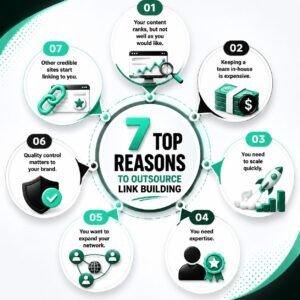
7 Top Reasons to Outsource Link Building 

If you already have good content, know roughly what you want to achieve, and have a budget for link building, outsourcing link building can make sense. Here are seven common reasons businesses choose this approach.

1. Your Content Ranks, but Not as Well as You’d Like

Your writers may be doing a great job, and Google may already understand and value your content. But your pages can still rank below your competitors.

In this situation, the problem may be your backlink profile rather than your content. Publishing more articles won’t necessarily solve it. This is where outsource link building services can help you build relevant links and improve your rankings more efficiently.

2. Keeping a Team In-House Is Expensive

Running link building internally can become expensive for both agencies and brands, especially when you want consistent, high-quality results.

Glassdoor estimates that an average junior specialist in California earns around $55,000 per year. A specialist with four to nine years of experience can cost up to $90,000. These figures don’t include SEO tools, hiring costs, or the time needed for a new employee to become fully productive.

And that’s only one person. If you want to build links faster, you may need a larger team with outreach managers, junior and senior specialists, and an SEO manager. Building that kind of team can quickly increase your overall costs.

3. You need to scale quickly

Quality comes first, but you also need enough good links to support your SEO growth. Around ten to twelve quality links a month can make a real difference.

Building that volume yourself takes time, especially when you have targets to meet. That’s why many businesses choose outsource link building services instead of waiting months to build everything from scratch. An experienced team already has the processes, contacts, and knowledge needed to scale quickly.

If something isn’t working, they can also adjust the strategy and change direction quickly. You can often see results sooner than with a new in-house hire, but don’t expect major results in the first week.

4. You Need the Expertise

Link building is more complex than it first appears. There are different types of links to consider, several factors to evaluate, tools to manage, and SEO rules that continue to change. The right technical SEO tools can also help teams research websites, track backlinks, and monitor performance.

Someone who works on link building every day already has experience with these areas. Many businesses outsource link building to fill this expertise gap while keeping their overall SEO strategy in-house.

5. You Want to Expand Your Network

Choosing the right anchor text is relatively easy. Finding editors and website owners who are willing to publish your content is much harder.

When you outsource to an experienced agency, you can access its existing network of contacts and partners. Building those relationships yourself can take years. Strong industry connections can help you earn relevant links and improve your search visibility over time.

6. Quality Control Matters to Your Brand

A good provider checks every website before reaching out to make sure it meets the right quality standards. This helps keep PBN backlinks and low-quality domains away from your backlink profile.

You also stay updated on changes in SEO and link-building practices. This is one of the less obvious benefits of link building with an experienced team, as they can help maintain quality while adapting to changes.

7. Other Credible Sites Start Linking to You

Once you build a strong link-building network, your articles, videos, and other content can start appearing on reputable websites.

This is one of the real benefits of link building. Each quality link can increase your visibility and make it easier to attract more natural links over time. Eventually, your content can become a useful source that other websites choose to reference.

Outsource Link Building for Agencies 

Agencies have a slightly different challenge. You already offer SEO services, but building an outreach team can increase your costs and reduce your profit margins.

An outsource link building for agency setup usually works in one of two ways:

  1. White label: The provider works under your agency’s name, so your clients don’t know another company is handling the link building. This works well for agencies that include link building as part of a larger SEO package. You can learn more about how white label link building works before choosing this option. 
  2. Named partner: You are open with your client about who handles the link building. Some clients prefer this approach because they can see who is responsible for the work. 

A link building outsource partnership can also make costs easier to manage. You pay a fixed rate, add your own margin, and can scale by ordering more links instead of hiring more staff. Meanwhile, your team can stay focused on SEO strategy, client communication, and reporting.

The main thing to remember is that your client’s website reflects your agency. Any poor-quality link can affect your reputation, so take the time to properly check an outsource link building partner before working with them.

How to Choose a Trustworthy Outsourced Backlinks Provider 

The biggest risk when you outsource link building is choosing the wrong provider. A poor choice can cost you money, waste your time, and even damage the backlink profile you’ve already built. Here are five things to check before making a decision.

1. Analyse Case Studies

A provider can make plenty of promises about what they can do, but their past work tells you much more.

A good case study should explain the methods they used, what challenges they faced, and how they handled them. It should also include websites or URLs that you can review yourself. If they only show you a ranking graph, ask to see the actual links. Many outsource link building decisions come down to this.

2. Review Company Ratings

Take some time to check what other customers say about the provider. Look at reviews on platforms such as G2, Clutch, or Glassdoor and pay attention to specific experiences rather than just the overall rating.

Feedback from other businesses can give you a better idea of what it’s actually like to work with the company. A recommendation from someone you trust can also be valuable.

3. Go for Transparency

Link building can be complicated, and some providers use that complexity to hide important details. They may offer deals that sound too good to be true or avoid telling you where their links come from.

Don’t be afraid to ask questions. Find out which websites they use, what methods they follow, and who handles the outreach. A trustworthy provider should be willing to answer these questions clearly.

4. Focus on Quality Rather Than Quantity

The number of links matters, but quality and consistency matter more. If a provider offers packages with 50, 200, or 300 links every month, there’s a good chance quantity is their main focus. It’s difficult to contact many relevant editors manually while maintaining quality.

Ten relevant links can be much more valuable than a hundred random ones. You can also use the right link building metrics to measure whether your links are actually helping. Be cautious of providers that make unrealistic claims about their results.

5. Watch Out for Shady Schemes

There are many link building strategies available, but you don’t need to use every one of them.

Avoid mass outreach, fully automated methods, unusually cheap packages, and multiple links from the same domain. Good outsource link building services should also give you a dedicated contact instead of sending you to a shared inbox. If everything could be automated while maintaining quality, every business would already be doing it.

For Faster Growth, Outsource Link Building

Link building is an important part of SEO, but doing it well takes time, experience, and consistent effort. Choosing to outsource link building can take that workload off your team and let you focus on other areas that need your attention.

The right provider can help you find relevant websites, manage outreach, and keep your link-building efforts moving consistently. For smaller or busy teams, this can be a practical way to build quality backlinks without creating a full in-house team.

Final Thoughts

Good link building is not about getting as many links as possible. It is about earning relevant, high-quality backlinks through a reliable and transparent process. The right approach can help improve your organic visibility while saving your team time and resources.

VH Info focuses on SaaS link building for SaaS, B2B, AI, cybersecurity, and other technology companies. With a white-hat approach, competitor-gap strategy, transparent pricing, and dedicated project management, the team handles the link-building work while keeping clients involved in the process.

If your team doesn’t have the time or resources to manage link building internally, working with an experienced partner can help you build a consistent strategy without the cost and effort of creating a new team.

FAQs

1. How much does it cost to outsource link building?

You can expect to pay around $100 to $300 per link, depending on the website’s authority. For example, ten links at the $150 tier would cost about $1,500 per month. In-house link building can cost much more after salaries, tools, and training.

2. Should I outsource link building or hire someone?

For smaller companies, outsourcing is often more affordable and faster than hiring an in-house specialist. Larger businesses with an SEO lead may benefit from using both approaches. They can keep strategy and planning internally while outsourcing the time-consuming outreach and link-building work.

3. How long until outsourced links work?

The first links usually start appearing within three to five weeks after you outsource link building. However, rankings and organic traffic generally take longer to improve. Depending on your niche, competition, website authority, and overall SEO strategy, noticeable results may take three to six months.

4. Can agencies outsource link building for clients?

Yes. Agencies can outsource link building for agency projects through a white-label model, where the provider works under the agency’s name. This allows agencies to offer link-building services without hiring additional outreach staff while keeping their margins, client relationships, and overall SEO strategy under control.

5. Is outsourcing link building safe?

Outsourcing can be safe when the provider uses white-hat methods, manually earns links, checks websites carefully, and gets client approval before placements. Avoid providers offering bulk packages, automated outreach, PBNs, or extremely cheap links, as these approaches can put your website’s SEO at risk.

6. How many links should I order?

There is no fixed number that works for every website. For many SaaS and B2B companies, around ten to twelve relevant links per month can be a reasonable starting point. However, link building services should focus on relevance and quality rather than simply increasing the number of backlinks.

DA and DR Metrics: What Are They and Why Do They Matter for Link Building?

An SEO strategy can be considerably impacted by link building. This is because links rank as one of Google’s top factors when determining how to display your website in search engine results (SERP). The difficult aspect, though, is locating those reputable websites to link to.

DA & DR Metrics can help in this situation. You may assess a website’s quality and whether it makes sense to link to or from it by monitoring the performance of particular metrics. Your link-building campaign’s overall success can also be evaluated.  

This post will go in-depth on link-building metrics, explaining why domain rating (DR) and domain authority (DA) are crucial metrics for effective link-building campaigns and how to raise these scores for your website.

What Metrics Are Used for Link Building?

Domain strength is one of the metrics used in link building. It assesses the overall strength of a website as compared to a single page. The domain strength of a site grows as more backlinks are added to it. A site with a high domain strength score is an authoritative site.

Another metric that link builders use is page authority. It evaluates the quality and strength of a single web page rather than the entire domain. A high page authority score helps a page rank higher in search engine results. Linking to a relevant page with a high authority score will also help your site’s online visibility.

Among the most important metrics used in link building are DR and DA scores.

Let’s go over the definitions of DA and DR to see how they affect your backlink strategy.

What is DA?

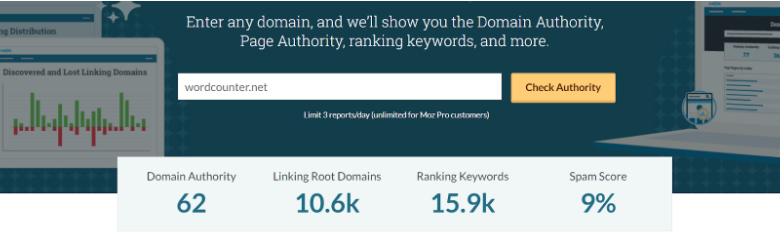
Moz uses domain authority (DA) to determine your ranking. These ratings are given on a scale of 1 (low DA) to 100 (high DA). The position of your website on this scale indicates how well it ranks in comparison to other sites in the same category.ImageMoz calculates a website’s DA using several factors, which are constantly updated as SEO trends change over time. This, however, prevents websites from playing the game and deceiving the system into producing a high DA score that was not obtained ethically.

What is DR?

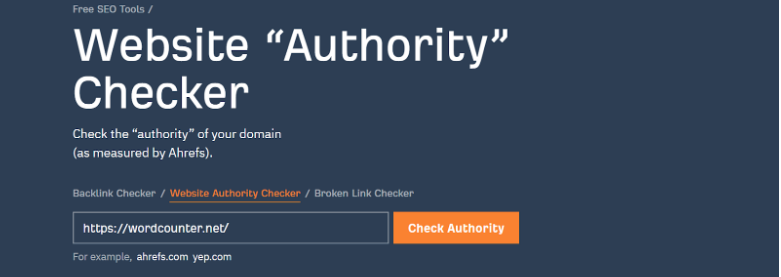
Domain rating (DR) is a score used by Ahrefs to assess the importance of your backlink profile. The scores, like DA, range from 1 to 100, but the calculation is not as complex. DR is determined by how your backlink profile compares to that of other websites. To achieve a high DR, you’ll need more than just a solid backlink strategy.Image

Although some organizations attempt to game the Ahrefs rating system, the company is constantly updating its algorithms to better understand backlink profile patterns and penalize domains that use black hat tactics to boost this metric.

What Do DR and DA Mean?

The DA and DR metrics are based on the quality and quantity of backlinks to authoritative sites and were developed by different platforms: Moz created the DA score and Ahrefs created the DR score.

A high DA and DR can help your website and blog as well. Using quality backlinks to direct traffic to deserving pages on your website, you can:

  • Boost authority
  • increase brand recognition
  • Become an opinion leader
  • Boost online presence
  • Get noticed on search engines
  • Increase organic website and blog traffic
  • Improve your position in search engine results

When evaluating the strength and quality of your website and other sites, DA and DR scores are crucial to take into account.

How Can You Improve

After you’ve defined DA & DR Metrics and their significance to your link-building campaign, the next step is to learn how to improve these scores. You can improve your DA & DR Metrics by implementing the following strategies:

1. Learn to differentiate between good and harmful links.

Obtaining high-quality backlinks is critical in your efforts to increase your DA and DR scores. However, you must first understand the difference between a good and bad link in order to select one that will benefit rather than hinder your efforts to build authority.

When researching, you can determine whether a site is worth linking to or not by answering the following questions:

  • What is the DR score? What about DA?
  • Is the website well-ranked?
  • Is it getting a lot of organic traffic?
  • Have they put any effort into the design and content?
  • Are blog posts written by real people?
  • What are the incoming links? What about inbound?
  • Is their about page or contact information visible?

If the answers to these questions are positive, the site or page could be a good link.

2. Prioritize high-quality backlinks.

A successful link building campaign relies on backlinks from high-quality sites. When you know a good link, you can concentrate solely on obtaining high-quality backlinks. Linking to a large number of low-quality sites will not increase your DA or DR. Indeed, it may reduce it or, at the very least, harm your reputation among visitors and customers.

When strong sites link to yours, Google sees that your site is trustworthy and authoritative. This helps your site rank higher on search results pages and makes it more visible to Google users.ImageThe first step is to conduct extensive research on the sites from which you hope to obtain backlinks. Examine the DA or DR score, page authority, and other important metrics. Examine the content quality and organic traffic, as well as whether it is mobile-friendly or fast-loading. Investigate the site’s details to determine whether it is of high quality or not.

The foundation technique is an excellent way to kick off any link-building campaign: First, you look at which pages are ranking for the keywords you’re interested in. Then you make a list of the pages that link to those pages. Finally, you make a note of the pages from which you believe you can obtain a link.

3. Create a plan for internal linking

Internal linking is also essential for effective link building. It’s not as important as getting authoritative sites to link to your site. Internal links in your blog and throughout your website content, on the other hand, can help Google better understand your site and give it a higher ranking on search results pages.

You can indicate which pages on your site are the most important and valuable by linking to them repeatedly in your content. Make a list of blog posts that you believe should receive more traffic and attention. Then, in future blog posts, include two or three of these internal links. However, make certain that they are naturally integrated into the content.

4. Produce worthwhile content

Creating valuable content is essential for SEO in general, but it can have a specific impact on your DA and DR metrics. The better your site’s content, the longer people will stay on it. And as people spend more time on your site, search engines are more likely to consider it trustworthy, increasing your DA and DR score.

Create as much original content as you can for your blog and post on a regular basis. To keep your visitors’ attention, combine excellent writing with visuals such as infographics, images, videos, and illustrations.

5. Keep an eye on the anchor text

Anchor text is an underutilized tool for improving your DA & DR Metrics. It is, however, significant for page authority.

Google considers the anchor text’s relevance to the information shared at the link. Anchor text that does not match links may result in an unfavorable page authority score, lowering your overall DA or DR score and your chances of ranking high on search results pages.

Anchor text should be deliberate and should foreshadow what can be found at the link. As your anchor text, use a variety of relevant keywords and experiment with naked URLs, exact keywords, natural anchor text, and branded anchor text.

6. Employ an SEO and link-building team

Outsourcing to a link building team could be exactly what you need to boost your DA or DR metrics. Not only are SEO and link building specialists knowledgeable about link metrics, but they also have experience with various link building strategies, relationship building, data analysis, and campaign creation.

Learn how to pick the best backlink provider from among the many available on the market.

Another option is to create an internal team dedicated to SEO and link building to ensure that outreach is as effective as possible. So, begin assembling an SEO team that includes a link building expert, outreach coordinator, and research expert.

What Are Some Other Link Building Metrics to Consider?

Aside from DA and DR, there are a few other link building metrics to consider tracking to improve your strategy:

Linking root domains

The linking root domains are the domains from which your backlinks originate. You can see if your links come from different domains or the same few. This metric is important because it will help you determine whether you need to do more to diversify your backlink profile or if what you’re doing is generating backlinks from various unique domains.

Number of links

This metric counts the total number of links pointing to your website. This metric can be used to determine whether you are gaining or losing links. If your link count is growing, it could indicate that your link building campaign is succeeding. If they are declining, it means that something is wrong with your link insertion strategy.

Page ranking

You should also keep an eye on the page ranking for the pages you’re linking to. How do the positions of your target pages change in Google search results? Of course, you want to be in the top three on your respective pages, but landing on page one is a good starting point.

Organic traffic

A site with a high volume of organic traffic conveys to visitors that the site is reliable, authoritative, and valuable. Examine organic traffic to see if it is increasing or decreasing. If it’s the latter, it could mean that Google has penalized your site or that your techniques aren’t working.

Improve Link Building Strategies with Metrics

You must use metrics if you want your link building campaign to be successful. Some of the most important link building metrics to track are DA and DR. High scores can help you determine whether a site is worth linking to, and they can also improve your site’s visibility and authority.

Continue to learn about important metrics for link building, and use the tips above to improve your DA and DR scores over time.

Vishal Ambani

Vishal is a Founder & CEO of vh-info . He loves to talk about SEO, Link building and Digital marketing tactics. In his free time, he likes to read and stay updated on Link building. You can always reach out to Vishal on linkedin.
8 Benefits of Link Building You should be Aware!

You’re probably aware of the importance of effective SEO if you’re a SaaS company or startup running an SEO strategy

The proper onsite technological framework, content optimization, and meta-data must all be in place in addition to keywords.

But have you given link-building adequate time? Building links is (still) a crucial component of your “off-page” SEO 

If you haven’t already, it’s time to make link development the focus of your SEO marketing plan.

What is link building?

Creating backlinks on other sites that point to your own is the practice of link building. A backlink is a connection between two pages that people use to move from one website to another. It is also known as a hyperlink or an inbound link. Instead, you should balance your approach and create connections with other authorities, only adding links when they are useful and important to visitors.

8 key advantages of creating a solid link-building strategy are listed below.

Benefits of Link building

1) Increased website traffic –

ImageEveryone who owns a website wants to see more visitors, right? And it is the most obvious advantage of constructing backlinks for your website.

The advantages are also dual in this instance. To begin with, the more websites that link back to your website, the more chances you have to increase the number of clicks from those individuals. Second, your website authority, credibility, and expertise are all increased by these backlinks. In this meantime, it’s important to get a professional hosting for your website, integrate Windows VPS if necessary so that you will provide a secure experience for users. For those mindful of costs, opting for a budget-friendly Windows VPS ensures reliable performance without compromising on security or user experience. Your site will rank higher in the search results the more reliable, trusted, and knowledgeable Google believes it to be.

Additionally, your rankings rise the more online visitors you have!

2) Link building increases credibility

Links give your website credibility because they serve as outside indicators of the authority of your domain. Google wants to deliver the most pertinent results to users. It takes into account “authority” to achieve this. The bigger the amount of high-quality links pointing at your website, the more credible it is.

Because it will improve their user experience, reputable publishers will connect to your material, according to Google’s logic. 1 quality connections usually exceed 10 unhelpful ones, so try to only build links from reputable websites.

Consider the number of sites you are linking back from as well. It is preferable to receive 5 links from 5 separate authoritative domains as opposed to 5 from a single domain.

3) Generating sales & Revenue Opportunities

You probably encounter influencer marketing every day just by reading a blog you enjoy, launching your Instagram app, or utilizing any other kind of social media. You’ll frequently see links to other sites while you carry out these tasks, compelling you to visit them. This is a type of influencer marketing, and it’s also a way that link building can boost your chances of making sales and generating income.

More options for you to generate income arises when links to your website drive more site visitors and customers to your store to make purchases. Who wouldn’t want greater sales, too?

4) Improve Your Networking and Relationships in Your Niche

In addition, let’s not undervalue the value of networking and developing contacts within your field when it comes to link building.

Link building frequently works best when there is mutual benefit. To profit from additional traffic, reputation, and other advantages of link building, marketers in related niches may trade links with one another. Relationships like these have advantages for your personal life goal as well as your work.

Connecting with other like-minded business owners in your industry can give you a suggestion box for fresh concepts and the chance to gain firsthand knowledge from those who have already achieved the success level you aspire to.

5) Boost the authority of your page or domain

ImageTwo factors—site authority and page authority—are used to assess a website’s Scredibility and dependability.

Page authority is used to estimate how high a web page will rank on search engines and pertains to a specific page.

Site authority, also known as domain authority, is a rating that assesses a website’s overall authority and reliability

Although Google does not pay heed to third-party metrics, they only estimate Google’s feelings about a site. Site and page authority are significant indicators of how well your web page and page authority are significant indicators of how well a site of yours may rank in a search engine.

As a result, these scores provide useful information and merit attention.

Your domain and page scores are determined by several variables, many of which overlap. The page authority of each of your website pages will benefit from having a high site authority, and likewise.

The majority of SEO systems use link building as a means of raising a site’s domain and page authority; adding plenty of links from reliable sources that have pertinent content will have the largest impact on your authority scores

6) Decreased bounce rates

Bounce rate is described by Google as “The number of single-page views.” In other words, the number of site visitors who came to one page before leaving without exploring the remainder of it.

Think about internal connections as well as outbound links when creating links because the combination helps your backlinking appear more natural. Internal links facilitate user navigation of your content while also facilitating Google’s navigation of your website. You can increase time spent on your website and lower bounce rates by making it simpler for users to find the content they’re looking for.

7) Create valuable content for readers

When used wisely, inbound and outbound links can benefit readers greatly. For instance, you may have noticed how we emphasize specific terms with links scattered throughout our blog entries. This is done to give you a useful link to more details about the term that is highlighted. Even if your blog article is several thousand words big, it can be difficult to include everything you require. However, by including links to appropriate content, you give readers the option to look up additional details if they’re curious.

8) Link Building enables fast Indexing of your website

Obtaining high-quality backlinks helps improve the indexation of your website. When reputable websites link to your page, Google will consider your page to be trustworthy.

In addition to receiving a “confidence vote,” quality sites typically receive more frequent crawls, increasing the possibility that Google will identify and follow the connection to your site. If you have information worth indexing, Google is more likely to crawl your site the more frequently it is visited.

Conclusion-

After reading these 8 outstanding benefits of link building, you probably want to know how to start utilizing them for your website. Right?

We hope that this article has inspired you to begin or refine your backlinking strategy.

Last but not least, avoid purchasing links if you want to have actual success with link building. The links you purchase may even turn out to be ineffective over time; you will never know if they’ll work until after you’ve paid for them.

Instead, try to gain connections from high authority websites, even though it will require more time. Increase your (high-quality) content marketing efforts and include your link-building plan in all of your other platforms

Rohit Ambani

Rohit is a SEO expert, Ninja link builder and Rockstar of vh-info. He loves to talk about SEO, Link building. In his free time, he likes to watch reels on instagram. You can always reach out to Rohit on linkedin.