The Beginner’s Guide to LinkedIn Marketing

Introduction

LinkedIn is one of the most powerful tools for businesses and professionals looking to expand their reach and connect with potential customers, clients, and partners. With over 740 million members and counting, LinkedIn provides a platform for individuals and companies to showcase their skills, experience, and services, and to engage with others in their industry.

However, for those new to LinkedIn, it can be overwhelming to know where to start with marketing efforts. That’s where The Beginner’s Guide to LinkedIn Marketing comes in. This comprehensive guide provides beginners with practical tips and insights on how to effectively use LinkedIn for marketing purposes, and to take advantage of its unique features and capabilities.

From creating an optimized profile to building a network, creating engaging content, using LinkedIn ads, and measuring success, this guide covers all aspects of LinkedIn marketing. By following the best practices outlined in this guide, beginners can unlock the full potential of LinkedIn and take their marketing efforts to the next level.

1. Why LinkedIn Marketing is Essential for Your Business

LinkedIn marketing is essential for businesses of all sizes, particularly those in the B2B sector. With over 740 million members, LinkedIn provides a unique opportunity for businesses to connect with other professionals and decision-makers in their industry. It is the go-to social media platform for professionals, making it an ideal place to showcase your brand, products, and services.

LinkedIn provides a variety of tools and features that businesses can use to build relationships and drive engagement with potential customers. By optimizing your LinkedIn profile, creating engaging content, and building a strong network, you can establish your brand as a thought leader in your industry and gain the trust of potential customers.

Moreover, LinkedIn ads can help businesses reach their target audience more effectively and drive traffic to their website. The platform’s advanced targeting capabilities allow businesses to reach the right people with their messaging, which can result in increased lead generation and ultimately, sales.

Overall, LinkedIn marketing is essential for businesses looking to expand their reach, build relationships, and drive growth. With its powerful features and large user base, LinkedIn is a must-have tool for any B2B marketing strategy.

2. Optimizing Your LinkedIn Profile for Maximum Engagement

Optimizing your LinkedIn profile is crucial to standing out and making a positive first impression on potential connections. By making a few simple changes, you can turn your

profile into a powerful marketing tool that drives engagement and attracts potential customers.

First, start by adding a professional profile picture and cover photo that represents your brand. Then, write a compelling headline that showcases your expertise and what you have to offer. It should be clear and concise, with relevant keywords.

Next, optimize your summary section by including your unique value proposition, your accomplishments, and your goals. This should be written in a conversational tone that reflects your personality and brand.

Additionally, make sure to include your relevant work experience and education, along with any relevant skills and endorsements. This will help establish your credibility and showcase your expertise.

Finally, don’t forget to add a call-to-action at the end of your profile, inviting potential connections to reach out and connect with you.

By optimizing your LinkedIn profile, you can attract the right people, d

rive engagement, and ultimately, grow your business.

3. Building Your LinkedIn Network: Tips and Tricks

Building a strong network is key to success on LinkedIn. But, how do you connect with the right people and build meaningful relationships?

First, start by identifying your ideal connections. Look for individuals or companies that align with your industry, interests, and goals. You can also use LinkedIn’s search and filter features to find potential connections.

Next, personalize your connection requests. Instead of using the default message, take the time to write a personalized message that explains why you want to connect and how you can add value to each other.

Engage with your connections by liking, commenting, and sharing their content. This will help establish your presence and build trust with your connections.

Joining LinkedIn groups can also be a powerful way to build your network. Find relevant groups in your industry, and actively participate by sharing your expertise and engaging with other members.

Finally, consider reaching out to connections to schedule a call or meeting. finding a suitable times for meetings or call can make your outreach more effective and increase the chances of getting a positive response. This can help establish a more personal connection and lead to potential business opportunities.

By following these tips and tricks, you can build a strong network on LinkedIn that drives engagement and growth for your business.

4. Creating Engaging Content on LinkedIn

Creating engaging content is key to building your brand and driving engagement on LinkedIn. By producing high-quality content that resonates with your audience, you can establish yourself as a thought leader and attract potential customers.

First, identify your target audience and what type of content they’re interested in. This will help you create content that is relevant and valuable to them.

Next, consider using different formats, such as articles, videos, and infographics, to keep your content fresh and engaging. Don’t be afraid to experiment with different types of content to see what resonates best with your audience.

When creating your content, make sure it’s visually appealing and easy to read. Use images and videos to break up text and make your content more digestible.

Finally, engage with your audience by responding to comments and starting conversations around your content. This will help build trust and establish a community around your brand.

By following these tips, you can create engaging content that drives engagement and helps you stand out on LinkedIn.

5. The Power of LinkedIn Groups for Business

LinkedIn Groups are a powerful tool for businesses to connect with like-minded professionals, establish their brand, and build relationships. By joining relevant groups in your industry, you can engage with potential customers, collaborate with other professionals, and stay up-to-date with the latest trends and news.

One of the benefits of LinkedIn Groups is the ability to position yourself as a thought leader in your industry. By sharing your expertise and insights, you can build trust and establish your brand as a go-to resource for others.

Additionally, LinkedIn Groups provide a platform for businesses to share their content and drive engagement. By sharing valuable content, such as blog posts and articles, businesses can attract potential customers and generate leads.

Joining LinkedIn Groups also allows businesses to network with other professionals and connect with potential partners and collaborators. By building relationships with other businesses and professionals in your industry, you can expand your reach and create new opportunities for growth.

Overall, the power of LinkedIn Groups for business cannot be overstated. By joining relevant groups and actively participating, businesses can establish their brand, build relationships, and drive growth.

6. Using LinkedIn Ads to Drive Business Growth

LinkedIn Ads are a powerful tool for businesses to drive growth and reach their target audience on the platform. By using LinkedIn Ads, businesses can target specific demographics, industries, and job titles to reach potential customers and generate leads.

One of the benefits of LinkedIn Ads is the ability to create highly targeted campaigns. Businesses can target their ads to specific job titles, industries, and company sizes, ensuring that their message reaches the right people.

LinkedIn Ads also provides a variety of ad formats, including sponsored content, sponsored InMail, and display ads, to help businesses meet their goals and drive engagement.

Additionally, LinkedIn Ads provide detailed analytics and insights, allowing businesses to track their performance and optimize their campaigns for better results.

Overall, using LinkedIn Ads can be an effective way for businesses to drive growth and reach their target audience on the platform. By creating targeted campaigns and leveraging the platform’s analytics and insights, businesses can generate leads, build brand awareness, and ultimately, drive business growth.

7. Measuring Your LinkedIn Marketing Success: Metrics that Matter

Measuring your LinkedIn marketing success is key to understanding the effectiveness of your strategy and optimizing your efforts for better results. By tracking relevant metrics, businesses can gain valuable insights into their performance and make data-driven decisions.

One important metric to track is engagement, which includes likes, comments, and shares on your content. This metric can help businesses understand how well their content is resonating with their audience and adjust their strategy accordingly.

Another important metric to track is reached, which measures the number of people who have seen your content. By tracking reach, businesses can understand how well their content is performing in terms of visibility and adjust their strategy to reach a larger audience.

Additionally, lead generation is a critical metric to track for businesses looking to drive growth. By tracking the number of leads generated through LinkedIn, businesses can understand how well their strategy is driving conversions and adjust their efforts to optimize for better results.

Overall, measuring key metrics is essential for businesses looking to optimize their LinkedIn marketing strategy and drive success on the platform. By tracking relevant metrics and making data-driven decisions, businesses can improve their performance and achieve their goals on LinkedIn.

8. Staying Ahead of the Curve: The Latest LinkedIn Marketing Trends

Staying ahead of the curve is critical for businesses looking to succeed on LinkedIn. As the platform continues to evolve, it’s important to stay up-to-date with the latest marketing trends and tactics to stay ahead of the competition.

One of the latest trends in LinkedIn marketing is the rise of video content. With the popularity of video content on social media, businesses are now leveraging video to engage with their audience and stand out on the platform.

Another trend in LinkedIn marketing is the increasing focus on personalization. By tailoring their messaging and content to individual users, businesses can improve their engagement and build stronger relationships with potential customers.

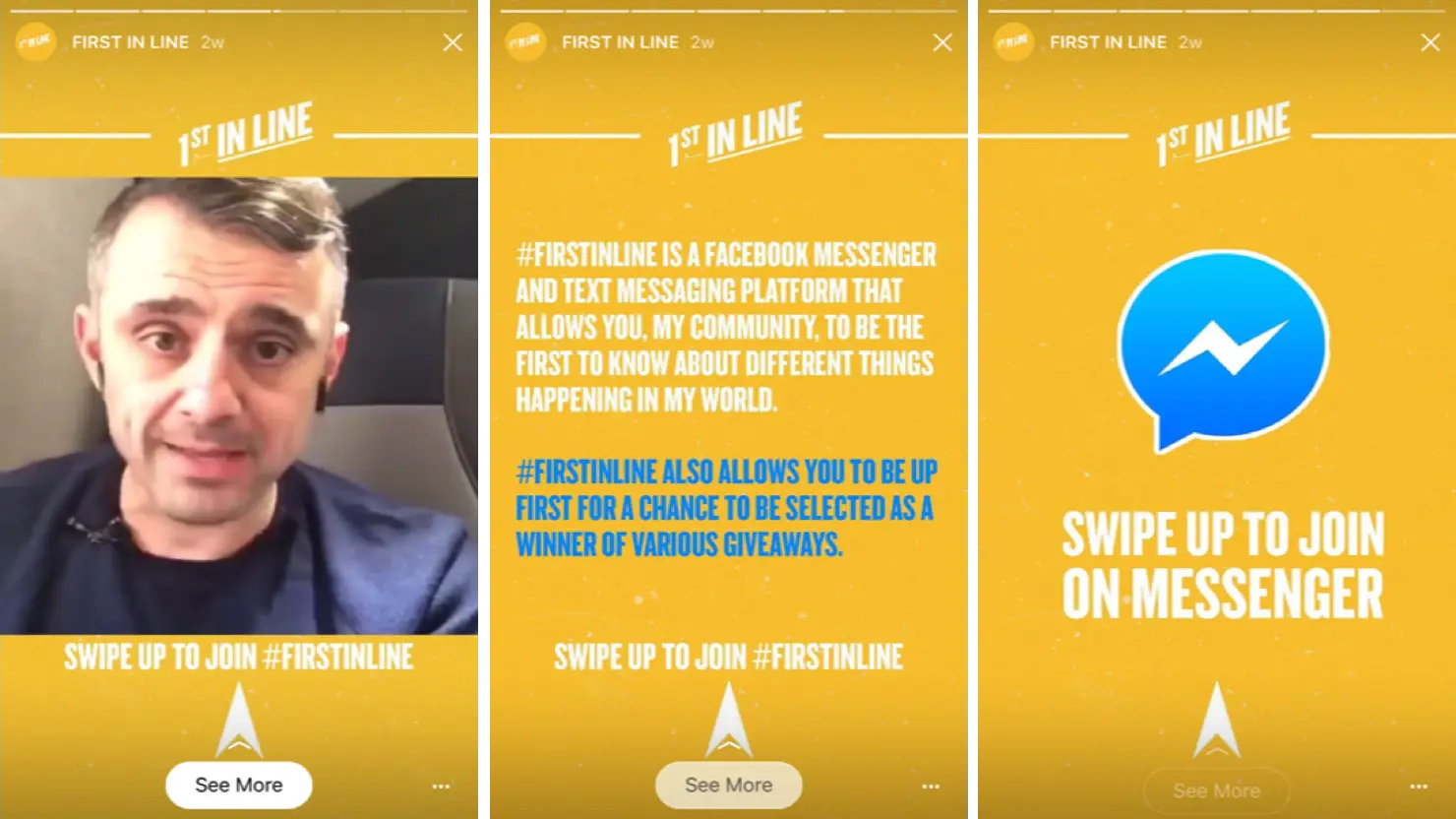
Additionally, the use of LinkedIn Stories is another emerging trend in the platform. Similar to Instagram and Snapchat Stories, LinkedIn Stories provide a new way for businesses to engage with their audience and share more casual, behind-the-scenes content.

Overall, staying ahead of the latest LinkedIn marketing trends is essential for businesses looking to succeed on the platform. By leveraging new tactics and staying up-to-date with the latest developments, businesses can stand out and achieve their goals on LinkedIn.

9. Mastering LinkedIn Analytics: A Beginner’s Guide

Mastering LinkedIn Analytics is essential for businesses looking to understand the performance of their marketing efforts on the platform. By tracking relevant metrics and analyzing their performance, businesses can make data-driven decisions and optimize their strategy for better results.

One of the key metrics to track is engagement, which includes likes, comments, and shares on your content. By analyzing engagement data, businesses can understand how well their content is resonating with their audience and adjust their strategy accordingly.

Another important metric to track is reach, which measures the number of people who have seen your content. By analyzing reach data, businesses can understand how well their content is performing in terms of visibility and adjust their strategy to reach a larger audience.

Additionally, tracking conversion rates is critical for businesses looking to drive growth. By analyzing the number of leads and conversions generated through LinkedIn, businesses can understand how well their strategy is driving results and adjust their efforts to optimize for better performance.

Overall, mastering LinkedIn Analytics is key to understanding the effectiveness of your marketing strategy on the platform. By tracking relevant metrics and making data-driven decisions, businesses can improve their performance and achieve their goals on LinkedIn.

10. Best Practices for LinkedIn Marketing: Do’s and Don’ts

To ensure success with LinkedIn marketing, there are several best practices that businesses should follow.

DO:

  •   Optimize your profile for maximum engagement
  •   Create engaging content that resonates with your target audience
  •   Build a strong network by connecting with relevant professionals in your industry
  •   Utilize LinkedIn Ads to target specific demographics and drive growth
  •   Measure your performance with relevant metrics to make data-driven decisions

DON’T:

  •   Overlook the importance of personalization and connection building
  •   Post irrelevant or low-quality content that doesn’t add value to your audience
  •   Spam your network with irrelevant messages or connection requests
  •   Neglect to optimize your profile for searchability and engagement
  •   Ignore the importance of tracking your performance with relevant metrics to improve your strategy.

By following these do’s and don’ts, businesses can create a strong and effective LinkedIn marketing strategy that drives results on the platform.

Conclusion

In conclusion, mastering LinkedIn marketing is essential for businesses looking to grow their brand and reach new audiences. By optimizing their profile, building a strong network, creating engaging content, utilizing LinkedIn Ads, measuring their performance, and staying up-to-date with the latest trends and best practices, businesses can achieve their goals on the platform.

With a strong understanding of the fundamentals of LinkedIn marketing and a commitment to ongoing learning and optimization, businesses can successfully leverage the platform to drive growth and reach their full potential.

Author Bio

Raj panchotiya is a Link builder at vh-info. He likes to talk about Link building. In his free time, he likes to watch videos on youtube on the latest link building trends!

You can always reach out to Raj on LinkedIn
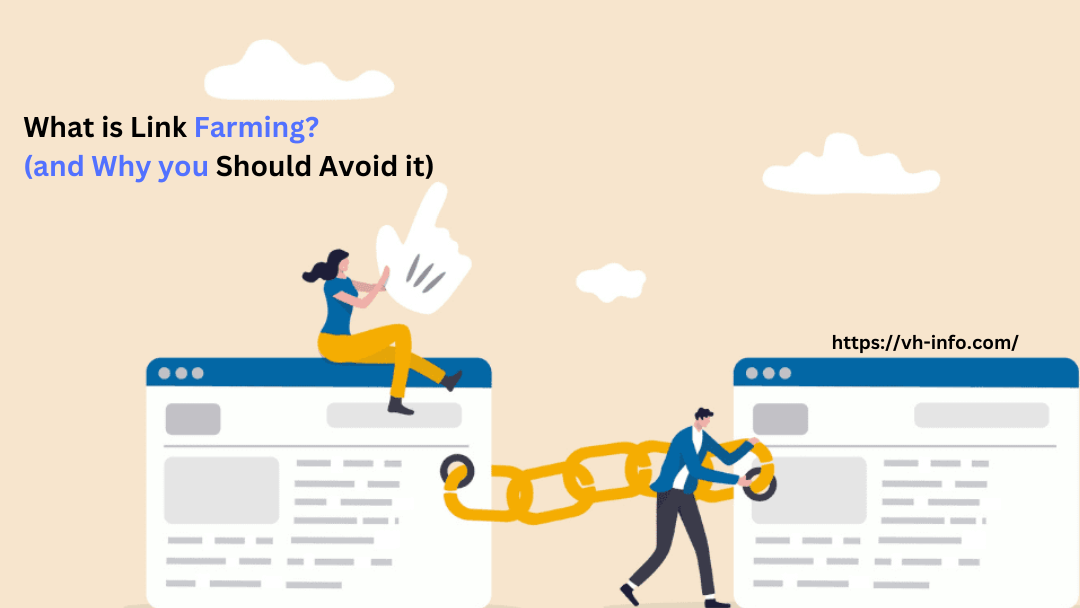
What is Link Farming? (and Why you Should Avoid it)

Every website owner is now aware of the significance of link building for ongoing SEO efforts.

Search engines use backlinks as important signals to determine the value of your website. They serve as evidence that visitors to your website not only read your information but also find it valuable enough to link to it and share it with others.

But Google and the other search engines are developing greater intelligence. They are aware of the distinction between an organic backlink that was actually acquired and a shortcut with no real benefit.

One of the more dubious strategies marketers occasionally still employ to quickly assemble a large backlink collection is the usage of link farms. However, link farming ultimately causes much more harm than benefit.

Read the following paragraphs carefully to learn more about this.

Link farming: What is it?

A link farm, like a real farm, is a website (or sometimes a group of them) that exists solely to create links to other websites.

Link farms aren’t there to spread a message or provide valuable content to the general public.

Instead, they are sham sites created specifically to add to the backlink catalogs of legitimate websites.

When you see all those services promising to help aspiring website owners and marketers get stellar search engine rankings, hundreds of backlinks, and dozens of pieces of content, think twice before signing up.

All of that “value” cannot exist in a vacuum. In reality, you’re potentially involving yourself with a link farm, putting your site’s long-term success at risk.

Link farming is now considered a deceptive, black hat tactic for artificially increasing page rank, a major no-no in Google’s eyes.

Furthermore, participation in a link farm now carries heavy ranking penalties that can be difficult to overcome, so it’s best to avoid them entirely.

How to Identify a Link Farm?

While some link farms are easier to spot, others appear to be legitimate websites at first glance.

However, closer inspection always exposes them for what they are.

Look for the following characteristics to determine whether a website you’ve found is actually a link farm in disguise:

  • A low Google PageRank score — Google-backed evidence that the site isn’t valued.
  • Content that is extremely brief or poorly written, with little value to human readers.
  • Topics that appear to be random and unrelated were covered.
  • Pages are nothing more than lists of links with no context.
  • Domain names that make no sense or are made up entirely of random letters and numbers.
  • The more of those characteristics you notice, the more likely you’re looking at a link farm.

Legitimate websites have a consistent look and feel. Even if the sites themselves aren’t very well-run, they make sense and you can tell what the owners are trying to accomplish.

Is a Link Farm a PBN?

A link farm is not the same as a Private Blog Network ( PBN), but it could be a component of one.

PBNs are networks of sites used by people to gain authority over other sites they own. The idea is that this will elevate them in the search results.

It makes no sense for a PBN owner to sell backlinks through their network. This would expose it to Google’s scrutiny.

However, a PBN operator may extract additional revenue from sites by using some of them as link farms if:

Google has already discovered the PBN, and the sites aren’t passing on any positive rank to the network.

Why Does Google Hate Link Farming?

Link farms first appeared as a result of Google’s ranking algorithm, PageRank.

In the early days of PageRank, each link to a specific website was regarded as a vote for that site’s overall worth and popularity.

The more backlinks a site had, the more valuable it was thought to be, and there was little way to distinguish between genuine backlinks and fake ones created to manipulate the algorithm..

However, as the algorithm evolved and Google became smarter, steps were taken to identify link farms and prevent them from dominating SERPs.

As a result, owning, operating, or even being associated with a link farming scheme can now result in penalties from Google and the other search engines, and for good reason.

Link farms purposefully try to fool Google’s algorithm in order to achieve artificial rankings for sites that haven’t earned them.

Is Link Farming Worth the Risk?

Although link farming may appear to make sense on the surface, especially after hearing a slick sales pitch from a black hat SEO “expert,” it is not worth the risk.

The following are just a few of the numerous reasons why you should avoid them at all costs.

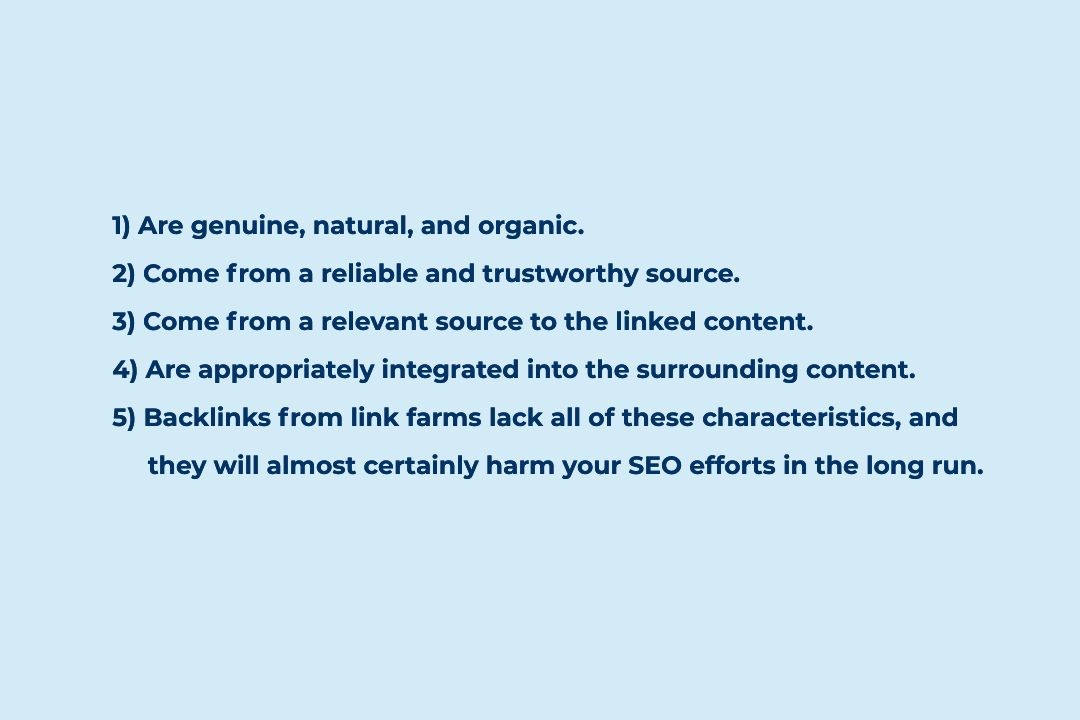
You can’t trust the quality

Although link farming may appear to make sense on the surface, particularly after hearing a slick sales pitch from a black hat SEO “expert,” the risk is not worth it.

Here are a few of the many reasons why you should avoid them at all costs.

all costs

You can’t trust the longevity

Even if the link farm’s owner runs a tight enough fleet to avoid being shut down or penalized, there is no guarantee that those links will remain active in the long run.

Link farms frequently fail just as quickly and abruptly as they rise, which means that all of the backlinks you paid for may simply vanish.

Even if the link farm remains active, there are no guarantees that your specific links will not be removed or otherwise changed without notice.

So it’s only a matter of time before farmed links become completely useless.

You may face severe penalties.

Poor quality links, such as those associated with link farms, expose your site to severe penalties that will be difficult to overcome.

This applies to both outbound links in your content and backlinks pointing to your site.

The penalties are frequently applied automatically by an algorithm filter. Members of Google’s spam team, on the other hand, occasionally manually review sites for potential violations of their webmaster guidelines and decide to use a penalty.

How to Know If Your Link Building Service Uses Link Farms

To develop links for clients, certain link-building firms are involved in link farming.

They do this because they can avoid spending time and money on the actual link-building process, which involves producing high-quality content and conducting manual outreach.

Instead, they can simply use link farms they either own or are affiliated with to place backlinks to boost their DA.

It’s an easy victory for the link builder, but the clients’ money is completely wasted.

The problem is that it might be challenging to predict the websites that backlink-building services would use to establish links. The following red flags should cause you to pause:

  • Guaranteed links: There are no assurances when building links; it is up to website owners to choose whether or not to do so. A link farm may be used by a provider if it guarantees links on a specific type of website or website.
  • Quick links: It takes time to create backlinks. You need to locate appropriate websites, bargain with the owners, and then provide pertinent material. Watch out for services that guarantee quick outcomes.
  • Low cost: Link building is an expensive procedure. Writing guest pieces and doing manual outreach can be costly. Service may be taking shortcuts to building links if the pricing is suspiciously cheap.
  • Poor performance: Link farms are ineffective. If the service cannot provide detailed testimonials or case studies demonstrating how it has influenced a site’s search engine ranking, this is a major red flag.

What Should You Do Instead of Link Farming?.

Link farming may appear to be a quick way to achieve your desired level of SEO performance, but it just doesn’t work in the long run.

Making the appropriate optimization decisions and running your website ethically are the only ways to achieve long-term success. Here are some pointers to help you get going.

1. Examine your link options carefully

Make a special effort to make sure the website you are connecting to is trustworthy when choosing outbound links to include in your content.

Pick websites and materials that are related to your own. Verify their applicability, reliability, and ranking.

To your audience, an outbound link is a recommendation from you. Choose carefully.

Remember that if they’re selling links to you, they’re probably also selling them to a lot of other people, which means you’re dealing with a link farm.

2. Understand the differences between link farms and directories

A link farm and a directory could appear to be the same thing at first glance. They are, however, extremely dissimilar.

While link farms are random, directories are well-organized and carefully managed. In comparison, link farms don’t truly offer their visitors any kind of helpful service.

Your SEO efforts and SERP rankings will benefit greatly from directories. Simply carefully consider your alternatives to make sure you are included in the best, most pertinent ones for your industry or area.

3. Concentrate on gaining organic links

There’s nothing wrong with asking for or exchanging links with credible competitors in your niche, but completely natural connections are still preferable.

And the best approach to achieve those is to concentrate on accumulating a library of expertly created, educational content that actually benefits the people who visit your website.

Analyze a range of topics associated with your area of expertise as well as other media. Answer the inquiries from your audience from different perspectives.

It goes without saying that this approach won’t produce a sizable collection of backlinks overnight, but it is still the best and most efficient way to get results that last.

Conclusion: Keep updated with trends and achieve success

Neither Google nor your audience remains the same over time.

Then your SEO approach also can’t be static if you’re serious about remaining ahead of the competition. This entails keeping up with new developments in SEO, marketing, and changing consumer demands.

To help you rise to the top of Google’s search engine results pages, you’ll learn how to better optimize your website and produce engaging interactive content experiences, among other things.

Writer Information


Bharat Baghel

Bharat Baghel is a Digital Marketing Expert and also a SAAS content marketer. He loves to talk about SEO, content creation and Digital marketing tactics. In his free time, he likes to read and stay updated on digital marketing trends and travel to remote places on his bike. You can always reach out to Bharat on LinkedIn.

Instagram Marketing Guide: 10 Tips That Actually Work

Introduction

Instagram is a powerful social media platform that businesses can use to market their products or services. With over 1 billion active monthly users, Instagram offers a huge potential audience for businesses to connect with. However, simply having an Instagram account is not enough to guarantee success. Effective Instagram marketing requires strategy, creativity, and persistence. 

In this guide, we will share 10 tips that actually work for Instagram marketing. These tips will help you to increase engagement, build brand awareness, and ultimately drive more sales through the platform. Whether you are new to Instagram marketing or looking to improve your existing strategy, this guide has something for you.

Top 10 Instagram Marketing Tips & Tricks To Know in 2023

1. Creating a Winning Instagram Profile

instagram profile

Creating a winning Instagram profile is crucial for businesses looking to use the platform for marketing purposes. Your profile is your storefront on Instagram and should be designed to attract and engage potential customers. Here are some tips for creating a winning Instagram profile:

  •   Use a clear and recognizable profile picture that represents your brand.
  •   Write a clear and concise bio that tells visitors who you are and what you do.
  •   Use relevant keywords in your bio to help users discover your profile.
  •   Add a call-to-action in your bio to encourage visitors to take action, such as visiting your website or making a purchase.
  • Use high-quality images, ideally generated or enhanced with Flux LoRa, and videos that are visually appealing and consistent with your brand.
  •   Create an Instagram highlight reel to showcase your best content and give visitors a quick overview of your brand.
  •   Use Instagram insights to track your profile’s performance and make adjustments to improve engagement.

By following these tips, you can create a winning Instagram profile that helps you connect with your target audience and achieve your marketing goals.

2. Creating High-Quality Content

Content

Creating high-quality content is essential for a successful Instagram marketing strategy. To stand out on Instagram, businesses need to use social media post maker to create visually appealing and engaging conten that resonates with their target audience. Here are some tips for creating high-quality content:

  1. Define your brand’s visual style and stick to it. Use a consistent color palette, filters, and editing techniques to give your content a cohesive look and feel.
  2. Use high-quality images and videos that are well-lit, in-focus, and visually interesting. To create unique visuals, consider using an image generator to enhance or customize your content.
  3. Use captions to provide context, tell a story, and encourage engagement. Also, implement Instagram grid post maker to create captivating multi-image posts that will help you stand out on the platform.
  4. Experiment with different content formats, such as carousel posts, videos, and Instagram Reels.
  5. Use hashtags to increase discoverability and reach new audiences.
  6. Collaborate with influencers and other brands to create co-branded content that reaches new audiences.
  7. Use Instagram insights to track your content’s performance and adjust your strategy accordingly.

By following these tips, businesses can create high-quality content that attracts and engages their target audience, builds brand awareness, and ultimately drives sales on Instagram.

3. Hashtag Strategy for Instagram Marketing

Instagram

Hashtags are an important part of Instagram’s marketing strategy as they help businesses increase the visibility of their content and reach a wider audience. Here are some tips for creating an effective hashtag strategy:

  1. Research popular and relevant hashtags in your industry and include them in your posts. You can use tools like Hashtagify or All Hashtag to find popular hashtags.
  2. Use a mix of broad and niche hashtags to reach both a wide and targeted audience.
  3. Create a branded hashtag that is unique to your business and encourage your followers to use it.
  4. Use location-based hashtags to reach local audiences and increase discoverability.
  5. Use trending hashtags that are relevant to your industry or niche to increase your post’s visibility.
  6. Limit the number of hashtags to between 5-10 per post. Too many hashtags can look spammy and decrease engagement.
  7. Analyze the performance of your hashtags using Instagram insights and adjust your strategy accordingly.

By following these tips, businesses can create an effective hashtag strategy that helps increase the visibility of their content, reach new audiences, and drive engagement on Instagram.

4. Instagram Stories for Marketing

Stories

Instagram Stories are a popular feature of the platform and provide businesses with a great opportunity to connect with their audience in a more authentic and engaging way. Here are some tips for using Instagram Stories for marketing:

  1. Use Instagram Stories to showcase your brand’s personality and give followers a behind-the-scenes look at your business.
  2. Use interactive features such as polls, quizzes, and questions to engage with your audience and encourage them to participate.
  3. Use stickers, emojis, and GIFs to make your Stories more visually appealing and interesting.
  4. Use Instagram Stories to promote new products or services, special offers, or events.
  5. Use location tags and hashtags in your Stories to increase discoverability and reach new audiences.
  6. Use Instagram Stories to collaborate with influencers or other businesses to reach new audiences.
  7. Use Instagram insights to track the performance of your Stories and adjust your strategy accordingly.

By incorporating Instagram Stories into your marketing strategy, businesses can increase engagement, reach new audiences, and build a more authentic connection with their instagram followers on the platform.

Instagram Influencer Marketing

Instagram Influencer Marketing

Instagram influencer marketing is a powerful way for businesses to reach new audiences and connect with potential customers. Influencers are people who have a large and engaged following on Instagram and can use their influence to promote products or services. Here are some tips for using influencer marketing on Instagram:

  1. Choose influencers whose values and style align with your brand.
  2. Set clear goals and objectives for your influencer campaign, such as increasing brand awareness or driving sales.
  3. Negotiate a clear agreement with the influencer that outlines the terms of the collaboration, including compensation, content creation, and posting frequency.
  4. Allow the influencer creative freedom to develop content that is authentic and engaging.
  5. Use a unique discount code or affiliate link to track the performance of the influencer campaign.
  6. Measure the success of the campaign using Instagram insights and adjust your strategy accordingly. 
  7. Effective influencer tracking tools can help brands monitor and measure the performance of their influencer campaigns, ensuring they achieve the desired impact.

Incorporating influencer marketing into your Instagram strategy can help increase your brand’s visibility, build credibility, and ultimately drive sales apart from this we can also make use of the NFS means Not For Sale tag on Instagram to prevent our users for not buying. By choosing the right influencers and setting clear objectives, businesses can create successful influencer campaigns that connect with their target audience and achieve their marketing goals.

6. Instagram Ads

Instagram Ads

Instagram Ads provide businesses with a powerful way to reach their target audience and drive sales. Here are some tips for using Instagram Ads effectively:

  1. Choose the right ad format based on your marketing objectives. Instagram offers a variety of ad formats, including photo ads, video ads, carousel ads, and Instagram Stories ads.
  2. Use high-quality visuals that are visually appealing and consistent with your brand’s visual style.
  3. Write compelling ad copy that highlights the benefits of your product or service and encourages users to take action.
  4. Use targeting options to reach your ideal audience based on demographics, interests, and behaviors.
  5. Use a clear call-to-action to encourage users to take action, such as making a purchase or visiting your website.
  6. Monitor your ad performance using Instagram insights and adjust your strategy accordingly.
  7. Experiment with different ad formats, targeting options, and ad copy to find the combination that works best for your business.

By incorporating Instagram Ads into your marketing strategy, businesses can reach new audiences, increase brand awareness, and ultimately drive sales on the platform. Additionally, using ad spend tracking tools like RedTrack can further enhance your ad campaigns by helping you accurately track conversions, optimize spending, and improve ROI.

7. Engaging with Your Audience on Instagram

Instagram Influencer Marketing

Engaging with your audience on Instagram is essential to building a strong and loyal following. Here are some tips for effectively engaging with your audience:

  1. Respond to comments and direct messages promptly and authentically. This helps build a relationship with your followers and shows them that you value their feedback.
  2. Use Instagram Stories to ask questions, run polls, and encourage followers to share their opinions.
  3. Use Instagram Live to connect with your audience in real-time and answer their questions.
  4. Host Instagram giveaways and contests to encourage engagement and increase your reach.
  5. Use user-generated content to showcase your followers and build a sense of community.
  6. Share content that is relevant and valuable to your audience and encourages them to engage with your brand.
  7. Monitor your engagement metrics using Instagram insights and adjust your strategy accordingly.
  8. By engaging with your audience on Instagram, businesses can build a loyal following, increase brand awareness, and ultimately drive sales. By using a mix of tactics, businesses can create a strong and authentic connection with their followers and build a community around their brand on the platform.

8. Instagram Analytics

Instagram Analytics

Instagram analytics provides businesses with valuable insights into the performance of their content and overall Instagram strategy. Here are some key metrics to track using Instagram analytics:

  1. Engagement rate: This metric measures the level of engagement on your content, such as likes, comments, and shares. A high engagement rate indicates that your content is resonating with your audience.
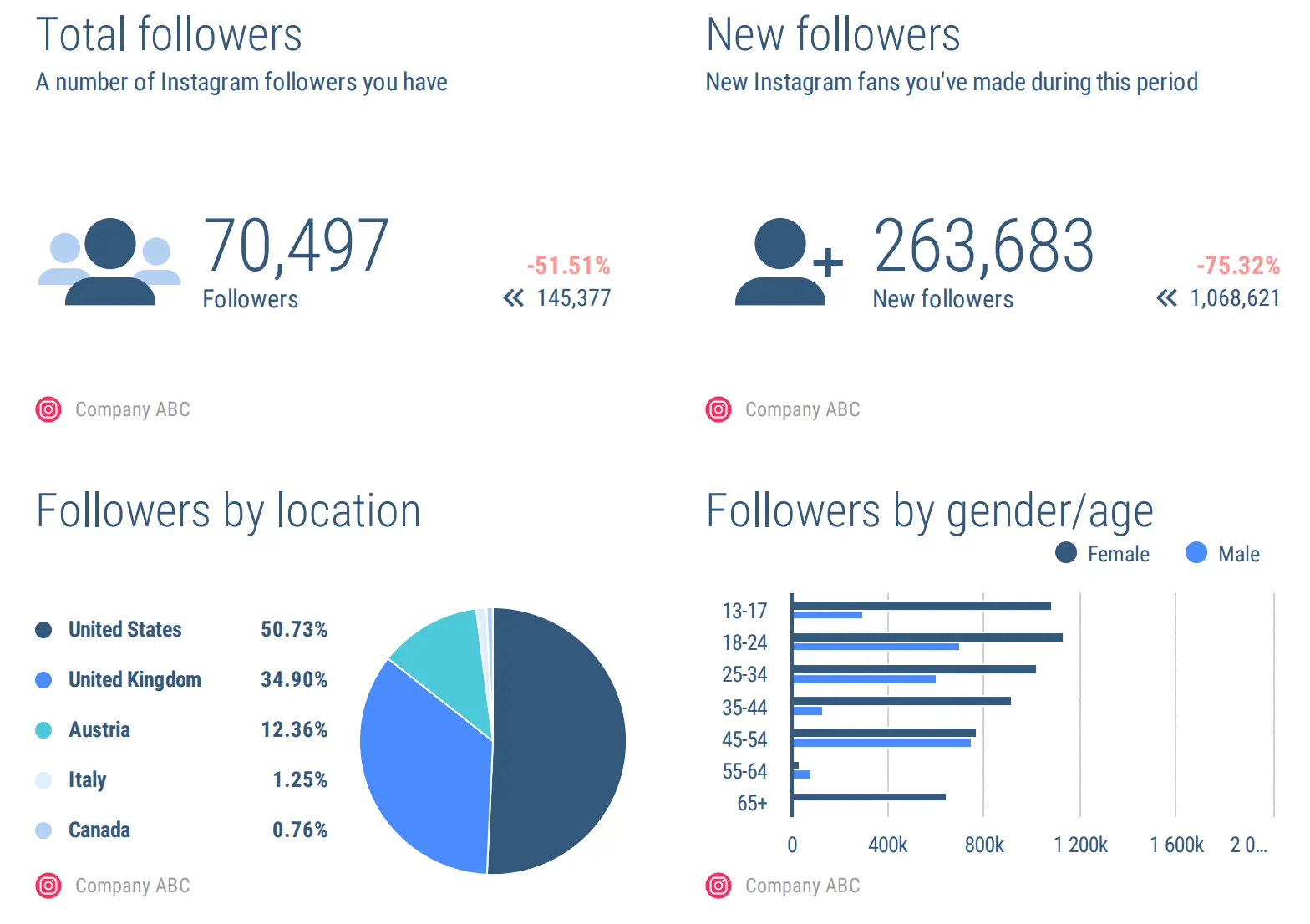
  2. Follower growth: This metric tracks the growth of your Instagram following over time. Tracking follower growth can help you identify which content or tactics are driving new followers to your account.
  3. Monitoring recent follower activity can provide additional context behind these growth trends. The recent followers instagram free platform helps users view recent follow activity associated with public Instagram accounts, making it easier to analyze audience behavior, discover growth patterns, and better understand how an account is attracting new followers.
  4. Reach: This metric measures the number of unique users who have seen your content. Tracking reach can help you understand the size of your audience and the effectiveness of your content distribution strategy.
  5. Impressions: This metric measures the number of times your content has been seen. Tracking impressions can help you identify which content is resonating with your audience and driving engagement.
  6. Click-through rate: This metric measures the percentage of users who click on a link in your bio or on an Instagram ad. Tracking click-through rate can help you understand the effectiveness of your call-to-action and overall marketing strategy.
  7. By using Instagram analytics, businesses can gain valuable insights into the performance of their Instagram strategy and make data-driven decisions to optimize their content and reach their marketing goals.

9. Instagram Marketing Do’s and Don’ts

Dos and Donts

Instagram is a powerful platform for businesses to reach new audiences and build brand awareness. Here are some do’s and don’ts to keep in mind when creating an Instagram marketing strategy:

Do’s:

Do use high-quality visuals that are consistent with your brand’s visual style.

Do engage with your audience by responding to comments and direct messages promptly and authentically.

Do use hashtags strategically to increase your reach and visibility.

Do track your performance using Instagram insights to make data-driven decisions.

Do experiment with different ad formats, targeting options, and ad copy to find the combination that works best for your business.

Don’ts:

Don’t use irrelevant hashtags to try to reach a wider audience.

Don’t post low-quality visuals that are inconsistent with your brand’s visual style.

Don’t ignore your audience by failing to respond to comments and direct messages.

Don’t over-post and flood your followers’ feeds with too much content.

Don’t rely solely on Instagram to drive traffic and sales to your website.

By following these do’s and don’ts, businesses can create an effective Instagram marketing strategy that resonates with their audience and achieves their marketing goals.

10. Find Your Best Time to Post

Best Time to Post

Finding the best time to post on Instagram is crucial to maximizing engagement and reaching your target audience. Here are some tips for finding the best time to post on Instagram:

  1. Analyze your Instagram Insights: Instagram Insights provides valuable data on when your followers are most active on the platform. Use this data to identify the best times to post based on your specific audience.
  2. Consider your audience’s location: If your audience is primarily located in a specific time zone, make sure to schedule your posts accordingly.
  3. Experiment with different posting times: Try posting at different times of the day and week to see when you receive the most engagement.
  4. Use third-party tools: There are several third-party best instagram tools available that can analyze your Instagram data and suggest the best times to post based on your audience’s behavior.
  5. By finding your best time to post on Instagram, you can increase your engagement, reach a larger audience, and ultimately achieve your marketing goals on the platform.

Conclusion

In conclusion, Instagram is a powerful platform for businesses to reach new audiences, build brand awareness, and drive sales. By implementing the 10 tips outlined in this Instagram Marketing Guide, businesses can create an effective Instagram marketing strategy that resonates with their audience and achieves their marketing goals.

From creating a winning Instagram profile to using Instagram ads and engaging with your audience, these tips are proven to work and have helped many businesses succeed on the

platform. By following these tips, businesses can unlock the full potential of Instagram and create a strong online presence that drives real results.

Author Bio

Kashish Mehta is a Digital Marketing Expert and an Outreach Specialist at Brandveda. She loves to talk about SEO, content marketing & digital marketing strategies. In her free time, she likes to read & stay updated on the latest digital marketing trends!

You can always reach out to kashish on LinkedIn
Internal Linking for SEO: Why and How?

Introduction

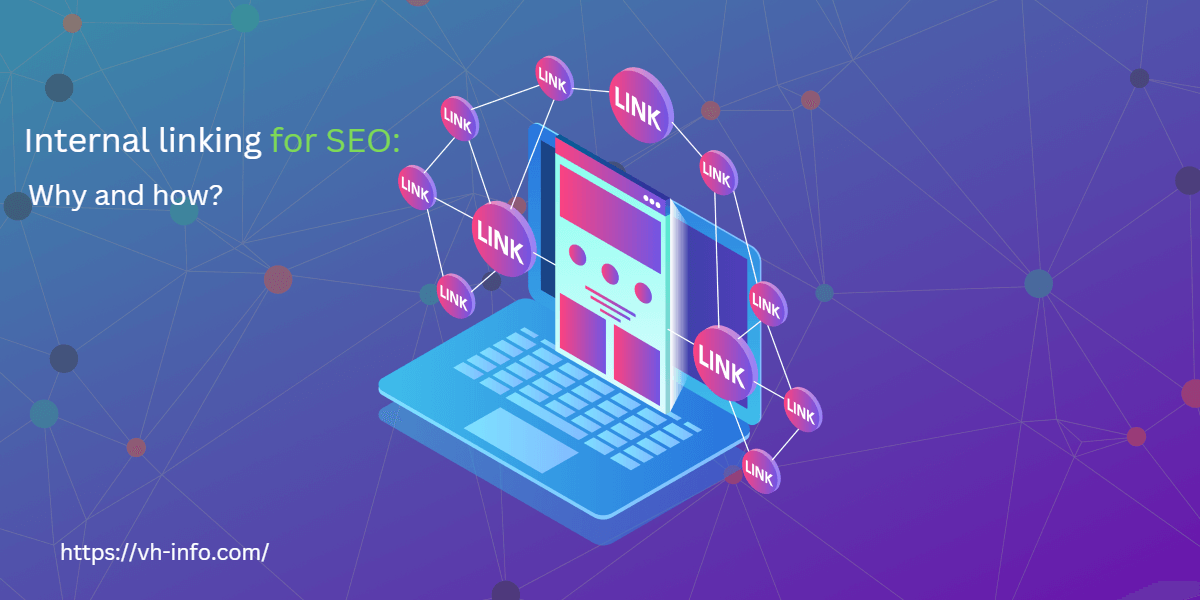
Internal linking is an essential aspect of SEO that often gets overlooked. Internal linking involves linking to other pages on your website, and it has a significant impact on how search engines crawl and index your site. 

By strategically linking between pages, you can help search engines understand the structure and hierarchy of your site, reinforce the relevance of your content, and transfer authority between pages.

In addition, internal linking can enhance the user experience by guiding users to related content and making it easier to navigate your site. In this series of blog outlines, we’ll explore the benefits of internal linking for SEO and provide practical tips and best practices for implementing an effective internal linking strategy on your website.

1. What is internal linking for SEO and why it’s important

Internal linking for SEO involves linking to other pages within your website. It’s a key aspect of website architecture and helps search engines understand the structure and hierarchy of your site. Internal linking also helps transfer authority between pages, which can boost the SEO performance of your website. By linking to related pages and content, you can reinforce the relevance of your site’s content and create a better user experience by guiding users to additional resources on your site.

Internal linking also helps to distribute link equity throughout your site. When one page on your website earns links from other sites, it passes some of that link equity to other pages on your site through internal links. This can help improve the rankings of those pages in search engine results pages (SERPs).

In summary, internal linking is an essential aspect of SEO that can improve the crawlability, authority, and relevance of your website. By using internal links effectively, you can enhance the user experience and boost the SEO performance of your site.

2. The benefits of internal linking for SEO

Internal linking is an SEO strategy that involves linking one page of a website to another page within the same site. It is an essential component of on-page optimization, and it offers numerous benefits for search engine optimization.

One of the primary benefits of internal linking is that it helps search engines understand the structure of your website. By linking your pages together, search engines can easily crawl and index your website, which can improve your website’s visibility and ranking in search results.

Internal linking can also help distribute page authority and link equity throughout your website. When you link from a high-authority page to a lower-authority page, you pass on some of that authority to the linked page, which can help it rank higher in search results.

 Another benefit of internal linking is that it can increase user engagement and reduce bounce rates. By linking to related pages within your website, you can keep visitors on your site for longer, and encourage them to explore more of your content.

In conclusion, internal linking is an effective and essential SEO strategy that can improve your website’s visibility, ranking, and user engagement.

3. Best practices for internal linking for SEO

Internal linking is an important aspect of search engine optimization (SEO) that can greatly enhance the visibility of a website. However, there are certain best practices that need to be followed to ensure that internal linking is done correctly and effectively for SEO.

One best practice for internal linking is to use descriptive anchor text. Anchor text should accurately describe the content on the linked page, and avoid generic phrases like “click here”. This can help search engines understand the context and relevance of the linked page.

Another best practice is to use a logical linking structure that makes it easy for users and search engines to navigate your website. You should link related pages together and avoid linking irrelevant pages. 

A good internal linking structure can help distribute page authority throughout your website, which can improve your website’s ranking in search results.

It’s also important to avoid overloading pages with too many internal links, as this can make them appear spammy and harm your website’s ranking. Instead, focus on linking only to relevant and valuable content.

Lastly, regularly reviewing and updating your internal linking structure can help ensure that it remains effective for SEO. This includes identifying broken links and updating anchor text to keep it relevant.

By following these best practices for internal linking, you can improve your website’s visibility, ranking, and user engagement.

4. How to create an internal linking structure for SEO

Creating an effective internal linking structure is an important aspect of SEO that can greatly improve the visibility and ranking of a website. Here are some steps to follow to create a successful internal linking structure:

  1. Start by identifying your main pages: Determine the most important pages on your website that you want to rank in search results.
  2. Group related content together: Identify related pages that can be linked together. For example, blog posts on similar topics can be linked together.
  3. Use descriptive anchor text: Use descriptive and relevant anchor text to link pages together. Avoid using generic text like “click here” as it provides no context to search engines.
  4. Use a consistent linking structure: Use a consistent linking structure across your website. For example, you may choose to link to category pages from the homepage and to individual blog posts from category pages.
  5. Avoid overlinking: Avoid linking excessively, which can make pages appear spammy and can harm your website’s ranking.
  6. Monitor and update regularly: Regularly review and update your internal linking structure to ensure it remains effective for SEO.

By following these steps, you can create an effective internal linking structure that enhances the visibility and ranking of your website.

5. How to optimize anchor text for internal linking

Anchor text optimization is a critical aspect of internal linking for SEO. Anchor text is the clickable text that appears as a hyperlink on a webpage. Here are some tips for optimizing anchor text for internal linking:

  1. Use descriptive anchor text: Use descriptive and relevant anchor text that accurately reflects the content of the linked page. Avoid using generic phrases like “click here” or “read more,” as they do not provide any context to search engines.
  2. Include target keywords: Including target keywords in the anchor text can help indicate the relevance of the linked page to search engines. However, it’s important not to overdo it, as this can be seen as spammy and harm your website’s ranking.
  3. Keep it natural: Avoid stuffing anchor text with keywords or using exact match phrases. Instead, focus on using natural language that flows well within the context of the content.
  4. Vary anchor text: Avoid using the same anchor text for every internal link. Instead, vary anchor text to reflect the different content on the linked pages.
  5. Be concise: Keep anchor text concise and to the point. Long, wordy anchor text can be confusing to users and may be seen as spammy by search engines.

By following these tips, you can optimize anchor text for internal linking and improve the visibility and ranking of your website.

6. The impact of internal linking on website architecture

Internal linking is a fundamental aspect of website architecture that impacts website usability, search engine optimization (SEO), and overall user experience. Internal linking refers to the practice of linking pages within the same website, creating a network of interconnected pages.

Effective internal linking helps users to navigate through a website, providing them with easy access to the content they are looking for. This, in turn, enhances the user experience and can lead to increased engagement and conversion rates.

In terms of SEO, internal linking helps search engine crawlers to understand the structure and hierarchy of a website. By linking pages together, website owners can signal to search engines which pages are most important and which ones are related. This can help to improve the website’s search engine ranking and visibility.

Overall, the impact of internal linking on website architecture cannot be overstated. It plays a crucial role in both user experience and SEO, and website owners should prioritize its implementation as part of their overall website strategy.

7. Internal linking and content strategy

Internal linking is an important component of content strategy, as it helps to guide users through a website and keep them engaged with the content. When creating a content strategy, website owners should carefully consider how they will link their content together to create a cohesive user experience.

Effective internal linking involves linking related content together, using descriptive anchor text that accurately reflects the content being linked to. This not only helps users to navigate through a website, but it also helps to establish a website’s authority and relevance on a particular topic.

Additionally, internal linking can be used to highlight important content or to promote certain pages or products. By strategically linking to specific pages, website owners can help to drive traffic and increase conversions.

When planning an internal linking strategy as part of a content strategy, it’s important to consider the overall goals of the website and how internal linking can be used to achieve those goals. By integrating internal linking into a comprehensive content strategy, website owners can improve the user experience and drive traffic to key pages.

8. Using internal linking to support keyword targeting

Internal linking is an effective strategy for supporting keyword targeting on a website. By linking to pages within a website that contains specific keywords, website owners can signal to search engines that those pages are relevant and authoritative on those topics. This can help to improve the website’s search engine ranking for those keywords.

When using internal linking to support keyword targeting, it’s important to use descriptive anchor text that includes the targeted keyword. .

This helps search engines to understand the content on the linked page and can improve the page’s relevance for that keyword.

Additionally, website owners can use internal linking to create a hierarchical structure that emphasizes the importance of certain pages or topics. By linking to top-level pages or category pages, website owners can establish a clear hierarchy that signals to search engines which pages are most important and relevant.

Overall, internal linking is a valuable tool for supporting keyword targeting and improving search engine ranking. 

By carefully planning and implementing an internal linking strategy that emphasizes targeted keywords and establishes a clear hierarchy, website owners can improve the visibility and relevance of their website’s content.

9. How to measure the impact of internal linking on SEO

Measuring the impact of internal linking on SEO can be done using several key metrics. One of the most important metrics is organic search traffic.

By analyzing the website’s organic search traffic before and after implementing an internal linking strategy, website owners can determine whether internal linking has had a positive impact on search engine visibility and traffic.

Another important metric is the number of internal links on each page. Website owners can use tools such as Google Analytics or SEMrush to analyse the number of internal links on each page, as well as the anchor text used for those links.

By identifying pages with a high number of internal links and optimizing the anchor text used for those links, website owners can improve the website’s search engine ranking and visibility.

Finally, website owners can also track the time spent on a page and the bounce rate for pages that receive a high number of internal links.

If users are spending more time on these pages and the bounce rate is low, this indicates that the internal linking strategy is effective in improving user engagement and retention.

Overall, measuring the impact of internal linking on SEO requires a combination of data analysis and user behavior tracking. By carefully tracking these metrics, website owners can optimize their internal linking strategy to improve search engine ranking and user engagement.

10. Common internal linking mistakes to avoid

Internal linking is a powerful tool for improving user experience and search engine optimization, but it’s important to use it correctly to avoid making common mistakes that can harm your website’s performance. Here are some common internal linking mistakes to avoid:

  1. Over-optimizing anchor text: Using exact match anchor text excessively can trigger Google’s algorithm and lead to a penalty. Using varied and descriptive anchor text is better for improving user experience and avoiding penalties.
  2. Over-linking: Linking excessively within content can make it difficult for readers to focus on the main topic. Only link when necessary to provide additional value and context.
  3. Linking to low-quality pages: Linking to pages that are low-quality or irrelevant to the content can harm the user experience and lower the website’s authority.
  4. Broken links: Broken links can create a poor user experience and signal to search engines that the website is not well-maintained.
  5. Poorly structured linking hierarchy: Creating a clear and logical linking hierarchy makes it easier for users to navigate the website and for search engines to understand the website’s architecture.

By avoiding these common internal linking mistakes, website owners can improve user experience, increase website authority, and enhance search engine optimization efforts.

Conclusion

In conclusion, internal linking is a powerful tool for improving search engine optimization and user experience on a website. By linking related content together, website owners can signal to search engines which pages are most important and relevant, improving the website’s search engine ranking. 

Additionally, internal linking helps users to navigate through a website and engage with the content, improving the user experience and increasing conversion rates.

To use internal linking effectively for SEO, website owners should create a clear and logical linking hierarchy, use varied and descriptive anchor text, and avoid over-optimizing or over-linking. 

By following these guidelines and tracking key metrics such as organic search traffic and user behavior, website owners can optimize their internal linking strategy and improve the overall performance of their website.

Author Bio

Kashish Mehta is a Digital Marketing Expert and an Outreach Specialist at Brandveda. She loves to talk about SEO, content marketing & digital marketing strategies. In her free time, she likes to read & stay updated on the latest digital marketing trends!

You can always reach out to kashish on LinkedIn
Why is link building important for every SaaS company?

Link building is a crucial aspect of search engine optimization (SEO) for every SaaS company. It refers to the process of acquiring hyperlinks from other websites to your own website. Link building plays a critical role in increasing website traffic, improving search engine rankings, and building brand awareness.

For SaaS companies, link building is particularly important as it helps to establish credibility and authority in the industry. By acquiring links from reputable and relevant websites, SaaS companies can demonstrate to search engines that their website is trustworthy and relevant. This, in turn, can lead to higher search engine rankings, increased website traffic, and ultimately, more customers. Therefore, link building should be an integral part of every SaaS company’s marketing strategy.

What is link building?

Link building is the process of acquiring hyperlinks from other websites to your own website. It is a crucial aspect of search engine optimization (SEO) and plays a critical role in improving website traffic and search engine rankings.

Links are a signal to search engines that other websites consider your content to be valuable and relevant. Therefore, the more high-quality links you have pointing to your website, the more likely it is that search engines will view your website as authoritative and trustworthy.

Link building can be achieved through a variety of tactics, such as guest blogging, broken link building, and resource page link building. The goal is to acquire links from reputable and relevant websites that will enhance your website’s online visibility and reputation.

Benefits of link building for SaaS companies

Link building is a critical component of search engine optimization (SEO) and can bring numerous benefits to SaaS companies. Here are some of the key benefits of link building for SaaS companies:

  1. Improved search engine rankings: Acquiring high-quality links from reputable websites can help to boost your website’s search engine rankings, making it more visible to potential customers.
  2. Increased website traffic: By improving your search engine rankings, link building can also increase website traffic, as more people are likely to click on your website when it appears at the top of search engine results pages.
  3. Enhanced credibility and authority: Acquiring links from respected and relevant websites can help to establish your SaaS company’s credibility and authority in the industry, which can be particularly important for attracting new customers.
  4. Brand awareness: Link building can also help to build brand awareness by increasing the visibility of your SaaS company’s website across the internet.

Overall, link building is a powerful tool for SaaS companies to increase their online visibility, attract new customers, and establish themselves as credible and authoritative players in their industry.

Types of link building

There are several types of link building strategies that SaaS companies can use to acquire links from other websites. Here are some of the most common types of link building:

  1. Guest blogging: This involves writing articles or blog posts for other websites in exchange for a link back to your own website.
  2. Broken link building: This involves finding broken links on other websites and reaching out to the website owner to suggest a replacement link to your own website.
  3. Resource page link building: This involves finding resource pages on other websites that are relevant to your SaaS company’s industry and requesting that your website be added to the page.
  4. Skyscraper content: This involves creating high-quality content that is better than existing content on a particular topic and reaching out to other websites to request that they link to your content.
  5. Infographics: This involves creating visually appealing and informative infographics that other websites may be interested in sharing, thereby generating links back to your website.

These link building strategies can help to improve your website’s search engine rankings, increase website traffic, and establish your SaaS company as a credible and authoritative player in your industry.

How to build backlinks for your SaaS company

Building backlinks for your SaaS company can be a challenging task, but there are several effective strategies that can help you acquire high-quality links. Here are some tips for building backlinks for your SaaS company:

  1. Develop high-quality content: Creating high-quality, informative, and engaging content is the foundation of any successful link building campaign. By creating content that others find valuable, you increase the chances that they will link to it.
  2. 2. Outreach to relevant websites: Identify websites that are relevant to your SaaS company’s industry and reach out to the website owners or editors to request a link back to your website.
  3. Use social media: Share your content on social media platforms and engage with others in your industry. This can help to increase the visibility of your content and encourage others to link to it.
  4. Guest blogging: Write articles or blog posts for other websites in your industry and include a link back to your website in your author bio.
  5. Participate in online communities: Participate in online communities related to your industry, such as forums, groups, or online communities. This can help to build relationships with others in your industry, and potentially lead to link building opportunities.

By implementing these strategies, your SaaS company can build high-quality backlinks that can help to improve your search engine rankings, increase website traffic, and establish your company as a credible and authoritative player in your industry.

Best practices for link building

Link building can be a powerful strategy for improving your SaaS company’s search engine rankings, increasing website traffic, and establishing credibility and authority in your industry. However, it’s important to follow best practices to ensure that your link building efforts are effective and sustainable. Here are some best practices for link building:

  1. Focus on quality over quantity: Acquiring a few high-quality links from authoritative and relevant websites is more valuable than many low-quality links.
  2. Diversify your link profile: Aim to acquire links from a variety of sources, such as guest blogging, broken link building, and resource page link building, link building outsource to ensure a diverse and natural link profile.
  3. Avoid black hat techniques: Avoid using manipulative tactics, such as buying links or participating in link exchanges, as this can harm your website’s reputation and lead to penalties from search engines.
  4. Provide value: Focus on creating high-quality content and resources that others find valuable, which can increase the likelihood of others linking to your website.
  5. Build relationships: Building relationships with others in your industry can lead to link building opportunities, as well as other benefits such as partnerships and collaborations.

By following these best practices, your SaaS company can build a strong and sustainable link profile that can improve your search engine rankings, drive website traffic, and establish your company as a credible and authoritative player in your industry.

Tools and resources for link building

There are several tools and resources available to help SaaS companies with their link building efforts. Here are some popular tools and resources for link building:

  1. Ahrefs: A popular SEO tool that includes a link analysis tool, allowing you to analyze your own link profile as well as those of your competitors.
  2. Moz Link Explorer: A link analysis tool that allows you to research your link profile, analyze your competitors’ link profiles, and identify link building opportunities.
  3. SEMrush: A comprehensive SEO tool that includes a backlink analysis tool, allowing you to research your link profile, track your backlink progress, and identify link building opportunities.
  4. HARO (Help a Reporter Out): A service that connects journalists with sources for their articles, providing opportunities for SaaS companies to get dofollow backlinks from authoritative media outlets.
  5. Broken Link Checkers: These are tools that scan web pages for broken links and help you identify broken links on your website or others’ websites, providing opportunities to offer replacement links.

By utilizing these tools and resources, your SaaS company can streamline your link building efforts and identify high-quality link building opportunities that can help to improve your search engine rankings, increase website traffic, and establish credibility and authority in your industry.

How to track link building efforts

Tracking your link building efforts is important to ensure that you are making progress towards your goals and to identify areas where you may need to adjust your strategy. Here are some tips for tracking your link building efforts:

  1. Set goals: Identify specific goals for your link building efforts, such as acquiring a certain number of links from authoritative websites within a certain timeframe.
  2. Use tracking tools: Utilize tools like Google Analytics or Moz to track the number of backlinks you acquire over time, as well as other metrics such as referral traffic and search engine rankings.
  3. Keep a record: Keep a record of the websites you have reached out to and the status of each outreach effort. This will help you to avoid reaching out to the same website multiple times, and to follow up on outreach efforts that haven’t yet resulted in backlinks.
  4. Monitor your link profile: Regularly monitor your link profile to ensure that you are acquiring high-quality backlinks from authoritative and relevant websites.

By tracking your link building efforts, you can identify what is working and what isn’t, adjust your strategy as needed, and ensure that your link building efforts are effective in improving your SaaS company’s search engine rankings, increasing website traffic, and establishing credibility and authority in your industry.

Tips for successful link building

Link building can be a challenging process, but by following these tips, you can increase your chances of success:

  1. Understand your target audience: Before you start reaching out to websites for pbn backlinks, make sure you understand your target audience and the types of websites they frequent. This will help you to identify relevant and authoritative websites for outreach.
  2. Create high-quality content: Creating high-quality content that others find valuable is a powerful way to attract backlinks naturally. Focus on creating content that solves your audience’s pain points and provides useful insights.
  3. Build relationships: Building relationships with others in your industry can lead to link building opportunities, as well as other benefits such as partnerships and collaborations. Reach out to influencers in your industry and engage with them on social media.
  4. Be persistent: Link building can be a time-consuming and challenging process, but don’t give up. Persistence is key when it comes to link building, and it often takes multiple outreach efforts before you secure a backlink.
  5. Measure your results: Measure the success of your link building efforts by tracking your backlinks, referral traffic, and search engine rankings. This will help you to adjust your strategy and improve your results over time.

By following these tips, your SaaS company can improve your link building efforts, increase your search engine rankings, and establish credibility and authority in your industry.

Link building services

Link building services are companies that specialize in helping businesses and websites acquire backlinks from other websites. These services can be especially helpful for SaaS companies that want to improve their search engine rankings and establish credibility and authority in their industry.

  1. Link building services typically offer a variety of services, such as:
  2. Link prospecting: Identifying potential websites for outreach and backlink acquisition.
  3. Outreach and relationship building: Reaching out to websites to establish relationships and secure backlinks.
  4. Content creation: Creating high-quality content that can be used to attract backlinks naturally.

Monitoring and reporting: Monitoring backlink acquisition and reporting on the success of link building efforts.

When choosing a link building service, it’s important to do your research and choose a reputable provider that has a track record of success. Look for a provider that uses ethical and effective link building strategies, and that has experience working with businesses in your industry.

While link building services can be a helpful resource for SaaS companies, it’s important to remember that building high-quality backlinks is a long-term process that requires ongoing effort and attention.

Conclusion

In conclusion, link building is an essential strategy for every SaaS company that wants to improve its search engine rankings, increase website traffic, and establish credibility and authority in its industry. By acquiring high-quality backlinks from authoritative and relevant websites, SaaS companies can demonstrate to search engines that their website is a trustworthy and valuable resource for their target audience.

 While link building can be a time-consuming and challenging process, the benefits are well worth the effort. By following best practices and utilizing tools and resources, SaaS companies can build a strong backlink profile that supports their overall marketing goals and drives long-term success.

Author Bio

Kashish Mehta is a Digital Marketing Expert and an Outreach Specialist at Brandveda. She loves to talk about SEO, content marketing & digital marketing strategies. In her free time, she likes to read & stay updated on the latest digital marketing trends!

You can always reach out to kashish on LinkedIn
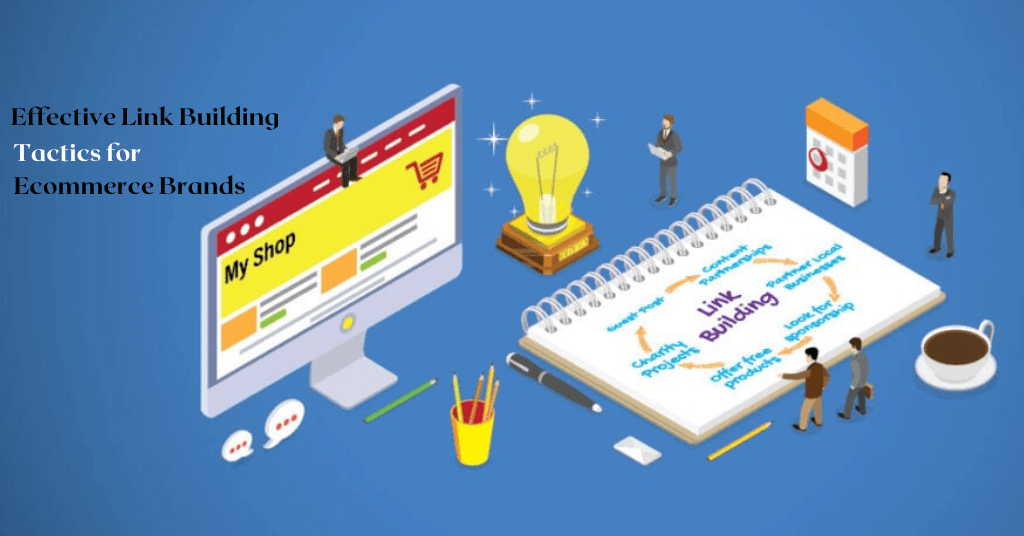
6 Effective Link Building Tactics for Ecommerce Brands

You own an eCommerce store and want to build links, but you don’t have time to launch a full-fledged SEO link building campaign.

We understand how you feel because we’ve been there! That’s why we’ve compiled a list of seven effective link-building strategies that are simple to implement and will help your eCommerce site rank higher in search engine results pages.

Implementing even one of these strategies can significantly increase the amount of traffic to your website. And if you combine all seven, you’ll have even more success!

So, what are you holding out for? Let’s get started on improving your rankings right away!

What Is ECommerce SEO Link Building?

Before we get started with the strategies, let’s make sure everyone is on the same page.

Building links to your website or blog can have a significant impact on your search engine ranking (SERPS).

More traffic for you means higher rankings! And when you build backlinks with strategically placed keywords, you’ll see an increase in not only organic traffic but also conversions (which means more money).

However, not all links are created equal.

Google recognizes this and will reward you for natural backlinks from within your niche.

Google, on the other hand, despises unnatural links that appear to be manipulative in nature (link schemes) and penalizes the sites that use them.

In a nutshell, link building is the process of obtaining backlinks from websites and blogs that have a natural relationship with your target audience.

When it comes to link building, there are three factors to consider:

Link Authority

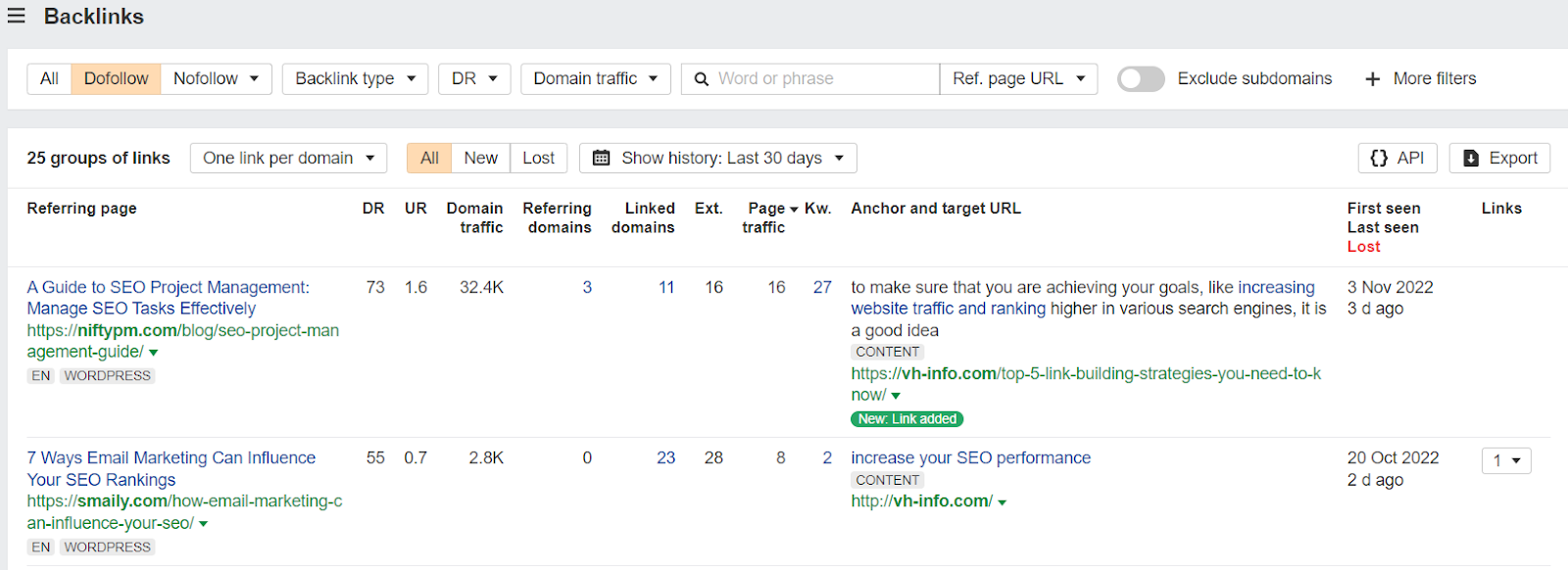
The ranking authority of the site that is linking back to your website or blog is referred to as link authority.

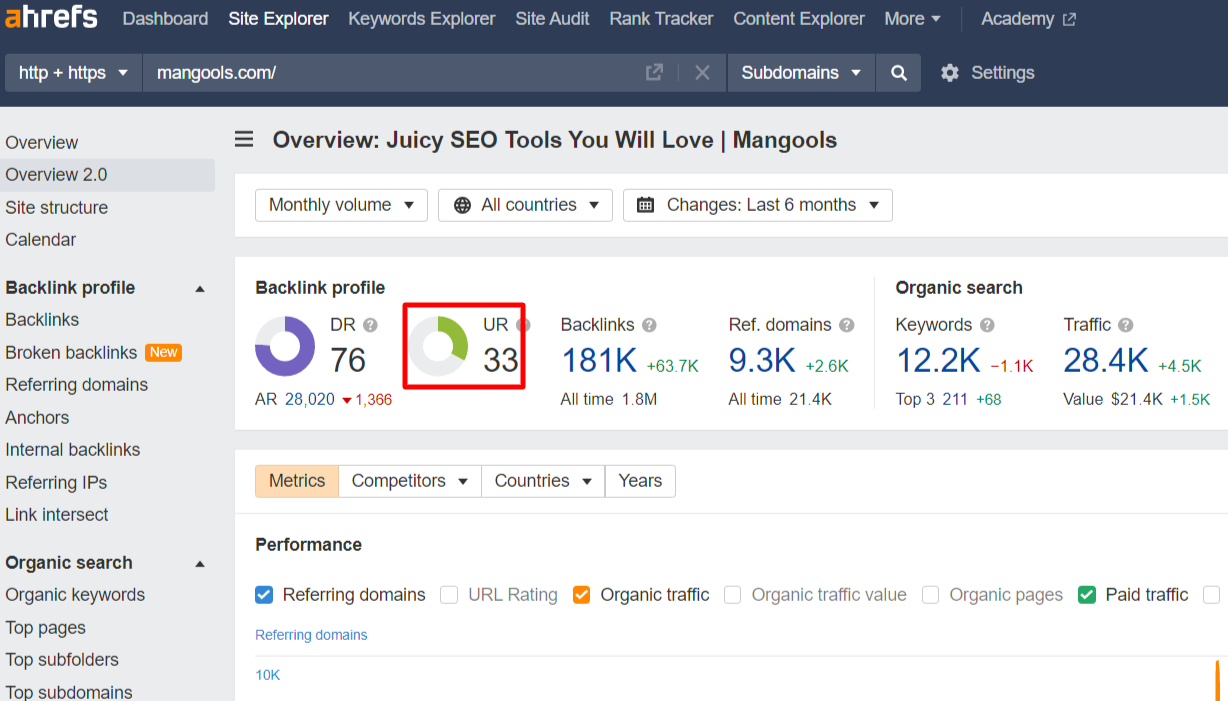
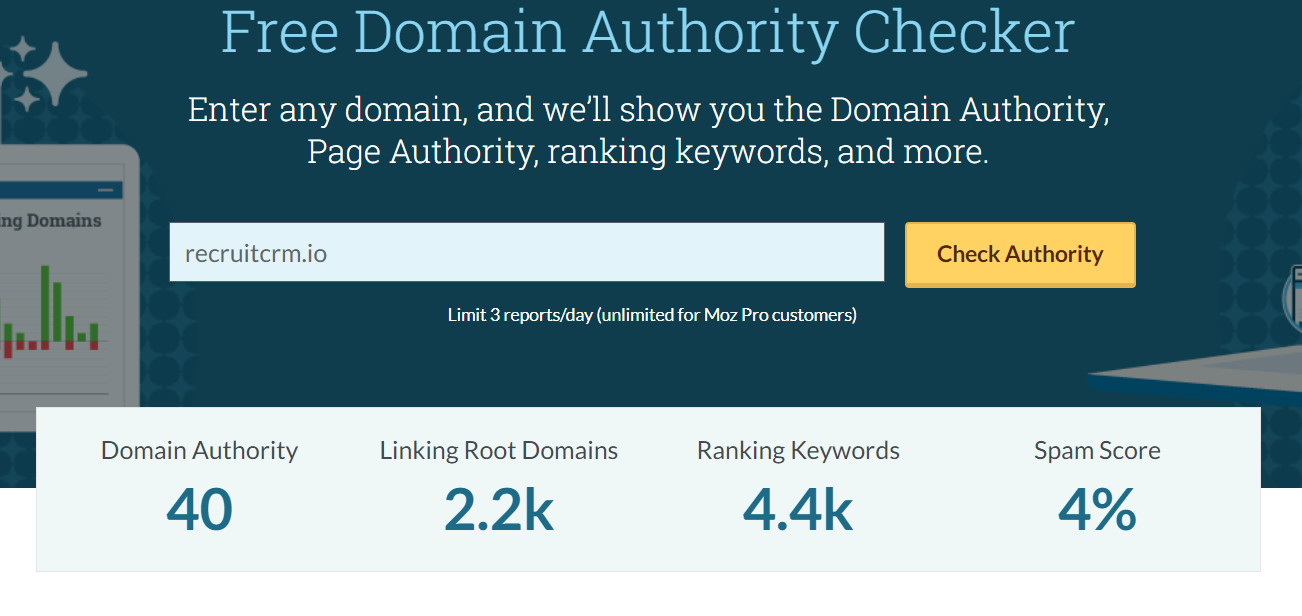
Using Ahrefs’ Site Explorer, you can determine a domain’s authority.

Effective Link Building 1

To summarize, the higher the authority of the site linking back to you, the better.

Link Relevancy

It’s extremely crucial that the content on your website or blog and the content of other websites and blogs (from which you’re building links) are both relevant.

The topical relevance of a link is a good indicator of its quality.

If your website contains links from unrelated websites, it is more likely to be penalized for unethical link building practices.

However, if you build links from high authority sites that are relevant to your eCommerce site’s niche, you will see a much higher return on investment (more traffic, higher rankings, and more conversions).

Trustworthiness

You want to build links from reputable websites. It is also the level of trust that Google’s search engines have in your domain.

In general, adhering to Google’s webmaster guidelines will assist you in developing a natural, trustworthy link profile.

If your site contains a high number of irrelevant or low-quality inbound links, you will experience the consequences of Google’s penalty for manipulative practices.

E-Commerce Link-Building Tactics

It is common knowledge that creating links for e-commerce websites is difficult. Developing links for an eCommerce site presents some unique challenges, whether you’re an SEO building links for a client or a website owner looking to increase the visibility of your site.

Issues such as

  • Extremely competitive markets
  • Increased impact of technological errors
  • Commercial orientation causes suspicion and mistrust
  • There is a scarcity of link-worthy pages and informative content

These factors increase the difficulty of creating links for these types of websites. Despite all of these issues, e-commerce link building is still very much possible; however, you must have the right expectations and goals in order to be successful.

It will be difficult (unless you are a well-known, significant company) to build links to your product pages and rank them for the most important terms.

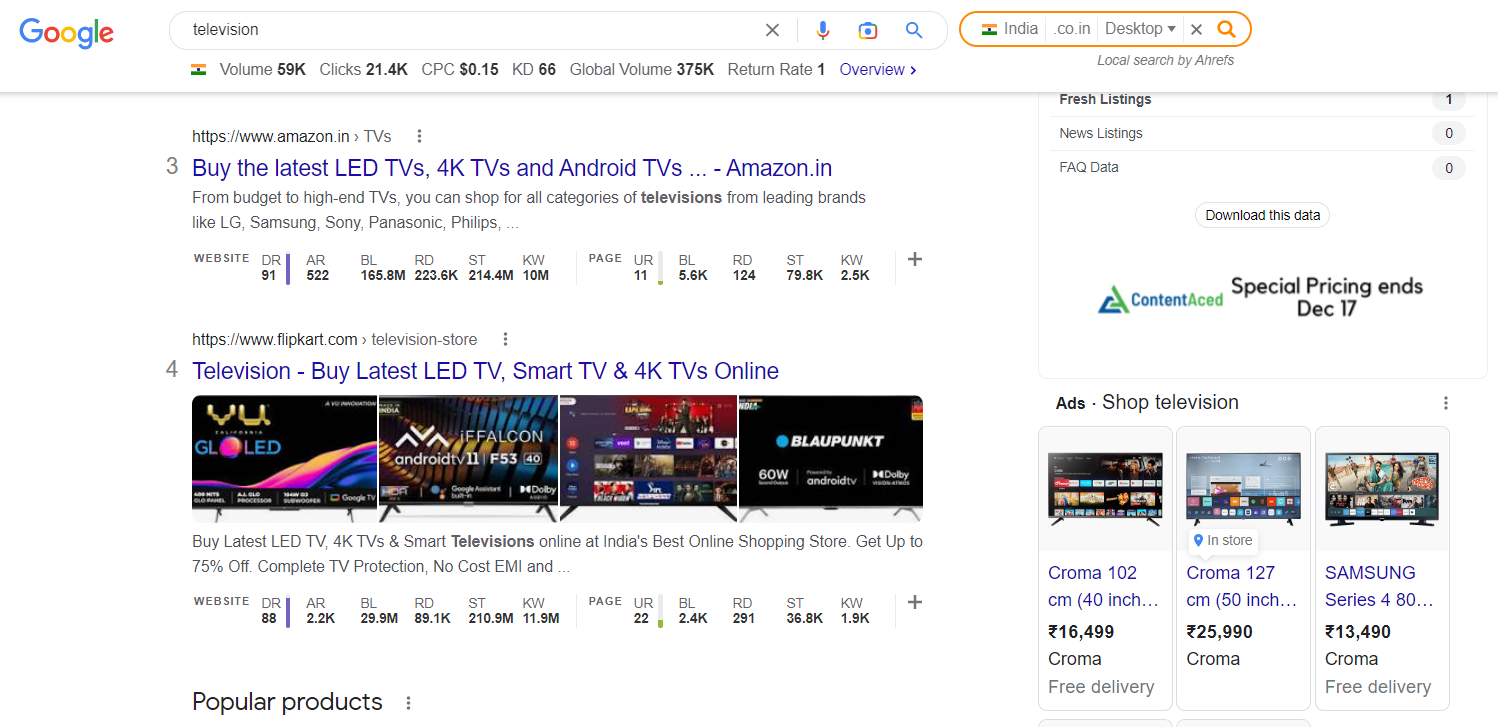
For example, here are the organic results for [Television]:

television

A small to medium-sized beauty eCommerce website will struggle to compete with Amazon, Flipkart, and Croma. Link building, on the other hand, can help smaller e-commerce businesses compete in certain niches and SERPs.

The key metrics that most eCommerce businesses should try to influence with link development are branding and awareness. Although link-building can indirectly increase sales (having more visitors can lead to more conversions), eCommerce link-building initiatives should not be judged based on the number of sales generated.

Rather than product pages that convert well, link acquisition efforts should be focused at educational pages that can expose top-funnel visitors to your brand. If you use outsource link building as a branding strategy to expand the audience for your website, you will be successful.

7 Ways to Build Links to Your ECommerce Store

1. Video Promotion

If you want to build high-quality links, video marketing could be just what your eCommerce store needs.

It’s critical to keep your target audience in mind when creating video content. Make your content interesting and engaging by personalising it to your audience.

You can accomplish this by producing how-to videos, humorous stories, or slapstick comedy (depending on the niche of your store).

Video content ranks well on Google. This means you may be able to get featured snippets for your videos.

Once you’ve gotten some traffic to your videos, make sure to check the analytics to see who embeds them on their website.

This can provide you with outreach opportunities to link back to your eCommerce store.

Additionally, you can use video content to conduct video outreach in order to obtain high DR backlinks.

Because this strategy is relatively unknown among eCommerce store owners, you will face little competition when attempting to rank your video content.

2. Use Shareable Content to Build Links

When you create share-worthy content, it’s a win-win situation for your business.

Not only will you get more organic traffic from search engines from people sharing your awesome products, but you’ll also get relevant links back to your eCommerce store!

One of the best ways to increase the chances of getting a high DR backlink is to craft a “how-to” or listicle article about how to use your product.

For example, if you are selling a smartphone case that has a unique feature, create an article that tells people how to take advantage of that specific feature.

You could even use Reddit to build links for eCommerce stores by participating in relevant subreddits and posting memes about your products. This content idea is applicable to almost any eCommerce store.

After you’ve created the content, it’s time to find places to share it.

3. Contacting Existing Partners

Every eCommerce store has some kind of connection that they can use.

Consider suppliers, loyal customers, local businesses, sponsored organizations, business directories, community pages, and so on… Don’t be afraid or shy about trying to obtain backlinks.

You’ve probably heard it before, but the key is to provide value.

You can add value by thinking about and producing content that other businesses in your industry will find interesting and shareable.

4. Discovering Unconnected Mentions of Your Brand

In an ideal world, you’d have a list of all the websites that mention your brand.

The truth is, given how many resources exist on the internet that may mention your brand without providing a link to it, this could be quite time-consuming.

But don’t worry, there is an easy way!

That is by using Google Alerts to find relevant brand mentions to your eCommerce store!

Set up alerts to monitor the web for mentions of your brand and easily track down the source and contact them to get a link back to your store.

Furthermore, Google Alerts can be used to monitor for any negative feedback, to which you can respond and attempt to reconcile.

This is an excellent way to not only generate additional links but also demonstrate to your customers that you value them and their opinions.

6. Supporting a Cause

Donating to a cause is a great way to gain charitable branding as well as a link from that website.

Many charitable organizations have their own websites, and a link from those websites can provide you with a wealth of information.

They will gladly provide a link to your website as long as you donate something meaningful.

Donating to a worthy cause also demonstrates your company’s concern for the well-being of others. Making your brand look fantastic.

7. Creating Content Assets With Influencers For Marketing Purposes

Influencers are people who have a large online following, particularly on social media.

You can use them to help you achieve your marketing goals as a brand by collaborating with them on content promotion.

This could include asking them to write a blog about your brand, share an Instagram photo, or post a product review on their YouTube channel. Additionally, managing brand assets effectively ensures that influencers use consistent visuals, logos, and messaging that align with your eCommerce brand.

You should do a good deed in exchange for collaborating with the influencer by providing value to them.

This will make it easier for you to collaborate with other influencers, resulting in the development of a strong reputation for your brand.

Final Thoughts

Here are 6 methods to make sure your online store receives more traffic and backlinks.

Keeping in mind that giving value is the most crucial aspect of this type of marketing.

So… How do you feel? I hope you found this essay useful, and if so, thanks. Share it with your friends and anybody else you know who might need it by clicking the button below.

Look at what we did there.

We can assist you if you need assistance with SEO link building. At VH-Info, we have a highly talented team.

We specialize in developing links using white hat SEO, and we can help your company rank. You may check out our client case studies online, so you know we get results.

We also provide a free link building strategy consultation during which we review your website and offer practical suggestions that can increase traffic, leads, and sales.

What say you, then? Let’s speak soon.

Frequently Asked Questions (FAQ)

What is a natural backlink profile?

A website with a natural backlink profile would have links created from content that is relevant to your business. This indicates that the websites connecting to you do so because they consider your material to be important and engaging. Your SEO efforts will benefit more from the links you have from these websites because they will be given greater authority.

Is link building for ecommerce SEO still applicable in 2023?

Yes, link building for eCommerce SEO will still be important in 2023. In actuality, its significance has increased.

To give users the greatest experience possible, search engines’ algorithms are always being improved. And one of the most crucial elements that goes into creating a positive user experience is having a dependable website with useful and relevant content.

Therefore, your website will perform better in search engine results pages (SERPs) the more high-quality websites link to it. More direct traffic as well as referrals from other websites will result from this. resulting in a higher return on investment for digital marketing activities.

Author Bio

Bharat Baghel

Bharat Baghel is a Digital Marketing Expert and also a SAAS content marketer. He loves to talk about SEO, content creation and Digital marketing tactics. In his free time, he likes to read and stay updated on digital marketing trends and travel to remote places on his bike. You can always reach out to Bharat on LinkedIn.

7 Reasons Why You Should Outsource Link Building

Link building is an important aspect of search engine optimization (SEO), yet it is usually disregarded and misunderstood by business owners. Even if you have a link-building plan in place, there is sometimes the perception that having more links to your content is better. Only relevant, high-quality links, on the other hand, are important.

Aside from that, some people assume link building does not require a lot of experience or more than one person on the job, which is also incorrect. An experienced backlink supplier knows where to look for potential collaborations, how to do outreach in a unique way, and how to maintain a steady flow of useful connections.

Not all teams are capable of dealing with such a complex issue, which is where outsourcing comes in. Let’s go over why you should outsource link building services, how to identify the correct provider, and how SEO links may help your business.

How Link Building in SEO Works

One of the obvious reasons for outsourcing any services is a lack of competence. And, while you don’t have to be an expert in that particular industry, you should understand enough about how link building works to select the ideal vendor.

What is link building? 

Link building is a component of SEO outreach that ensures the exchange of valuable link references from one website to another. A link to your article on a high authority site can assist search engines in determining its trustworthiness, allowing it to rank higher, display higher in search results, and eventually deliver you more sales chances.

A link builder’s job is to ensure the exchange of links between websites. Such a person (or team) is in charge of researching relevant websites, deciding which ones to partner with (including guest posting), reaching out to those resources in a tailored manner, and screening the links that enter your website.

How do you earn a link? 

These three approaches rank among the most successful ways to obtain a link among the numerous available ones:

The majority of links on the Internet were not specifically picked; rather, they were added because they were relevant to the content. They lead to editorial content. For larger, well-ranked businesses, obtaining an organic editorial link is significantly simpler because their material has already been shared and viewed.

However, if you believe that your information would be a valuable addition to someone else’s post, you can reach out and influence editorial linking yourself.

Guest blogs: Guest blogging is similar to an exchange of wisdom: the host receives a piece of high-quality content for their blog, and you receive a promotional chance and an inbound connection to your site. If done successfully, your brand name may appear on high-ranking resources. This strategy should be an automatic element of your marketing activities.

Link for link: When you reach out to request a link placement and offer one in exchange, you are using this strategy. This approach is not recommended by Google and may result in penalties (if performed in mass), yet it is nevertheless extensively employed. It should be well explored beforehand and utilized in conjunction with other link-building tactics.

What makes a connection valuable?

According to John Mueller, a Google Search supporter, one good connection from a relevant page might have more impact than millions of low-quality links. Some vendors are more concerned with numbers, but quality should be their primary goal.

A good link possesses at least one of the following qualities: 

  • Placed on a website with a high domain authority
  • Has a high level of link juice (the PageRank value you get from a backlink)
  • Is it a do-follow link? (as “no-follow” tag signals search engines not to pass link juice to your website)
  • Within the article’s material (not in the footer or the sidebar)
  • Has relevant anchor text (it indicates to Google what the page is about)

Links should be put on websites with content related to the topics you often write about, and they should add value to the host of the link. You should also consider the website’s trustworthiness: How long has it been around, does it have a privacy policy, and has it recently been active on social media? Overall, the finest link is one that feels and appears natural—as if it has always been there.

Advantages of Outsourcing Link Building

Before we go into sound reasons why you should outsource link building, consider the following:

It’s practical. Why do people, in general, outsource? Simply because it is simpler. You don’t have to master the art of link building; instead, you can engage professionals to do it for you so you can devote your time and energy elsewhere.

It saves you time. Link building is a time-consuming and laborious operation. It takes time to conduct research, reach out to others, try out different tactics, and become an expert. Outsourcing is the way to go if you want to see results sooner.

It is cost effective. Although it may come as a surprise, employing a contractor really saves you money. Outsourcing is typically less expensive than hiring a full team, tools, and ramp-up time.

It creates accountability. You get to monitor progress, demand results, hold the vendor accountable for mistakes, and guide them in the right direction when someone else does the job. Furthermore, knowing that your affairs are being handled by professionals can provide you with peace of mind.

7 Top Reasons to Outsource Link Building

Outsource Link Building

You should consider outsourcing link building if you have solid content, a basic idea of what you want to achieve, and, of course, a budget. If that’s the case, here are ten reasons why you should consider outsourcing:

1. Your material is ranked, but not as highly as you would like

You may see that your content team creates high-quality content, yet it does not rank as high as you would want or falls behind your competition.

If search engines like your content but you feel like you need a little push to reach your goals, outsourcing link building services could be the right solution.

2. Maintaining an internal team is extremely expensive

Link building for agencies can be very expensive to manage in-house, especially if you want the best outcomes.

According to Glassdoor, the average junior specialist in California earns at least $55,000 per year. If you need someone with greater experience (four to nine years), expect to spend up to $90,000 per year. This pricing excludes the costs of the tech stack, hiring, and ramp time, as well as your unique link building objectives.

And keep in mind, that is just one person. If you need things done faster, you’ll need a crew, which necessitates a larger budget. VH-Info, for example, has twelve individuals on its SEO and link building teams, including outreach managers, junior and senior backlink specialists, and an SEO manager.

3. You must scale fast

Although link quality should be prioritized, quality links should be flowing in at a consistent rate and volume (about ten to twelve links per month) to provide results. That takes time, especially when you have a lot of goals to meet.

Outsourced link building specialists that have been in business for a while usually have a slew of methods and tricks up their sleeves to help you scale your activities as quickly as feasible.

If anything doesn’t go as planned, they should be able to rapidly regroup and provide a personalized strategy to each client. Expect results sooner than from an in-house team, but don’t expect them on the first day.

4. You will need link-building expertise

Link building is a complicated concept; aside from dozens of different sorts of links, a lot of characteristics to consider, and a wide variety of tools to track, the laws of the SEO game change on a regular basis. Google’s standards and algorithms, according to Moz, alter approximately 600 times per year.

An expert, in addition to having their finger on the pulse, brings their previous experience and insight to you. Outsourcing link building services to supplement your in-house team might be an excellent opportunity to fill knowledge gaps.

5. You want to expand your network

Anchoring content to particular keywords is just one aspect of link building. You may access their entire network of clients and partners by outsourcing to a link building agency, which would take a lot of time and effort to accomplish on your own.

The majority of agencies and freelancers have developed close connections with other companies in their sector. Utilizing these connections can significantly improve your website’s ranking in search engine results.

6. Quality control is critical for your brand

Outsourcing provides you with the advantages of quality control and peace of mind when it comes to generating new backlinks to your company website in addition to keeping you informed about the most recent link building algorithms.

You can be confident that all the new backlinks coming your way will be pertinent, reliable, and intriguing for your target audience thanks to the frequently effective filtering processes used by link building firms.

7. Other credible websites will link to your article

You may display your blog articles, videos, and other pertinent content on other reputable websites, which is another fantastic benefit of being a member of a community that is always growing around link building.

This is similar to SEO rocket fuel in that it enables you to join a movement that generates an increasing number of high-quality backlinks, giving you the chance to have your links become incredibly trustworthy sources for influential business people.

How to Choose a Trustworthy Outsourced Backlinks Provider

One of the disadvantages of outsourcing link building is hiring an unqualified vendor; this can lose you money, time, and the links that got the whole thing going. Five best practices are listed below to assist you in the right direction:

1. Analyze case studies

Even if a vendor may talk a lot about what they can offer you, actions always speak louder than words. Case studies are an excellent method to learn more about a company’s past projects, how they handled difficulties, and whether they were successful in the sector or market you are in.

A solid case study will detail the tactics employed and outcomes attained as well as include names and URLs of relevant websites (which you can double-check too).

2. Review company ratings

It is essential to look up online reviews of the business. Do they have a positive Glassdoor or G2 rating? That’s encouraging. What are the opinions?

The first-hand accounts of other businesses that use your vendor are similar to case studies that are presented in person. Additionally, if a trusted source recommends this service provider to you, that should increase your level of trust.

3. Go for transparency

Link building is difficult, as we’ve already established, but there are also a lot of businesses out there that will try to entice you with dubious agreements (we’ll speak about that in a moment) or who won’t actually disclose how they acquire their connections.

You have the right to discuss these specifics as a client. Inquire about their methods, strategies, and the sources of such links. They won’t keep any of this information from you if they are a legitimate business.

4. Focus on quality rather than quantity

Of course, results depend on numbers. Consistency, predictability, and quality, however, are more crucial. If their packages give you a choice of 50, 200, or 300 links per month, the quality is probably not given much thought. Similar to overpromising, try to avoid vendors who describe their links as magical.

5. Watch out for shady schemes

There are many link building strategies out there, and you don’t need them. Examples include excessive outreach (which gives off a spammy vibe), any automation (if there was a way to automate all link building efforts, everyone would be doing it), an exceptionally low price, or anything that looks fishy.

For Faster Growth, Outsource Link Building

Okay, what have we learned so far? Although necessary, link building can be challenging to master on your own. A fantastic method to save money and effort and direct those resources elsewhere is to outsource link building.

Outsourcing can be the best option for you if you’re seeking for a link-building company that ticks all those boxes and offers much more. It can improve your current team, speed up your progress, and assist you in overcoming your present difficulties. It is practical, has a great long-term outlook, and could be just what your marketing needs to scale your efforts successfully.

Writer Information

Bharat Baghel

Bharat Baghel is a Digital Marketing Expert and also a SAAS content marketer. He loves to talk about SEO, content creation and Digital marketing tactics. In his free time, he likes to read and stay updated on digital marketing trends and travel to remote places on his bike. You can always reach out to Bharat on LinkedIn.

Best Social Media Aggregator Tools in 2023

Social media aggregators are tools or platforms that allow users to bring together multiple social media accounts, feeds, and updates in one place. 

These tools aggregate and display content from various social media platforms, such as Facebook, Twitter, Instagram, LinkedIn, and YouTube, in a single stream, making it easier for users to keep track of multiple accounts simultaneously.

Individuals or businesses can use social media aggregators to monitor their brand’s online presence, track mentions and comments, and engage with their audience. 

They can also be used to discover new content, follow specific topics or hashtags, and stay up-to-date on industry news and trends.

Best Social Media Aggregator Tools 

Taggbox

Aggregator Tools

Taggbox is the best social media aggregator tool in 2023 and this tool that allows users to collect, moderate, and display social content on websites, and digital displays. 

Taggbox can aggregate content from 20+ social media platforms, like Twitter, Facebook, Instagram, LinkedIn, Pinterest, and so on.

With Taggbox, users can create customizable social media feeds and social walls that showcase consumer-created content, such as photos, videos, and reviews. 

The platform also offers advanced moderation tools that allow users to filter out spam or inappropriate content, ensuring that only relevant and engaging content is displayed.Taggbox is often used by businesses, event organizers, and marketers to create engaging social media walls for events, digital signage, and websites.

The platform offers various pricing plans based on the user’s needs and requirements, including a free trial and paid subscriptions.

Walls.io

Screenshot 2026 01 20 at 10.57.41 AM scaled

Walls.io is a social media aggregator tool that enables users to collect, curate, and display content from multiple social media platforms in one centralized feed, with a strong focus on audience engagement.

The platform supports major networks such as Instagram, Facebook, X (Twitter), LinkedIn, YouTube, and TikTok, as well as direct user submissions, allowing audiences to actively contribute content without relying solely on social media accounts.

Using Walls.io, users can create customizable social walls and feeds for websites, events, and digital displays that encourage interaction and participation. Built-in moderation tools help ensure that only relevant and appropriate content is shown, supporting a safe and engaging experience.

Walls.io is widely used by enterprises, event organizers, educational institutions, and marketers to boost audience involvement, showcase user-generated content (UGC), and create interactive digital experiences. The platform offers multiple pricing plans based on features and usage, including free trial options and paid subscriptions.

Curator

Curator 1

Curator is also a social media aggregator tool like Taggbox that allows users to gather, organize, and showcase social media content from various platforms in one place. 

Curator supports integration with multiple social media platforms, including Facebook, Twitter, and Instagram.

Using Curator, users can create customizable social content and displays that showcase user-generated content (UGC), such as photos, videos, and comments. 

The platform offers various features, including content moderation, real-time updates, and analytics that provide insights into audience engagement.

Businesses, event organizers, and marketers often use a curator to create engaging social media displays for events, digital signage, and websites. Curator is designed to be user-friendly, making it accessible to users with little to no technical expertise. Leveraging Digital Display Solutions, curators can easily integrate social media content into their displays, ensuring a seamless and captivating experience for their audience.

The platform offers multiple pricing plans based on the user’s needs and requirements, including a free trial and paid subscriptions.

Juicer

Juicer 1

Just like any other social media aggregator tool Juicer also allows users to display social media feed from various platforms on one screen. 

Using this tool you can aggregate posts from multiple social media platforms, including Facebook, Twitter, Airbnb, and Yelp.

Using Juicer, users can customize social feeds that showcase UGC, such as photos, videos, and reviews. The platform offers various features, including real-time updates, content moderation, and analytics that provide insights into audience engagement.

Businesses, event organizers, and marketers often use a Juicer to create engaging social media displays for events, digital signage, and websites. 

The platform offers various pricing plans based on the user’s needs and requirements, including a free trial and paid subscriptions. 

Juicer also provides a user-friendly drag-and-drop interface that enables users to create and customize their feeds without any coding knowledge.

Tintup

Tintup 1

Tintup is a social media aggregator and display tool that allows users to curate, moderate, and display social media content from various platforms in one feed. The platform supports integration with multiple social media platforms, including Facebook, Twitter, Instagram, YouTube, and LinkedIn.

Using Tintup, users can create customizable social media feeds that showcase user-generated content (UGC), such as photos, videos, and comments. 

The platform offers various features, including advanced content moderation, real-time updates, analytics, and team collaboration tools.

Tintup is often used by businesses, event organizers, and marketers to create engaging social media displays for events, digital signage, and websites.

The platform offers various pricing plans based on the user’s needs and requirements, including a free trial and paid subscriptions. Tintup also provides a user-friendly drag-and-drop interface enabling users to create and customize their feeds without coding knowledge.

Benefits of Social Media Aggregators

Time-Saving: Social media aggregators save time by allowing users to monitor and manage multiple social media accounts from a single platform. This eliminates the need to log in and out of different interpretations, saving time and effort.

Streamlined Content: Social media aggregators can help users simplify their content creation process by allowing them to discover and curate content from multiple sources in one place. This makes it easier to find and share relevant content with their audience.

Increased Engagement: Social media aggregators can help users increase engagement by creating a centralized platform for user-generated content (UGC) from different social media channels. This encourages user engagement and participation, increasing brand loyalty and awareness.

Improved Analytics: Social media aggregators can provide insights and analytics to help users track and measure their social media performance across multiple platforms. This can help users optimize their social media strategy and improve their social media presence.

Brand Management: Social media aggregators can help businesses and brands manage their reputations by monitoring and moderating social media content in real-time. This lets them respond quickly to customer feedback and complaints, ensuring their brand reputation remains positive.

Overall, social media aggregators can help users save time, streamline their content creation process, increase engagement, improve analytics, and manage their brand reputation, making them a valuable tool for social media management.

Conclusion

In conclusion, social media aggregators are powerful tools that allow users to gather, curate, and display social media content from multiple platforms in one centralized location. 

These platforms provide a variety of benefits, including time-saving, streamlined content creation, increased engagement, improved analytics, and brand management. 

By leveraging social media aggregators, businesses, event organizers, and marketers can create engaging social media displays for events, digital signage, and websites, while also optimizing their social media strategy and improving their overall social media presence.

Author Bio

Prakash Rawat is a savvy digital marketing specialist. For the past two years, he has been specializing in SEO, PPC & Marketing Strategy. He has a super sharp analytical mind and a finely tuned creative eye for marketing initiatives that optimize brands.
You can reach out to him on Linkedin

What Are PBN Backlinks? (Can harm your website reputation and rankings?)

Building links is critical for SEO success. However, proper link-building strategies necessitate time and effort. When your link-building efforts don’t immediately pay off, it’s tempting to fantasize about having a network of websites to place links on. This would undoubtedly make life much easier, right?

Unfortunately, this isn’t a novel concept. These website networks are known as PBNs (Private Blog Networks), and using them is against Google guidelines.

What Are PBN Backlinks?

Private Blog Network (PBN backlinks are links that lead to another website from a network of privately owned websites. The PBN sites are solely there to link to the primary website and, ideally, elevate the pages’ search engine rankings.

Due to the fact that Google’s algorithm considers a website’s link profile when determining its ranking, PBNs are effective. A page’s ability to draw links indicates that its material is worthwhile, hence a large number of links may indicate a page’s high quality.

Of course, it doesn’t signify anything at all if you’re adding your links from a PBN to your main site. You’re merely trying to manipulate the system, is all it means.

Because of this, PBNs are disliked by search engines. In addition, Google is now skilled at identifying these networks and penalizing users who use them, despite the fact that they were once a useful tool to rank webpages.

What motivates people to build PBN?

Despite the fact that it is a black hat SEO strategy, it has a distinct appeal. People hope to gain some advantages from using this link-building strategy. Let us look at some of the reasons why PBNs are appealing:

You have complete control over how links are displayed

Reaching out to authority sites and establishing legitimate links takes time and money. PBN link building is a faster alternative to organic white hat link building strategy. When you have a PBN, you no longer need to spend a lot of money on blogger outreach strategies. It saves you the time and effort of creating authoritative content, reaching out to reputable sites, and sending follow-up emails.

Rapid link building

Reaching out to authority sites and establishing legitimate links takes time and money. PBN link building is a faster alternative to organic white hat link building strategy. When you have a PBN, you no longer need to spend a lot of money on blogger outreach strategies. It saves you the time and effort of creating authoritative content, reaching out to reputable sites, and sending follow-up emails.

See immediate results in search rankings

PBN sites leverage existing authority, making it easier to rank higher in SERPs for your keywords. PBN sites can influence search engine giants to push your website to the top of the rankings because they masquerade as an authoritative network of sites. In Google’s eyes, PBN backlinks will appear to be reputation online recommendations.

How Do People Build PBNs?

Backlinks from authoritative domains are the most effective. However, creating this type of site is both costly and time consuming.

As a result, people who run PBNs take a number of shortcuts.First, they build the sites on expired domains with existing authority from previous owners’ links. The new owner simply adds content to the expired domain and links to the articles within.

And, while adding high-quality website content is costly, PBN owners rely on low-cost, low-quality content—or, increasingly, content generated by AI copywriting tools.

Additionally, PBN owners frequently attempt to conceal the sites’ connections. They achieve this by utilizing various hosting companies, adding information that isn’t linked to their website, and utilizing various themes.

PBN Backlinks: How to Build Them

There are primarily two methods for building PBN backlinks.

The first is to create your own network and support it with your own site or sites.

If you choose this course of action, you will conceal the PBN and only sometimes link to your own websites from the network. If these networks are managed properly, they may be useful for a while.

The purchase of PBN backlinks for your site from an established network is the other method. You can quickly obtain a large number of links if you follow this route.

However, the people who run these networks are frequently less cautious about hiding the sites on their network. They may even disclose to buyers which websites they own.

As a result, people who buy links on these networks are unlikely to benefit from them. They are essentially link building scams that are designed to dupe people into paying money for ineffective links.

Not Every Website Network Is A PBN

Many people have multiple websites that they connect. We even do it when we link to our PPC advertising service, PPC Genius, from the VH-info website.

A PBN is not the same as this type of interlinking. There’s nothing wrong with linking between your own websites as long as you don’t go overboard and the links make sense.

A website network only becomes a PBN when it is built with the sole purpose of linking to other websites.

Should You Buy PBN Links?

Generally speaking, you shouldn’t buy PBN backlinks. But to be fair, let’s examine some of the advantages and disadvantages of doing so.

Advantages

  • PBNs are a simple way to create links pointing to your website.
  • You can specify which specific pages to connect to.
  • You can select the ideal anchor text to utilize.
  • PBN backlinks can be created in bulk.
  • Links that belong to your PBN are free.
  • PBNs can be effective in some circumstances, such as generating temporary traffic surges.

Disadvantages

  • PBN links could result in serious Google penalties.
  • PBN setup costs are high because you must purchase expired domains and add content.
  • Almost always, buying PBN backlinks are useless.
  • Even if your rankings do improve, this could disappear if Google finds the PBN.
  • If a site is constructed utilizing PBN links, it may be difficult to sell it.

Google’s Stance

Google’s stand is crystal clear: PBN backlinks are not preferred. Although PBNs are not officially included in the search engine’s Webmaster Guidelines, several relevant practices are covered.

Any link “intended to manipulate PageRank or a site’s ranking in Google search results may be considered part of a link scheme and a violation of Google’s Webmaster Guidelines,” it specifically states.

Finally, if you want to stay within Google’s guidelines, avoid using PBN links.

How Will PBN Backlinks Affect Your Website?

If you decide to purchase PBN backlinks, one of three things will usually happen.

1) Your money will be wasted

The first result is that your rankings will not be impacted at all. Your website won’t go up or down, but your wallet will be a little lighter as a result.

This usually happens when you have a few links on a website that Google recognizes as a PBN. The link is simply ignored by the search engine’s algorithm.

2) You’ll be hit with a manual penalty.

When a human reviewer determines that your backlink profile is artificial, it results in a manual penalty.

You will receive a warning on your Google Search Console account if you are subject to a manual penalty. Rankings may drop as a result, and your website may potentially be removed from the list.

It’s good to know that this is not fatal. By sending Google a disavow file, which is a spreadsheet with a list of all your unfavorable links, you can get rid of the links.

The search engine may decide to reinstate your ranks after you submit a reconsideration request.

3) You’ll see rankings increase

It’s common to believe that PBNs never work. However, if you construct one carefully and use it sparingly, you will see positive results.

The problem is that if you use PBNs to build a site, you are always at risk of a Google penalty. Even if you see a short-term boost, your rankings and earnings could vanish at any time.

It’s also worth noting that when people create their own PBN, they get positive results. There is almost no chance that links purchased from third parties that sell PBN backlinks will work.

How to Identify PBN Backlinks

We’ve established that buying PBN backlinks are generally bad for your website. The next question is how to tell if your site has links from a PBN.

The good news is that PBN links are usually easy to spot. You simply need to use an SEO tool to learn more about the websites that link to you. Then you can look for unnatural links.

We use Ahrefs to identify bad links when performing backlink audits for clients.

Simply go to the “Backlinks” report, filter the results for “Dofollow” links, and then set the display to “One link per domain.”

Backlinks

This will highlight all of the domains that link to your website. Signs in this report that a link is from a PBN include:

  • Doubtful anchor text
  • Low organic traffic
  • Sudden large spikes in organic traffic
  • Re-directs from other domains
  • You should keep in mind that PBNs are frequently created on expired domains, which means they might potentially have a high domain authority

Another option is to search for websites with a high spam score using Moz. This is a metric that represents the percentage of sites with features similar to the one you’re looking at that Moz discovered were penalized by Google.

Google domain

It’s not perfect, because good PBNs are designed to look different from other PBNs. However, sites with a high spam score should be investigated.

  • Bad content
  • Suspicious outbound links
  • No “about” information or contact details

Removing toxic links

You have several options if you discover a suspicious link or links during the audit described above. The first option is to do nothing.

If you don’t have many suspicious links and your search rankings are stable, Google is probably ignoring the PBN backlink. You can use other methods to focus your efforts on other aspects of SEO, such as creating content or building high authority links.

If you have a large number of suspicious links or are concerned that they are affecting your rankings, you can remove them by creating and submitting a disavow file to Google.

Simply create a .txt file with all of the domains you want to remove backlinks from and upload it to Google Search Console’s disavow tool.

The links will then be added to Google’s index. According to the company, the process can take several weeks to complete. More information can be found in this Google blog post.

Are PBNs worth it to you?

The answer to whether Private Blog Networks (PBN) are good or bad is in the grey or dark area. On the one hand, buy PBN backlinks for your site appear to be a simple way to build links. PBN backlinking, on the other hand, is a risky endeavor that may result in penalties. It may end up doing more harm to your site in the long run. Building legitimate organic traffic takes time, but it is a low-risk method of obtaining backlinks. You are also confident that you are building your company and website on solid ground.

You won’t have to worry about your house of cards collapsing if Google finds out! To boost organic growth and visibility, you should invest in a whitehat link building strategy. To improve organic rankings, increase website traffic, and build brand awareness, you can work with a reputable link building service agency.

What is Google Bard and How Does it work?

Google Bard is a powerful tool that can help you research and access information quickly. It’s a search engine designed by Google to bring you the best results for your queries. With an easy-to-use interface and intuitive navigation, you can find the information you need in just a few clicks. Whether you’re looking for a specific article, a book, or something else entirely, Google Bard can help you find it quickly. It works by analyzing your search query, then providing you with a list of relevant results.

With each result, you’ll get a brief summary and a link to the source material. Plus, you can even save results for later and refine them with additional filters. Google Bard is a great resource for anyone looking to find the answers they need quickly and easily.

Introduction to Google Bard

Google Bard is a powerful search engine developed by Google. It is used to search for information on the Internet. It was launched in 1998 and has since become one of the most popular search engines. Google Bard has a large index of web pages and images that are constantly updated.

It also provides a variety of advanced search options and a wide range of other services such as Google Maps and Google Scholar.

Google Bard is a great tool for finding information online. It is simple and easy to use, and it provides the most accurate results. It can be used to search for specific topics or to find a range of information on a particular subject.

It also offers a range of other services such as Google Maps and Google Scholar.

Google Bard is also known for its ability to deliver comprehensive and relevant search results. It uses a complex algorithm to determine the relevancy of a webpage or an image to the search query. It also uses a variety of different techniques to determine the quality of the results.

Google Bard is constantly updating its algorithm to improve the quality of its search results.

Google Bard is a great tool for both individuals and businesses. It is a great way to find information quickly and easily on the Internet. It is also a great tool for businesses to increase their visibility online and reach a wider audience.

What is Google Bard AI?

Google Bard is an artificial intelligence (AI) technology developed by Google. It is designed to help people understand and interact with the world around them. Google Bard is powered by natural language processing and machine learning algorithms that enable it to understand the context of conversations and provide meaningful responses.

Google Bard is a conversational AI platform that enables users to communicate with each other and with machines in natural language. The platform is capable of understanding a variety of languages and is constantly being improved. It can understand spoken words, written words, images, and videos.

It is used by many companies and organizations to create smarter and more personalized experiences for customers.

Google Bard AI also helps with tasks such as understanding a user’s intent, providing information, and providing recommendations.

The AI can process text, audio, and video data to provide users with relevant information. For example, it can be used to recommend books or movies based on user preferences. It can also be used to provide insights into customer behavior and sentiment.

Google Bard AI is also used to create virtual assistants that can help users with tasks such as scheduling appointments, ordering food, or finding information. These assistants can be used in a number of different ways, such as providing customer service, helping to automate business processes, or providing information to customers.

Google Bard AI has the potential to revolutionize the way businesses interact with their customers. It can provide a personalized and contextual experience for customers, making it easier for them to find what they need.

It can also provide businesses with insights into customer behavior and sentiment, enabling them to better understand and serve their customers. With its powerful capabilities, Google Bard AI is sure to become an integral part of many companies’ customer service strategies.

How Does Google Bard Work?

Google’s BARD (Bayesian Optimization with Automated Regularization Design) is an AI algorithm designed to optimize machine learning models. It is particularly useful for finding the best set of hyperparameters for a given model, which can significantly improve its performance.

BARD uses a Bayesian optimization approach, which means it uses probability theory to model the relationship between a model’s hyperparameters and its performance. It starts by defining a prior distribution for the hyperparameters and then updates this distribution as it observes the model’s performance on different sets of hyperparameters.

BARD also incorporates automated regularization design, which means it automatically selects the appropriate regularization method for a given model.

Regularization is a technique used in machine learning to prevent overfitting, and the choice of regularization method can significantly impact a model’s performance.

Overall, BARD is a powerful tool for optimizing machine learning models and has been used successfully in a wide range of applications, including natural language processing, computer vision, and recommendation systems.

Its ability to automatically select the best set of hyperparameters and regularization methods has made it an essential tool for machine learning practitioners looking to improve the performance of their models.

Benefits of Using Google Bard

There are several benefits of using Google’s BARD algorithm for optimizing machine learning models.

Firstly, BARD uses a Bayesian optimization approach, which allows it to efficiently explore the hyperparameter space and find the best set of hyperparameters for a given model. This

can significantly improve the model’s performance and save time and resources compared to manual hyperparameter tuning.

Secondly, BARD incorporates an automated regularization design, which means it can select the appropriate regularization method for a given model without requiring manual intervention. This can further improve the model’s performance and prevent overfitting.

Finally, BARD is a highly flexible and customizable algorithm that can be adapted to different types of machine-learning models and applications.

It has been successfully used in a wide range of domains, including natural language processing, computer vision, and recommendation systems.

Overall, the benefits of using BARD include improved model performance, efficient hyperparameter tuning, and automated regularization selection, making it an essential tool for machine learning practitioners.

Google Bard Features

Google’s BARD algorithm has several key features that make it a powerful tool for optimizing machine learning models.

Firstly, BARD uses a Bayesian optimization approach, which allows it to efficiently explore the hyperparameter space and find the best set of hyperparameters for a given model. This approach takes into account uncertainty in the model’s performance and updates its beliefs as it observes new data.

Secondly, BARD incorporates an automated regularization design, which means it can select the appropriate regularization method for a given model without requiring manual intervention. This feature can prevent overfitting and improve the model’s generalization performance.

Thirdly, BARD is highly customizable and can be adapted to different types of machine-learning models and applications. It also supports parallel computation, allowing it to search for optimal hyperparameters across multiple computing nodes.

Finally, BARD provides a user-friendly interface for setting up and running optimization experiments. It also provides detailed diagnostic information, such as convergence plots and performance metrics, to help users understand and interpret the results.

Overall, BARD’s features make it a powerful and flexible tool for optimizing machine learning models, particularly when hyperparameter tuning and regularization selection are critical for achieving high performance.

Tips and Tricks for Google Bard

Here are some tips and tricks for using Google’s BARD algorithm to optimize machine learning models:

  1. Define a realistic search space: BARD searches for the best set of hyperparameters within a defined search space. It is important to define a search space that is large enough to capture a wide range of potential solutions but also realistic in terms of what hyperparameters are likely to have an impact on the model’s performance.
  2. Use appropriate priors: BARD uses probability theory to model the relationship between hyperparameters and performance.

It is important to define appropriate prior distributions that reflect prior knowledge or assumptions about the hyperparameters.

  1. Select an appropriate acquisition function: BARD uses an acquisition function to determine which set of hyperparameters to evaluate next. Different acquisition functions can be used depending on the characteristics of the problem and the desired trade-off between exploration and exploitation.
  2. Experiment with parallelization: BARD supports parallel computation, which can speed up the optimization process.

Experiment with different levels of parallelization to find the optimal balance between computation time and performance.

  1. Interpret the results: BARD provides detailed diagnostic information, such as convergence plots and performance metrics. It is important to carefully interpret the results to understand how the chosen hyperparameters impact the model’s performance and to identify areas for further improvement.
  2. Overall, BARD can be a powerful tool for optimizing machine learning models when used appropriately and with careful consideration of the above tips and tricks.

Best Practices for Using Google Bard

Here are some best practices for using Google’s BARD algorithm to optimize machine learning models:

Clearly define the optimization objective: Before using BARD, it is important to clearly define the optimization objective and the metrics that will be used to evaluate model performance. This will help ensure that BARD is searching for the optimal set of hyperparameters for the specific task at hand.

Start with a simple model: BARD can be computationally expensive, so it is often a good idea to start with a simple model and gradually increase its complexity as more data becomes available. This can help avoid wasting computational resources on models that are too complex for the available data.

Consider the trade-off between exploration and exploitation: BARD uses an acquisition function to determine which set of hyperparameters to evaluate next. It is important to carefully consider the trade-off between exploration (trying new sets of hyperparameters)

and exploitation (focusing on sets of hyperparameters that have performed well in the past) to ensure that BARD is efficiently searching for the optimal solution.

Monitor the optimization process: It is important to monitor the optimization process and adjust the search space or acquisition function if necessary.

This can help ensure that BARD is making progress toward the optimal solution and can help identify potential issues early on.

Interact with BARD: BARD provides detailed diagnostic information, such as convergence plots and performance metrics.

Interacting with BARD and exploring this information can help users gain a better understanding of their model and the optimization process, and can help identify areas for further improvement.

Overall, following these best practices can help ensure that BARD is used effectively and efficiently to optimize machine learning models.

Conclusion

In conclusion, Google’s BARD algorithm is a powerful tool for optimizing machine learning models. BARD uses a Bayesian optimization approach to efficiently explore the hyperparameter space and find the best set of hyperparameters for a given model.

It also incorporates an automated regularization design to select the appropriate regularization method for a given model, preventing overfitting and improving generalization performance.

BARD is highly customizable and can be adapted to different types of machine learning models and applications, and it supports parallel computation to speed up the optimization process.

It provides a user-friendly interface and detailed diagnostic information, making it a useful tool for machine learning practitioners.

To use BARD effectively, it is important to define a realistic search space, use appropriate priors, select an appropriate acquisition function, experiment with parallelization, and interpret the results carefully.

Following best practices such as clearly defining the optimization objective and monitoring the optimization process can also help ensure that BARD is used effectively and efficiently.

Overall, BARD is a valuable addition to the machine learning toolbox, providing a powerful and flexible tool for optimizing machine learning models, particularly when hyperparameter tuning and regularization selection are critical for achieving high performance.

Kashish Mehta

Kashish is a Digital Marketing Expert and an Outreach Specialist. She loves to talk about SEO, content marketing & digital marketing strategies. In her free time, she likes to read & stay updated on the latest digital marketing trends!

 You can always reach out to kashish on LinkedIn