The Best Black Friday SEO Deals 2025: Your Ultimate Guide to Tools & Services

The holiday season is almost here, and that means one thing for smart website owners: the Black Friday sale is coming. This is the perfect time of the year to get huge discounts on almost everything, including the SEO tools and services you need to grow your online presence.

We are VH-Info, and we help SaaS (Software as a Service) companies get high-quality backlinks to grow their business. 

We live and breathe SEO every single day. We know that building a strong SEO strategy costs money.

That’s why we’re so focused on the Black Friday SEO sales. This is the one time all year you can get the best SEO tools—the ones all the SEO professionals use—for a much lower price. Finding the best deals can be hard. There are so many Black Friday offers!

That’s why we made this guide. We want to help you find the very best Black Friday SEO deals for 2025. We’ll show you where to look for sales on your favorite SEO toolkit, what kinds of big discounts to expect, and how to choose the right deal for your business plan.

This is your guide to saving money and getting the tools you need to get more organic traffic next year.

Why You Can’t Miss These Black Friday SEO Deals (A Quick Intro)

Why You Can't Miss These Black Friday SEO Deals?

The Black Friday season is more than just a chance to buy things.

For a business, it’s a strategic move. The holiday shopping season is the most important time for any online store, but it’s also the perfect time for you to invest in your business’s future. Paying attention to Black Friday SEO deals is one of the smartest things you can do.

Maximize Your ROI For the Next Year

ROI means “Return on Investment.” It’s a way of asking, “If I spend this money, will I make more money back?” When you buy an SEO tool on a Black Friday deal, you are setting yourself up for a great ROI.

Think about it. You might buy an annual plan for an SEO tool at 40% off. This means you get a powerful tool to help your digital marketing for the whole next year, but you paid much less. This tool enables you to find the right keywords, which improves your keyword rankings.

When your keyword rankings go up, you get more organic traffic. More traffic means more customers. Your small investment during the Black Friday sale can lead to a big increase in business. This is a key part of a smart business plan.

You are using the huge discounts to make your online presence stronger for all of next year.

Access Premium Tools At A Fraction of the Cost

Let’s be honest: the best SEO tools are often very expensive. A full SEO toolkit from a top brand can cost hundreds of dollars every single month. For many new business owners or bloggers, this is just too much.

But on Black Friday, these tools are suddenly affordable. This is your chance to get the “premium” (very best) tools for a “fraction of the cost” (much cheaper). This is a limited time offer.

With these tools, you can finally do serious competitor analysis to see what your competition is doing. You can run deep backlink analysis to check your links and find new ones. You can use content optimization features to make your blog posts better.

These are things that are hard to do without a good SEO tool. This Black Friday deal lets you use the same software as the top SEO professionals without paying the full price. It can take your SEO strategy to the next level.

Our Curated List: The Best Black Friday SEO Deals of 2025

Best Black Friday SEO Deals of 2025

We’ve looked around, and here are the types of deals you should watch for. We’ve broken them down to help you find what you need.

(Note: Specific deals for 2025 are not all announced yet, but these are the categories and companies that almost always offer big discounts.)

VH-Info SaaS Backlinks (25% Off – Lifetime)

Alright, we’re putting ourselves first, but we truly believe we offer huge value.

At VH-Info, we don’t sell an SEO tool or software. A tool is just a tool; you still have to do all the work.

We are a specialized link-building agency. We do the work for you. We get high-quality SaaS backlinks for B2B and SaaS companies. Links are a major factor in how search engines like Google rank your site. Good links tell Google you are a trusted expert.

This Black Friday season, we’re doing something special. We are offering a 25% Off – Lifetime deal on our SaaS backlink packages. This isn’t a small, one-time discount; this is a lifetime rate for our expert link-building service. This is the perfect Black Friday deal to get our expert team working on your SEO strategy for good. If you want to really get more authority, tools are only half the story. 

This is a truly limited offer: To ensure the highest quality of service, only the first 30 legitimate companies can claim this lifetime deal.

To lock in your spot, email our sales strategist, Megan, at megan@vh-info.com for Inquiry for VH-info’s Black Friday offer to get started.

Top All-in-One SEO Platform Deals (Semrush, SE Ranking, etc.)

These are the “do-everything” platforms. An all-in-one SEO toolkit gives you tools for keyword research, site audits, competitor analysis, backlink analysis, and even social media management.

Look for deals from:

  • Semrush: They often have great Black Friday offers for their annual subscriptions.
  • SE Ranking: This is a very popular SEO tool that gives you a lot of power for less money. Their Black Friday sale is usually one of the best deals you can find.

Best Keyword Research Tool Discounts

If you just need help with keyword research, you don’t need a full platform. You can find deals on tools made just for finding keywords. This helps you plan your content marketing and find Black Friday keywords for your own sales.

Good keyword research is the foundation for getting into search results.

Top-Rated Technical SEO & Audit Tool Deals

Technical SEO is the “under-the-hood” part of your website. It’s about site speed, mobile-friendliness, and fixing errors. These tools help you run site audits to find and fix problems. A good technical setup improves user experience, which search engines love.

Also, look for tools that help with local SEO. If you have a physical store or service area, this is key. These tools can help you manage your Google Business profile and get found by local customers.

Link Building & Outreach Software Sales

This is our specialty at VH-Info! While we provide a service to do the work, some tools help you do it yourself. These tools help you find websites to ask for links. They can help you manage your email marketing outreach campaigns.

This Black Friday, look for deals on these tools. They can help you find link opportunities and manage your outreach. But remember, the tool won’t build the relationship for you. For that, a service like VH-Info is what you need.

SEO WordPress Plugin Deals (Rank Math, Yoast, etc.)

If you have a WordPress site, you need an SEO plugin. These plugins make it easy to do content optimization while you write your blog posts.

They help you set your page title and meta description. They work with any WordPress theme to help your site get better search engine results. Look for deals from Rank Math PRO or Yoast SEO Premium. They often have huge discounts on their annual plan.

You can also find deals on tools like Surfer SEO, which works with WordPress to help you write perfect, optimized articles.

Black Friday Deals on SEO Software (By Category)

Black Friday Deals on SEO Software

The list above can feel like a lot. Let’s break it down again. The Black Friday offers on SEO tools Black Friday sales are usually in these main groups.

All-in-One SEO Platforms

We mentioned these, but let’s look closer. When you look at deals from places like SE Ranking or Semrush, don’t just look at the price. Look at what you get. Do they offer a free trial? Check their customer support.

These platforms are the best value if you plan to do a lot of your own SEO work. Getting a 50% discount on an annual plan can save you thousands of dollars. This is a serious investment, but the Black Friday pricing makes it the right time to buy.

Keyword Research Tools

If you are a blogger or a content marketing specialist, a standalone keyword research tool might be all you need. Your job is content creation, and these tools help you find what to write about.

A Black Friday deal on one of these D: 10 tools is a small investment that can give you hundreds of ideas for blog posts.

Link Building Tools

Let’s be clear again. These are tools for managing your own link-building. They help you find people, send emails, and track your results. This is different from the service VH-Info provides, where we do the building for you.

If you are a DIY person and have a lot of time, a Black Friday discount on one of these tools can be helpful. But if you are a busy business owner, your time is worth more. It is often smarter to hire an expert service like VH-Info.

Black Friday SEO Service & Agency Deals

Black Friday SEO Service & Agency Deals

This is a category many people forget. It’s not just about software! Many agencies (like VH-Info!) and consultants offer Black Friday deals on their services. This is where you can get some of the best deals because you are buying expert help, not just a program.

Discounts on SEO Audits

Don’t know where to start? An SEO audit is a health check for your website.

An expert will go through your site and give you a report of everything that’s wrong and how to fix it. This Black Friday, you can find SEO professionals offering a SEO consultation or a full audit for a flat-rate discount. Some may even offer a free SEO consultation to get started.

Special Offers on Monthly SEO Retainers

This is for businesses that want long-term help. An agency (like VH-Info) will work on your SEO every single month.

This is the most effective way to get real, lasting results.

Instead of a small, one-month discount, the best deals are ones that provide long-term value. For example, at VH-Info, our Black Friday deal isn’t a small introductory offer; it’s our 25% Off – Lifetime deal on backlink packages. This is a great way to lock in expert help for the next year and beyond, at a price that never goes up. Look for agencies that offer real long-term value for your business plan.

Link Building & Content Packages

This is our favorite! This is exactly what we do at VH-Info. We are experts in content creation and link building for SaaS. We believe our expert service provides more value than any SEO tool. A tool is a hammer; you still have to build the house. We are the builders.

Our approach isn’t about selling small, one-time “packages” that you might see elsewhere during the Black Friday season. We provide a complete service that builds your SEO strategy for the long term, helping you get the high-authority links you need.

This holiday season, we are making that long-term partnership even easier to start. We are offering our 25% Off – Lifetime deal.

This isn’t for a small bundle; this is a permanent discount on our core SaaS link-building services. This is the best way to get our expert team dedicated to helping your WordPress site or online store get the authority it needs.

Remember, this offer is limited to the first 30 companies, so be sure to reach out to megan@vh-info.com to secure your spot.

Black Friday Deals on SEO Courses & Training

Black Friday Deals on SEO Courses & Training

Maybe you don’t want to buy a tool or a service. Maybe you want to learn how to do it all yourself! The Black Friday sale is the single best time of year to buy online courses.

Top-Rated Beginner SEO Course Deals

If you are new to SEO, this is for you. You can find amazing online courses that teach you all the basics. You will learn best practices for content optimization, link building, and local SEO. These Black Friday offers can be as high as 90% off.

Advanced SEO Mastermind & Training Discounts

Are you already an SEO professional? You can find big discounts on high-level training. These are “masterminds” or advanced courses that teach next level strategies. This is a great way to invest in your own skills.

How to Choose the Right Black Friday SEO Deal For You?

How to Choose the Right Black Friday SEO Deal For You?

It is easy to get excited and buy everything. But that is a mistake. Here is how to choose the right deal.

Assess Your Current SEO Needs (Don’t Buy Just to Buy)

Stop and think. What do you really need? Look at your SEO strategy. Where is it weak?

  • Do you need help with keyword research? Then buy a keyword tool.
  • Is your site a technical mess? Buy an audit tool or an audit service.
  • Do you have good content but no authority? You need link building. A service from VH-Info is probably a better fit than a tool.

Don’t buy a full SEO toolkit if you will only use 10% of it. Many business owners waste money on tools they never log into. Don’t be one of them.

Check For Lifetime Deals (LTDs) Vs. Annual Subscriptions

You will see two kinds of deals:

  • Annual Subscriptions: This is a discount on the first year (or month). You get a deal on an annual plan for a well-known tool. This is safe, but you have to pay again for last year.
  • Lifetime Deals (LTDs): You pay one time, and you get the tool “forever.” These are often for new tools.

An LTD can be one of the best Black Friday deals you ever get… if the tool sticks around. An annual plan on a trusted tool is a safer bet. Decide what is best for your business plan.

Read Reviews and Check Refund Policies

This is so important. Before you buy any Black Friday SEO deal, read reviews.

See what other people say. Is the customer support good? Also, be careful. Many review blog posts use affiliate links. This means they get paid if you buy. This is okay, but it means their review might not be 100% honest.

Finally, check the refund policy. If you buy a tool and hate it, can you get your money back? Only buy if there is a clear refund policy.

FAQ’s:

When Do Black Friday SEO Deals Typically Start?

They start earlier every year! The “official” Black Friday is the day after Thanksgiving.

But many Black Friday SEO deals start a week or even two weeks before. The whole Black Friday season is now most of November. The best deals are usually on Black Friday itself and on Cyber Monday (the Monday after). Keep watching that whole Black Friday weekend.

Are Black Friday SEO Deals Worth It?

Yes! 100%. If you buy smart. You should never go into debt for a sale. But if you have a budget and you buy a tool or service that you will use, you can save hundreds or thousands of dollars. Getting a huge discount on your main SEO toolkit for the whole year is absolutely worth it.

What’s Better: A Lifetime Deal (LTD) Or A Discounted Annual Plan?

It depends on your risk.

  • An annual plan from a big, trusted company (like Semrush or SE Ranking) is very safe. You know the tool is good and will be supported.
  • An LTD is a gamble. You pay once, which is great. But the company might be new. Will they be in business in 3 years? Maybe, maybe not.

Our advice: For your most important tool, get an annual plan from a top company. Use LTDs to try new, smaller tools.

What Types of Discounts Are Typical For SEO Tools on Black Friday?

The discounts are big. For annual subscriptions, it’s common to see 20% to 50% off.

For LTDs, you might see a tool that costs $50/month sold for a one-time price of $299. The Black Friday pricing is almost always the lowest price of the entire year. You will see companies using a special Black Friday landing page with a promo code or coupon code.

Should Beginners Or Bloggers Wait For Black Friday to Invest in SEO Software?

Yes. This is the perfect time. If you are a new blogger or have a new WordPress site, your budget is probably small. You need to make every dollar count. Waiting for the Black Friday sale to buy your first real SEO tool or your WordPress theme is a very smart move.

It lets you get the best SEO tools right from the start, but at a price you can afford.

Conclusion

The Black Friday and Cyber Monday sales are a huge opportunity. This holiday shopping season is not just for TVs and toys; it’s for investing in your business.

You can get the best Black Friday deals on the SEO tools during Black Friday sales. You can get a new SEO toolkit, a course, or an audit.

These are all good things that can help your digital marketing. But as you look at all these software deals, remember what your real goal is. Your goal is to get more organic traffic and more customers. A tool is just one way to do that.

The other way is to get expert help. At VH-Info, we are a SaaS link-building agency. We build the high-authority links that search engines love. This is the part of SEO that tools can’t do for you.

So as you plan your SEO strategy, think about what you need most. If you need a tool, we hope this guide helps you find a great Black Friday deal. But if you’re a SaaS company that needs real results, skip the free trial on another tool.

Contact VH-Info. Let’s talk about how our link-building services can take your business to the next level.

Black Friday Backlinks: The Ultimate Guide to Boosting Your SEO This Holiday Season

The holiday season is coming fast. Stores are getting ready for the Black Friday shopping frenzy. As a website owner, you are also getting ready. You want lots of website traffic and more Black Friday sales.

But how do you get noticed? The secret is Black Friday SEO. A big part of that secret is getting “Black Friday backlinks.

This sounds hard, but it is not. We at VH-info are experts in link building. We help SaaS (Software as a Service) companies get seen on search engine pages. In this guide, we will show you simple SEO strategies to get powerful Black Friday backlinks. 

We will make it easy to follow, so you can get more potential customers this holiday.

What Are Black Friday Backlinks and Why Are They Important?

What Are Black Friday Backlinks and Why Are They Important?

First, let’s keep it simple.

  • A backlink is a link from one website to your website. Think of it as a “vote.” If a popular website links to you, it’s like they are telling a search engine like Google, “This site is good!
  • Black Friday backlinks are just links you get during the holiday shopping season. These links often point to your Black Friday deal pages, gift guides, or product pages.

Why Are These Votes So Important?

When Google sees that many good sites are linking to your Black Friday page, it thinks your page must have the best deals or best info. This makes Google show your page higher in the search results.

When you are higher in the search results, more people click your link. This gives you more organic traffic (which is free traffic!). More traffic means more chances to make Black Friday sales. This is the core of a good content strategy.

VH Info’s Black Friday Backlinks Offer

Before we go on, we want to help you get started right.

Getting Black Friday backlinks is much easier when you have the right tools. At VH-info, our SEO toolkit is built to find the best link-building chances. You can find websites, check their quality, and track your new links, all in one place.

To help you win the holiday season, we have a special Black Friday deal for you.

VH-info is offering a 25% OFF discount on our annual plan!

This Black Friday discount gives you a full year of our best SEO tools. You can use it for your Black Friday campaign and all your search engine optimization needs for the whole next year. It’s one of the best SEO tool deals you will find.

Act Fast: This Offer is Limited

This exclusive Black Friday deal is only available to the first 30 legit companies that apply.

To claim your 25% discount, email our sales strategist, Megan, at megan@vh-info.com using the subject line: “Inquiry for VH-info’s Black Friday offer”.

Why A “Black Friday Backlinks” Strategy Is Your Secret SEO Weapon?

Why A Black Friday Backlinks Strategy Is Your Secret SEO Weapon?

Many people focus only on ads. But a good link-building plan is a secret weapon. Here is why.

Capitalizing on Seasonal Search Intent

Search intent just means “what someone is looking for.” During the Black Friday season, people are not just browsing. They are hunting for deals. Their search intent is high.

They use search terms like “best black friday deals for [product]” or “Cyber Monday deals.”

When you have backlinks from trusted sites, your black friday landing page shows up for these search terms. You catch shoppers right when they are ready to buy. This is much more powerful than a random ad.

Building Authority in a Competitive Niche

The holiday shopping season is noisy. Everyone is shouting about their deals. How do you stand out? You build authority.

When a big news site or a top blogger links to your Black Friday content, it tells Google you are a big deal. You are not just another small shop. You are an authority. This helps your SE ranking climb above your rivals. This trust lasts long after the holiday season is over.

Driving High-Converting Referral Traffic

Traffic from a search engine is great. But traffic from a backlink (called referral traffic) is even better. Think about it. If a blogger you trust writes a blog post about the “5 Best Tools” and links to one, you are very likely to check it out. You trust their advice.

This traffic converts well. That means the potential customers who click that link are more likely to become real customers. They are not cold; they are already warmed up by the site that “referred” them.

7 Powerful Strategies to Earn High-Quality Black Friday Backlinks

Strategies to Earn High-Quality Black Friday Backlinks

Okay, so how do you get these votes? You earn them by making good stuff and talking to the right people. Here are 7 simple strategies.

Strategy 1: Create the Ultimate “Black Friday Deals” Resource Page

You need one central place for all your deals. This is your main Black Friday landing page. Do not hide your deals on different product pages.

Put them all on one new page.

  • Make it clear: List your best deals with simple text.
  • Make it fast: Your landing page must load quickly.
  • Optimize it: Use good title tags and meta descriptions. Your title tag could be “The Best Black Friday/Cyber Monday Deals 2025.” This helps your content optimization.
  • Make it easy: Give people a good user experience.

This single Black Friday page is what you will show to other sites. It’s a great opportunity to get links because it’s so helpful for shoppers.

Strategy 2: Get Featured in “Best Of” & Gift Guide Roundups

Many blogs and news sites write gift guides or “Best Black Friday Deals” lists. Your goal is to get your product on those lists.

  1. Find them: Go to Google. Search for lists from last year (like “best SaaS deals 2024”). This tells you who writes these articles.
  2. Make a list: Put them in a spreadsheet.
  3. Email them: Send a short, polite email.
    “Hi [Name], I saw your great gift guide from last year. We have a [Your Product] that your readers would love. We are offering a special Black Friday discount. Can I send you the info?”

Strategy 3: Offer Exclusive Discounts to Bloggers & Affiliates

Instead of offering the same deal to everyone, offer a special deal to a few key bloggers.

Give them a unique discount code. This makes them feel special. They are more likely to write a whole blog post about your specific products because you gave them something just for their target audience. And, of course, they will link to your web pages.

Strategy 4: Guest Posting on Shopping & Deal Sites

Guest posting is when you write an article for another website. Find a blog that your target audience reads. Offer to write a helpful article for them, like “5 Ways to Save Time This Holiday Season.”

Inside that article, you can naturally include a helpful link back to your site. The anchor text (the words you link) could be “our holiday shopping guide.” This builds your authority and gives you a link.

Strategy 5: Broken Link Building on Last Year’s Deal Pages

This is a very smart trick, and SEO professionals love it.

  1. Find “best of” lists from last year (just like in Strategy 2).
  2. Check the links on that old page. Many of them will be broken! The 2024 deal page is gone, so the link leads to an error.
  3. This is your chance. Email the website owner.
    “Hi [Name], I was just looking at your ‘Best Deals of 2023’ page. I found a few broken links…
    Also, I see you linked to [Old Product]. We have an updated 2024 guide/deal that would be a perfect replacement. Here is the link: [Your Page Link]”

You are helping them fix their page and getting a link. While a link-building agency like VH-info can execute this strategy for you, many SEO audit tools can also run site audits to find these broken external links fast.

Strategy 6: Launch A “Holiday Shopping” Survey or Data Study

Reporters and bloggers love new data.

Do a simple survey of 100 people about their holiday shopping plans. (e.g., “How many people will shop on their phone?”).

Then, publish the results in a blog post with charts. Call it “Holiday Shopping Report 2024.” Email this report to tech and shopping news sites. They will write about your findings and link to your study as the source.

This is a powerful content strategy for getting high-quality links.

Strategy 7: Partner With Non-Competing Brands For Co-Marketing

Find another brand that sells to the same target audience but is not a competitor.

  • If you sell project management software, partner with an accounting software.
  • If you sell a design tool, partner with a writing tool.

Plan a joint Black Friday campaign. You can co-host a webinar, create a “bundle” deal, or just promote each other’s Cyber Monday deals in your newsletters and on social media. You both link to each other, and you both get new potential customers.

Your Black Friday Link Building Timeline: From Prep to Launch

You cannot start this on Thanksgiving Day. Good Black Friday SEO starts early.

September-October: Prospecting & Asset Creation

This is your planning time.

  • Asset Creation: Build your main Black Friday landing page. Do your content optimization. Write your title tags and meta descriptions. Make sure the user experience is perfect.
  • Keyword Research: Do your keyword research. Find the right keywords people will use. Look for long-tail keywords (longer phrases) like “best Black Friday deal for remote teams.” These are often easier to rank for.
  • Prospecting: Make your list of websites, bloggers, and gift guides you want to contact.

Early November: The Outreach & Pitching Phase

This is when you start sending emails.

Your Black Friday campaign is now live. Be friendly and track who you have talked to.

Black Friday Week: The Final Push & Live Updates

This is the big week.

  • Your black Friday landing should be live and working.
  • Use social media to promote your deals and link to your page.
  • Create a sense of urgency (e.g., “Deal ends in 4 hours!”).
  • Send reminders to any bloggers who said they would link to you. This is the week for the best Black Friday push.

Post-BFCM: Nurturing Relationships & Analyzing Results

Black Friday and Cyber Monday (BFCM) are over. Do not just disappear.

  • Say Thanks: Email the bloggers and sites that linked to you. Thank them. This builds a good relationship for next year.
  • Analyze: Check your Google Search Console to see your new links. Look at your traffic numbers. Did your SE ranking improve? What worked? What did not?

Tools & Resources For Your Black Friday Campaign

Finding the right websites to get links from is a big job. SEO professionals use powerful SEO tools to do this work. These tools are used to find “best deals” articles from last year, check on competitors’ links, and run site audits to judge a website’s quality.

But these tools can be expensive and take a lot of time to learn.

This is where VH-info shines. We are a SaaS link-building agency, which means we do this work for you. Our team already has and uses all the best SEO tools every single day. We know exactly how to find the perfect websites for your Black Friday campaign.

We find the gift guides and bloggers that fit your target audience.

We look at who links to your competitors and find opportunities you are missing.

We handle all the research, so you can focus on running your business.

It saves you a huge amount of time and money. You don’t need to buy or learn any complex SEO toolkit yourself. You just get the results. Instead of a free trial of a tool, you can book a free strategy call with us to see the exact link-building opportunities we can get for you.

Beyond the Sale: How to Maintain Your New Link Equity?

How to Maintain Your New Link Equity?

You worked hard to get links to your Black Friday page. Do NOT delete that page on December 1st!

If you delete it, all those links become broken. All that “vote” power (we call it “link equity) is lost.

Instead, do this:

  • Update the page. Change the text to: “Our 2024 Black Friday deals are over! Sign up below to be the first to know about our 2025 deals.
  • Add internal links from this page to your other important web pages (like your main homepage or product page).

This way, the page stays live. It keeps all its link power. And it passes that power to the rest of your site all year long.

FAQ’s:

When Should I Start Building Black Friday backlinks?

You should start your planning and content optimization in September. Start your email outreach in late September or October. It takes time for people to answer emails and write articles.

Are Black Friday Backlinks Only Valuable During the Holidays?

No! A high-quality link from a good website is valuable all year. It tells Google your site is trustworthy. This helps all your search engine optimization efforts, for seasonal keywords and everything else.

Are Black Friday Backlink Deals Safe and Effective For SEO?

Let’s be clear. You should earn links, not buy them.

Buying links is against Google’s rules and can hurt your site. The SEO Black Friday deals we talk about are about earning links by having good Black Friday content and using smart best practices for outreach. This is very safe and very effective.

What Kind of Content is Most Effective For Earning Black Friday Links?

The most effective content is:

  • Gift guides (“The 10 Best Gifts for…”)
  • Best Of” deal lists
  • A single, easy-to-read Black Friday landing page with all your deals
  • Data and survey reports (like our Strategy 6)

How Do I Verify the Quality of Backlinks Before Purchasing During Black Friday?

Again, we do not purchase links. We earn them. But you should check the quality of a site before you ask for a link. Use tools to check its organic traffic and SE ranking. If a site has no real traffic, a link from it will not help you.

What’s the Best Way to Maximize ROI From Black Friday Backlinks?

The best way to get a good “Return on Investment” (ROI) is to:

  • Point the link to a high-quality landing page.
  • Make sure that the page has a great user experience (loads fast, easy to use).
  • Use clear anchor text and good meta tags.
  • Make it very, very easy for potential customers to click “buy.” This is how you turn website traffic into Black Friday sales.

Conclusion

Black Friday backlinks are a powerful part of your Black Friday SEO plan. 

They are not just about a one-day sales rush. They build your site’s authority, bring in ready-to-buy customers, and give you an edge that lasts all year. It may seem like a lot of work, but it’s a great opportunity. 

By following the strategies in this guide—creating a great Black Friday page, finding gift guides, and being helpful—you can earn the links you need. And we at VH-info are here to help. Do not forget to check out our Black Friday deal. Getting 25% off our annual plan gives you the best SEO tools to make your Black Friday campaign a huge success. Would you like help planning your keyword research for this holiday season?

Import Disavow File to Ahrefs: A Simple & Fast Guide

To get your website noticed in Google search results, you need other websites to link to you. These are called inbound links or backlinks.

But not all links are good. Some bad links can hurt your site’s reputation with a search engine like Google. To protect your site, you might tell Google to ignore these harmful links using a special list. This process is part of digital marketing that keeps your website healthy.

This guide will show you how to use your list of bad links inside a powerful SEO tool called Ahrefs. When you import Ahrefs data, you get a much clearer view of your website’s backlink profile. This helps you make better decisions to improve your search rankings.

At VH-Info, we manage this process for many SaaS companies, helping them maintain a strong and clean link profile that supports growth. This is a key step in any serious backlink audit.

What Is A Disavow File and Why Import It Into Ahrefs?

What Is A Disavow File and Why Import It Into Ahrefs?

Before you can import a disavow file into Ahrefs, it’s good to know what this file does. It’s a list you give to Google to clean up the links pointing to your site. This is an important step for anyone managing their website’s SEO.

Understanding the Purpose Of A Google Disavow File

A disavow file is a simple text file that you upload to the Google Search Console. Its job is to tell Google which backlinks you don’t trust or want to be associated with your site.

Think of it as telling a friend to ignore gossip from people you don’t know. You create this file when you find spammy links or toxic backlinks pointing to your site. These bad backlinks might come from link farms or other low-quality, spammy websites.

Sometimes, a competitor might try to hurt your site with a negative SEO attack by building lots of unnatural links to it.

In other cases, you might get a manual action or manual penalty from Google because of your link schemes. The Google disavow tool is your way of telling Google, “Please don’t count these harmful backlinks against me.

This is often used as a last resort after trying to get site owners to remove the links manually, a process called link removal. Using Google’s disavow tool is a critical step in recovering from link spam.

The Key Benefit: Aligning Ahrefs Data With Your Google Signals

Ahrefs is one of the best SEO tools for checking your backlinks.

However, Ahrefs doesn’t automatically know which links you’ve told Google to ignore. When you conduct a backlink audit in Ahrefs, it shows you every single link, both good and bad. This can make it hard to see the true health of your website’s backlink profile.

The main benefit of importing your disavow list into Ahrefs is that it cleans up your reports. Ahrefs will hide the disavowed links from its main analysis. This gives you a true picture of your real link equity.

You can see which good backlinks are actually helping your site. This alignment is vital for making smart SEO decisions based on clean data. It helps you focus on building quality links that matter for your organic traffic.

Critical Distinction: Ahrefs Import Vs. Submitting to Google

This is the most important thing to remember: importing your disavow file into Ahrefs does NOT submit it to Google. The Ahrefs tool is for analysis only. It helps you see your backlink profile without the noise of bad backlinks.

You must still take your disavow file and upload it separately to the Google disavow links tool inside your Google Search Console account.

This is the only way to ask Google to ignore the toxic links. Think of Ahrefs as your practice sheet and Google Search Console as the final exam. Using the import disavow ahrefs feature is just the first step in your analysis; it does not directly affect your search engine results.

For our clients, VH-Info handles both the Ahrefs analysis and the official submission to Google, ensuring nothing is missed.

How to Import Your Disavow File Into Ahrefs (The Complete Walkthrough)

How to Import Your Disavow File Into Ahrefs?

Importing your file is a straightforward process. Following these steps will sync your Ahrefs project with the signals you’ve sent to Google, giving you a cleaner dataset to work with for your digital marketing efforts.

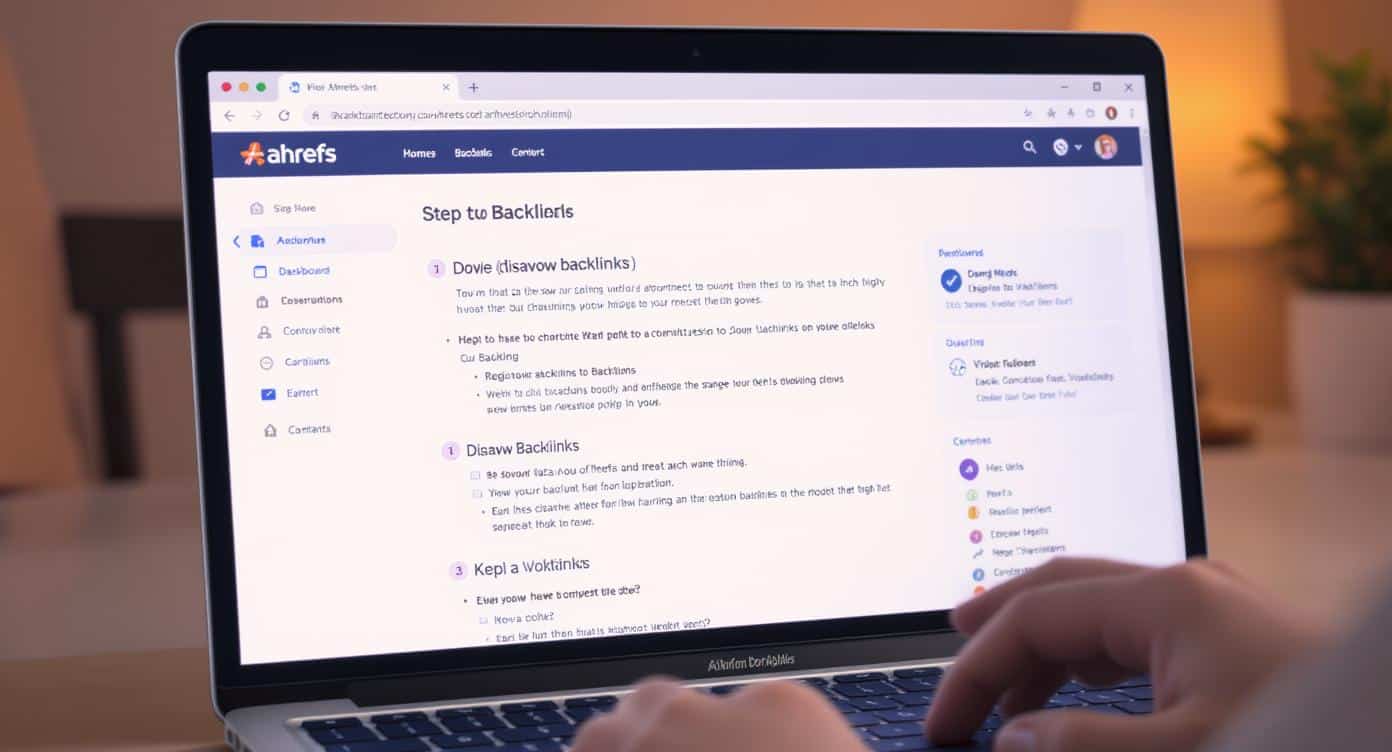
Step 1: Locating the Disavowed Links Tool in Your Ahrefs Project

First, you need to find the right tool in Ahrefs. This advanced feature is located within your project’s dashboard.

  • Log in to your Ahrefs account.
  • Open Site Explorer and enter the domain name of the website you are analyzing.
  • On the left-hand menu, look for the “Backlink profile” section.
  • Click on “Disavowed links.” This will take you to the disavow links tool page, where you can manage your list for that specific project.

Step 2: Preparing Your Disavow File For Import (.txt format)

Ahrefs requires your disavow file to be in a specific format, the same one Google uses. It must be a plain text file with a .txt extension.

  • Each line in the file should contain one URL or domain you want to disavow.
  • To disavow an entire website, add domain: before the domain name (e.g., domain:spammy-website.com). This is the best way to handle spammy websites that have a considerable number of spammy links pointing to you.
  • Make sure there are no blank lines that are not comments.
  • The file should be UTF-8 or 7-bit ASCII encoded.
  • There is a maximum file size and maximum URL length, so ensure your file meets Ahrefs’ requirements, which are similar to Google’s. You are not able to upload a CSV file.

Step 3: Uploading Or Pasting Your Disavowed Domains and URLs

Once your file is ready, you have two options in the Ahrefs disavow links tool.

  • Upload file: Click the “Import” button and select the .txt disavow file from your computer. Ahrefs will read the file and add the URLs and domains to your project’s disavow list.
  • Paste links: If you only have a few links, you can copy the list of links from your file and paste them directly into the text box provided. Make sure each URL or domain is on a new line.

This action is what completes the import disavow Ahrefs task.

Step 4: Confirming the Import and Allowing Ahrefs to Process the Data

After you upload or paste your links, Ahrefs will ask you to confirm. Once you agree, the tool will start processing the data. It will cross-reference your list with its massive index of external links.

This can take a few minutes, especially if you have a large number of links to disavow. You will see a notification once the process is complete. Ahrefs will then begin to exclude these disavowed links from its calculations and reports, giving you a cleaner view of your profile.

What Changes After You Import A Disavow File In Ahrefs?

After you import your list, you’ll notice several important changes in how Ahrefs presents your data. These changes help you perform a more accurate backlink audit and better understand your true online authority.

How Disavowed Links Are Flagged in Site Explorer?

Once Ahrefs processes your file, it will flag the disavowed links throughout its reports.

When you are using Site Explorer to look at your “Backlinks” or “Referring domains,” you will see a special icon next to each link that is on your disavow list. This visual cue instantly tells you that this is a link you have asked Google to ignore.

This makes it easy to distinguish between your good backlinks and the bad backlinks you are trying to distance your site from. You can filter your reports to either show or hide these links, giving you full control over your analysis.

The Impact on Ahrefs Rank, Domain Rating (DR), and URL Rating (UR)

One of the biggest changes you will see is in Ahrefs’ proprietary metrics.

Domain Rating (DR) is Ahrefs’ score for a website’s overall backlink strength. Since DR is calculated based on the number of backlinks and their quality, removing toxic backlinks from the equation will change your score.

Usually, your DR will go down after you import the disavow Ahrefs data. This is a good thing!

It means Ahrefs is no longer counting the harmful links, so the new, lower DR is a more accurate reflection of your real authority. Your Ahrefs Rank and the UR of specific pages might also adjust. This new baseline helps you track the impact of future quality links more effectively.

Reviewing Your “Clean” Backlink Profile and Referring Domains Reports

With the spammy links filtered out, you can now review a “clean” version of your backlink profile.

Go to the “Referring domains” report to see which websites are giving you valuable link equity.

You can analyze your anchor text distribution without the noise from spam. This clean view is essential for identifying gaps in your profile and planning your future link-building strategy. It helps SEO professionals focus on what truly matters for improving Google search results.

If this seems complicated, the team at VH-Info can provide a detailed report and a clear action plan.

Best Practices For Managing and Maintaining Your Ahrefs Disavow List

Your disavow list is not something you set and forget. It requires ongoing management to ensure it stays accurate and effective.

Here are some best practices to follow.

How to Add Or Remove Single Links From the Ahrefs Tool?

You don’t need to re-upload your entire file every time you find a new bad link. Ahrefs allows you to manage your disavow list directly within the tool. You can simply paste a new URL or domain into the interface to add it to your list.

Similarly, you can easily remove links. If you made a mistake or realized a link isn’t harmful, you can select it and click “Remove.”

This action is sometimes called a request to cancel disavowals within Ahrefs. This flexibility is useful for keeping your analysis data as accurate as possible. Remember, any changes here are only for Ahrefs.

Exporting Your Disavow List From Ahrefs

After you’ve made changes in Ahrefs—like adding new spammy backlinks or removing a link you want to reclaim—you should export the updated list. Ahrefs provides an “Export” button that generates a perfectly formatted .txt disavow file. This file will contain all the domains and URLs currently on your Ahrefs disavow list. This exported file is what you will use to update Google.

Keeping Your Ahrefs and Google Search Console Files in Sync

This is the most critical best practice. Your Ahrefs disavow list and your official Google disavow file must always be the same. They must be in sync. Here’s a simple workflow:

  • Do your backlink audit in Ahrefs.
  • Add any newly found bad links to the Ahrefs disavow links tool.
  • Export the complete, updated list from Ahrefs.
  • Go to the Google disavow tool in your Google Search Console account and upload this new file. This will replace your old file.

Keeping them in sync ensures that your analysis in Ahrefs matches what you’ve told Google’s algorithms to ignore. This prevents confusion and helps you accurately track how your SEO efforts are affecting your organic traffic and search engine results.

At VH-Info, we offer services that manage this entire sync process, giving our clients peace of mind.

FAQ’s:

Does Importing A Disavow File From Ahrefs Impact My SEO Rankings?

No, it does not. Importing a file into Ahrefs is for analysis purposes only. It changes the data you see inside Ahrefs’ reports, but has zero direct impact on your search rankings. The only action that affects your SEO is uploading the disavow file to the official Google disavow tool.

Can Ahrefs Automate the Creation and Submission of Disavow Files?

No, Ahrefs cannot automate this. Ahrefs helps you identify potentially harmful backlinks and manage a list, but the final decision of what to disavow is yours. Furthermore, you must manually submit the file to Google Search Console.

This manual step is a safeguard to prevent site owners from accidentally harming their website by disavowing good backlinks.

What Mistakes Should I Avoid When Importing A Disavow List From Ahrefs?

The biggest mistake is thinking that importing the file into Ahrefs is the final step. Always remember to submit the file to Google as well.

Other mistakes include using the wrong file format (it must be a .txt file), not keeping your Ahrefs and Google lists in sync, and accidentally adding a valuable, high-quality link to your disavow list, which could hurt your SEO.

A reconsideration request after a penalty requires a very careful audit.

Can I Undo the Import Of A Disavow File in Ahrefs?

Yes, you can. In the Ahrefs disavow links tool, you can select all the links and domains on your list and remove them. This will effectively undo the import, and Ahrefs will go back to including all of your backlinks in its metrics and reports.

Your DR and other scores will return to what they were before the import.

How Long Does It Take For Ahrefs to Update Its Metrics After an Import?

It’s usually quite fast.

For a small list of links, you may see the changes reflected in your reports and metrics within a few minutes. If you have a very large and complex disavow file with thousands of entries, it might take up to an hour for all the data to be fully reprocessed across the platform.

Conclusion

Using the import disavow Ahrefs tool helps people who want their website to do well. It is a smart choice for owners or SEO workers. This tool makes your Ahrefs reports better and cleaner. You can check your backlinks more clearly. You also know how strong your site really is.

When you remove bad or spam links, it is easier to see good links.

You are able to focus on building strong links that help your site grow. Remember, Ahrefs helps you study your links. The Google disavow tool lets you take action on them. It is very important to use both tools together for the best results with your backlinks.

If you have a problem like a penalty or bad SEO, you may want help from an expert team like VH-Info. They work on fixing bad links and making good ones to help your site show up better in search results. Their goal is for your website to do as well as possible online.

Attendance Write Up Example For Managers (Actions to Take)

Maintaining good attendance is fundamental to a healthy and productive work environment. When every employee is present and on time, teams can collaborate smoothly, and business operations run without interruption.

However, managers and HR professionals often face challenges with employee attendance issues, such as frequent tardiness or unscheduled absences. Handling these situations requires a fair, consistent, and well-documented process.

A formal write-up is a key tool in this process, providing a clear and structured way to address issues related to poor attendance.

Effectively managing your team’s internal processes, like employee attendance, is essential for building a strong foundation for growth. Just as consistent internal performance is vital for operational efficiency, a consistent online presence is key to scaling your business.

At VH-Info, we specialize in building high-quality backlinks that create a reliable online authority, helping you grow faster. This guide will provide you with the tools to manage attendance problems effectively, so you can focus on building a strong team and a successful business.

What is an Attendance Write-Up?

What is an Attendance Write-Up?

An attendance write-up is a formal document that a manager or HR manager gives to an employee to address ongoing attendance issues. It serves as an official warning that the employee’s attendance is not meeting the company’s expectations.

This document is a type of written warning and is a critical part of a company’s performance management system. It typically follows a verbal warning when informal conversations about poor performance in attendance have not led to improvement.

The purpose of the write-up is not just to punish but to clearly communicate the problem, outline the necessary improvements, and explain the potential consequences if the behavior continues.

It creates a paper trail that documents the company’s efforts to help the employee correct their actions. This documentation is placed in the employee’s personnel file for future reference and is an important step in a fair and structured approach to disciplinary action.

What Should Be Included in an Attendance Write-Up?

What Should Be Included in an Attendance Write-Up?

A well-structured attendance write-up protects both the employee and the employer by ensuring clarity and fairness. It should be based on facts and directly reference company policy. Here are the key elements to include.

Employee Details

The document should start with basic information identifying the employee. This includes the employee’s name, job title, and department. It should also include the date the write-up is issued and the name of the manager or supervisor conducting the meeting.

This ensures the record is clear and easy to identify.

Specific Dates and Incidents of Poor Attendance

This is the most important part of the write-up. You must be specific.

Instead of saying “you have been absent a lot,” list the exact dates of the unexcused absences or early departures.

For tardiness, record the dates and the times the employee arrived past their scheduled start time. This section should detail the number of unexcused absences and any other policy violations related to the work schedule.

This information comes directly from the employee’s attendance record.

Reference to Company Attendance Policy

The write-up should connect the employee’s behavior directly to the company’s attendance policy. Quote or summarize the specific rule from the employee handbook that has been violated.

For example, you might state, “Our employee attendance policy requires employees to provide prior notice at least two hours before a scheduled shift if they are unable to work. On the dates listed, you did not provide this advance notice.

This shows that the disciplinary action is based on established rules, not personal feelings.

Previous Verbal Or Written Warnings

Document any previous discussions or warnings given to the employee about their attendance. Mention the dates of any informal talks or formal verbal warnings. If there were other previous warnings, they should be noted here as well. This demonstrates a progressive approach to disciplinary measures, showing that the company has given the employee opportunities to improve before escalating to a written warning.

Clear Expectations For Improvement

The goal of a write-up is to correct behavior, so you must clearly state what needs to change. The attendance expectations should be specific and measurable.

For instance, “We expect you to maintain regular attendance and arrive on time for all scheduled shifts for the next 90 days.” Or, “You must follow the call-out procedure outlined in the employee handbook for any future sick days.

This section may be part of an improvement plan.

Consequences For Not Meeting Expectations

The employee needs to know what will happen if the attendance issues continue. Clearly state the next step in the disciplinary process. This could be a final warning, suspension, or termination of employment.

For example, “Failure to demonstrate immediate and sustained improvement in your attendance will result in further disciplinary action, up to and including termination.” This makes the seriousness of the situation clear.

Signature Lines For Manager and Employee

The form should have a place for both the manager and the employee to sign and date. It’s important to explain to the employee that their signature does not mean they agree with the write-up, but rather that they have received and read it.

This signature confirms receipt of the warning letter and completes the paper trail for the personnel file.

Professional Attendance Write-Up Example For Excessive Absences

Professional Attendance Write-Up Example For Excessive Absences

When an employee has excessive absenteeism, a formal write-up is necessary. This attendance write up example provides a clear and professional template for addressing the issue.

Employee Warning Notice: Details

  • Company Name: [Your Company Name]
  • Employee’s Name: John Smith
  • Date: October 27, 2025
  • Manager’s Name: Jane Doe
  • Type of Warning: Written Warning (First)

This section clearly identifies the parties involved and the nature of the formal document.

Description of Attendance Violation

This written warning is being issued due to ongoing employee absenteeism, which is a violation of our employee attendance policy. Your attendance record shows a pattern of unexcused absences over the past two months.

Specifically, you were absent on the following dates without providing prior notice as required by company policy:

  • September 15, 2025
  • September 29, 2025
  • October 10, 2025
  • October 22, 2025

These unscheduled absences disrupt team dynamics and negatively impact business operations. A verbal warning was issued on September 30, 2025, after which there was no sustained improvement in your employee attendance.

Corrective Action Plan

To ensure consistent attendance moving forward, the following improvement plan is being put in place:

  1. You are required to report to all scheduled shifts on time.
  2. For any future absence, including for sick leave, you must follow the call-out procedure detailed in the employee handbook. This means providing advance notice to your direct supervisor.
  3. You may not have any unexcused absences for the next 90 days.

We trust that you can improve your time management and meet these expectations. Achieving good attendance is vital for your success and for maintaining a positive work environment.

Employee Comments

I have read this warning and my comments are below. My signature confirms receipt of this notice, not necessarily my agreement with its contents.

Employee Signature: _________________________ Date: ____________

Manager Signature: _________________________ Date: ____________

Attendance Write-Up Example For Frequent Tardiness

Attendance Write-Up Example For Frequent Tardiness

Frequent tardiness can be just as disruptive as absences. It affects team morale and operational efficiency. This attendance write-up example focuses on addressing a pattern of late arrivals.

Employee Warning Form: Details

  • Company Name: [Your Company Name]
  • Employee’s Name: Emily Jones
  • Date: October 27, 2025
  • Manager’s Name: Tom Wilson
  • Type of Warning: Written Warning

This form serves as an official warning regarding your adherence to your work schedule.

Pattern of Tardiness

This write-up addresses a persistent pattern of tardiness. According to your employee’s attendance record, you have been late for your scheduled start time on multiple occasions over the last month.

  • October 3, 2025 (Arrived at 9:18 AM)
  • October 7, 2025 (Arrived at 9:25 AM)
  • October 16, 2025 (Arrived at 9:15 AM)
  • October 20, 2025 (Arrived at 9:30 AM)
  • October 24, 2025 (Arrived at 9:22 AM)

Previous discussions about the importance of punctuality were held on October 8, 2025. This pattern of poor attendance has not improved.

Impact on Team and Operations

Your repeated lateness impacts team members who rely on you to be present at the start of the shift. It disrupts workflow, lowers employee morale, and affects our ability to serve customers efficiently.

Maintaining a productive work environment requires all employees to adhere to their schedules.

Required Actions and Follow-Up Date

We require you to arrive on time for all scheduled shifts starting immediately.

Failure to adhere to your designated start time will lead to further disciplinary action. We will meet again on November 27, 2025, to review your progress. Continued policy violations may result in a final warning or other disciplinary measures.

Employee Comments:

Employee Signature: _________________________ Date: ____________

Manager Signature: _________________________ Date: ____________

Best Practices For Delivering an Attendance Write-Up

Best Practices For Delivering an Attendance Write-Up

How you deliver the write-up is as important as what is in it. Following these best practices helps ensure the process is fair, professional, and constructive.

  1. Maintain A Factual and Objective Tone: Stick to the facts. The conversation should focus on the documented employee’s behavior—the dates and times—not on your opinions or frustrations. Base the discussion on the employee’s attendance record and the specific requirements of the company’s attendance policy. This keeps the meeting professional and less confrontational.
  2. Conduct the Meeting In A Private Setting: Always hold the meeting in a private office or conference room. Publicly discussing disciplinary action is unprofessional and can damage employee morale and trust. A private setting allows for an honest conversation and respects the employee’s dignity, which is key to fostering a positive work environment.
  3. Allow the Employee to Respond: Always hold the meeting in a private office or conference room. Publicly discussing disciplinary action is unprofessional and can damage employee morale and trust. A private setting allows for an honest conversation and respects the employee’s dignity, which is key to fostering a positive work environment.
  4. Document Everything Thoroughly: Keep a copy of the signed write-up in the employee’s personnel file. The manager should also keep notes from the meeting for future reference. This thorough documentation, or paper trail, is essential for the HR department if further disciplinary action is needed. It shows that the company followed a clear and fair process.

FAQ’s:

How Do You Write A Warning Letter For Poor Attendance?

To write a warning letter, start by clearly stating that it is a written warning. Include the employee’s name and the date.

List the specific dates of absences or tardiness. Refer to the part of the employee attendance policy that was violated. Mention any previous warnings. Clearly state the expectations for regular attendance and the potential consequences if there is no improvement.

Can an Employee Refuse to Sign an Attendance Write-Up?

Yes, an employee can refuse to sign.

However, you should explain that the signature only acknowledges they received the document, not that they agree with it.

If they still refuse, the HR manager or another manager can witness the refusal, and the manager can write “Employee refused to sign” on the signature line. The document is still considered valid and is placed in the personnel file.

What is the Three-Strike Rule For Attendance?

The three-strike rule is a common progressive discipline model. It usually involves:

  • First Strike: A verbal warning for the first instance of poor attendance.
  • Second Strike: A written warning if the issue continues.
  • Third Strike: A final warning or termination of employment.

This structured approach gives employees clear opportunities to correct their behavior before more serious disciplinary measures are taken.

How Do You Address Attendance Issues Before A Formal Write-Up?

Before issuing a formal write-up, managers should have an informal conversation with the employee. Ask if there’s a reason for the attendance problems.

Sometimes, issues can be resolved with simple solutions, like clarifying the work schedule or discussing expectations around remote work or sick days. This can often correct the problem without needing a written warning and helps maintain a positive work environment.

Conclusion

Addressing employee attendance issues is a necessary part of managing a team and ensuring smooth business operations. Using a formal attendance write-up provides a clear, fair, and documented way to manage policy violations and set expectations for improvement.

Managers can address these scenarios effectively and professionally by adopting best practices and a well-organized approach, which safeguards the company while enabling employees to thrive.

Prioritizing regular attendance fosters a dependable team and enhances workplace productivity. Building that strong internal team is the first step toward sustained growth.

Once your internal operations are running efficiently, VH-Info can help you scale your success externally. Our expertise in SaaS link building drives organic traffic and boosts your online authority, helping you reach your growth goals faster.

GEO For B2B SaaS: How to Get Your Product Cited in AI SEARCH 

Author’s Bio: Avinash Tripathi is Co-founder and CEO of GetCito, the #1 GEO Consultant by YesUsers, specializing in AI Search Optimization and trained over 50,000 professionals.

TL;DR: The Future of B2B Visibility Is AI Citations

Buyers don’t Google anymore; they ask ChatGPT, Perplexity, or Gemini.
If your SaaS product isn’t mentioned in those AI answers, you’re invisible.

GEO (Generative Engine Optimization) is the new SEO; it helps AI understand, trust, and cite your brand. That means optimizing your content, reviews, and data so AI assistants recommend you when buyers ask, “What’s the best [category] tool?”

Quick Wins

  • Add schema markup (SoftwareApplication, FAQPage, HowTo)
  • Keep consistent info across your site, G2, and LinkedIn.
  • Create comparison pages and data-backed guides.
  • Let AI crawlers (GPTBot, PerplexityBot, ClaudeBot) index your content.
  • Coin your own framework or term so AI links it back to you.

Bottom line:
You don’t need to rank on page one anymore; you just need to get named by AI.

What You Will Get In This Comprehensive Guide

This guide will move you from traditional SEO rankings to earning highly qualified, revenue-driving citations in the AI era. You will learn to:

  • Quantify the Risk: See the hard data on how much traffic and pipeline you are losing by ignoring the “Invisible Buyer Journey.”
  • Build the GEO Foundation (Section III): Master the content architecture and technical SEO fixes (Schema, TL;DR Principle) required to make your product content machine-readable.
  • Execute Platform-Specific Tactics: Get clear, actionable checklists for maximizing citation probability on ChatGPT, Perplexity, and Google AI Overviews.
  • Establish Generative Trust: Leverage the E-E-A-T framework to create a competitive moat that forces AI models to cite your brand over your competitors.
  • Launch and Measure: Implement the 30-Day Visibility Sprint checklist and learn the new B2B metrics for tracking AI-referred qualified pipeline.

1. Understanding the AI Search Revolution: 

Howdy! I’m Avinash, and I’ve been in the SEO game since the days of keyword stuffing and reciprocal linking, when I optimized pages for my first startup. I learned the rules of that era: find the right keywords, build just enough links, and watch your site climb the rankings. And it worked for a while. We hit the first page, and the traffic felt like magic.

But then, the game changed. An algorithm update hit, and our rankings vanished overnight. It was my first hard lesson in digital marketing: what worked yesterday could be your downfall today. That early failure taught me that chasing algorithms is a losing game; you have to focus on providing real value.

That lesson stayed with me. But nothing, and I mean nothing, prepared me for what came next.

A few years later, I poured my heart (and way too many sleepless nights) into another startup. Things were looking good… until I noticed something strange. AI search engines were misrepresenting my work and twisting my content, and showing answers that had nothing to do with what I’d built.

My first reaction? Pure panic. For a hot second, I actually thought, “Do I need to file a legal case?” Dramatic, I know. But when your brand, the thing you’ve bled for, is misrepresented, it feels like an identity crisis.

After weeks of research, late-night experiments, and way too much coffee, the truth clicked: there was no human villain. The problem wasn’t malicious, but it was a misinterpretation. AI simply wasn’t “seeing” my brand the way I intended.

That moment changed everything. If AI could misunderstand my business, it could happen to any brand. And that’s when the mission crystallized: protect businesses from being lost or worse, misrepresented in the AI era.

So in 2023, I founded GetCito (formerly AI Monitor), with a simple belief: Traditional SEO isn’t enough anymore, and people need tools to optimize their brand and content for AI search.

In case you have been living under a rock, we’ve entered a new era where generative AI, answer engines, and large language models decide what people see and believe about your brand. Ranking on Google’s first page? That’s yesterday’s win. Today, if AI doesn’t interpret your brand correctly, you may as well not exist.

1.1 The Age of Clicks: SEO Era

Discovery

According to BrightEdge, 68% of all online experiences begin with a search engine.


Dominance

 According to SparkToro, 63.41% of all U.S. web traffic referrals come from Google.

Monopoly

SparkToro also reports that 92.96% of global traffic originates from Google Search, Google Images, and Google Maps.

Novelty

Google itself states that 15% of all searches made each day have never been searched before.

For almost twenty years, digital marketing ran on a script we all knew by heart. Google’s “10 blue links” were the stage, and every brand was fighting for that coveted front-row seat.

The playbook was simple: crack the algorithm, pile on backlinks, sprinkle in the right keywords, and watch your site climb. And honestly? It worked. Good SEO is always good. It felt like a game, half science, half hustle. If you mastered the rules, you got the clicks. For marketers, it was like fighting for the best shelf space in a giant digital library. Land on that first page, and you were a winner. Vishal Ambani, in his articles, explains SEO in such an updated way that you can refer to his article. “Here

1.2 The Age of Citation: AI Era

Zero-click searches

According to SparkToro, over 58% of all Google queries in the U.S. now end without a single click, as users increasingly find answers directly on the results page.

Summarization

Botify’s Q4 2024 AI Overviews Report found that AI Overviews now appear in up to 47% of all Google search results, signaling a major shift toward summary-based discovery.

Adoption


According to Backlinko, ChatGPT has over 700 million weekly active users worldwide, making it one of the fastest-adopted technologies in history.

Shift

A Search Engine Land survey reports that 61% of Gen Z and 53% of Millennials now use AI tools instead of Google or traditional search engines.

The Million Dollar Question: Are You Losing Deals Before They Start?

Today’s buyer is unlikely to simply Google “best project management software.” Instead, there’s a high probability they will directly ask a tool like ChatGPT: “What’s the best project management tool for a 50-person remote team with a $10K annual budget?”

What happens next:

  • AI analyzes their specific needs
  • AI provides 3-5 shortlisted solutions
  • Buyer picks one and moves forward

If you’re not in that AI-generated shortlist, you might as well not exist at all. The buyer never visits your website. Never sees your ads. Never know your brand. You’ve lost the deal before it even started.

Think of it this way: yesterday’s search engine was a library index, pointing you to shelves of information. Today’s AI-powered engines are the librarian. They don’t hand you books; they summarize the knowledge they hold, sometimes without ever mentioning where it came from.

That shift changes everything. Ranking #1 on Google isn’t the finish line anymore. Because if AI doesn’t understand your brand, it misrepresents it, and you vanish from the conversation entirely.

This is where AI Search Optimization (AIO) steps in, helping brands to ensure they aren’t just indexed, but accurately represented in the age of generative AI.

2. AI Search Optimization: One Process Many Names: GEO, AEO, AI Search Optimization, LLM SEO

AI Search Optimization

The landscape of search is transforming, and with it comes a confusing array of new terms. You’ve probably heard them all: GEO, AEO, AI Search Optimization, LLM SEO.   “AI Search Optimization” (AIO) has emerged as the more widely adopted term. A recent BrightEdge study of over 200 senior SEOs revealed how the industry is adapting:

The search landscape is undergoing a significant transformation, introducing a confusing array of new terminology. Terms like Generative Engine Optimization (GEO), Answer Engine Optimization (AEO), AIO, and LLM SEO are becoming increasingly common. Among these, “AI Search Optimization” (AIO) has gained broader acceptance. A recent BrightEdge study involving over 200 senior SEO professionals sheds light on how the industry is adapting to these changes.

  • 36% call it “AI search optimization.”
  • 27% stick with SEO (but for AI platforms).
  • 18% call it generative engine optimization (GEO).
  • Others use terms like AEO or LLMO.

While the terminology is still becoming established, the mission remains clear. What matters most is that they all describe the same fundamental shift in how people discover information online.

2.1 Breaking Down the Terms: GEO, AEO, AIO, LLM SEO

Look, the world of search and discovery is fundamentally changing because of Artificial Intelligence. To keep up, we need to be crystal clear on what we’re talking about. These four terms are the essential vocabulary for navigating this new terrain: 

  • AIO (AI Search Optimization): This is the big picture strategy, the umbrella term that covers optimizing content for all AI-driven discovery platforms, no matter if they give a quick answer or generate a novel response.
  • AEO (Answer Engine Optimization): This one is about optimizing for the systems designed to give you a direct, definitive answer. Think about your smart home devices, Amazon Alexa, Google Assistant, they fall here. For comprehensive insights and applied frameworks, refer to my article here.
  • GEO (Generative Engine Optimization): This is more focused. GEO means optimizing specifically for the Generative Engines, which use Generative AI technology and a search tool to generate human-like responses to user queries. For comprehensive insights and applied frameworks, refer to my article here.
  • LLM SEO (Large Language Model SEO): I initially coined this term in 2023 to define the systematic optimization of digital content specifically so that Large Language Models (LLMs) can effectively discover, ingest, and cite your data from their training sources (like the Common Crawl dataset). At its core, LLM SEO ensures that when models like ChatGPT, Claude, and Gemini are taught, your content is structurally prepared for them to understand, trust, and attribute.

2.2 The LLM SEO Files Framework: A Tested Approach

The principles behind LLM SEO aren’t just theory, and I’m proud to have published a research paper detailing a concrete solution: the LLM SEO Files conceptual framework.

This novel framework was specifically designed to solve a missing piece of the puzzle. While traditional SEO adapted, there was still no systematic, file-based method that truly aligned with how LLMs parse, interpret, and, most importantly, attribute the information they consume.

To tackle this problem, we proposed a six-layer system for content structuring. It includes standard components, but also introduces some new ones:

  • TXT files (llms.txt)
  • YAML configuration (index.yaml)
  • Markdown summaries (page-name.md)
  • Schema.org markup (schema.JSON-LD)
  • Evidence of Facts JSON (evidence-of-facts.json)
  • Open Graph JSON (open graph.json)

2.2.1 Experimental Validation

To validate the framework, we conducted an experiment using over 100 AI-search prompts across the three leading LLM platforms: ChatGPT, Perplexity, and Google AI Overview. To ensure our findings weren’t skewed by location, these prompts were run from five distinct geographic locations: India, the United States, Australia, the United Kingdom, and Germany.

  • Phase 1 checked the prompts using non-optimized content.
  • Phase 2 introduced our five-layer files, which led to a remarkable 64% increase in brand mentions and domain citations.

This significant uplift clearly highlights the direct impact of structured optimization in enhancing both AI interpretability and response precision. These strategies have proven beneficial for organizations of all sizes, from large corporations to bootstrapped startups. 

2.3 Understanding the Diverse Roles of AI Platforms in the Buyer’s Journey 

Different AI platforms serve different purposes in the buyer’s journey, and each handles citations differently. Here’s something most brands get wrong: They treat all AI platforms the same. They optimize once and hope it works everywhere.

Spoiler alert, it doesn’t.

Think about your own behavior for a second. When you use ChatGPT, you’re probably exploring ideas or comparing options. When you fire up Perplexity, you’re doing serious research and want sources. When you see a Google AI Overview, you just want a quick answer before clicking through.

Here’s what that looks like in practice:

  • ChatGPT excels at research and comparison tasks. Users come here for deep dives and exploratory conversations. The platform mentions brands inline but doesn’t provide clickable links, making it powerful for awareness but challenging for direct attribution. For B2B brands, this is where high-intent prospects start their evaluation process.
  • Perplexity has become the researcher’s choice for deep, sourced investigations. Every claim gets hyperlinked to its source, which creates a direct path to your content. When Perplexity cites you, you’re reaching qualified traffic that’s actively seeking authoritative information.
  • Google AI Overviews meet people right when they’re searching, that crucial moment when someone actually needs an answer. These AI-generated snapshots show up at the top of search results, giving quick information while still displaying the usual links underneath where those answers came from.
Platform Primary Use Case Citation Format B2B Impact
ChatGPT Research & comparison Inline mentions, no links High-intent early stage
Perplexity Deep research with sources Hyperlinked citations Qualified traffic
Google AI Overviews Quick answers in SERP Featured snippets + links Traffic capture

3. The 9 GEO Techniques That Get B2B SaaS Brands Cited by AI

The 9 GEO Techniques

Okay, the numbers look good, but let’s talk about what actually matters. You’re probably wondering: “Sure, but HOW do I get AI to mention my product? Do I just optimize my site and cross my fingers?”

Fair question. Here’s the reality: if you’re only using traditional SEO tactics, they won’t be effective. AI search plays by different rules. And that’s exactly what I’m going to show you.

3.1. The TL;DR Principle: Front-Load Your Value
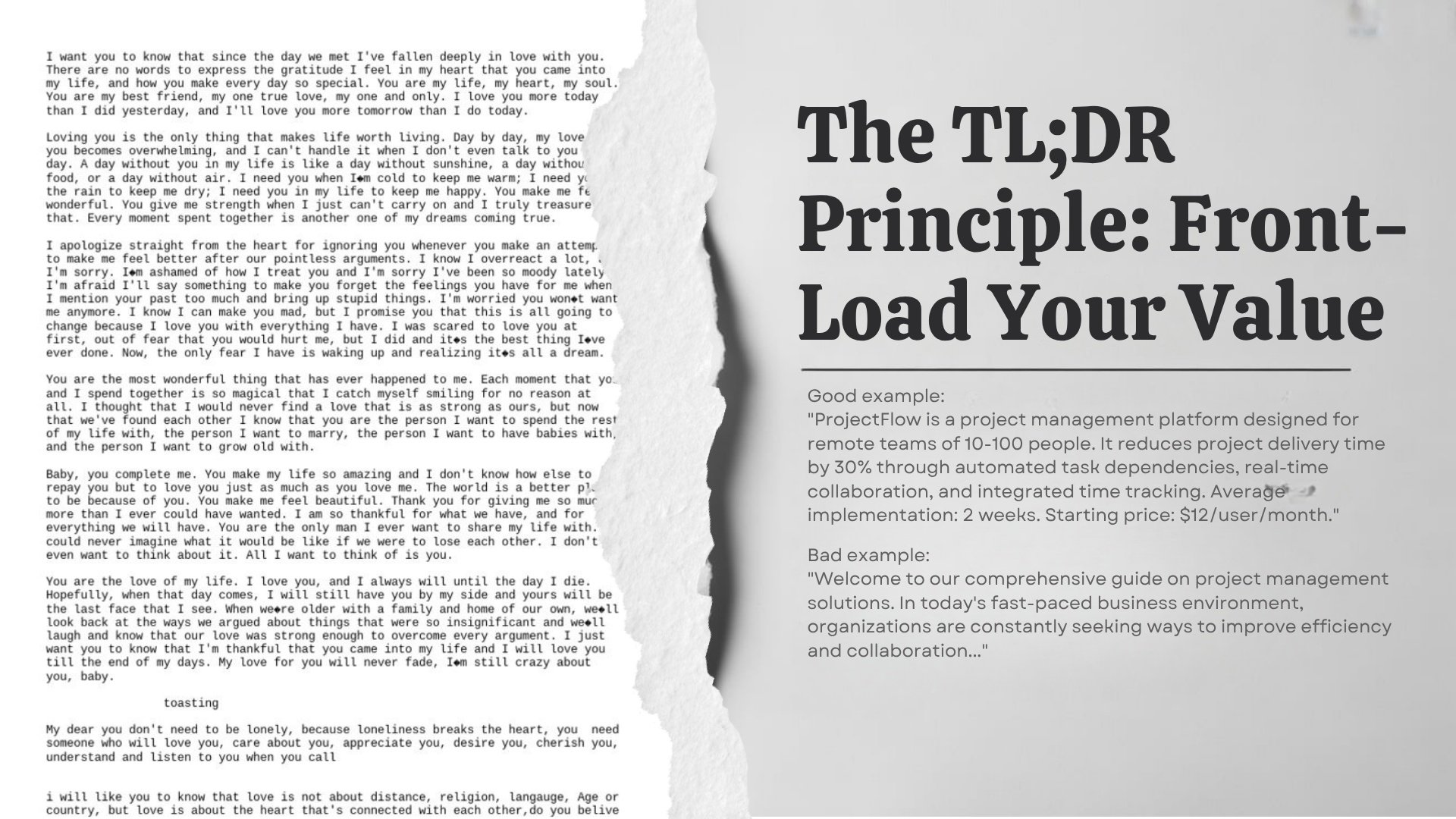
The TL;DR Principle

The first 50-100 words of every key page must contain a concise, direct answer to the most likely user query. Think of it as your elevator pitch to an AI that’s processing thousands of pages per second.

Bad example:

“Welcome to our comprehensive guide on project management solutions. In today’s fast-paced business environment, organizations are constantly seeking ways to improve efficiency and collaboration…”

Good example:

“ProjectFlow is a project management platform designed for remote teams of 10-100 people. It reduces project delivery time by 30% through automated task dependencies, real-time collaboration, and integrated time tracking. Average implementation: 2 weeks. Starting price: $12/user/month.”

See the difference? The second example immediately tells the AI (and the reader) exactly what you do, who it’s for, and what results to expect.

3.2 Structured Content is King

AI models don’t read like humans; they extract and parse. Your job is to make that extraction as easy as possible.

3.2.1 Semantic Chunking: Keep It Digestible

Use short, focused paragraphs. Each paragraph should convey one complete idea. When ChatGPT or Perplexity scans your content, they’re looking for clean, extractable chunks of information.

Your paragraph length sweet spot: 2-4 sentences maximum for core information.

3.2.2 Lists and Tables: The AI’s Best Friend

LLMs love structured data. When they encounter a clean comparison table or a numbered list, they can extract and cite it with confidence.

Use these formats religiously:

  • Numbered lists for sequential steps or ranked items
  • Bullet points for feature lists or benefits
  • Comparison tables for competitive positioning
  • Data tables for pricing, specifications, or benchmarks

Pro tip: Every comparison table should include at least 4-5 data points (pricing, implementation time, support tiers, ideal team size, key differentiator).

3.2.3 Question-to-Answer Format: Speak Their Language

Structure your content using H2 headers for common user questions. This mirrors exactly how people query AI systems.

Examples of high-performing H2s:

  • <h2>What is the ROI of automated reporting?</h2>
  • <h2>How long does implementation take for mid-market teams?</h2>
  • <h2>What integrations does [Your Product] support?</h2>
  • <h2>How does [Your Product] compare to [Competitor]?</h2>

When AI sees these question formats, it recognizes them as direct answers to user queries, making you citation-ready.

3.3 High-Intent Content Types LLMs Prioritize

Not all content is created equal in the eyes of AI. Based on my research framework, these three content types get cited most frequently:

3.3.1. Comparison Pages (The LLM Shortlist Maker)

Why this works: When someone asks “What’s the best [category] for [use case]?”, AI pulls from comparison content to build its shortlist.

What to create:

  • “[Your SaaS] vs. [Competitor X]” dedicated pages
  • “Best [Category] Alternatives” roundup content
  • Feature-by-feature comparison tables

The comparison table must include:

  • Pricing (specific numbers, not “Contact us”)
  • Implementation time (in days or weeks)
  • Support tiers (what comes with each plan)
  • Ideal customer profile (team size, industry)
  • Key differentiator (your unique strength)

Real example structure:

Feature Your Product Competitor A Competitor B
Starting Price $12/user/month $15/user/month $10/user/month
Implementation Time 2 weeks 4-6 weeks 1 week
Ideal Team Size 10-100 100-1000 5-50
Support Response <2 hours 24 hours Email only
Key Strength AI-powered automation Enterprise security Budget-friendly

Why AI loves this: It’s extractable, factual, and comparative, everything an AI needs to make a confident recommendation.

3.3.2. Implementation/How-To Guides: Be the Authority

Why this works: LLMs prioritize content that provides authoritative, step-by-step guidance. When someone asks, “How do I implement [solution]?”, your guide becomes the citation.

What to create:

  • “Complete Implementation Guide for [Your Product]”
  • “How to Migrate from [Competitor] to [Your Product] in 5 Steps”
  • “The Technical Setup Guide for [Feature]”

Structure each guide with:

  • Clear numbered steps
  • Defined roles and responsibilities for each step
  • Expected timeframes
  • Common pitfalls and solutions
  • Success metrics

Example structure:

Step 1: Data Audit and Preparation (Week 1)

  • Who’s involved: IT team, department leads
  • What to do: Export existing data from the current system, clean duplicate entries, and map fields to the new structure
  • Expected outcome: Clean dataset ready for migration
  • Common mistake: Skipping data cleanup leads to 40% longer implementation times

Why AI loves this: It’s actionable, complete, and citable. When someone needs implementation guidance, you’re the obvious source.

3.3.3. ROI & Methodology Content: Own Your Numbers

Why this works: LLMs cite content that explains unique, quotable methodologies. This is your chance to create intellectual property that AI must attribute to you.

What to create:

  • “The [Your Brand] 4-Step Methodology for 30% Cost Reduction”
  • “How We Calculate Customer ROI: The Complete Framework”
  • “The [Unique Name] Approach to [Problem Your Product Solves]”

Example:

The Revenue Acceleration Framework: Our 4-Phase Methodology

We’ve helped 500+ companies reduce manual reporting time by 60% using our proprietary four-phase approach:

  • Phase 1: Baseline Assessment (Days 1-7) We measure current manual hours spent, error rates, and time-to-insight metrics.
  • Phase 2: Automated Workflow Implementation (Days 8-14) We configure automated data collection, validation rules, and reconciliation workflows.
  • Phase 3: Team Training and Adoption (Days 15-21) We conduct role-based training and establish new operational procedures.
  • Phase 4: Optimization and Scaling (Days 22-30) We fine-tune workflows based on initial usage data and expand to additional teams.

Average Results: 60% reduction in manual reporting time, 85% fewer errors, 3-day faster month-end close.

Why AI loves this: It’s specific, branded, and impossible to discuss without mentioning your company. You’ve created a citation magnet.

For a deeper exploration of how this shift impacts brand visibility, you can read our detailed breakdown here: Future-proof your content

3.4 Technical GEO: Making Your Product “Machine Readable”

Technical GEO

Let’s get technical for a moment. All the great content in the world won’t help if AI can’t properly understand and extract it.

3.4.1. Schema Markup: The LLM’s Rosetta Stone

Think of schema markup as a direct translation layer between your content and AI systems. It explicitly tells AI what your content represents.

Here’s your implementation priority:

  • Priority 1: Software Application Schema (Product Pages)

This is mandatory. It tells AI exactly what your product is, what it does, and who it’s for.

Minimum required fields:

json

{

  “@context”: “https://schema.org”,

  “@type”: “SoftwareApplication”,

  “name”: “Your Product Name”,

  “applicationCategory”: “BusinessApplication”,

  “offers”: {

    “@type”: “Offer”,

    “price”: “12.00”,

    “priceCurrency”: “USD”

  },

  “operatingSystem”: “Web-based, iOS, Android”,

  “description”: “Your concise product description”

}

“`

  • Priority 2: FAQPage Schema (All Content Pages)

Every page with Q&A content should use this. It’s like highlighting the exact answers AI should extract.

**When to use it:**

– Product pages with FAQ sections

– Implementation guides with common questions

– Comparison pages with “Which is better for…” questions

  • Priority 3: HowTo Schema (Implementation Guides)

Structure your step-by-step content so AI can confidently cite your process.

  • Priority 4: Organization Schema (About Page)
    • Establish your brand entity clearly with the founding date, location, and description.
      Why this matters: Schema markup increases your citation probability by up to 40% in my testing. AI has explicit instructions on what your content means.
    • Entity Clarity: Consistency is Everything
      Ensure your brand name, product name, and key feature terms are identical across all structured data.
    • Create a “Brand Entity Dictionary” and use it everywhere:
Entity Type  Consistent Phrase ❌ Variations to Avoid
Core Benefit  “Reduces manual reporting time by 60%” “Saves time,” “Faster reporting”
Primary Feature “Automated reconciliation workflows” “Auto-matching,” “Smart reconciliation”
Ideal Customer “Mid-market finance teams (50-500 employees)”  “Finance professionals,” “CFOs”

Why this matters: When AI sees consistent terminology across your site, review platforms, and third-party mentions, it builds what I call “LLM Confidence Bias.” The AI trusts your information more. 

3.5. Crawlability & Accessibility: Let AI In

Here’s an embarrassing truth: Many companies accidentally block the very AI crawlers they want to impress.

AI Crawler Access Table: Make sure you’re allowing these crawlers in your robots.txt

Crawler User-Agent Platform Action Required
GPTBot GPTBot ChatGPT Allow in robots.txt
PerplexityBot PerplexityBot Perplexity Allow in robots.txt
ClaudeBot Claude-Web Claude Allow in robots.txt
GoogleOther GoogleOther Google AI Usually already allowed
Bingbot Bingbot Bing Chat Usually already allowed

3.5.1 Action item: 

Check your robots.txt file right now. Go to `yoursite.com/robots.txt` and verify none of these user-agents are blocked.

If you see this, you have a problem:

“`

User-agent: GPTBot

Disallow: /

“`

You want this instead:

“`

User-agent: GPTBot

Allow: /

3.5.2 Prioritize Server-Side Rendering (SSR)

The technical truth: JavaScript-rendered content is harder for some AI models to parse accurately.

What this means: Your core content should be visible in the raw HTML source, not loaded dynamically via JavaScript.

How to test:

  1. View your page source (right-click → View Page Source)
  2. Search for your main product description
  3. If you can’t find it in the raw HTML, AI probably can’t either

Solution: Implement server-side rendering for critical pages (product pages, comparison pages, implementation guides).

Want to learn more? See our detailed guide on Robots.txt Disallow All: Blocking AI Bots is as misguided as blocking Google in the 90s!.

3.6 Build Social Proof That AI Trusts

Here’s something most brands miss: AI doesn’t just crawl your website. It pulls from dozens of third-party sources to validate your claims.

3.6.1 Review Platforms: Your Citation Multiplier

LLMs frequently pull shortlists and feature summaries from high-authority review sites. A strong, active presence here directly influences citations.

The Review Platform Priority Matrix:

Platform LLM Citation Weight Update Frequency B2B Focus
G2 Very High Weekly Enterprise
Capterra High Weekly SMB
TrustRadius High Bi-weekly Enterprise
Gartner Peer Insights Very High Monthly Enterprise
Product Hunt Medium Once Early-stage

3.6.2 Review Optimization Tactics That Actually Work

  • Respond to every review within 48 hours: This signals active management to both potential customers and AI systems. When ChatGPT sees responsive engagement, it interprets your product as actively maintained.
  • Prompt customers to mention specific features in reviews: Don’t just ask for reviews, give customers a template: “Would you mind mentioning which features you use most? (e.g., automated reconciliation, real-time dashboards, Slack integration)”
    Why this works: When AI sees consistent feature mentions across reviews, it reinforces those features as your core strengths.
  • Use identical feature names across your site and review profiles: If you call it “Automated Reconciliation Workflows” on your website, use that exact phrase in your G2 profile, Capterra listing, and review response.
  • Target 30+ reviews minimum per platform for citation threshold: Based on my research, products with fewer than 30 reviews rarely get cited by AI. Cross that threshold on your top 2-3 platforms first.

3.6.3 Guest Posting on Authority Sites

Focus on placing content on domains that LLMs already trust and cite frequently in the B2B space.

  • High-value targets:
  • High-traffic SaaS blogs (like the one you’re reading now)
  • Established thought leadership platforms
  • Trade publications with strong domain authority
  • What to pitch:
  • Original research and data
  • Unique methodologies (like your proprietary framework)
  • Case studies with specific metrics
  • Technical deep-dives that showcase your expertise

Why this works: When your named methodology appears on TechCrunch or your case study is published on an industry authority site, AI gives it significantly more weight than content on your own domain.

3.7 Community Seeding: Plant Your Brand Where AI Searches

Community Seeding

The overlooked truth: AI doesn’t just scan corporate websites. It pulls heavily from community platforms where real people ask and answer questions.

3.7.1 Quora and Reddit: The High-Intent Gold Mines

When someone asks “What’s the best [your category] for [use case]?” on Reddit or Quora, those threads become AI training data.

Your strategy:
  1. Identify high-intent questions in your niche
  • Search for your category keywords in relevant subreddits
  • Set up alerts for questions on Quora
  • Look for questions with 1,000+ views (high-value discussions)
  1. Answer using your product’s “Meta Answer” phrasing

Use the same language from your Brand Entity Dictionary. When AI sees consistent phrasing across platforms, it reinforces your positioning.

Example Reddit answer structure:

“For mid-market finance teams (50-500 employees), you’re looking at three main options:

  1. [Your Product] – Best if you need automated reconciliation workflows and fast implementation (2 weeks). Reduces manual reporting time by 60%. Starting at $12/user/month.
  2. [Competitor A] – Better for enterprise (1,000+ employees) with complex security requirements
  3. [Competitor B] – Good budget option, but limited automation

Full disclosure: I work at [Your Company], but I’ve tried to give an honest comparison based on our customers’ alternatives.”

Why this works: You’re transparent about your affiliation, helpful to the community, and using citation-ready language that AI will extract.

3.7.2 LinkedIn Thought Leadership: Original Insights AI Can’t Ignore

Publish original insights and data reports that LLMs can use as authoritative claims.

  • High-citation content types for LinkedIn:
  • Original survey data (“We surveyed 500 finance leaders and found…”)
    • Industry benchmarks (“The average implementation time in 2025 is…”)
    • Trend analyses with specific numbers
    • Case study summaries with hard metrics
  • Format for maximum citation:
  • Lead with the data point in the first sentence
    • Include methodology (sample size, date range)
    • Visualize data in simple charts
    • End with implications and recommendations

Why this works: LinkedIn posts from verified company accounts carry authority weight with AI. When you publish original data, AI cites it as a primary source.

3.8 The Consistent Entity: Build AI’s Confidence in Your Brand

The pattern AI looks for: Consistency across sources builds trust.

3.8.1 Avoid Contradictions at All Costs

Ensure your features, pricing model rationale, and benefits are described using identical phrasing across:

  • Your website
  • Help documentation
  • G2/Capterra profiles
  • Guest posts and PR
  • Social media
  • Review responses

When AI sees conflicting information, it hesitates to cite you.

3.8.2 The Brand Entity Dictionary (Your Most Important Document)

Create this document and distribute it to everyone who writes about your product, internal team, agencies, partners, and everyone.

Example structure:

Entity Consistent Phrase ❌ Variations to Avoid
Core Benefit “Reduces manual reporting time by 60%” “Saves time,” “Faster reporting,” “Improves efficiency”
Primary Feature “Automated reconciliation workflows” “Auto-matching,” “Smart reconciliation,” “Automated matching”
Ideal Customer “Mid-market finance teams (50-500 employees)” “Finance professionals,” “CFOs,” “Accounting teams”
Implementation Time “2-week average implementation” “Quick setup,” “Fast to deploy,” “Ready in days”
Key Differentiator “Only platform with real-time audit trail visibility” “Better transparency,” “Clear audit logs”

Update this document quarterly as your positioning evolves, but maintain consistency during each quarter.

3.9 The Data Partnership Play: Become the Industry Benchmark
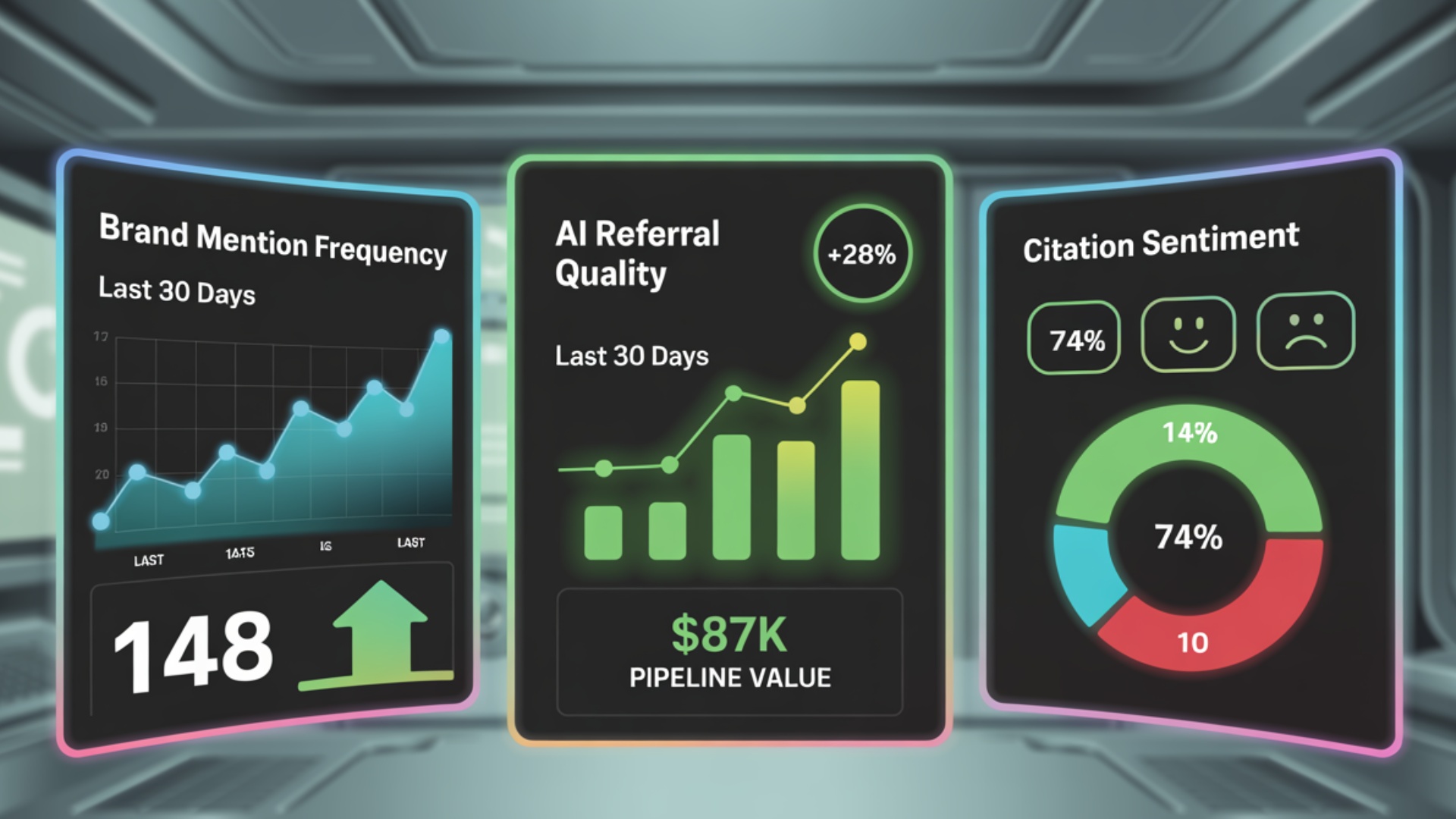
he Data Partnership Play

Partner with industry research firms to co-create reports where your brand gets cited in authoritative industry data.

3.9.1 How This Works:

Step 1: Identify research partners
  • Industry-specific research firms
  • Market intelligence companies
  • Trade associations
  • Academic institutions in your field
Step 2: Propose a co-created study

Example pitch:

“We have proprietary usage data from 500+ mid-market finance teams. Would you be interested in partnering on a benchmark report: ‘The State of Financial Automation in 2025’? We’ll provide anonymized data, you’ll provide research methodology and distribution.”

Step 3: Ensure proper attribution
  • Your brand is mentioned in the executive summary
  • Your product data forms part of industry benchmarks
  • Press release mentions your contribution
  • The report is published on both organizations’ websites

3.9.2 Why This Is Citation Gold:

  1. AI pulls from these trusted sources

When Gartner, Forrester, or industry associations publish data, AI systems treat it as authoritative. If your brand is embedded in that data, you get cited by association.

  1. Your product becomes associated with industry benchmarks

When AI answers “What’s the industry standard for [metric]?”, your data becomes the reference point.

  1. Third-party validation

AI gives more weight to claims about your product when they come from independent sources.

3.9.3 Real Implementation Example:

Scenario: You’re a project management SaaS company.

Action: Partner with the Project Management Institute (PMI) to survey 1,000 project managers about remote work challenges.

Result: The report “Remote Project Management: 2025 Benchmark Study” gets published with data showing:

  • “Teams using automated workflow tools complete projects 23% faster.”
  • “[Your Product] users report 40% fewer missed deadlines”
  • Industry standard: 4-week average project delay; Your customers: 1-week average

Citation impact: When someone asks ChatGPT about project management efficiency benchmarks, your brand appears in the answer because you’re part of the authoritative data source.

4. The New Metrics That Actually Matter

4.1 Brand Mention Frequency

Test your core buyer questions in ChatGPT, Perplexity, and Gemini weekly. Count how often you’re mentioned, where you rank, and in what context. 

Pro tip: Tools like GetCito can automate this if you’re tracking 20+ queries. Manual works fine for smaller teams.

4.2. AI Referral Quality 

To filter your GA4 data for LLM traffic sources, look for the UTM parameter “utm_source=chatgpt.” Users arriving through ChatGPT typically display unique behaviors, such as shorter research cycles, higher intent, and better conversion rates. It’s important to focus on monitoring pipeline value rather than just counting sessions.

Keep in mind that GA4 cannot detect bots, so you may not have insights into whether GPTBot has visited your site or which pages it accessed. GetCito can help you with Bot detection. 

4.3. Citation Sentiment 

When AI tools mention you, what’s the tone? Positive recommendations drive action. Neutral mentions get ignored. Negative citations kill deals before they start.

5. The Window is Open. But Not For Long.

Here’s the truth: Traditional SEO takes 6-12 months to show results. GEO can impact your pipeline in 120 days.

Why? Because there are only 3-5 citation spots in an AI answer. First movers win. Latecomers fight for scraps.

The brands establishing entity authority right now, the ones getting cited consistently in ChatGPT, Perplexity, and Gemini, are building a moat that their competitors won’t be able to cross.

Your buyers aren’t Googling anymore. They’re asking AI.

Stop optimizing for 10 blue links. Start optimizing for the single, cited answer that closes deals.

Ready to See Where You Stand?

Test your brand visibility across 10 high-intent buyer queries. See exactly where you’re winning (and where competitors are stealing your citations).

[Generate Your SaaS’s AI Search Visibility Report on GetCito→]

What Is A 945? Instructions & How to Complete This IRS Form (Guide)

The number “945” might seem random, but it appears in several important places. It could refer to a specific tax form, a classic car, a piece of computer hardware, or even a telephone area code. Each one has a unique story and purpose.

Just as VH-info helps clarify the complex world of link building, this guide will break down what “945” means in each of these contexts. We’ll give you clear, simple explanations so you know exactly what people are talking about when they mention “945.”

What Is A 945?

What Is A 945?

The term “945” can mean different things depending on the conversation. It’s not just one thing; it’s a label used in taxes, cars, technology, and even geography. Think of it as a code that changes its meaning based on the subject.

  • The 945 in Taxes: IRS Form 945: Most often, “945” refers to IRS Form 945, the Annual Return of Withheld Federal Income Tax. This is a document used to report federal income tax withheld from specific types of payments that aren’t regular wages. We will dive deep into this form, as it is important for many business owners.
  • The 945 in Cars: The Volvo 945 Estate: For car lovers, “945” brings to mind the Volvo 945, a well-built station wagon from the 1990s. Known for its safety and boxy design, this car has a loyal following and represents a key part of Volvo’s history.
  • The 945 in Technology: Intel’s 945 Chipset: In the tech world, “945” points to the Intel 945 chipset family. These chipsets were like the traffic directors on a computer’s motherboard, managing how different parts communicated with each other during the mid-2000s.
  • The 945 in Geography: Area Code 945: If you get a call from area code 945, you’re hearing from the Dallas, Texas area. This area code was added to serve the growing population in and around the city, showing how numbers are used to organize our communication networks.

Understanding IRS Form 945

Understanding IRS Form 945

IRS Form 945 is an important tax form for reporting federal income tax withholding on nonpayroll payments.

These are payments made outside of the regular salary you give to employees. You file this form once a year to report the total taxes you withheld for the entire calendar year. It serves as an annual record for the Internal Revenue Service. Getting this right is vital. For businesses focused on growth, handling details like your annual withholding tax return correctly is as important as your marketing strategy.

At VH-info, we believe in clear, effective strategies, whether it’s for link building or understanding your tax obligations.

Who is Required to File Form 945?

You must file Form 945 if you withheld any federal income tax, including backup withholding, from specific types of payments.

These payments include:

  • Pensions (including distributions from 401(k)s, IRAs, and other retirement plans)
  • Military retirement pay
  • Gambling winnings
  • Payments to an Alaska Native Corporation
  • Certain government payments
  • Payments are subject to backup withholding

If you make these kinds of payments, you are responsible for withholding the correct tax and reporting it on this annual return. You’ll need an Employer Identification Number (EIN) to file.

What Payments Are Reported On Form 945?

The primary purpose of filing Form 945 is to report the total amount of federal income tax withheld from nonpayroll payments.

This includes any backup withholding you were required to take out. Backup withholding often applies when a recipient doesn’t provide a correct Taxpayer Identification Number (TIN), which could be a Social Security Number or EIN. The form summarizes your tax liability for the tax year. You must report the total withheld income taxes and the deposits you made throughout the year.

The goal is to ensure that the total amount of backup withholding and other withheld taxes are sent to the government correctly.

Filing Deadlines and Procedures

The main due date for filing Form 945 is January 31st following the end of the tax year. So, for the 2025 tax year, your form is due by January 31, 2026. However, if you have made all your federal tax deposits on time and have a zero balance due, you get an extra 10 days to file.

If the due date falls on a weekend or a legal holiday, you must file by the next business day.

Making sure you meet the deadline is essential to avoid penalties. Think of it like a campaign deadline—missing it can cause problems. A clear schedule, like the one we use at VH-info to deliver high-quality backlinks, ensures everything runs smoothly.

How to File Form 945?

How to File Form 945?

Filing Form 945 requires careful attention to detail to ensure the right amount of tax is reported and paid. You can file either electronically or by mail.

First, you need your Employer Identification Number (EIN). If you don’t have one, you must apply for it. At the top of the form, you will enter your EIN, name, and address.

Next, you will report the total amount of federal income tax you withheld from all nonpayroll payments for the calendar year. You also need to report the total deposits you have made. If your total taxes are more than your deposits, you will have a balance due. If you deposited more than your total tax liability, you have an overpayment.

For your deposits, many businesses are required to use the Electronic Federal Tax Payment System (EFTPS). This is a free service from the U.S. Treasury that allows you to make your tax payment online or by phone.

Some small business filers with a smaller nonpayroll tax liability may be able to pay when they file.

You must complete the Annual Record of Federal Tax Liability (Form 945-A) or the Monthly Summary of Federal Tax Liability section if your federal tax liability is $2,500 or more for the year. This breaks down your liability by deposit period.

If you choose paper filing, the address for where to mail Form 945 depends on your location. You can find the correct address on the IRS website or in the form instructions.

Finally, if you use a paid preparer to complete your tax returns, they must sign the form and enter their Preparer Tax Identification Number (PTIN).

Common Mistakes to Avoid When Filing Form 945

Common Mistakes to Avoid When Filing Form 945

Mistakes on tax forms can lead to notices, penalties, and headaches.

Here are some common errors to watch out for when preparing your annual return of withheld federal income tax:

  • Using the Wrong Form: A frequent mistake is confusing Form 945 with Form 941, the Employer’s Annual Federal Tax Return. Remember, Form 941 is for payroll tax (wages paid to employees), while Form 945 is for nonpayroll items like pensions and gambling winnings.
  • Incorrectly Calculating Tax Liability: Double-check your math. Ensure the total taxes reported match the sum of your withheld amounts throughout the previous year. A small error can create a mismatch with the deposits you’ve made.
  • Missing the EIN: Forgetting to put your Employer Identification Number on the form is a simple but common mistake that can delay processing.
  • Failing to Make Timely Deposits: You can’t just wait until January 31st to pay everything. You must deposit the withheld income tax withholding according to your deposit schedule (either monthly or semi-weekly). Failure to make timely deposits can result in penalties, even if you file the form on time.
  • Not Filing at All: Some business owners assume that if they didn’t withhold any taxes, they don’t need to file. However, if you are required to file Form 945 but had no tax withholdings, you must still file a return showing zero liability.

Avoiding these mistakes is key. Just as a strong link-building strategy from VH-info requires precision, so does your tax reporting. Getting the details right from the start saves time and money.

A Look At the Volvo 945

Shifting gears from taxes to cars, the “945” also refers to the Volvo 945. This model was a station wagon, or “estate,” that was part of Volvo’s 900 Series. It became famous for its practical design, large cargo space, and reputation for being incredibly safe and durable.

History and Production of the Volvo 945

The Volvo 945 was produced from 1990 to 1998. It was an evolution of the older Volvo 740, sharing a similar body but with updated features and styling. The car was built with quality and longevity in mind, which is why you can still see many of them on the road today.

It was a true workhorse, loved by families and anyone who needed to carry a lot of stuff without sacrificing comfort.

Key Features and Engine Specifications

The Volvo 945 was known for its rear-wheel-drive layout, which was common for larger cars at the time. It came with several engine options, including reliable four-cylinder gasoline engines, some of which were turbocharged for extra power.

Key features included:

  • A huge cargo area, especially with the rear seats folded down.
  • A tight turning circle, making it surprisingly easy to maneuver for a large car.
  • Volvo’s signature safety features, like a strong safety cage, side impact protection, and anti-lock brakes (ABS).

The Legacy of this Classic Station Wagon

The Volvo 945 left a lasting legacy as one of the most iconic station wagons ever made. Its boxy but functional design became a symbol of practicality and safety. It solidified Volvo’s reputation as a brand that built cars to last.

For many, the 945 represents an era of simple, dependable engineering before cars became filled with complex electronics.

Exploring the Intel 945 Chipset

In the world of computers, “945” brings us to the Intel 945 chipset family.

Released around 2005, this chipset was a critical component on motherboards designed for Intel processors. Think of the chipset as the motherboard’s nervous system—it controls the flow of data between the processor, memory, and other devices.

Overview of the 945 Chipset Family (945P, 945G, 945GC)

The Intel 945 family came in several versions:

  • 945P: A mainstream performance chipset that required a separate graphics card.
  • 945G: This version included integrated graphics, meaning you didn’t need to buy a separate video card. It was a popular choice for budget-friendly and business computers.
  • 945GC: A lower-cost version of the 945G, often used in entry-level desktop computers. It had slightly reduced capabilities but offered great value.

Supported Processors and Memory

The 945 chipset was made to work with well-known Intel chips from its time. These chips were the Pentium 4, Pentium D, and Celeron D. The Pentium D had two cores, which helped it do more tasks at once.

The 945 chipset was also one of the first main chipsets to use DDR2 memory. DDR2 memory was much faster than the old DDR memory. It gave computers better speed and stronger performance. This made the 945 chipset a good choice for many users back then.

Impact on Personal Computing in its Era

The Intel 945 chipset helped make computers better. It brought dual-core processors to many people. It also made memory faster, which was needed for the new Windows Vista and harder programs.

The 945G and 945GC types came with built-in graphics. This meant that people could save money because they did not have to buy a separate graphics card for simple computer jobs. The chipset made stronger computers more affordable for everyone.

FAQ’s:

What is the Most Common Meaning of “945”?

The most common meaning is IRS Form 945, the Annual Return of Withheld Federal Income Tax. While it also refers to a car and a chipset, its use in the tax world is the most widespread and officially documented.

How is IRS Form 945 Different From Form 941?

Form 945 is for reporting income tax withholding on nonpayroll payments, such as pensions, gambling winnings, and payments subject to backup withholding. Form 941 is the employer’s quarterly federal tax return, used to report wages paid to employees and their payroll tax withholdings, like social security and Medicare taxes.

What is the Deadline For Filing Form 945?

The deadline is January 31st of the year after the tax year ends. If you made all your tax deposits on time, the deadline is extended to February 10th. If the date is on a weekend or holiday, you file on the next business day.

Can Form 945 Be Filed Electronically?

Yes, electronic filing of Form 945 is not only possible but encouraged by the IRS.

You can use approved IRS e-file software or have a tax professional file it for you. Payments can be made via the Electronic Federal Tax Payment System (EFTPS) using a debit card or a transfer from a financial institution.

What Happens If I File Form 945 Late?

Late filing of Form 945 can result in penalties and interest charges. The penalty is typically a percentage of the unpaid tax, calculated based on how late the filing is. There are also penalties for failing to make the required federal tax deposits on time throughout the year.

Is There A Way to Request an Extension For Filing Form 945?

No, there is no extension of time to file Form 945. However, if you need more time to pay your federal tax liability, you may be able to request a payment plan, but this will not stop penalties and interest from accruing on the late payment.

Do I Need to File Form 945 If No Taxes Were Withheld?

If you are required to file Form 945 (for example, because you filed one in the prior year and haven’t closed your account), you must file it even if you had no tax withholdings and no tax liability. In this case, you would file a “zero return.”

How Do I Correct A Mistake On A Previously Filed Form 945?

To correct a mistake on a previously filed form, you use Form 945-X, Adjusted Annual Return of Withheld Federal Income Tax or Claim for Refund. This form allows you to correct errors related to underreported or overreported taxes from a previous year.

Are Volvo 945 Cars Still Available Today?

Yes, you can still find Volvo 945 cars on the used car market. They are popular among enthusiasts who appreciate their simple mechanics, durability, and large cargo capacity. Finding one in good condition can be a rewarding experience.

Conclusion

The number “945” has a surprisingly rich set of meanings. It represents the important annual withholding tax return that many businesses must file, a beloved classic car known for its reliability, a foundational piece of computer technology, and a regional identifier for Dallas.

The most complex of these is undoubtedly IRS Form 945, where getting the details right is essential for staying compliant.

From understanding your nonpayroll tax liability and making timely deposits to ensuring your annual record of federal tax liability is accurate, managing your tax obligations is a critical business function.

It requires the same level of expertise and attention to detail that we at VH-info apply to building powerful link-building strategies for our clients. By handling these duties correctly, you ensure your business operates smoothly, freeing you up to focus on growth.

Which Element Outlines Marketing Costs In Your Strategy? [Answer]

Think of a marketing plan as a road map for a business. It shows you where you want to go and how you plan to get there.

It helps you reach your ideal customers and achieve your business goals.

But just like any trip, you need fuel to get your car moving. In business, that fuel is money. All your marketing efforts cost money, from putting an ad on social media to hiring people for your marketing team.

So, how do you keep track of all that money? A good marketing strategy needs a way to plan for and control spending. This is a very important part of making any business plan work. If you don’t know how much you are spending, you can’t know if your plan is successful.

The question then is, which element outlines marketing costs?

This guide will give you a simple and clear answer. We will look at the specific part of a marketing plan that deals with all the money, called marketing expenses. Knowing this will help your small business or large company make smart decisions and grow.

Which Element Outlines Marketing Costs In A Marketing Plan?

Which Element Outlines Marketing Costs In A Marketing Plan?

The element that outlines marketing costs in a marketing plan is the marketing budget.

It is that simple. The marketing budget is the section of your comprehensive marketing plan dedicated entirely to money. It lists all the money you expect to spend on your marketing activities over a certain period, like a year or a quarter.

It is the financial blueprint for your entire marketing strategy. Without a clear marketing budget, your marketing plan is just a list of ideas with no power to make them happen. It provides the financial resources needed to turn your marketing objectives into reality.

The Marketing Budget: The Core Element Which Outlines Marketing Costs

The Marketing Budget: The Core Element Which Outlines Marketing Costs

The marketing budget is more than just a list of numbers. It is a tool that guides every decision you make in your marketing efforts. It connects your big ideas to the real world of spending and earning.

Let’s look closer at what it is, how it is different from a marketing plan, and who is in charge of it.

Defining the Marketing Budget and Its Purpose

A marketing budget is a detailed document that estimates all the costs needed to carry out your marketing plan.

Its main purpose is to allocate financial resources to different marketing channels and activities. It tells you how much money you have for digital marketing, content creation, advertising, and more. This document is a critical part of your business strategy.

The purpose of the budget is to control spending and measure results.

It helps a company reach its specific goals, like increasing brand awareness or generating more sales. It also ensures that the marketing team spends money wisely. The budget forces the team to think about which marketing methods will give the best results for the money spent.

It makes sure every dollar has a purpose that connects back to the main business objectives.

The Difference Between A Marketing Plan and A Marketing Budget

It is easy to mix up a marketing plan and a marketing budget, but they are two different things. Think of it this way:

A marketing plan is the “what” and “why.” It is a broad document that lays out your entire marketing strategy. It includes your mission statement, business objectives, and an analysis of the marketing environment.

It contains your SWOT analysis (Strengths, Weaknesses, Opportunities, Threats) and a competitive analysis. It also defines your target audience by creating buyer personas and explains your company’s value proposition.

The plan describes the specific actions you will take to reach your target market. The marketing budget is the “how much.” It is just one piece of the entire marketing plan. It gives the financial details for the action plan laid out in the marketing document.

While the plan might say “we will run social media marketing campaigns,” the budget will say “we will spend $5,000 on social media ads.” The budget turns the strategy into a financial reality. You cannot have an effective marketing plan without a realistic budget to support it.

Who is Responsible For Creating and Managing This Element?

Creating and managing the marketing budget is a team effort, but it is usually led by a marketing manager or director. These leaders work with their team members to figure out how much money is needed for different marketing campaigns.

For a small business, the owner might be the one who creates the budget.

The marketing team provides ideas on what is needed to reach the marketing objectives.

For example, the content marketing specialist will know the costs of writing blog posts or making videos. The advertising manager will know the cost of running ads. The leader then puts all of this information together.

They must also work with the finance department and company leaders to get the budget approved. Once it is approved, the marketing manager is responsible for tracking spending and making sure the team stays within the budget.

They also report on how the spending is helping the company meet its key performance indicators. Good management of the budget is key to proving the value of all marketing efforts.

What Key Expenses Are Outlined In A Comprehensive Marketing Budget?

What Key Expenses Are Outlined In A Comprehensive Marketing Budget?

A comprehensive marketing plan needs a budget that covers all possible marketing expenses. Breaking down the costs helps you see where your money is going and manage it better. Here are the main types of costs you will find in a marketing budget.

Digital Advertising Costs (PPC, Social Media Ads, Etc.)

This is a big part of most marketing budgets today. It includes the money you spend on digital marketing ads to reach new customers.

This can be for pay-per-click (PPC) ads that appear on a search engine like Google. It also includes money for ads on social media platforms like Facebook, Instagram, and LinkedIn. These costs are often easy to track and can directly support lead generation.

Content Creation and SEO Expenses

Content marketing is about creating helpful and interesting things for your target audience. This includes writing blog posts, making videos, creating infographics, and more. The costs here can include paying writers, videographers, or for graphic design.

Another key expense is search engine optimization (SEO). SEO helps your website show up higher in search engine results. Part of SEO is building quality links from other websites to yours.

For SaaS businesses, this is very important for growth. Many businesses set aside a part of their budget to hire an agency like VH-info. We specialize in building high-quality backlinks that improve your rankings and authority, making it easier for your ideal customers to find you.

Personnel and Team Salaries

This category includes the salaries and benefits for everyone on your marketing team.

This covers your marketing manager, content creation specialists, social media managers, and any other team members involved in marketing activities. Sometimes, a company’s human resources department helps calculate these costs.

People are often the biggest expense in a marketing budget, but they are also your most important asset.

Marketing Technology and Software (MarTech Stack)

The modern marketing team uses a lot of software to do their job well. This is often called a “MarTech stack.”

These costs include tools for email marketing, software for managing social media marketing, and platforms for analyzing data. It also includes customer relationship management (CRM) software that helps track interactions with new customers and existing ones.

These tools help automate tasks and provide valuable data on your marketing efforts.

Public Relations (PR), Events, and Sponsorships

This part of the budget is for activities that build brand awareness and public image.

It can include hiring a PR agency to get your company featured in news articles. It could also be the cost of hosting or attending industry events and trade shows. Sponsoring a local event or a podcast that your target market listens to would also fall into this category.

These activities help build trust and credibility for your new business.

Market Research and Analytics Costs

To make smart decisions, you need data. This budget category covers the cost of getting that data. It might include paying for market research reports, surveys to understand customer needs, or tools for competitive analysis. This research helps you understand market conditions and market trends. It also helps you perform a situation analysis to see where your business stands in the market share race.

How to Create the Element That Outlines Your Marketing Costs: A Step-by-Step Process

How to Create the Element That Outlines Your Marketing Costs?

Creating a marketing budget may seem hard, but you can do it by following a clear process.

Here are the steps to build a budget that supports an effective marketing plan.

Step 1: Align Your Budget With Overall Business Goals

Your marketing budget should not be created in a bubble. It must directly support your company’s main business goals.

Start by looking at the company’s overall business plan. Are you trying to grow into a new market? Launch a new product? Increase your market share? Your marketing objectives should line up with these goals, and your budget should give you the money to achieve them.

For example, if a key business objective is lead generation, you should put more money into activities that bring in leads.

Step 2: Analyze Historical Data and Industry Benchmarks

Don’t start from scratch. Look at what your company has spent on marketing in the past. What worked and what did not?

Use this information to guide your new budget. Also, do some market research to see what other companies in your industry spend on marketing. This is called benchmarking. While you don’t have to copy them, it gives you an idea of what is considered normal.

This helps you create a realistic budget based on solid data and best practices.

Step 3: Choose Your Marketing Channels and Tactics

Now, decide where you will spend your money.

Based on your market analysis and buyer personas, choose the marketing channels that are most likely to reach your target market.

Will you focus on content marketing and SEO? Or will you invest heavily in social media marketing? Your marketing mix—the combination of product, price, place, and promotion—will help you decide. Make a list of all the specific actions and marketing campaigns you plan to run.

Step 4: Allocate Funds and Finalize Your Budget

Assign a specific cost to each marketing activity on your list. This is where you put numbers to your plans. Be as detailed as you can.

For example, instead of just “Content Creation,” break it down into “Blog Posts,” “Video Production,” and “Graphic Design.” Add up all the costs to get your total proposed marketing budget. This becomes the financial action plan for your annual marketing plan.

Step 5: Implement, Monitor, and Adjust for ROI

A budget is not something you set and forget. Once your budget is approved, it is time to put your marketing plan into action.

As you spend the money, you must track your results. Use key performance indicators (KPIs) to measure the success of your marketing efforts. Are you getting a good return on investment (ROI)? If some marketing activities are not performing well, be ready to move money to the channels that are giving you better results. A good budget is flexible and allows for adjustments based on performance.

Why Is It Important to Have An Element That Clearly Outlines Marketing Costs?

Why Is It Important to Have An Element That Clearly Outlines Marketing Costs?

Having a clear marketing budget is extremely important for any business, big or small. It is the backbone of a strong marketing strategy and provides many benefits that help a company succeed. Here are three big reasons why it is so important.

To Ensure Financial Accountability and Control

A marketing budget makes the marketing team responsible for how they spend the company’s money.

When every dollar is assigned to a specific purpose, it reduces wasteful spending. It creates a culture of accountability where team members think carefully before spending money. This control helps the business manage its financial resources effectively.

It ensures that the marketing expenses are aligned with the overall business strategy and not just spent on random ideas.

To Effectively Measure Return on Investment (ROI)

One of the most important questions in marketing is: “Are our efforts working?” A marketing budget is essential for answering this question.

By tracking how much you spend on different marketing campaigns and comparing it to the results (like new sales or leads), you can calculate your return on investment (ROI). This shows you which marketing methods are most profitable. Measuring ROI helps you prove the value of marketing to company leaders and justifies future spending. It allows you to make data-driven decisions instead of guessing.

To Secure Funding and Get Stakeholder Approval

If you want your bosses or investors to give you money for marketing, you need to show them a solid plan. A well-researched marketing budget does just that. It shows that you have thought through your action plan and understand the costs involved.

It gives them confidence that you will spend their money wisely. A clear budget is a key part of your pitch to get approval for your annual marketing plan. Without it, your great ideas are less likely to get the funding they need to become a reality.

FAQ’s:

Which Marketing Plan Element Details Marketing Costs?

The marketing budget is the part of a marketing plan that gives all costs for marketing. It shows each planned cost for your ads and other work. This helps you know how much money will be spent on every step of your marketing.

Should You Break Down Or Estimate Costs in Your Marketing Plan?

You should do both. In the main body of your marketing plan, you might use estimates. But in the marketing budget section, you should break down costs as much as possible to create a detailed financial plan.

Where Do Marketing Costs Appear In A Typical Marketing Plan?

Marketing costs are listed in their own dedicated section, which is called the marketing budget. This section usually appears after the marketing strategy and action plan have been described in the executive summary or main document.

What Percentage Of A Company’s Revenue Should Be Allocated to the Marketing Budget?

There is no single magic number. It depends on the industry, company size, and business goals. Many businesses spend between 5% and 12% of their total revenue on marketing. A new business trying to grow fast might spend more.

How Often Should A Marketing Budget Be Reviewed and Adjusted?

A marketing budget should be reviewed regularly. Many companies review it every month or every quarter. This allows the marketing team to make adjustments based on performance and changing market conditions or external factors.

What is the Difference Between A Marketing Plan and A Marketing Budget?

A marketing plan is the overall strategy that outlines your goals, target audience, and the marketing activities you will use. The marketing budget is the part of that plan that lists the specific costs for all those activities.

What Are the Most Common Mistakes to Avoid When Creating A Marketing Budget?

Some common mistakes are not connecting the budget to clear business objectives, not tracking results (ROI) to see what is working, setting an unrealistic budget (too high or too low), and not being flexible enough to adjust the budget when needed.

Conclusion

In any effective marketing plan, the element that outlines marketing costs is the marketing budget.

It is the financial foundation of your entire marketing strategy. This document does more than just list expenses; it gives your team a clear path, ensures you are financially responsible, and helps you prove the value of your work.

A strong budget helps a small business compete with larger ones and enables any company to achieve its specific goals for growth, customer satisfaction, and profitability. If your marketing budget has room for search engine optimization, remember that high-quality link building is one of the best ways to get long-term results.

At VH-info, we focus on performance-based link building for SaaS companies. We help you use your budget wisely to get backlinks that drive real traffic and boost your authority.

Detailed Content Marketing Operations: Basic Strategies Breakdown

If you have a website, you probably use content marketing to attract visitors.

Content marketing is the job of creating and sharing helpful articles, videos, and posts to bring people to your brand. But making great content all the time can be hard. You need a plan. This is where content marketing operations come in.

It is the system behind your content that makes sure everything runs smoothly. Think of it as the engine that powers your content creation car. Without a good engine, even the best car won’t go far. This guide will show you how to build a strong system for your marketing efforts.

What Are Content Marketing Operations and Why Do You Need Them?

What Are Content Marketing Operations and Why Do You Need Them?

Content marketing operations, also called content ops, are the “how” part of your content plan. It includes the people, the steps, and the tools you use to make, publish, and manage your content. It is the backbone of your entire content marketing strategy.

Many people mix up content strategy and content operations. A content strategy decides what you will create, who it is for (your target audience), and why you are creating it. It sets your business goals. In contrast, content operations is the process you follow to make that strategy happen. It is the plan that turns your ideas into a real blog post or video.

You need content ops to stop the chaos. Without a system, your marketing team might miss deadlines, create content that is not consistent, or waste time on tasks that are not important. A good content operations framework helps everyone know what they need to do and when.

It ensures you produce quality content that helps you meet your marketing goals and supports your successful content marketing program.

The Core Pillars of Content Marketing Operations

The Core Pillars of Content Marketing Operations

A strong content operations framework stands on three main pillars: People, Process, and Technology. When these three work together, your content marketing program becomes a well-oiled machine.

People: Roles and Responsibilities in Content Ops

The people on your content team are your most important asset. For your content efforts to succeed, every person needs to know their exact role. Clear jobs prevent confusion and help team members work together better.

Common roles in a content marketing team include:

  • Content Strategists: These are the planners. They decide what topics to cover and how the content will support business objectives.
  • Content Creators: These are the writers, designers, and video makers who produce the actual pieces of content.
  • Content Managers: These people oversee the entire process. They use project management skills to make sure content is created on time and follows the plan.

Having clear roles means everyone can focus on what they do best, leading to more effective content.

Process: Creating Efficient Content Workflows

Your process is the set of steps you follow to create content.

A documented content production workflow is like a recipe for making great content. It covers every stage of the content lifecycle, from the first idea to publishing and even updating it later. This is often called the content supply chain.

Your workflow should outline each step, such as:

  • Planning and brainstorming ideas.
  • Writing and editing the content.
  • Designing images or videos.
  • Getting approvals.
  • Publishing on your website or social media.

Having clear content processes makes your content production predictable and efficient. It acts as a single source of truth for your whole team.

Technology: Essential Tools For Your Content Stack

Technology helps you manage your people and processes. The right tools can automate tasks, improve collaboration, and give you data to make better decisions. Your “content stack” is the group of technologies you use.

Essential tools include:

  • Content Management System (CMS): This is where your content lives online, like WordPress.
  • Project Management Software: Tools like Trello or Asana help track tasks and deadlines for every marketing campaign.
  • Digital Asset Management (DAM): This is a central library for all your files. Asset management software helps you organize and find images, videos, and documents easily, improving your asset management.

Using new technologies helps you streamline content operations and gives your team more time to focus on creating quality content.

How to Build A Successful Content Marketing Operations Strategy?

How to Build A Successful Content Marketing Operations Strategy?

Building a content operations framework is about creating a system that works for your team. You can do it by following these five actionable steps.

Step 1: Audit Your Existing Content Processes

First, look at how you are making content now. What is working well? Where are the problems? Talk to your team members to find bottlenecks. Maybe your approval process is too slow, or your content creators spend too much time looking for files.

Document your current content work to see where you can make it better. This review will show you what to fix in your content initiatives.

Step 2: Define Clear Goals and KPIs

Your content operations should help you reach your business goals. Define what success looks like for your content marketing. Do you want more website traffic, more leads, or better brand awareness? Set clear marketing goals and then choose key performance indicators (KPIs) to track your progress. KPIs are numbers that tell you if your strategy is working, like website visitors or shares on social media.

Step 3: Document Your Content Production Workflow

Write down every step of your content production process. Create a guide that anyone on the team can follow.

This document should explain who is responsible for each task, what tools to use, and how long each step should take. This documentation becomes your team’s single source of truth, ensuring brand consistency across all content assets.

It is one of the most important best practices for a successful content marketing program.

Step 4: Implement the Right Technology and Tools

Based on your workflow and goals, choose the right tools for your team. You do not need the most expensive software, just the tools that solve your problems. Whether you are a big company or a small one, some tools can fit your marketing budget.

The goal is to find technology that makes your content development process smoother, from idea to final blog post.

Step 5: Measure Performance and Optimize Continuously

Content ops is not a “set it and forget it” task. You need to keep checking how things are going. Use content analytics to track your KPIs.

See which pieces of content perform best. Ask your team for feedback on the process. Use this information for content optimization and to make your system better over time. This includes your SEO efforts to make sure your content is found on search engines.

Key Benefits Of A Streamlined Content Ops Framework

Key Benefits Of A Streamlined Content Ops Framework

Putting a solid content operations system in place brings many benefits to your business and your marketing operations.

  1. Increased Efficiency and Productivity: When everyone knows their role and follows a clear process, work gets done faster. A good system reduces wasted time and allows your content team to focus on what matters: creating great content. When you streamline content operations, you can produce more without hiring more people.
  2. Improved Content Quality and Consistency: A documented workflow with checklists and guidelines ensures that every piece of content meets your standards. This leads to higher content quality and strong brand consistency. Your audience will come to trust your brand because they always get valuable, consistent content, which improves the customer experience.
  3. Better Alignment Across Teams: Content ops gets everyone on the same page. The sales team, product team, and marketing team can all work together from a shared plan. This alignment ensures that every marketing campaign supports the same overall business objectives. It breaks down silos and fosters better communication.
  4. Enhanced Scalability For Content Production: As your company grows, you will need to create more content. A strong content operations framework is built to scale. You can add new team members, enter new markets, or launch new product lines without your content production process breaking down. Your system helps you grow your marketing efforts smoothly.

The Future of Content Operations

The Future of Content Operations

The world of content marketing is always changing. Here is what is next for content operations.

  1. AI Isn’t Coming — It’s Already Here: Artificial intelligence (AI) is one of the new technologies changing how we do content work. AI can help with brainstorming ideas, writing first drafts, and content optimization for search engines. Smart content managers are already using AI to make their teams faster and more creative, not to replace them.
  2. Structured Content Wins: Structured content is content that is organized predictably, making it easy for computers to read. This allows you to publish the same content asset across various channels automatically, like on a website, an app, and a smart speaker. This approach is key to reaching potential customers wherever they are.
  3. ContentOps Becomes Cross-Functional By Default: In the future, content ops will not just be for the marketing team. It will connect teams across the entire company, from sales and support to product development. Even specialized industries like life sciences are seeing the value. When everyone is involved in the content supply chain, the customer experience becomes much better.
  4. Measurement Becomes Non-Negotiable: Proving the value of content is more important than ever. Content analytics will become a core part of content ops. Teams must show how their content marketing strategy helps achieve business objectives. Tracking performance from the first click on a blog post through the entire buyer’s journey will be standard.

FAQ’s:

What is the Main Goal of Content Marketing Operations?

The main goal of content marketing operations is to make your content production process run smoothly, like a well-oiled machine.

It helps your content marketing team create high-quality content consistently without chaos or delays, ensuring every blog post or video supports your business goals. Think of it as the system that helps brands like VH-info deliver helpful articles on time, every time.

This organization allows your team to focus on creating effective content that your audience loves.

How is Content Operations Different From Content Strategy?

Content strategy is your big-picture plan; it decides what topics you’ll cover and why you’re creating content in the first place. Content operations, or ContentOps, is the step-by-step “how-to” guide for making that plan a reality.

For example, at VH-info, our strategy is to be the go-to resource for link-building advice. Our content operations is the system we use to write, edit, and publish that advice, turning our marketing strategy into great content you can actually use.

What Roles Are Common in A Content Operations Team?

A typical content operations team has a few key players who manage the content development process. Content strategists decide what to create, while content creators do the writing and designing. A content manager acts like a director, making sure everything stays on track.

At VH-info, these roles work together to ensure the SEO and link-building guides we publish are accurate, helpful, and perfectly polished, supporting our overall content marketing program.

Can Small Businesses Benefit From Content Marketing Operations?

Yes, absolutely! You don’t need a huge marketing team to benefit from content ops. A simple, documented process helps a small business save time, avoid mistakes, and produce consistent content that looks professional.

This improves your content quality and builds trust with your audience. Once you create that great content, a targeted service like VH-info can help you build the high-quality backlinks needed to get it in front of more potential customers.

Conclusion

Content marketing operations are the engine that drives a modern content marketing program.

Concentrating on your team, workflows, and technological tools enables you to create an efficient, scalable system for generating top-tier content. This transformation moves your content marketing strategy beyond mere documentation, delivering tangible outcomes that drive business growth. Building a strong content ops framework is like building high-quality backlinks; it is a foundational investment that pays off in long-term growth.

At VH Info, we know that great content deserves to be seen, and a solid operational backbone makes that possible. When your content is ready, our link-building services can help it reach the right target audience.

As a results-driven agency, we have a proven track record of boosting organic traffic for SaaS and B2B companies. We focus on building high-authority links that improve your SEO and get your content efforts noticed, driving real growth for your business.

Dunkin Donuts Marketing Mix Strategy: 4Ps & Lessons Made Easy

If you live in the United States, you have probably seen a Dunkin’ store. They seem to be everywhere, selling coffee and donuts to millions of people every day. This success did not happen by accident. It is the result of a very clever Dunkin’ Donuts marketing strategy.

The company became a household name not just by making good coffee, but by creating a smart plan to win over customers. This plan, or marketing strategy, helps them stay popular and sell countless cups of coffee each year.

We will look at how the marketing strategy of Dunkin works and what makes it so effective.

What’s Dunkin’ Donuts’ Marketing Strategy?

What’s Dunkin' Donuts' Marketing Strategy?

The Dunkin’ Donuts marketing strategy is all about being fast, friendly, and affordable. The company focuses on giving its target audience what they want most: a quick and easy way to get their daily coffee and a bite to eat without spending a lot of money.

Their plan uses a mix of traditional marketing, like TV ads, and modern digital marketing, like social media campaigns.

The main goal of the strategy of Dunkin’ Donuts is to be the go-to spot for the everyday person. They create marketing campaigns that make the brand feel like a comfortable and reliable part of people’s daily routines, which helps build strong customer loyalty.

Understanding the Core of the Dunkin’ Donuts Marketing Strategy

Understanding the Core of the Dunkin' Donuts Marketing Strategy

The Mission and Vision Fueling Dunkin’s Approach

Dunkin’s mission is to energize people and keep them going. Their vision is to be the nation’s favorite destination for coffee and baked goods.

This simple idea powers their entire marketing approach. Every decision they make is about making the customer experience quick, simple, and pleasant. They want to be a dependable part of their customers’ day, which is why their marketing efforts are focused on speed and convenience. This clear goal helps shape all their food items and promotional activities.

A Brief History of Dunkin’s Marketing Evolution

Dunkin’ started in 1950 when a man named William Rosenberg opened his first donut shop in Quincy, Massachusetts. His idea was to serve fresh coffee and donuts to busy workers. From the beginning, the focus was on quality and good customer service.

Over the years, the brand grew from a single shop into a massive chain. Their marketing evolved, too.

They moved from local newspaper ads to big TV advertisements and eventually built a strong online presence. This evolution shows how the company has always been willing to find new ways to reach its target customers.

The “America Runs on Dunkin'” Philosophy

In 2006, Dunkin’ launched its most famous slogan: “America Runs on Dunkin‘.” This phrase perfectly captured the brand’s identity. It positioned Dunkin’ as the fuel for busy Americans—the nurses, construction workers, and parents who need energy to get through their day.

This philosophy is at the heart of their marketing strategy. It shows that they are not just selling coffee; they are selling the energy people need. This simple but powerful message helped the brand connect with millions and build a loyal customer base.

Identifying the Target Audience in the Dunkin’ Donuts Marketing Strategy

Identifying the Target Audience in the Dunkin' Donuts Marketing Strategy

Primary Demographics: The Everyday Worker and Families

The main target audience for Dunkin’ has always been the average working person. This includes people who commute to work, tradespeople, and office workers who need a quick breakfast.

Families are also a key part of their target market. They offer donuts and other treats that appeal to kids, making it an easy stop for parents. The strategy of Dunkin Donuts is built around serving these groups with speed and value.

Psychographic Segmentation: A Focus on Speed, Convenience, and Value

Dunkin’ also targets people based on their lifestyle and values.

Their ideal customer is someone who is busy and practical. They value their time and money, so they look for quick service and affordable prices. This customer isn’t looking for a fancy cafe to sit in for hours. They want to get in, get their order, and get on with their day.

This focus on convenience is a central part of the Dunkin’ Donuts marketing strategy and helps increase foot traffic at their stores.

Expanding to Younger Generations: Millennials and Gen Z

To keep growing, Dunkin’ knew it needed to attract a wider audience, especially younger people.

They started using social media marketing heavily to connect with Millennials and Gen Z. They create fun content for platforms like TikTok and Instagram and have worked with popular influencers.

By offering trendy new products, like special flavored cold brews, and using smart influencer marketing, they have successfully brought new customers into their stores. This focus on social media engagement is now a key part of their plan.

Analyzing the 4 Ps of the Dunkin’ Donuts Marketing Strategy

Analyzing the 4 Ps of the Dunkin' Donuts Marketing Strategy

The marketing mix is a famous concept in many marketing courses, and it refers to the four main pillars of any marketing plan: Product, Price, Place, and Promotion. An analysis of Dunkin shows they have mastered all four.

Product Strategy: More Than Just Donuts (Coffee, Beverages, and Food)

While they started with donuts, Dunkin’ is now a beverage-first company. Their main product is coffee. They have a wide range of hot and iced coffee, lattes, and other drinks that dominate the beverage industry.

Their menu items also include many food items like breakfast sandwiches, bagels, and muffins. The company constantly introduces new products to keep the menu exciting. This diverse product line is one of the key elements of their success in the competitive coffee market.

Pricing Strategy: Positioning as an Accessible, Everyday Treat

Dunkin’s pricing is a huge part of its appeal. They use an affordable pricing model to position themselves as a daily habit, not a special treat.

Their coffee and food are cheaper than what you’d find at many other coffee shops, like Starbucks. These affordable prices make it easy for customers to stop by every day without feeling guilty, which encourages repeat purchases and strengthens brand loyalty.

Place (Distribution) Strategy: Ubiquity Through Standalone Stores and Partnerships

Dunkin’ has a strong presence across the country. You can find a Dunkin’ store almost anywhere. The number of Dunkin locations is massive, with standalone shops, stores inside malls, and even locations in gas stations and airports.

This makes it incredibly convenient for customers to grab their coffee no matter where they are. This widespread distribution is a critical part of their plan to meet customer needs for convenience.

Promotion Strategy: Loyalty Programs, Social Media, and Traditional Ads

Dunkin’ promotes itself through a smart mix of channels. They run fun TV advertisements and use traditional advertising like billboards.

At the same time, their digital marketing is very strong. They use social media platforms to run contests and share funny posts. The most important part of their promotion is the DD Perks loyalty program.

This program rewards customers for their repeat purchases, giving them free drinks and special offers through the Dunkin’ mobile app.

The Role of Digital in the Dunkin’ Donuts Marketing Strategy

The Role of Digital in the Dunkin' Donuts Marketing Strategy

  1. The Dunkin’ App and the DD Perks Loyalty Program: The Dunkin’ mobile app is a powerful tool in their digital marketing arsenal. It allows for mobile ordering, which lets customers skip the line and save time. The app is also home to the DD Perks program. Every time a customer pays with their app, they earn points toward free drinks. This loyalty program not only encourages people to come back but also allows Dunkin’ to collect valuable customer data.
  2. Social Media Marketing: Mastering Engagement on Instagram, TikTok, and Twitter: Dunkin’ is a star when it comes to social media marketing. Their posts are funny, relatable, and often go viral. They understand what their audience wants to see and have built a strong online presence. Their high social media engagement helps keep the brand relevant and top-of-mind for millions of followers. This approach has been very effective in building brand awareness among younger consumers.
  3. Influencer Collaborations and Celebrity Endorsements: A key part of Dunkin’s recent success has been its use of influencer marketing. Their most famous collaboration was with TikTok star Charli D’Amelio, which resulted in “The Charli” drink. This campaign was a huge hit and brought in a massive number of new customers. By partnering with celebrities and influencers whose target audience loves, Dunkin’ has found new ways to stay cool and current.
  4. Email Marketing and Personalized Offers: Dunkin’ uses email marketing to communicate directly with its loyal customer base. They send out emails with special deals, announcements about new products, and personalized offers based on a customer’s past purchases. This form of content marketing helps drive sales and makes customers feel valued, strengthening their connection to the brand.

Branding and Positioning: The Foundation of the Dunkin’ Donuts Marketing Strategy

Branding and Positioning: The Foundation of the Dunkin' Donuts Marketing Strategy

The Strategic Rebrand: Dropping “Donuts” to Emphasize Beverages

In 2019, the company made a big move: it officially changed its name from Dunkin’ Donuts to just “Dunkin’“. This name change was a strategic decision to signal that they are more than just a donut shop.

It helped them better compete in the broader coffee market and the larger beverage industry. The move showed that they were focused on being a beverage-led brand, which is where most of their sales come from.

Brand Voice: Fun, Approachable, and Unpretentious

Dunkin’s brand identity is built on being friendly and down-to-earth. Their marketing language is simple, fun, and never snobby. They use bright colors like orange and pink in their branding, which feels energetic and welcoming.

This approachable personality makes people feel comfortable with the brand and is a big reason for their strong brand loyalty.

Positioning Against Key Competitors Like Starbucks and McDonald’s

Dunkin’ knows exactly where it stands among its competitors.

They are not trying to be Starbucks, which is seen as a more premium and expensive option.

Instead, Dunkin’ positions itself as the faster, more affordable choice for great coffee. Against major players like McDonald’s, they emphasize the quality of their coffee. This clear positioning helps them win a large market share by being the best option for their specific target market.

A SWOT Analysis of the Dunkin’ Donuts Marketing Strategy

A SWOT Analysis of the Dunkin' Donuts Marketing Strategy

  • Strengths: Brand Recognition, Loyalty, and Affordability – Dunkin’s biggest strengths are its powerful brand recognition and its incredibly loyal customer base. It is a global brand known by almost everyone. Their affordable pricing model drives repeat purchases and builds strong customer loyalty. The convenience of their many locations also gives them a huge advantage.
  • Weaknesses: Perception of Lower Quality, Limited Healthy Options – One weakness is that some people see Dunkin’ as having lower-quality coffee or food compared to premium coffee shops. Another challenge is the limited number of healthy menu items. As more consumers look for healthier choices, Dunkin’ will need to adapt its offerings to meet customer demands.
  • Opportunities: International Growth and Menu Innovation – Dunkin’ has a huge opportunity for international growth. While they have a strong presence in the United States, there are many new markets they can enter. Their global marketing strategy will need to adapt to local tastes. There is also an opportunity to continue innovating their menu with new food items and drinks to attract a wider audience.
  • Threats: Intense Competition and Shifting Consumer Health Trends – The coffee market is extremely competitive. Dunkin’ faces threats from other giant chains like Starbucks and McDonald’s, as well as from smaller, local coffee shops. Another threat is the growing trend toward health and wellness, which could reduce demand for donuts and sugary drinks.

The Future of the Dunkin’ Donuts Marketing Strategy

The Future of the Dunkin' Donuts Marketing Strategy

  1. Focus on Sustainability and Ethical Sourcing: In the future, expect Dunkin’ to talk more about sustainability. Modern consumers care about where their coffee comes from. The brand will likely focus more on ethical sourcing and eco-friendly packaging to appeal to socially conscious customers. This will be an important part of their future marketing campaigns.
  2. Using Data Analytics For Hyper-Personalization: Dunkin’ collects a lot of customer data through its DD Perks loyalty program. In the future, they will use this data to create hyper-personalized offers. Imagine getting a coupon for your favorite drink right as you are driving by a store. This level of personalization will make their marketing efforts even more effective.
  3. Predictions For Future Campaigns and Market Expansion: We can predict that Dunkin’s future marketing strategy will continue to blend digital marketing with fun, real-world experiences. They will likely expand further into new markets around the world, becoming an even bigger global brand. Their marketing campaigns will continue to be centered on speed, convenience, and making customers smile.

Dunkin’ Donuts Marketing Strategy: Lessons For Small Businesses

Dunkin' Donuts Marketing Strategy: Lessons For Small Businesses

Even small businesses can learn a lot from the Dunkin’ Donuts marketing strategy.

  1. Know Your Audience: Dunkin’ has deep knowledge of its target audience. Small businesses should also work hard to know who their target customers are and what they truly want.
  2. Highlight Quality and Affordability in Your Messaging: If you offer good value, make sure your marketing communicates that clearly. Dunkin’s focus on affordable pricing has been a huge part of its success.
  3. Use A Mix of Content Marketing, Email, and Social Media: A smart digital marketing plan is essential today. Use content marketing to provide value, email to stay in touch, and social media to build a community.
  4. Forge Partnerships With Other Businesses: Dunkin’ partners with gas stations to reach more people. Similarly, businesses can partner with others to grow. For example, SaaS companies can benefit from link building to get their brand seen on other relevant websites. A targeted service, like what we provide at VH-info, helps you build authority and drive the right kind of traffic.
  5. Listen to Feedback: Good customer service involves listening. Pay attention to what your customers say online and in person. Use that feedback to improve your products and services, just as Dunkin’ has done for decades.

Conclusion

The Dunkin’ Donuts marketing strategy is a masterclass in building a beloved brand.

The key elements of their success are a clear brand identity, a deep connection with their target audience, and a smart marketing mix that blends product, price, place, and promotion perfectly. The strategy of Dunkin’ Donuts is not overly complex; it is focused and consistent.

By staying true to its core promise of providing fast, affordable, and friendly service, Dunkin’ has secured its place as one of the world’s top brands and continues to power the daily lives of millions.

A focused strategy is key to becoming a top brand, and for today’s SaaS companies, that includes building strong online authority.

At VH-info, we help you achieve this through high-quality, white-hat link building designed to boost your rankings and drive real growth. Our data-driven approach ensures your brand gets noticed by the right audience, helping you build the foundation for long-term success.​

Words of Encouragement For Someone Who Lost Their Job (Ways to be there)

Losing a job is a very hard thing to go through. It can make a person feel sad, worried, and alone. This is a difficult time for anyone.

If you know someone who is going through a job loss, like a good friend or a family member, you want to help. But sometimes, it’s hard to know what to say. The right words of encouragement can make a big difference. They show you care and can give someone hope.

This guide is here to help you. We will share many encouraging words you can use. We will also talk about what not to say, which is just as important. Knowing how to offer support is the best way to help someone you care about during tough times. Helping them see that there are new opportunities ahead is a great first step. This article will give you the tools to offer real comfort and practical support.

What Are Words of Encouragement and Why Are They So Important?

What Are Words of Encouragement and Why Are They So Important?

Words of encouragement are kind and positive words you say to someone to show your support. They are not just empty phrases; they are words of comfort that tell a person, “I am here for you, and I believe in you.”

When someone loses their job, they might feel like they have failed. Your words can help lift their spirits and give them positive vibes.

These words are important because they provide emotional support. Feeling supported can change how a person sees their situation.

It helps them feel less alone and more hopeful about the future. During tough times, having a listening ear and hearing that someone believes in you can be the best thing. It reminds them of their strengths and that this bad day will not last forever.

As the famous Winston Churchill once suggested, success is about going from failure to failure without losing enthusiasm. Your encouraging words can help a person keep that enthusiasm alive. It’s the best way to show you care.

Uplifting Words of Encouragement For Someone Who Lost Their Job

Uplifting Words of Encouragement For Someone Who Lost Their Job

Here are some messages you can share. You can say them in person, over a phone call, or in a short message.

“This Setback is Only Temporary—Your Skills and Talent Will Open New Doors.”

This message reminds your friend that their current situation, while a difficult time, is not permanent.

Job loss can feel like a final bad news event, but it’s more like a detour. It’s important to help them see that the skills and experience they’ve built over so much time are still valuable assets on the job market. Encourage them to take a first step by listing their key talents.

This isn’t just about sending positive vibes; it’s about providing concrete words of encouragement that build confidence.

Suggest they update their LinkedIn profile with these skills. Remind them that new opportunities often arise from unexpected changes, and this could be the start of a new path to a new job that is even more fulfilling.

“You Are Not Defined By Your Job, But By Your Courage and Resilience.”

When someone loses a job, their identity can feel shaken because their job title is gone.

This statement provides deep emotional support by separating their self-worth from their employment status. It’s a reminder that their character—their courage, their role as a family member, their strength as a good friend—is what truly defines them.

You can say, “I see how strong you are, and that’s what matters.” This is a good thing to say because it shifts the focus from the external kind of loss to their internal, lasting qualities.

As Winston Churchill implied, success is about resilience. Your encouraging words can help them remember that their true value has not changed one bit, making this the best way to offer comfort.

“Every Ending Is A New Beginning In Disguise—Brighter Opportunities Await You.”

This message frames the job loss not as a failure but as a transition. It helps them look toward a better tomorrow instead of dwelling on a bad day. While it’s important to acknowledge their feelings, gently shifting their perspective toward new opportunities can be very powerful.

You can mention how people like Steve Jobs faced similar setbacks before achieving great things. This isn’t about empty optimism; it’s about seeing the growth potential. Encourage them to take a few deep breaths and consider what they truly want in their next steps. This could be the perfect moment to find a role that aligns better with their passions and puts them in a better place professionally and personally.

“You Have Overcome Challenges Before, and You Will Get Through This, Too.”

Reminding someone of their past resilience is a powerful form of encouragement.

Everyone has faced tough times before and found their way through. By bringing up specific examples, you provide tangible proof of their strength. You could say, “Remember when you handled that difficult project? You have that same strength now.”

This provides emotional support by grounding them in their own history of success. Being a listening ear while they recall these moments can be the best thing you do. It’s a way of showing them that this current job loss is just another challenge they are fully equipped to handle.

This reminder helps them believe in themselves again, which is a critical first step in their job search.

“Take This Time to Rediscover Your Strengths and Passions.”

Losing a job, while difficult, offers the rare gift of time. This is a good time to pause and reflect on what truly excites them.

Encourage your friend to think beyond their last job title and explore hobbies or skills they’ve wanted to develop. This isn’t about avoiding the job hunt but making it more focused and meaningful.

Offering practical support here could mean brainstorming ideas or looking up online courses together.

As Ralph Waldo Emerson suggested, self-reliance and self-discovery are powerful. This period can become a new path to a career that feels more authentic. Framing this pause as an opportunity for growth can transform a negative experience into a positive one.

“Your Worth Is Not Tied to Your Employment Status.”

In a world that often equates career with identity, this is one of the most important words of comfort you can offer.

This statement directly addresses the fear that job loss diminishes a person’s value. It’s important to reinforce that they are still the same capable and loved person—a family member, a good friend, the best person to their community.

You can say, “Your job was what you did, not who you are.” This simple truth provides powerful emotional support. It helps them separate their self-esteem from their professional life, which is essential for maintaining mental health during tough times.

Reminding them of this helps them face the job market with confidence, not desperation.

“Keep Your Head High—Better Days Are Ahead.”

This is a simple yet powerful message of hope. During a difficult time like job loss, it’s easy to feel overwhelmed by the present and fearful of the future. This phrase acts as a beacon, reminding them that their current situation is not their final destination.

It sends positive vibes and encourages a forward-looking mindset. You can back this up by being a consistent source of support, whether through a phone call or just checking in. It’s about instilling the belief that a better tomorrow is possible. This isn’t about denying the reality of a bad day, but about holding onto the hope that better things are on the horizon, which is the only way to keep moving forward.

“Remember, It’s Okay to Feel Upset, But Don’t Lose Hope.”

Validating someone’s feelings is a critical part of emotional support.

Saying “it’s okay to feel upset” gives them permission to grieve the kind of loss they’ve experienced without judgment. There is no wrong way to feel in this given moment. However, this message also gently encourages them not to get stuck in despair.

It’s a delicate balance. You can be a listening ear for their frustrations while subtly reminding them of their strengths. The goal is to help them process their emotions, take some deep breaths, and then slowly turn their focus toward their next steps.

This approach provides words of comfort that are both empathetic and empowering.

“You Have A Unique Set of Skills That Will Be Valued Elsewhere.”

When a person faces job loss, their confidence can plummet. This statement is a direct confidence booster. It reminds them that their professional value hasn’t disappeared; it just needs a new home. You can offer practical support by helping them identify these unique skills and how they might apply to different roles or industries. Help them update their LinkedIn profile to showcase these talents.

It’s about reminding them that the job market is vast and that there is another company out there looking for exactly what they have to offer. This perspective shifts their mindset from one of rejection to one of opportunity, making the job search feel more proactive and less daunting.

“Sometimes, the Best Opportunities Come After Unexpected Changes.”

History is full of stories of people who achieved great things after a major setback. Citing examples like Steve Jobs can make this idea more concrete. It illustrates that an unexpected change can force creativity and lead to a new path that is ultimately more rewarding.

This message helps reframe the job loss from a purely negative event into a potential turning point.

It suggests that while the bad news is hard now, it might be clearing the way for good news in the future. It’s a hopeful perspective that can provide much-needed motivation during the job hunt and help them stay open to new opportunities they might not have considered before.

“Consider This A Detour, Not A Dead End. Your Path Forward Is Still Bright.”

This metaphor is powerful because it’s easy to visualize. A detour on a road trip is an inconvenience, not the end of the journey.

This message frames the job loss in the same way—as a change of route on their career new path. It gives them a sense of agency; they are still in the driver’s seat. Your encouraging words can help them see that their destination (a fulfilling career) is still achievable.

This perspective is the best way to combat feelings of hopelessness. It encourages them to look at the bright side, not by ignoring the difficulty, but by focusing on the fact that they are still moving forward toward better things.

“Your Determination and Spirit Are Your Greatest Assets Right Now.”

This statement points to internal strengths that no one can take away. Unlike a job title or a salary, their inner drive is a permanent asset.

Reminding them of their spirit, as Bruce Lee often emphasized, is a way of empowering them from within. It’s a good thing to focus on these qualities because it helps them feel in control of their own destiny, even when external circumstances are chaotic.

Ordinary people face tough times, but it’s their determination that leads to an extraordinary destiny. Your words of encouragement here should be genuine, highlighting specific instances where you’ve seen their determination shine.

This builds a foundation of self-belief that is important for the job search.

“This Is Just A Chapter In Your Story, Not the Entire Book.”

This message helps put the job loss into a broader perspective. It’s a significant event, but it’s not their entire life story.

This is a comforting thought during a difficult time because it reduces the overwhelming weight of the present moment. You can add, “This is a bad day, but it doesn’t have to be a bad life.” It encourages them to think about their next steps as writing the next chapter.

This gives them a sense of control over their narrative. By framing the experience this way, you help them see that they have the power to turn the page and start a new, exciting part of their story filled with great things.

“Lean On the Strength You’ve Built Over Your Career; It Will Carry You Through.”

A career is more than just a series of jobs; it’s a collection of skills, experiences, and successes built over much time. This message reminds them of that solid foundation. Even though they’ve lost their new job, the strength they’ve accumulated is still there.

Offer practical support by helping them list these accomplishments. This list can then be used to update their LinkedIn profile and resume.

Reminding them of their professional history provides a much-needed confidence boost and serves as proof that they are a valuable candidate for new opportunities. It helps them see that they are not starting from scratch but building on a strong base.

“Every Day Is A New Opportunity to Move Closer to A Role You’ll Love.”

This is an action-oriented message that combats the feeling of being stuck. It reframes the passing of time from something to be dreaded into something to be used. The job hunt can feel like a long, drawn-out process, but this message breaks it down into daily, manageable steps.

Encourage them to do one small thing each day—update a section of their resume, look at job listings, make a phone call to a contact. This approach makes the job search feel less overwhelming and helps build momentum.

Celebrating these small daily wins is the best way to maintain positive vibes and keep moving toward the good news of a new job.

“You Are Capable, Strong, and Have So Much to Offer the Right Employer.”

This is a direct and powerful dose of encouragement.

After a job loss, self-doubt can be overwhelming. Hearing these positive affirmations from a good friend or family member can be incredibly validating. It’s not just about being nice; it’s about reminding them of the truth of who they are.

You can make this even more effective by being specific: “You are so capable when it comes to organizing projects.”

This reminds them that they are the best person for the right role. These words of comfort help rebuild their self-esteem, which is essential for presenting themselves confidently in interviews and on their LinkedIn profile.

“This Unexpected Pause Can Be A Powerful Time For Growth and Reflection.”

This message reframes a period of unemployment from a negative “gap” into a positive “pause.” It suggests that this is a good time for intentional reflection and growth. Encourage them to think about what they want from their new path, not just what their last job title was.

This could involve learning a new skill, exploring a passion project, or simply taking time to rest and recharge.

As Ralph Waldo Emerson might suggest, it’s a time for self-reliance and introspection. This perspective can turn a difficult time into a productive and transformative one, ensuring they move toward a better place intentionally, not just out of necessity.

“Don’t Forget All the Successes You’ve Had; They Are A Testament to Your Ability.”

When faced with a failure like job loss, it’s human nature to forget past successes.

This message serves as an important reminder of their track record of competence. You can offer practical support by sitting down with them and making a list of their past achievements. This exercise is not just about nostalgia; it’s a powerful tool for rebuilding confidence.

Each success is a piece of evidence that they are capable of achieving great things. These reminders provide the emotional support needed to counter the negative self-talk that often accompanies a bad day, and they provide concrete material to use in their job search.

“The Perfect Opportunity Is Out There Waiting For Your Unique Talents.”

This is a message of hope and destiny. It suggests that the job hunt is not a desperate search for “any” job but a purposeful quest for the “right” one. It implies that there is a better place for them, a role where their unique skills will be perfectly suited and appreciated.

This is an incredibly uplifting thought. It can motivate them to be more selective in their job search, looking for new opportunities that truly align with their goals. It turns the process from a numbers game into a search for a perfect match, which can be a much more inspiring and less stressful way to approach the job market.

“Believe in Your Ability to Navigate This Transition and Come Out Stronger.”

Ultimately, their journey through this difficult time will depend on their belief in themselves. This final message is a call to self-belief. It echoes the wisdom of figures like Winston Churchill and Bruce Lee, who emphasized inner strength.

The only way to get through tough times is to believe that you can. If they are struggling with this, suggesting professional help can be a good thing. Your role as a good friend is to be their cheerleader, offering encouraging words that reinforce their own strength and capacity to not only survive this but to emerge on the other side with new resilience and a better tomorrow ahead.

What to Avoid Saying When Offering Encouragement?

Knowing what not to say to someone who lost their job is very important. The wrong way of trying to help can make things worse.

Why Avoid Empty Platitudes

Phrases like “Everything happens for a reason” or “Look on the bright side” can feel dismissive.

When someone is hurting, hearing such things can make them feel like their sadness is not valid. The best thing you can do is acknowledge their pain, not try to erase it with a simple saying.

Steer Clear of Blame or Unsolicited Advice

Don’t ask, “What happened?” or “Did you see this coming?” This can make them feel like they are being blamed.

Also, avoid jumping in with advice like, “You should immediately update your LinkedIn profile” or “You need to start applying for jobs today.” They will get to the job search when they are ready. Right now, they need emotional support, not a to-do list.

Don’t Compare Their Situation to Others

Saying, “I know someone who lost their job and now they’re so happy,” is not helpful. Every person’s experience with job loss is different. Comparing their situation minimizes their feelings and can make them feel pressured to be okay before they are ready.

It’s not a good thing to do.

How to Support Someone Who Lost Their Job?

How to Support Someone Who Lost Their Job?

Here are some practical ways to help a man or woman who is dealing with job loss.

  1. Offer Emotional Support: The most important thing you can do is be there. A simple phone call or a text that says, “I’m thinking of you,” means a lot. Be a listening ear. Let them talk about their feelings without judgment. This is a kind of loss, and they need to process it.
  2. Provide Encouragement: Use the words of encouragement we listed earlier. A short message to someone who lost her job can brighten her day. Remind them of their strengths and that you believe in them. These motivational quotes and personal messages show you care.
  3. Help With Job Search: When they are ready, offer to help with their job search. You could offer to read their resume, help them practice for interviews, or look at job listings with them. Helping them with these next steps is a form of practical support that can make the job hunt feel less overwhelming.
  4. Offer Practical Help: Losing a job comes with other stresses, like money worries or losing health insurance. Offer to help in practical ways. You could bring over a meal, help with their kids, or just offer to run errands. This gives them one less thing to worry about.
  5. Encourage Self-care: Remind your friend to take care of themselves. This is not the time to spend too much time worrying. Please encourage them to get enough sleep, eat well, and do activities they enjoy. Taking deep breaths and going for a walk can make a big difference.
  6. Avoid Unhelpful Statements – What NOT To Say: Remember the list of things to avoid. Do not give empty platitudes, blame them, or offer advice they didn’t ask for. Knowing what not to say to someone who lost their job is a key part of providing good support.
  7. Help Them Stay Connected: When someone loses a job, they might feel disconnected from their routine and social media friends. Invite them to coffee or a walk. Even if they say no, the invitation itself shows you care and that they are still part of a community.
  8. Respect Their Boundaries: Everyone deals with job loss differently. Some people want to talk, while others need space. Let them know you’re there for them, but don’t push. Let them lead the way.
  9. Suggest Professional Help If Needed: If your friend seems very stuck or depressed, it might be a good thing to suggest they seek professional help gently. A therapist or career coach can provide support that friends and family cannot. There is no shame in getting expert help.
  10. Celebrate Small Wins: The job hunt can be long. Celebrate small victories along the way. Did they update their LinkedIn profile? That’s a win. Did they have a good interview? Celebrate it. These small celebrations can build momentum and keep their spirits up.

FAQ’s:

What Can I Say to Motivate Someone Who Feels Hopeless After Being Laid Off?

When someone feels hopeless, focus on them as a person, not their job title. Remind them of their strength and past successes. Say things like, “You are so much more than your job,” and “I believe in you and your ability to get through this.”

The goal is to provide emotional support and gently guide them toward seeing a better tomorrow.

How Can I Help A Friend Cope With Job Loss When I’m Unsure of What to Say?

If you are unsure what to say, the best thing you can do is listen.

Often, the most helpful support is not about having the perfect words, but about providing a safe space for them to share their feelings. A simple “I’m here for you” is powerful. Offering practical support, like helping with errands, is also a good thing to do.

Are There Any Uplifting Quotes Or Messages to Share With Someone Who Lost Their Job?

Yes, many. Quotes from people like Steve Jobs or Winston Churchill can be inspiring. Simple, heartfelt messages are also great. Try something like, “This is a detour, not a dead end,” or “This is just one chapter in your story, not the whole book.”

The key is to offer genuine words of comfort and hope.

Conclusion

Job loss is a difficult time that can shake a person’s confidence.

As a good friend or family member, your support can make a huge difference. The best way to help is by offering a mix of emotional support and practical support. Use kind and encouraging words to remind them of their worth and potential.

Be a listening ear, help with their job search when they’re ready, and avoid making unhelpful comments.

Supporting them during this difficult period can guide them through challenges and help them progress toward the exciting opportunities and positive experiences that lie ahead on their new journey.