B2B SEO Audit: What is it, Benefits, Tools & How to Conduct It?

Are you struggling to improve your B2B website’s visibility in search engine results? A comprehensive B2B SEO audit is the first step to identifying and fixing issues hindering your SEO performance.

In this ultimate guide, we’ll dive into the importance of B2B SEO audits, the benefits they offer, and a step-by-step process to conduct one effectively.

What is a B2B SEO Audit?

What is a B2B SEO Audit?

A B2B SEO audit is a thorough analysis of your website’s search engine optimization (SEO) health, focusing on factors that impact your search rankings, organic traffic, and overall online presence. It involves examining various aspects of your website, including technical SEO, on-page elements, content quality, and off-page factors like backlinks.

Why B2B SEO Audits Are Important?

In the competitive B2B landscape, a strong SEO strategy is important for driving targeted traffic, generating leads, and establishing your brand as an industry leader. A B2B SEO audit helps you:

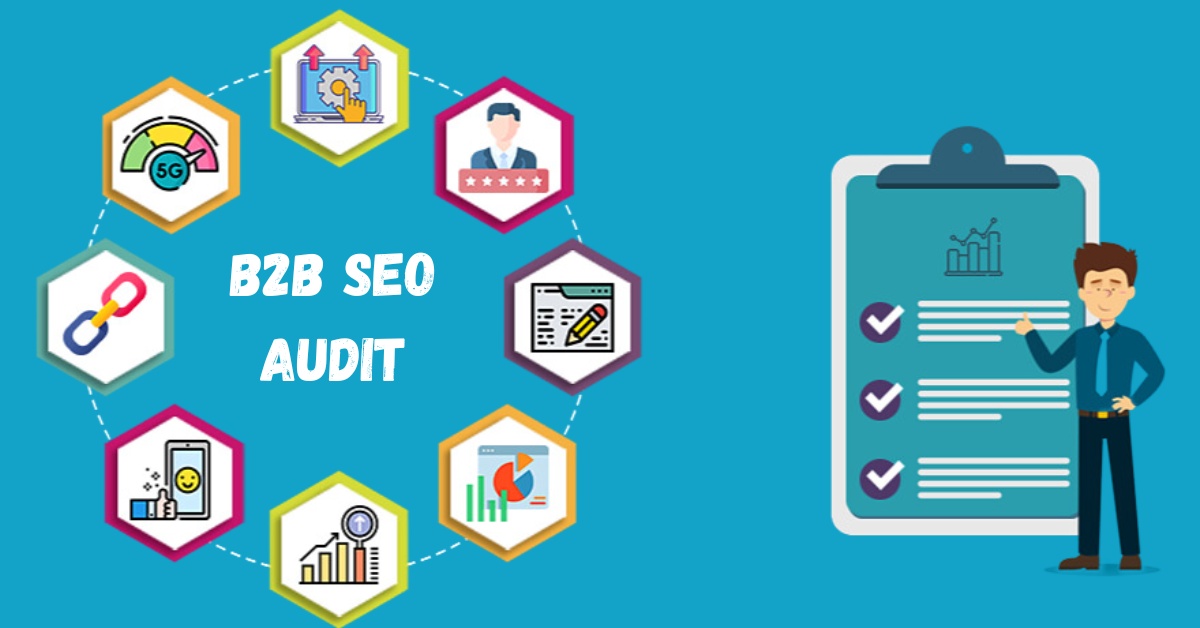
  1. Technical SEO audit: Identify technical issues preventing search engines from crawling and indexing your site effectively. Technical audit also involves things like checking the schema markup, page speed, image optimization, checking for duplicate content etc.
  2. On Page Audit: Optimize on-page elements like title tags, meta descriptions, and header tags for better search visibility. Essential an On page audit makes sure that your topic clusters are well built and whether you are focusing on quality content, internal links etc or not.
  3. Content Audit: Assess content quality and relevance to ensure you’re targeting the right keywords and satisfying user intent to diversify your SEO content marketing results. The end goal of a content audit is to streamline the sales funnel and improve your service pages, landing pages and pillar pages to get more organic search traffic to you website.
  4. Backlink Audit: Analyze your backlink profile to identify opportunities for improvement and eliminate toxic links

Benefits of Conducting a B2B SEO Audit

Investing in a B2B SEO audit offers numerous benefits for your business, including:

  1. Improved search rankings: By identifying and fixing SEO issues, you can boost your website’s search engine rankings and attract more qualified traffic.
  2. Enhanced user experience: Optimizing your site’s structure, navigation, and doing a content audit makes it easier for users to find what they need (i.e. their pain points), leading to higher engagement and conversion rates.
  3. Competitive advantage: Understanding your competitors’ SEO strategies allows you to identify gaps and opportunities to outrank them in search results.
  4. Cost-effective marketing: SEO is a long-term, cost-effective marketing strategy that supports B2B lead generation services by driving ongoing organic traffic and capturing qualified leads.

What Do You Need to Start Your B2B SEO Audit?

What Do You Need to Start Your B2B SEO Audit?

Before diving into the audit process, there are a few key things you’ll need:

Run a Competitor Analysis

Analyze your competitors’ websites to identify their target keywords, content strategies, and backlink profiles. This will give you valuable insights into industry best practices and areas where you can differentiate yourself.

Set Goals and Objectives

Clearly define what you want to achieve with your B2B SEO audit, whether it’s improving search rankings, driving more organic traffic, or increasing conversions. Setting specific, measurable goals will help guide your efforts and track progress.

What is Included in an SEO Audit?
What is Included in an SEO Audit?

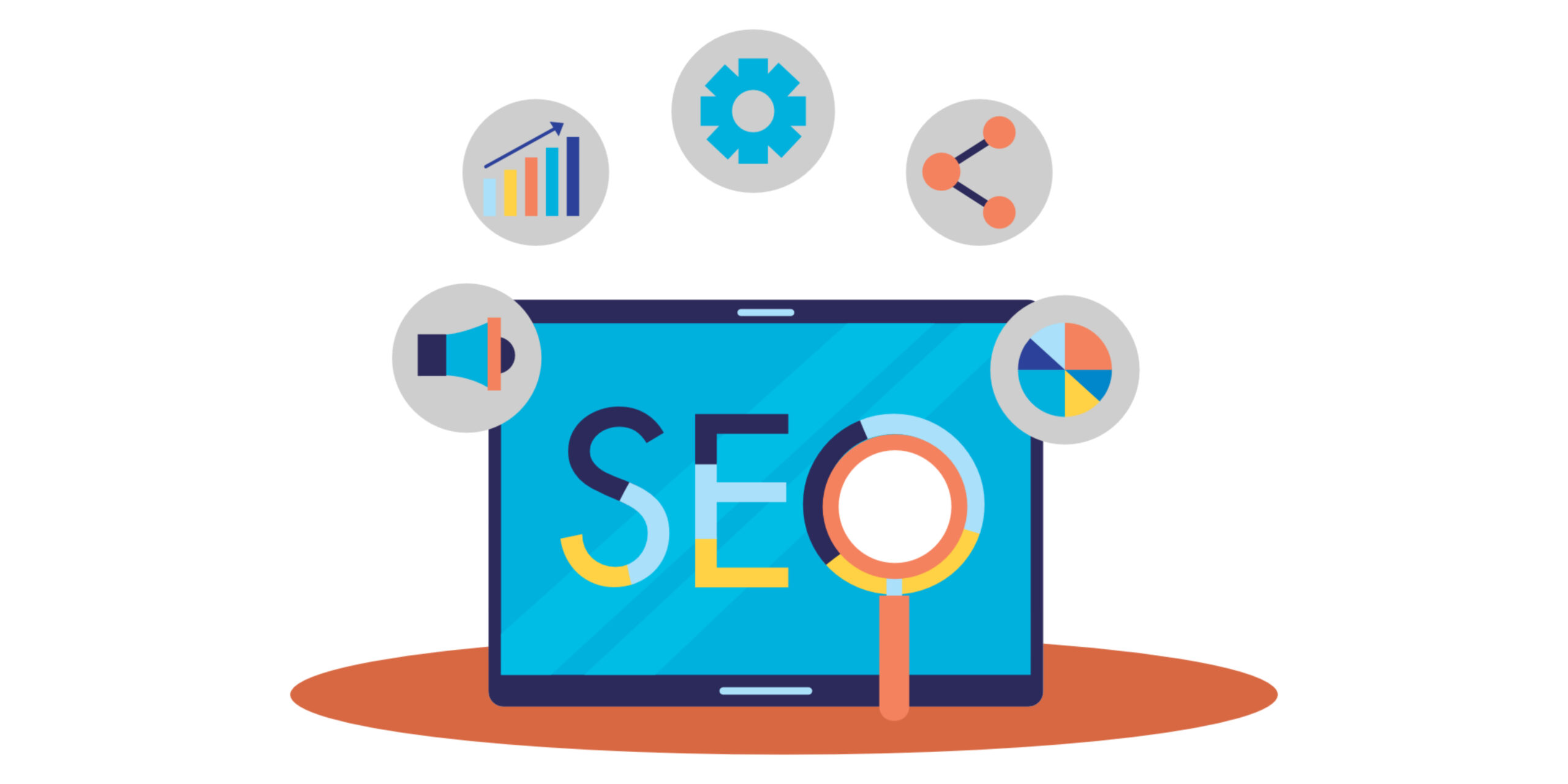
A comprehensive B2B SEO audit typically includes the following elements:

  1. Technical SEO: Analyzing your website’s architecture, crawlability, indexability, site speed, and mobile-friendliness.
  2. On-page SEO: Evaluating title tags, meta descriptions, header tags, content quality, and keyword targeting for better rankings in google search results.
  3. Off-page SEO: Examining your backlink profile, identifying toxic links, and assessing your website’s authority and trust.
  4. Keyword research: Identifying high-value keywords that align with your business goals and have the potential to drive qualified traffic.
  5. Competitor analysis: Analyzing your competitors’ SEO strategies to identify opportunities for improvement and differentiation.

How to Conduct a B2B SEO Audit?

How to Conduct a B2B SEO Audit?

Now that you understand the importance and benefits of a B2B SEO audit, let’s walk through the steps to conduct one effectively.

Step 1: Crawl Your Website

The first step in your B2B site audit journey is to crawl your website. Think of this as sending a digital explorer to check every part of your site. This helps you see how a search engine views your site and find any possible problems.

Crawling your website will show you important information, like broken links, redirect issues, and pages that load slowly. These crawl errors can hurt your user experience and lower your search rankings.

Finding these problems early means you can fix them quickly. This makes your website easy to access for both users and search engines. This step is important for a successful SEO audit and sets you up for better optimization.

Step 2: Analyze Your Technical SEO

  • Check For Crawl Errors: Ensure that search engine bots can easily crawl and index your website. Look for issues like server errors, broken links, and robots.txt file problems that may be preventing search engines from accessing your content.
  • Evaluate Site Speed and Performance: Slow-loading pages can negatively impact user experience and search rankings. Use tools like Google PageSpeed Insights to assess your site’s speed and identify areas for improvement, such as optimizing images and minifying code.
  • Ensure Your Site is Mobile-Friendly: With mobile devices accounting for a significant portion of web traffic, having a mobile-friendly website is important for SEO success. Use Google’s Mobile-Friendly Test to evaluate your site’s mobile responsiveness and make necessary improvements.

Step 3: Review On-Page SEO Elements

  • Optimize Title Tags and Meta Descriptions: Title tags and meta descriptions are essential for attracting clicks from search results. Ensure that each page has a unique, relevant title tag and meta description that accurately reflects the content and includes target keywords.
  • Analyze Header Tags (H1, H2, H3): Header tags help structure your content and signal its importance to search engines. Make sure each page has a single, relevant H1 tag and that subheadings are properly nested using H2 and H3 tags.
  • Assess Content Quality and Relevance: High-quality, relevant content is the foundation of a successful SEO strategy. Evaluate your existing content to ensure it targets the right keywords, satisfies user intent, and provides value to your target audience. Identify gaps and opportunities for new content creation.

Step 4: Examine Off-Page SEO Factors

  • Analyze Backlink Profile: Backlinks from high-quality, relevant websites can significantly boost your search rankings. Use tools like Ahrefs or Moz to analyze your backlink profile, identifying opportunities for improvement and monitoring your competitors’ link-building strategies.
  • Check For Toxic Backlinks: Not all backlinks are created equal. Low-quality or spammy links can harm your search rankings and even lead to manual penalties from Google. Identify and disavow any toxic backlinks to maintain a healthy link profile.

Step 5: Identify Keyword Gaps and Opportunities

Conduct thorough keyword research to identify high-value keywords that align with your business goals and have the potential to drive qualified traffic. Analyze your competitors’ keyword strategies to find gaps and opportunities for differentiation.

B2B SEO Audit Checklist

To ensure you cover all the essential aspects of a B2B SEO audit, use this handy checklist:

  1. Crawl your website to identify technical SEO issues
  2. Analyze your site’s architecture, navigation, and internal linking structure
  3. Evaluate site speed and performance
  4. Ensure your site is mobile-friendly
  5. Optimize title tags and meta descriptions
  6. Analyze header tags (H1, H2, H3)
  7. Assess content quality and relevance
  8. Examine your backlink profile and disavow toxic links
  9. Identify keyword gaps and opportunities
  10. Conduct a competitor analysis

Is a B2B SEO Audit Worth it?

Absolutely! Investing in a B2B SEO audit is essential for any business looking to improve its online presence, drive targeted traffic, and generate leads. By identifying and fixing SEO issues, optimizing on-page elements, and developing a strong content strategy with a focus on core web vitals, you can establish your brand as an industry leader and gain a competitive edge in search results.

B2B SEO Audit Tools
B2B SEO Audit Tools

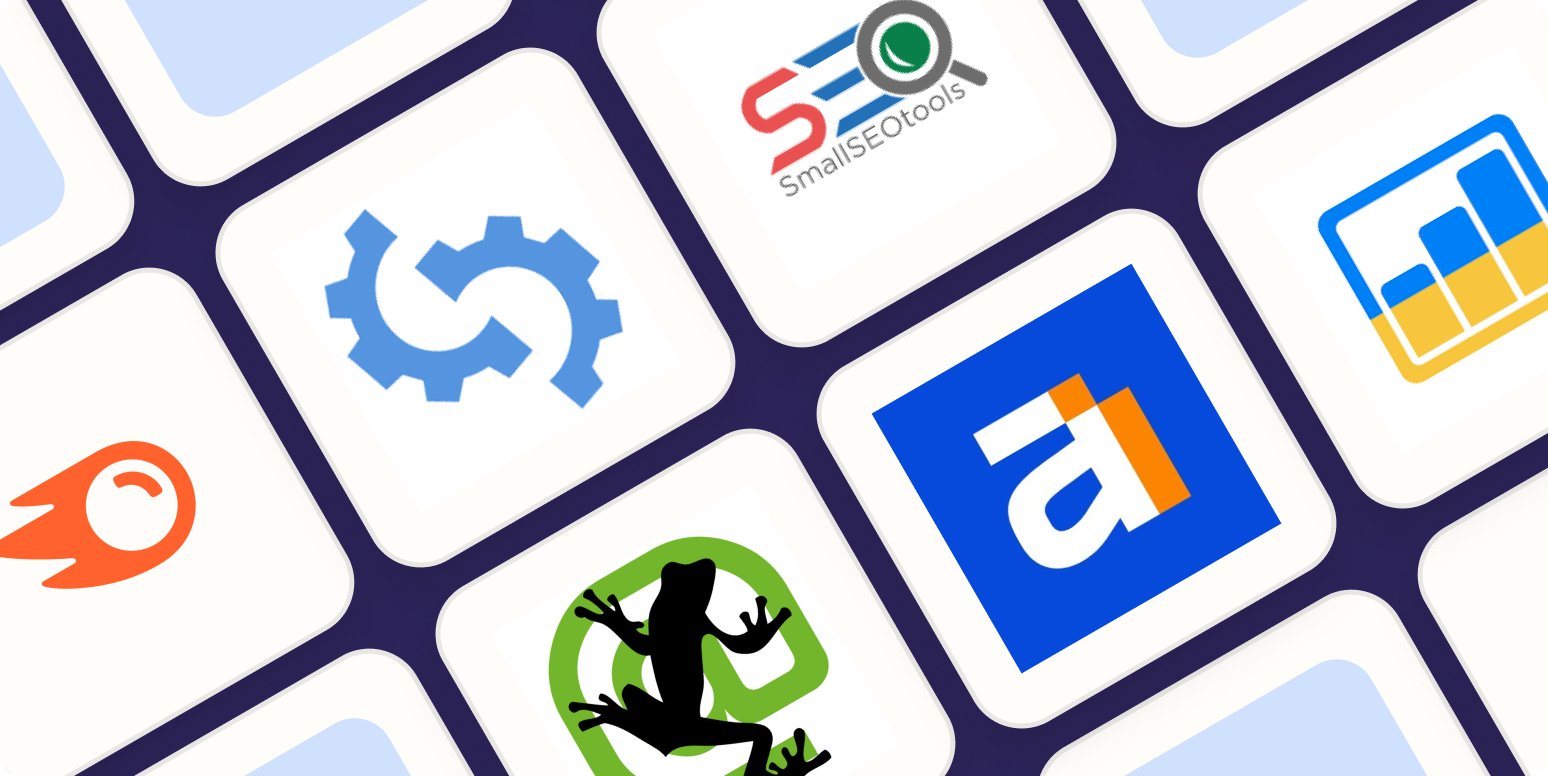
To conduct a thorough B2B SEO audit, you’ll need the right tools. Here are some of the best options:

  1. Screaming Frog: Screaming Frog is a powerful website crawler that helps you identify technical SEO issues, analyze on-page elements, and generate comprehensive reports.
  2. Semrush: Semrush is an all-in-one SEO tool that offers website auditing, keyword research, competitor analysis, and backlink monitoring capabilities.
  3. Ahrefs: Ahrefs is a popular tool for analyzing backlink profiles, identifying link building opportunities, and monitoring your competitors’ SEO strategies.
  4. Ubersuggest: Ubersuggest is a user-friendly keyword research tool that helps you identify high-value keywords, analyze search intent, and generate content ideas.
  5. Moz Pro: Moz Pro offers a suite of SEO tools, including website auditing, keyword research, and link building insights, making it an excellent choice for businesses of all sizes.
  6. Google Search Console: Google Search Console is a free tool that provides valuable insights into your website’s search performance, including keyword rankings, click-through rates, and crawl errors.
  7. Google Analytics: Google Analytics is an essential tool for tracking your website’s traffic, user behavior, and conversion rates, helping you make data-driven decisions to optimize your SEO efforts.

How Long Does A B2B Audit Take?

The duration of a B2B SEO audit depends on the size and complexity of your website, as well as the scope of the analysis. A thorough audit can take anywhere from a few days to several weeks, depending on the number of pages, the depth of the analysis, and the resources available.

How Can The Results Of A B2B SEO Audit Improve My Business?

How Can The Results Of A B2B SEO Audit Improve My Business?

The insights gained from a B2B SEO audit can help you:

  • Improve your website’s search rankings and visibility
  • Drive more targeted, qualified traffic to your site
  • Enhance user experience and engagement
  • Increase lead generation and conversion rates
  • Establish your brand as an industry authority
  • Gain a competitive advantage in your market

FAQ’s:

How Much Does a B2B SEO Audit Cost?

The cost of a B2B SEO audit varies depending on the size of your website, the complexity of the analysis, and the provider you choose. Prices can range from a few hundred to several thousand dollars.

How Often Should A B2B SEO Audit Be Conducted?

It’s recommended to conduct a comprehensive B2B SEO audit at least once a year, or whenever you make significant changes to your website. However, it’s essential to continuously monitor your SEO performance and make ongoing optimizations to stay ahead of the competition.

What Are Some Common Findings Of A B2B SEO Audit?

Common findings of a B2B SEO audit include technical issues like crawl errors and site speed problems, on-page optimization opportunities, content gaps, and backlink profile weaknesses.

Can Small B2B Businesses Benefit From SEO Audits?

Yes! Regardless of your business size, a B2B SEO audit can help you identify areas for improvement, optimize your online presence, and attract more qualified leads.

Can A B2B SEO Audit Identify Opportunities For Content Creation?

Absolutely! A thorough SEO audit will analyze your existing content, identify gaps and opportunities for new content creation, and help you develop a targeted content strategy that aligns with your business goals and target audience’s needs.

Conclusion

A comprehensive B2B SEO audit is essential for any business looking to improve its online presence, drive targeted traffic, and generate leads.

Following the steps outlined in this guide and utilizing the right tools, you can identify and fix SEO issues, optimize your website for search engines, and develop a strong content strategy that resonates with your target audience.

At VH-info, we specialize in providing actionable insights and expert guidance for B2B SEO success. Our experienced team can help you conduct a thorough SEO audit, develop a customized strategy, and implement effective tactics to boost your search rankings and drive meaningful results.

Don’t let poor SEO hold your business back. Invest in a B2B SEO audit today and take the first step towards unlocking your website’s full potential.


Link Insertion Vs Guest Post: A Comprehensive Comparison

Link building is an important aspect of SEO that helps improve a website’s search engine rankings and online presence.

Two popular link building strategies are link insertions and guest posts. While both aim to acquire high-quality backlinks, they differ in their approach and execution.

In this article, we’ll explore the differences between link insertions and guest posts, their benefits, drawbacks, and how to choose the right strategy for your SaaS business.

What Are Link Insertions?

What Are Link Insertions?

Link insertions, also known as niche edits, involve adding your link to an existing article on a relevant, high-quality website. This strategy leverages the authority of the host site to boost your backlink profile and improve your search engine rankings.

How Do You Target Link Insertions?

How Do You Target Link Insertions?

There are a few good ways to use link insertions wisely:

  • Broken Link-Building: One effective way to target link insertions is through broken link-building. This involves finding dead links on relevant websites and offering your content as a replacement. Broken link building is a great strategy when you temporarily have exhausted new guest posting opportunities. The good news also is that it helps you to restore your lost link juice.
  • Unlinked Brand Mentions: Another approach is to find unlinked brand name mentions of your company and reach out to the website owner to request a link insertion.

Benefits of Link Insertions

  1. Faster Indexing: Since the link is inserted into an existing piece of content, it can be indexed by search engines more quickly compared to a new guest post.
  2. Easy Outreach: Link insertion outreach is often simpler and less time-consuming than pitching a new guest post idea.
  3. No Content Creation Needed: With link insertions, you don’t need to create new content, saving you valuable time and resources.
  4. Targeting Any Website in Your Industry: Link insertions allow you to target any relevant website in your industry, regardless of whether they accept guest posts.

Drawbacks of Link Insertions

While link insertions offer several benefits, they also have some drawbacks. You have limited control over the context of your link (aka contextual links) and the anchor text used for the target site. Additionally, some website owners may be reluctant to add links to existing content.

What Are Guest Posts?

What Are Guest Posts?

Guest posts involve creating a new piece of content for another website in your industry. This content typically includes a link back to your own site, helping you build brand authority and drive referral traffic.

How Do You Target Guest Posts?

How Do You Target Guest Posts?

To target guest posts, start by identifying reputable websites in your niche that accept guest contributions. Create a compelling pitch that demonstrates the value you can provide to their audience.

Advantages of Guest Posts

Guest posts have special benefits that help build a strong online presence:

  1. Establish Thought Leadership: Guest posting allows you to showcase your expertise and establish yourself as a thought leader in your industry.
  2. Better Control over target keywords: Guest posts enable you to have better control over the target keywords used in your content, helping you optimize for specific search terms and enhance your SEO efforts. Additionally, guest posts provide a platform to engage with a new audience using ethical practices, expand your reach, foster relationships within your industry and helping you find newer opportunities.
  3. Generate Referral Traffic: A well-created guest post can drive targeted referral traffic to your website, potentially leading to new customers and opportunities.

Drawbacks of Guest Posts

While guest posting has many benefits, it also has some limits to think about.

  1. Time-Consuming: Creating high-quality guest posts requires a significant investment of time and effort, from ideation to writing and editing.
  2. Delayed Indexing: Since guest posts are new pieces of content, it may take longer for search engines to index and recognize the value of your backlink.

Link Insertion Vs Guest Post: What Are Their Differences?

The primary difference between link insertions and guest posts lies in their execution.

Link insertions, also known as niche edits, involve adding your link to an existing piece of content on a relevant website. This strategy uses the authority of the host site to boost your backlink profile and improve your search engine rankings.

On the other hand, guest posts require creating a new article from scratch for another website in your industry. This new content typically includes a link back to your own site, helping you build brand authority and drive referral traffic. Guest posting allows you to showcase your expertise and establish yourself as a thought leader in your industry.

When targeting link insertions, you can use tactics like broken link-building or finding unlinked brand mentions.

For guest posts, you’ll need to identify reputable websites that accept guest contributions and create a compelling pitch.

While link insertions offer faster indexing and require no content creation, guest posts provide more control over the content and can generate valuable referral traffic.

Guest Posting and Link Insertion: Factors to Consider

When deciding between guest posting and link insertions for your SEO campaign, it’s essential to consider several key factors.

First, evaluate your available resources, including time, budget, and content creation capabilities. Guest posting requires a significant investment in creating high-quality content, while link insertions can be more time-efficient.

Next, think about your target audience and SEO goals. If you aim to establish thought leadership and drive referral traffic, guest posting may be more effective. By creating valuable content for reputable websites, you can expose your brand to a new audience and build trust.

However, if your primary goal is to quickly improve your backlink profile and search engine rankings, link insertions can provide faster results.

Consider the relevance and authority of the websites you target for each strategy.

For guest posts, look for reputable sites that align with your niche and have an engaged audience. When targeting link insertions, prioritize relevant, high-quality websites that can pass valuable link equity to your site.

By carefully selecting your targets based on relevance and authority, you can maximize the impact of both guest posting and link insertion efforts on your SEO performance.

Link Insertion Vs Guest Post: Google’s Stance

Link Insertion Vs Guest Post: Google’s Stance

Both link insertions and guest posts are considered acceptable link building strategies by Google, as long as they adhere to white hat SEO practices. Google encourages creating valuable, informative content that benefits users and naturally earns backlinks.

When executing link insertions or guest posts, it’s important to avoid tactics that violate Google’s guidelines, such as link exchanges, paid links, or low-quality content. These black hat practices can lead to penalties and harm your website’s credibility.

To stay in Google’s good graces, focus on creating high-quality, relevant content that provides value to readers. When inserting links or publishing guest posts, ensure the links are contextual and enhance the user experience. By prioritizing quality and relevance over quantity, you can build a strong backlink profile that aligns with Google’s guidelines and contributes to your long-term SEO success.

Link Insertion Vs Guest Post: Choosing The Right Strategy For You

Link Insertion Vs Guest Post: Choosing The Right Strategy For You

Ultimately, the choice between link insertions and guest posts depends on your unique needs, goals, and resources. Many businesses find success by including both strategies in their overall SEO campaign.

To determine the right approach for your website, start by defining your primary objectives. Are you looking to quickly boost your search engine rankings, or do you want to build long-term brand authority and thought leadership? Consider your target audience and the types of websites they engage with regularly.

Evaluate your available resources, including time, budget, and content creation capabilities. If you have limited resources, link insertions may be a more efficient option, while guest posting can be ideal if you have a dedicated content team.

Finally, track and analyze the results of your link building efforts using tools like Google Analytics and SEO software. Monitor key metrics like organic traffic, search engine rankings, and referral traffic to gauge the success of your link insertion and guest posting strategies.

By continually assessing your performance and adapting your approach, you can refine your SEO campaign and achieve sustainable growth for your website.

FAQ’s:

Which is Better For SEO: Link Insertions Or Guest Posts?

Both link insertions and guest posts can be effective for SEO when executed properly. The best approach depends on your specific goals and resources.

Can You Use Both Link Insertions and Guest Posts Together?

Yes, many businesses use a combination of link insertions and guest posts to build a diverse and robust backlink profile.

How Do You Choose Between Link Insertions and Guest Posts?

Consider factors like your target audience, available resources, and desired outcomes when choosing between link insertions and guest posts.

Acquiring guest post backlinks is a time-consuming process and quick results should not be anticipated as you don’t have full control over the entire guest blogging process.

How Can Businesses Measure the Success of their Link Insertion or Guest Posting Strategy?

Monitor key metrics like organic traffic, search engine rankings, referral traffic, and domain rating or domain authority to gauge the success of your link building efforts.

Conclusion

Link insertions and guest posts are two powerful link building strategies that can help improve your website’s search engine rankings and online presence.

Understanding the differences between these approaches and considering your unique goals and resources can help you develop an effective SEO strategy that drives sustainable growth for your SaaS business.

Is Blogging Dead in 2024? Find Out Here

As we navigate the ever-evolving digital landscape in 2024, a question on many content creators’ minds is: “Is blogging dead?

With the rise of social media, video content, and AI-generated content like ChatGPT, some argue that traditional blogging has lost its relevance. However, while the blogging industry has undoubtedly transformed, it’s far from extinct.

In this article, we’ll explore the state of blogging in 2024, the impact of AI on content creation, and strategies to help your blog thrive in this new era.

Is Blogging Dead in 2024?

Is Blogging Dead?

No, blogging is not dead in 2024. Despite the rise of social media, video content, and AI-generated content, blogging remains a thriving and essential part of the digital landscape.

With over 600 million active blogs and 77% of internet users regularly engaging with blog content, the demand for high-quality, informative, and entertaining blog posts persists.

Successful bloggers in 2024 are adapting to the evolving landscape by diversifying their content formats, leveraging new technologies, and focusing on delivering exceptional value to their target audience.

While certain outdated strategies may no longer be effective, blogging as a whole continues to offer immense opportunities for creators to share their ideas, build communities, and achieve their content marketing goals.

The State of Blogging in 2024

The State of Blogging

The blogging world in 2024 is full of changes and competition. Millions of blog posts go live each day. This makes it hard to get noticed. New platforms and tech are growing fast. Bloggers must be smarter to grab the ever-changing attention of their readers.

Yet, this tough setting is not the end for blogging. It shows that bloggers must change and think of new ideas. Those who welcome change, focus on good content, and use new tools will succeed in this growing field.

How Many Blogs Are There in 2024?

Despite the rise of new technologies and platforms, the number of blogs continues to grow in the online world in recent years. In 2024, there are over 600 million blogs on the internet, with thousands of new blogs launched every single day. This growth indicates that blogging remains a popular medium for sharing ideas, experiences, and expertise with a wider audience.

Do Blogs Still Make Money?

Yes, blogs can still be profitable in 2024. Successful bloggers monetize their content through various strategies, including sponsored content, affiliate marketing, and selling digital products like ebooks or courses through an online store to attract new customers. However, as the blogging industry becomes more competitive, creators must adapt their monetization strategies to stand out and provide value to their target audience.

Do People Still Read Blogs?

In short, yes. While video content and social media have gained popularity, many internet users still turn to blogs for in-depth information, personal experiences, and problem-solving content. In fact, 77% of internet users read blogs regularly, demonstrating the enduring appeal of written content in the digital age.

Why Some Say Blogging is Dead?

Why Some Say Blogging is Dead?

Some say blogging is dead due to the following reasons:

  1. Competition From Social Media: One reason some believe blogging is dead is the fierce competition from social media platforms like Facebook, Instagram, and Twitter. These platforms offer instant gratification and easy content consumption, making it harder for bloggers to capture their audience’s attention.
  2. Competition From Video Content: With the rise of YouTube and other video-sharing platforms, many content creators have shifted their focus to video content. As a result, some argue that blogging has taken a backseat to more visually engaging mediums.
  3. The Rise of AI-Generated Content: The emergence of AI-powered tools like ChatGPT has led some to question the future of blogging. With AI capable of generating human-like text, some wonder if the role of human bloggers will diminish.

AI’s Impact on Blogging

AI’s Impact on Blogging

Artificial intelligence is changing the world of blogging fast. It challenges how we think about making content. AI tools help bloggers by automating tasks, coming up with ideas, and even writing drafts. This raises the question: will human writers still be needed?

But rather than seeing AI as a danger, many smart bloggers welcome it as a helpful partner. AI can boost productivity, simplify processes, and give important insights. This allows bloggers to spend time on what matters: writing real, high-quality content that connects with their readers.

AI Vs. Human Storytelling In Content Creation

While AI can generate coherent and informative text, it lacks the personal touch and unique perspective that human bloggers bring to their content. Successful bloggers in 2024 will leverage AI tools to streamline their workflow while infusing their content with their own experiences, opinions, and storytelling prowess.

Content Monetization Strategies

To remain competitive in the AI era, bloggers must adapt their monetization strategies:

  1. Sponsorships: Partnering with brands that align with your niche and audience can provide a lucrative income stream. Sponsored content allows you to create valuable content while promoting products or services your readers will appreciate.
  2. Affiliate Marketing: By recommending products or services you trust and use, you can earn a commission on sales made through your unique affiliate links. This passive income strategy rewards you for the trust you’ve built with your audience.
  3. Digital Products: Creating and selling your digital products, such as ebooks, courses, or templates, allows you to share your expertise while generating income. These products provide value to your audience and establish you as an authority in your niche.

Blogging Strategies That No Longer Work

Blogging Strategies That No Longer Work

To succeed in 2024, bloggers must avoid outdated strategies that no longer resonate with audiences:

  1. Publishing Too Frequently: Quality trumps quantity in the modern blogging landscape. Instead of churning out mediocre posts daily, focus on creating well-researched, engaging content that provides value to your readers.
  2. Covering Too Many Topics: Niche down and focus on a specific topic or audience. By establishing yourself as an expert in a particular area, you’ll attract a loyal following and stand out in a crowded market.
  3. Using Click-Bait Headlines: While attention-grabbing headlines are important, misleading or sensationalized titles will only erode trust with your audience. Focus on creating headlines that accurately reflect your content and provide a clear benefit to readers.
  4. Ignoring SEO Best Practices: Search engine optimization (SEO) is important for driving organic traffic to your blog. Neglecting keyword research, meta descriptions, and other on-page SEO elements will limit your blog’s visibility and growth potential.

Types of Blogs That Still Succeed in 2024

Types of Blogs That Still Succeed

  1. Blogs That Solve Problems For Readers: Blogs that provide practical solutions to common problems or challenges faced by their target audience continue to thrive. By addressing your readers’ pain points and offering actionable advice, you’ll establish yourself as a valuable resource.
  2. Blogs With High-Quality, In-Depth Content: In an era of short attention spans, blogs that offer comprehensive, well-researched content stand out. By going beyond surface-level information and providing in-depth insights, you’ll attract readers seeking expertise and substance.
  3. Blogs Optimized For Search Engines: Blogs that prioritize SEO best practices, such as keyword optimization, internal linking, and mobile-friendliness, have a better chance of ranking high in search engine results pages (SERPs). By making your content easily discoverable, you’ll attract new readers and grow your audience.

How to Grow Your Blog in 2024?

How to Grow Your Blog?

  1. Embrace At Least One Other Platform: While your blog should remain the cornerstone of your content strategy, embracing other platforms can help you reach a wider audience. Consider repurposing your blog content for social media, YouTube, or even starting a podcast to engage with your audience on their preferred platforms.
  2. Invest in More Video Content to Complement Your Blog: Video content is a powerful way to complement your blog posts and engage your audience. Consider creating video tutorials, interviews, or behind-the-scenes content to add a new dimension to your blog.
  3. Build an Email List: An email list allows you to communicate directly with your most engaged readers. By offering valuable content and exclusive resources to your subscribers, you’ll foster a loyal community and drive traffic back to your blog.
  4. Become a Better Copywriter: In a crowded content landscape, strong copywriting skills are essential. Invest time in honing your writing craft, learning persuasive techniques, and developing your unique voice to create content that resonates with your audience.
  5. Find a Supportive Community: Connecting with other bloggers in your niche can provide invaluable support, collaboration opportunities, and exposure to new audiences. Engage in online communities, attend industry events, and guest post on other blogs to expand your network and grow your blog.

How to Make Your Blog Thrive in 2024?

How to Make Your Blog Thrive?

  1. Focus on Meeting Your Audience’s Needs: To create a successful blog in 2024, prioritize understanding and meeting your target audience’s needs. Conduct surveys, analyze comments and feedback, and engage with your readers to gain insights into the content they crave.
  2. Create Comprehensive, Valuable Content: Invest time and effort into creating in-depth, well-researched content that provides genuine value to your readers. Go beyond surface-level information and offer unique insights, actionable tips, and real-life examples to keep your audience coming back for more.
  3. Optimize For On-Page SEO: To attract organic traffic from search engines, optimize your blog posts for on-page SEO. Conduct thorough keyword research, create compelling meta descriptions, and use header tags to structure your content. By making your blog search engine-friendly, you’ll increase your visibility and attract new readers.
  4. Promote Your Content on Social Media: Social media platforms offer powerful opportunities to promote your blog content and engage with your audience. Share your blog posts on relevant social channels, participate in industry conversations, and collaborate with other creators to expand your reach and drive traffic to your blog.

FAQ’s:

Is it Too Late to Start a Blog in 2024?

No, it’s never too late to start a blog. While the blogging industry has evolved, there is still room for new voices and fresh perspectives. By focusing on a specific niche, creating valuable content, and engaging with your audience, you can build a successful blog in 2024.

How Often Should I Publish New Blog Posts?

The ideal publishing frequency depends on your niche, audience, and content goals. While consistency is important, prioritize quality over quantity. Aim to publish well-researched, engaging content on a schedule that allows you to maintain high standards.

Is Blogging Dead After ChatGPT?

No, blogging is not dead after the emergence of AI-powered tools like ChatGPT. While these tools can assist with content creation, they cannot replace the unique perspective, personal experiences, and storytelling abilities of human bloggers. Successful bloggers in 2024 will learn to use AI to enhance their content while infusing it with their voices and insights to build brand awareness.

Can You Still Start a Profitable Blog in 2024?

Yes, it is still possible to start a profitable blog in 2024. By choosing a niche with monetization potential, creating valuable content, and implementing effective strategies like sponsored content, affiliate marketing, and selling digital products, you can build a thriving blog business.

Do I Need to Be an Expert to Start a Blog?

No, you don’t need to be an expert to start a blog. While having knowledge and experience in your chosen niche is beneficial, you can also document your learning journey and share your experiences with your audience. Authenticity and a willingness to learn and grow are more important than being an established expert.

Conclusion

In conclusion, blogging is far from dead in 2024. While the landscape has evolved with the rise of social media, video content, and AI-generated content, blogs remain a powerful medium for sharing ideas, building communities, and establishing thought leadership.

To succeed in this new era, bloggers must adapt their strategies, focus on creating high-quality, valuable content, and leverage new technologies to enhance their workflows. Understanding their audience’s needs, optimizing for search engines, and diversifying their content across multiple platforms can help bloggers continue to thrive and make a meaningful impact in the digital world.

So, if you’re passionate about a topic and ready to put in the hard work, don’t let anyone tell you that blogging is dead. Embrace the challenges and opportunities of this exciting time, and start building your successful blog today.

What is Mobile First Indexing: Meaning, Benefits, Fixes & Tools

In today’s mobile-centric digital landscape, having a mobile-friendly website is no longer optional—it’s a necessity. With the majority of internet users accessing websites through their smartphones, Google has shifted its focus to mobile-first indexing.

As a SaaS company, understanding and optimizing for mobile-first indexing is important for improving your search engine rankings and providing a seamless user experience for your mobile visitors.

What is Mobile-First Indexing?

What is Mobile-First Indexing?

Mobile-first indexing is a process where Google predominantly uses the mobile version of a website’s content for indexing and ranking in search results. This means that Google’s crawler, Googlebot, will primarily use the mobile version of your site to determine its relevance and ranking position.

What Does Mobile-First Indexing Mean For SEO?

What Does Mobile-First Indexing Mean For SEO?

Mobile-first indexing has a significant impact on search engine optimization (SEO) because it prioritizes the mobile version of your website over its desktop counterpart. If your site isn’t optimized for mobile devices or lacks a mobile version altogether, it may experience a drop in search engine rankings, making it harder to achieve higher rankings, even if your desktop site is well-optimized.

How Does Mobile-First Indexing Work?

How Does Mobile-First Indexing Work?

When a site has separate URLs for desktop and mobile, Google’s indexing system will look at the mobile page instead of the desktop page for information. For responsive websites that adjust their content based on screen size, there will be no change in the indexing process.

Why is Mobile-First Indexing Important?

Why is Mobile-First Indexing Important?

Mobile first Indexing is important because of the following reasons:

  1. Improved Search Engine Rankings: Prioritizing mobile-friendly websites, Google aims to provide the best possible user experience for its mobile users. Sites that are well-optimized for mobile devices are more likely to rank higher in search results, leading to increased visibility and organic traffic.
  2. Competitive Advantage: With the growing dominance of mobile internet usage, having a mobile-optimized website gives you a competitive edge over businesses that haven’t adapted to this shift. Providing a seamless mobile experience can help you attract and retain more customers, ultimately driving growth for your SaaS company.
  3. Improved User Experience: Mobile-first indexing encourages website owners to focus on creating a user-friendly mobile experience. Optimizing your site for mobile devices ensures that your visitors have a positive interaction with your brand, reducing bounce rates and increasing engagement.

How to Enable Mobile-First Indexing?

How to Enable Mobile-First Indexing?

To enable mobile-first indexing, ensure that your website follows best practices for mobile optimization:

  1. Use responsive web design to ensure your content adapts to different screen sizes.
  2. Maintain consistency in content and metadata across desktop and mobile versions.
  3. Optimize page load speeds for mobile devices.
  4. Ensure Googlebot can access and render your mobile content.

How to Fix Mobile Indexing Issues?

To fix Mobile Indexing issues follow these steps:

Check For Mobile-Friendliness

In today’s world, mobile phones are important for Google search. Your website must work well on mobiles. As a site owner, think like a mobile user. Is your text easy to read? Can users navigate easily? Does your content display properly?

Google offers the Mobile-Friendly Test tool. Enter your site’s URL to check its mobile-friendliness. Fix any issues found to enhance user experience and SEO rankings. Running these tests periodically is essential after significant updates for a seamless user experience and keeping up with digital trends.

Run a Site Audit

A website check is important to maintain site health and visibility on search engines. It involves examining technical aspects, content, and external factors. Picture it as a check-up identifying issues impacting performance and Google’s view of your site.

During the check-up, you’ll review various areas like page accessibility, site structure, data optimization, and backlink quality. The focus is on identifying any barriers that Google may encounter while navigating your site.

Fixing these problems improves site layout, content delivery, and Google’s ability to navigate. This boosts SEO rankings, enhances user experience, and strengthens online presence.

How Do I Improve & Optimize For Mobile-First Indexing?

How Do I Improve & Optimize For Mobile-First Indexing?

Optimizing your website for mobile-first indexing is more than just making it look nice on small screens. You also have to think about the technical details and follow Google’s best practices to give users a smooth experience.

  1. Structured Data: Ensure that structured data is present on both desktop and mobile versions of your site. Use the same structured data markup across both versions to maintain consistency.
  2. Use Responsive Design: Implement responsive web design to ensure your content adapts seamlessly to different screen sizes and devices. This approach eliminates the need for separate mobile URLs and ensures a consistent user experience.
  3. Optimize Page Speeds: Improve your mobile page load times by compressing images, leveraging browser caching, and minimizing code. Fast-loading pages not only improve user experience but also contribute to higher search engine rankings.
  4. Googlebot Accessibility: Ensure that Googlebot can access and render your mobile content. Avoid blocking CSS, JavaScript, or images in your robots.txt file, as this can hinder Googlebot’s ability to properly index your mobile site.
  5. Prioritize Mobile Parity: Maintain content parity between your desktop and mobile sites. Avoid serving less content on your mobile version, as this can negatively impact your search rankings.
  6. Visual Content ‒ Images: Optimize images for mobile devices by compressing them and using appropriate alt text. Ensure that images are easily viewable on smaller screens and contribute to a positive user experience.
  7. Visual Content – Videos: Ensure that videos are playable on mobile devices and don’t rely on Flash or other unsupported formats. Consider using responsive video embeds that adapt to different screen sizes.
  8. Run Mobile-Friendliness Tests: Regularly run mobile-friendliness tests using tools like Google’s Mobile-Friendly Test and PageSpeed Insights. These tools will help you identify and fix any usability issues affecting your mobile site.

What Are The Most Common Mistakes With Mobile-First Indexing?

What Are The Most Common Mistakes With Mobile-First Indexing?

  1. Inconsistent content across devices: Ensure all content (text, images, videos) available on desktop is also accessible on mobile to maintain content parity and rankings.
  2. Blocking CSS, JavaScript, or images: Avoid blocking these essential elements, as they are important for search engines to understand and render your mobile site correctly.
  3. Poor mobile usability: Implement user-friendly mobile designs with large touch elements, easy navigation, and minimal intrusive interstitials to enhance user experience.

4 Free Mobile-First Indexing Auditing Tools

Mobile-First Indexing Auditing Tools

  1. Google Search Console: Use the URL Inspection Tool in Google Search Console to determine if your content is being crawled by Googlebot Smartphone. This will help you identify any mobile indexing issues.
  2. Rich Results Test: Google’s Rich Results Test provides insights into how Google interacts with your content. Use this tool to see how Google views your mobile content and detect any structured data issues.
  3. Chrome Developer Tools: Chrome Developer Tools offers a comprehensive suite of web development and debugging tools. Use it to simulate how your website looks on different mobile devices and identify mobile-specific issues.
  4. PageSpeed Insights: Google’s PageSpeed Insights tool evaluates both mobile and desktop versions of your site, offering insights into various aspects affecting performance. Use this tool to identify areas for improvement in your mobile site’s page speed and user experience.

FAQ’s:

Why is Google Moving to Mobile-First Indexing?

Google is moving to mobile-first indexing because the majority of users now access the internet primarily through mobile devices. Prioritizing mobile content, Google aims to provide the most relevant and user-friendly search results for its mobile users.

Does Mobile-First Indexing Affect My Rankings?

Yes, mobile-first indexing can affect your search engine rankings. If your mobile site is not optimized or lacks the same content as your desktop site, you may experience a drop in rankings. On the other hand, a well-optimized mobile site can lead to improved rankings and visibility.

How Often Should I Perform Mobile Usability Tests?

It’s recommended to perform mobile usability tests regularly, ideally every time you make significant changes to your website. However, running tests at least once a month can help you stay on top of any mobile usability issues and ensure your site remains optimized for mobile-first indexing.

Are There Now Two Indexers, One For Mobile and Another For Web?

No, there is only one index for both mobile and desktop content. With mobile-first indexing, Google primarily uses the mobile version of your content for indexing and ranking purposes. However, if you only have a desktop site, Google will still index and rank your content.

Conclusion

As Google continues to prioritize mobile-first indexing, SaaS companies must adapt their websites to provide an optimal mobile experience.

Understanding the implications of mobile-first indexing and implementing best practices for mobile optimization can help improve your search engine rankings, gain a competitive advantage, and provide a seamless user experience for your mobile visitors.

At VH Info, we specialize in helping SaaS companies navigate the complexities of mobile-first indexing and SEO.

Our team of experts can guide you through the process of optimizing your website for mobile devices, ensuring that your content is properly indexed and ranked by Google. Partnering with VH Info can help you stay ahead of the curve and drive sustainable growth for your SaaS business in the mobile-first era.

Niche Marketing: Meaning, Advantages, Disadvantages, Types & Examples

Niche marketing is a targeted approach that focuses on a specific segment of a broader market. Catering to the unique needs and preferences of a niche audience helps businesses differentiate themselves from competitors and build a loyal customer base.

In this article, we’ll explore the concept of niche marketing, its advantages and disadvantages, and provide examples and strategies to help you succeed in your niche market.

What Does “Niche Market” Mean?

What Does “Niche Market” Mean?

A niche market is a subset of a larger market that has specific needs, preferences, and characteristics that differ from the broader market. Niche markets are often defined by factors such as demographics, interests, lifestyle, or geographic location. Targeting a specific niche allows businesses to tailor their products, services, and marketing strategies to meet the unique needs of their target audience.

What is Niche Marketing?

What is Niche Marketing?

Niche marketing is a strategy that involves focusing your marketing efforts on a specific segment of the market that has unique needs and preferences. Instead of trying to appeal to a wide range of potential customers, niche marketing allows you to concentrate on a smaller group of people who are more likely to be interested in your products or services.

How Does Niche Marketing Work?

How Does Niche Marketing Work?

  1. Building Your Audience: The first step in niche marketing is to identify your target audience. This involves researching your potential customers’ demographics, interests, and pain points. Once you have a clear understanding of your niche audience, you can create content and products that address their specific needs.
  2. Testing Before Investing: Before investing heavily in a niche market, it’s essential to test your products or services to ensure there is sufficient demand. This can be done through surveys, focus groups, or small-scale product launches. Testing allows you to gather valuable customer feedback and make necessary adjustments before committing significant resources.
  3. Digging Deeper Into the Niche: As you establish your presence in a niche market, it’s important to continue learning about your target audience. Engage with your customers through social media, email marketing, and other channels to gain insights into their preferences and behaviors. This knowledge will help you refine your marketing strategies and develop new products or services that meet their evolving needs.
  4. Researching About Trends in the Niche: To stay competitive in your niche market, you must stay up-to-date with the latest trends and developments. Regularly conduct market research and monitor your competitors to identify new opportunities and potential threats.

Niche Marketing Advantages and Disadvantages

Niche Marketing Advantages and Disadvantages

Niche marketing can be a smart choice for some businesses. It has its good and bad sides. It is important to think about both to see if it fits with your business goals and resources.

Advantages of Niche Marketing

  • Less competition: Targeting a specific niche means facing fewer competitors than in the broader market.
  • Higher profit margins: Niche products and services often command premium prices due to their specialized nature.
  • Loyal customer base: Niche audiences tend to be more engaged and loyal to brands that cater to their specific needs.
  • Cost-effective marketing: Targeted marketing campaigns are more efficient and cost-effective than broad-based advertising.

Disadvantages of Niche Marketing

  • Limited market size: Niche markets are smaller than the broader market, which can limit growth potential.
  • Dependence on a single market: Focusing on a single niche can make your business vulnerable to changes in consumer demand or market conditions.
  • Higher costs: Specialized products and services may have higher production or acquisition costs.
  • Difficulty in scaling: As your business grows, it may be challenging to maintain the same level of personalization and customer service that initially attracted your niche audience.

Types of Niche Markets Under Niche Marketing

Types of Niche Markets Under Niche Marketing

Environmental Aspects

The growing demand for eco-friendly products is driven by a rising environmental consciousness. Businesses catering to this market showcase sustainability through transparent supply chains, eco-friendly packaging, and support for environmental causes. For example, precision forestry practices like LiDAR forest inventory help companies ensure sustainable sourcing. This focus attracts loyal customers willing to pay more for products that minimize environmental impact, leading to market expansion.

Music

The music industry provides niche marketing opportunities with its diverse genres and preferences. Businesses targeting vinyl lovers or K-Pop fans can thrive.

Online platforms have transformed music consumption, enabling direct interaction among artists, businesses, and audiences through blogs, groups, and streaming services.

Successful music niche businesses stay current on industry trends and engage with their audience on social media. Knowing customers’ preferred genres and artists is crucial for offering unique value.

Fashion

Fashion trends change frequently, offering brand opportunities. Niche options like sustainable fashion, vintage clothing, streetwear, and athleisure are popular choices. Understanding your target audience’s preferences is key to success.

Niche fashion brands build communities through social media and influencer marketing. Staying updated on trends, offering unique designs, and providing excellent customer service are crucial for ongoing success in the industry.

Travel and Tourism

The travel industry offers many opportunities for businesses focusing on specific interests like adventure, eco-friendly options, cooking tours, and historical visits. People seek activities that match their passions, looking for unique experiences.

Digital nomads are increasing; they require travel solutions suiting their work-from-anywhere lifestyle, including co-working spaces, good Wi-Fi, and remote work-supportive destinations.

Health and Fitness

The health industry offers niche marketing opportunities catering to fitness enthusiasts, the health-conscious, and those seeking wellness enhancement. Niche businesses focus on tailored workouts, health supplements, fitness gadgets, and wellness getaways. Strength training programs have become a significant focus within these niches, offering specialized regimens to build muscle and improve overall health. In conjunction with these efforts, some individuals may also be using health supplements or medically approved aids like Wegovy weight loss medication, showing the broad range of solutions that people employ in their journey toward better health and fitness Online platforms connect fitness professionals with clients through virtual coaching, personalized workouts, and online communities. Successful businesses in this sector follow trends by using social media to engage their target audience and collaborating with influencers and experts to build credibility and expand reach.

Computers

The tech world changes often. This helps businesses target computer fans and gamers. Keeping up with trends is important. Understanding user needs is vital for success in this specialized market.

Custom PC builders, gaming companies, and niche app developers can thrive by focusing on specific computer segments. Sharing expertise, offering quality products, or creating unique software can set businesses apart as industry leaders.

Engaging in online forums, collaborating with influencers, and attending industry events boost brand exposure. These actions also establish credibility with consumers seeking the newest tech and professional guidance.

Pets & Animals

The pet industry is ideal for niche marketing. Pet owners seek products tailored to their pets’ needs, breeds, and lifestyles. Businesses can specialize in organic food, custom items, grooming, or pet adventures. Understanding the bond between pets and owners is important.

Using online platforms helps reach pet owners efficiently by providing easy shopping and helpful information. Connecting through digital spaces enables businesses to build relationships with pet owners looking for quality products and services.

Gamers

The gaming industry has various player types. To excel in niche marketing, understand gamer groups and preferences. Businesses focus on specific areas such as esports, mobile, or indie games. Stay updated on the latest trends and tech to engage gamers with new experiences. This also includes investing in high quality visuals, where 3D character modeling services play a key role in creating unique characters and worlds that resonate with different gaming audiences.

Collaborate with influencers like streamers or YouTubers to reach the gaming audience effectively. Building a robust online presence via streaming platforms, forums, and social media is vital to connect with dedicated gamers and foster a loyal following. Gaming proxies are intermediary servers that help gamers bypass geographic restrictions, reduce lag, and protect their privacy during online gaming. By masking their real IP addresses, players can access restricted content and enjoy a smoother, more secure gaming experience.

Gig and Remote Workers

The gig economy’s growth created a unique market to serve remote workers. They require specific tools and services. Businesses can assist by offering project management software, online platforms, co-working spaces, virtual help, and remote work training. For example, ergonomic office chairs can enhance productivity and comfort for remote professionals who spend long hours at their desks. A growing need in this niche is remote time tracking app that allows employees to clock in and out from anywhere. Efficient employee time clock apps help employers manage remote teams efficiently, monitor productivity, and maintain transparency. Tools that offer geolocation, automated timesheets, and real-time attendance tracking are increasingly in demand among companies with distributed workforces.

Understanding the needs of remote workers enables businesses to provide solutions and create online communities.

Digital marketing, including content creation, social media engagement, and targeted ads, is important for reaching remote professionals worldwide to provide support in navigating the gig economy’s challenges. In addition, if you’re looking to diversify your remote work opportunities, you might explore how to become a remote sales closer, tapping into a growing niche that offers both flexibility and financial potential.

Home Decor

The home decor market offers niche marketing opportunities. Different groups, like design lovers and DIY homeowners, have varied preferences.

To succeed, one must understand trends, styles, and connect with those seeking unique homes. Businesses can specialize in eco-friendly furniture, vintage decor, smart gadgets, or offer personalized design advice.

Online platforms help showcase products, share ideas, and build a community for design enthusiasts. Through social media, collaborating with influencers, and creating appealing content, businesses can effectively reach their target audience in the competitive home decor market.

How Brands Can Use Influencers to Connect With Niche Markets?

How Brands Can Use Influencers to Connect With Niche Markets?

  1. Identify a Niche Within Your Target Audience: Analyze your target audience to identify specific niches with unique needs and preferences. Use social media listening tools and engage with your followers to uncover potential niche markets.
  2. Find Influencers Trending Within the Niche: Research influencers who have a strong presence and engagement within your target niche. Look for influencers whose content aligns with your brand values and resonates with your niche audience.
  3. Conduct Influencer Outreach: Reach out to potential influencer partners, expressing your interest in collaboration and highlighting how your brand can provide value to their audience. Be genuine and personalize your outreach to establish a strong connection.
  4. Collaborate On Content: Work with influencers to create authentic, engaging content that showcases your products or services in a way that appeals to your niche audience. Give influencers creative freedom while ensuring the content aligns with your brand guidelines.
  5. Engage With the Niche’s Community: Actively participate in the conversations and interactions surrounding your influencer collaborations. Respond to comments, answer questions, and seek feedback from the niche community to build trust and strengthen your brand’s presence within the niche.

What Steps Should a Brand Take to Develop a Niche Marketing Strategy?

What Steps Should a Brand Take to Develop a Niche Marketing Strategy?

  1. Identify your target market: Define your niche audience based on demographics, interests, and needs.
  2. Conduct market research: Analyze your competition and identify gaps in the market that your brand can fill.
  3. Develop a unique value proposition: Create a compelling message that communicates your brand’s unique benefits and how it addresses your niche audience’s specific needs.
  4. Tailor your marketing efforts: Create targeted content, campaigns, and promotions that resonate with your niche audience and showcase your brand’s expertise.
  5. Monitor and adjust: Continuously track your niche marketing performance, gather customer feedback, and adapt your strategies as needed to optimize results.

How to Find a Niche Market?

How to Find a Niche Market?

To find a niche market, follow these:

  1. Reflect On Your Passions and Interests: Consider your own experiences, skills, and interests to identify potential niche markets that align with your expertise and enthusiasm.
  2. Identify the Problems and Needs of Your Customers: Analyze your target audience’s pain points, challenges, and desires to uncover opportunities to provide solutions through your products or services.
  3. Research the Competition: Evaluate existing competitors in your potential niche markets to identify gaps, weaknesses, and areas where your brand can differentiate itself.
  4. Define Your Niche and its Profitability: Assess the size, growth potential, and profitability of your chosen niche market to ensure it can sustain your business goals.
  5. Test Your Product or Service: Validate your niche market idea by testing your offerings with a small group of target customers, gathering feedback, and refining your approach.

How to Evaluate Your Niche Market Ideas?

How to Evaluate Your Niche Market Ideas?

  1. Be Wary of Zero Competition: While a lack of competition may seem appealing, it could indicate a limited market size or demand. Thoroughly research your niche to ensure there is sufficient potential for growth.
  2. Test the Waters Before Diving in: Before fully committing to a niche market, test your products or services on a small scale to gauge customer response and validate your assumptions.
  3. Dig Deeper Into a Niche: Once you’ve identified a promising niche, explore sub-niches and micro-niches within that market to uncover even more targeted opportunities.
  4. Stay On Top of Consumer Trends in Your Market: Regularly monitor trends, customer preferences, and market developments to stay ahead of the curve and adapt your strategies accordingly.
  5. Explore Growth Opportunities: As your niche business grows, consider expanding into adjacent niches or partnering with complementary brands to reach new audiences and drive further growth.

10 Successful Niche Marketing Examples

Niche Marketing Examples

Looking at successful niche marketing examples can give brands good ideas for finding their spot in specific markets. These success stories show how important it is to focus on a clear target audience. It’s about understanding their unique needs and creating marketing messages that connect with what they care about.

Pabst Blue Ribbon

Pabst Blue Ribbon is a great example of how to market to a small group of people. They focused on hipster customers who wanted something real and different. Appealing to this niche audience helped Pabst Blue Ribbon set itself apart from others and gain their loyalty.

The company’s branding and marketing efforts matched what this specific target audience wanted. This led to a loyal customer base and higher profit margins.

Pabst Blue Ribbon’s special place in the beer market shows how effective niche marketing can be in reaching people with unique tastes.

Powell’s Books

Powell’s Books, an independent bookstore in Portland, Oregon, is great at niche marketing. They focus on book lovers who want rare finds and unique titles.

Their niche audience comprises committed readers who search for specific genres or editions that are hard to find.

Whole Foods

Whole Foods has found its place in the grocery world by focusing on organic and natural products. They care about sustainability and quality. This attracts conscious consumers who want to know where their food comes from.

Whole Foods meets the needs of health-focused individuals. Because of this, they have a loyal customer base. Their unique value stands out in a world of regular grocery stores.

TaskRabbit

TaskRabbit is a great example of how to succeed in niche marketing. It connects people with skilled taskers who provide many services.

TaskRabbit understands the special needs of its niche audience. They use marketing campaigns on social media and digital strategies to reach their target market effectively.

Facebook

Facebook reaches a wide range of users around the world. It uses niche marketing strategies very well. Facebook’s ad targeting tools let companies carefully connect with their ideal customers. This makes their marketing efforts stronger.

Casper and Purple

Casper and Purple are great examples of how niche marketing can work.

These two companies have found their special spot in the busy mattress market. They focus on specific groups of people with their unique products. Casper aims at tech-savvy customers, stressing “sleep science.”

On the other hand, Purple appeals to those who want comfort with its special Hyper-Elastic Polymer technology.

Square

Square is a great example of niche marketing. It creates services for small businesses. Focusing on what they need, like easy payment options, Square found its special place in the market. Its value proposition appealed to the target audience.

Meeting the specific needs of small businesses, Square set a standard for niche marketing practices. It understood the target market well and built a strong brand around unique value offerings.

Under Armour

Under Armour is a great example of a brand that succeeds in niche marketing. They make high-performance sportswear for athletes.

Their marketing efforts are based on market research and strong brand identity. This strategy has helped them rise in the sports apparel industry, showing how effective niche marketing can be.

Lefty’s San Francisco

Lefty’s San Francisco is a great example of a niche business. They focus on the special needs of left-handed people. By doing this, Lefty’s has gained a loyal customer base and set itself apart from other businesses. They offer a range of left-handed products, which helps them reach a specific audience. This success shows how effective niche marketing can be when you understand and serve a specific target audience well.

Vermont Wooden Toys

Vermont Wooden Toys focuses on a special market. They make sustainable, handcrafted toys. They aim at parents who care about the environment and want safe toys for their kids. This approach has helped them build a loyal group of customers.

Their special value comes from the quality of their craft and the eco-friendly materials they use. Using smart digital marketing and having a strong brand identity, Vermont Wooden Toys stands out in a busy market. They offer unique products that meet the needs of careful buyers.

FAQ’s:

What is the Difference Between a Mass Market and a Niche Market?

A mass market targets a wide, diverse audience with broad appeal, while a niche market focuses on a specific segment of customers with unique needs and preferences.

What Makes a Good Niche Market?

A good niche market has a clear, identifiable audience with specific needs, sufficient demand for your products or services, and the potential for profitability.

Can Niche Marketing Work For Any Business?

Niche marketing can be effective for businesses of all sizes and industries, as long as there is a clearly defined target audience with unique needs and sufficient demand for the products or services offered.

Can a Company Operate in More Than One Niche Market?

Yes, a company can target multiple niche markets, as long as each niche is clearly defined and the products or services offered are tailored to the specific needs of each audience.

How Can I Find a Profitable Niche Market?

To find a profitable niche market, conduct thorough market research, analyze consumer trends and demands, evaluate competition, and test your products or services with a small group of target customers.

How Frequently Should I Reevaluate My Niche Strategy?

It’s essential to regularly review and adapt your niche marketing strategy based on market trends, customer feedback, and business performance. Aim to reevaluate your strategy at least once a year or whenever significant changes occur in your industry or target market.

Conclusion

Niche marketing is all about honing in on specific audiences with unique needs and preferences, giving businesses a targeted way to stand out from the competition and build a loyal customer base. To make a splash in niche marketing, companies need to do their homework, think outside the box, and create content that speaks directly to their niche audience.

Influencer marketing is a game-changer when it comes to connecting with niche markets. Influencers have already built trust and credibility with their followers, so teaming up with the right influencers who match your brand values can help you engage your target market effectively.

Don’t forget to keep tabs on your niche marketing efforts, listen to customer feedback, and be ready to adjust your strategies to keep up in today’s ever-changing market. With the right attitude and a dedication to serving your niche audience, your business can really thrive in today’s diverse and dynamic market landscape.

How To Research Keywords For A Niche? A Complete Guide

Effective keyword research is important for any successful SEO strategy, especially when targeting a specific niche. Niche keywords help you reach your target audience more precisely, driving targeted traffic to your website.

This guide will walk you through the process of researching keywords for your niche, providing valuable insights and practical tips to improve your marketing strategy.

What Are Niche Keywords?

What Are Niche Keywords?

Niche keywords are specific keywords or phrases that cater to a particular area or industry. Unlike broad keywords, niche keywords have lower search volume but often lead to higher conversion rates due to their relevance to a specific audience.

Why Are Niche Keywords Important to Your Business?

Why Are Niche Keywords Important to Your Business?

Niche keywords are vital for businesses looking to stand out in competitive markets. They help you:

  • Reach a targeted audience
  • Improve search engine rankings for specific queries
  • Increase conversion rates
  • Reduce competition for search results
  • Enhance your content creation strategy

Where Do You Use Niche Keywords?

Where Do You Use Niche Keywords?

Niche keywords can be included into various aspects of your online presence:

  • Website content
  • Blog posts
  • Meta titles and descriptions
  • Anchor text for internal and external links
  • Social media posts
  • PPC campaigns

How to Research Keywords For a Niche?

How to Research Keywords For a Niche?

Effective niche keyword research is a step-by-step method that helps you find hidden chances in your target market. You need to truly understand your audience. You also need careful market analysis and smart use of keyword research tools.

Following the steps below, you can discover important search terms. These terms will bring in the right visitors, engage your ideal customers, and help your business succeed more.

Determine Your Target Audience

Understanding your target audience is very important for good keyword research. When you know who your audience is, you can create a keyword plan that fits what they are looking for. Use tools like keyword planners to make a list of possible keywords that will appeal to your specific audience. Look at details like age, interests, and behavior to find the best keywords for your niche. This focused approach makes sure your content finds the right people and brings quality visitors to your site.

Research The Market

Thorough market research is very important for finding useful keyword insights. You need to understand what your target market is interested in, what trends they follow, and how they search online. Start by looking at industry magazines, online forums, and groups related to your area.

Pay attention to topics that people talk about a lot, new trends, and questions that keep coming up. Check what your competitors are doing. What keywords are they using? Are there gaps or chances for you to take advantage of?

Evaluate Your Competitor’s

While you should not worry too much about your competitors, it’s good to learn from what they do, especially when it comes to keywords. First, find your top competitors. These are the ones selling similar products or services to the same audience.

Tools like Semrush’s Keyword Gap can help a lot. By looking at your competitors’ keyword rankings, you can find good chances for yourself. Check for keyword gaps where they are doing well with words you haven’t used yet. These gaps can lead to new traffic. This can help you get some of their search visibility and bring in leads they might be missing. Look for the best niche keywords that they are using.

Browse Online Communities

Online communities are great sources for keyword ideas. Websites like Reddit, Quora, niche forums, and social media groups show what your target audience thinks. You can explore talks related to your industry or niche. Look closely at the words people use, the questions they ask, and the problems they want to solve.

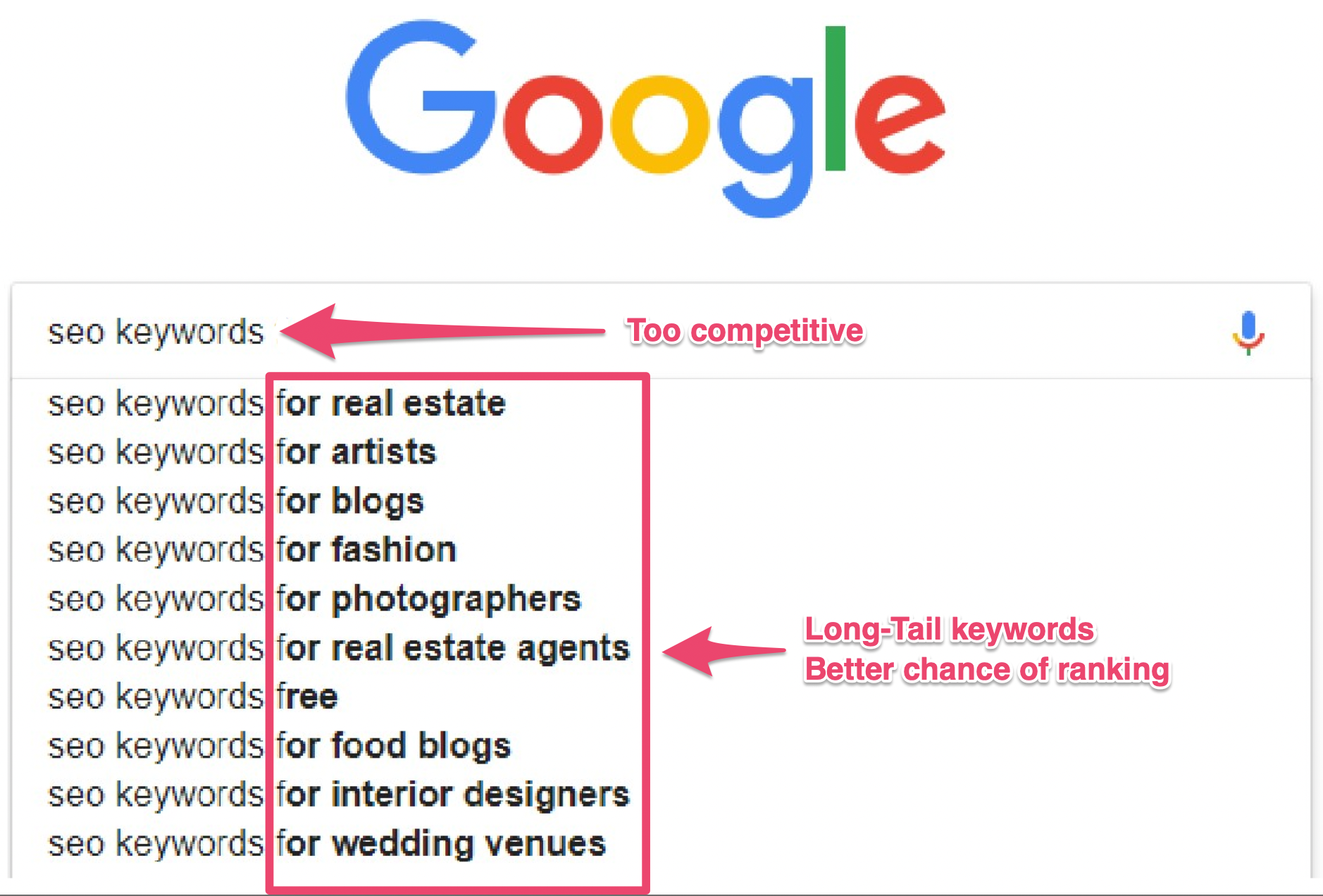
These platforms often show long-tail keywords and phrases that you might not find with regular keyword research. Join these communities in a real way, share helpful ideas, and write down common themes, questions, and related keywords that can help your keyword strategy. Talking directly with your target audience gives you important clues about their language and search habits. For example, if you’re in a psychology-related niche, you might find valuable insights by engaging in discussions about interesting psychology research or other trending topics that are popular in the field.

Compile Preliminary Keywords and Research Them

By now, you should have a good list of preliminary keywords from your audience research, market study, and checking out competitors. Now, it’s time to clean up this keyword list and do more research to find the best terms for your SEO and marketing.

Sort your keywords into relevant groups and remove any that don’t fit or are repeated. Use a keyword research tool like Semrush or Ahrefs to look at each keyword and check some key details:

  • Search Volume: How many people search for this keyword each month?
  • Keyword Difficulty: How hard will it be to rank for this keyword?
  • Relevance: How well does this keyword match your content and target audience?

Top Tools For Niche Keyword Research

Top Tools For Niche Keyword Research

A good keyword research tool can help you find new chances and improve your content plans. These tools make research easier. They give you useful data on search volume, how hard a keyword is, and what your competitors are doing.

By finding new keywords and checking search trends and competitor methods, these tools let you make smart choices. This way, you can stay ahead in the digital world. Let’s look at some of the best tools for niche keyword research.

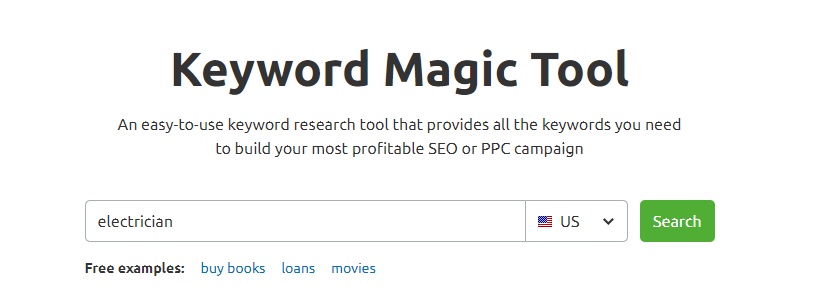
Keyword Magic Tool

Keyword Magic Tool

Semrush’s Keyword Magic Tool lives up to its name. It has many features to help you find useful keyword suggestions. You can enter a seed keyword related to your field. Then, it quickly gives you a long list of related words. This list includes important information like search volume, keyword difficulty, and competitive analysis.

A big benefit of the Keyword Magic Tool is that it groups keyword suggestions into useful categories. This makes it simple to find specific niches and chances in your larger market. By doing this, you can sharpen your content strategy. You can focus on specific words that have less competition and are more important to your target audience.

Keyword Gap

Semrush’s Keyword Gap tool is very helpful for finding important keyword opportunities that your competitors might be using. It lets you compare your website’s keyword rankings with those of your main competitors. This way, you can see where you might be missing out and make the most of those chances.

The competitor analysis feature gives you great info on the keywords your competitors rank for that you do not. This can help you find new chances and improve your content plan. By using this data, you can focus on the best keywords. This ensures that your work targets the most effective terms for getting more visibility and beating the competition.

Keyword Planner

Keyword Planner

The Keyword Planner, created by Google, is a popular tool for SEO and PPC experts. It is mainly made for people who use Google Ads, but it also helps with finding keywords for free searches.

You can use the Keyword Planner by entering a seed keyword or a group of keywords that relate to your area of focus. It gives you information about average monthly searches, the level of competition, and how much to bid for ads. Even though most of the information is for paid ads, it can still show you search volume trends. This helps you choose keywords that have good search potential.

Use Google Autocomplete Feature

Use Google Autocomplete Feature

Use Google’s autocomplete feature to find keyword ideas for your niche.

This tool shows suggestions in real-time based on what people search for often. It helps you see what your target audience is looking for. By checking these suggestions, you can find good keywords to add to your content or marketing strategy.

Using Google autocomplete can help you grow your list of keywords. This can improve your search engine optimization and bring more targeted traffic to your website. Start by typing your seed keyword and look at the autocomplete suggestions from Google.

Google Search Console

Google Search Console

Speaking of Google Search Console, this free tool is very useful for anyone with a website or a business. While it is not just a keyword research tool, Google Search Console gives you a lot of performance data and search analytics that can help you with your keyword planning.

When you connect your website to Google Search Console, you can see important details about how your site shows in Google Search results. You can find out which keywords bring visitors to your site, their average position in search results, and the click-through rate (CTR) for each keyword. This information helps you see ways to improve your current content, so you can get more visibility and attract more organic traffic.

WordTracker

WordTracker

Wordtracker is a special tool for keyword research. It helps find important search terms for your website and content marketing. This tool is better than free options. It gives accurate data on search volume, competition, and keyword trends.

One of the best things about Wordtracker is that it offers long-tail keyword suggestions using a seed keyword. This helps you find chances that have less competition. Wordtracker also gives keyword effectiveness scores. These scores look at search volume, competition, and relevance. This helps you choose the right keywords for the best results.

Analyze the SERPs

Analyze the SERPs

Analyzing the SERPs (Search Engine Results Pages) is important. It helps you see the competition for your chosen keywords. You need to look at the top-ranking pages for a specific keyword. Find their strengths and weaknesses. Look for ways to rank higher than them.

Begin by searching your target keyword on Google. Check the top 10 results. Things like domain authority, content quality, backlink profile, and user experience are very important for ranking. By knowing what works for your competitors, you can adjust your content and SEO strategy. This way, you can outshine them and get more organic traffic.

FAQ’s:

What is the Difference Between Niche Keywords and Broad Keywords?

Niche keywords are specific to a particular industry or topic, while broad keywords have a wider appeal. Niche keywords typically have lower search volume but higher conversion rates due to their relevance to a specific audience.

How Many Niche Keywords Should I Target?

The number of niche keywords to target depends on your business goals and resources. Start with a manageable list of 10-20 keywords and expand as you create more content and improve your SEO strategy.

How Often Should I Conduct Niche Keyword Research?

Conduct niche keyword research regularly, ideally every 3-6 months, to stay up-to-date with changing search trends and identify new opportunities in your industry.

Can Niche Keywords Improve My Local SEO?

Yes, niche keywords can significantly improve your local SEO efforts. By targeting location-specific niche keywords, you can attract more targeted traffic from your local area and improve your visibility in local search results.

Conclusion

Researching keywords for a niche is an essential step in developing an effective SEO strategy.

Following the steps outlined in this guide and using the recommended keyword tools, you can uncover valuable list of niche keywords that will help you reach your target audience and drive targeted traffic to your website.

Remember to regularly review and update your keyword strategy to stay ahead of the competition and maintain your search engine rankings.

At VH-info, we specialize in helping SaaS companies improve their search engine optimization through effective link-building strategies. Our team of experts can assist you in implementing a comprehensive keyword research and link-building plan tailored to your specific niche.

Contact us today to learn how we can help you boost your website’s visibility and drive more targeted traffic to your SaaS product.

Competitive PPC Analysis: Boost Your SaaS Ad Performance

Competitive PPC analysis is an important component of successful digital marketing strategies for SaaS companies.

At VH Info, we understand the importance of staying ahead in the fast-paced world of PPC advertising.

This comprehensive guide will walk you through the essentials of competitive PPC analysis, helping you gain valuable insights to optimize your ad campaigns and outperform your rivals.

What is a Competitive PPC Analysis?

What is a Competitive PPC Analysis?

Competitive PPC analysis involves examining your competitors’ paid search strategies to identify opportunities and improve your own PPC campaigns. This process helps you understand the competitive landscape, uncover effective keywords, and refine your bidding strategies for better results.

The Importance of a Competitor PPC Analysis

The Importance of a Competitor PPC Analysis

  1. Language: Analyzing your competitors’ ad copy provides insights into the language that resonates with your target audience. This information helps you create more compelling ad content and improve your click-through rates.
  2. Budgeting: Understanding your competitors’ spending patterns allows you to allocate your marketing budget more effectively. You can identify opportunities to outbid competitors on high-performing keywords or find cost-effective alternatives.
  3. Keywords: A thorough competitor analysis reveals valuable keywords you might have overlooked. By identifying gaps in your keyword strategy, you can expand your reach and target new segments of your audience.
  4. Existing Competition: Assessing the competitive landscape helps you gauge the level of competition for specific keywords and adjust your PPC strategies accordingly. This knowledge is essential for maintaining a competitive edge in the SaaS industry.

The Anatomy of a PPC Competitor Analysis

The Anatomy of a PPC Competitor Analysis

  1. Ad Content: Examining your competitors’ ad copy, headlines, and calls-to-action can inspire improvements in your ads. Pay attention to their unique selling propositions and value propositions to differentiate your offerings.
  2. Keyword Strategy: Analyzing your competitors’ keyword strategies helps you identify high-performing keywords and potential negative keywords to refine your campaigns. This insight is important for optimizing your search volume and impression share.
  3. Landing Pages: Studying your competitors’ landing pages can reveal best practices for user experience and conversion rate optimization. Use these insights to enhance your landing pages and improve your quality score.

How to Conduct a Competitive PPC Analysis?

How to Conduct a Competitive PPC Analysis?

To Conduct a Competitive PPC Analysis follow these steps:

  1. Identify Your Paid Search Competitors: Start by using Google Ads’ Auction Insights to identify your main competitors in the PPC space. This tool provides valuable data on overlap rate and impression share.
  2. Analyze Competitor Keywords: Use keyword research tools to uncover your competitors’ target keywords and search volumes. This information helps you refine your keyword strategy and find new opportunities.
  3. Examine Competitor Ad Copy: Study your competitors’ ads to identify effective messaging and ad extensions. Look for patterns in their headlines, descriptions, and calls to action to improve your ad content.
  4. Assess Competitor Budgets and Bidding Strategies: Analyze your competitors’ bidding strategies and estimated budgets to inform your own PPC marketing efforts. This insight helps you allocate your resources more effectively.
  5. Check Out Competitor Landing Pages: Evaluate your competitors’ landing pages for design, messaging, and user experience. Use these insights to optimize your landing pages and improve your conversion rates.
  6. Track Competitor Performance Metrics: Monitor key performance metrics such as average position, click-through rates, and quality scores to benchmark your campaigns against the competition.

Tools For Competitive PPC Analysis

Tools For Competitive PPC Analysis

Choosing the right tools for your PPC competitor analysis is very important. Luckily, there are many options out there, both free and paid. These tools fit different needs and budgets.

SEMrush

SEMrush

SEMrush is a strong tool for digital marketers. It has many features that can greatly improve your competitor’s PPC analysis. The amount and quality of data it offers make it a great help in finding out what your competitors are doing. This way, you can improve your own strategies.

One great feature of SEMrush is its keyword research. By entering a competitor’s website, you can learn about their best keywords, their estimated organic traffic, and their paid search methods. This information can help you find important keywords you might have missed.

SEMrush also lets you see how a competitor performs on different search engine results pages. You can look at their backlink profile, track their rankings for certain keywords, and check which ads they are using.

SpyFu

SpyFu

In the world of PPC competitor analysis, SpyFu is a great and easy-to-use tool. It is especially good for finding out how keyword strategies work. It’s simple design and strong features make keyword research simple.

Just input a competitor’s website into the search bar, and SpyFu will show you a lot of information. You can find their best keywords, look at their estimated monthly ad spending, and check their past ad copy from years ago.

Also, SpyFu lets you monitor how your competitors rank in Google Search. You can see which keywords they rank for in both organic and paid searches. This gives you a complete picture of their online presence.

Akkio

Akkio

Artificial intelligence is changing many areas of digital marketing, and PPC is one of them. Among the many AI tools, Akkio is special because it makes complicated data analysis easier to handle. This makes it a great tool for PPC analysis.

Akkio may not only focus on PPC, but its easy-to-use no-code platform helps marketers create their own AI models to analyze different data sets, including data from PPC campaigns. It can find patterns, predict trends, and offer helpful insights to boost campaign results.

For example, Akkio can check your ad copy and recommend changes based on past data and best practices. It can also look at your bidding strategies and point out how you can improve them. This could give you better conversion rates and lower costs for acquiring customers.

Ahrefs

Ahrefs

Ahrefs has strong features for analyzing PPC competition. Its easy-to-use interface lets you look at competitor ad campaigns, keywords, and more. With Ahrefs, you get valuable insights into your rivals’ strategies.

This helps you find chances to gain a competitive edge in the world of PPC. You can analyze data on impression share, overlap rate, and ad performance metrics.

This gives you the right tools to improve your campaigns. Ahrefs is a great partner for creating successful PPC strategies.

BrandVerity

BrandVerity

In the world of digital marketing, keeping your brand’s reputation safe and making sure ads follow the rules is very important. BrandVerity is a special tool designed for this purpose. It helps marketers watch over, spot, and fix any risks to their brand image.

BrandVerity does a great job of checking for trademark misuse and affiliate actions that are not allowed. It looks online for cases where your brand name or trademarks are used without your consent. This lets you act quickly to protect your brand’s value. This is very important in PPC, where rivals might use your brand’s name without permission to bid on related keywords.

In addition to protecting your brand, BrandVerity helps check that affiliates follow your ad rules. It makes sure that your affiliates are sticking to your guidelines and not doing things that might hurt your brand’s reputation.

BuiltWith

BuiltWith

In the world of competitive intelligence, knowing what technology your competitors use can help you a lot.

BuiltWith is a great tool for technology tracking. It shows you the software and tools that different websites use. This makes it very useful for marketers who want to get an edge over their competition.

With its detailed web profiling features, BuiltWith helps you see the tech details of your competitors’ websites. You can find out what content management system (CMS) they use, their web analytics tools, advertising networks, and more.

These findings can help you understand what your competitors can do and may help you find new chances.

For example, if you learn that many of your rivals use a certain marketing automation platform, you might want to look into adding that tool to your strategy to improve your marketing efforts.

iSpionage

iSpionage

ISpionage is a useful tool for looking at PPC marketing. It helps you learn about your competitor’s ad campaigns and strategies.

When you use ispionage, you can find important information about top keywords, ad performance metrics, and ad extensions. This deep dive into your competitor’s PPC campaigns can show you new bidding strategies and keyword tactics to improve your campaigns.

Google Ads’ Auction Insights

Google Ads’ Auction Insights

When you want to understand the competition in Google Ads, there is a helpful tool called Auction Insights. You can find this feature right in your Google Ads account. It shows how your ads stack up against other advertisers in the same auctions.

One important number you see in Google Ads Auction Insights is the overlap rate. This number tells you how often your ads show up with those of other advertisers when people search for a specific keyword. A high overlap rate means you often compete for the same audience. This shows that you need a good plan to make your brand stand out.

Auction Insights also gives details about your competitors’ average position, impression share, and top-of-page rate. By looking at these numbers, you can find ways to boost your ad ranking, increase visibility, and get more impressions for your target keywords.

Facebook Ad Library

Facebook Ad Library

In the fast-changing world of social media advertising, it’s important to keep track of what your competitors are doing. Facebook is one of the biggest platforms. It has a great tool called the Facebook Ad Library.

This resource is available to everyone. You can see active and inactive ads from any business on Facebook, even your competitors. You can check different types of ads like image ads, video ads, carousel ads, and more.

The Facebook Ad Library lets you narrow your search. You can filter by keyword, page name, and even specific dates. This detail helps you spot trends in your industry, find new competitors, and understand the messages and images that work well with your target audience.

LinkedIn Ads Library

LinkedIn Ads Library

When we talk about B2B marketing, LinkedIn Ads can help you reach a specific audience very well.

Watching how your competitors use this platform can give you some valuable insights to improve your own ad targeting and messaging. Luckily, LinkedIn makes this easy to explore through the LinkedIn Ads Library.

Like Facebook’s Ad Library, LinkedIn’s library lets you search for ads from any company on the site, including your competitors. You can see the ad design, the targeting factors they used (like job title, industry, and company size), and also the performance metrics, like clicks and impressions.

This openness lets you study your competitors’ techniques, find areas where they might be missing out, and discover effective ideas and messages that connect with your common target audience.

Can I Do a Competitive PPC Analysis Without Using Paid Tools?

Yes, you can conduct a basic competitive PPC analysis using free tools like Google’s Keyword Planner, Google Ads’ Auction Insights, and manual searches. However, paid tools often provide more comprehensive data and time-saving features for in-depth analysis.

Benefits of Conducting a Competitive PPC Analysis

Benefits of Conducting a Competitive PPC Analysis

  1. Gain valuable insights into effective PPC strategies
  2. Identify new keyword opportunities
  3. Optimize your ad copy and landing pages
  4. Improve your bidding strategies
  5. Stay ahead of industry trends
  6. Allocate your marketing budget more effectively
  7. Enhance your overall digital marketing performance

What Are the Most Important Metrics to Track in a Competitive PPC Analysis?

What Are the Most Important Metrics to Track in a Competitive PPC Analysis?

Key metrics to monitor include:

  1. Impression share
  2. Click-through rate (CTR)
  3. Cost per click (CPC)
  4. Conversion rate
  5. Quality score
  6. Average position
  7. Ad spend
  8. Return on ad spend (ROAS)

FAQ’s:

What Insights Can I Gain From a Competitive PPC Analysis?

A competitive PPC analysis provides insights into your competitors’ keyword strategies, ad copy, landing pages, and bidding tactics. This information helps you refine your own PPC campaigns and identify new growth opportunities.

How Often Should I Conduct a Competitive PPC Analysis?

We recommend conducting a thorough competitive PPC analysis quarterly, with ongoing monitoring of key metrics and industry trends. This approach allows you to stay agile and responsive to changes in the competitive landscape.

How Do I Identify My Top PPC Competitors?

Use Google Ads’ Auction Insights to identify competitors bidding on similar keywords. Additionally, perform Google searches for your target keywords to see which companies consistently appear in paid search results.

Is it Legal to Analyze My Competitors’ PPC Strategies?

Yes, it’s legal to analyze publicly available information about your competitors’ PPC strategies. However, ensure you respect intellectual property rights and avoid any unethical practices when conducting your analysis.

Conclusion

Competitive PPC analysis is an essential tool for SaaS companies looking to maximize their digital marketing efforts.

Using the right tools and strategies, you can gain valuable insights into your competitors’ PPC campaigns and use this knowledge to optimize your performance.

At VH Info, we’re committed to helping SaaS businesses like yours succeed in the competitive world of PPC advertising. Use the insights from this guide to refine your PPC strategies and drive better results for your SaaS company.

SEO Tools For Competitive Analysis: Boost Your Rankings in 2025

In the fast-paced world of digital marketing, staying ahead of the competition is important for success. SEO tools for competitive analysis provide invaluable insights into your rivals’ strategies, helping you refine your approach and climb the search engine rankings.

At VH Info, we understand the importance of effective competitor analysis in SaaS link building. Let’s dive into the world of SEO competitor analysis tools and how they can supercharge your marketing efforts.

What is Competitor Analysis?

What is Competitor Analysis?

Competitor analysis in SEO involves examining your rivals’ online presence, strategies, and performance to identify opportunities and threats in your market. This process helps you understand your position in the competitive landscape and informs your SEO strategies.

Why Do I Need SEO Tools For Competitor Analysis?

Why Do I Need SEO Tools For Competitor Analysis?

SEO tools for competitor analysis offer a wealth of data and insights that would be impossible to gather manually. These tools help you:

  • Identify top competitors in organic search
  • Analyze competitors’ keyword rankings and backlink profiles
  • Uncover content gaps and new content ideas
  • Track competitors’ marketing campaigns and social media presence
  • Monitor changes in search rankings and website traffic

Top SEO Tools For Competitive Analysis

Top SEO Tools For Competitive Analysis

Conducting a thorough competitive analysis is important for developing an effective SEO strategy. By understanding your competitors’ strengths, weaknesses, and tactics, you can identify opportunities to outrank them and capture a larger share of your target market.

Here are some of the best SEO tools for competitive analysis:

Semrush

Semrush

Semrush is a comprehensive all-in-one SEO tool that offers robust competitive analysis features. With Semrush, you can easily identify your organic search competitors, analyze their keyword rankings, and uncover their top-performing content.

The tool also allows you to compare your website’s performance against your rivals’ in terms of organic traffic, backlinks, and keyword gaps. Additionally, Semrush’s advertising research capabilities enable you to spy on your competitors’ PPC campaigns and ad copy.

Ahrefs

Ahrefs

Ahrefs is another powerful SEO tool known for its extensive backlink database and competitor analysis features.

Using Ahrefs, you can discover which websites are linking to your competitors’ pages and analyze the quality and quantity of their backlink profiles. The tool also offers a content gap analysis feature that helps you identify keywords your competitors are ranking for but you are not.

Furthermore, Ahrefs allows you to track your competitors’ keyword rankings and monitor changes in their organic search visibility over time.

Moz Pro

Moz Pro

Moz Pro is a suite of SEO tools that includes several features for competitive analysis.

With Moz Pro, you can compare your website’s Domain Authority and other key metrics against your competitors. The tool’s Keyword Explorer helps you discover new keyword opportunities and analyze the difficulty of ranking for specific terms based on your competitors’ performance.

Moz Pro’s Link Explorer also enables you to analyze your competitors’ backlink profiles and identify potential link building opportunities.

SpyFu

Spyfu

SpyFu is an SEO and PPC competitor research tool that provides insights into your rivals’ search marketing strategies.

With SpyFu, you can uncover your competitors’ top-performing keywords, monitor changes in their organic rankings, and analyze their PPC ad copy and landing pages. The tool also offers a feature called “Kombat” which allows you to compare your website’s keyword rankings against up to three competitors simultaneously.

BuzzSumo

BuzzSumo

BuzzSumo is a content marketing and social media analysis tool that can also be used for SEO competitive analysis.

Using BuzzSumo, you can discover your competitors’ most shared content across various social media platforms. This information can help you understand what types of content resonate with your target audience and identify potential content gaps in your strategy.

Additionally, BuzzSumo’s influencer research features enable you to find key opinion leaders in your industry who may be willing to share your content or link to your website.

SE Ranking

SE Ranking

SE Ranking is an all-in-one SEO platform that offers a range of tools for competitive analysis.

With SE Ranking’s Competitive Research tool, you can identify your top organic search competitors, analyze their keyword rankings, and discover their best-performing pages.

The tool also provides insights into your competitors’ backlink profiles and helps you identify potential link building opportunities.

Additionally, SE Ranking’s Keyword Rank Tracker allows you to monitor your keyword rankings alongside your competitors’ positions.

SEO PowerSuite

SEO PowerSuite

SEO PowerSuite is a desktop-based SEO software that includes several tools for competitive analysis. The Rank Tracker tool enables you to monitor your website’s keyword rankings and compare them against your competitors’ positions.

SEO SpyGlass, another tool in the suite, allows you to analyze your competitors’ backlink profiles and identify potential link building opportunities. Additionally, the WebSite Auditor tool can help you analyze your competitors’ on-page SEO and technical SEO issues.

Majestic

Majestic

Majestic is a link intelligence tool that offers valuable insights for competitive analysis.

With Majestic, you can analyze your competitors’ backlink profiles and compare them against your own. The tool’s Trust Flow and Citation Flow metrics help you assess the quality and quantity of a website’s backlinks.

Additionally, Majestic’s Topical Trust Flow feature enables you to understand the topical relevance of your competitors’ backlinks.

SimilarWeb

SimilarWeb

SimilarWeb is a web analytics and market intelligence platform that provides insights into your competitors’ online performance.

Using SimilarWeb, you can analyze your rivals’ website traffic, traffic sources, and engagement metrics. The tool also offers insights into your competitors’ top organic and paid keywords, as well as their social media performance.

Additionally, SimilarWeb’s industry analysis features enable you to benchmark your website’s performance against industry averages and identify potential growth opportunities.

Screaming Frog

Screaming Frog

Screaming Frog is a website crawler and technical SEO audit tool that can also be used for competitive analysis.

Crawling your competitors’ websites with Screaming Frog allows you to uncover technical SEO issues, analyze their on-page optimization, and identify content gaps.

The tool also allows you to export key data points, such as page titles, meta descriptions, and header tags, which can be useful for benchmarking your own website’s on-page optimization against your competitors.

Serpstat

Serpstat

Serpstat is an all-in-one SEO platform that offers a range of tools for competitive analysis. With Serpstat, you can identify your top organic search competitors, analyze their keyword rankings, and discover their best-performing content.

The tool also provides insights into your competitors’ backlink profiles and helps you identify potential link building opportunities. Additionally, Serpstat’s advertising research features enable you to analyze your competitors’ PPC strategies and ad copy.

How Often Should You Perform An SEO Competitor Analysis?

At VH Info, we recommend conducting a thorough SEO competitor analysis quarterly. However, you should monitor key metrics monthly and stay alert to significant changes in your competitive landscape. Regular analysis helps you stay agile and responsive to market shifts.

How to Effectively Use SEO Tools For Competitor Analysis?

How to Effectively Use SEO Tools For Competitor Analysis?

To maximize the benefits of SEO tools for competitor analysis:

  1. Identify your true competitors in organic search
  2. Analyze their keyword strategies and content gaps
  3. Examine their backlink profiles for link-building opportunities
  4. Study their on-page SEO and technical setup
  5. Monitor their social media and content marketing efforts
  6. Track changes in their search rankings and traffic sources
  7. Use insights to inform your own SEO and marketing strategies

Why Should You Invest in SEO Competitor Analysis Tools?

Why Should You Invest in SEO Competitor Analysis Tools?

Investing in SEO competitor analysis tools offers numerous benefits:

  1. Save time and resources on manual research
  2. Gain deep insights into your competitive landscape
  3. Identify new opportunities for keyword targeting and content creation
  4. Improve your link-building strategies
  5. Stay ahead of market trends and algorithm changes
  6. Make data-driven decisions to improve your SEO performance

While free plans are available for many tools, paid versions often provide more comprehensive data and features that can significantly boost your SEO efforts.

Conclusion

SEO tools for competitor analysis are essential for any business looking to improve its search engine rankings and online visibility.

Using these tools effectively can help you gain valuable insights into your competitors’ strategies, identify opportunities for improvement, and stay ahead in the competitive digital landscape.

At VH Info, we’re committed to helping you navigate the complex world of SaaS link building and SEO. Our expert team can guide you in choosing and using the right SEO tools for your specific needs.

Remember, effective competitor analysis is an ongoing process that requires consistent effort and the right tools. Start implementing these strategies today, and watch your search rankings soar!

SEO Management: What is it, Benefits, Services, Process & Tools

Search engine optimization (SEO) is an important component of any successful digital marketing strategy, especially for SaaS businesses looking to increase their online visibility and attract potential customers.

Effective SEO management involves a comprehensive approach that encompasses both on-site and off-site optimization techniques, as well as the use of specialized tools and best practices.

What is SEO Management?

What is SEO Management?

SEO management is the process of optimizing a website to improve its visibility and ranking in search engine results pages (SERPs). This involves a range of strategies and techniques designed to enhance the website’s relevance, authority, and user experience. The goal of SEO management is to drive organic traffic to the website, ultimately leading to increased brand awareness, engagement, and conversions.

Benefits of SEO Management

Benefits of SEO Management

Effective SEO management offers numerous benefits for SaaS businesses, including:

  1. Increased Organic Traffic: Optimizing your website for relevant keywords and improving its overall search engine visibility can help attract more qualified organic traffic to your site.
  2. Better Search Engine Rankings: Implementing SEO best practices and building high-quality backlinks can help your website rank higher in search results, making it easier for potential customers to find you.
  3. Enhanced User Experience: SEO management focuses on creating a user-friendly, navigable, and engaging website that provides value to visitors, encouraging them to spend more time on your site and interact with your content.
  4. Cost-Effective Marketing Strategy: Compared to paid advertising, SEO is a more cost-effective, long-term strategy for driving targeted traffic and generating leads.

What Services Do SEO Companies Provide?

What Services Do SEO Companies Provide?

SEO companies offer a range of services designed to improve a website’s search engine performance, including:

  1. Keyword Research: Identifying the most relevant and valuable keywords to target based on search volume, competition, and relevance to your business.
  2. Content Creation: Developing high-quality, engaging, and keyword-optimized content that attracts and informs your target audience.
  3. Content Marketing: Promoting your content through various channels, such as social media, email marketing, and guest posting, to build backlinks and drive traffic.
  4. Local SEO: Optimizing your website and online presence for local search queries, including Google Business Profile optimization and local citation building.
  5. On-Page SEO: Optimizing individual web pages, including titles, meta descriptions, headers, and content, to improve their relevance and visibility for targeted keywords.
  6. Off-Page SEO: Building high-quality backlinks from authoritative websites to improve your site’s domain authority and search engine rankings.
  7. Technical SEO: Ensuring your website is properly structured, fast, mobile-friendly, and easy for search engines to crawl and index.
  8. Link Building: Acquiring high-quality, relevant backlinks from authoritative websites to improve your site’s authority and search engine rankings.
  9. KPI Tracking: Monitoring and analyzing key performance indicators, such as organic traffic, rankings, and conversions, to measure the success of your SEO efforts.
  10. Reporting: Provide regular, detailed reports on your website’s SEO performance, including progress, challenges, and recommendations for improvement.
  11. Competitor Analysis: Research and analyze your competitors’ SEO strategies, backlink profiles, and content to identify opportunities for improvement and stay ahead of the competition.

How Much Do SEO Companies Charge For Their Services?

How Much Do SEO Companies Charge For Their Services?

The cost of SEO services varies depending on factors such as the size of your website, the complexity of your industry, and the scope of services required. On average, SEO companies charge between $500 to $5,000 per month, with some offering project-based pricing or hourly rates.

What Does On-Site SEO Management Involve?

On-site SEO management focuses on optimizing elements within your website to improve its visibility and relevance to search engines. This includes:

  • Conducting keyword research to identify valuable terms to target
  • Optimizing page titles, meta descriptions, and headers to include targeted keywords
  • Creating high-quality, keyword-rich content that provides value to users
  • Ensuring proper website structure and navigation
  • Optimizing images and videos with relevant file names, alt tags, and descriptions
  • Implementing schema markup to provide additional context to search engine’s
  • Improving page speed and mobile-friendliness for better user experience

What Does Off-Site SEO Management Involve?

Off-site SEO management focuses on improving your website’s authority and relevance through external factors, primarily backlinks. This involves:

  • Building high-quality, relevant backlinks from authoritative websites
  • Creating and promoting valuable content to attract natural backlinks
  • Engaging in guest posting and broken link building to acquire new backlinks
  • Monitoring and disavowing low-quality or spammy backlinks to maintain a healthy link profile
  • Using social media to promote content and drive engagement
  • Managing online reputation and building brand mentions across the web

Do I Need SEO Management Services?

Do I Need SEO Management Services?

If you want to improve your website’s visibility, attract more qualified traffic, and ultimately grow your SaaS business, investing in SEO management services can be highly beneficial. While it’s possible to implement some SEO strategies on your own, working with an experienced agency can provide you with the expertise, resources, and time needed to achieve optimal results.

SEO Management Process

SEO Management Process

A typical SEO management process involves the following steps:

SEO Audit

SEO Audit

An SEO audit is like a health check for a website. It rates how well the site performs in search engines and shows areas that need work. This audit is often the first step in managing SEO. It helps website owners see what their site does well, what it doesn’t, and how to make it better.

An SEO audit looks closely at different parts of a website. It checks for technical SEO problems like crawl errors, broken links, and slow loading times. These issues can hurt the website’s performance. The audit also looks at content quality, keyword targeting, backlinks, and whether the site works well on mobile devices.

Finding both technical and content issues, an SEO audit highlights what stops a website from ranking well in search engines. This helps businesses target their improvements effectively and create a good plan for SEO management.

Strategy Development

Strategy development takes the insights from the SEO audit and turns them into a clear plan. This helps ensure that all SEO efforts fit with the main business goals. It includes setting achievable objectives, defining target audiences, finding relevant keywords, and creating a plan to optimize the website and its content.

A good SEO strategy development looks at both on-page and off-page optimization methods. It includes figuring out the best content formats, finding chances for link-building and brand mentions, and focusing on important technical SEO fixes.

With a clear SEO strategy in place, businesses can concentrate on activities that give the best return on investment. They can also measure their success against their business goals effectively.

Implementation

The implementation phase of SEO management is where the planned SEO strategies are carried out. This important step turns ideas into real changes on the website and more. It includes updating website content, improving technical parts, building strong backlinks, and using other methods from the SEO strategy.

Implementation is not just about following a checklist. It needs careful action. You must understand how each part helps achieve the SEO goals during this stage. For example, when creating SEO content, you should use relevant keywords. It’s also important to make sure the content is good, easy to read, and offers value to the user.

Putting SEO strategies into action helps businesses boost their search engine rankings, increase website traffic, and improve online visibility. But remember, this is an ongoing process that requires patience, watching what happens, and making changes along the way.

Monitoring and Reporting

Monitoring and Reporting

Monitoring and reporting are very important parts of SEO management. The digital world is always changing, and so are search engines. This means it’s essential to track progress, analyze key metrics, and report on how effective SEO efforts are. It helps to keep moving forward.

SEO experts use different tools and methods to check how well a website is doing and how the SEO strategies are working. This includes tracking organic traffic growth with tools like Google Analytics. It helps in understanding which pages bring in visitors and finding out where traffic might drop. Experts also watch keyword rankings to see how visible the website is for important search terms.

Regular reports on these key metrics give businesses useful insights. This helps them make smart choices, use resources wisely, and improve their SEO strategies over time. A good SEO strategy needs to adapt and respond to changes in the digital world.

Tools For SEO Management

Tools For SEO Management

Effective SEO management relies on a variety of tools to analyze, optimize, and monitor website performance, including:

Google Analytics

Google Analytics

Google Analytics is vital for SEO experts. It’s free and provides data on website traffic and user behavior. This tool tracks essential numbers to show businesses how visitors interact with their site. They can see where users come from, the pages they view, time spent, and user demographics.

Analyzing this data helps companies understand their audience better. They can identify areas needing enhancement and assess SEO effectiveness. For example, high bounce rates on certain pages indicate quick exits.

Google Analytics aids decisions on website content, design, and user experience due to its user-friendly interface and robust reports.

Google Search Console

Google Search Console

Google Search Console (GSC) is a free tool from Google. It helps website owners keep track of their site in Google search results. This tool shows website owners how Google sees their site. It also points out problems that might lower site traffic or hurt search engine rankings.

GSC has many features. It tracks how a website performs for certain keywords. It also finds crawl errors, which can stop Google from indexing pages. Another helpful feature is submitting sitemaps to Google. This helps search engines crawl and index a website’s content smoothly.

Checking Google Search Console data regularly can help businesses find and fix issues it shows. This can improve their website’s visibility, boost search engine results, and create a better user experience for visitors.

SEO Audit Tools

SEO Audit Tools

SEO audit tools are important for finding technical issues. They help spot chances to improve on-page optimization. These tools also analyze backlink profiles. Overall, they give a clear view of a website’s strengths and weaknesses related to SEO. Using these tools makes the audit process easier and provides important data for optimizing websites.

Some well-known SEO audit tools include Ahrefs, Semrush, and Moz. These tools offer detailed reports about things like domain authority, backlinks, keyword rankings, and on-page SEO health. They also focus on technical SEO. They can find problems with site speed, mobile-friendliness, broken links, crawl errors, and more.

Finding these issues, SEO audit tools help businesses decide what changes to make first. They allow companies to focus on improvements in technical SEO, upgrade content, and enhance their online presence.

Keyword Research Tools

Keyword Research Tools

Keyword research tools are very important for any SEO professional. They provide helpful insights into the search terms that people use when looking for information online. These tools show data on search volume, keyword difficulty, and related keywords. This helps businesses find relevant keywords that fit their target audience and create useful content that connects with them.


In addition to giving data about search volume and competition, many keyword research tools let you analyze competitor websites. They help find keyword gaps and opportunities to beat competitors in search results. Tools like Semrush, Ahrefs, and Google Keyword Planner help businesses find valuable long-tail keywords. They also help optimize content for voice searches and discover new keyword opportunities.

When businesses understand the keywords bringing traffic to their competitors’ sites, they can improve their content strategy. They can focus on relevant keywords and increase their chances of getting qualified traffic.

Best Practices For SEO Management

Best Practices For SEO Management

To achieve the best results from your SEO management efforts, consider the following best practices:

  1. Stay Up-to-Date With SEO Trends: The world of SEO is constantly evolving, so it’s important to stay informed about the latest trends, algorithm updates, and best practices to ensure your strategies remain effective.
  2. Focus On User Experience: Prioritize creating a user-friendly, engaging, and valuable website experience, as this can improve user satisfaction, reduce bounce rates, and ultimately boost your search engine rankings.
  3. Regularly Monitor and Analyze Performance: Use tools like Google Analytics and Search Console to regularly track your website’s SEO performance, identify areas for improvement, and measure the success of your efforts.
  4. Collaborate With Other Marketing Channels: Integrate your SEO efforts with other digital marketing channels, such as content marketing, social media, and email marketing, to create a cohesive and effective overall strategy.

FAQ’s:

What is the Difference Between SEO and SEM?

SEO focuses on improving organic search visibility through optimization techniques, while SEM (Search Engine Marketing) includes both SEO and paid advertising strategies like Google Ads.

How Long Does it Take to See Results From SEO Management?

The timeline for seeing results from SEO management varies depending on factors such as the competitiveness of your industry, the current state of your website, and the effectiveness of your strategy.

On average, it can take 3-6 months to start seeing significant improvements in rankings and traffic.

How Much Does SEO Management Cost?

The cost of SEO management varies depending on the size of your website, the complexity of your industry, and the scope of services required. On average, SEO companies charge between $500 to $5,000 per month, with some offering project-based pricing or hourly rates.

Can I Do SEO Management Myself, Or Do I Need to Hire an Agency?

While it’s possible to implement some SEO strategies on your own, working with an experienced agency can provide you with the expertise, resources, and time needed to achieve optimal results.

If you have limited knowledge or resources for SEO, hiring an agency can be a worthwhile investment.

How Do I Measure the Success Of My SEO Management Efforts?

To measure the success of your SEO management efforts, track key performance indicators such as organic traffic, search engine rankings, click-through rates, bounce rates, and conversions. Use tools like Google Analytics and Search Console to monitor these metrics and identify areas for improvement.

Conclusion

So, you know how important it is for SaaS businesses to up their online game, right?

Well, that’s where effective SEO management comes in. It’s all about boosting your visibility, drawing in the right kind of traffic, and growing your customer base in the digital world.

By diving into a mix of on-site and off-site optimization techniques, using some cool tools, and sticking to best practices, you can really amp up your website’s search engine performance and set yourself up for success in the competitive online scene.

Here at VH-info, we’re all about helping SaaS businesses like yours with top-notch SEO management services. Our team of pros can whip up a customized strategy just for you, using our tried-and-true methods and insider knowledge to get you the results you’re after. Hit us up today to find out how we can take your SaaS business to the next level with killer SEO management.

Primary Keywords: What is it, Importance, Examples & How To Find It?

Primary keywords play a vital role in search engine optimization (SEO) and are essential for driving organic traffic to your website.

As the main keyword you want to rank for, primary keywords serve as the foundation of your keyword research and content strategy. Targeting the right primary keywords can help you attract your target audience and improve your search engine rankings.

What Are Primary Keywords?

A primary keyword, often referred to as a “head term,” is the main search term you want your web page or a specific page of content to rank for in search engine results. It’s the most relevant and high search volume keyword that accurately represents your page’s main topic and content. Various factors influence how primary keywords are often more general and competitive compared to secondary or long-tail keywords.

Why Are Primary Keywords Important in Keyword Research?

Keyword research is an important aspect of SEO, and identifying the right primary keywords is essential for your SEO efforts and overall success. Primary keywords help you understand what your target audience is searching for and guide your content creation efforts.

The Importance of Primary Keywords in SEO

Primary keywords play a significant role in various aspects of SEO:

  1. Attracting Relevant Traffic: Targeting the right primary keywords can help attract users who are actively searching for your products, services, or information.
  2. Improving Search Rankings: Search engines use keywords to understand the content and context of your web pages. Optimizing your content for primary keywords can improve your chances of ranking higher in search results.
  3. Guiding Content Creation: Primary keywords serve as a roadmap for your content strategy, helping you create targeted and relevant content that resonates with your audience.

Where to Include Primary Keywords on Your Website?

To maximize the impact of your primary keywords, it’s important to place them strategically throughout your website:

  1. Heading 1 (H1 Tag): Include your primary keyword in the main heading (H1 tag) of your page to clearly communicate the main topic to both users and search engines.
  2. Title Tag and Meta Description: Include your primary keyword in the title tag and meta description to improve click-through rates from search results.
  3. Throughout the Body Copy: Use your primary keyword naturally throughout the body of your content, ensuring a balanced keyword density to avoid keyword stuffing.
  4. Secondary Headings (H2, H3): Include variations or related keywords in subheadings to provide additional context and reinforce the main topic.
  5. Image Alt Text: Add your primary keyword to the alt text of relevant images to improve accessibility and SEO.
  6. URL Slug: Use your primary keyword in the URL slug to create a clear and descriptive web address.
  7. Anchor Text: When linking to your page from other parts of your website, use the primary keyword as the anchor text to establish relevance.

How to Find Primary Keywords?

Finding the right primary keywords involves a combination of keyword research tools, competitor analysis, and understanding your target audience. Start by brainstorming seed keywords related to your business or content, then use tools like Google Keyword Planner, SEMrush, or Ahrefs to discover keyword ideas and analyze search volume and competition.

How Do You Know If It’s a “True” Primary Keyword?

A “true” primary keyword should have the following characteristics:

  1. High search volume: The keyword should have a significant number of monthly searches, indicating that users are actively looking for information related to that term.
  2. Relevance: The keyword should be closely related to your page’s main topic and content.
  3. Reasonable competition: While some competition is expected for primary keywords, it should be feasible to rank for the term with a well-optimized page and a strong backlink profile.

How to Identify Primary Keywords?

Identifying primary keywords involves a two-step process

Step #1: Analyze the SERPs to Validate the Keyword

Search for your potential primary keyword on Google and analyze the search engine results pages (SERPs). Look for the following indicators:

  • The top-ranking pages are closely related to your content and target audience.
  • The search intent behind the keyword aligns with the purpose of your page (informational, navigational, transactional, or commercial).

Step #2: Find the Highest Search Volume Variant

If your primary keyword has multiple variants or synonyms, choose the one with the highest search volume. This ensures that you’re targeting the most popular version of the keyword.

How to Optimize Your Page For the Primary Keyword?

Once you’ve identified your primary keyword, optimize your page to improve its chances of ranking:

  1. Keyword Research: Conduct thorough keyword research to identify related keywords, long-tail variations, and semantic terms to include in your content.
  2. Secondary Keywords: Include secondary keywords that complement your primary keyword and provide additional context.
  3. Keyword Placement: Place your primary keyword in strategic locations, such as the title tag, meta description, H1 tag, and throughout the body copy.
  4. Content Creation: Create high-quality, informative, and engaging content that comprehensively covers the topic and satisfies user intent.
  5. Links: Build relevant internal and external links to your page using the primary keyword as anchor text to reinforce its importance.

Primary Keyword Examples

Here are a few examples of primary keywords across different industries:

Example 1: E-Commerce

  • Primary keyword: “organic coffee”
  • Page title: “Buy Organic Coffee Beans | Premium Quality & Fair Trade”

Example 2: Service Industry

  • Primary keyword: “plumbing services”
  • Page title: “Professional Plumbing Services | 24/7 Emergency Repairs”

Example 3: Educational Content

  • Primary keyword: “How to start a blog”
  • Page title: “How to Start a Blog in 2024: A Step-by-Step Guide for Beginners”

Primary Keywords Best Practices

To make the most of your primary keywords, follow these best practices:

  1. Target Only 1 Primary Keyword Per Page: Focus on one primary keyword per page to avoid confusion and maintain a clear topic focus.
  2. Have Proper Keyword Placement: Ensure your primary keyword appears in critical on-page elements, such as the title tag, meta description, H1 tag, and body copy.
  3. Find Relevant or LSI Keywords to Your Primary Keyword: Include related keywords and latent semantic indexing (LSI) terms to provide context and improve relevance.
  4. Have Internal Links With Primary Keywords as Anchor Text: Link to your page from other relevant pages on your website using the primary keyword as anchor text.
  5. Have a Few Backlinks With Primary Keywords as Anchor Text: Acquire high-quality backlinks from external websites using your primary keyword as anchor text to boost authority.
  6. Try to Include Primary Keywords in Subheadings: Use your primary keyword or variations in subheadings (H2, H3) to structure your content and reinforce the main topic.
  7. Only Include Primary Keywords in Your URL: Keep your URL slug concise and include your primary keyword to create a descriptive and SEO-friendly web address.

Differentiating Between Primary and Secondary Keywords

Understanding the difference between primary and secondary keywords is important for a successful keyword strategy.

Primary Vs Secondary Keywords: What’s the Difference?

Primary keywords are the main terms you want to show up for. They tell people what your content is mostly about. These keywords are usually shorter and have more searches, but they also face more competition.

Secondary keywords relate to your primary keyword but are more detailed. They usually have fewer searches.

You can think of primary keywords as the main category. Secondary keywords are like the subcategories.

For example, if your primary keyword is “shoes,” then some secondary keywords could be “running shoes,” “dress shoes,” or “kids‘ shoes.” When you differentiate your keywords, you can target different search queries. This helps draw in a more specific audience.

Can You Rank For Both Primary and Secondary Keywords?

Yes, optimizing your content for both primary and secondary keywords can help you rank for a wider range of search queries and attract a larger audience.

How to Integrate Primary and Secondary Keywords in Content?

Use your primary keyword in the most prominent parts of your content, such as the title, headings, and opening paragraph. Include secondary keywords naturally throughout the body copy to provide depth and context.

How Can I Separate Primary Keywords From Secondary Keywords?

Analyze search volume, relevance, and competition to identify your primary keyword. Secondary keywords should be closely related to the primary keyword but have lower search volume or more specific intent.

FAQ’s:

What’s the Difference Between Primary Keywords and Short-Tail Keywords?

Primary keywords can be short-tail or long-tail, depending on their length and specificity. Short-tail keywords are generally broader and more competitive, while long-tail keywords are more specific and often easier to rank for.

Can I Use Multiple Primary Keywords For a Single Piece of Content?

It’s best to focus on one primary keyword per page to maintain a clear topic focus and avoid keyword cannibalization. However, you can target multiple secondary keywords to provide additional context.

Are Too Many Keywords Bad For SEO?

Using too many keywords, especially irrelevant or repeated ones, can be considered keyword stuffing and may result in search engine penalties. Focus on using keywords naturally and strategically.

Do Primary Keywords Guarantee High Search Rankings?

While primary keywords are essential for SEO, they don’t guarantee high rankings on their own. Other factors, such as content quality, backlinks, and user experience, also play a significant role in search engine rankings.

Should I Use Primary Keywords in My Meta Tags?

Yes, include your primary keyword in the title tag and meta description to improve click-through rates and signal relevance to search engines.

How Often Should I Update My Primary Keywords?

Review your primary keywords periodically (e.g., every 3-6 months) to ensure they remain relevant and aligned with your content strategy. Update them as needed based on changes in search trends, your business, or your target audience.

How Frequently Should Primary Keywords Be Used in Content?

Use your primary keyword naturally throughout your content, aiming for a keyword density of 1-2%. Avoid overusing the keyword, as it may be perceived as keyword stuffing.

Should Primary Keywords Be Broad or Specific?

The specificity of your primary keywords depends on your goals and target audience. Broader keywords may attract a wider audience but face more competition, while specific keywords may have lower search volume but higher conversion rates.

Conclusion

Primary keywords are like the building blocks of a solid SEO strategy, helping you figure out what to focus on when researching keywords, creating content, and optimizing your website.

Picking out the right primary keywords that are relevant and have high search volume, and then sprinkling them strategically throughout your site can help you draw in your ideal audience, boost your search engine rankings, and get more organic traffic flowing your way.

Don’t forget to stick to one primary keyword for each page, throw in some related secondary keywords for extra context, and follow the usual rules for where and how often to use keywords. It’s also a good idea to check in regularly and update your primary keywords to make sure they’re still hitting the mark and fitting with your content plan.

Once you’ve got the hang of using primary keywords effectively in your SEO strategy, you’ll be well on your way to getting more visibility, attracting the right kind of traffic, and growing your online presence.