DA/PA Checker Tools: Check Website’s SEO Authority Of Any Domain

When it comes to SEO, measuring your website’s authority is essential for creating effective, long-term strategies. Domain Authority (DA) and Page Authority (PA) are key metrics that help evaluate how well your site might rank on search engine result pages (SERPs).

A DA/PA checker provides valuable insights into these scores, allowing you to make data-driven decisions to improve your website’s performance. At VH Info, we know that monitoring these SEO metrics regularly gives you a competitive edge.

The higher your domain authority score, the better chances your website has of outranking competitors.

This article will guide you through everything you need to know about DA/PA checkers and how they can transform your SEO strategy.

What Is A DA/PA Checker?

What Is A DA/PA Checker?

A DA/PA checker is a specialized SEO tool that measures the authority score of domains and individual web pages. These tools analyze various factors, including link profiles, content quality, and website structure, to generate numerical scores that represent a site’s potential to rank in search engines. The DA PA checker tool pulls data from multiple indexing sources to calculate these scores on a scale of 1 to 100.

The higher the score, the stronger the domain or page authority. Today, these tools have become essential resources for SEO professionals and digital marketers who want to evaluate website authority quickly and accurately before launching outreach or content campaigns.

Why Use A DA/PA Checker?

Why Use A DA/PA Checker?

Using a DA PA checker offers numerous strategic benefits for your SEO strategy:

First, it helps you assess your website’s current standing regarding authority. This baseline measurement allows you to track improvements over time as you implement various SEO tactics. These tools also enable competitive analysis. 

By checking the domain authority score of your competitors, you can identify industry benchmarks and set realistic goals for your site.

SEO professionals rely on these tools to:

  • Evaluate potential link building opportunities and weed out low-quality sites.
  • Monitor their website’s growth in authority over weeks and months.
  • Identify strengths and weaknesses in their overall SEO strategy.
  • Compare SERP performance against direct industry competitors.
  • Assess the quality and safety of referring domains.

What Are Domain Authority (DA) and Page Authority (PA)?

What Are Domain Authority (DA) and Page Authority (PA)?

Before diving deeper into DA PA checker tools, let’s clarify what exactly these metrics measure and why they matter for your website’s performance on search engine result pages.

Domain Authority (DA) Explained
Domain Authority

Domain Authority is a search engine ranking score developed by Moz that predicts how likely a website is to rank on search engine result pages. The score ranges from 1 to 100, with higher scores indicating a greater ability to rank.

Domain authority is calculated by evaluating multiple factors, including:

  • Number of total links pointing to the domain
  • Quality of those links (from reputable sites)
  • The authority of linking root domains
  • Domain age
  • Website’s overall link profile
  • Social signals

A domain authority checker tool measures this score, giving you insights into your website’s overall strength. New websites typically start with a low DA score (around 10-20) and gradually increase as they build quality backlinks and improve other SEO factors.

Page Authority (PA) Explained

Page Authority

While domain authority evaluates an entire website, page authority focuses on individual web pages. PA is also scored on a scale of 1 to 100, with higher numbers indicating a stronger likelihood of ranking in search results.

A PA checker tool analyzes factors specific to a particular URL, including:

  • Quality of links pointing to that specific page
  • Relevance of the content
  • On-page SEO elements
  • Internal linking structure
  • User experience signals

Page authority score helps SEO professionals identify which specific pages on their site need improvement.

For example, key landing pages or product pages might require focused optimization to increase their PA score and improve their ranking potential.

DA Vs. PA: What’s The Difference?

DA Vs. PA: What's The Difference?

While both metrics measure authority, they serve different purposes in your SEO analysis:

Domain Authority (DA) Page Authority (PA)
Measures entire domain’s strength Measures individual page’s strength
Helps evaluate overall site performance Helps optimize specific pages
Useful for competitive analysis Useful for on-page optimization
Influenced by site-wide factors Influenced by page-specific factors
Changes more slowly over time Can change more rapidly with targeted optimization

Both metrics work together to give you a comprehensive view of your website’s authority. While a high domain authority creates a strong foundation, individual pages may still need optimization to achieve their full ranking potential.

Beyond DA/PA: Other Important Metrics

The best checker tools provide a more complete picture of a site’s health by including other metrics:

  • Spam Score (SS): Indicates the risk of a domain being penalized for spammy practices. A low score is better.
  • Domain Rating (DR): An alternative authority metric from Ahrefs that also measures backlink strength.
  • Trust Flow & Citation Flow: Metrics from Majestic that measure the quality and quantity of links, respectively.
  • Total Backlinks (TB) and Quality Backlinks (QB): The total number of links versus the number of high-quality, “dofollow” links.

How To Use A DA/PA Checker?
How To Use A DA/PA Checker?

Using a DA PA checker is straightforward, even for those new to SEO tools.

Here’s a simple process to check your website’s authority:

  1. Select a reliable DA PA checker tool (we’ll recommend some later)
  2. Enter the domain or specific URL you want to analyze
  3. Click the “Check Authority” button
  4. Review the results, which typically include:
  • Domain Authority score
  • Page Authority score
  • Spam Score
  • Number of backlinks
  • Number of linking root domains
  • Additional SEO metrics

For bulk analysis, many tools allow you to check multiple domains simultaneously.

This is particularly useful when:

  • Analyzing competitors
  • Evaluating potential link building partners
  • Auditing multiple websites you manage
  • Researching industry benchmarks

After receiving your results, compare your scores against competitors in your niche to establish realistic targets. Remember that DA and PA scores are relative metrics—what’s considered a “good” score varies by industry and competition level.

Key Features Of A DA/PA Checker Tool

Key Features Of A DA/PA Checker Tool

Not all DA PA checker tools offer the same capabilities.

Here are the essential features to look for when selecting a tool for your SEO needs:

Quick and Easy To Use

A good DA PA checker provides results with minimal effort. The best tools require just a single click to generate comprehensive reports. Look for interfaces that are intuitive and don’t require extensive training to operate.

The tool should process your request quickly, delivering results within seconds. This efficiency is particularly important when checking multiple domains or conducting regular monitoring of your SEO metrics.

Accurate Results

Accuracy is paramount when measuring domain authority and page authority. Premium tools use Moz’s proprietary algorithm or similar reliable methodologies to calculate these scores.

The most trustworthy DA PA checker tools update their databases regularly to reflect the latest changes in search engine algorithms and website metrics. This ensures you’re making decisions based on current data rather than outdated information.

Bulk Checking and Comprehensive Analysis

Advanced DA PA checker tools allow you to analyze multiple domains simultaneously. This bulk DA PA checker functionality saves considerable time when conducting competitive research or evaluating numerous potential link building partners.

Beyond just providing basic DA and PA scores, comprehensive tools offer additional insights such as:

  • Backlink profiles
  • Referring domains analysis
  • Spam score evaluation
  • Historical data for tracking changes over time
  • Competitor comparisons

Additional Metrics

While DA and PA are valuable metrics, the best checker tools provide additional SEO metrics to give you a more complete picture of website performance:

  • Spam Score: Indicates potential red flags that might affect ranking
  • Domain Rating: An alternative authority metric from Ahrefs
  • Trust Flow: Measures the quality of links pointing to your site
  • Citation Flow: Measures the quantity of links
  • Domain Age: This shows how long a domain has been active
  • IP Address information
  • Social media metrics

These supplementary data points help create a more nuanced view of a website’s authority and potential.

Downloadable Reports

The ability to download and share reports is important for SEO professionals and digital marketers.

Look for tools that allow you to:

  • Export data in CSV or Excel format
  • Generate detailed reports with visualizations
  • Schedule regular reports
  • Share results with team members or clients

A downloadable Excel report makes it easier to track changes over time and integrate DA/PA data with other SEO metrics you’re monitoring.

Free Access

While premium tools often provide more comprehensive features, many quality DA PA checker tools offer free access with reasonable limitations.

Free DA PA checker options are ideal for:

  • Small businesses with limited SEO budgets
  • Beginners learning about authority metrics
  • Quick checks without needing extensive analysis
  • Basic competitive research

Even free tools should provide accurate results and a user-friendly interface.

However, expect limits on the number of queries or reduced access to advanced features compared to paid versions.

Tools For Checking DA and PA Scores

Tools For Checking DA and PA Scores

Several reliable tools are available for checking domain authority and page authority.

Here are some of the most popular options:

Moz’s Tools

As the creator of the Domain Authority and Page Authority metrics, Moz offers the most authoritative tools for checking these scores:

  • Moz Link Explorer: The official tool for checking DA and PA, providing comprehensive analysis of domains and pages. It offers limited free searches with more extensive capabilities in the paid version.
  • MozBar: A browser extension that displays DA, PA, and other SEO metrics as you browse the web. This is particularly useful for quick checks while researching competitors or potential link partners.
  • Moz API: For developers and enterprises, Moz provides API access to integrate DA/PA checking into custom applications and workflows.

The Moz DA checker utilizes the company’s premium API to deliver the most accurate authority scores available. Their tools are regularly updated to reflect changes in search engine algorithms and web trends.

Other SEO Platforms

Several alternative platforms offer DA/PA checking capabilities:

  • SEMrush: While primarily known for keyword research, SEMrush includes authority metrics in its domain analytics tools.
  • Ahrefs: Offers its own Domain Rating (DR) metric alongside Moz’s DA measurements for comprehensive authority analysis.
  • Ubersuggest: Neil Patel’s tool provides free DA/PA checking with attractive visualizations and trend data.
  • Small SEO Tools: A simple free DA checker tool suitable for basic checks and analysis.

How Does The Domain Authority Checker Tool Help To Improve SEO?
How Does The Domain Authority Checker Tool Help To Improve SEO?

A domain authority checker tool serves as a compass for your SEO efforts, pointing you in the right direction for improvements.

Here’s how these tools can enhance your SEO strategy:

  1. Competitive Benchmarking: By analyzing competitors with higher domain authority scores, you can identify gaps in your SEO approach and set realistic targets for improvement.
  2. Link Building Prioritization: Identifying websites with higher domain authority helps you focus your outreach efforts on obtaining quality backlinks from reputable sites.
  3. Progress Tracking: Regular checks allow you to monitor how your SEO efforts are impacting your authority scores over time.
  4. Problem Identification: Sudden drops in domain authority might indicate issues like lost backlinks, technical problems, or potential penalties that need addressing.
  5. Resource Allocation: Understanding which aspects of your site need the most improvement helps you allocate your SEO budget and efforts more effectively.
  6. Client Reporting: For agencies, showing improvements in authority scores provides tangible evidence of SEO progress to clients.

The domain authority score serves as a valuable predictive metric, helping you estimate how changes to your website might impact search engine rankings before those changes affect your actual position on Google search engine results.

Strategies To Improve Your Website’s DA and PA

Strategies To Improve Your Website’s DA and PA

Improving your domain authority and page authority requires a strategic approach focused on quality rather than quick fixes.

Here are effective strategies to boost these important SEO metrics:

Building High-Quality Backlinks

The foundation of strong domain authority is a robust backlink profile from reputable sites.

Focus on these link building tactics:

  • Target High Authority Domains: Prioritize earning links from websites with higher domain authority than yours. These quality backlinks carry more weight in boosting your own authority.
  • Diversify Link Sources: Acquire backlinks from various domains rather than multiple links from the same website. The number of unique root domains linking to your site significantly impacts domain authority.
  • Create Link-Worthy Content: Develop comprehensive resources, original research, and valuable tools that naturally attract links from other websites in your industry.
  • Guest Posting: Contribute content to established websites in your niche to earn quality backlinks. Look for sites with a high domain authority score and a relevant audience.
  • Fix Broken Links: Use tools to identify broken links on reputable sites and suggest your content as a replacement, a technique known as broken link building.
  • Monitor Competitors’ Backlinks: Analyze competitors with higher domain authority to identify their backlink sources and target similar opportunities.
  • Remove Toxic Links: Use a spam score checker to identify potentially harmful backlinks and disavow them to protect your domain authority.

Enhancing On-Page SEO

While backlinks are important, on-page factors also contribute to both domain and page authority:

  • Create Quality Content: Develop comprehensive, accurate, and valuable content that thoroughly addresses user needs. Content quality directly affects user engagement metrics that influence authority.
  • Optimize Site Structure: Implement a logical site hierarchy with effective internal linking to help distribute page authority throughout your website.
  • Improve Technical SEO: Ensure your site loads quickly, works properly on mobile devices, and has no crawling or indexing issues that could hinder search engine evaluation.
  • Enhance User Experience: Reduce bounce rates and increase time on site by improving navigation, readability, and overall user experience. These user signals indirectly affect authority measurements.
  • Implement Schema Markup: Add structured data to help search engines better understand your content, potentially improving how your pages are evaluated.
  • Optimize For Search Intent: Align your content with what users are searching for to improve relevance signals that contribute to authority.
  • Build Social Signals: While not a direct ranking factor, social media engagement can increase visibility and indirectly lead to more backlinks, boosting domain authority.

How To Improve Position On Google Search Engine?
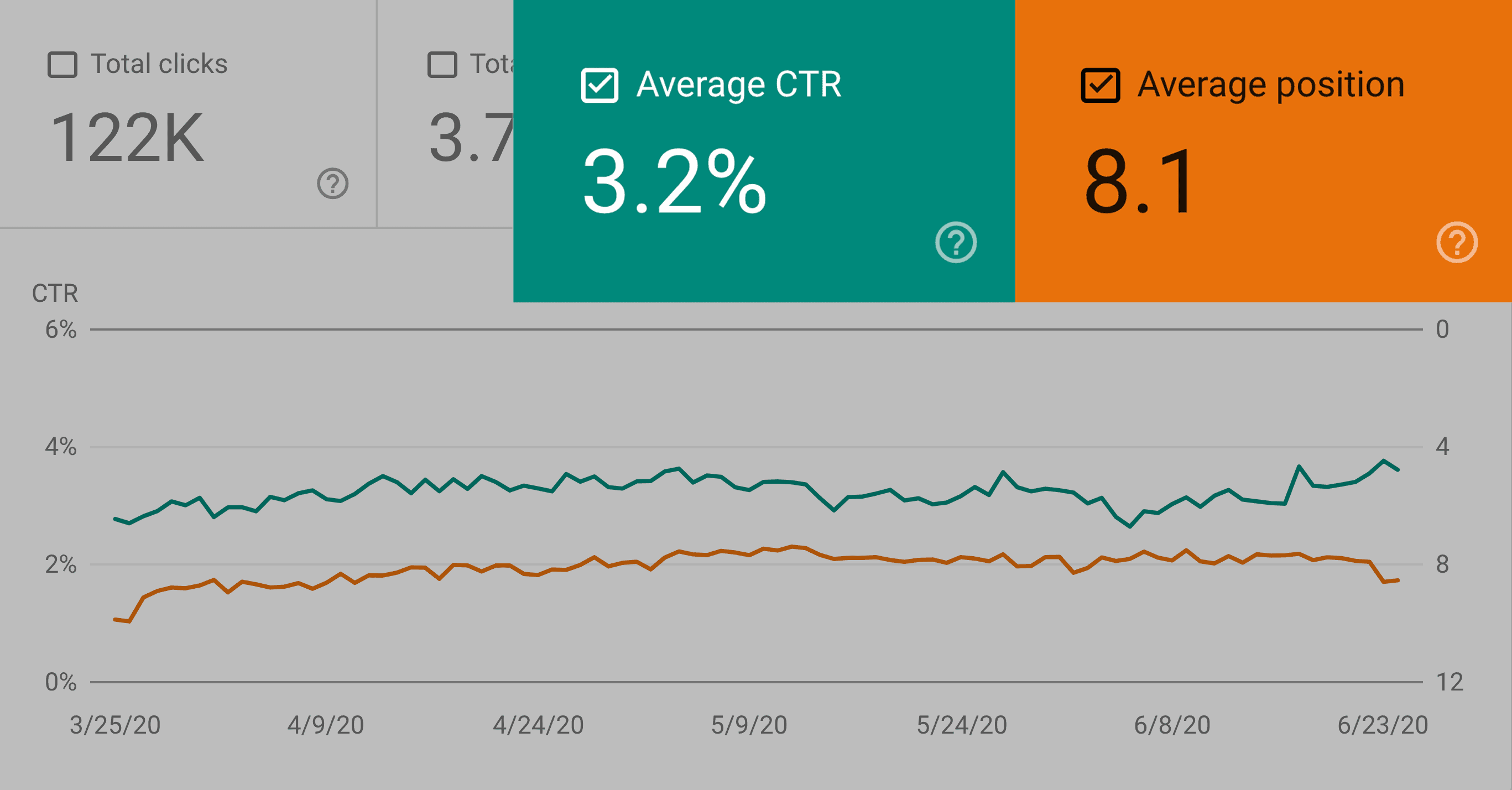
How To Improve Position On Google Search Engine?

While DA and PA are valuable predictive metrics, they’re part of a larger strategy to improve your website’s position on Google search engine results. Here’s a comprehensive approach:

  1. Keyword Research and Optimization: Identify relevant keywords with good search volume and moderate competition. Integrate these naturally into your content, titles, headings, and meta descriptions.
  2. Content Strategy: Develop a content plan that addresses user needs at every stage of the buyer’s journey. Create in-depth content that provides more value than competing pages.
  3. Technical Optimization: Ensure your website is technically sound with fast loading speeds, mobile responsiveness, secure connections (HTTPS), and proper indexing.
  4. User Experience Enhancement: Improve site navigation, readability, and accessibility to reduce bounce rates and increase engagement metrics that influence rankings.
  5. Local SEO: For businesses serving specific geographic areas, optimize Google Business Profile and build local citations to improve visibility in local search results.
  6. Authority Building: Use your DA PA checker to monitor improvements as you implement link building strategies to increase your website authority.
  7. Regular Auditing: Conduct periodic SEO audits to identify and fix issues that might be holding back your ranking potential.
  8. Competitor Analysis: Study websites that rank above yours for target keywords to identify opportunities for improvement.
  9. Featured Snippet Optimization: Structure content to potentially appear in featured snippets at the top of search results.
  10. Click-Through Rate Optimization: Improve your titles and meta descriptions to increase click-through rates from search results pages.

FAQ’s:

What Is The Difference Between DA and PA?

Domain Authority (DA) measures the predictive ranking strength of entire domains or subdomains, while Page Authority (PA) measures the strength of individual pages. DA evaluates the overall link profile and authority of your entire website, whereas PA focuses on the ranking potential of a specific web page.

What Is A Good DA Score?

A good DA score varies by industry and competition level. Generally:

  • 1-20: New or small websites
  • 21-40: Established sites with growing authority
  • 41-60: Strong websites with solid authority
  • 61-80: Very authoritative industry leaders
  • 81-100: Top websites with exceptional authority (like major media outlets)

Rather than targeting an arbitrary number, aim to have a higher domain authority score than your direct competitors. Use a DA checker tool to benchmark against similar sites in your niche.

How Often Are DA/PA Scores Updated?

Moz typically updates its DA/PA scores approximately once per month.

However, this can vary based on algorithm changes and data refreshes. Most DA PA checker tools that use Moz’s API will reflect these updates shortly after they occur. Some third-party tools may update less frequently.

How Often Should I Check My Website’s DA/PA?

For most websites, checking DA/PA scores once a month is sufficient to track progress. This aligns with Moz’s update schedule and gives enough time for SEO changes to have a measurable impact.

For websites actively engaged in intensive link building or recovering from penalties, more frequent checks (every two weeks) might be warranted.

Do DA and PA Scores Directly Impact Google Rankings?

No, DA and PA are third-party metrics created by Moz, not official Google ranking factors. Google doesn’t use these specific scores in its algorithm.

However, DA and PA are designed to correlate with ranking potential because they measure many of the same factors Google considers important, such as link quality and quantity.

Can Improving DA/PA Directly Affect My Site’s Ranking?

While improving DA/PA doesn’t directly change your Google rankings, the actions you take to increase these scores (building quality backlinks, improving content, enhancing site structure) are the same actions that typically lead to better search engine rankings.

Think of DA/PA as indicators rather than drivers of SEO success.

Conclusion

Domain Authority and Page Authority have become essential metrics for SEO professionals and website owners looking to improve their search engine visibility. A reliable DA/PA checker tool provides valuable insights into your website’s strength compared to competitors and helps track progress over time.

Remember that these scores aren’t ends in themselves but rather indicators of your website’s ability to rank in search results. Focus on the fundamentals: creating quality content, building relevant backlinks from reputable sites, and enhancing user experience.

Regular monitoring with a DA PA checker allows you to measure the impact of your SEO efforts and make data-driven decisions.

Whether you’re just starting out or looking to boost an established site, understanding and improving your domain authority and page authority should be key components of your SEO strategy.

At VH Info, we believe in empowering website owners with the tools and knowledge needed to succeed in search engine optimization.
Best Ecommerce Platform For SEO (That Will Help You Rank Faster)

Selecting the best ecommerce platform for SEO is the first step toward building a successful online store. Your choice of an ecommerce platform directly impacts your site’s visibility, search rankings, and ability to attract potential customers.

An SEO-friendly ecommerce platform can significantly boost your online presence, driving more organic traffic and ultimately increasing sales. But with so many options available, how do you choose the right ecommerce platform to supercharge your SEO efforts?

At VH-info, we specialize in helping SaaS businesses enhance their online visibility through strategic link building and SEO.

Drawing from our expertise, we’ll guide you through the best ecommerce platforms for SEO, essential factors to consider, and proven strategies to improve your ecommerce site’s search engine optimization.

What Are eCommerce Platforms?

What Are eCommerce Platforms?

An e-commerce platform is software that enables businesses to create and manage an online store.

It provides essential tools for inventory management, product listings, payment processing, and web design. The right e-commerce platform simplifies managing your online store and significantly impacts your site’s visibility on search engines.

Why is SEO Important For E-Commerce?

Why is SEO Important For E-Commerce?

SEO (Search Engine Optimization) is the backbone of driving organic traffic to your e-commerce website. Effective e-commerce SEO ensures your products appear prominently in search results when potential customers search for relevant keywords. This increased online visibility leads to higher organic traffic, improved user experience, and ultimately higher sales conversions.

Benefits of SEO for e-commerce include:

  • Better search engine rankings
  • Increased organic traffic
  • Enhanced user experience
  • Higher conversion rates
  • Improved brand credibility and trust

What Makes An E-Commerce Platform SEO-Friendly?

What Makes An E-Commerce Platform SEO-Friendly?

When evaluating an ecommerce platform’s SEO capabilities, look for these key features:

  • Customizable URLs and URL structure optimization
  • Mobile optimization and mobile responsiveness
  • Site speed and performance optimization
  • Integrated blogging capabilities
  • SSL certificates and robust security features
  • Schema markup and rich snippets support
  • User-friendly navigation structure
  • Advanced meta tags management (title tags, meta descriptions)
  • Canonical tags to avoid duplicate content issues

Top E-Commerce Platforms For SEO

Top E-Commerce Platforms For SEO

Picking the right ecommerce platform for SEO can greatly impact your online store. There are many options out there, so it’s important to know what each platform can offer.

Let’s dive into the leading ecommerce platforms known for their powerful SEO tools:

Shopify

Shopify

Shopify is one of the most popular ecommerce platforms, especially for beginners and small businesses.

It offers built-in SEO features like customizable meta tags, automated sitemap generation, and mobile optimization. Shopify provides a user-friendly interface, making it easy to manage your ecommerce store without technical knowledge.

It also integrates smoothly with powerful SEO plugins to enhance your site’s visibility. However, Shopify has limited options for URL customization, which can slightly restrict advanced SEO strategies.

Overall, Shopify is ideal if you want ease of use combined with effective built-in tools to boost your site’s search engine rankings.

WooCommerce (WordPress)

WooCommerce

WooCommerce is a flexible, open-source plugin built on WordPress, giving you complete control over your site’s SEO. It offers extensive customization options, including full control over URL structure, meta tags, and descriptions.

WooCommerce integrates seamlessly with powerful SEO plugins like Yoast SEO or Rank Math, helping you optimize product pages effectively.

With WooCommerce, you can easily implement advanced SEO strategies such as structured data markup and canonical tags. It’s perfect for businesses that want maximum customizability and advanced control over their ecommerce SEO.

BigCommerce

BigCommerce

BigCommerce is known for its strong built-in SEO capabilities, including customizable URLs, automatic redirects, and rich snippets (structured data). It automatically generates SEO-friendly URLs and ensures each page has unique content to avoid duplication issues.

BigCommerce also provides excellent site speed and mobile optimization through its content delivery network (CDN). This platform is suitable for businesses looking for robust built-in features without needing many external plugins or technical adjustments.

Wix eCommerce

Wix eCommerce combines ease of use with comprehensive built-in SEO tools like Wix SEO Wiz checklist tool, structured data markup, image optimization with alt text support, and automatic sitemap submission to Google Search Console.

Wix also integrates smoothly with Google Analytics to help track your site’s performance effectively. Its intuitive interface makes it ideal for beginners or small businesses looking to quickly optimize their ecommerce site without technical expertise.

Squarespace Commerce

Squarespace

Squarespace Commerce offers visually appealing designs along with solid built-in SEO functionalities like clean URL structures, automatic image optimization (alt text), integrated blogging capabilities, and SSL certificates for security.

Squarespace emphasizes user experience alongside basic yet effective ecommerce SEO features. It’s ideal for creative entrepreneurs or small businesses prioritizing aesthetics while still benefiting from good search visibility.

Shift4Shop (Formerly 3dcart)

Shift4Shop

Shift4Shop provides robust built-in SEO tools such as customizable URLs, editable meta tags, structured data support, automatic sitemap generation, and mobile responsiveness.

These features help improve your site’s visibility in search engines without extra plugins or complicated setups. Shift4Shop suits growing businesses needing strong technical SEO foundations combined with straightforward marketing tools.

Opencart

Opencart

Opencart is an open-source ecommerce solution offering flexibility in URL customization and basic metadata management (meta titles/descriptions). It supports essential technical SEO elements like canonical tags to avoid duplicate content issues and XML sitemap creation for improved indexing by search engines.

Opencart works well if you’re comfortable managing hosting yourself and prefer basic yet customizable ecommerce solutions.

Sellfy

Sellfy

Sellfy targets creators selling digital or physical products online. It offers simple but effective built-in SEO features like customizable product URLs, optimized meta titles/descriptions, and image alt text editing capabilities.

Sellfy’s user-friendly interface makes it easy even for beginners to optimize their product pages quickly without extensive technical knowledge or additional plugins.

Magento (Adobe Commerce)

Magento

Magento (Adobe Commerce) is a powerful enterprise-level platform offering extensive customization options for advanced ecommerce SEO strategies.

It supports customizable URLs, structured data markup integration, canonical tags management, XML sitemap generation, mobile responsiveness optimization, and robust site speed performance enhancements through caching mechanisms.

Magento is ideal if you’re running a large ecommerce business requiring comprehensive inventory management software alongside advanced technical SEO capabilities.

Prestashop

Prestashop

Prestashop is another open-source ecommerce solution providing essential built-in features including customizable URLs structures and basic meta tag optimizations.

It emphasizes multimedia content integration (video/audio) to enhance user experience significantly—a key ranking factor in modern search algorithms.

Prestashop suits small-to-medium-sized businesses targeting global markets due to multilingual support combined with standard yet effective ecommerce SEO practices.

Volusion

Volusion

Volusion emphasizes strong technical foundations such as automatic canonical tag creation (avoiding duplicate content), optimized URL structures customization options available directly within the platform itself—helping improve overall site visibility effectively across search engines results pages (SERPs).

Volusion also ensures fast-loading pages across devices through optimized image compression techniques—ideal if you’re looking specifically at technical aspects impacting overall ecommerce website rankings positively.

Factors To Consider When Choosing An E-Commerce Platform For SEO

Factors To Consider When Choosing An E-Commerce Platform For SEO

To select the right eCommerce platform for better search visibility, it’s important to understand the basics of building a strong online store. A reliable eCommerce website development guide can help you make informed decisions before exploring the key factors below.

  1. Mobile Optimization: Your online store must offer excellent mobile responsiveness. Many potential customers shop on smartphones, so a platform optimized for mobile ensures a smooth shopping experience and better search rankings.
  2. SEO Features: Look for built-in SEO features like easy editing of meta tags, customizable headings, and automatic sitemap generation. These tools simplify your SEO efforts, helping you achieve better search engine optimization results.
  3. Customizability: A customizable platform lets you adjust your site structure, design, and functionality to meet your unique business needs. This flexibility helps improve both user experience and overall SEO performance.
  4. Site Speed and Performance: Fast-loading pages are a key ranking factor for search engines. Choose an e-commerce platform known for excellent site speed, ensuring visitors stay longer and boosting your site’s visibility in search results.
  5. URL Structure Customization: Platforms offering fully customizable URLs help you create clear, keyword-rich links. Good URL customization improves your site’s readability for both users and search engines, enhancing overall SEO.
  6. Meta Tags and Descriptions: Effective management of meta tags and descriptions helps search engines understand your content clearly. A platform with easy editing of these tags can significantly boost your site’s visibility in organic search results.
  7. Schema Markup and Rich Snippets: Platforms supporting schema markup allow you to display extra information (like ratings or prices) directly in Google’s search results. These enhanced listings attract more clicks from potential customers, improving your site’s online visibility.
  8. Integrated Blogging Capabilities: Regular blogging supports effective content marketing, keyword optimization, and improved SEO rankings. Choose a platform with built-in blogging features to seamlessly integrate content into your e-commerce strategy.
  9. SSL and Security Features: Security is important for e-commerce—platforms providing built-in SSL certificates ensure secure transactions. Strong security features also positively influence your site’s trustworthiness, improving SEO rankings.
  10. User-Friendly Navigation: Clear, intuitive navigation enhances user experience, keeping visitors engaged longer on your e-commerce website. Platforms with simple navigation structures help both users and search engines easily find important pages, boosting SEO performance.

Key SEO Strategies For E-Commerce Websites

Key SEO Strategies For E-Commerce Websites

To improve your ecommerce website for search engines, you need a well-rounded plan. It’s not only about choosing the right ecommerce platform; it’s also about using effective SEO strategies that boost your online visibility.

Let’s look at some important SEO strategies that can help your ecommerce site achieve better search engine rankings and attract more potential customers.

Keyword Optimization

Using the right keywords is essential for successful e-commerce SEO. Start with thorough keyword research to find terms your audience searches for when looking for products like yours.

Then, naturally include these keywords in your product descriptions, titles, headings, and image alt text. Good keyword optimization helps your product pages appear higher in search results, driving more targeted, organic traffic to your online store.

Content Marketing

Regularly creating valuable content is one of the best ways to boost your site’s visibility. Use integrated blogging features on your chosen e-commerce platform to share helpful articles, guides, or product tips relevant to your audience.

Effective content marketing attracts visitors, improves user experience, and helps you rank higher in search engines. It also positions your e-commerce business as an expert in your industry, building trust with potential customers.

Technical SEO

Technical SEO focuses on improving the behind-the-scenes elements of your website. This includes optimizing your site’s speed and performance, ensuring mobile optimization and responsiveness, fixing broken links, and setting up proper URL structures with canonical tags.

Good technical SEO ensures search engines like Google can easily crawl and index your ecommerce site. This leads to better search engine rankings and a smoother shopping experience for visitors.

Choosing The Right Platform For Your Business

Choosing The Right E-Commerce Platform For Your Business

There are many ecommerce platforms available, each offering unique features and benefits. To select the right ecommerce platform, carefully consider your specific business needs, goals, and resources.

Let’s look at some important points to help match your ecommerce business goals with the platform’s abilities:

  1. Evaluating Your Business Needs: Think about what your online store requires most, such as easy inventory management, powerful SEO features, or built-in content marketing tools. For product-heavy websites, choosing a platform with a robust ecommerce product search algorithm can significantly improve product discoverability and user experience. Clearly understanding your needs helps you choose a platform that supports your goals effectively.
  2. Customizability Vs. Out-Of-The-Box Solutions: Decide if you prefer a highly customizable solution or one that offers ease of use right away. Customizable platforms provide flexibility for advanced SEO strategies, while out-of-the-box solutions simplify setup and management for beginners and small businesses.
  3. Scalability and Growth Potential: Choose an ecommerce platform that can grow along with your business. Platforms with strong scalability make it easy to add products, handle increased traffic, and expand your online presence, supporting long-term growth.
  4. Customer Support and Community: Good customer support and an active user community are important when running an ecommerce site. Platforms offering reliable support and helpful communities ensure you have quick solutions to problems, keeping your e-commerce website running smoothly.

Enhancing E-Commerce SEO With Tools

Enhancing E-Commerce SEO With Tools

Improving your ecommerce SEO strategy involves more than just optimizing your ecommerce website and creating content. You often need the help of powerful SEO tools that provide essential insights and make your work easier.

Let’s look at some effective tools that can boost your e-commerce site’s visibility and help attract more organic traffic:

  1. Ahrefs: Ahrefs is a popular tool known for detailed keyword research, backlink analysis, and competitor insights. You can use Ahrefs to identify valuable keywords for your product pages, analyze competitors’ strategies, and discover link-building opportunities. This helps improve your site’s search engine rankings and overall online visibility.
  2. SEMrush: SEMrush offers comprehensive features like keyword tracking, site audits, and competitor analysis. It helps you find the best keywords to target, identifies technical issues affecting your site’s SEO performance, and provides actionable recommendations to fix them. SEMrush makes it easier to optimize your e-commerce store effectively.
  3. Google Analytics: Google Analytics is a free tool that tracks visitor behavior on your ecommerce site. It shows you important data like where visitors come from, which pages they visit most, and how long they stay. Using this information, you can improve user experience, optimize your content marketing efforts, and boost conversions.
  4. Google Search Console: Google Search Console helps you monitor how your website performs in Google’s search results. It shows you which keywords bring visitors to your site, identifies indexing issues, and alerts you to technical problems. Regularly using Google Search Console ensures your e-commerce website remains optimized for better search engine rankings.

Is SEO Worth It For Ecommerce?

Is SEO Worth It For Ecommerce?

Yes, investing in search engine optimization is worth it for any ecommerce business. Effective SEO strategies improve your site’s visibility in search engines like Google, attracting more targeted organic traffic from potential customers.

Good SEO practices like keyword optimization, technical SEO improvements, and content marketing enhance user experience and build trust with visitors. Over time, this leads to higher conversion rates, increased sales, and sustainable growth for your online store.

In short, strong e-commerce SEO helps you stand out among competitors and ensures long-term success by consistently bringing valuable visitors to your website.

FAQ’s:

Can SEO Increase My Ecommerce Sales?

Yes, effective ecommerce SEO can significantly boost your sales.

By improving your site’s visibility in search engine results, you attract more organic traffic and potential customers. Better search rankings mean more visitors find your product pages, leading to increased conversions and higher revenue for your ecommerce business.

Which SEO Strategies Work Best For E-Commerce?

The most effective SEO strategies for ecommerce include keyword optimization, creating valuable content through content marketing, and focusing on technical SEO. Optimizing your product pages with targeted keywords, improving your site’s technical aspects like site speed, and regularly publishing helpful content are proven best practices.

Which Ecommerce Platform is Best For Beginners?

Shopify and Wix eCommerce are excellent choices for beginners due to their ease of use, intuitive interfaces, and built-in SEO features.

Both platforms offer user-friendly setups, mobile responsiveness, and helpful customer support, making it easy to launch your first successful online store without technical expertise.

How Can I Improve My Ecommerce Site’s SEO?

To enhance your e-commerce site’s SEO, focus on keyword optimization in your product descriptions, image optimization using descriptive alt text, and improving your site’s technical elements like clear URL structure and proper use of meta tags. Regularly track performance using powerful tools like Google Analytics and Google Search Console to refine your strategy further.

Conclusion

Choosing the best ecommerce platform for your online store is an essential first step to improving your site’s online visibility and attracting more potential customers.

Consider important factors like mobile optimization, strong built-in SEO features, easy customizable URLs, and reliable site speed. Also, use effective SEO strategies such as thorough keyword optimization, consistent content marketing, and solid technical SEO practices.

Combining the right platform with powerful SEO tools like Ahrefs, SEMrush, Google Analytics, and Google Search Console can significantly boost your site’s visibility in search engine results.

Taking the time to match your specific business needs with the platform’s features will help you achieve better search rankings, attract more targeted visitors, and ultimately grow your ecommerce business successfully.

Niche Edits: What Are They, Benefits, Types, Tips & How To Build

In the ever-evolving landscape of digital marketing, link building remains a cornerstone of effective SEO strategies.

For SaaS companies, enhancing online presence and improving search rankings requires staying ahead of the curve. VH-info offers expertise in SaaS link building, providing services designed to improve website authority. One technique gaining traction is the niche edit.

This guide will walk you through what niche edits are, how they work, and how they can boost your SEO performance. At VH-info, our outreach team is dedicated to helping you understand and implement effective niche edits as part of your broader SEO strategies.

What Are Niche Edits?

What Are Niche Edits?

Niche edits, also known as “link insertions” or “contextual backlinks,” involve adding a link to your website within existing content on relevant websites.

Unlike guest posting, where you create a new article for another site, niche edits use an existing piece of content to build quality backlinks.

This approach can save time and resources while still delivering significant SEO benefits. VH-info specializes in identifying quality niche edit opportunities to enhance your SEO performance.

What Are Niche Edits Used For?

What Are Niche Edits Used For?

Niche edits serve a critical purpose in boosting organic traffic and improving search engine rankings. They are used to strategically place quality links in relevant content, enhancing a website’s backlink profile and domain authority.

Securing link placement on relevant sites can help businesses drive targeted traffic, increase brand visibility, and improve their standing in search results. Niche edits also improve domain ratings, increase brand awareness, generate referral traffic, and earn relevant backlinks.

The VH-info team helps SaaS brands build quality content, guest posts on authoritative relevant websites, and fix broken links to improve search engine optimization.

How Do Niche Edits Work?

How Do Niche Edits Work?

The process begins by identifying relevant websites within your niche that have high-quality, existing blog posts. You then reach out to the website owner to request a link insertion, offering a piece of content or a financial incentive in exchange for the link placement.

Once the link is placed, it can drive referral traffic and improve your website’s search rankings. VH-info’s approach focuses on building relationships to improve domain rating and increase brand awareness, generating referral traffic and earning relevant backlinks.

Benefits Of Niche Edits

Benefits Of Niche Edits

Niche edits offer several advantages over traditional link-building methods:

  1. Quicker Results: Because a niche edit involves adding a link placement to an existing article, you often see faster improvements in your search rankings. Unlike waiting for a new article to rank, you’re using existing content that’s already indexed by search engines. This helps boost organic traffic quicker.
  2. Relevance: Quality niche edits ensure your contextual links are placed within relevant content. This means the link juice flows from a source that’s directly related to your industry, signaling to search engines that your site is a valuable resource. When you achieve this, your chances of earning quality backlinks increase significantly.
  3. Authority: Securing a niche edit link from high authority relevant websites can significantly boost your domain authority. These quality links act as a vote of confidence, telling search engines that your website is trustworthy and credible. This is a great way to improve your backlink profile.
  4. Anchor Text Diversity: Effective niche edits allow for a natural mix of anchor text. Instead of using the same anchor text repeatedly (which can look unnatural), you can vary it to align with the existing piece of content, making your link profile look more organic, and in line with Google’s guidelines.
  5. Link Velocity: Compared to guest posting or waiting for new content to rank, niche edit link building enables you to build quality backlinks at a faster pace. This increased link velocity can help you achieve search ranking improvements more rapidly, improving your domain rating.
  6. Quality Check: A focus on quality niche edits ensures that any link insertion is of the highest standard. Before the link placement, careful vetting of any relevant sites and website owner takes place to ensure a sound backlink profile and strong SEO performance.

Types Of Niche Edits

Types Of Niche Edits

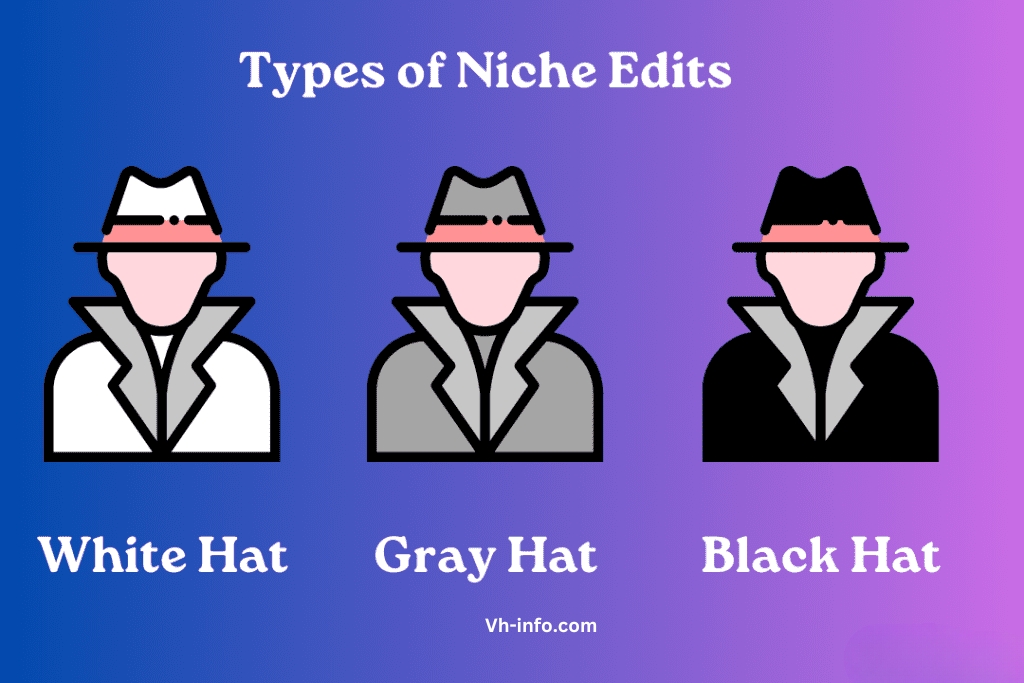
Niche edits can be categorized based on the techniques used to acquire them:

White Hat Niche Edits

These are the niche edits done the right way. They involve blogger outreach to site owners, building real relationships, and offering genuine value in exchange for a link placement in their existing content.

This white hat approach focuses on providing relevant content and quality links that benefit both the website owner and the reader, adhering to Google’s guidelines. When niche edit link building is done the right way, then your SEO performance can improve.

Black Hat Niche Edits

These are the black hat side of link building, and something VH-info brand name would never recommend.

These tactics might include hacking into relevant websites to insert link placement, buying quality backlinks from link farms, or using automated tools to spam outbound links across the internet. These methods can lead to penalties from search engines.

Gray Hat Niche Edits

These methods fall somewhere in between white hat and black hat. Gray hat niche edits might involve paying for a link insertion on a relevant website, without disclosing that it’s a paid placement.

While not as risky as black hat techniques, they still carry some risk of violating search engine guidelines, and it is important to proceed with caution and to ensure that the link is still relevant content.

Targeting Niche Edits

Targeting Niche Edits

To effectively target niche edits, you can use several strategies.

Broken Link Building

This tactic involves finding broken links on relevant websites and offering your piece of content as a replacement. It’s a win-win: you help the site owner fix a dead link, and you earn a quality backlink.

Use tools to identify these broken links, then reach out to the website owner suggesting your quality content as a valuable substitute. This will improve your backlink profile.

Contextual Niche Edits

These involve inserting your link placement naturally within the existing content of a relevant article.

The goal is for the niche edit to blend seamlessly with the surrounding text, providing additional information or value to the reader. This increases the likelihood that the link will be clicked and viewed as a quality link by search engines.

Economical Niche Edits

This involves finding relevant sites with good metrics, like domain authority or domain rating, that offer niche edit opportunities at a reasonable price. The aim is to secure quality links without breaking the bank, focusing on placements that provide the most seo value for your investment. You want to find the most relevant websites that are cost-effective for your link building efforts.

Authority Niche Edits

This strategy targets high authority relevant websites to acquire quality links that can significantly boost your website’s domain authority and search rankings.

While these niche edit opportunities may be more competitive or expensive, the potential seo performance is often worth the investment. Links from these relevant sites act as strong signals to search engines, improving your online presence.

Press Mention Niche Edits

This involves finding unlinked brand name mentions on relevant websites and contacting the website owner to request that the mention be turned into a quality backlink.

This is a great way to capitalize on brand name awareness and secure niche edits that are highly relevant to your business. Set up google alerts for your brand name.

Resource Page Link Building

Resource page link building is about securing a spot on a blogger or influencer’s relevant websites that have a curated list of quality links, valuable tools, services, or products within their niche.

The goal here is to find resource pages that align with your piece of content and demonstrate why your resource would be a valuable addition to their audience. This helps build quality backlinks to your website. This will enhance your site’s domain authority.

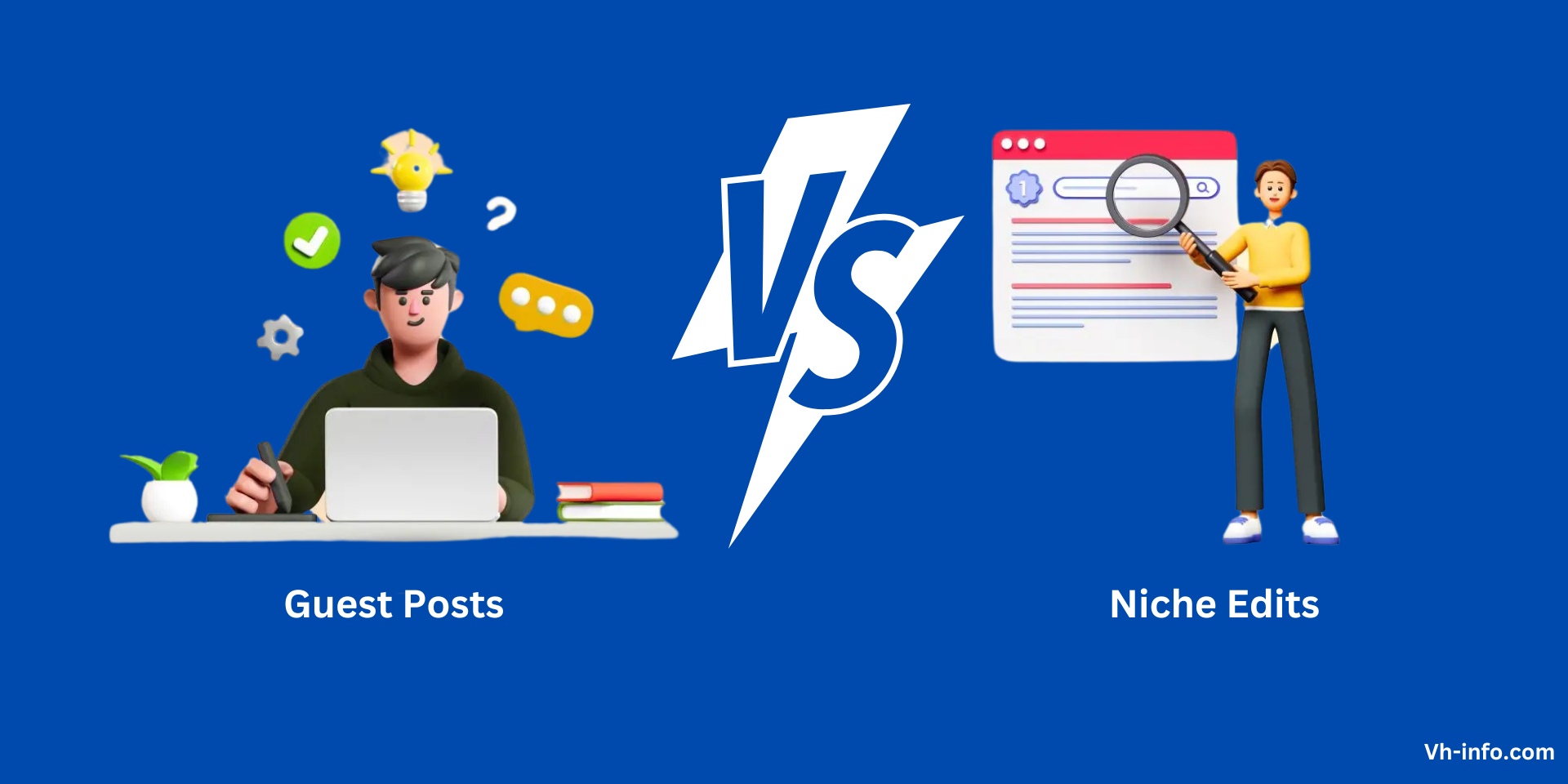
Niche Edits Vs. Guest Posts

Niche Edits Vs. Guest Posts

Feature Niche Edits Guest Posts
Content Link added to existing content New content created for another site
Time Faster to implement Takes longer (writing, editing, approval)
Control Less control over context More control over content and anchor text
Cost Generally cheaper Can be more expensive (if you hire a writer)
SEO Benefit Quicker Boost uses an existing piece Long-term builds authority but takes more time

How To Build Niche Edit Links?

How To Build Niche Edit Links?

Here’s a step-by-step guide to building effective niche edit links:

  1. Identify The Best Target Sites: Start by finding relevant websites in your niche that have high domain authority. Look for sites with strong backlink profiles and a history of publishing quality content. Use tools like Ahrefs or SEMrush to assess their authority and relevance. The ideal relevant websites should also cater to a similar audience to yours.
  2. Select Potential Page Candidates: Once you’ve identified target sites, find specific pages that are relevant to your piece of content and could naturally include your link placement. Focus on existing blog posts or resource pages that align with your niche and target audience. Look for pages where adding your link would genuinely enhance the existing content.
  3. Find The Contact Information: Next, locate the website owner’s contact information. Use tools like Kaspr, Hunter.io, or Cognism to find email addresses. You can also check the website’s contact page or social media profiles for contact details.
  4. Create The Content (If Necessary): If the existing piece of content doesn’t quite fit your link, consider creating a new article or additional content that adds value to the page while naturally including your link. Make it easy for the website owner by suggesting copy they can simply copy and paste.
  5. Send Your Pitch: Create a personalized outreach message to the site owner, highlighting the value your link can bring to their readers. Be clear about which page you’d like your link added to and the anchor text you prefer. Keep your email concise and to the point, and always be polite and respectful.
  6. Follow Up: Many website owners may miss your initial email, so it’s important to follow up. Send a polite follow-up email a few days later to reiterate your offer and increase your chances of getting a response. If you don’t hear back after a few attempts, it’s best to move on to other niche edit opportunities. Set an auto-follow-up sequence of two emails spread 5 days apart.

Are Niche Edits An Ethical Link-Building Strategy?

Are Niche Edits An Ethical Link-Building Strategy?

When done correctly, niche edits can be an ethical and effective link-building strategy. The key is to focus on providing genuine value to both the website owner and their audience.

This means ensuring that your link placement is relevant to the existing content and enhances the user experience.

Avoid black hat niche edit tactics, such as paying for links or using automated software, as these can harm your website’s reputation and search rankings. Niche edit link building should be a strategy to improve SEO performance and increase organic traffic.

VH-info prioritizes ethical link-building best practices to ensure long-term SEO success for SaaS companies.

How To Get Niche Edits The RIGHT Way?

How To Get Niche Edits The RIGHT Way?

To get quality niche edits the right way, focus on building real relationships with site owners and offering something of value in exchange for the link placement. This could involve providing quality content, fixing broken links, or offering to share their content with your audience.

Ensure that your link is relevant to the existing content and adds value to the reader’s experience. Avoid tactics that violate search engine guidelines, such as paying for links or using automated software.

White hat niche edits ensure your backlink profile appears natural. Remember that hard work and patience are key to successful niche edit link building. Earning relevant backlinks should be the goal for improving your website’s domain authority.

Best Practices For Safe Niche Edits

  1. Focus On Relevance: Always ensure your link placement is highly relevant to the existing content. A niche edit link should naturally fit within the context of the page, providing value to the reader. Avoid forcing a link into an unrelated existing article, as this can be seen as spammy and harm your SEO performance. The goal is to achieve contextual links that enhance user experience.
  2. Build Relationships and Offer Value: Don’t just ask for a link; offer something in return. Engage with site owners, provide feedback on their existing blog posts, and suggest ways your piece of content can add value to their readers. Building genuine relationships increases the likelihood of a successful link insertion and fosters a long-term connection. This also avoids the risk of black hat practices.
  3. Vet The Website: Before pursuing niche edit opportunities, thoroughly research the relevant websites. Check its domain authority, domain rating, backlink profile, and overall quality of content. Avoid sites with a history of spammy practices or low-quality existing content. A strong, reputable site will provide a more valuable and safer niche edit link.
  4. Monitor For New Content: Stay informed about new pieces of content published on relevant websites in your niche. This allows you to identify fresh niche edit opportunities and reach out to site owners quickly with relevant and timely suggestions. Set up google alerts or use RSS feeds to track new blog post publications in your industry. This proactive approach can lead to more effective niche edits.

5 Safe Ways To Get Niche Edits Links

Safe Ways To Get Niche Edits Links

  1. Resource Page Link Building: Identify relevant websites that curate resource pages for your industry and offer your piece of content as a valuable addition. Highlight how your resource can benefit their audience and enhance the existing content on their page. This provides value to the site owner while earning you a quality backlink.
  2. Broken Link Building: Find broken links on relevant websites within your niche and offer your quality content as a replacement. This helps the website owner fix a problem and provides you with a niche edit link in existing content. It’s a win-win situation that enhances your backlink profile.
  3. Unlinked Brand Mentions: Monitor the web for mentions of your brand name that don’t include a link to your site. Reach out to the website owner and politely request that they turn the mention into a quality backlink. This is a simple way to capitalize on existing brand name recognition and secure relevant backlinks.
  4. Expert Roundups: Participate in expert roundup articles by sharing your insights and opinions on industry-related topics. These articles often feature contributions from multiple experts, each with a link back to their website. This is a great way to build quality backlinks and establish yourself as an authority in your niche.
  5. Use A Reputable Niche Edits Service: Partner with a trusted niche edit service to handle the blogger outreach and link placement process for you. These services have established relationships with website owners and can help you secure quality links on relevant websites. Ensure they follow white hat best practices and prioritize relevance and quality.

FAQ’s:

Where Can I Buy Niche Edits?

While you might find services offering niche edits for sale, it’s important to proceed with caution.

Buying links outright can be a black hat tactic that violates search engine guidelines. Instead, focus on earning niche edits through genuine blogger outreach and relationship building, or consider using a niche edit service that prioritizes ethical practices.

Are Niche Edits Safe?

When executed correctly, following google’s guidelines and best practices, niche edits are a safe and effective link-building strategy.

However, avoid black hat tactics like buying links or hacking websites, as these can lead to penalties. Focus on white hat niche edits that provide value to both the website owner and the reader.

How Can Niche Edits Improve My Website’s Rankings?

Niche edits can boost your website’s search rankings by building quality backlinks from relevant websites.

These contextual links signal to search engines that your site is a credible and valuable resource, which can improve your domain authority and visibility in search results. Effective niche edits enhance your link profile.

Are Niche Edits Considered White-Hat Or Grey-Hat SEO?

Niche edits can fall into either category, depending on the methods used.

White hat niche edits involve manual blogger outreach and relationship building. Gray hat niche edits might involve paid link placement that isn’t explicitly disclosed. Always aim for white hat approaches to ensure long-term SEO success.

How Do You Find Relevant Sites For Niche Edits?

Finding relevant websites requires keyword research, competitor analysis, and industry monitoring.

Look for sites with high domain authority, a strong backlink profile, and quality content that aligns with your niche. Tools like Ahrefs and SEMrush can help identify potential niche edit opportunities.

Can Niche Edits Help Improve Domain Authority?

Yes, niche edits are a great way to improve domain authority. When you get a niche edit link from high authority relevant websites, this signals to search engines that your website is trustworthy and credible.

This, in turn, leads to improved search rankings and more organic traffic.

Conclusion

In conclusion, niche edits are a valuable link building method when implemented ethically.

Strategically placing links in existing content on relevant websites can boost organic traffic and improve search rankings. Focus on building relationships with site owners and providing quality content to avoid black hat tactics.

Remember that effective niche edits enhance your link profile and domain authority, signaling to search engines that your website is a trustworthy resource.

With hard work and a focus on best practices, niche edit link building can significantly improve your website’s SEO performance and online presence. VH-info is here to guide you in this process.

SEO Reseller Program: Step-By-Step Start Guide For Beginners

As a digital marketing agency, you’re constantly seeking ways to expand your service offerings, boost revenue, and deliver results for your clients. One avenue that can assist with this is an seo reseller program.

We understand the challenges agencies face. That’s why we’ve created a comprehensive white label seo solution that allows you to provide top-notch SEO services to your clients under your own brand.

With our program, you can expand your range of services, attract new clients, and focus on what you do best: building relationships and growing your business.

At VH Info, our mission is to provide actionable insights for Software as a Service (SaaS) link building, we speak as a trusted expert, breaking down complex topics into clear, relatable advice.

What Is An SEO Reseller Program?

What Is An SEO Reseller Program?

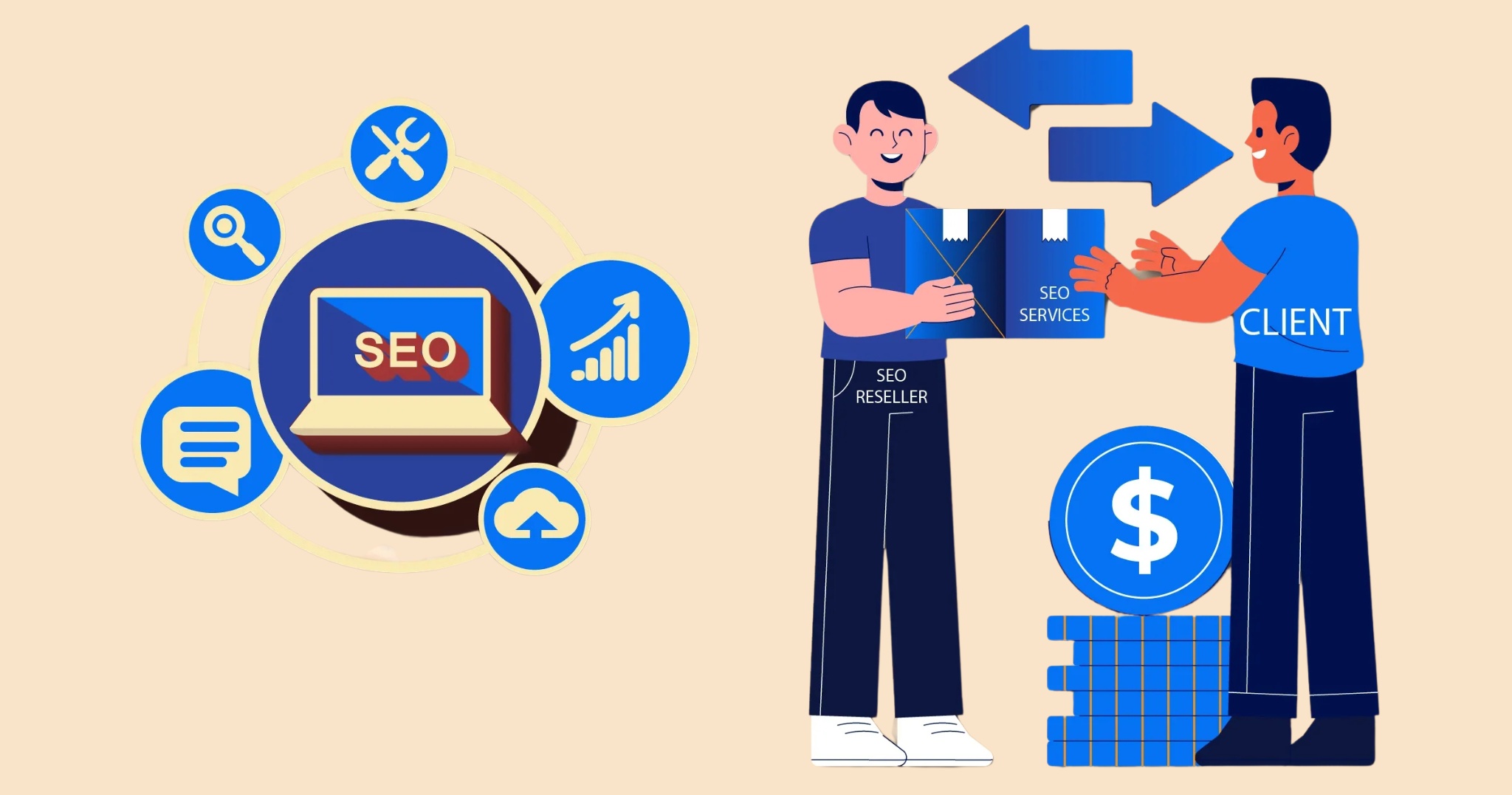
An seo reseller program is a partnership where one company (the reseller) offers SEO services to its clients using the resources and expertise of another company (the seo provider). This allows marketing agencies, web design firms, and other businesses to expand their services without the need to hire and train seo specialists.

In essence, you act as the point of contact for your clients, while we handle the technical aspects of SEO, such as keyword research, on-page optimization, link building, and more.

The seo work we do is completely white label, meaning it appears to your clients as if it’s coming directly from your agency. This allows you to build your brand reputation and maintain control over your client relationships.

How Our SEO Reseller Program Works?

How Our SEO Reseller Program Works?

Here’s how SEO Reseller Program works:

  • Step 1: Onboarding: After signing up for our program, we’ll work with you to understand your client’s needs, goals, and target audience.
  • Step 2: Customize Your Packages: Choose from our range of seo services and create custom seo packages that align with your client’s specific requirements and budget.
  • Step 3: We Do The SEO Work: Our team of SEO experts will execute the seo campaign behind the scenes, utilizing the latest strategies and techniques to improve your client’s search engine rankings and online visibility.
  • Step 4: You Reap The Benefits: As your client’s seo performance improves, you’ll see increased client satisfaction, higher retention rates, and more opportunities for upselling and cross-selling.
  • Step 5: Monthly Reports and Analytics: We’ll provide you with detailed monthly reports that showcase the progress of your client’s seo campaign, including keyword rankings, organic traffic, and other key metrics.

How To Become An SEO Reseller?

How To Become An SEO Reseller?

Becoming an SEO reseller is a straightforward process.

Here’s a step-by-step guide:

  1. Find A Reputable SEO Provider: Look for a provider with a proven track record, a comprehensive range of services, and a commitment to white-label solutions.
  2. Sign Up For Their Program: Review the provider’s terms and conditions, pricing structure, and service level agreements before signing up.
  3. Define Your Target Market: Identify the types of clients you want to serve and the specific SEO needs you want to address.
  4. Create Your SEO Packages: Develop customized SEO packages that align with your target market’s needs and budget.
  5. Market Your Services: Promote your SEO services to your existing clients and prospects through your website, social media channels, and other marketing channels.
  6. Manage Client Relationships: Serve as the point of contact for your clients, providing regular updates, answering questions, and addressing any concerns.

VH Info will help you grow your business, and we can help you do it effectively. With our team of SEO experts, we will help your business thrive.

Essential SEO Services Offered in Reseller Programs

Essential SEO Services Offered in Reseller Programs

A solid seo reseller program should include many SEO services to help websites rank higher.

Here are some of the most important ones:

  1. On-Page Optimization: This is like cleaning up and organizing a website to make it easier for search engines and people to understand. It means making sure the website’s content, titles, and descriptions all use the right keywords. This helps the search engine know what the page is about and if it will assist the user, and make your website more visible.
  2. Off-Page Optimization: This is about building a website’s reputation by getting other trustworthy websites to link to it. It’s like getting votes of confidence from other sites, which tells search engines that your website is reliable and has good information. Guest posting is one of the many strategies for building off-page SEO.
  3. Keyword Research: Keyword research is finding the words and phrases that people type into search engines when they’re looking for something. It helps you figure out what keywords to use on your website so that it shows up when people search for those terms. Using keyword research will help you create an SEO strategy for the long term.
  4. Link Building: This means getting other websites to put links to your website on their services pages. When other sites link to yours, it’s like they’re saying your website is a good source of information. This helps improve your website’s authority and search engine rankings.
  5. Local SEO: Local SEO helps businesses get found by customers in their town or city. If someone searches for “pizza near me,” local SEO makes sure that local pizza places show up in the search results. It’s super useful for businesses that want to attract local customers.
  6. International SEO: If a business wants to reach customers in other countries, international SEO can help. It involves making changes to a website, so search engines show it to people in different countries and in different languages. Using international SEO can expand your online presence globally.
  7. WordPress SEO: WordPress SEO helps websites built on the WordPress platform rank higher in search results. Since many websites use WordPress, optimizing them for search engines is very important. WordPress offers plugins that make SEO easier for users.
  8. E-commerce SEO: This focuses on helping online stores get found by shoppers on search engines. It includes things like keyword research, optimizing product pages, and building links to the store’s website. If you want to increase your sales, E-commerce SEO is a great strategy to use.
  9. B2B SEO: B2B SEO means optimizing a website to attract other businesses instead of individual customers.
  10. Technical SEO: This involves making sure a website is technically sound, so search engines can easily crawl and understand it. It includes things like improving site speed, fixing broken links, and making sure the site works well on mobile devices.
  11. Content Marketing: Content marketing involves creating helpful and interesting content, like blog posts and articles, that attract visitors to a website. Providing useful information helps businesses build trust with their audience and improve their search engine rankings. Great SEO content helps establish a strong online presence and will help businesses grow.
  12. Social Media Marketing: Using social media platforms to promote a website’s content, build brand awareness, and drive traffic.
  13. Analytics and Reporting: This involves tracking how well a website is performing in search results and providing reports to clients. Monitoring key metrics like keyword rankings and organic traffic can help businesses see what’s working and what needs improvement. The information will help with the SEO health of your website, and give you insight into changes you may need to make.

Who Can Benefit From SEO Reseller Services?

Who Can Benefit From SEO Reseller Services?

Many different types of businesses can gain a lot from using SEO reseller services.

Here’s how each group can benefit:

  1. Digital Marketing Agencies: These agencies help businesses grow online. When using SEO reseller services, they can offer more services to their clients, like link building and keyword research. This helps their clients get better results in search engines, making the agency more valuable to them.
  2. Web Designers: When web designers create websites, they want those sites to be found by people.
  3. Marketing Firms: These firms can focus on promoting other products and services without having to worry about SEO.
  4. Entrepreneurs and Startups: New business owners often have limited resources. By using SEO reseller services, they can access expert help without needing to hire a full team. This allows them to focus on growing their business while still improving their website’s performance in search engines.
  5. Freelancers: Freelancers who provide services like writing or graphic design can benefit from offering SEO services too. This helps them attract more clients and increase their income. They can use the expertise of an SEO team while still managing their projects.
  6. Businesses of all Sizes: Whether a business is big or small, everyone wants to be found online. Using SEO reseller services allows any business to improve its website’s ranking in search results. This means more customers can find them, leading to more sales and growth for the business.

Benefits Of Using An SEO Reseller Program

Benefits Of Using An SEO Reseller Program

There are numerous benefits to using an SEO reseller program, including:

  1. You Can Focus On Your Core Competency: By outsourcing SEO, you can focus on your core competencies, such as strategy, creative development, and client management.
  2. You Get Scalable Results: An SEO reseller program allows you to scale your SEO services up or down based on client demand, without the need to hire or train additional staff.
  3. You Can Work With Niche Experts: Many SEO companies specialize in specific industries or SEO techniques, allowing you to tap into their expertise and deliver the best results to your clients.
  4. You Don’t Have To Invest in New Relationships: With an SEO reseller program, you can use existing relationships with your clients to introduce SEO services and generate additional revenue.
  5. You Get “On-demand” Services: You can access SEO services on an as-needed basis, without the commitment of a full-time employee.

With our white label SEO services, we can provide the best results for your SEO campaign. VH Info is direct, knowledgeable, and helpful; we speak as a trusted expert and guide.

What Are The Risks Associated With SEO Reseller Services?

What Are The Risks Associated With SEO Reseller Services?

While seo reseller services offer many benefits, it’s essential to be aware of the potential risks:

  1. They Might Resort to Spam or Black Hat Links: Some SEO providers may use unethical link building techniques that can harm your client’s website.
  2. Your Clients Might See You as a Middleman: If not managed properly, your clients may perceive you as simply passing along work to a third party.
  3. You Might Get Links From Poor Sites or Poor Content: The quality content of the links acquired can impact your client’s website reputation and rankings.

Companies With The Best SEO Reseller Programs

Companies With The Best SEO Reseller Programs

Here are some SEO companies that are known for having excellent SEO reseller programs.

These programs help other businesses offer SEO services to their clients under their service’s brand name:

  1. Marketer’s Center: Marketer’s Center has white label SEO services for agencies, with local business citations for clients. They also offer services to fix and improve existing citations, ensuring businesses are accurately listed online. Marketer’s Center helps clients secure important keyword spots and provides affordable contextual links for tiered link building strategies.
  2. AgencyPlatform: The Agency Platform offers white label SEO solutions with flexible pricing, making them accessible to many agencies. They provide a customizable dashboard for tracking how well SEO campaigns are doing, check keyword rankings weekly, and follow Google’s rules. With a full range of services, from technical checks to content creation and link building, Agency Platform is a top choice for agencies.
  3. Contentellect: Contentellect focuses on content writing services and link building, providing white label SEO to agencies. They work mostly with B2B clients, and more than 65 agencies use their services for content and links. Also, all of their deliveries have to meet individual standards and guidelines.
  4. FATJOE: FATJOE’s SEO Reseller Program lets agencies resell their services, either as they are or as part of bigger SEO campaigns. They offer link building, SEO, content writing, and design services that are designed to be resold. They also ensure that your clients will never know that FATJOE was involved. FATJOE also offers a custom dashboard for easy order management and provides free tools and great support.
  5. Outreach Monks: Outreach Monks specializes in link building through outreach to bloggers, helping businesses improve their search engine rankings and get more traffic. They build high-quality links and develop relationships with websites. Outreach Monks uses manual blogger outreach. Their team creates content that resonates with audiences for long-term gains in search engine visibility.
  6. Semify: Semify offers white label SEO services with a team based in the USA, ensuring good communication and quality. They provide access to resources and services that clients need, offering different SEO packages for local, national, and e-commerce businesses. Semify also provides custom white label SEO packages and transparent reports.
  7. SEO Brothers: SEO Brothers offers white label SEO services to web and digital marketing agencies, handling the SEO tasks so agencies can focus on serving clients. They provide a white label portal where agencies can brand reports with their own logo and company information. SEO Brothers also offers a wide range of services, including on-page optimization, link building, and local SEO.
  8. SEOReseller: SEOReseller offers white label SEO programs designed to get results for client campaigns. They provide white label reports with your branding and have a team of SEO experts. The SEO packages are designed to deliver results for client campaigns.
  9. The HOTH: The HOTH provides white label SEO services, including link building and content writing, to help agencies increase profits and grow their business. They offer white label reports and a dashboard to track orders and results. The HOTH helps agencies scale without increasing costs.
  10. Vazoola: Vazoola provides white label SEO reseller services, offering agencies access to premium SEO services to help their clients stay ahead of the competition. They offer a range of services, including SEO audits, keyword research, optimized content, and on-page and off-page SEO. They help agencies save time, improve ROI, and grow their business.

How To Select The Right Partner?

How To Select The Right Partner?

Choosing the right SEO reseller is important for the success of your SEO efforts.

Here are some factors to consider:

  1. Look For Reviews Or References From Real People: Check online reviews and ask for references from other agencies that have worked with the provider.
  2. Years in Business: A provider with several years of experience is more likely to have a proven track record and a stable business model.
  3. Number of Clients and Expertise in Your Target Niche: Look for a provider that has experience working with clients in your target industry and has a deep understanding of your target audience.
  4. Payment Structure and Cost: Understand the provider’s pricing structure and ensure it aligns with your budget and profitability goals.
  5. Communication Quality: Choose a provider that is responsive, transparent, and easy to communicate with.
  6. Test Drive The Service: Ask for a trial period or a sample project to evaluate the provider’s SEO capabilities and communication style.

How To Track Results From SEO Resellers?

How To Track Results From SEO Resellers?

To ensure your SEO reseller is delivering the promised results, it’s essential to track key SEO performance metrics:

  1. Constant Communication: Maintain open communication with your SEO provider to stay informed about the progress of your SEO campaign.
  2. Monitor Backlinks Yourself: Use SEO tools to monitor the quality of content and quantity of backlinks acquired by your SEO provider.
  3. Track Rankings and Organic Traffic Yourself: Monitor your client’s keyword rankings and organic traffic to measure the impact of your SEO efforts.

VH Info offers transparent reports that can assist with tracking results and changes that can affect growth.

Best Practices For Implementing Resell SEO Services

Best Practices For Implementing Resell SEO Services

To make the most of your seo reseller program, follow these best practices:

  1. Outsource The Right SEO Partner: Choose a partner with a proven track record, a comprehensive range of seo services, and a commitment to white label solutions.
  2. Set Clear Expectations: Establish clear goals, timelines, and deliverables with your SEO provider.
  3. Maintain Communication: Establish a defined communication channel between you, your clients, and the SEO provider.
  4. Have A Pricing Strategy: Determine how much margin you’ll add on top of what your white label seo agency charges for their services.
  5. Keep Track Of Your Clients: Monitor your clients’ SEO performance and be proactive in addressing any issues or concerns.

FAQ’s:

What Does An SEO Reseller Do?

An SEO reseller is like a middleman that helps businesses improve their online presence.

They partner with an SEO provider and offer SEO services to their clients. The reseller talks to the clients understands what they need, and then works with the SEO provider to make it happen.

What Are The Advantages Of Engaging An SEO Reseller For Your Business?

Using an SEO reseller lets you offer more services to your clients without having to hire a whole team of SEO experts. This means you can make more money and keep your clients happy. Plus, you can focus on what you’re good at, while the SEO reseller takes care of the technical stuff.

What Financial Resources Should You Allocate For SEO Reseller Services?

How much money you spend depends on what your clients need and how much the SEO reseller charges. It’s important to have a budget for SEO and to compare prices from different resellers. Make sure to choose a plan that fits your budget and will give your clients good results.

What Does An SEO Reseller Package Typically Include?

An SEO reseller package usually includes a range of services like keyword research, which helps find the best words for your website; link building, which gets other websites to link to yours; and content marketing, which creates interesting articles and posts for your site.

These all work together to improve your search engine rankings.

How Does The Reseller Model Integrate With Other Digital Marketing Services?

The seo reseller model can work with other digital marketing services, like social media marketing and content writing.

Combining these services can help you create a complete marketing plan for your clients. This will assist them in reaching more people and achieving better results overall.

Are SEO Reseller Services A Valuable Investment?

Yes, SEO reseller services are a good investment if you want to grow your business and help your clients succeed online.

Improving search engine rankings and driving more traffic to their websites, you can help your clients attract more customers and make more money. This makes you a valuable partner for their success.

How Do I Ensure Client Satisfaction In An SEO Reseller Program?

To keep clients happy, communicate with them often, tell them what’s happening with their SEO, and show them the results. Make sure to listen to their concerns and answer their questions.

Being transparent and providing quality service can help you build trust and keep your clients satisfied.

Conclusion

In conclusion, if you want to help your clients get noticed online and grow their businesses, using an SEO reseller program is a smart move. You don’t have to be an SEO expert yourself; instead, you partner with a company that knows all about search engine optimization.

This way, you can offer services like keyword research and link building to improve your client’s search engine rankings and online visibility.

Choosing the right SEO reseller and keeping open communication are key to ensuring your clients are happy and see great results. Ultimately, this helps your business succeed and builds strong, lasting relationships with your clients.

12 Best Link Building Courses In 2025: Build Backlinks Like A PRO

In today’s competitive digital landscape, mastering link building is essential for enhancing your search engine rankings and driving targeted traffic to your site.

A link building course can provide you with the knowledge and skills needed to develop effective link building strategies. This article will guide you through the essentials of link building courses, helping you choose the best courses to elevate your SEO performance.

VH Info’s tailored link building services are designed to boost your website’s visibility and credibility.

What Are Link Building Courses?

What Are Link Building Courses?

Link building courses are online training programs designed to teach you how to build backlinks to your website. These courses cover various types of links, link building tactics, and techniques to run successful link building campaigns. Given that incorrect strategies can negatively impact your website, a link building course offers a solid foundation to get it right from the start.

What Do Link Building Courses Usually Include?

What Do Link Building Courses Usually Include?

Typically, a link building course includes a range of topics to provide a comprehensive understanding of the subject:

  • An introduction to link building and its role in an SEO strategy
  • Explanation of different types of backlinks, like dofollow links and nofollow links, and their impact on search engine optimization
  • Methods for building high-quality backlinks
  • Techniques to identify prospects and target websites for link building opportunities
  • Effective outreach strategies
  • Integration of content marketing with link building, emphasizing quality content
  • Tracking and analysis of links being built
  • Overview of available SEO tools and their functions
  • Distinction between white hat link building and black hat tactics

Types Of Link Building Courses

Types Of Link Building Courses

Link-building courses can be divided into two main types: free and paid. Each one meets different needs and budgets for learners.

Free Link Building Courses

Free course options are often introductory, giving a general overview of link building.

These courses are a good place to start for those new to SEO link building and digital marketing. They provide a basic understanding of how backlinks work and their importance in improving search engine rankings.

Platforms like HubSpot Academy and Semrush Academy offer free course options covering the basics of link building, which are helpful for beginners. Ahrefs Academy also provides a free link building course teaching how to generate backlinks, using SEO tools effectively.

These courses often cover essential concepts such as keyword research and different types of backlinks.

Paid Link Building Courses

Paid courses provide more in-depth knowledge and resources, often including personalized support and a link-building certification upon completion.

These courses delve into advanced link building techniques, offering downloadable resources and detailed strategies for building a strong backlink profile. They often cover how to avoid google penalties by using white hat link building techniques.

Platforms like Udemy and CXL offer comprehensive paid courses focusing on enhancing your skill level and providing lifetime access to course materials. CXL’s link building course, taught by Irina Nica, emphasizes building high-quality links and mastering google search console.

These courses are designed for those serious about mastering seo strategies and improving their link building efforts, providing valuable insights from seo expert instructors.

Who Should Sign Up For A Link Building Course?

Who Should Sign Up For A Link Building Course?

A link building course is beneficial for:

  • SEO Professionals: To enhance SEO strategies and stay updated.
  • Content Marketers: To improve content marketing with quality backlinks.
  • Digital Marketing Specialists: To boost digital marketing campaigns and enhance SEO efforts.
  • Website Owners: To improve their search engine rankings.
  • Business Owners: To understand and implement effective link building efforts.
  • Products Marketing Manager: To increase organic traffic to product pages.

Anyone wanting to implement ethical (white hat) practices and achieve better search results and enhance SEO performance.

How Can You Choose The Right Link Building Course?

How Can You Choose The Right Link Building Course?

Choosing the right link building course involves looking at a few key things to make sure it fits your needs and helps you achieve your SEO goals.

  1. Price: Consider your budget when choosing a link building course. Some platforms offer a free trial, while others require a one-time payment or a subscription. Make sure the course content justifies the cost and provides valuable information for your investment.
  2. Duration: Assess how much time you can dedicate to a training course. Some courses are short and can be completed quickly, while others are more extensive. Choose a course with a duration that aligns with your schedule and learning pace, with options for lifetime access.
  3. Accessibility and Format: Make sure the course is accessible on various devices and that the format (video, text, live sessions) matches your learning style. The best link building course should offer a user-friendly online learning platform that makes it easy to follow along and apply what you learn.
  4. Certificates: If you want to demonstrate your expertise to employers or clients, check if the link building course offers a recognized seo certification course. A link-building certification can validate your skills and enhance your credibility as an SEO professional.
  5. Current Knowledge Base: Select a course that matches your current understanding of link building. Some courses are designed for beginners, providing the basics of SEO and backlink building, while others are for those with years of experience looking to learn advanced link building techniques.
  6. Instructors Experience and Expertise: Research the course instructor to ensure they have a proven track record and extensive knowledge in SEO and link building. Look for instructors with years of experience in the field and a solid understanding of white hat link building strategies.

Best Link-Building Courses Of 2025

Best Link-Building Courses

Here are some of the best courses to help you master link building in 2025:

LinkedIn Learning

LinkedIn Learning offers various digital marketing courses that include link building strategies.

Led by SEO and link building expert Paddy Moogan, the “SEO Strategy: Link Building” course teaches how to create an effective link building campaign for your brand.

This course is designed for beginners and covers topics such as finding websites that may link to you and what makes your site link-worthy.

It emphasizes the importance of quality backlinks as a major factor in search engine rankings, providing practical examples of running successful link building campaigns.

UDACITY

UDACITY provides nanodegree programs covering technical seo and content marketing, integrating link building strategies. These programs focus on essential SEO skills to improve your site’s search engine rankings.

While specific link building tactics may vary, the emphasis on technical SEO provides a solid foundation for understanding how backlinks fit into a broader SEO strategy. These courses aim to enhance your skill level by ensuring a comprehensive approach to digital marketing.

Coursera

Coursera features the SEO Specialization by UC Davis, which includes strategies for acquiring high-quality links. This specialization aims to teach learners how to create successful link building strategies as part of their overall SEO efforts.

You’ll learn to identify ethical (white hat) SEO techniques and understand the importance of backlinks for improving search engine results. The course content is designed to help you optimize your link building efforts and achieve better seo performance.

BrightonSEO (Sponsored By Majestic)

BrightonSEO offers “An Introduction to Backlinks,” a free course that introduces the basics of link building.

This course teaches what links are, why they are important, and the difference between good and bad links. It is designed for those new to SEO and link building, keen to understand the role of backlinks in improving search engine results pages (SERPs).

It helps you understand the important role backlinks play in search engine optimization and guides you in acquiring good backlinks for your website.

Ahrefs Academy

Ahrefs Academy delivers a free link building course focused on generating backlinks with practical examples and tutorials on good link building methods.

The Advanced Link Building Course teaches how to find link prospects, write personalized outreach emails, and validate your link building campaigns efficiently.

This course is suitable for both beginners and experienced individuals looking to sharpen their link building skills. It effectively uses SEO tools to analyze and implement successful link building strategies, focusing on improving your website’s backlink profile.

Semrush Academy

Semrush Academy offers a Backlink Management Course with Greg Gifford, covering the essentials of building a strong backlink profile.

This free course focuses on managing and growing a backlink profile, helping learners improve their SEO strategy through proper backlink management.

It’s designed for beginners and intermediate marketers wanting a better understanding of link building principles and how to use Semrush’s tools to improve their SEO. You’ll gain foundational knowledge on acquiring backlinks from reputable websites.

MOZ Academy

MOZ Academy presents “30 Days of SEO,” a comprehensive program that includes backlink building strategies. This course walks you through an SEO game plan, helping you implement effective strategies, including backlink building.

It covers the components of backlinks and why they’re important, offering ideas that are independent of SEO tools, but applicable within MOZ’s Link Explorer. The program is designed to help you develop a competitive SEO strategy.

HubSpot Academy

HubSpot Academy provides an SEO Certification Course with a valuable lesson on link building, emphasizing relationship-building with journalists and website owners.

The SEO Training Course: Building Sustainable Traffic for Business Growth focuses on link building, topic clusters, and building search authority.

This free course is designed for marketers, content creators, and anyone wanting to improve their SEO abilities. Irina Nica from HubSpot Academy also teaches a link building course on CXL.

Udemy

Udemy offers “The Complete Link Building Course,” suitable for beginners and covering essential strategies for high-quality links. This course helps you understand the broader picture of search engine optimization before connecting the dots between SEO and link building.

It includes methods for building backlinks through blog commenting, guest posting, and resource pages, and it provides tips to avoid Google penalties and ensure safe backlinks. The course aims to help learners build a strong backlink profile and improve their search engine rankings.

CXL

CXL provides a link building course designed for both beginners and experienced professionals, focusing on improving SEO performance and driving quality traffic.

This course, prepared by Irina Nica from HubSpot, teaches advanced link building strategies to improve SEO performance, raise brand awareness, and drive traffic.

It’s ideal for SEO specialists, content marketers, and digital marketing professionals looking to improve their link building training. By the end of this training, you’ll have a structured link building strategy that supports long-term SEO growth.

MarketMotive

MarketMotive features an Advanced Link Building Certification Training, ideal for marketers aiming to enhance site authority and search engine rankings.

The course focuses on ways to get high-quality backlinks. It teaches you how to use SEO Tools like Ahrefs, Moz, and Semrush to analyze link profiles and recover from Google penalties.

This course provides you with an advanced understanding of off-page optimization techniques.

Exam Labs

Exam Labs offers an Advanced Digital Marketing Certification with insights into modern digital marketing tools and link building strategies.

The course is good for people who want to learn about SEO and marketing in detail.

Key objectives include gaining insights into current strategies and tools, learning to identify high-quality link opportunities, and developing skills in using analytics to track the success of link building efforts.

FAQ’s:

How Long Do Link Building Courses Take To Complete?

The time it takes to complete a link building course can vary greatly. Some courses can be completed in just a few hours, offering a quick overview of the basics of link building.

More in-depth courses, which cover advanced link building techniques and involve hands-on projects, may take several weeks or even months to finish. It depends on the depth of the course content and your pace.

Do Link Building Courses Offer Certification?

Yes, many paid courses offer a link-building certification upon completion.

This certification can demonstrate your expertise in SEO link building and enhance your professional credentials. Look for courses that provide recognized certifications to validate your skills in link building strategies.

Can Beginners Enroll in These Link Building Courses?

Absolutely, many link building courses are designed specifically for beginners with little to no prior knowledge of SEO.

These courses provide a solid foundation in the basics of SEO, including keyword research, types of backlinks, and white hat link building practices. They serve as a good place to start learning how to improve your search engine rankings.

What Level Of Experience is Required For Link Building Courses?

The required skill level varies depending on the course. Some courses are tailored for novices and provide a comprehensive introduction to link building and SEO. Others are designed for experienced seo professionals seeking to master advanced link building techniques.

Always check the course description to ensure it aligns with your current expertise.

Can I Learn Link Building Without Prior SEO Experience?

Yes, you can learn link building without prior SEO experience.

Many courses provide an introduction to SEO, covering essential concepts that will help you understand how link building fits into the bigger picture. These courses often start with the basics of SEO to help you develop a better understanding of its core principles.

Conclusion

In conclusion, a link building course is a valuable asset for anyone aiming to boost their website’s visibility and SEO performance.

Whether you’re an SEO professional, a content marketer, or a business owner, understanding and implementing effective link building strategies is important in today’s competitive digital marketing landscape.

Carefully selecting a course that fits your skill level, budget, and learning style can help you gain the knowledge and expertise needed to improve your search engine rankings and build a strong backlink profile.

VH Info remains committed to providing insights and services that help you succeed in your link building efforts and stay ahead in the dynamic world of search engine optimization.

HubSpot SEO Certification: Study Guide & Everything To Know

In today’s landscape of digital marketing, search engine optimization (SEO) stands as a cornerstone for achieving online success.

For business owners and marketers alike, mastering SEO is vital for driving organic traffic, enhancing online visibility, and achieving sustainable growth.

VH-info recognizes the demand for skilled SEO professionals, making the HubSpot SEO Certification a valuable asset for individuals seeking to enhance their expertise and career prospects.

This guide provides a detailed look into the HubSpot SEO Certification, its benefits, key learnings, and strategies for excelling in the exam.

VH-info is dedicated to providing actionable insights and resources to empower SaaS businesses in their link building and SEO endeavors.

What Is The HubSpot SEO Certification?

What Is The HubSpot SEO Certification?

The HubSpot SEO Certification is a certification course offered by HubSpot Academy designed to validate an individual’s knowledge and skills in search engine optimization. This seo certification covers a broad spectrum of SEO concepts, from history of search engines and keyword research to technical seo and content strategy.

This certification equips participants with the expertise to rank web pages effectively, drive organic traffic, and optimize website optimization for search engines. Completing the HubSpot SEO Certification signifies a commitment to mastering SEO and staying current with industry trends. It enhances one’s credibility in the field of digital marketing.

Why Get A HubSpot SEO Certification?

Why Get A HubSpot SEO Certification?

Obtaining a seo certification offers numerous advantages for marketing professionals. A certification validates your expertise and demonstrates your commitment to staying current in the dynamic field of SEO.

Here are some reasons to pursue HubSpot certifications:

Get The Attention Of Employers

In today’s competitive job market, possessing a seo certification can set you apart from other candidates. Employers value individuals who have invested in their professional development and demonstrated a commitment to mastering SEO principles.

A HubSpot certification on your linkedin profile signals to potential employers that you possess the skills and knowledge needed to drive organic traffic and achieve results. VH-info is a valuable asset in today’s digital landscape.

Learn In-Demand Skills From Inbound Marketing Experts

HubSpot Academy’s certification courses are developed by inbound marketing experts who possess extensive knowledge and practical experience in SEO.

Stay Current On The Latest Marketing and Sales Trends

The field of SEO is constantly evolving, with new algorithm updates, ranking factors, and search engine guidelines emerging regularly.

The HubSpot SEO Certification ensures that you stay up-to-date on the latest seo knowledge and trends, equipping you with the expertise to adapt to change and maintain a competitive edge.

Staying current is vital in the dynamic realm of SEO.

Add Credentials To Your LinkedIn Profile, Website, and More

Upon completing the HubSpot SEO Certification, you’ll receive a digital certificate that can be displayed on your LinkedIn profile, website, and other professional platforms.

This certificate serves as evidence of your SEO expertise and enhances your credibility among peers, clients, and employers. Sharing your completion publicly is a great way to showcase your achievements.

Launch A Variety Of Career Paths

Earning a seo certification can open doors to a wide variety of career paths in digital marketing.

From SEO specialist and content strategist to marketing manager and business owners, the skills and knowledge gained through the HubSpot SEO Certification are applicable across various roles and industries.

Whether you’re seeking to advance in your current role or pursue a new career opportunity, a HubSpot certificate can help you achieve your professional goals. It prepares you for diverse opportunities.

7 Popular HubSpot Certifications For Beginners

Popular HubSpot Certifications For Beginners

HubSpot offers various certifications tailored for beginners looking to establish a strong foundation in digital marketing and sales.

Here are seven popular HubSpot certifications ideal for beginners:

HubSpot Inbound Marketing Certification

This certificate is perfect for newbies wanting to understand inbound marketing. It teaches you how to bring in, connect with, and make customers happy using content and experiences that are relevant to them.

You’ll learn the basics of the inbound flywheel methodology, setting goals, understanding your ideal customers (buyer personas), and mapping out their journey. It will take less than 2 hours to complete the 6 lessons, 15 videos, and 4 interactive quizzes.

It’s a great first step into the world of digital marketing.

HubSpot Inbound Certification

This certification focuses on the core ideas behind inbound marketing. You’ll learn how to create marketing campaigns that draw visitors, turn them into leads, and build strong customer relationships. It’s all about providing value at every stage of the customer journey.

HubSpot Email Marketing Certification

If you want to master email marketing, this certificate is for you.

It covers important topics like making sure your emails reach inboxes (deliverability), dividing your audience into groups (segmentation), and using automation. You’ll learn how to create email campaigns that grab attention and get results.

HubSpot Content Marketing Certification

This certificate teaches you how to create high-quality, valuable content that attracts and engages your target audience. You’ll learn about content strategy, writing blog posts, and promoting your content. This certification will help you become a skilled content marketer.

HubSpot Social Media Marketing Certification

This certification introduces you to the world of social media marketing. You’ll learn how to create a social media strategy, develop content, and manage your online community. You’ll also discover how to build brand awareness and attract new customers.

The course includes 8 lessons, 40 videos, and 34 quizzes and should take around 4 hours.

HubSpot Inbound Sales Certification

This certificate focuses on the inbound approach to sales. You’ll learn how to find potential customers, connect with them in a helpful way, and nurture them through the sales process. It covers topics like sales prospecting, lead qualification, and sales automation.

HubSpot SEO Certification

This certificate is designed to help you master search engine optimization (SEO). You’ll learn about keyword research, on-page optimization, link building, and other techniques to improve your website’s ranking in search results. This certification equips you with the expertise to drive organic traffic and improve website visibility. The course takes about 4 hours and is free.

HubSpot SEO Certification: What You’ll Learn?

HubSpot SEO Certification: What You'll Learn?

The HubSpot SEO Certification covers a wide array of topics related to search engine optimization. Participants will delve into keyword research techniques to identify high-value keywords. They will also learn on-page seo strategies to optimize website content.
The seo certification also provides strategies for technical seo to improve website architecture. Participants will also explore link building tactics to enhance website authority.

HubSpot SEO Certification: Benefits For Your Career

HubSpot SEO Certification: Benefits For Your Career

The HubSpot SEO Certification offers lots of benefits for advancing your career in digital marketing:

  1. Enhanced SEO Skills: The HubSpot SEO certificate enhances your seo knowledge and expertise, enabling you to implement effective marketing strategy and optimization techniques.
  2. Industry Recognition: The HubSpot certificate enhances your credibility and demonstrates your competence in SEO best practices.
  3. Career Advancement: A seo certification can open doors to new career opportunities and advancement within the field of digital marketing and search engine optimization.

  4. Competitive Edge: In a competitive job market, holding a HubSpot certificate can set you apart from other candidates. VH-info is a valuable asset in today’s digital landscape.

How To Prepare For The HubSpot SEO Certification Exam?

How To Prepare For The HubSpot SEO Certification Exam?

Preparing for the HubSpot SEO Certification exam requires a strategic approach. Begin by reviewing the certification course materials thoroughly, paying close attention to key concepts and techniques.

Take advantage of practice quizzes and sample questions to assess your knowledge and identify areas for improvement. Stay updated on the latest SEO trends and best practices through industry blogs, forums, and resources. VH-info keeps you updated.

HubSpot SEO Certification: Exam Details

HubSpot SEO Certification: Exam Details

The HubSpot SEO Certification exam assesses your comprehension of seo principles. It also tests your ability to apply those principles in real-world scenarios.

Here’s an overview of the exam details:

  1. Exam Format: The HubSpot SEO Certification exam includes 60 multiple-choice questions. These questions are randomly selected from a pool, and the answers can be found in the course videos and transcripts. The exam generally takes about an hour to complete, but students are given three hours to finish.
  2. Passing Score: To successfully pass the HubSpot SEO Certification exam, you need to achieve a minimum score of 75%, which means answering at least 45 questions correctly. HubSpot’s grading software automatically determines your score by dividing the number of correct answers by the total number of questions.
  3. Retake Policy: If you don’t pass the exam on your first attempt, there’s a waiting period of 12 hours before you can retake it. This retake policy allows time to review the material and improve your seo knowledge before trying again. You can retake the exam as many times as needed.
  4. Certification Validity: The HubSpot SEO certificate remains valid for one year from the date of completion. To keep your certification current and relevant, you’ll need to renew it by retaking the exam after one year. This ensures that your seo knowledge aligns with the latest industry trends and algorithm updates.

Strategies For Creating SEO-Friendly Content On HubSpot

Strategies For Creating SEO-Friendly Content On HubSpot

Creating SEO-friendly content on HubSpot involves implementing a variety of strategies. These strategies help improve the visibility of your website in search engine results:

  1. Keyword Research: Utilize HubSpot’s Keyword Tool to identify relevant keywords with high search volume and low competition. Include these keywords strategically throughout your content, including in the title, headings, meta description, and body text.
  2. On-Page Optimization: Optimize your website pages using HubSpot’s Optimize tab, adding meta descriptions, title tags, and headings. Adjust your URL structure, add image alt tags, and provide a social preview for each page.
  3. Content Optimization: Use HubSpot’s SEO Analyzer Tool to scan your content and receive actionable tips on how to improve it. The SEO Analyzer checks for factors such as keyword usage, readability, and link quality.
  4. Link Building: Use HubSpot’s Link Tool to find relevant websites willing to link back to yours, increasing your website’s authority and rankings in search engine results. Track metrics such as the number of backlinks built, trust score, and domain rank to assess the effectiveness of your link building efforts.
  5. URL Redirects: Manage URL redirects within HubSpot to ensure that users and search engines are directed to the correct pages. This is particularly important when you’re restructuring your website or updating URLs. VH-info excels at ensuring strategies.

Tips For Passing The HubSpot SEO Certification Exam

Tips For Passing The HubSpot SEO Certification Exam

Passing the HubSpot SEO Certification exam requires careful preparation and a strategic approach.

Here are some tips to help you succeed:

  1. Review the Course Material: Thoroughly review the HubSpot SEO Certification course material, including videos, transcripts, and supplementary resources. Pay close attention to key concepts and techniques.
  2. Take Practice Quizzes: Take advantage of practice quizzes and sample questions to assess your knowledge and identify areas for improvement. Focus on understanding the rationale behind each answer.
  3. Stay Updated on SEO Trends: Stay updated on the latest SEO trends, algorithm updates, and best practices through industry blogs, forums, and resources. VH-info keeps you updated.
  4. Apply SEO Principles: Apply the SEO principles and techniques learned in the certification course to real-world scenarios. Experiment with optimizing your website and content for search engines.
  5. Manage Your Time: During the exam, manage your time effectively and allocate sufficient time to answer each question. Read each question carefully.

HubSpot SEO Tools and Features

HubSpot SEO Tools and Features

HubSpot offers a suite of SEO tools and features designed to streamline the optimization process.

These tools enhance your website’s visibility in search engine results:

  1. Keyword Research: HubSpot’s Keyword Tool enables you to discover relevant keywords. You can gain insights into search volume, competition level, and related metrics. By identifying high-value keywords, you can optimize your content and marketing strategy to target the terms that your audience is actively searching for.
  2. On-Page SEO: HubSpot’s Optimize tab streamlines the on-page seo process, allowing you to easily add meta descriptions, title tags, and headings to your website pages. By optimizing these elements, you can improve your website’s visibility in search engine results and attract more organic traffic.
  3. Content Optimization: HubSpot’s SEO Analyzer Tool scans your content and provides actionable tips on how to improve it for search engines. By following the tool’s recommendations, you can ensure that your content is optimized for readability, keyword usage, and link quality, increasing its chances of ranking higher in search engine results.
  4. Technical SEO: HubSpot provides features for managing technical SEO aspects such as site speed, mobile optimization, and URL redirects. These tools help improve your website’s architecture and usability. This makes it more accessible to search engine crawlers and users.
  5. Link Building: HubSpot’s Link Tool helps you discover relevant websites willing to link back to yours, increasing your website’s authority and rankings in search engine results. By building high-quality backlinks, you can improve your website’s credibility.
  6. Analytics and Reporting: HubSpot offers analytics and reporting features. They provide valuable insights into your website’s performance in search engine results.

FAQ’s:

Who Should Pursue The HubSpot SEO Certification?

The HubSpot SEO Certification is ideal for marketers looking to expand their SEO knowledge.

Content creators can use it to improve their skills. It’s also great for anyone who wants to boost their career by learning about search engine optimization. The course is a great way to understand how to improve organic traffic and create an effective SEO strategy.

How Much Does The HubSpot SEO Certification Cost?

One of the best things about the HubSpot SEO Certification is that it’s completely free.

HubSpot provides this certification course at no cost. This makes it accessible to anyone wanting to learn about SEO and improve their marketing skills. You can gain valuable SEO knowledge without spending any money.

How Long Does The Certification Last?

Once you’ve earned your HubSpot SEO certificate, it’s valid for one year. This means you’ll need to renew your certificate annually by retaking the exam. This ensures your skills and knowledge remain current with the latest SEO trends and best practices.

How Long Does It Take To Complete The HubSpot SEO Certification?

The HubSpot SEO Certification is a self-paced course that takes approximately 4 hours to complete. The course consists of video lessons, quizzes, and a final exam. This allows you to learn at your speed and fit the course into your schedule.

Where Can I Display My HubSpot SEO Certification?

After earning your HubSpot SEO certificate, you can showcase it on various online platforms to demonstrate your expertise. You can add it to your LinkedIn profile to enhance your professional credibility.

You can embed the certification badge on your website to show visitors your skills. You can also share it on social media profiles to promote your accomplishment.

Conclusion

In conclusion, the HubSpot SEO Certification is a great choice for anyone wanting to improve their SEO skills in today’s world of digital marketing. It’s perfect for marketing professionals, small business owners, and content creators looking to enhance their SEO knowledge and drive organic traffic.

Learning about keyword research, technical SEO, and content strategy will equip you to rank web pages effectively and optimize your website for search engines. The best part is that the SEO certification is free, making it accessible to everyone.

Once you complete the certification course, be sure to showcase your certificate on your LinkedIn profile and other platforms to demonstrate your expertise and enhance your career prospects. VH-info is dedicated to helping you succeed in your SEO endeavors.

SaaS Marketing Certification: Best Courses For Founders & Teams

Are you aiming to thrive in the competitive SaaS industry? A SaaS marketing certification course can equip you with the skills and knowledge needed to excel. This guide from VH-info covers everything from the basics to advanced marketing strategies.

Learn how a SaaS marketing certification can boost your career and help SaaS companies achieve sustainable growth.

What is SaaS Marketing Certification?

What is SaaS Marketing Certification?

A SaaS marketing certification is a specialized program that validates your proficiency in SaaS marketing.

Unlike traditional marketing, SaaS marketing focuses on promoting software solutions through content marketing, inbound marketing, and digital marketing.

This certification demonstrates your ability to drive customer acquisition, improve customer retention, and increase customer lifetime value. It covers various aspects, including content strategy, search engine optimization, social media marketing, and email marketing.

A solid marketing course will also delve into SaaS metrics like churn rate and how to reduce it, ensuring the health of your SaaS business.

Importance of SaaS Marketing Certifications

Importance of SaaS Marketing Certifications

In the fast-paced SaaS industry, staying ahead requires continuous learning.

A SaaS marketing certification provides several key advantages:

  • Enhanced Skills: Learn the latest marketing tactics and best practices specific to SaaS companies.
  • Career Advancement: Stand out to employers and advance your career as a SaaS marketer.
  • Improved Performance: Drive better results for your SaaS product by implementing effective marketing strategies.
  • Credibility: Gain recognition as a certified expert in SaaS marketing.
  • Increased Earning Potential: Certified marketers often command higher salaries due to their specialized knowledge.

Where To Find The Best SaaS Marketing Courses?

Where To Find The Best SaaS Marketing Courses?

Finding the right marketing course to boost your SaaS marketing skills requires some research.

Whether you prefer a formal academic setting, an online course, or an intensive workshop, the key is to choose a program that aligns with your learning style and career goals.

Here’s where you can find the best SaaS marketing training:

Academic Institutions

Many universities and colleges now offer specialized digital marketing courses with a focus on SaaS.

These institutions combine academic rigor with real-world teachings, giving you a solid understanding of the software landscape. These courses are a great way to get a well-rounded education in the basics of SaaS and broader marketing strategies.

Online Learning Platforms

Platforms like Coursera, Udemy, and LinkedIn Learning host a wide variety of marketing certification courses. These online courses are designed by industry professionals and offer flexible, self-paced learning.

They cover everything from the basics of SaaS marketing to advanced modules on specific tools and marketing tactics, often including video lessons and case studies. These platforms can give you a strong online presence. These online learning platforms can give you a strong online presence.

Conferences and Workshops

Attending industry-specific SaaS conferences can provide valuable insights into the latest in SaaS marketing.

These events often feature workshops and sessions led by SaaS experts, giving you hands-on learning and networking opportunities. These are a great way to connect with other SaaS marketers and learn about industry trends.

Specialized Training Centers

Some training centers and institutes focus solely on SaaS and its associated marketing strategies. These centers offer intensive, boot camp-style courses, allowing you to fully immerse yourself in the subject matter.

Centers like CXL Institute prioritize practical skills, ensuring you can apply your knowledge in real-world settings, improving conversion rates.

Recommendations From SaaS Marketers

Networking with peers in your niche can lead to valuable course recommendations. Professionals who have already taken courses can share their experiences, guiding you toward SaaS marketing courses that offer the most value.

Recommendations from experienced SaaS marketers can help you find the best fit for your needs and career aspirations.

Top SaaS Marketing Certification Programs

Top SaaS Marketing Certification Programs

The choices for SaaS marketing certification programs can feel overwhelming. To help you out, we have created a list of some of the best programs available. These courses are praised for their well-rounded content, skilled teachers, and hands-on learning.

If you are new to marketing or have experience, there is a program here that can improve your SaaS marketing skills and advance your career.

Fundamentals Of Digital Marketing By Google

The Fundamentals of Digital Marketing course offered by Google is an excellent starting point for anyone interested in SaaS marketing. This course covers the essential concepts of digital marketing, including search engine optimization (SEO) and how to effectively use Google Ads.

Taking this course will help you gain a solid understanding of how to improve your online presence and attract more traffic to your SaaS product.

It’s designed for beginners, making it a great way to build a strong foundation in the basics of SaaS marketing that can be applied across various platforms.

Social Media Marketing Certification By HubSpot

HubSpot Academy’s Social Media Marketing Certification is tailored for those looking to enhance their skills in social media. This course teaches you how to create an effective content plan and execute successful social media campaigns that engage your audience.

Learning these skills is important for attracting potential customers and building brand awareness. The course includes practical tips and strategies, making it a great way to understand how social media can drive traffic and conversions for your SaaS business.

Blogging For Business By Ahrefs

Ahrefs offers a specialized course called Blogging for Business, which focuses on creating high-quality content that drives traffic to your website.

This course emphasizes the importance of developing a robust content marketing strategy, helping you learn how to attract your target audience effectively.

Mastering blogging techniques can help you produce valuable content that not only engages readers but also enhances your overall SEO efforts. This course is perfect for anyone looking to use blogging as a key component of their SaaS marketing strategy.

SEO Toolkit By Semrush

The SEO Toolkit Certification from Semrush is essential for anyone serious about improving their website’s search engine rankings. This certification focuses on using Semrush’s powerful tools to conduct effective keyword research and implement advanced SEO strategies.

For any SaaS brand, understanding SEO is important, as it directly impacts visibility and traffic. This course equips you with the skills needed to optimize your website, making it easier for potential customers to find your services online.

Inbound Marketing Certification By HubSpot

HubSpot’s Inbound Marketing Certification dives deep into the principles of inbound marketing specifically tailored for the SaaS industry. This course teaches you how to attract, engage, and delight potential customers through valuable content and effective marketing tactics.

You’ll learn how to align your marketing efforts with the sales funnel, ensuring that you nurture leads effectively. Completing this certification can significantly enhance your ability to implement successful inbound marketing strategies that drive conversions.

SEO That Works 4.0 By Backlinko

Brian Dean’s course, SEO That Works 4.0, offers advanced strategies in search engine optimization with a focus on link building and content strategy. This program is designed for marketers who already have a basic understanding of SEO but want to deepen their knowledge further.

By learning these advanced techniques, you can improve your website’s authority and visibility in search results, which is critical for any SaaS marketer looking to boost their online presence and attract more customers.

SaaS Marketing Masterclass On Udemy

The SaaS Marketing Masterclass available on Udemy provides a comprehensive overview of all aspects of SaaS marketing.

Covering topics from product marketing to customer retention, this course equips you with the knowledge needed to succeed in the competitive SaaS landscape.

You will also learn about developing effective buyer personas, which are essential for creating targeted marketing campaigns. This masterclass is perfect for anyone looking to gain a well-rounded understanding of what it takes to market a SaaS product successfully.

Digital Marketing Minidegree By CXL Institute

CXL Institute offers a Digital Marketing Minidegree, which provides in-depth training on various aspects of digital marketing relevant to SaaS businesses.

This program covers critical topics like analytics and growth strategy, making it ideal for product managers who need to understand how data influences decision-making in marketing efforts.

Completing this minidegree will equip you with actionable insights that can drive growth and improve performance metrics within your organization.

Advanced SaaS Marketing Courses For Executives

These specialized courses target executives and senior members of the marketing team who are looking to refine their strategic decision-making skills.

They focus on advanced topics such as analyzing SaaS metrics, managing churn rates, and implementing growth strategies tailored specifically for SaaS companies.

These courses are designed to help leaders develop high-level strategies that align with business goals while ensuring sustainable growth in an ever-evolving market landscape.

How To Choose The Right SaaS Marketing Certification?

How To Choose The Right SaaS Marketing Certification?

Choosing the right marketing certification course is key to advancing your career as a SaaS marketer.

Consider your current skills, what you want to learn, and how much time and money you’re willing to invest. This ensures you pick a program that aligns with your professional goals.

Assessing Your Skill Level and Goals

Before enrolling in a SaaS marketing course, take an honest look at your existing skills.

Are you new to digital marketing, or do you have experience with content marketing or social media?

Define clear goals for what you hope to achieve through the certification, such as improving your SEO strategy, boosting customer acquisition, or mastering inbound marketing tactics.

Comparing Course Content and Outcomes

Carefully review the curriculum of each certification program. Does it cover the specific areas you’re interested in, like SEO and content strategy, social media marketing, or email marketing?

Look for courses that provide actionable skills and real-world case studies. Make sure the outcomes align with your career objectives, such as increasing website traffic or improving conversion rates.

Evaluating Cost and Time Commitment

Consider the financial cost of the certification and the time needed to complete it. Some online courses are self-paced, offering flexibility, while others require fixed schedules.

Factor in your personal and professional commitments to ensure you can dedicate enough time to succeed. Choose a program that fits within your budget and timeline.

Key Skills Learned From SaaS Marketing Certifications

Key Skills Learned From SaaS Marketing Certifications

SaaS marketing certifications equip you with essential skills to thrive in the industry. These skills range from creating engaging content to analyzing SaaS metrics. They enable you to drive growth and enhance customer retention.

SEO and Content Strategy

You’ll learn how to optimize content for search engines, conduct keyword research, and create a content strategy that attracts your target audience.

This includes writing compelling blog posts, creating engaging video lessons, and understanding how to improve your online presence. By mastering these skills, you can significantly increase website traffic.

Social Media and Inbound Marketing Tactics

You’ll master social media marketing to engage your target audience and use inbound marketing to attract potential customers.

This involves creating engaging social media campaigns, creating valuable content offers, and nurturing leads through the sales funnel. These skills are important for boosting brand awareness and driving customer acquisition.

Analytics and Performance Metrics

You’ll learn to use tools like Google Analytics to track your marketing efforts, measure conversion rates, and analyze SaaS metrics.

Understanding metrics like churn rate and customer lifetime value helps you refine your marketing strategies and improve overall performance. This ensures your marketing efforts are data-driven and effective.

Career Opportunities After Completing A SaaS Marketing Certification

Career Opportunities After Completing A SaaS Marketing Certification

A SaaS marketing certification can open doors to various career opportunities:

  1. SaaS Marketing Manager: Lead the marketing team and develop marketing strategies for SaaS companies.
  2. Content Marketing Specialist: Create great content that attracts and engages potential customers.
  3. Inbound Marketing Specialist: Implement inbound marketing campaigns to drive customer acquisition.
  4. Social Media Manager: Manage social media marketing efforts to build brand awareness.
  5. SEO Specialist: Improve website traffic and search engine rankings through SEO strategy.

FAQ’s:

How Does This Course Stay Updated With The Rapidly Evolving SaaS Industry?

To keep up with the fast-changing SaaS industry, good SaaS marketing courses are regularly updated with the latest industry trends and best practices. Instructors often include new case studies and marketing tactics, ensuring the valuable content remains relevant.

This helps you stay ahead and apply current strategies in your SaaS marketing efforts.

Will I Receive Any Certification Upon Completing This SaaS Free Online Course?

Many online courses, even free ones, offer a certification upon completion. This certification validates your skills and knowledge, which can be a great addition to your resume. Check the course details to confirm whether a certificate is provided and what the requirements are to earn it.

Can I Pursue A SaaS Marketing Certification Online?

Yes, there are numerous online courses offering SaaS marketing certifications.

These digital marketing courses provide flexibility and convenience, allowing you to learn at your own pace. Look for reputable platforms like HubSpot Academy or CXL Institute that offer specialized SaaS marketing course options.

Do Certifications Guarantee A Job in SaaS Marketing?

While a SaaS marketing certification demonstrates your expertise and enhances your qualifications, it doesn’t guarantee a job.

However, it significantly improves your chances of landing a role in SaaS marketing by showcasing your commitment and skills to potential employers. Focus on building a strong portfolio and networking within the SaaS industry to increase your job prospects.

What Are The Career Prospects After Obtaining A SaaS Marketing Certification?

A SaaS marketing certification can open doors to various career opportunities, such as SaaS Marketing Manager, Content Marketing Specialist, Inbound Marketing Specialist, and SEO Specialist. These roles allow you to apply your knowledge of marketing strategies and SaaS metrics to drive customer acquisition and growth for SaaS companies.

Conclusion

A SaaS marketing certification is a valuable investment for anyone looking to succeed in the SaaS industry. It provides the skills, knowledge, and credibility needed to drive customer acquisition, improve customer retention, and achieve sustainable growth for SaaS companies.

Whether you’re interested in content marketing, social media marketing, or search engine optimization, a certification can enhance your expertise and open up new career opportunities.

Start your journey today by exploring the various SaaS marketing courses available and choosing the one that best fits your goals. With the right marketing strategies and a solid understanding of SaaS metrics, you can help SaaS businesses thrive and grow in this dynamic market.

B2B SaaS Marketing Budget: Breakdown & Allocation Guide

Creating a saas marketing budget can feel like a complex task, but with the right approach, it can drive significant business growth.

As a saas marketing agency, VH-info understands the unique challenges saas companies face. This guide provides actionable insights to optimize your marketing spend and achieve your growth goals.

We aim to break down complex topics into clear, relatable advice.

What is a SaaS Marketing Budget and Why is it Important?

What is a SaaS Marketing Budget and Why is it Important?

A saas marketing budget is a financial plan that outlines how a saas business will allocate its resources to marketing activities over a specific period.

It’s essential for saas companies because it provides a roadmap for marketing efforts, ensuring that marketing investments are aligned with business model objectives.

Without a well-defined marketing plan, saas growth can be unpredictable and inefficient. A properly managed marketing budget helps in effective lead generation and customer acquisition.

How Much Should SaaS Companies Spend On Marketing?

How Much Should SaaS Companies Spend On Marketing?

Figuring out the right amount of money for saas marketing is tricky. The best marketing spending depends on things like how big your company size is, how much it’s growing, and who your target market is.

As a general rule of thumb, lots of saas companies put a big chunk of their total revenue into marketing activities, mostly when they’re just starting. Knowing where you stand helps set a realistic saas budget. Aim to balance marketing spend with potential revenue growth.

How Much Should Your Marketing Budget Be?

How Much Should Your Marketing Budget Be?

What part of your total revenue should go into your saas budget? That depends on your growth rate and what you want to get done.

Fast-growing saas companies might spend more to grab more market share, while companies that are already established might focus on getting the most out of their money.

Think about how much a customer is worth (customer lifetime value) and how much it costs to get them (customer acquisition cost) to figure out how much marketing spend is sustainable. Setting your marketing budget allocation wisely is key.

How To Create A SaaS Marketing Budget?

How To Create A SaaS Marketing Budget?

Creating a solid SaaS marketing budget is important for your business. Start by looking at your current marketing expenses. Find ways you can improve or make them work better.

Step 1: Assess Current Marketing Expenses

First, take a close look at where your marketing spend is already going. List out everything, from social media ads and content creation to your marketing team’s salaries and analytics tools. This helps you see what’s working, what’s not, and where you might be wasting money.

Understanding your current marketing expenses is the foundation for making smart changes to your saas budget. This also ensures you’re making informed decisions about budget allocation.

Step 2: Define Clear Marketing Objectives

Before you decide how to spend your marketing budget allocation, you need to know what you want to achieve.

Do you want more new customers? Boost brand awareness? Increase your annual recurring revenue (ARR). Set specific, measurable growth goals. These smart goals will guide your whole saas marketing plan.

Step 3: Choose The Right Budgeting Method (Revenue-Based Or Goal-Based)

There are two main ways to decide how much to spend:

  • Revenue-Based: Spend a percentage of your total revenue on marketing. Easy to manage, but might not be right if you have very specific goals.
  • Goal-Based: Figure out how much money it will take to hit your growth goals (like getting a certain number of customers). This is more targeted but requires careful planning.

Step 4: Allocate Funds Across Channels

Now, decide where to spend your marketing budget allocation. Think about which marketing channel will best reach your target audience.

Will you focus on content marketing, email marketing, google ads, or social media? Split your marketing investments based on what you think will give you the best return. Consider using market research to see where you should spend your marketing budget.

Step 5: Track and Adjust Your Budget

Don’t just set it and forget it! Use analytics tools (like Google Analytics) to monitor your performance data. See which marketing activities are driving results and which aren’t.

Then, adjust your marketing budget accordingly. If social media ads aren’t bringing in leads, maybe shift that money to content creation. Regular monitoring ensures efficient marketing investments.

SaaS Marketing Budget Breakdown

SaaS Marketing Budget Breakdown

Here’s a simple breakdown of how to allocate your saas marketing budget across different areas:

  1. Paid Advertising (PPC, Social Media Ads): Set aside funds for paid ads, like Google ads and social media advertising. This can give you quick visibility and help with lead generation. Paid advertising is a direct way to reach your target audience, but remember to track your cost of acquisition to make sure you’re getting a good return on your marketing spend.
  2. SEO and Content Marketing: Invest in content marketing to boost your search engine rankings and attract organic traffic. This includes creating blog posts, case studies, and other valuable content creation. Good content marketing builds brand awareness, establishes you as an expert, and supports long-term saas growth.
  3. Email Marketing and Automation Tools: Allocate money for email marketing software and automation. Email marketing is still a super effective way to connect with potential and existing saas clients. It helps you nurture leads, share valuable content, and promote your saas product.
  4. Web Design and Development: Make sure your website is user-friendly and optimized for conversions. This might involve updates, redesigns, or ongoing maintenance. Your website is often the first impression potential saas clients have of your saas business, so it needs to be professional and easy to navigate.
  5. Influencer and Affiliate Marketing: Think about partnering with influencers and affiliates to broaden your reach and get more new customers. Influencer marketing can be really effective, especially if you choose influencers who align with your target market and have an engaged audience. This helps your lead generation and customer acquisition.

Factors Impacting SaaS Marketing Budgets

Factors Impacting SaaS Marketing Budgets

Here are some factors that impact saas marketing budgets:

Company Growth Stage (Startup Vs. Established)

Startups often need to spend a bigger percentage of their revenue on total marketing to gain traction and build brand awareness.

Established saas companies, on the other hand, might focus more on efficiency and optimizing their existing marketing efforts. This is because customer acquisition is more difficult in the beginning stages of saas growth and requires a larger marketing spend.

Competitive Landscape

If you’re in a competitive target market, you might need a larger marketing budget allocation to stand out from the crowd.

A higher marketing spend might be necessary to capture market share. Knowing your competition and adapting is essential for success in a saturated market.

Target Audience Demographics

Who are you trying to reach? Different demographics might need different marketing strategies and different marketing channel investments.

For example, a younger audience might be more responsive to social media marketing, while a more professional audience might prefer content marketing like webinars or case studies.

Product Nature and Pricing

The complexity and price point of your saas product also play a role. If it’s a complex product, you might need to invest more in content creation to educate potential saas clients.

Also, higher-priced products often require more intensive marketing efforts to justify the investment. Pricing and product complexity have a direct effect on cost of acquisition.

How To Calculate Your SaaS Marketing Budget?

How To Calculate Your SaaS Marketing Budget?

Here are three main ways to calculate your saas marketing budget:

Sales and Marketing As A Percentage of Revenue

This method involves allocating a specific percentage of your total revenue to sales and marketing efforts. It’s a straightforward approach that helps ensure your marketing spending grows in line with your business.

For many saas companies, this percentage typically ranges from 10% to 40%, depending on their growth stage and goals. This method is easy to track and adjust as your revenue changes.

LTV: CAC Ratio

The lifetime value (LTV) to customer acquisition cost (CAC) ratio is a key metric for understanding how much you should spend on acquiring new customers. Ideally, your LTV should be significantly higher than your CAC, often aiming for a ratio of 3:1 or better.

Calculating this ratio helps you determine how much you can afford to invest in your marketing budget while still ensuring profitability over the long term. This method helps you make informed decisions about your marketing investments.

Goal-Based Budgeting

With goal-based budgeting, you start by defining specific marketing objectives, such as increasing customer acquisition or improving brand awareness. Then, estimate the costs associated with achieving these goals.

This method allows for more targeted spending and ensures that every dollar in your saas budget is aligned with your overall business goals. It requires careful planning but can lead to more effective use of your marketing spend as it focuses on measurable outcomes.

Best Practices For SaaS Marketing Budget Management

Best Practices For SaaS Marketing Budget Management

Here’s how to best manage your saas marketing budget:

  1. Interdepartmental Collaboration: Make sure your marketing team is working closely with other departments like sales and product development. When everyone’s on the same page, your marketing efforts become more effective. For example, the sales team can give feedback on what’s working with saas clients, while the product team can share updates that content marketing can highlight.
  2. Market Adaptability: The target market is always changing, so your marketing plan needs to be flexible. Keep an eye on industry benchmarks, new technologies, and what your competitors are doing. Being ready to adjust your marketing budget allocation ensures you’re always using the most effective marketing strategies.
  3. Resource Allocation: Put your money where it counts. Analyze your performance data to see which marketing channels are giving you the best return on investment (ROI). Then, shift your marketing budget to focus on those areas. Don’t be afraid to cut funding from channels that aren’t performing well.
  4. Performance Monitoring: Use analytics tools to track your marketing efforts closely. Regularly review your performance data to see what’s working and what’s not. This helps you make informed decisions about your marketing budget and ensure you’re getting the most out of your marketing spend.

Innovation & Future SaaS Marketing Budget Trends

Innovation & Future SaaS Marketing Budget Trends

Here are some key innovations and trends that are shaping the future of saas marketing budgets:

  1. AI Content Generation: Artificial intelligence is making it easier to create high-quality content quickly. Tools can generate blog posts, social media updates, and even emails based on specific guidelines. This not only saves time but also helps in scaling your content marketing efforts without a huge increase in marketing spending.
  2. AI-Driven Chatbots & Virtual Assistants: Chatbots and virtual assistants powered by AI are transforming customer interactions. They can handle inquiries 24/7, provide instant support, and guide users through your saas product. This enhances the customer experience and reduces the workload on your support team, allowing you to allocate more resources to other important areas of your marketing budget.
  3. Adaptive Content & User Experience: The ability to personalize content and user experiences is becoming important. Adaptive content uses data to tailor messages and offers based on individual user behavior and preferences. This means your marketing strategies can be more effective, leading to higher engagement rates and better conversion rates. Investing in adaptive content can significantly improve your overall marketing ROI.
  4. Enhanced Customer Insights: With advancements in data analytics, businesses can now gain deeper insights into customer behavior and preferences. Enhanced customer insights allow you to understand what drives your audience, helping you refine your marketing budget allocation. This data-driven approach ensures that your marketing efforts are aligned with what customers want, improving both acquisition and retention.
  5. Predictive Analytics For Lead Scoring: Predictive analytics helps identify which leads are most likely to convert based on historical data. Scoring leads effectively allows you to focus your marketing spending on high-potential prospects. This not only improves efficiency but also enhances your overall sales strategy, making it easier to achieve your growth goals.
  6. Optimized Marketing Spend: As technology evolves, so does the ability to optimize your marketing budget in real time. Advanced analytics tools can help you track performance across various channels and adjust spending accordingly. This means you can allocate funds to the most effective channels while cutting back on underperforming ones, ensuring that every dollar spent contributes to achieving your business objectives.

5 Marketing Budget Examples Of Well-Known Companies

Marketing Budget Examples Of Well-Known Companies

Here are some marketing budget examples of well-known companies, keeping in mind that specific budget numbers are often confidential:

  1. Salesforce: Salesforce is known for its strong focus on brand awareness and customer relationship management (CRM). Their marketing strategies often include a mix of large-scale digital marketing campaigns, industry events, and comprehensive content marketing efforts. They invest heavily in understanding their target market to drive lead generation and customer acquisition. Marketing spend is significant to maintain their leadership position.
  2. Tableau: Tableau, a data visualization company, puts a lot of effort into content marketing and thought leadership. Their marketing activities aim to educate their target audience on the power of data analysis, using case studies and informative resources. Focusing on demonstrating value and building a strong online presence, Tableau attracts saas clients and drives business growth through inbound marketing.
  3. Google: Google’s marketing strategies are diverse, using its platforms for advertising and promotion. They focus on product integration and strategic partnerships to reach a broad target market. With a strong emphasis on digital marketing, Google continuously innovates and invests in new technologies to maintain its dominance. Effective budget allocation across numerous channels drives brand loyalty and new product adoption.
  4. Microsoft: Microsoft employs a wide range of marketing activities, from traditional advertising to digital marketing, to connect with a varied target market. They tailor marketing campaigns to specific customer segments, delivering relevant messaging and offers.
  5. Mindbody: Mindbody focuses on attracting businesses in the wellness industry through inbound marketing and content marketing. Their approach involves creating valuable resources and leveraging strategic partnerships.

What Percentage Of Sales Should Be Spent On Marketing?

What Percentage Of Sales Should Be Spent On Marketing?

Deciding what percentage of sales should be spent on marketing for your saas business is a balancing act. There’s no one-size-fits-all answer, as it depends on your company size, how fast you want to grow, and how competitive your market is.

Early-stage saas companies focused on rapid customer acquisition might allocate 30-50% of their revenue to sales and marketing. More established saas companies can often operate efficiently, spending 20-40% or even 7-15% of revenue on marketing.

It’s key to consider your customer acquisition cost (CAC), customer lifetime value (CLTV), and growth goals when setting your marketing budget allocation.

Don’t forget to also consider your total revenue, marketing spending, and industry benchmarks when looking at your marketing activities.

Ultimately, your saas marketing budget should align with your overall marketing strategies.

FAQ’s:

Why Do SaaS Companies Need A Marketing Budget?

A marketing budget is essential for saas companies to plan, execute, and measure their marketing efforts.

It helps ensure that marketing investments are used efficiently to drive lead generation, customer acquisition, and sustainable saas growth. Without a clear marketing budget allocation, it’s difficult to track marketing spend and optimize for ROI.

How Much Should Startups Allocate To Their Marketing Budget?

Startups often need to allocate a higher percentage of their revenue to marketing to establish brand awareness and acquire new customers quickly. They may spend between 20% to 50% of their total revenue on marketing activities to gain traction and build a customer base. Balancing marketing strategies while keeping an eye on funds is important.

Can You Achieve Growth Without A Significant Marketing Budget?

While organic growth is possible, a well-planned marketing budget can significantly accelerate business growth and increase market share.

A strategic marketing plan can help drive customer acquisition and increase monthly recurring revenue faster than relying solely on organic methods.

What Is The Current Benchmark For SaaS Marketing Spend?

Industry benchmarks vary, but many saas companies aim to spend between 7% to 40% of their revenue on marketing.

The actual percentage depends on factors such as company size, growth stage, and competitive landscape. Established saas business may fall into that 7% while high-growth saas business may fall into that 40%.

How Much Do SaaS Companies Spend On Marketing Activities?

The amount of money saas companies spend on marketing activities varies widely based on company size, stage of growth, and specific business goals. Early stage firms may want to spend close to 40% and scale down as they grow to the later stages of growth.

The scale down will probably put them in the 7% range of total revenue.

Conclusion

In conclusion, creating the right saas marketing budget is essential for driving business growth and meeting your objectives. It involves understanding your marketing expenses, setting clear goals, and allocating funds across the right marketing channel.

Using methods like revenue-based or goal-based budgeting, and constantly tracking your performance data, you can optimize your marketing spend.

Remember to stay adaptable to market trends, work closely with other departments, and focus on efficient resource allocation.

Ultimately, a well-managed saas marketing budget leads to improved customer acquisition, increased brand awareness, and sustainable saas growth for your saas business.

By innovating and adapting, you can ensure that you are maximizing the use of your marketing budget allocation.

B2B SaaS Onboarding: What is it, Importance, Checklist & Examples

In the competitive landscape of B2B SaaS, a positive onboarding experience is critical for product adoption and long-term customer success. A well-structured onboarding process sets the stage for happy customers, reduces churn rate, and maximizes the value of your product.

This guide from VH-info, your trusted expert in SaaS link building, breaks down the complexities of SaaS onboarding, providing actionable insights and a comprehensive onboarding checklist to ensure your new customer has a great onboarding.

We aim to help SaaS companies transform first time users into active users through effective onboarding.

What is B2B SaaS Onboarding?

What is B2B SaaS Onboarding?

SaaS onboarding is the process of guiding new users to fully adopt and realize the value proposition of your SaaS product. It encompasses every step a customer takes from initial sign-up to becoming a proficient, engaged user.

Unlike one-time software purchases, SaaS relies on recurring subscriptions, making customer retention paramount. A streamlined onboarding flow ensures the learning curve is minimized and that users quickly grasp how the product works.

The onboarding journey is not just about teaching different features; it’s about showcasing how your solution addresses their pain points and achieves their goals.

When is Onboarding Necessary in SaaS?

When is Onboarding Necessary in SaaS?

User onboarding is essential whenever a new customer interacts with your SaaS product for the first time.

This includes:

  • Initial sign-up for a free trial or paid subscription
  • Introduction of new features or updates
  • Expansion into advanced features
  • Any instance where guide users are needed to maximize the value of your product

Without a robust onboarding process, SaaS companies risk losing new users who may become frustrated or overwhelmed.

Key Elements Of A Successful B2B SaaS Onboarding Process

Key Elements Of A Successful B2B SaaS Onboarding Process

A good onboarding experience requires careful planning and execution.

Here are the core components:

  1. Understanding Customer Needs: Before designing your onboarding flow, deeply analyze your target audience. Identify their pain points, goals, and technical expertise. Tailor your onboarding materials to address these specific needs, ensuring the first step is relevant and engaging. Customer feedback is very important here.
  2. Structuring The Onboarding Journey: Break down the onboarding process into manageable onboarding tasks. Design user flows that are intuitive and logical, guiding SaaS user from basic to advanced features seamlessly.
  3. Customizing The Process For Each Client: Recognize that not all clients are the same. Offer personalized onboarding experience based on company size, use case, and technical proficiency. Segment your audience and provide tailored guidance.
  4. Monitoring and Evaluating Progress: Track user behavior throughout the onboarding journey. Utilize analytics to identify drop-off points and areas for improvement. Regularly solicit customer feedback to refine your onboarding process.

How To Create A Successful SaaS Customer Onboarding Process?

How To Create A Successful SaaS Customer Onboarding Process?

Here’s a step-by-step onboarding checklist to implement a great onboarding strategy:

  1. Pre-Onboarding and Kickoff Meeting: Before the official onboarding process begins, provide new users with resources such as knowledge base articles or introductory videos. Schedule a kickoff meeting to set expectations and establish a personal connection.
  2. Needs Assessment and Goal Setting: Use the kickoff meeting to conduct a thorough needs assessment. Ask questions to understand the client’s objectives, challenges, and desired outcomes.
  3. Platform Setup and Integration: Assist SaaS customers with the initial setup of your SaaS product. Provide clear instructions and customer support to ensure seamless integration with their existing systems.
  4. Training and Knowledge Transfer: Offer comprehensive training sessions to familiarize onboard users with the key features of your platform. Use a variety of formats, such as live demos, recorded tutorials, and interactive workshops.
  5. Testing, Validation, and Go-Live: Before the official launch, conduct thorough testing to ensure everything works as expected. Validate that the client’s goals have been met and that they are comfortable using the platform.
  6. Follow-Up and Ongoing Support: The onboarding journey doesn’t end at go-live. Provide new customers with ongoing customer support and resources to ensure continued product adoption.

Challenges in B2B SaaS Onboarding

Challenges in B2B SaaS Onboarding

  1. Managing Complex Client Requirements: B2B SaaS customers often have detailed needs. Your customer onboarding process needs to be flexible to adapt to these specific demands, which can be tough to handle.
  2. Avoiding Information Overload: Don’t overwhelm new users with too much info at once. A good onboarding approach breaks down onboarding tasks into easy-to-digest chunks.
  3. Ensuring Cross-Team Collaboration: Effective onboarding requires your product team, customer success manager, and support team to work together smoothly. Good communication is key.

Best Practices For B2B SaaS Onboarding

Best Practices For B2B SaaS Onboarding

Creating an easy and helpful onboarding experience helps make happy customers and encourages them to use your SaaS product for a long time. If you follow these best SaaS onboarding examples, you can help new users become confident and successful SaaS users.

  1. Minimize Friction During Sign-Up: Make it easy for new users to sign up. The first step should be quick and painless to avoid losing potential SaaS users before they even start.
  2. Personalize the Onboarding Experience: Tailor the onboarding journey to each customer. Use data to customize their onboarding experience, making it feel relevant and personal.
  3. Front-Load Value with Quick Wins: Help new users see the value of your product right away. Give them a good user experience by showing them how the product works with some quick, easy wins.
  4. Keep Your Onboarding Flow Simple: Your onboarding flow should be straightforward and easy to follow. Avoid overwhelming new users with unnecessary steps, keeping the learning curve gentle.
  5. Use Milestone-Based Checklists: An onboarding checklist helps onboard users track their progress and feel a sense of accomplishment. A progress bar motivates them to complete onboarding tasks.
  6. Assign Customer Success Managers to High-Value Accounts: For important clients, a dedicated customer success manager can provide personalized support and guidance, ensuring a positive onboarding experience.
  7. Use Interactive Product Tours and Tooltips: Product tour and tooltips guide SaaS user through your platform, offering contextual onboarding and showing them how product features work.
  8. Automate Repetitive Processes: Use onboarding tool to automate routine onboarding tasks, saving time and ensuring consistency in your customer onboarding process.
  9. Regularly Update Onboarding Material: Keep your onboarding materials current and relevant. Update them to reflect new features and customer feedback, providing good onboarding resources.
  10. Celebrate User Achievements: Acknowledge milestones to reinforce a positive onboarding experience. Recognizing their success encourages continued engagement.
  11. Use Analytics: Track user behavior to see how people are using your product and identify areas for improvement. Using analytics helps you refine the onboarding process.
  12. Follow-Up After Onboarding: Continue engaging with new customers after user onboarding. Provide ongoing customer support, ask for customer feedback, and make sure they are getting the most out of your product. Following up ensures their long-term success and product adoption.

Measuring Success in B2B SaaS Onboarding

Measuring Success in B2B SaaS Onboarding

Setting clear goals is very important to see how well your B2B SaaS onboarding is working.

By keeping track of key metrics, you can learn about user behavior and find ways to make it better. This all helps create a happier onboarding experience for your clients, which can result in happy customers.

  1. Key Performance Indicators (KPIs) To Track: KPIs help you measure how well your onboarding process is doing. Track things like how many new users complete onboarding tasks, much time it takes them to see the value of your product, and how actively they use different features.
  2. Customer Feedback and Satisfaction Metrics: Customer feedback is vital for improving the onboarding experience. Use surveys and other methods to see how SaaS customers feel about their onboarding journey and how customer satisfaction can be improved.
  3. Retention and Churn Rates Analysis: Keeping an eye on retention and churn rates tells you if your onboarding process is leading to long-term customer success. High retention and low churn rate indicate that your new users are sticking around and finding value in your SaaS product. This shows you are providing a good onboarding.

Examples Of Great B2B SaaS Customer Onboarding Experiences

Examples Of Great B2B SaaS Customer Onboarding Experiences

Here are some examples of great B2B SaaS customer onboarding experiences, explained simply:

  1. Calendly: This tool makes scheduling appointments easy. They keep sign-up simple by asking only for essential info, like your email and name. Once you confirm your email, you can quickly set up your custom calendar.
  2. Trello: This task management tool helps you hit your goals faster. After signing up, you see a simple checklist to guide you. They give new users a quick win by already crossing off the first task on their checklist when they arrive on the first screen.
  3. Klaviyo: This marketing platform needs a lot of info, but they break it into three easy steps to reduce the pain. After the final step, you’re taken to a dashboard with helpful topics.
  4. Box: The content management platform has a simple homepage with a clear call to action. Clicking it takes you to the pricing page, so you can quickly choose the right plan for your needs.
  5. HubSpot: This marketing automation tool personalizes onboarding using a short survey. Your answers lead to a customized onboarding flow tailored to your needs.
  6. Productboard: After validating your email, they use a fill-in-the-blanks method to learn about your use case. Once inside the app, you are presented with a checklist that shows the key features.

FAQ’s:

What Makes B2B Onboarding Different From B2C Onboarding?

B2B SaaS customer onboarding differs significantly from B2C because it involves more than just individual users. It’s not just about getting one person acquainted with the SaaS product; it’s about integrating it into an entire organization.
The onboarding process tends to be more intricate due to the complexity of business needs, requiring customization to align with specific workflows and use cases.

You’ll likely have multiple stakeholders involved, extended sales cycles, and a greater emphasis on training and support. Effective onboarding in B2B requires demonstrating the value of your product across the entire company, not just to individual SaaS users.

What is The Average TimeFrame For B2B SaaS Onboarding?

Pinpointing a single average timeframe for B2B SaaS onboarding is challenging because it varies greatly.

Much time it takes depends on several factors, including the complexity of your SaaS product, the size of the client organization, and their technical readiness. Some straightforward SaaS product might have an onboarding process that’s completed within a week or two.

However, more complex platforms, especially those requiring extensive data migration or integration with existing systems, could extend onboarding journey to several months. A good onboarding experience should prioritize efficiency without compromising thoroughness, ensuring new customers are fully equipped to succeed.

How Long Does A Typical B2B SaaS Onboarding Process Take?

So, how long does a typical B2B SaaS onboarding process actually take? Well, think of it like this: it’s not just about teaching someone how to click buttons; it’s about helping them fundamentally change how they do business.

The duration hinges on the learning curve associated with your SaaS product, how well you guide users through different features, and the level of customization required.

A good onboarding program aims to get users up and running quickly while ensuring they grasp the full potential of your platform. It’s a balance between speed and comprehensiveness to create a positive onboarding experience.

The goal is to transform new users into active users.

How Can I Personalize The Onboarding Experience For Different User Segments?

Personalization is key to effective onboarding. To personalize the onboarding experience, start by deeply understanding customer segments.

Create distinct user flows tailored to each segment’s unique needs and goals. Use data to dynamically adjust the onboarding materials and messaging based on user behavior and preferences.

For example, offer different product tours based on their use case. A personalized approach ensures that new users receive relevant guidance and see the value of your product quickly, leading to higher engagement and customer satisfaction.

Providing a good user experience through personalization is key.

How Do You Handle Onboarding For Large Enterprise Clients?

Onboarding large enterprise clients requires a specialized approach. Assign a dedicated customer success manager to serve as their primary point of contact and advocate within your organization.

Conduct a thorough needs assessment to understand their specific requirements and tailor the onboarding process accordingly. Develop a detailed onboarding checklist and project plan with clear milestones and timelines.

Proactive communication, regular check-ins, and ongoing support are important for ensuring a positive onboarding experience and driving product adoption within complex enterprise environments. This results in happy customers.

How Can Automation Be Used To Improve The Onboarding Process?

Automation is a game-changer for enhancing your onboarding process.

Use onboarding tool to automate routine onboarding tasks such as sending welcome emails, scheduling follow-up calls, and tracking user progress. Implement contextual onboarding with automated tooltips and in-app messages that guide SaaS user through different features at the right moment.

Automating repetitive processes frees up your team to focus on more strategic activities, such as providing personalized support and addressing complex customer needs.

Automation streamlines the onboarding flow, improves efficiency, and ensures a consistent and scalable customer onboarding process.

Conclusion

A well-executed B2B SaaS customer onboarding strategy is vital for product adoption, customer success, and long-term growth.

Understanding customer needs, structuring the onboarding journey, and implementing best practices can help SaaS companies create a positive onboarding experience that delights new users and drives customer retention.

VH-info’s guide provides the insights and onboarding checklist you need to transform first time users into active users, maximizing the value of your product and achieving sustainable SaaS success.

Best B2B Email Marketing Software 2025 – Why To Use, Features & More

In today’s competitive digital landscape, email marketing remains a cornerstone of successful marketing efforts, especially for B2B businesses. To execute effective marketing campaigns, businesses need the right marketing software.

This guide from VH-info dives deep into the world of B2B email marketing software, providing actionable insights to help you choose the best marketing tool for lead generation and nurture your customer journey.

What is B2B Email Marketing Software?

What is B2B Email Marketing Software?

B2B email marketing software is a specialized marketing platform designed to facilitate email marketing strategies specifically for businesses targeting other businesses.

Unlike B2C email marketing, which focuses on direct sales to individual consumers, B2B email marketing emphasizes building relationships, providing value, and nurturing leads through targeted email content.

These platforms offer automation tools, email templates, and advanced features to streamline marketing automation and improve campaign performance.

Why is Email Marketing Important For B2B Businesses?

Why is Email Marketing Important For B2B Businesses?

Email marketing is vital for B2B businesses, including a mobile app development company, for several reasons. It allows for direct communication with your target audience, enabling personalized messaging that resonates with their specific needs and pain points.

Effective email marketing campaigns can drive new subscribers, nurture leads, and convert prospects into loyal customers.

Moreover, email marketing provides a cost-effective way to distribute valuable content, establish thought leadership, and drive traffic to your website.

Key Features of B2B Email Marketing Software

Key Features of B2B Email Marketing Software

The key features of B2B email marketing software are designed to optimize your marketing efforts and enhance your campaign performance.

  1. Automation and Workflow Management: Automation features are at the heart of efficient email marketing. They allow you to create automated workflows that trigger drip campaigns based on specific actions or behaviors of your target audience. This ensures that the right message reaches the right person at the right time, maximizing engagement and conversion rates.
  2. Audience Segmentation and Personalization: Audience segmentation is another essential feature, enabling you to divide your target audience into smaller, more defined groups based on demographics, industry, job title, or engagement level. This customer data allows for highly personalized email content that speaks directly to the needs and interests of each segment.
  3. Analytics and Reporting Tools: Comprehensive analytics and reporting tools provide valuable insights into the performance of your marketing campaigns. You can track open rates, click-through rates, conversion rates, and other key metrics to measure the effectiveness of your email marketing strategies and identify areas for improvement. Integrating with google analytics can provide even deeper insights.
  4. Integration With Other Platforms: The ability to integrate with other platforms, such as customer relationship management (CRM) systems, social media marketing platforms, and live chat tools, is important for a seamless customer journey. These integrations allow you to synchronize customer data, automate tasks, and deliver a more consistent and personalized experience across all touchpoints.
  5. Scalability and Pricing Considerations: As your business grows, your email marketing needs will evolve. Choose a marketing solution that offers scalability to accommodate your increasing contact list and evolving requirements. Consider the pricing structure of different platforms, and look for a paid plan that aligns with your budget and offers the range of features you need. Some platforms offer a free version or free trial to help you get started.

Benefits Of Using B2B Email Marketing Software

Benefits Of Using B2B Email Marketing Software

Implementing the best b2b email marketing software offers several tangible benefits for B2B businesses.

  1. Enhanced Lead Nurturing: Email marketing software facilitates enhanced lead nurturing by allowing you to create targeted drip campaigns that guide prospects through the sales funnel. Email marketing software facilitates enhanced lead nurturing by allowing you to create targeted drip campaigns using effective sales email templates that guide prospects through the sales funnel. By delivering relevant and valuable email content at each stage, you can build trust, establish credibility, and increase the likelihood of conversion.
  2. Improved ROI and Conversion Rates: By optimizing your marketing campaigns with the right marketing features, you can significantly improve your return on investment (ROI) and conversion rates. Personalized messaging, automation tools, and detailed analytics enable you to refine your strategies, target the most receptive segments of your target audience, and drive more qualified leads.
  3. Streamlined Campaign Management: Email marketing software streamlines campaign performance by centralizing all your marketing automation efforts into a single, user-friendly interface. From creating email templates to scheduling sends and tracking results, these platforms simplify the entire email campaign process, saving you time and resources.

Top B2B Email Marketing Software in 2025

Top B2B Email Marketing Software in 2025

In 2025, several email marketing platforms have emerged as leaders in the B2B space, each offering unique features and capabilities that cater to various business needs.

Here’s a closer look at these top B2B email marketing software options:

HubSpot


HubSpot is a comprehensive all-in-one marketing platform that integrates CRM capabilities with powerful email marketing tools.

It allows B2B marketers to automate their workflows effectively, nurturing leads through tailored email sequences that guide prospects from awareness to decision-making.

HubSpot’s features include advanced audience segmentation, enabling personalized messaging based on user behavior and demographics.

With its user-friendly drag-and-drop email builder, businesses can create visually appealing emails without technical expertise.

HubSpot also offers robust analytics to track campaign performance and optimize strategies over time. While it provides a free plan for up to 2,000 emails per month, premium plans start at $15/month, making it suitable for both small and large businesses.

Mailchimp


Mailchimp is well-known for its user-friendly interface and extensive library of customizable email templates. It caters primarily to small and mid-sized teams looking to launch creative email marketing campaigns quickly.

With its automation features, Mailchimp allows users to set up targeted drip campaigns based on subscriber behavior, enhancing engagement and conversion rates. The platform also offers A/B testing capabilities, enabling marketers to optimize their emails for better results.

Mailchimp’s free plan allows sending up to 1,000 emails per month, making it an attractive option for startups and small businesses looking to establish their email marketing efforts without significant upfront costs.

Brevo


Brevo (formerly Sendinblue) is an affordable email marketing solution that combines email with SMS marketing and CRM features. This platform is ideal for businesses seeking a unified communication tool that covers multiple channels.

Brevo offers powerful automation tools for lead nurturing and customer engagement, allowing businesses to set up follow-ups and reminders effortlessly.

Its free plan includes up to 300 emails per day with unlimited contact storage, making it accessible for small businesses. Brevo’s drag-and-drop editor simplifies the email creation process, while its predictive sending feature optimizes delivery times for higher open rates.

Klaviyo


Klaviyo is particularly favored by e-commerce businesses due to its strong integration capabilities with platforms like Shopify and WooCommerce. This email marketing software excels in using customer data for highly targeted campaigns.

Klaviyo’s advanced segmentation allows marketers to tailor messages based on detailed customer behaviors, ensuring relevance and engagement. The platform also supports automated workflows that react dynamically to customer interactions, enhancing the overall customer experience.

Although it may be pricier than some alternatives, Klaviyo’s data-driven approach can significantly improve conversion rates for B2B companies focused on e-commerce. However, due to its high cost and complexity, many businesses find it beneficial to evaluate the best Klaviyo alternatives to ensure they are using a platform that offers the best value and the right features for their specific needs.

Mailmodo

Mailmodo is an innovative email marketing platform that stands out for its focus on interactive AMP emails, which allow B2B businesses to embed forms, surveys, and calendars directly within the inbox. By enabling recipients to take action without clicking away to a landing page, Mailmodo helps reduce friction in the customer journey and significantly improves conversion rates for lead generation and feedback collection.

The platform offers a comprehensive suite of features, including a visual automation builder for creating complex triggered workflows and an AI-powered template generator to speed up campaign creation. Mailmodo also leverages advanced segmentation and analytics, such as click maps and A/B testing, to help marketers optimize their strategies based on real-time user behavior. While Mailmodo provides a free plan for up to 500 contacts, its premium plans start at $39/month, making it an excellent choice for businesses looking to enhance engagement through interactive content.

ActiveCampaign


ActiveCampaign is a robust marketing automation platform that combines email marketing, CRM functionalities, and sales automation tools. Its advanced automation capabilities allow users to create complex workflows tailored to different customer journeys.

ActiveCampaign also provides detailed analytics and reporting tools, helping businesses measure the effectiveness of their campaigns accurately.

The platform’s audience segmentation features enable personalized messaging that resonates with specific segments of the target audience.

With plans starting at $9/month, ActiveCampaign is an excellent choice for B2B businesses looking to enhance their lead generation efforts through effective email strategies.

Zoho Corporation


Zoho Corporation offers a suite of business applications, including Zoho Campaigns for email marketing. This platform provides a range of features designed for B2B marketers, such as customizable templates, automation tools, and detailed analytics.

Zoho’s integration with other Zoho products allows for seamless data management across various business functions. The platform supports audience segmentation and personalized messaging, making it easier for businesses to engage their target audience effectively.

With competitive pricing starting from $10/month, Zoho Campaigns is suitable for small to mid-sized B2B companies looking for an integrated solution.

GetResponse


GetResponse is a versatile email marketing platform that offers a variety of features including webinar hosting and landing page creation alongside traditional email services.

This makes it particularly useful for B2B businesses aiming to strengthen their online presence and nurture customer relationships effectively.

GetResponse provides automation tools that help streamline campaign management while offering detailed analytics to track performance metrics like open rates and click-through rates.

With a free plan allowing up to 2,500 emails per month, GetResponse is an excellent option for businesses looking to expand their email marketing efforts without significant investment.

Marketo


Marketo stands out as a powerful marketing automation platform designed specifically for enterprise-level B2B companies. It offers advanced features such as lead scoring, predictive analytics, and extensive integration options with other business tools.

Marketo’s robust segmentation capabilities allow marketers to deliver highly personalized content tailored to individual customer journeys. The platform excels in managing complex campaigns across multiple channels while providing comprehensive analytics to measure ROI effectively.

While Marketo’s pricing can be on the higher side compared to other options, its extensive feature set makes it ideal for larger organizations with sophisticated marketing needs.

Convertkit


ConvertKit is an intuitive email marketing tool designed primarily for creators but also serves B2B marketers well due to its simplicity and effectiveness in building targeted campaigns.

It provides easy-to-use automation features that allow users to create drip campaigns based on subscriber actions or interests.

ConvertKit emphasizes audience segmentation and personalization, enabling marketers to tailor their messages effectively.

The platform also supports customizable landing pages and forms that help capture leads seamlessly. With pricing starting at $15/month after a free trial period, ConvertKit is suitable for small businesses looking for an easy-to-use solution.

Omnisend


Omnisend is an all-in-one email marketing solution tailored specifically for e-commerce but also applicable in the B2B space due to its multichannel capabilities including SMS and push notifications.

It offers robust automation tools designed to enhance customer engagement through personalized messaging across different platforms.

Omnisend’s integration with e-commerce platforms allows users to use purchase data for targeted campaigns effectively.

The platform also provides A/B testing features and detailed analytics that help optimize campaign performance over time. With plans starting at $16/month after a free trial period, Omnisend is well-suited for B2B companies looking to enhance their digital marketing strategies.

These platforms represent some of the best options available in 2025 for B2B email marketing software, each offering unique features tailored to meet diverse business needs in the ever-evolving digital landscape.

How To Choose The Best B2B Email Marketing Software For Your Business?

How To Choose The Best B2B Email Marketing Software For Your Business?

Choosing the best b2b email marketing software for your business is a critical decision that can significantly impact your marketing efforts.

Here’s how to approach it:

Assessing Your Business Needs

Begin by thoroughly evaluating what your business requires from an email marketing platform.

What are your specific goals? Are you primarily focused on lead generation, nurturing existing leads, or driving sales? Determine the scale of your marketing campaigns and the number of contacts you need to manage.

Consider essential key features like automation tools, audience segmentation, and integration with your CRM or other marketing tools. Understanding these needs will narrow down your options and help you find a marketing solution that aligns with your objectives.

Evaluating Software Usability and Support

The ease of use of the email marketing software is vital for your team’s productivity. Look for a platform with an intuitive interface, a drop editor, and readily available email templates to simplify email content creation. Also, consider the quality of customer support.

Does the vendor offer comprehensive documentation, tutorials, and responsive customer service? Reliable support is important for troubleshooting issues and maximizing the value of your marketing automation platform.

A free trial can help you assess the software’s usability and the responsiveness of the support team before committing to a paid plan.

Best Practices For B2B Email Marketing Campaigns

Best Practices For B2B Email Marketing Campaigns

To maximize the effectiveness of your B2B email marketing campaigns, follow these best practices.

  1. Creating Effective Subject Lines and Headers: Your subject line is the first thing your target audience sees, so it’s essential to make it compelling and relevant. Use clear, concise language that accurately reflects the content of your email content. A/B b testing different subject line options to see what performs best.
  2. Personalization Strategies For Better Engagement: Personalization strategies are key features to better open rates and engagement by tailoring your messaging to the specific needs and interests of each recipient. Use audience segmentation to deliver highly targeted content that resonates with each segment of your target audience.
  3. Timing and Frequency of Emails: Consider the timing and frequency of your emails. Send emails at optimal times when your target audience is most likely to engage with them. Avoid overwhelming new subscribers with too many emails too soon.

FAQ’s:

What Is The Difference Between B2C and B2B Email Marketing Software?

B2C (business-to-consumer) email marketing software often focuses on direct sales to individual consumers, emphasizing promotional offers and immediate purchases.

In contrast, B2B (business-to-business) email marketing software prioritizes building relationships and nurturing leads within organizations.

B2B platforms typically offer more robust audience segmentation, marketing automation, and lead generation tools to cater to longer sales cycles and complex decision-making processes.

Can I Integrate Email Marketing Software With My CRM?

Yes, integrating your email marketing software with your customer relationship management (CRM) system is highly recommended. This integration allows you to synchronize customer data, streamline marketing automation, and gain a holistic view of your customer journey.

By connecting these platforms, you can personalize email campaigns, track customer interactions, and improve overall campaign performance, ultimately enhancing your marketing efforts.

How Will AI Influence B2B Email Marketing Strategies?

Artificial intelligence (AI) is set to transform B2B email marketing strategies by enabling more personalized and efficient campaigns.

AI can analyze vast amounts of customer data to predict behavior, optimize subject lines, and personalize email content. AI-powered automation features can also automate tasks like audience segmentation and b testing, allowing email marketers to focus on strategic initiatives.

Can Email Marketing Software Improve Customer Retention Rates?

Yes, email marketing software can significantly improve customer retention rates by enabling ongoing engagement and personalized communication. Through targeted email campaigns, you can provide valuable content, product updates, and exclusive offers to existing customers.

By nurturing these relationships, you can increase customer loyalty, reduce churn, and encourage repeat business, ultimately boosting your long-term revenue.

Conclusion

Choosing the best b2b email marketing software is a significant decision that can have a profound impact on your marketing efforts.

By understanding your business needs, evaluating the range of features offered by different platforms, and following best practices for email marketing campaigns, you can find a marketing solution that helps you achieve your lead generation goals and drive sustainable growth.

VH-info hopes this guide will steer your marketing strategies toward success.