
Building brand authority SEO is the slow, steady work of getting your brand trusted, recognized, and talked about online. That trust now affects two things: where you rank on Google and whether AI tools mention you at all.
The numbers make this clear. An Ahrefs study of 75,000 brands found branded web mentions had the strongest link to AI Overview visibility. The correlation was 0.664. Brands in the top quarter for web mentions averaged 169 AI Overview mentions. Brands in the next quarter averaged just 14. And 26% of brands had no AI Overview mentions at all.
This guide walks through what brand authority means, why it matters for AI search, and which tools track it. After that, we’ll cover the signals that build authority and how to measure your progress.
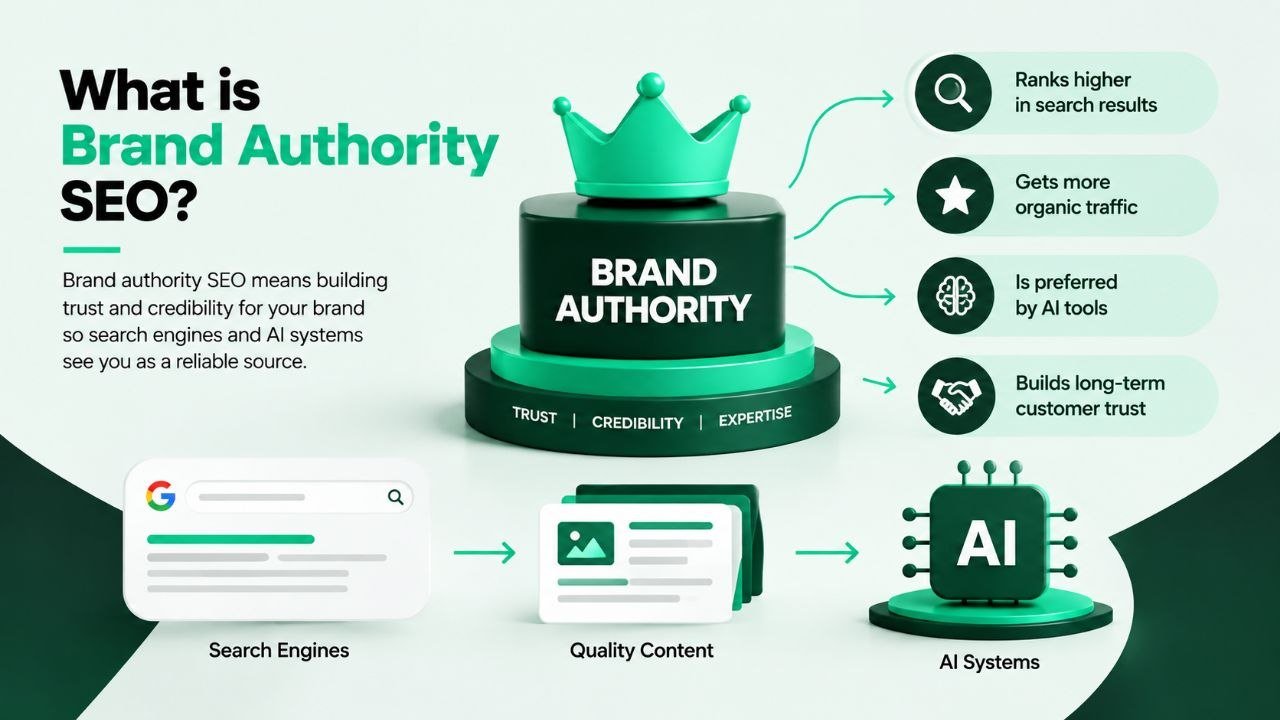
Brand authority SEO is the practice of making your brand a source that people, search engines, and AI tools trust. It starts with a strong brand identity and grows as other sites mention, link to, and review you. Every building authority SEO plan is built on it. Below are two ideas that help define it.
Domain authority is a score from SEO tools, like Moz’s DA or Ahrefs’ DR, based mostly on backlinks. Brand authority is broader. It reflects how often real people and publications mention, search for, and recommend you. Google has said it doesn’t use DA.
AI brand authority is how often AI tools like ChatGPT, Perplexity, and Google AI Overviews name and recommend your brand. It depends on third-party mentions, consistent brand details, and content these tools can easily quote.
Building brand authority SEO matters more now because AI often answers the question before anyone clicks. Across 146 million search results pages, Ahrefs found AI Overviews showed up for 21% of keywords. If trusted sites rarely mention you, AI answers probably won’t either. Below are three reasons this shift matters.
AI tools build their picture of a brand from what the rest of the web says. Ahrefs found YouTube mentions tracked with AI brand visibility more closely than any other signal. It’s one reason brand mentions for SEO now get so much attention.
The same signals usually help in both places. Editorial links help Google rank your pages, and mentions help AI tools recognize your brand. For example, one spot in an industry roundup can bring referral visits, rankings support, and AI citations.
Ahrefs compared click-through rates from December 2023 and December 2025 across 300,000 keywords. It found AI Overviews cut clicks to top-ranking content by 58%. With fewer clicks, being named inside the answer is often your first impression.
AI citation tracking tools show how often AI engines mention or cite your brand when people ask about your category. They put numbers on the AI side of building authority SEO, which is otherwise hard to see. We checked prices against vendor pages and independent 2026 reviews, but they change often.
Below is a side-by-side look at five widely used platforms, followed by a short note on each.
| Tool | AI Engines Tracked | Starting Price | Best For | Key Strength |
| Semrush AI Visibility Toolkit | ChatGPT, Google AI, Gemini, Perplexity | $99/month per domain, billed annually (25 prompts) | Teams already using Semrush | AI data next to SEO data |
| Ahrefs Brand Radar | AI Overviews, AI Mode, ChatGPT, Perplexity, Copilot, Gemini | A few prompts in Ahrefs plans from $129/month; all-platform plan listed at $699/month | Competitor benchmarking | Large AI prompt database |
| Otterly.AI | ChatGPT, AI Overviews, Perplexity, Copilot | $29/month (15 prompts) | Small teams starting out | Low entry cost |
| Peec AI | Your choice of engines, by plan | $95 per month | Agencies and B2B SaaS teams | Shareable client reports |
| Profound | Up to 10 engines on Enterprise | $99 per month | Enterprise brands | Citation source analysis |
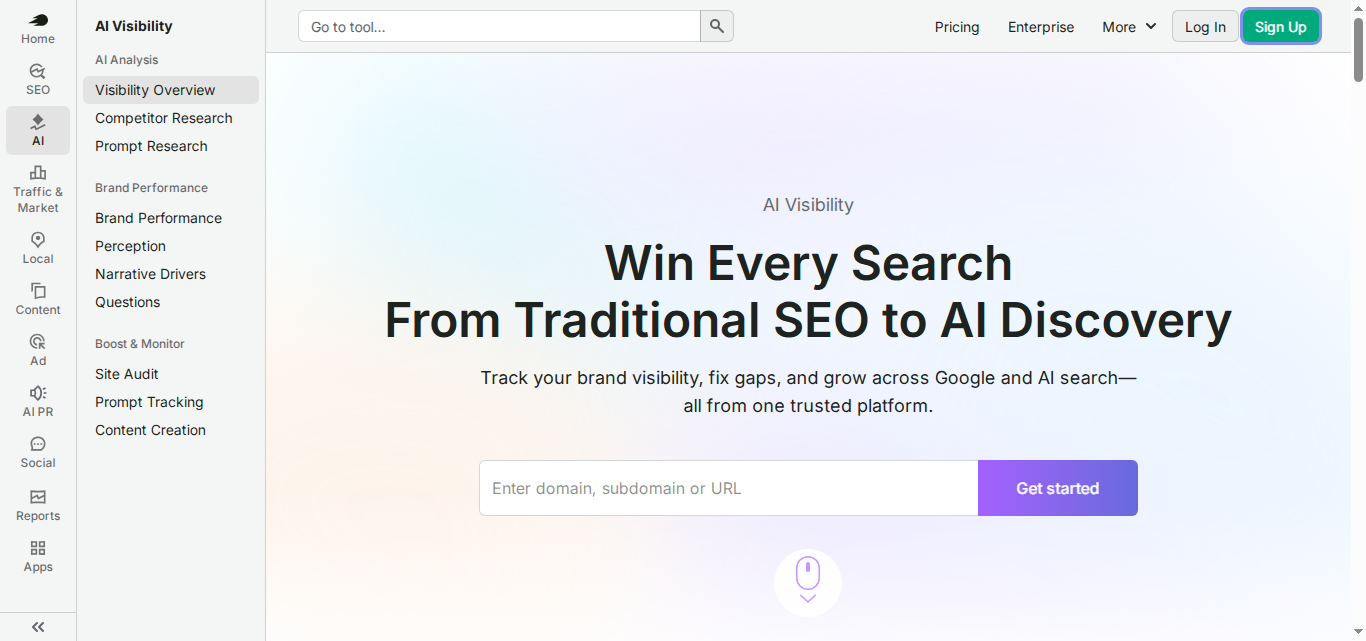
Semrush’s toolkit is the easy pick if your team already uses Semrush, because AI visibility data sits right next to your keyword and competitor research.
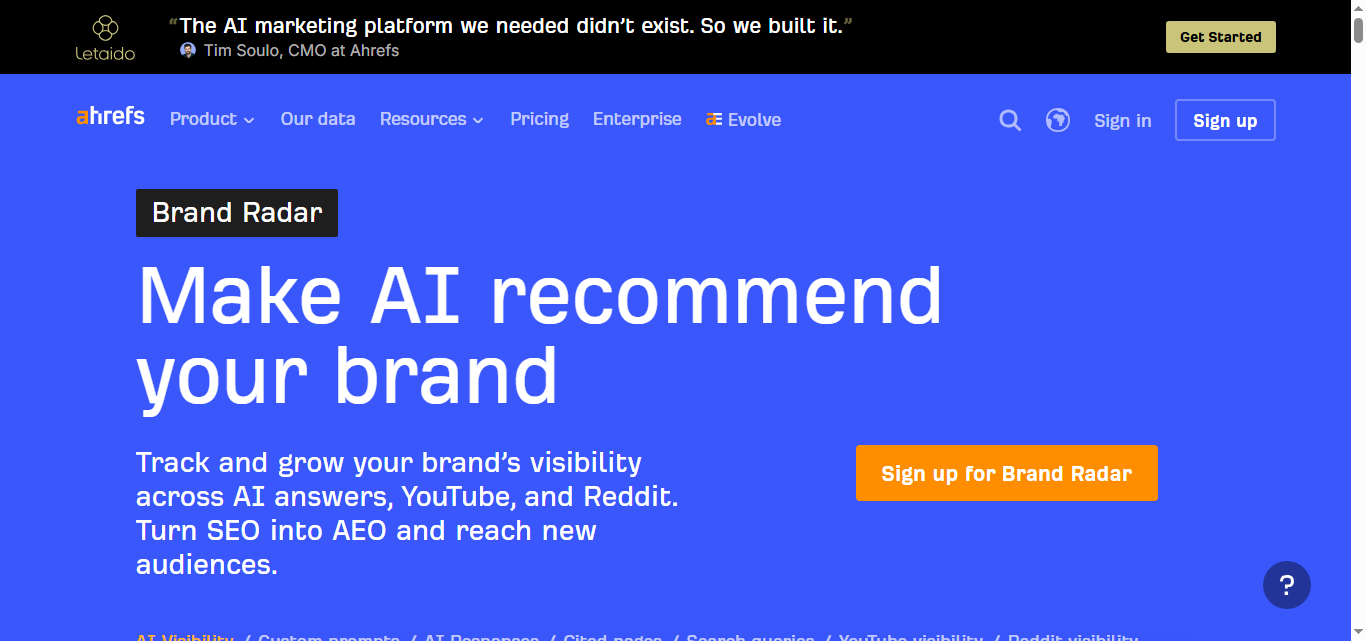
Ahrefs Brand Radar is a strong choice for benchmarking your brand against competitors across major AI platforms.
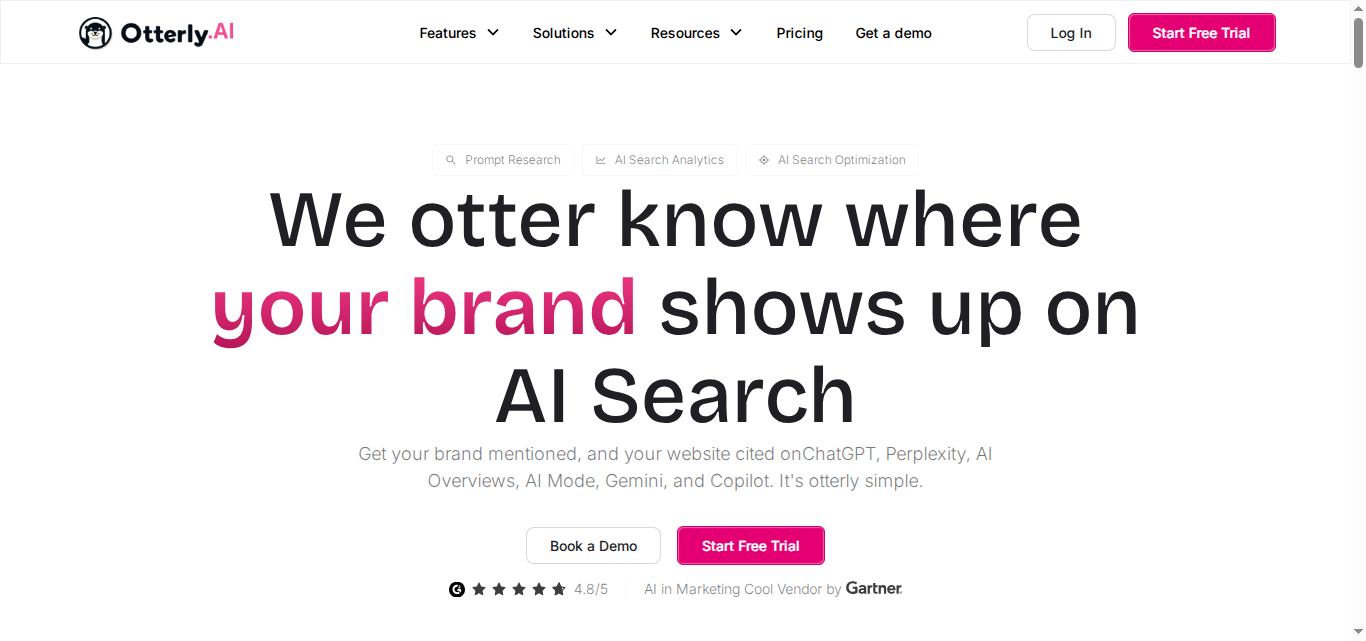
Otterly.AI is one of the cheapest ways to start tracking AI visibility, and it scales cleanly as your needs grow.
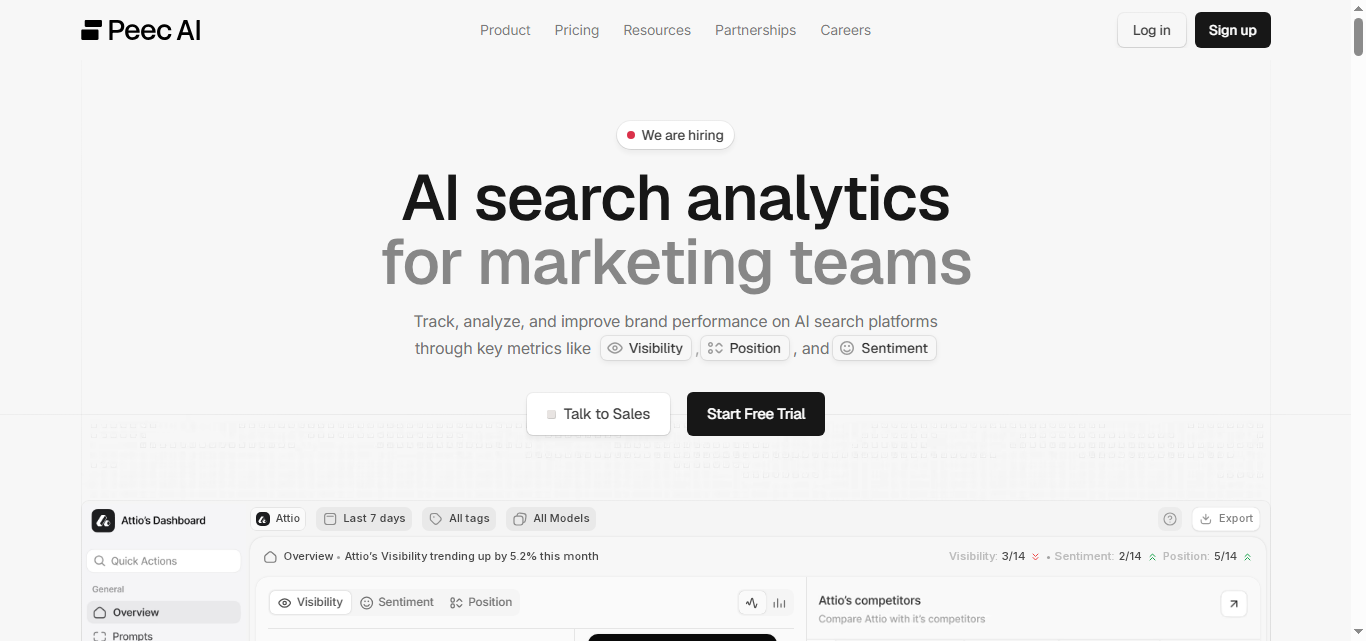
Peec AI works well for agencies and B2B SaaS teams that want competitor comparisons and reports they can share with clients.
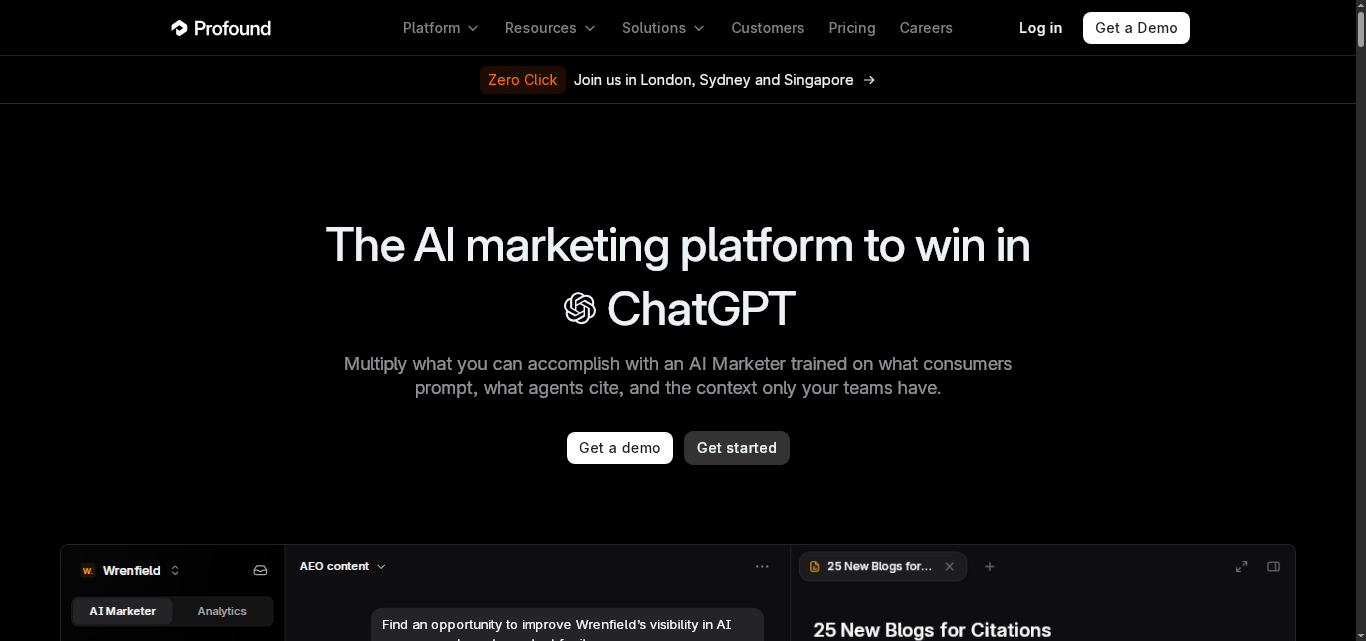
Profound is built for enterprise teams that want to see exactly which sources AI engines cite, and why.
Brand authority signals are the trust cues that search engines and AI tools use to judge a brand. A few come from your own website, but most come from everywhere else. Knowing them makes any building authority SEO plan easier to prioritize.
The table below shows the main signals and where each one tends to matter most.
| Signal | What It Shows | Main Source | Impact on SEO | Impact on AI Search |
| Branded web mentions | Your brand is discussed widely | News, blogs, podcasts, forums | Moderate | High |
| Editorial backlinks | Other sites vouch for your pages | Relevant industry publications | High | Moderate |
| Branded search volume | People look for you by name | Google searches | Moderate | High |
| Reviews and ratings | Customers trust your product | G2, Capterra, Trustpilot | Moderate | Moderate |
| Expert, first-hand content | Real experience and knowledge | Your blog and guest posts | High | High |
| Consistent entity data | Brand facts match everywhere | Website, schema, social profiles | Moderate | Moderate |
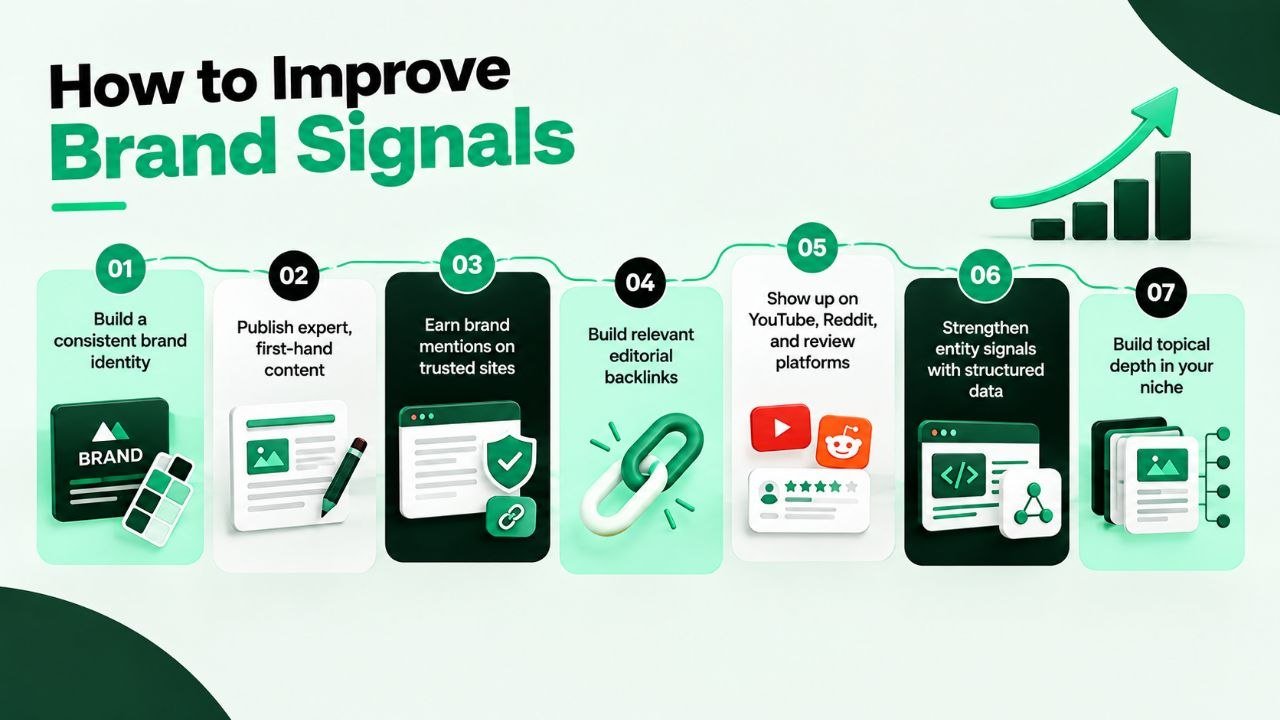
Wondering how to improve brand authority signals without overcomplicating things? Start with the basics and build outward. Below are seven steps that cover the core of building authority SEO, in the order most brands should tackle them.
Use the same name, description, logo, and positioning everywhere, from your website to LinkedIn and G2. This helps people and machines tie every mention back to you. For software companies, clear SaaS branding makes that consistency much easier to keep.
Write about what your team has actually done: real data, client results, and specific processes. Google’s guidance on E-E-A-T points to exactly this kind of first-hand content. Over time, content that builds trust turns your blog into a source others quote.
Get your brand into industry articles, podcasts, and software roundups, even when there’s no link. Pitch useful data or expert comments to editors who cover your space. Each mention can help AI tools connect your brand to the topics you want to own.
Links from respected sites in your niche are still central to building authority SEO. Focus on guest posts, resource pages, and digital PR instead of bulk placements. A handful of relevant links usually does more than dozens of random ones.
AI tools draw on video and community platforms as well as blogs. Post product walkthroughs on YouTube, answer real questions on Reddit, and collect reviews on G2 or Capterra. Each one gives AI another place to find you.
Structured data tells search engines exactly who you are. Add Organization schema with your name, logo, founders, and sameAs links to your official profiles. This can help Google connect your site and social accounts to one brand.
Authority tends to grow faster when you own one focused topic instead of covering everything. Build clusters of articles around your customers’ core problems and link them together. A cybersecurity SaaS, for instance, might go deep on compliance before branching into other areas.
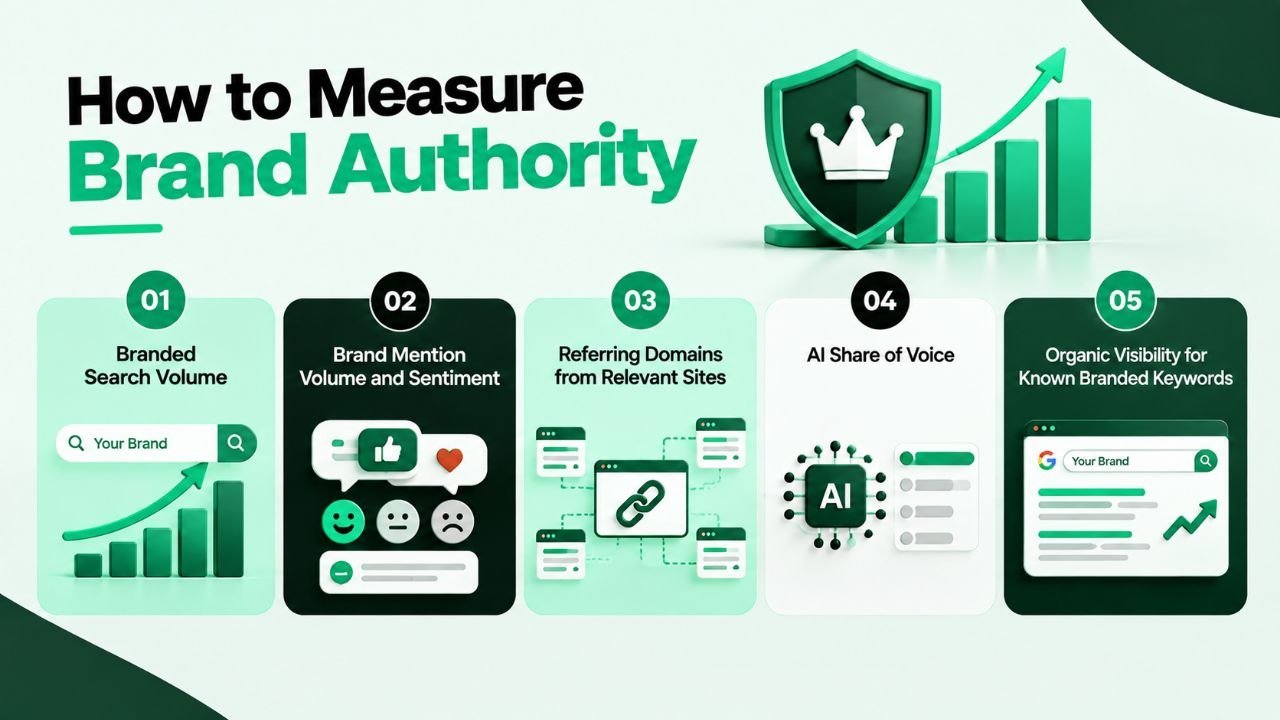
Knowing how to measure brand authority tells you whether your building authority SEO work is on track. No single number captures it, so look at a few signals together each month. Below are the five metrics worth tracking.
Branded search volume shows how many people look for your brand by name. Check branded impressions in Google Search Console and interest over time in Google Trends. Steady growth is often the first sign your building authority SEO work is paying off.
Count how often your brand shows up in news, blogs, forums, and social posts each month. Ahrefs, Brand24, or Google Alerts can help. Watch the tone as well, since a wave of negative mentions hurts more than it helps.
Track how many unique, relevant websites link to you, not just your total backlink count. Ten links from respected industry blogs usually say more than hundreds from unrelated directories. Review new referring domains monthly in Ahrefs or Semrush.
AI share of voice compares how often AI tools mention you versus competitors for the same prompts. If tracked answers include 50 brand mentions and 12 are yours, your share is 24%. It’s a simple way to follow AI brand authority.
Rankings for non-branded, high-intent keywords show whether Google trusts you on competitive topics. In crowded markets, the right growth strategies often start with winning a few of these terms. Check these rankings every quarter.
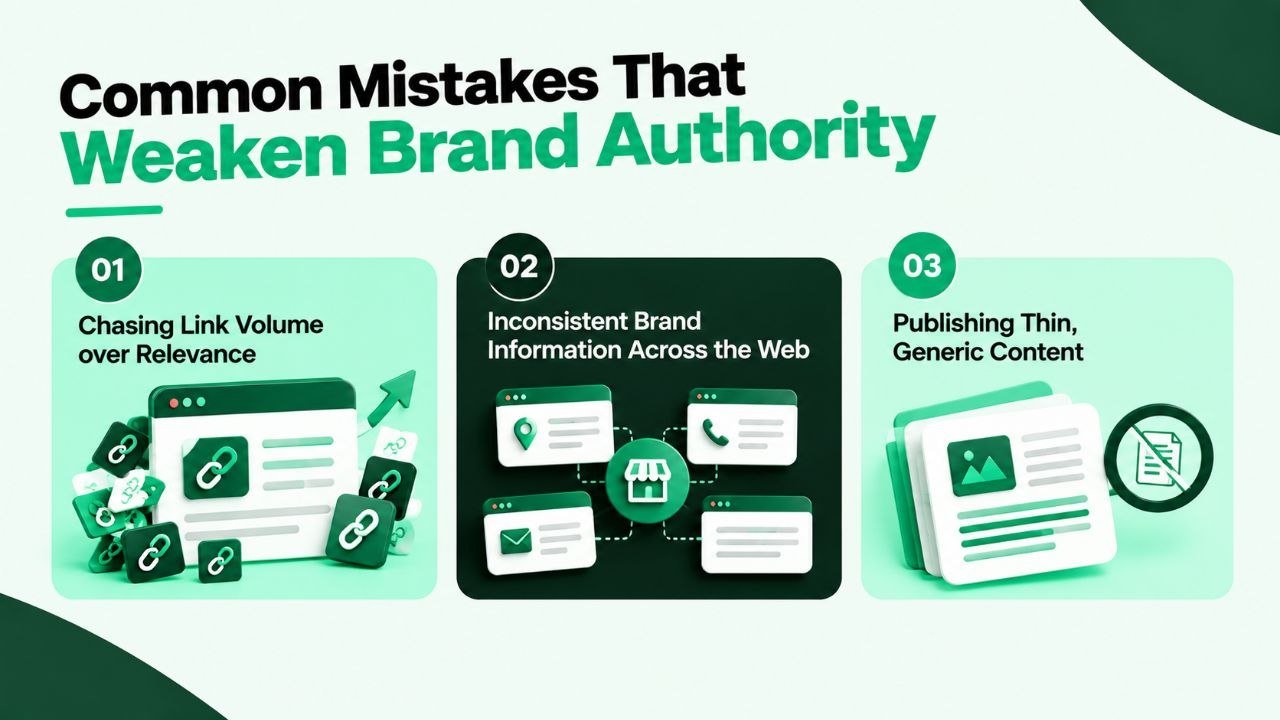
A few common habits can quietly undo months of building authority SEO work. Most come from chasing quick wins over lasting trust. Below are three to avoid.
Hundreds of cheap links from unrelated sites rarely build trust. Buying links to manipulate rankings also breaks Google’s spam policies.
Well-planned link building tactics focus on relevance first, whether you sell software or products online.
Different company names, descriptions, or founding details across your profiles confuse search engines and AI tools. A brand listed as both “Acme AI” and “Acme Labs,” for example, may split its mentions. Audit your main profiles every quarter.
Posts that repeat what every competitor already says give AI tools nothing new to cite. They also miss the bar set by Google’s helpful content guidance. Original data, expert quotes, and specific examples give people a reason to reference you.
Building authority SEO isn’t a quick project. It grows as other people see your brand, trust it, and talk about it in places that matter. Start with a consistent identity, publish what only your team knows, and check your numbers every month.
The slowest part is usually earned mentions, since each one needs outreach and an editor’s approval. That’s where brand mention link building helps, by getting your name into relevant industry articles that readers and AI tools already trust. Some teams handle this in-house, while others bring in outside support.
If earning those mentions feels like a full-time job, that’s where VH Info comes in. We’re a SaaS-focused link building agency, and our brand mention link building service gets your brand featured in relevant industry articles. You approve every placement before it goes live.
Ready to show up where your buyers and AI tools are already looking? Contact us.
Building authority SEO is the process of making your brand trusted by search engines and AI tools. It combines editorial backlinks, brand mentions, expert content, reviews, and consistent brand details. The aim is better rankings, more AI citations, and stronger buyer trust.
Brand authority SEO is about how widely people trust, search for, and mention your brand. Domain authority is a score from SEO tools, like Moz DA or Ahrefs DR, based mainly on backlinks. Google has said it doesn’t use Domain Authority for ranking.
The best ways to improve brand authority signals are consistent brand details, expert content, earned mentions, and relevant editorial backlinks. Start by using the same brand name and description on every profile. Then add Organization schema so search engines see one clear entity.
Five metrics show brand authority most clearly. They are branded search volume, mention volume and sentiment, relevant referring domains, non-branded rankings, and AI share of voice. Track them monthly with Google Search Console, Ahrefs or Semrush, and an AI citation tracker.
AI brand authority is how often AI tools like ChatGPT, Perplexity, and Google AI Overviews recommend your brand. It grows through third-party mentions, YouTube and review presence, consistent brand details, and quotable expert content. Tracking tools measure it as AI share of voice.
Building authority SEO is a long-term effort. Industry guides suggest new backlinks often start affecting rankings within 4–10 weeks, with fuller effect in 3–6 months. Branded search growth and AI citations usually take longer because they build through repeated mentions.
Widely used AI citation tracking tools include Semrush AI Visibility Toolkit, Ahrefs Brand Radar, Otterly.AI, Peec AI, and Profound. Otterly.AI starts at $29 per month for 15 prompts. Semrush’s toolkit costs $99 per month per domain, billed annually. Profound suits enterprise budgets.
Every article dives deep into what works, why it works, and how to use it.
TL;DR Blog outreach services place SaaS content on relevant third-party blogs run by real editors. This earns backlinks, referral traffic,…
 Vishal ambani
September 29, 2026
Vishal ambani
September 29, 2026
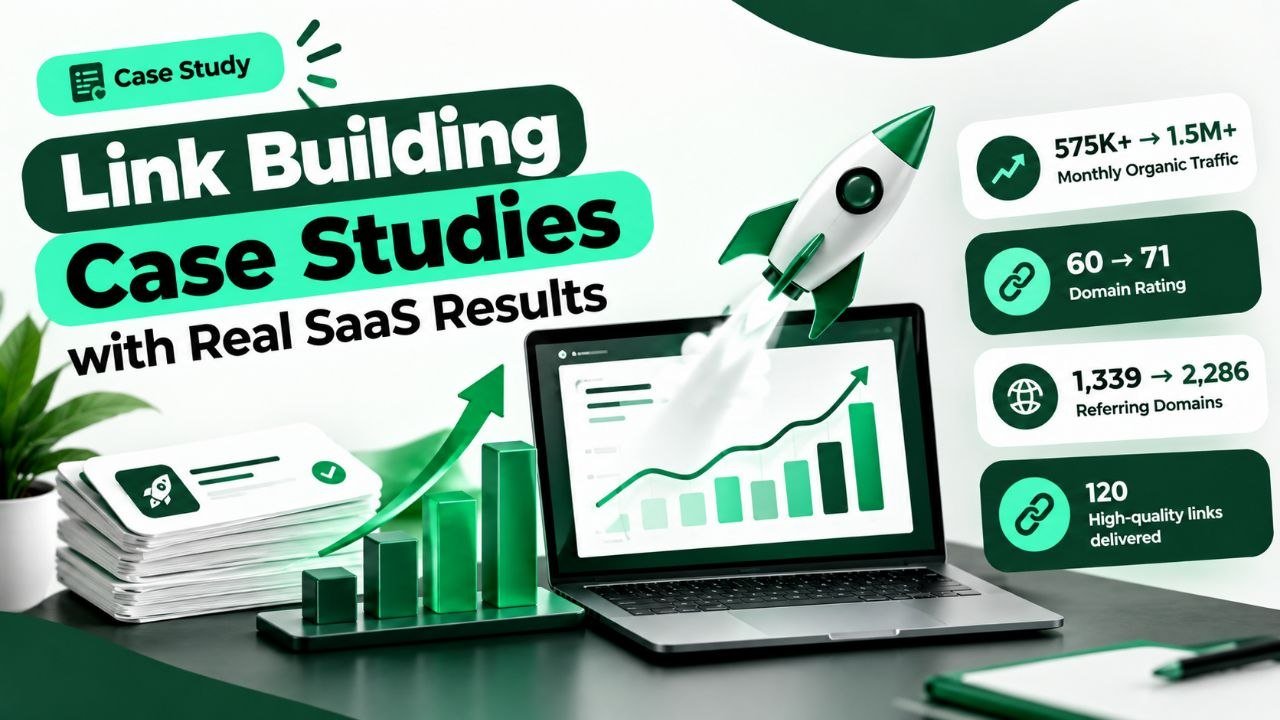
TL;DR These link building seo company case studies show different SaaS starting points, from brand-new domains to established sites, with…
 Tejas
September 26, 2026
Tejas
September 26, 2026
TL;DR Backlink packages can include prospect research, publisher outreach, content, placement management, anchor planning, reporting, and link monitoring, but every…
Tejas
September 24, 2026

 Share
Share