
Backlink packages are predefined link-building plans that combine link acquisition with services such as prospecting, outreach, content, placement, and reporting. However, packages with the same link count can differ in quality and deliverables.
Pricing varies by provider. Published examples include $299 per month for five links from Saalinko, $999 for 10 links from Get Pro Links, and $549 for five links from LinkSpur. VH Info lists link insertion rates from $100 for DR 45–59 sites to $300 for DR 80+ sites.
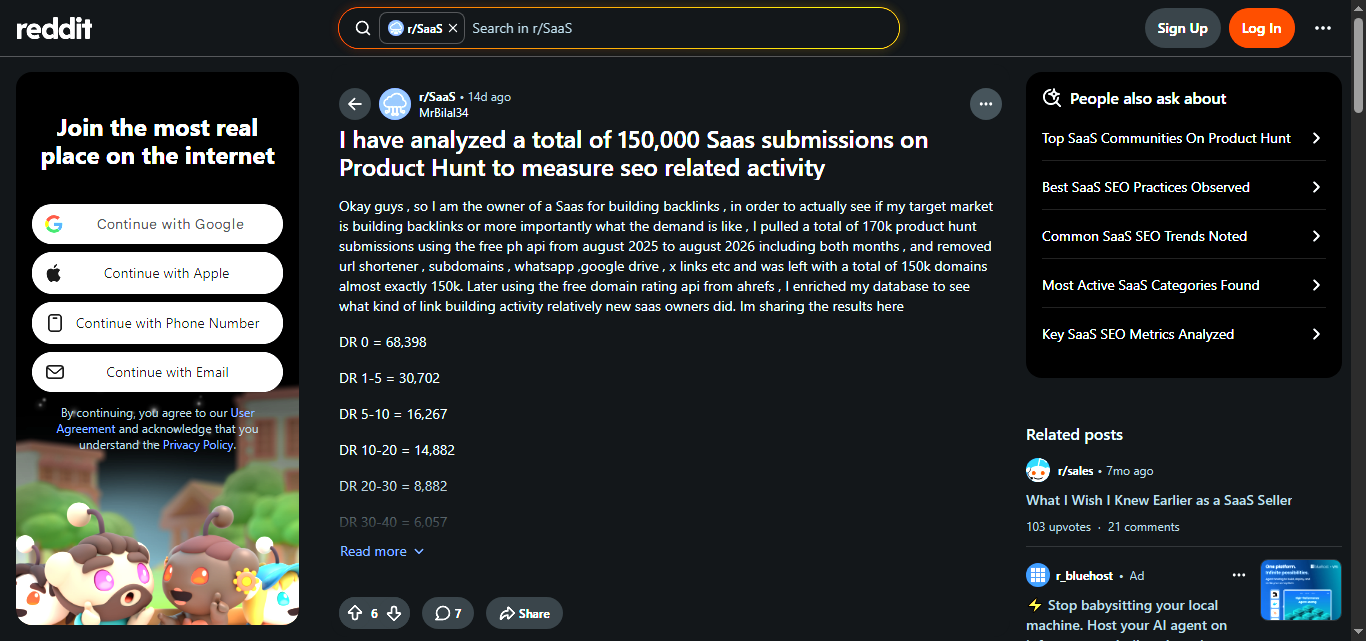
A September 2026 Reddit post analyzing 150,000 Product Hunt SaaS domains reported that nearly half had not done any backlink-building activity. This is a Reddit user’s analysis, not a representative industry-wide study.
This guide explains what backlink packages include, how quality is assessed, and how SaaS companies can compare pricing, deliverables, and link quality.
Backlink packages usually combine several activities into one defined campaign. The important difference is what happens behind the final link count. Some plans emphasize publisher quality, while others provide content, competitor research, approvals, or ongoing account management.
The following points explain what a buyer should expect before comparing backlink packages by price or volume.
A typical backlink package can include website prospecting, publisher qualification, outreach, content creation, placement coordination, anchor planning, and reporting. Some providers also include site approval, competitor analysis, replacement guarantees, or dedicated account management.
The exact combination matters because a 10-link package with detailed publisher screening can involve much more work than a basic placement package.
Some backlink packages cover link acquisition but exclude technical SEO, keyword research, extensive content strategy, website development, or digital PR. Others may charge separately for custom content, difficult publishers, additional revisions, or specialized campaigns.
Before signing, check the scope carefully. A lower headline price may reflect fewer services rather than better value.
The biggest differences between backlink packages usually involve link volume, publisher standards, content requirements, campaign duration, reporting, and account support.
For example, a startup may need a small test campaign, while an established SaaS company targeting competitive commercial terms may need ongoing acquisition across many referring domains.
Most backlink packages are built around a sequence of research, qualification, outreach, content, placement, and reporting. However, the depth of each activity determines how much work the provider actually performs.
A useful package should make these deliverables clear before the campaign begins.
Prospecting identifies websites that could logically reference a SaaS company. Qualification then checks relevance, organic visibility, content quality, authority metrics, outbound-link patterns, and audience fit.
Strong backlink packages should explain these screening standards rather than simply promising a certain number of domains.
Content may include guest articles, editorial contributions, supporting sections, or updates to existing pages. The format depends on the placement opportunity and publisher requirements.
For SaaS brands, content should explain a useful topic or answer a real reader question. The backlink should fit the surrounding discussion instead of becoming the reason the article exists.
Publisher outreach involves identifying appropriate contacts, preparing pitches, discussing topics, negotiating placement requirements, and coordinating publication.
The quality of this process affects the sites available to a campaign. Personalized outreach can also take more time than sending the same request to a large list of publishers.
Anchor text planning determines how links refer to the target page. A natural profile can contain branded terms, URLs, descriptive phrases, partial matches, and other variations.
A good backlink package should connect anchor decisions to the target page and surrounding content rather than repeating one commercial keyword across every placement.
Reporting should make acquired links easy to verify. Useful information can include the live URL, referring domain, target URL, anchor text, publication date, and placement status.
Some backlink packages also provide monthly reports, dashboards, or account management. These features are particularly useful when several campaigns or target pages are running simultaneously.
Also Read – Link Building Services USA: Top 7 Providers
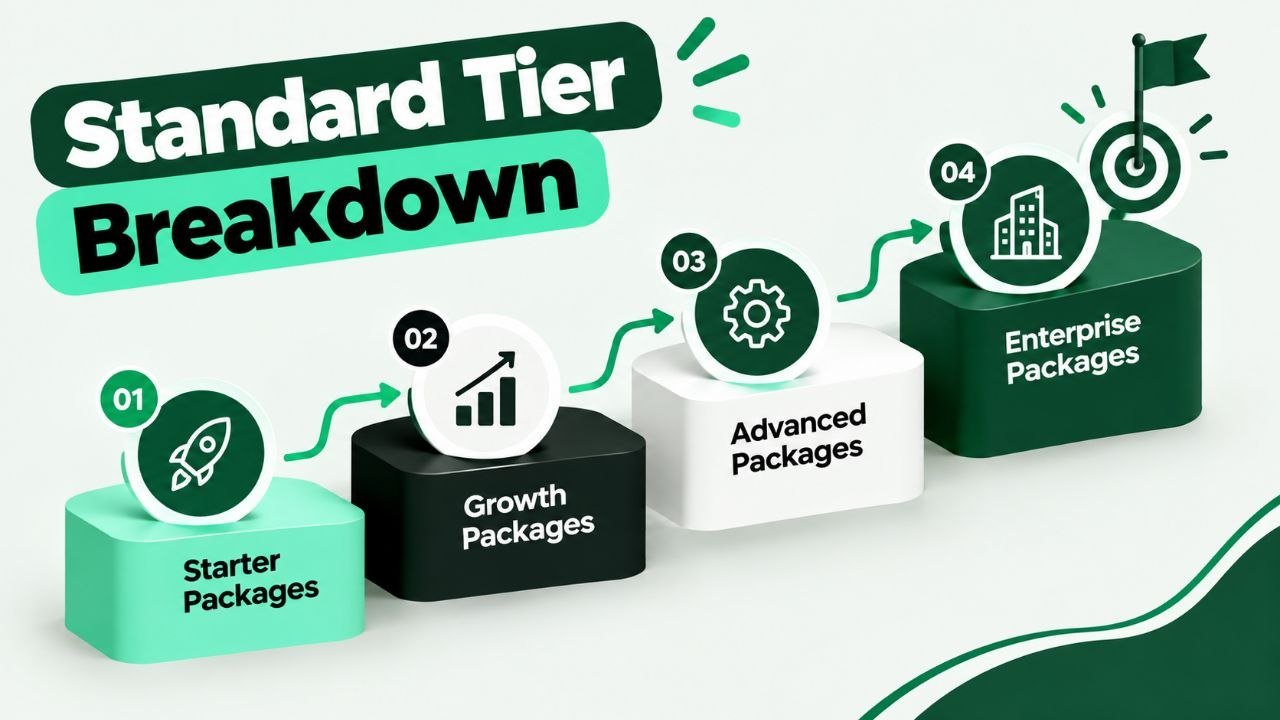
Backlink packages are often divided into starter, growth, advanced, and enterprise tiers. These labels are not standardized, so the same tier name can represent very different volumes or quality standards.
The practical way to compare tiers is to examine the actual deliverables behind the label.
Starter backlink packages are designed for smaller campaigns or companies testing external link acquisition. They generally involve fewer links and a narrower campaign scope.
A small SaaS brand may use this level to test publisher relevance, reporting quality, communication, and placement standards before committing to a larger monthly program.
Growth backlink packages usually increase the monthly link target and may add features such as competitor research, content support, publisher approval, or account management.
They can suit SaaS companies that already have a functioning content strategy and want to expand the number of relevant referring domains supporting important pages.
Advanced backlink packages typically involve greater volume, stronger publisher requirements, or more complex campaign management.
At this stage, the campaign may support several content clusters, product pages, comparison pages, or commercial topics. The provider may also spend more time balancing authority, relevance, traffic, and referring-domain diversity.
Enterprise backlink packages are generally customized around larger campaigns, multiple markets, several target pages, and more detailed reporting.
Instead of choosing a fixed number of links, enterprise buyers may negotiate publisher requirements, monthly capacity, content workflows, approval processes, reporting formats, and campaign priorities.
The quality of backlink packages depends on the sources being acquired and the editorial context surrounding each placement. A package should therefore be judged by more than its advertised number of links.
These five factors provide a practical framework for evaluating backlink packages before comparing providers.
Referring-domain quality considers the website publishing the link. Review its content, audience, organic visibility, topical focus, editorial standards, and outbound-link patterns.
A domain with a high third-party authority metric can still be a poor prospect if its content is unrelated, its traffic is weak, or its pages exist mainly to publish links.
Relevant referring domains connect the SaaS company with an audience that already has an interest in its subject.
For example, cybersecurity software may fit security publications, developer resources, technology media, and business technology websites. A completely unrelated publisher may offer little contextual value even if its authority metric looks attractive.
Authority metrics can help with initial screening, but they should not be treated as the complete measure of quality.
Organic visibility provides additional context because it indicates whether people can discover the publisher through search. Good backlink packages should consider authority alongside traffic, relevance, and content quality.
Placement context explains why the link belongs on the page. An editorial reference inside a useful article can make more sense to readers than a link inserted into an unrelated page.
Editorial standards also matter. Publishers should have real content, a legitimate audience, and a reason for covering the subject.
Also Read – Contextual Link Building Services: Top 5 Providers
Diversity refers to the range of websites, topics, domains, page types, and anchor variations supporting a site.
Diverse backlink profile packages can help prevent a campaign from depending too heavily on one publisher category. However, diversity should come from genuinely relevant sources rather than adding unrelated domains simply to increase variety.
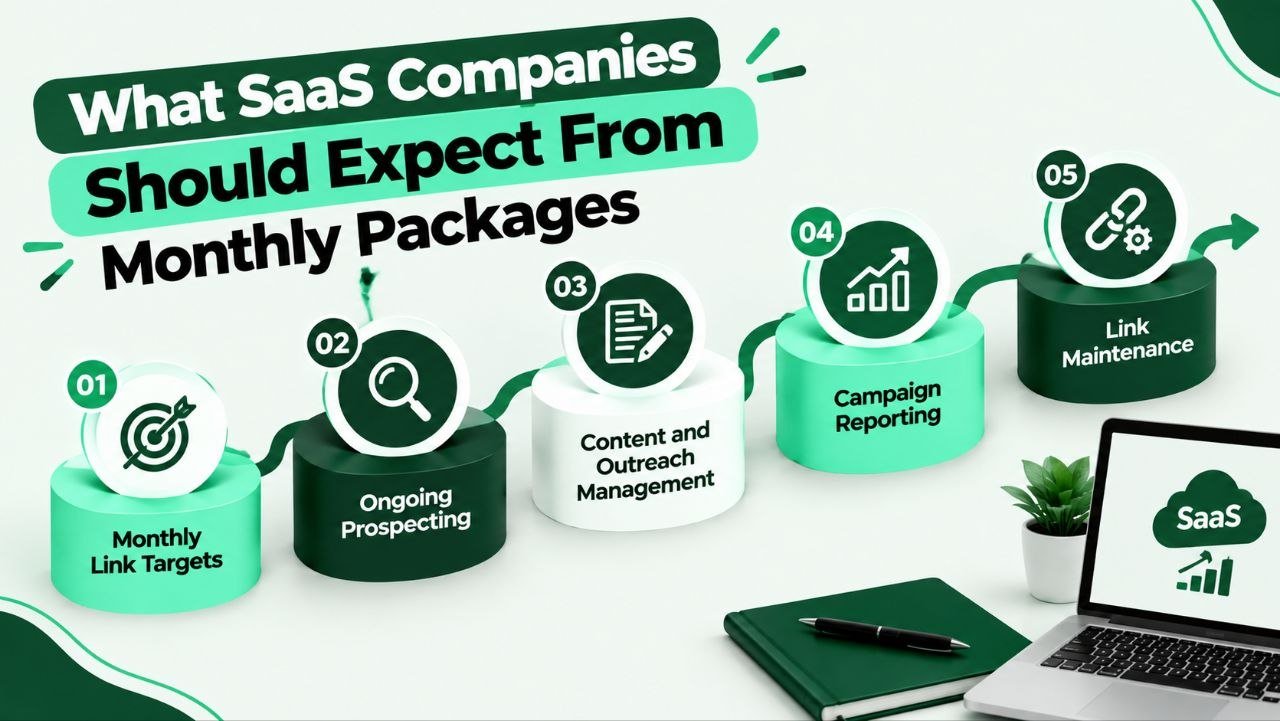
Monthly backlink packages provide an ongoing acquisition process instead of a one-time delivery. That means the campaign should continue finding prospects, managing outreach, securing placements, and reporting results.
The exact monthly scope varies, but these areas deserve attention before approving a recurring plan.
A monthly package should state the expected link volume or minimum delivery clearly. However, link quantity should not be the only measurement.
A SaaS company may prefer fewer relevant referring domains over a larger number of weak placements. The right target depends on competition, existing authority, content capacity, and available opportunities.
Publisher research should continue throughout the campaign. Prospects can become unavailable, change editorial policies, or fail quality checks.
Ongoing prospecting keeps the campaign from repeatedly approaching the same type of website. It also gives providers room to replace unsuitable prospects when the original opportunity does not meet the agreed standards.
Monthly campaigns often require a repeatable workflow for briefs, writing, revisions, outreach, publisher communication, and publication.
For SaaS companies with limited internal resources, this part of the service can be as important as the final link count. Clear ownership reduces delays between approving an opportunity and getting the placement published.
Monthly reports should explain what was achieved rather than simply showing a total number.
A useful report can include newly acquired links, referring domains, target pages, anchors, live URLs, campaign status, and upcoming activity. This information helps marketing teams connect monthly link building packages with broader SEO work.
A published link can later disappear, move, redirect, or become inaccessible.
Some providers include replacement guarantees or ongoing monitoring. Buyers should understand the duration and conditions of any replacement policy before treating it as part of the package’s value.
SaaS companies often need more specialized backlink packages because their target publishers may include technology websites, software publications, business media, developer resources, startup platforms, and industry-specific sources.
The following approaches address different ways SaaS brands can build relevant links.
SaaS industry outreach focuses on publications and websites that already discuss software, technology, business operations, or the specific problem the product solves.
A project management platform, for example, could target productivity, collaboration, operations, and business technology publications rather than unrelated high-metric websites.
Competitor research identifies websites that already link to comparable SaaS companies. Those domains can reveal publisher categories, content formats, and topics that may be relevant to the campaign.
However, competitors should be treated as a source of opportunities, not a list to copy blindly. Each prospect still needs independent quality and relevance checks.
Product and feature pages can be harder to promote than informational resources because publishers need a clear reason to reference them.
The opportunity improves when the page genuinely supports a topic. A cybersecurity feature page, for example, may be referenced when it provides useful technical information that complements an editorial article.
Content-led acquisition uses original research, statistics, tools, reports, expert commentary, and detailed resources to create reasons for publishers to link.
This approach can work particularly well for SaaS companies that already invest in original content. It connects the link campaign with assets that can provide value beyond the backlink itself.
Also Read – B2B Link Building Explained: Tactics, Costs and Timelines
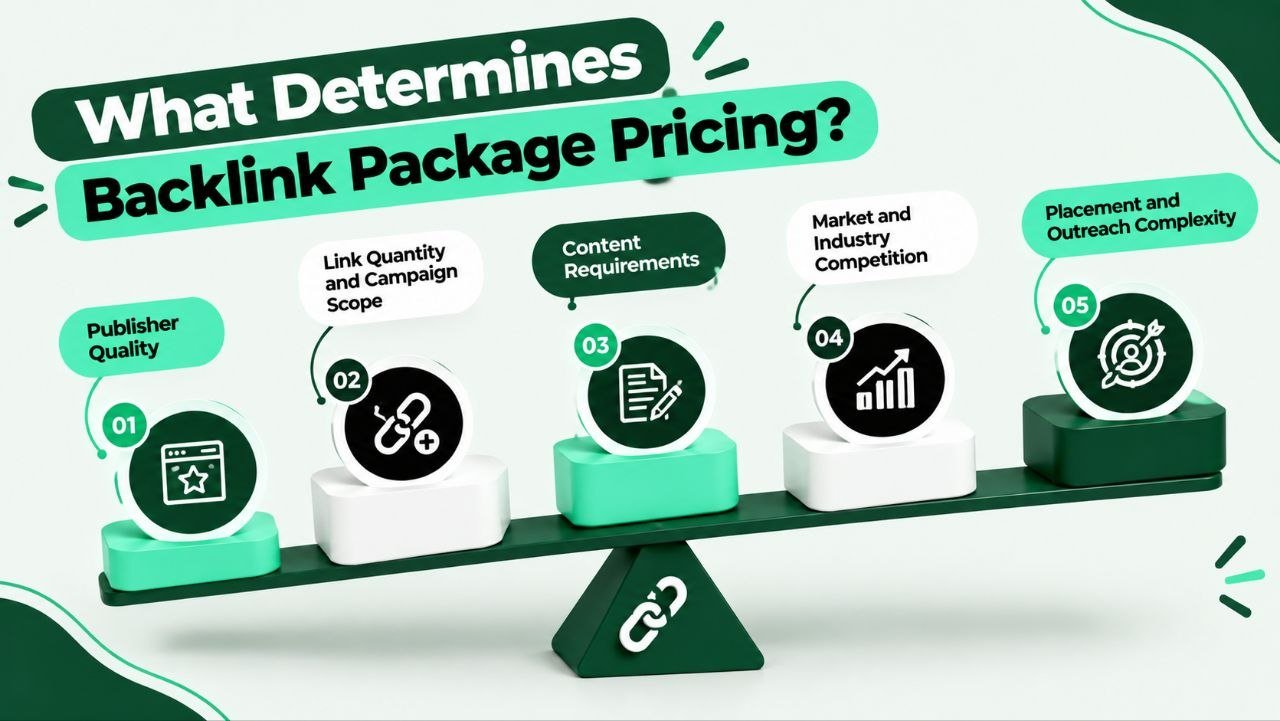
The price of backlink packages depends on the work required to find, qualify, create, negotiate, and monitor placements. There is no single universal U.S. price because providers use different models and quality standards.
Current public SaaS pricing demonstrates the range. Saalinko lists plans at $299 and $599 per month, while Get Pro Links publishes plans at $999, $2,499, and $3,999 per month. LinkSpur publishes fixed packages from $149 to $1,789.
Publisher quality is one of the biggest pricing variables. A website with stronger organic visibility, established editorial standards, relevant audiences, and higher authority may require more difficult outreach.
The price therefore reflects the acquisition effort as well as the final placement.
More links can increase the amount of research, outreach, content, approvals, and reporting required.
However, quantity alone does not explain pricing. A campaign with fewer demanding placements can require more work than a high-volume campaign using a broader publisher pool.
Content requirements influence both labor and turnaround time. Some placements need original articles, while others may involve existing pages or editorial contributions.
The more specialized the subject, the more research may be needed. Technical SaaS topics can also require writers who understand the product and industry.
Competitive SaaS markets can require stronger publishers and more targeted outreach.
For example, cybersecurity, finance, CRM, AI, and marketing software may compete for attention from many brands. Publishers can receive large numbers of pitches, increasing the effort needed to secure suitable placements.
Outreach complexity includes publisher availability, editorial requirements, negotiation, revisions, approval steps, and campaign geography.
A placement that looks simple from the outside may require multiple conversations before publication. This is why top quality link packages should be judged by the process and publisher standards, not only the advertised price.
Comparing backlink packages requires looking beyond the headline number. A package promising 20 links is difficult to evaluate without knowing where those links will come from and what services support the acquisition process.
The following checks help separate genuine campaign scope from simple volume claims.
Start by reviewing publisher standards. Check authority, organic visibility, relevance, editorial quality, and audience fit before comparing the number of links.
A smaller campaign can make more sense when its referring domains closely match the SaaS company’s audience and content.
Read the deliverables carefully. Look for prospecting, qualification, outreach, content, approvals, reporting, and replacement policies.
Some link building packages may include all of these services, while others focus mainly on securing placements. Knowing the difference prevents misleading price comparisons.
Ask how websites are selected and rejected.
Useful questions include:
These questions help reveal whether a provider has a defined quality-control process.
A campaign report should allow the buyer to verify what was delivered.
The report may include the live URL, referring domain, target page, anchor text, placement date, and status. More detailed programs may also include campaign progress and upcoming opportunities.
The strongest backlink packages should be evaluated in the context of the site’s broader SEO strategy.
Consider whether the placements support important pages, expand relevant referring domains, diversify the profile, and create useful referral opportunities. Avoid choosing a package solely because it promises the largest number of links.
Also Read – Best SaaS Link Building Agencies in 2026
VH Info‘s backlink packages are structured around SaaS-relevant placements, with published pricing based on referring-domain authority. Its current site lists $100 per link for DR 45–59, $150 for DR 60–69, $200 for DR 70–79, and $300 for DR 80+.
The plans include one link per domain, 1,000+ monthly traffic on referring sites, dofollow links, a dedicated project manager, monthly reporting, and SaaS-relevant placements.
Rather than repeating the same pricing throughout the article, the points below focus on what the campaign model means for SaaS companies.
VH Info focuses on SaaS, B2B software, AI, cybersecurity, technology, CRM, hosting, sales, and marketing-related businesses.
Its positioning is relevant to companies that need publishers connected to software audiences rather than a general list of high-metric domains.
The published plans organize placements by DR ranges while also requiring referring sites to meet a traffic threshold.
This gives buyers two screening points instead of relying only on an authority score. The placement still needs to make sense for the SaaS company’s topic and target audience.
A SaaS campaign can combine different publisher types, content topics, target pages, and anchor variations.
VH Info also publishes separate options for brand mentions and tool listicles, giving companies additional acquisition formats beyond standard link placements.
VH Info states that it offers flexible link-building plans based on client goals and budget. Its broader positioning also supports monthly delivery, dedicated project management, client approval, and transparent placement information.
For companies comparing link building services packages, these operational details can be as important as the number of links promised.
The right backlink packages are defined by what sits behind the link count. Publisher relevance, organic visibility, editorial standards, campaign management, reporting, and maintenance all affect the practical value of a campaign.
For SaaS companies in the USA, published prices show that packages can differ substantially in both cost and scope. A smaller plan may suit an initial test, while a larger campaign may require broader prospecting, more content, and stronger publisher requirements.
VH Info focuses on SaaS link building and works with B2B and B2C SaaS brands across technology-related niches. Its stated approach includes white-hat acquisition, competitor-gap research, transparent placement information, and client approval.
Before choosing a package, compare the actual deliverables, publisher standards, and campaign process. Then select the scope that matches your target pages, competition, budget, and internal resources.
A backlink package can include prospect research, publisher qualification, outreach, content creation, placement management, anchor planning, reporting, and link monitoring. The exact scope varies by provider. Some packages also include competitor research, publisher approval, account management, or replacement guarantees, so buyers should review the deliverables before comparing prices.
Backlink packages can cost a few hundred dollars to several thousand dollars per month, depending on link volume, publisher quality, authority, content, and campaign scope. Current published SaaS examples include $299 monthly plans, $999 monthly plans, and higher tiers above $3,000.
There is no fixed number that suits every SaaS website. The appropriate volume depends on competition, existing referring domains, content quality, target keywords, authority, and available publisher opportunities. A steady acquisition of relevant referring domains can be more useful than setting an arbitrary monthly link target.
Monthly link building packages can provide continuity in prospecting, outreach, content, and reporting. One-time campaigns may make more sense when a company wants to test a provider or support a specific launch. The better format depends on campaign goals, internal resources, budget, and the need for ongoing acquisition.
A high-quality backlink generally comes from a relevant website with useful content, genuine search visibility, an appropriate audience, and a logical editorial reason for the reference. Authority metrics can support screening, but they should not be the only criterion. Placement context and source quality should also be reviewed.
The timeline depends on publisher availability, outreach response rates, content requirements, approvals, and campaign size. Published providers show different delivery windows. For example, Get Pro Links lists two to four weeks for its Professional plan, while larger campaigns can take longer.
Safety depends on how links are acquired and used. Google identifies buying or selling links for ranking purposes, automated link creation, excessive exchanges, and other manipulative practices as link spam. Paid advertising links can be used when appropriately qualified with attributes such as nofollow or sponsored.
SaaS companies should compare publisher relevance, organic visibility, authority, placement context, referring-domain diversity, content requirements, reporting, and replacement policies. Review the complete scope rather than selecting the largest link count. A package should fit the site’s existing SEO strategy, target pages, competition, budget, and internal capacity.
Every article dives deep into what works, why it works, and how to use it.
Do you remember HARO? For years, Help a Reporter Out was the easiest way to win links from journalists. Then…
 Vishal ambani
October 16, 2026
Vishal ambani
October 16, 2026
Back in January 2014, Google’s Matt Cutts posted something that made a lot of SEO people nervous. “So stick a…
Vishal ambani
October 15, 2026
Back in early 2011, J.C. Penney ranked No. 1 on Google for searches like “living room furniture.” Then The New…
Vishal ambani
October 14, 2026

 Share
Share