
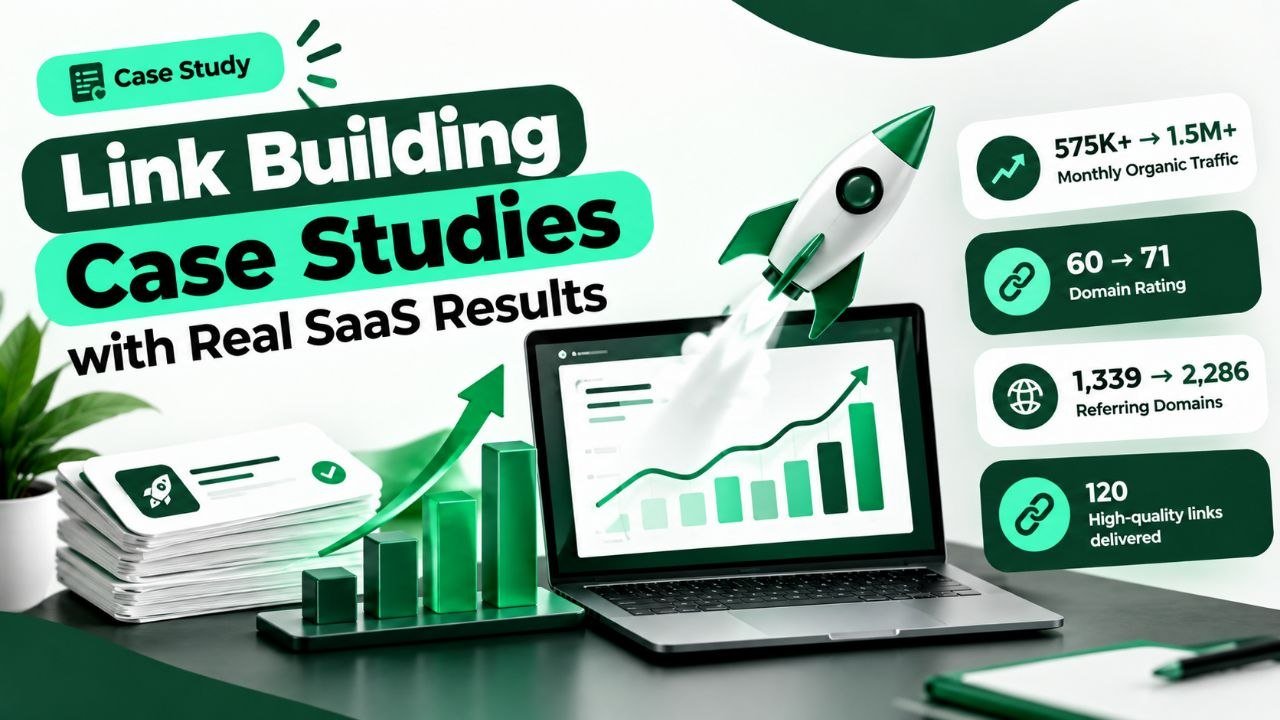
SaaS SEO rarely follows the same growth path. Some websites already have strong authority, while others begin with almost no visibility, few backlinks, or a completely new domain.
These four real campaigns show just how different the results can be. An AI SaaS website grew from 575K to 1.5M+ monthly visitors in eight months. An email verification site climbed from 390 to 8,200+ organic visits over 16 months.
An eCommerce email marketing SaaS reached 158.6K+ monthly organic traffic from 74K over 24 months. Meanwhile, a Chicago social media agency jumped from 216 to 1,400+ visitors in its first 30 days and later exceeded 10,000.
The interesting part is not only the growth. It is how different strategies produced those outcomes from very different starting points. These link building seo company case studies examine the campaigns, execution, timelines, and measurable SEO changes behind each result.
|
B2B SaaS companies that segmented their audience by industry achieved 17.3% average organic traffic growth in 2025.
|
These four seo case studies cover different industries, website stages, campaign lengths, and growth patterns. The comparison below uses only metrics explicitly published in the individual case studies.
| Case Study | Starting Point | Documented Growth | Project Duration |
| AI Humanizer | 575K monthly visitors; DR 60 | 1.5M+ visitors; DR 71; referring domains 1,339 → 2,286 | 8 months |
| eCommerce Email Marketing SaaS | 74K monthly organic traffic; DR 74 | 158.6K+ traffic; DR 81; traffic value $151K → $265K | 24 months |
| Email Verification SaaS | 390 monthly organic visits; 39 keywords | 8,200+ visits; 800 keywords; traffic value $920 → $4,800 | 16 months |
| Social Media Agency | 216 monthly traffic; DR 5; 9 referring domains | 1,400+ in 30 days; 10,000+ after three more months; DR 32 | 1 month |
The cases should not be treated as identical experiments. Their starting conditions and reported metrics differ, which makes the comparison useful for understanding how campaign strategy changes with the website and market.
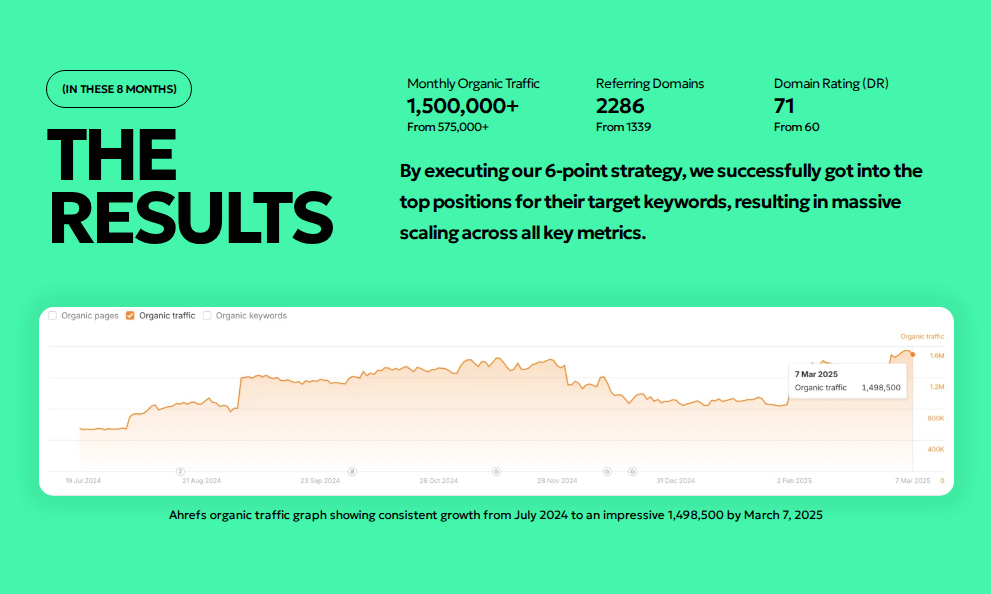
The AI Humanizer campaign started at 575K monthly visitors and reached 1.5M+ after eight months. During the same period, Domain Rating increased from 60 to 71, while referring domains moved from 1,339 to 2,286.
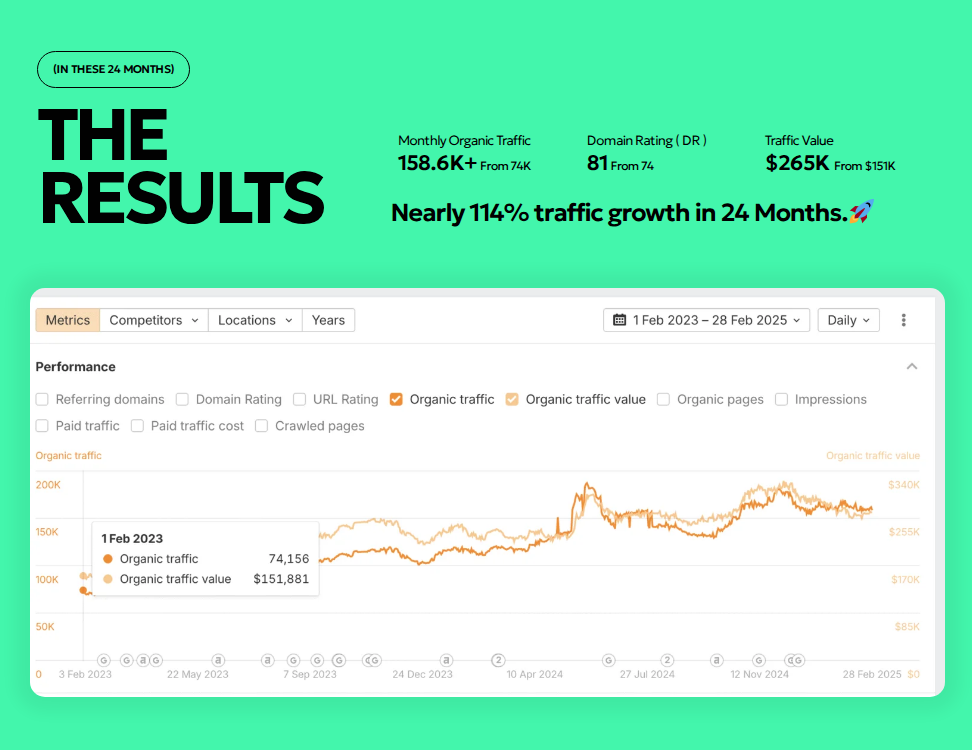
The eCommerce email marketing SaaS began with 74K monthly organic traffic and DR 74. After 24 months, the published case study reported 158.6K+ traffic, DR 81, and traffic value rising from $151K to $265K.
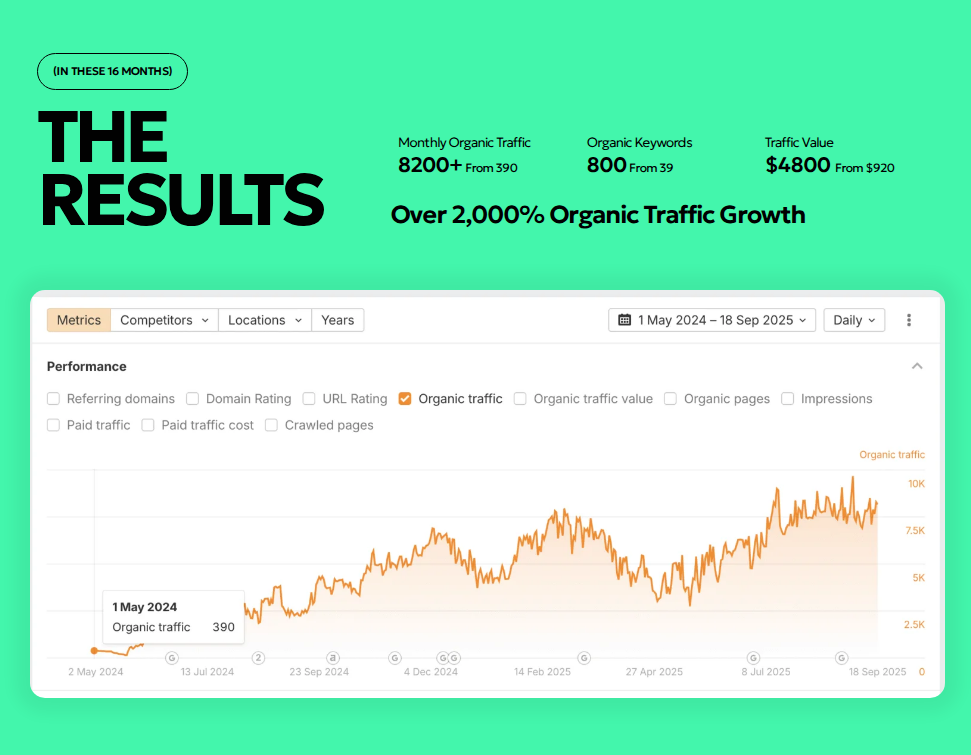
The email verification campaign began with 390 monthly organic visits and 39 organic keywords. After 16 months, traffic reached 8,200+, keywords reached 800, and traffic value increased from $920 to $4,800.
The Chicago agency started with a new website, DR 5, 216 monthly traffic in the reported results baseline, and nine referring domains. Traffic reached 1,400+ after 30 days and exceeded 10,000 after another three months.
This b2b seo case study begins with a site that already had substantial organic traffic. The challenge was therefore different from a new-domain campaign. The published campaign focused on scaling existing visibility through links, content, and technical SEO rather than building initial visibility from zero.
The AI SaaS website was already receiving 575K monthly visitors, but the campaign aimed to push organic growth beyond that level. Its starting DR was 60, while the published campaign data also recorded 1,339 referring domains.
The campaign used 120 high-quality, niche-relevant links alongside SEO-optimized content targeting high-intent keywords. A full technical SEO overhaul was also part of the documented work, creating a broader campaign than link acquisition alone.
Content was built around high-intent search terms while the link campaign focused on niche relevance. The combination gave the campaign two connected components: stronger content targeting and external references supporting the site’s wider search presence.
The eight-month period produced three documented changes: monthly traffic increased from 575K to 1.5M+, DR rose from 60 to 71, and referring domains increased from 1,339 to 2,286. These figures show growth across traffic and authority-related metrics rather than one isolated measure.
The eCommerce SaaS case presents a different situation. Instead of starting with a new website, the campaign focused on strengthening comparison pages, blog content, and product pages while targeting publishers with strong USA and UK traffic.
The main challenge was strengthening high-value pages and expanding the site’s link presence in important markets. The client specifically wanted relevant, authoritative backlinks from websites with strong traffic from the USA and UK.
The campaign mapped keywords connected to comparison pages, blog content, and product pages. This helped identify which existing pages needed external authority and where link acquisition could support the site’s commercial and informational content.
The team used targeted outreach to relevant, high-traffic USA and UK websites. Competitor backlink monitoring was also part of the campaign, while placements were selected around authority, relevance, and the targeted geographic markets.
Across 24 months, monthly organic traffic increased from 74K to 158.6K+, while DR moved from 74 to 81. Traffic value also increased from $151K to $265K. The campaign ultimately delivered 450 high-quality links, with the published monthly target listed as 16–18 backlinks.
This b2b saas seo case study started much earlier in the growth cycle. The website was a brand-new domain in a competitive email-verification market, with approximately 300 client-reported monthly visits and no comparable listicle presence against established competitors.
The site entered the campaign with low organic traffic, limited visibility, and a competitive search environment. Its published baseline for the results section was 390 monthly organic visits and 39 organic keywords, providing a clear starting point for measuring later growth.
The strategy reverse-engineered competitor backlinks and content topics, including listicles where competitors were already visible. This research helped identify subjects and publisher opportunities that could support the client’s product pages and priority search markets.
The campaign combined technical and on-page work with placement outreach. The team targeted SaaS and authority networks for editorial and listicle placements, using natural anchors and focusing on high-authority domains with DR 55+ and 2K+ monthly traffic.
The 16-month campaign moved monthly organic traffic from 390 to 8,200+, while organic keywords increased from 39 to 800. Traffic value also rose from $920 to $4,800. The campaign delivered 400 backlinks and 80 brand mentions in total.
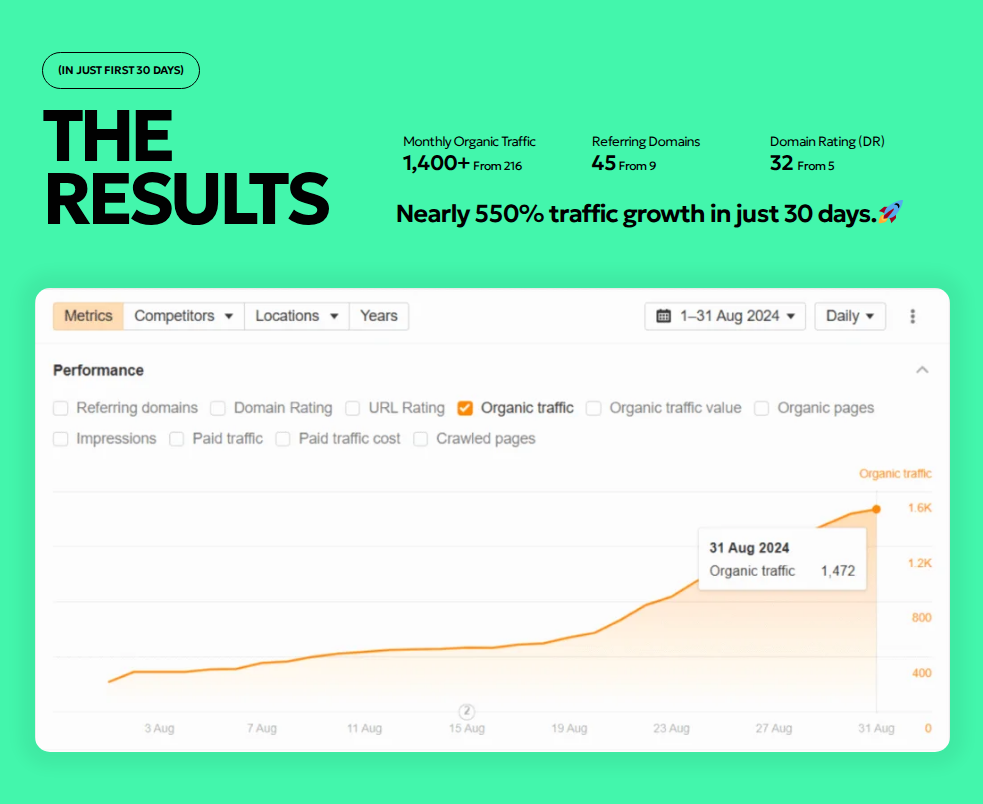
The social media agency case began with a brand-new website rather than an established SaaS property. The starting profile included DR 5, 100 visitors in the problem section, 10 low-quality backlinks, and eight blog posts described by the case study as appearing AI-generated.
The website needed foundational improvements before relying heavily on acquisition. The campaign therefore addressed technical issues, content planning, key-page optimization, and backlink acquisition instead of treating link building as an isolated activity.
The team mapped high-intent keywords, created a focused content strategy, optimized key pages, and conducted manual outreach to relevant websites. Weekly monitoring was used to identify changes and adjust the campaign.
The campaign focused on authoritative and relevant websites across social media, marketing, and SaaS niches. The published monthly deliverables included 30 backlinks and 20 pieces of written and published content, alongside on-page and technical SEO.
Within the first 30 days, reported traffic increased from 216 to 1,400+, referring domains moved from nine to 45, and DR rose from 5 to 32. During the following three months, traffic increased from 1,400 to more than 10,000 monthly visitors.
The four seo case studies show why SaaS campaigns cannot be evaluated through backlink volume alone. Each website entered the campaign with different levels of traffic, authority, content maturity, and competitive pressure.
A website with 575K monthly visitors needs a different growth plan from a brand-new domain. The AI Humanizer campaign focused on scaling established visibility, while the email verification and social media cases required stronger foundational work before broader growth could develop.
The published campaigns consistently describe relevance as part of publisher selection. The eCommerce campaign targeted high-traffic USA and UK websites, while the email verification campaign focused on high-authority domains and priority markets.
The cases repeatedly combine content with external acquisition. The AI campaign used SEO-optimized content, the social media campaign mapped high-intent keywords, and the email verification campaign researched competitor content and listicles before expanding outreach.
The longer campaigns show growth across multiple reporting points rather than a single final number. The eCommerce campaign ran for 24 months, while the email verification campaign continued for 16 months. The social media case shows a separate 30-day milestone followed by another three-month growth period.
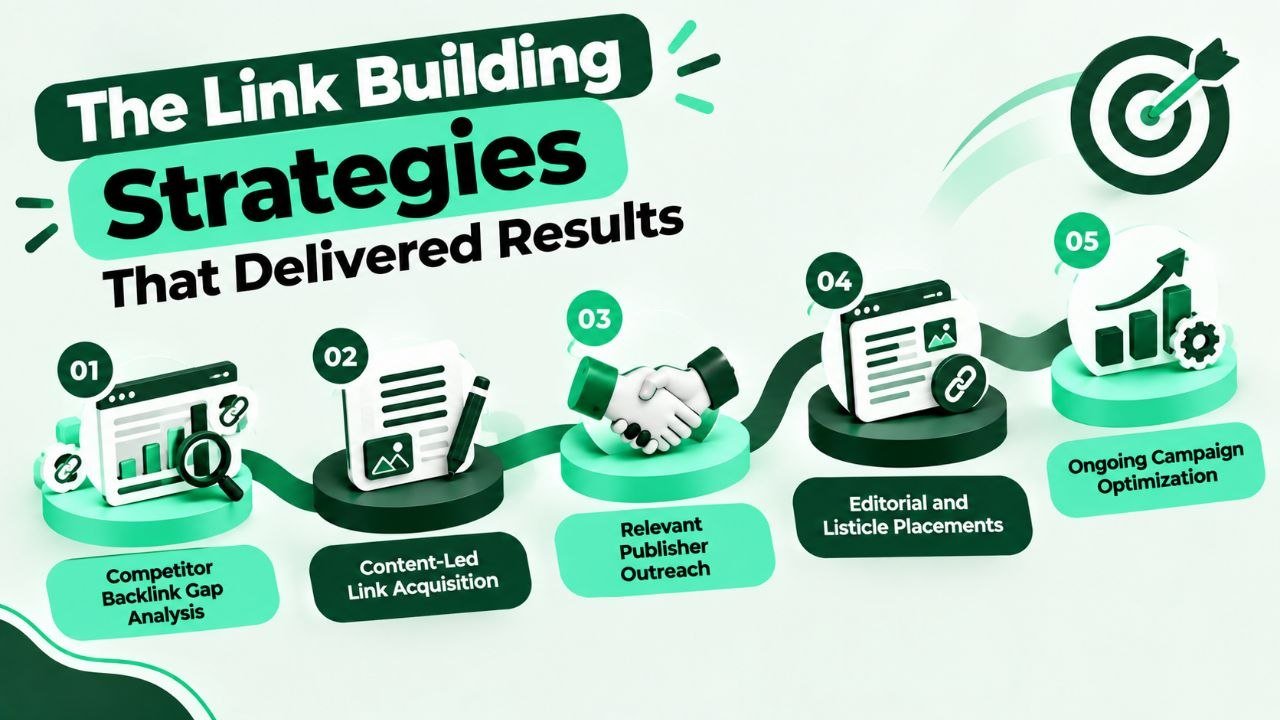
Across these link building seo company case studies, several recurring methods appear. They are not identical campaigns, but the documented work shows a consistent relationship between research, relevant content, publisher selection, and ongoing measurement.
Competitor research can reveal publishers and content formats already working within a niche. The email verification campaign reverse-engineered competitor backlinks and listicles, while the eCommerce campaign monitored competitor backlinks throughout its 24-month project.
Content gives outreach a relevant destination and gives publishers something useful to reference. The AI Humanizer campaign used SEO-optimized content for high-intent keywords, while the social media campaign developed content around mapped search opportunities.
The published cases emphasize publisher relevance rather than simply increasing backlink counts. The eCommerce campaign targeted high-traffic USA and UK websites, while the email verification campaign secured editorial and listicle placements on high-authority domains.
Editorial content and listicles appeared as important acquisition formats in the email verification campaign. Competitor research showed that competing websites already had listicle visibility, creating a clear content and placement gap to address.
The campaigns also included monitoring and adjustments. The eCommerce case describes continuous improvement based on performance data, while the social media campaign monitored weekly results and made adjustments during the project.
A useful link building seo company assessment should examine several connected metrics. Looking only at the number of links can hide whether visibility, authority, rankings, or commercial value actually changed.
Organic traffic shows whether more users are reaching the site through search. The case studies provide several clear examples, including 575K to 1.5M+, 74K to 158.6K+, 390 to 8,200+, and 216 to 1,400+ in their respective reporting periods.
Keyword growth can show whether a website is appearing for a broader set of searches. The email verification campaign provides a direct example, with organic keywords increasing from 39 to 800 during the documented 16-month campaign.
Referring domains provide context that total backlink counts alone cannot. In the AI Humanizer campaign, referring domains increased from 1,339 to 2,286. The social media case moved from nine to 45 referring domains during its first 30-day reporting period.
Traffic value can add another layer to an SEO assessment. The email verification case increased from $920 to $4,800, while the eCommerce case moved from $151K to $265K. These figures help show changes beyond visitor volume.
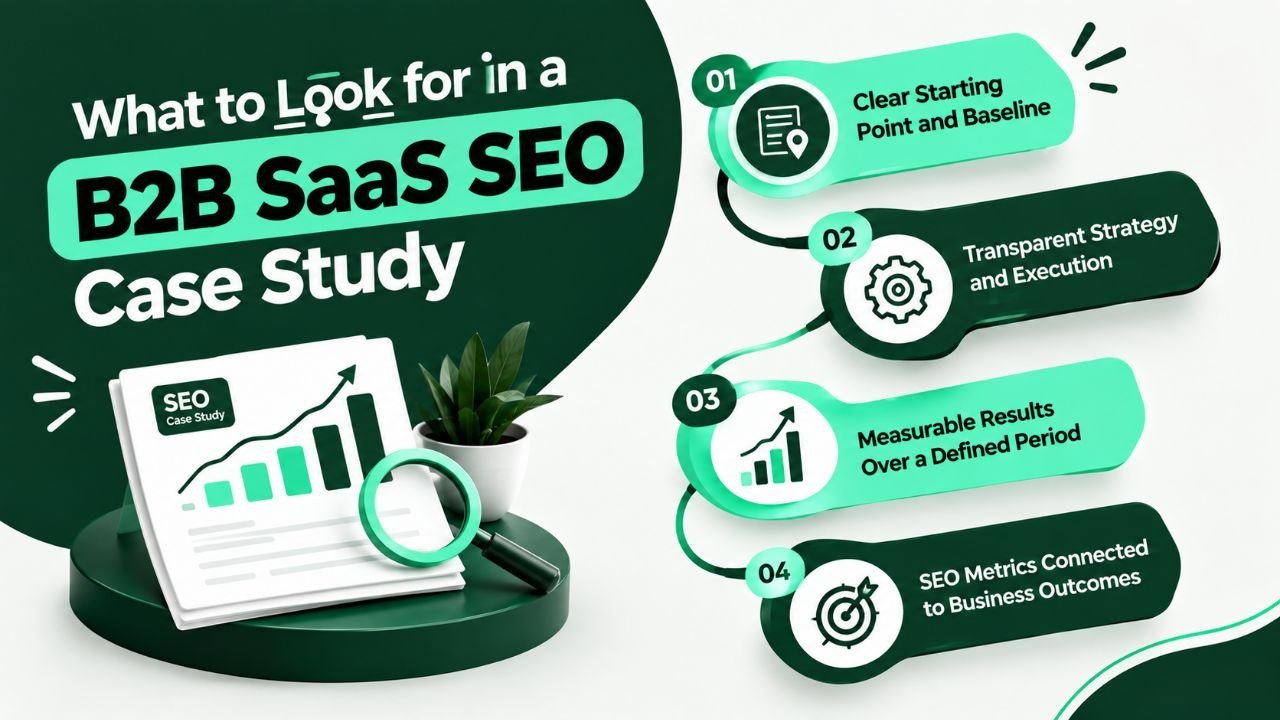
A credible b2b saas seo case study should make the starting point, campaign period, activities, and measured outcomes clear. Readers should be able to understand what changed without relying on vague claims about rankings or visibility.
A useful case study establishes measurable starting conditions. These may include organic traffic, referring domains, DR, ranking keywords, traffic value, or the website’s stage. Without a baseline, a later percentage increase has little context.
The reader should be able to see what work actually took place. The published cases identify activities such as technical SEO, content mapping, competitor research, manual outreach, editorial placements, and ongoing monitoring.
Time matters when evaluating SEO. The four cases report different campaign periods: eight months, 24 months, 16 months, and four months. These durations prevent the results from being presented as if every campaign followed the same timeline.
Traffic and authority metrics become more useful when connected to meaningful search outcomes. The cases include organic traffic, ranking keywords, referring domains, DR, and traffic value, giving readers several ways to evaluate campaign movement.
These link building seo company case studies show that sustainable SaaS growth depends on relevant links, quality content, and a well-planned SEO strategy.
If you are looking for a link building seo company, VH Info can be considered for SaaS-focused campaigns, with services centered on relevant placements, competitor research, and white-hat link acquisition.
The right agency should understand your niche, communicate its strategy clearly, and focus on meaningful SEO outcomes rather than simply delivering a high number of backlinks.
If you are reviewing potential providers, compare their published case studies, campaign timelines, starting baselines, link quality standards, and measurable outcomes before deciding which approach fits your SaaS website.
There is no single timeline for every website. These case studies report different durations, including 30-day milestones, four months, eight months, 16 months, and 24 months. Results depend on the starting website, competition, content, technical condition, link acquisition, and how consistently the campaign is managed.
There is no fixed backlink number that applies to every SaaS website. The required profile depends on competition, existing authority, content, target pages, and the quality of competing websites. The case studies show different campaign volumes, so backlink quantity should be evaluated alongside relevance and measurable search growth.
Link building can contribute to organic traffic growth when it forms part of a broader SEO campaign. These cases combine backlinks with content, technical improvements, keyword research, and page optimization. Reported traffic changes include 390 to 8,200+, 575K to 1.5M+, and 216 to 1,400+.
A useful b2b seo case study should include a clear starting point, campaign objectives, strategy, project duration, measurable results, and enough context to understand the changes. Traffic, ranking keywords, referring domains, authority metrics, traffic value, and delivered work can make the evidence easier to evaluate.
Measure link building through several connected outcomes rather than backlinks alone. Track organic traffic, ranking keywords, referring domains, traffic value, conversions, and revenue where reliable business data is available. A b2b saas seo case study becomes more useful when SEO metrics are connected to actual business outcomes.
Look for a clear process, relevant publisher selection, transparent reporting, defined campaign targets, and evidence that separates starting data from final results. A credible link building seo company should also explain the campaign period and acquisition methods instead of presenting backlink volume as the only measure of success.
Every article dives deep into what works, why it works, and how to use it.
Do you remember HARO? For years, Help a Reporter Out was the easiest way to win links from journalists. Then…
 Vishal ambani
October 16, 2026
Vishal ambani
October 16, 2026
Back in January 2014, Google’s Matt Cutts posted something that made a lot of SEO people nervous. “So stick a…
Vishal ambani
October 15, 2026
Back in early 2011, J.C. Penney ranked No. 1 on Google for searches like “living room furniture.” Then The New…
Vishal ambani
October 14, 2026

 Share
Share