
Blog outreach services help SaaS companies get their content and links published on relevant third-party blogs. They handle the hard parts: finding publishers, pitching editors, and securing placements.
That work matters more than ever. Ahrefs studied around 14 billion pages and found that 96.55% of them get zero traffic from Google. The study names building backlinks as one way to stay in the small group that does get traffic.
For SaaS teams, the pressure is sharper. Software search results are crowded, and buyers now research through both Google and AI answer engines. However, most content teams lack the time to run outreach well.
This guide covers the main service types, how publishers get vetted, and what quality outreach looks like. You’ll also learn how to choose the right partner for your goals.
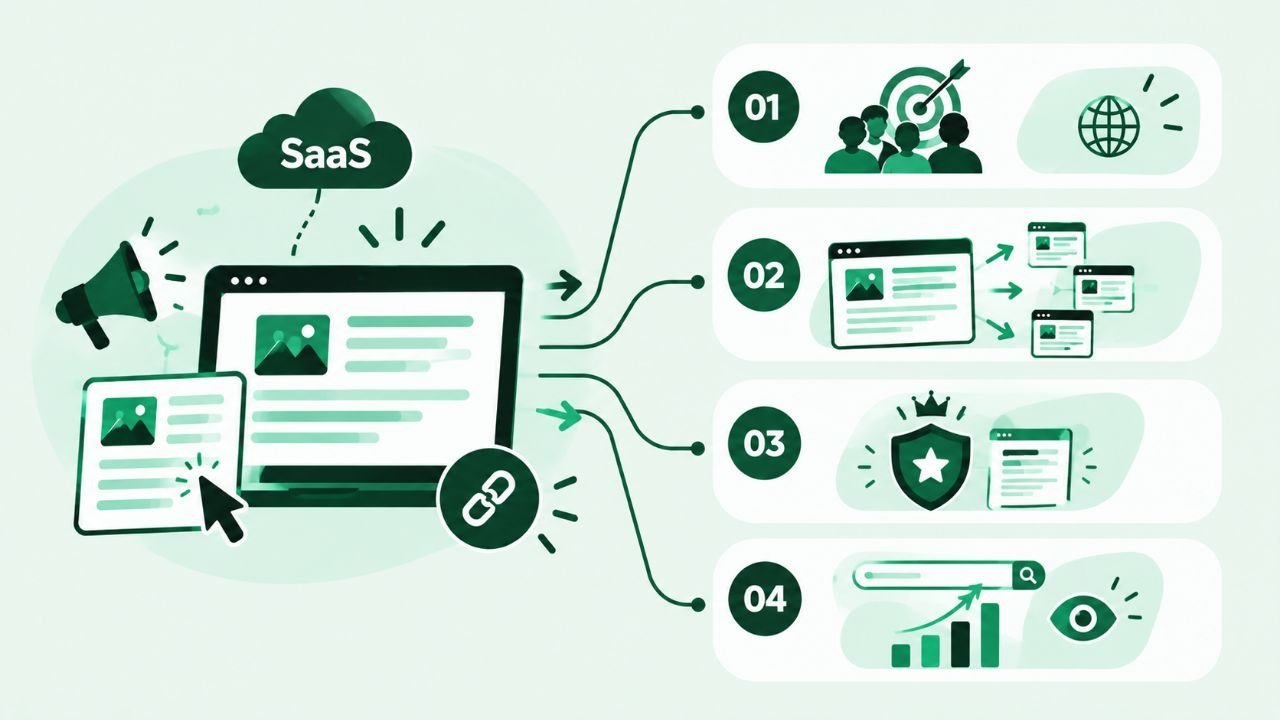
SaaS content teams need blog outreach services because strong content rarely spreads on its own. Your blog reaches existing visitors, but new buyers often read industry publications first. Outreach bridges that gap. Below are the four main reasons SaaS teams invest in it.
Your blog, newsletter, and social accounts mostly reach people who already know you. Outreach puts your ideas in front of new readers on trusted industry blogs. For example, a CRM brand might appear on a sales operations blog its buyers read weekly.
A strong article on your own site has limited reach. Blog outreach services turn that expertise into guest posts, mentions, and links on other sites. As a result, one research piece can earn exposure across several publications instead of one.
Being published on respected SaaS blogs signals credibility to buyers and search engines. Readers are more likely to trust a brand that editors they follow choose to feature. Over time, repeated appearances make your team a recognized voice in your niche.
Relevant backlinks help Google understand which pages deserve to rank. Brand mentions on trusted sites can also support visibility in AI-generated answers. That’s why many teams pair outreach with generative engine optimization to cover both search channels.
Blog outreach services come in several forms, and each one produces a different result. Some focus only on finding publishers, while others handle writing and placement from start to finish. The table below compares the six most common service types SaaS teams use.
| Service | Primary Deliverable | Best Use Case | Content Requirement | Expected Outcome |
| Publisher Prospecting | Vetted list of relevant blogs | Teams that run outreach in-house | None | Faster, better-targeted outreach |
| Quality Blogger Outreach | Personalized pitches and editor relationships | Brands wanting long-term publisher access | Pitch ideas and brand context | Repeat placements on niche blogs |
| Guest Post Outreach | Published guest articles | Thought leadership and topical authority | One original article per placement | Bylined exposure plus a contextual link |
| Contextual Link Outreach | Links added to existing articles | Supporting specific product or feature pages | Short insertion copy | Relevant backlinks on established content |
| Content Placement Services | Written and published content | Teams with no spare writing capacity | Topic brief and target URL | Hands-off published placements |
| Campaign Management | Planned and tracked monthly campaigns | Ongoing link targets across quarters | Goals, target pages, and anchors | Predictable monthly placement delivery |

Publisher prospecting is the process of finding and vetting blogs before any outreach begins. It’s the first step in most blog outreach services, and it shapes every placement that follows. Weak prospecting leads to irrelevant links, no matter how good the pitch is.
Below are the three steps involved in qualifying publishers.
Prospecting starts with search operators, competitor backlink profiles, and niche communities. For example, a cybersecurity SaaS team might study which blogs link to three competitors. Sites that link to all three are strong first targets.
Authority scores matter, but real organic traffic matters more. Check these signals before shortlisting a publisher:
A high-authority site is still a poor fit if its readers never buy software. Relevance filters remove general news sites, off-topic blogs, and link farms. What remains is a shortlist of publishers your buyers actually read.

Quality blogger outreach means contacting the right editors with pitches built for their readers. It replaces mass templates with research and a clear value offer. This approach earns fewer rejections and longer publisher relationships.
Below is how the outreach process works in practice.
A good pitch references the editor’s recent articles and explains why your idea fits their readers. For example: “Your post on SOC 2 prep drew questions about audit costs. We could cover that with our client data.”
Editors often ask about topic angles, word counts, or link policies. A real blogger outreach service answers quickly and respects each publisher’s rules. Slow or pushy replies are the fastest way to lose an interested editor.
Busy editors miss emails, so one or two polite follow-ups are normal. Each follow-up should add something new, like a refined headline or data point. After two attempts without a reply, move on and keep the relationship positive.

Guest post outreach is the process of pitching and publishing original articles on other blogs under your brand’s byline. It works best for thought leadership and topical authority. Each post usually includes one or two contextual links back to your site.
Below are the three stages of a guest post campaign.
Many SaaS blogs openly accept contributions through “write for us” pages. Others accept guest posts only from known experts. Searching phrases like “SaaS marketing” plus “contributor guidelines” surfaces both types quickly.
Strong guest topics solve a problem the publisher’s readers already have. For instance, an email marketing SaaS could pitch “How to Warm Up a New Sending Domain” to a deliverability blog. The topic helps readers first and the brand second.
Once a topic is approved, the draft goes through the publisher’s editing process. Expect revision requests, formatting changes, and link reviews. Publishing timelines range from a few days to several weeks, depending on the editorial calendar.

Contextual link outreach is the practice of earning links inside existing articles that already rank or get traffic. It’s one of the most requested blog outreach services because it skips new content creation. Instead, it focuses on pages with proven relevance.
Below are the three steps that make this approach work.
The process starts by finding published articles that already discuss your topic. For example, a proxy tool might target posts about web scraping or ad verification. These pages already have readers and indexed authority.
A natural placement adds value to the existing sentence or section. It might replace an outdated resource, support a statistic, or expand a thin explanation. If the link feels forced, editors will reject it, and they should.
The final step is agreeing on anchor text and exact placement with the site owner. Descriptive, varied anchors look natural and follow Google’s spam policies, which warn against links built to manipulate rankings.

Content placement services cover the full cycle of writing, pitching, and publishing content on external sites. Many blog outreach services include this option for SaaS teams whose writers are already stretched.
Below is how the placement process moves from brief to live article.
External content needs a different voice than your own blog. It should teach, not sell, and match the publisher’s depth. A developer tools brand, for example, would write code-heavy tutorials for engineering blogs rather than product overviews.
Every publisher has rules on length, formatting, image use, and link limits. Some cap articles at one external link, while others ban self-promotional mentions entirely. Following these rules closely improves acceptance rates and speeds up editing.
A single placement can involve pitching, drafting, revisions, approvals, and final checks. Good placement services track every stage in one shared sheet. That way, your team always knows which articles are pending, live, or stalled.
Blogger outreach campaign management is the planning layer that ties every placement to business goals. Without it, blogger outreach campaigns drift into random links with no clear impact.
Below are the three core parts of managing a campaign.
Targets turn outreach into a measurable plan. A typical monthly plan defines:
For example, a B2B SaaS might aim for 10 placements supporting three product pages.
Campaigns run several workstreams at once: prospecting, pitching, writing, and approvals. A project manager keeps them in sync so pitches do not stall waiting for drafts. This matters most when blogger outreach campaigns target several product pages.
Every live placement should be logged with its URL, anchor text, target page, and publish date. Monthly reports then show progress against targets. Teams can also connect placements to pipeline data from their SaaS sales funnel.
VH Info is a SaaS-focused link-building agency with over five years of experience. It has built 20,000+ links for 50+ clients, mainly across the USA and Europe. Its blog outreach services center on SaaS, AI, cybersecurity, and B2B tech brands. Below are the main features of its approach.
VH Info focuses its outreach on publishers covering SaaS, AI tools, cybersecurity, CRM, hosting, and marketing software. Because of that niche focus, placements land on blogs where software buyers already research tools.
The team studies which sites link to your competitors but not to you. Those gaps become the outreach target list. This keeps prospecting grounded in data instead of guesswork about which publishers matter in your category.
No link goes live without client approval. VH Info shares placement details, including the publisher and context, before creating any link. Clients can approve each suggestion or request changes, which keeps brand control with the SaaS team.
In the done-for-you model, clients share target URLs and anchor texts. VH Info then handles outreach and presents ready placement options. Teams wanting more control can choose a client-led model with a curated domain list and insertion guidelines.
Each client project gets a dedicated project manager and 24/7 support. Pricing is transparent, with no hidden costs. Regular check-ins keep monthly targets aligned with each client’s goals, and a backup plan supports reliable delivery.
Quality blogger outreach is defined by relevance, personalization, and lasting publisher relationships rather than link volume. The same standards apply whether you run outreach in-house or hire a SaaS blogger outreach partner.
Below are the four principles that separate quality outreach from spam.
Ten links from unrelated blogs rarely help a SaaS brand. Five links from publications your buyers read can support rankings, referrals, and demo requests. Relevance should decide every shortlist before domain metrics or price enter the discussion.
Editors at popular blogs see a steady stream of templated pitches. Personalized emails stand out because they reference real articles, reader needs, and a specific idea. The extra research time usually pays back in better responses.
A link inside a relevant paragraph carries meaning for readers and search engines. Links in author bios, footers, or unrelated roundups carry far less. Quality blogger outreach aims for placements where the link genuinely helps the reader.
Publishers who have worked with you once are more open to future pitches. Over time, these relationships lead to faster approvals and better placements. A real blogger outreach service treats editors as long-term partners, not transactions.
The right blog outreach service is one whose process, deliverables, and reporting match your goals and budget. Many SaaS CMOs review several providers before committing. Below are four checks that make the comparison easier.
Start with what you need most: authority, referral traffic, or rankings for specific pages. Guest posting suits thought leadership, while contextual links suit page-level gains. A SaaS SEO consultant can help map services to priorities.
Ask each provider to walk you through prospecting, pitching, and approval. Look for client approval steps and shared placement details. If a provider cannot explain where links come from, treat that as a warning sign.
Pricing only makes sense next to deliverables. Compare what each package includes: content writing, number of placements, publisher quality, and replacement guarantees. A cheaper package with weak publishers often costs more in wasted effort.
Request sample placements from past campaigns and check the sites yourself. Strong providers report each live URL, anchor text, and target page monthly. Avoid any provider using private blog networks, since these violate Google’s guidelines.
Blog outreach services give SaaS content teams a practical way to reach readers beyond their own channels. The strongest results come from relevant publishers, personalized pitches, and contextual placements that help readers first. As a result, the best partner is the one with a clear process, transparent reporting, and real niche fit.
If your team lacks the time to prospect and pitch every month, a specialist can take that work on. VH Info runs SaaS-focused, white-hat blogger outreach campaigns with client-approved placements and transparent pricing. You can reach the team at contact@vh-info.com to talk through your content goals.
Blog outreach services are done-for-you services that get a brand’s content, mentions, and backlinks published on relevant third-party blogs. Providers vet publishers, pitch editors, place content, and report live links. For SaaS companies, the goal is stronger rankings, referral traffic, and brand visibility.
A blog outreach service typically includes publisher prospecting, site vetting, personalized pitching, follow-ups, content writing, and placement negotiation. Good providers also send monthly reports listing live URLs and anchor texts. Some offer a client-led option, where your team handles placement. Confirm deliverables before signing.
Blog outreach services typically cost around $500 per quality backlink. An Editorial.Link survey of 518 SEOs put the average at $508.95 per link. For ongoing campaigns, 46.5% of SEO professionals spend 5,000–10,000 monthly, per uSERP. Prices rise about 32% per 10 DR points.
High-quality blogger outreach earns editorial links from relevant publishers with real organic traffic. It uses personalized pitches, places links that help readers, and follows Google’s spam policies. That rules out private blog networks and paid links without rel=”sponsored” or nofollow attributes.
Blogger outreach is the broader practice of working with bloggers for links, mentions, reviews, or collaborations. Guest post outreach is one type of blogger outreach focused on publishing original articles on other sites. Every guest post campaign is blogger outreach, but not the reverse.
Most blog outreach campaigns deliver their first live placements within 3–4 weeks, then run in monthly cycles. Ranking impact takes longer. A Moz case study found one backlink took about 10 weeks to lift a page one position. SaaS teams should plan for 3–6 months.
Yes, blog outreach services work for SaaS companies when placements come from relevant software and industry blogs. Semrush’s ranking factors research found backlinks remain a top Google ranking factor. Results typically show within 3–6 months and compound as placements build topical authority.
Every article dives deep into what works, why it works, and how to use it.
A SaaS team publishes fifty blog posts in one year. The writing is good, the topics are useful, and the…
 Vishal ambani
October 23, 2026
Vishal ambani
October 23, 2026
A small agency signs a new SaaS client for $1,500 a month in link building. It feels like a big…
Vishal ambani
October 22, 2026
You’re three months into a link building campaign. The report looks good, with twenty new links and rankings slowly going…
Vishal ambani
October 19, 2026

 Share
Share