

Everyone who runs a website wants two things: more visitors and more money.
Affiliate marketing is a great way to make money. It allows you to earn passive income by recommending products. But there is a big question that confuses many website owners. That question is: do affiliate links count as backlinks?
This is a tricky topic. You want to rank high in Google search. You know that link building is important for SEO rankings. But you might worry that using affiliate links could hurt your site. You might wonder if search engines see them as spam.
At VH-info, we help SaaS companies grow through real, high-quality strategies.
We know that mixing money-making links with an SEO strategy takes care. We want to clear up the confusion. We want to show you exactly how these links work. This guide will explain how Google search treats these links and how to use them safely on your own website.
What Are Affiliate Links?
Let’s start with the basics. What exactly are these links?
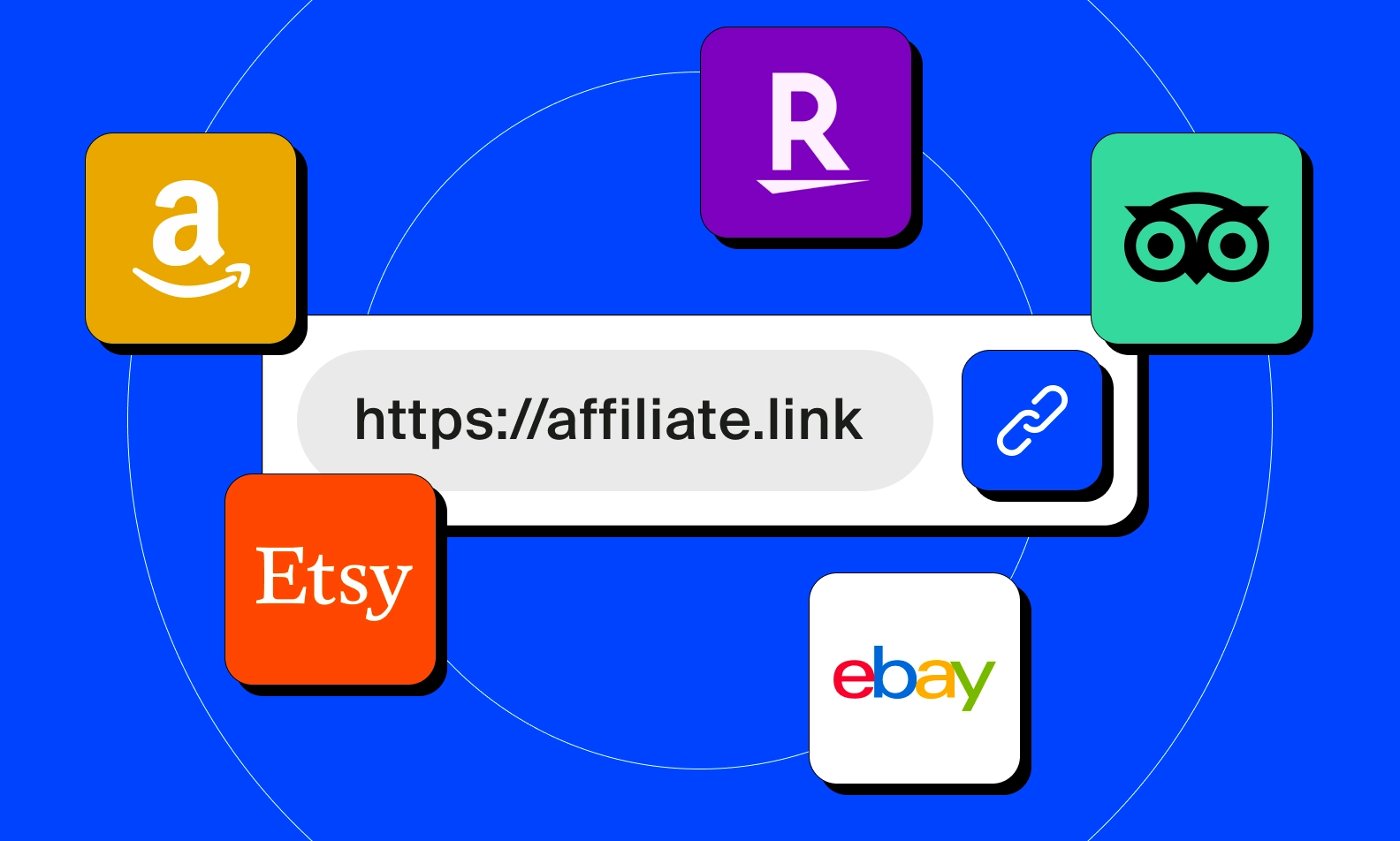
An affiliate link is a special URL. It contains a unique ID or username. This ID belongs to the affiliate marketer. When a visitor clicks this link and buys something, the marketer gets a commission.
Think of it like a salesperson in a store. When they help you find a shirt, they might scan a barcode on their badge at the register. That scan tells the store, “Hey, this person made the sale!”
On the internet, affiliate links do the same thing. They track where the traffic came from. They are used in affiliate programs and generally point to a product page on another site.
These links look a little different from normal links. A normal link might look like mysite.com/product. An affiliate link might look like mysite.com/product?ref=123. That extra part at the end is the tracker.
Why Are Affiliate Links Important In SEO?
You might ask, “Why do we care about these links for SEO performance?”
Search engine optimization (SEO) is about getting your site to the top of the search results. To do this, you need good content and good links.
Affiliate links are important because they are everywhere. Many blog posts and product reviews use them. If you look at top-ranking sites, you will see they use affiliate links often. They are a core part of digital marketing.
However, simply having them is not enough to rank. In fact, if you do it wrong, it can be bad. Search engines like Google want to show the best results. They want useful content, not just a page full of ads.
Understanding how these links fit into the bigger picture of search engine rankings is vital. You want to make money, but you do not want to lose your traffic. It is a balance.
How Affiliate Links Affect SEO?
So, do these links help or hurt? The answer depends on how you use them.
If you have a piece of content that is thin and only exists to sell something, Google might not like it. Google calls this “thin affiliate content.” This type of content does not add genuine value to the reader.
But, if you write a detailed review that helps the user, that is different.
If your content is great, the links are just a tool to help the user take the desired action.
Here is how they affect things:
- User Experience: If you have too many ads and links, it annoys people. A bad user experience can lower your rankings.
- Trust: If you are honest about your links, people trust you.
- Crawl Budget: If you have thousands of affiliate links, the Google bot might spend a lot of time checking those instead of your good articles.
At VH-info, we believe that quality of your content always comes first. The links should fit naturally.
Do Affiliate Links Count As Backlinks? The Short Answer

Here is the main answer you are looking for regarding the keyword: do affiliate links count as backlinks?
Technically, yes. They are hyperlinks pointing from one site to another. So, strictly speaking, they are links. However, do they count as “votes” for your website? Do they pass authority like a normal backlink? Usually, no.
Most affiliate programs and affiliate networks ask you to tag these links in a specific way. Google also is very smart. It can usually tell when a link is for sales. Because it is a paid relationship, Google does not view it as a natural “vote” of confidence. So, while they are links, they do not give you the same boost as a guest post or an editorial link that VH-info might build for you. They serve a different purpose.
How Search Engines Treat Affiliate Links?

Search engines have specific rules for these links. They want to keep the web fair. They do not want people buying their way to the top of search rankings.
The Role of rel=”nofollow” and rel=”sponsored” Attributes
To tell Google “this is a paid link,” we use HTML tags. These are little codes hidden in the link.
- Nofollow tags: This tells the search engine, “Don’t follow this link and don’t pass any authority.” For a long time, this was the standard for affiliate links.
- Sponsored tags: A few years ago, Google introduced rel=”sponsored”. This is now the best practice for any link that involves money or compensation.
When you use Nofollow links or sponsored links, you are playing by the rules. You are telling Google, “I am an affiliate marketer, and this is an ad.” This protects your site from search engine penalties.
Google’s Official Guidelines on Paid Links
Google has strict rules about “link schemes.” Buying links to trick the algorithm is against the rules. It can lead to manual actions.
This is when a real person at Google bans or penalizes your site. John Mueller from Google has said many times that affiliate links should have rel=”sponsored” or rel=”nofollow”. If you hide them or try to make them look like normal links, you might get in trouble.
Affiliate Links Vs. Regular Backlinks: What is the Difference?
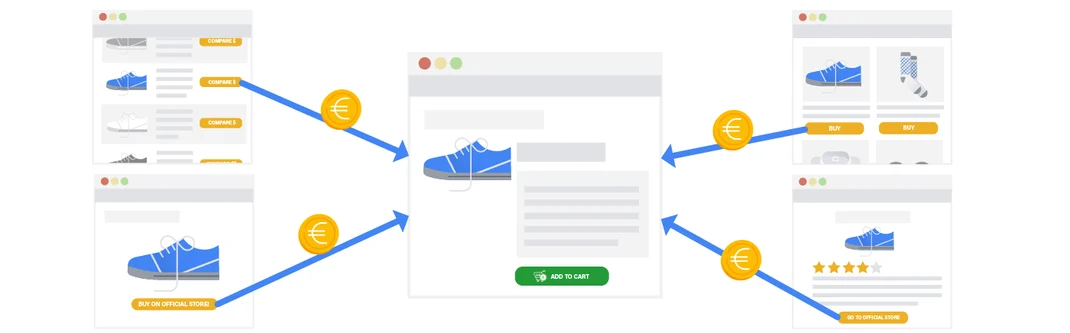
It is important to know the difference between an affiliate link and the links we build at VH-info.
Understanding Link Equity (Link Juice)
In the SEO world, we talk about “link juice.” Imagine a cup of juice. When a big site links to you, they pour some of their juice into your cup.
This makes your site stronger.
- Regular Backlinks: These usually pass link juice. They tell Google your site is good.
- Affiliate Links: These usually have a “stopper” on them (the nofollow tag). No link juice flows through them.
The Impact on Domain Authority
Domain Authority (DA) is a score that predicts how well a site will rank.
Real backlinks increase your authority. They show you are a leader in your field.
Affiliate links do not increase your authority directly. You can have a million affiliate links pointing to your site, but if they are all nofollow, your authority might not move much. This is why you need a separate link-building strategy.
You cannot rely on affiliate partners to build your SEO power. You need marketing strategies that focus on getting real, editorial links.
Can Affiliate Links Actually Help Your SEO?

Even though they don’t pass link juice, can they still help? Yes, in indirect ways.
- Indirect Benefits of Affiliate Traffic: When people click your links, you get referral traffic. Traffic is good. If people stay on your site, read your blog posts, and share them on social media, that sends positive signals to Google. High traffic can eventually lead to better SEO rankings because it shows your site is popular.
- Building Brand Awareness and Citations: The more people see your brand, the better. Even if a link is “nofollow,” it is still a mention of your brand. If you are a SaaS company and you run an affiliate program, thousands of affiliate sites might write about you. This creates a buzz. This “brand awareness” helps people recognize you in search results.
Affiliate Link Building: Is It Possible?

Can you use affiliate marketing efforts to build real backlinks? It is hard, but possible.
Building Backlinks Through Affiliate Partnerships
Sometimes, you can ask your affiliate partners for a favor.
If they write a review, you can ask them to include a link to your home page or a helpful resource, not just the tracking link. If that extra link is a standard “dofollow” link, then it counts as a real backlink! This is a smart SEO strategy. It turns a sales relationship into an SEO win.
Are Links From Affiliate Sites Considered Low Quality?
Many people think affiliate sites are low quality. This is sometimes true. Some sites are just spammy lists of products. However, many affiliate marketers put in hard work. They build amazing sites with useful content. A link from a high-quality review site is valuable.
At VH-info, we analyze the quality of every site. We know that a link from a respected blogger is worth a lot, even if they also use affiliate links.
Diversifying Your Affiliate Link Sources
You should not get all your links from one place. You need different types of links.
- Internal links: Links from one page on your site to another.
- Guest posts: Articles you write for other sites.
- Affiliate links: Links for sales.
A healthy link profile has a mix. This looks natural to search engines.
Best Practices For Managing Affiliate Links on Your Site
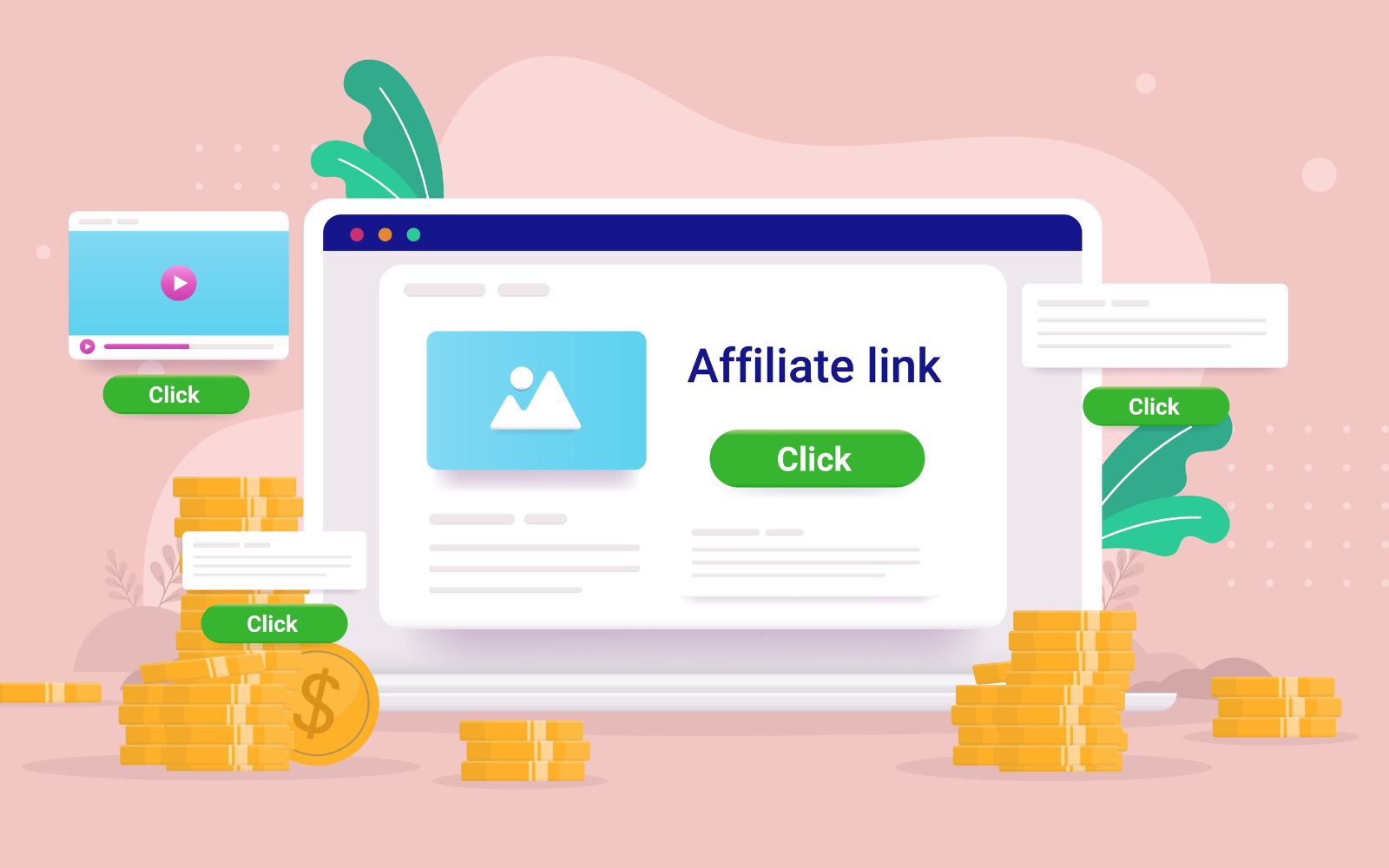
If you are going to use these links, you must do it right. Here are the best practices to keep your site safe and ranking high.
- Using the rel=”sponsored” Attribute: This is the most important technical rule. Whenever you add an affiliate link, go into the HTML code. Add rel=”sponsored”. If you use a plugin or marketing tools, check the settings. Make sure it adds this tag automatically. It protects your SEO value.
- Unique and Original Content: Do not just copy the product description from the seller. That is “duplicate content.” Google hates that. Write your own thoughts. Share your personal experience. Take your own photos. Content creation requires effort. The quality of your content is what makes people click. If you provide genuine value, Google will reward you.
- Disclosing Affiliate Relationships: In the United States, the Federal Trade Commission (FTC) requires you to tell people about your links. You must have a clear disclosure. It should say something like, “If you buy through my links, I may earn a commission.” Put this at the top of your post. This is not just a law; it builds trust. If you hide it, you look shady.
- Using Link Cloaking Responsibly: Link cloaking means making a long, ugly link look short and clean. Instead of site.com/product?id=4857485, it looks like yoursite.com/go/product. This is fine to do. It looks better for the user. But do not use it to trick people. The user should know they are going to a product page.
FAQ’s:
What is SEO Affiliate Marketing?
SEO affiliate marketing is the practice of optimizing your website to rank in Google, specifically to drive traffic to affiliate links. The goal is to get organic traffic so you can earn commissions without paying for ads.
Do Affiliate Links Pass Link Equity (Link Juice)?
Generally, no. Because they should have a nofollow or sponsored tag, they do not pass link juice. They do not act as a “vote” for authority in the eyes of Google.
Will Google Penalize Me For Having Too Many Affiliate Links?
This brings us to a key question: how many affiliate links is too many? There is no exact number.
However, if your page is 90% links and 10% text, that is too many. If every other sentence has a link, it looks spammy. The number of affiliate links should not overwhelm the content. If the user feels like they are in a minefield of ads, Google will likely lower your rankings.
Should I Use the “sponsored” Attribute For Affiliate Links?
Yes. This is the correct way to tag them. It tells Google you are being honest about the paid relationship.
Do Dofollow Affiliate Links Help Rankings?
They might help temporarily, but they are risky. If Google catches you using dofollow tags on paid links, you could get a penalty. It is not worth the risk. Stick to the rules.
What is the Difference Between A Cloaked Link and A Raw Affiliate Link?
A raw link shows the full, ugly URL with all the tracking numbers.
A cloaked link is a redirect on your own domain (like yoursite.com/out/product) that sends the user to the destination. Cloaking is used for tracking and neatness, but the SEO value is the same for both (which is neutral).
Conclusion
So, do affiliate links count as backlinks? They are links, but they don’t count as the “votes” you need to build high authority. They are great for money, but you cannot rely on them to build your SEO reputation alone.
To succeed, you need a balanced approach. You need marketing strategies that include creating valuable content and earning real, high-quality backlinks from other sites. This is where hard work pays off.
Don’t let the fear of number of affiliate links stop you. Just use them wisely. Focus on the user. Be honest with disclosures. Use the right tags.
If you are a SaaS business looking to build real authority and climb the search engine rankings, you need more than just affiliate programs. You need a dedicated partner.
VH-info is here to help you. We specialize in building the high-quality links that actually move the needle for your SEO. We handle the hard parts so you can focus on your product.
Ready to boost your site’s authority? Check out our strategies at VH-info today. It is the best way to ensure long-term growth for your business.


 Vishal ambani
  Share
Share
 VH Info