
TL;DR
What you’re buying: Generative engine optimization services help your SaaS brand show up in answers from ChatGPT, Google AI Mode and AI Overviews
Why mentions matter: In an Ahrefs study of 75,000 brands, web mentions tracked AI visibility far more closely than Domain Rating did
What it costs: Published GEO retainers run about $2,000 to $12,000+ a month, while single placed brand mentions start at $150
What to check: Ask for advice that matches Google’s 2026 guidance, approval before anything goes live, and zero ranking guarantees
How to measure: Run the same buyer prompts every month and record which brands and sources each AI tool names
Half of B2B software buyers now start their research in an AI chatbot. G2 found that 51% do this more often than they use Google, up from 29% in its 2025 report (G2, 2026).
That shift changes who gets shortlisted. If ChatGPT or Google AI Mode never names your product, many buyers won’t find you.
Generative engine optimization services promise to close that gap. The market is messy, though. Some agencies sell full programs, some sell content rewrites, and some sell only off-site mentions.
This guide is for SaaS teams choosing and paying for a provider. You’ll see what each part of GEO covers, what it costs, how to vet an agency, and where brand mentions fit.
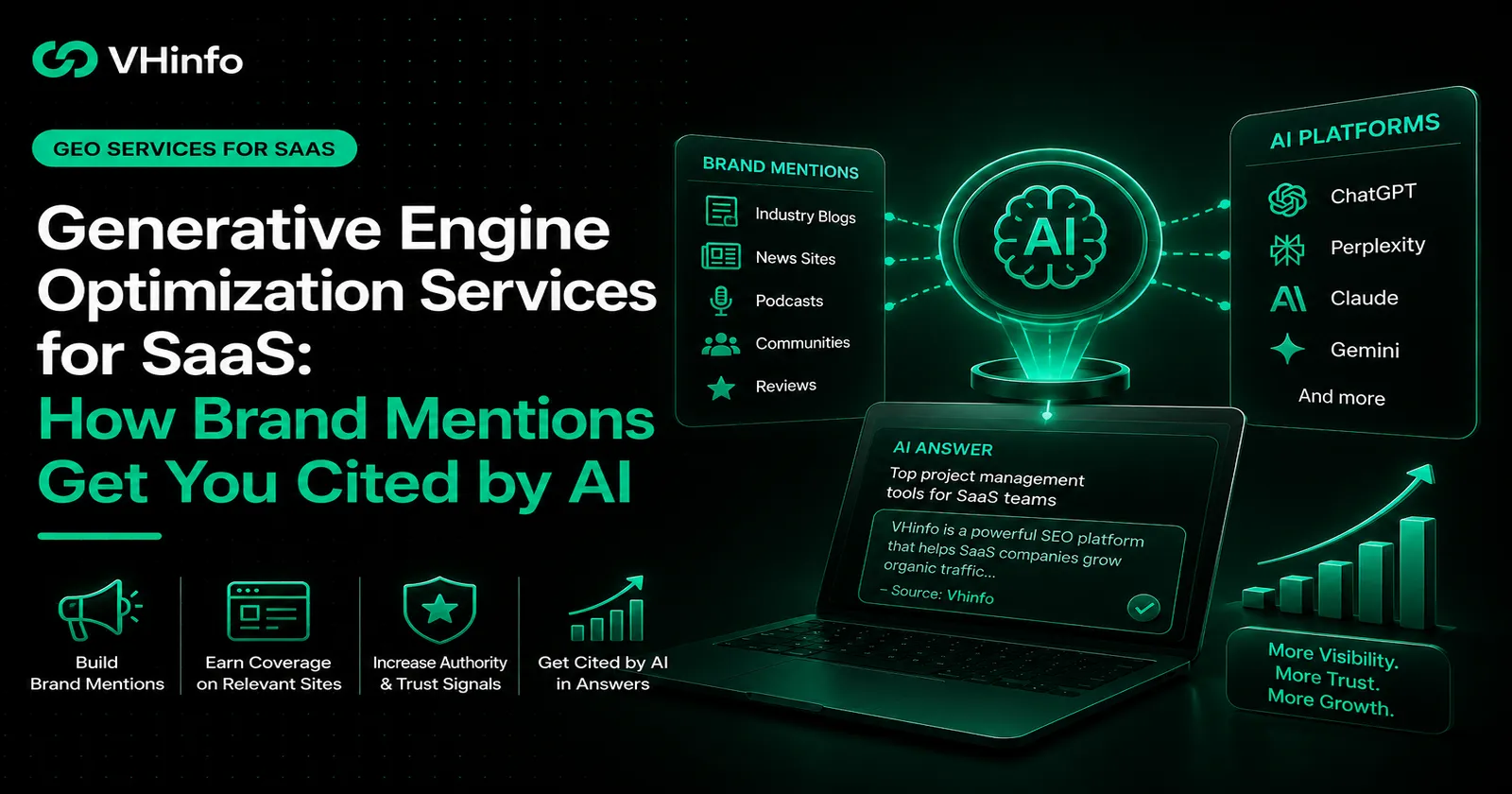
Most GEO offers bundle 2 kinds of work. On-site work makes your own pages easy for AI tools to read and quote. Off-site work gets your brand named on other sites those tools already trust. The table compares both layers, plus the reporting that ties them together.
| Layer | Typical deliverables | Who usually does it | What it helps with |
|---|---|---|---|
| On-site | Clear answer-first content, comparison and FAQ pages, consistent product facts, crawlable pages | Your content team or an SEO agency | Getting your own pages quoted |
| Off-site | Editorial mentions, listicle and comparison placements, review profiles, digital PR, community threads | PR firms, brand mention and link building agencies | Getting your brand named in category answers |
| Measurement | A fixed prompt set, share of answers that name you, cited sources, competitor benchmarks | GEO tools or the agency’s monthly report | Proving progress month to month |
Providers sell this under many names. You’ll see it called AI search optimization services or LLM SEO services. The labels change, but the work falls into these same 3 layers.
Google’s May 2026 guide is blunt. It says optimizing for generative AI search “is optimizing for the search experience, and thus still SEO” (Google Search Central).
The same guide lists 5 things you can ignore for Google Search.
Good on-site basics still matter. The 2024 KDD paper that named GEO tested this. Adding citations, quotes and statistics raised visibility in AI answers by up to 40%. Our guide to GEO techniques for SaaS covers that on-site playbook.
Need the off-site mentions that AI engines actually cite?
Book a quick call. We secure editorial brand mentions and listicle placements on trusted SaaS sites.
AI tools build answers from what the web already says about a category. Brands that get discussed often, on sites people actually read, get named more. This section covers the data behind that, what Google says, and how placed mentions fit in.
Ahrefs studied 75,000 brands across ChatGPT, Google AI Mode and AI Overviews in December 2025. Off-site mentions came out well ahead of site metrics (Ahrefs).
| Signal | Correlation with AI visibility (Spearman) |
|---|---|
| YouTube mentions | ~0.737 |
| YouTube mention impressions | ~0.717 |
| Branded web mentions | 0.66 to 0.71 |
| Branded search volume | 0.35 to 0.47 |
| Domain Rating | 0.27 to 0.33 |
Ranges cover the 3 AI platforms. Ahrefs notes that correlation isn’t causation. Still, the pattern held on every platform it tested.
This matches what buyers report. G2’s March 2026 survey found AI chatbots are now the top source shaping vendor shortlists, cited by 54% of buyers.
Google says its generative AI features “can show what’s being said about products and services across the web.” They pull pages through Google’s core Search ranking systems. So a mention on a page that ranks well can feed straight into an AI answer.
Mentions count even without a link. Our guide to unlinked mentions explains why they still carry weight.
Google also warns that seeking inauthentic mentions “isn’t as helpful as it might seem.” Take that seriously when you buy off-site work.
Placed editorial mentions are paid placements on real, relevant sites. They help only when they read like genuine coverage for a real audience.
For the on-page side of earning citations, see our guide to AI citation optimization.
Not every mention does the same job. Some put you on a shortlist, while others explain what your product does. The table compares 6 common mention types, what each is good for, and what to watch for.
| Mention type | Example | Why it helps | Watch out for |
|---|---|---|---|
| Listicles and roundups | “Best CRM tools for startups” | Mirrors the shortlist a buyer asks AI for | Lists that only praise the publisher’s own product |
| Comparison articles | “Tool A vs Tool B” or “Tool C alternatives” | Matches how buyers weigh options | Old pricing or feature claims about you |
| Review platforms | Your G2 or Capterra profile | G2 says your position in a G2 category shapes what chatbots think of you | Thin profiles with few recent reviews |
| Editorial articles | An industry blog using your tool as an example | Ties your brand to a clear problem and use case | Off-topic sites with no real readers |
| YouTube videos | Tutorials, reviews and walkthroughs | Showed the strongest correlation in the Ahrefs study | Low-effort videos nobody watches |
| Community threads | Reddit or Quora answers from real users | Shows real opinions from people using the product | Fake posts, which break community rules |
Listicles deserve extra attention for SaaS. A buyer who types “best tools for X” into ChatGPT is asking for exactly that format. See how brand listicle placements work for SaaS brands.
Start where buyers compare. That usually means listicles, comparison articles and review profiles, since each one maps to a buying question.
Then add editorial and video coverage to explain your use cases. For more on how each platform picks sources, read our breakdown of AI citation patterns.
Most published generative engine optimization services cost $2,000 to $12,000+ a month on a retainer. Per-mention placements cost far less but cover only the off-site layer. The table compares the pricing models we found on vendor pricing pages, with what each one includes.
| Pricing model | Published price (USD) | What you typically get | Typical term |
|---|---|---|---|
| One-time diagnostic | About $3,500 | Baseline audit and roadmap, no execution | 2 weeks |
| Entry retainer | $2,000 to $3,500 a month | In one published plan, 2 earned mentions, 5 pages and 20 tracked prompts a month | 3 to 6 months |
| Mid-tier retainer | $5,000 to $8,000 a month | In one published plan, 4 to 6 earned mentions plus 8 to 11 pages a month | 3 to 6 months |
| Enterprise retainer | $12,000+ a month | 8+ earned mentions and 16+ pages a month | 6 months |
| Off-site budget add-on | $1,000 to $3,000 a month | Placements billed on top of some retainers | Runs with the retainer |
| Per-mention placement (VH Info) | $150 to $300 per mention | 1 placed editorial mention on a DR 45 to DR 70+ site | Monthly, no upfront fee |
We checked these prices on vendor pricing pages on 10 November 2026. Prices are in USD as listed. None of the pages say whether tax or VAT is included, so ask before you sign.
The right model depends on what your team already handles. Use these checks to decide.
Here is a quick budget check. One $3,000 entry plan we found included 2 earned mentions a month. The same $3,000 covers 10 to 20 placed mentions at $150 to $300 each.
That budget buys no on-site work or prompt tracking, though. Compare like for like before you choose. You can see the per-tier rates on our brand mention pricing page.
A good generative engine optimization agency can explain its methods, show you every placement, and never promises a set outcome. Google updated its own hiring advice in June 2026 to cover AEO and GEO vendors. The checklist below builds on that advice, followed by the red flags to walk away from.
Walk away if a provider of AI search optimization services does any of the following.
You measure GEO results by tracking the same buyer prompts every month. Clicks alone will undercount the results. This section covers a 6-step tracking routine, why clicks mislead, and how long to wait before you judge a provider.
A monitoring tool saves hours here. Compare options in our list of AI brand monitoring tools.
AI answers keep buyers on the results page. Ahrefs found that AI Overviews now correlate with a 58% lower average CTR for the top-ranking page. The study used data from December 2025.
So a buyer can see your brand in an answer and never click. Branded searches and direct demo requests often show that influence better. If you’re new to this, start with our guide to tracking ChatGPT mentions.
AI answers shift between sessions and model updates. Judge trends across the whole prompt set, never single answers.
Published pilots we reviewed run 90 days, and minimum terms run up to 6 months. Give any provider at least one full pilot period before you decide.
VH Info covers the off-site layer of GEO for SaaS brands. We place editorial brand mentions on relevant sites with real traffic. This section explains how the service works, what each placement includes, and what we don’t do.
To be clear, VH Info doesn’t sell full generative engine optimization services. We don’t rewrite your site or run technical audits. The service pairs best with your content team or an on-site SEO partner.
You can see the full details on our SaaS brand mention service page.
VH Info has 5+ years of experience and 50+ clients, mostly in the US and Europe. Our team has built 20,000+ links for clients.
One European eCommerce SaaS client gained 450+ links from DR 50+ sites over 24 months. Its Domain Rating rose from 74 to 81, and monthly organic traffic grew from 74K to 158.6K.
That’s a link building result measured in organic traffic, not AI citations. Read the full eCommerce SaaS case study for the details.
Want your SaaS named in ChatGPT, Perplexity, and Google AI?
Let VH Info build the off-site authority and listicle placements that shape AI category answers.
The right generative engine optimization services depend on which layer your SaaS brand is missing. Strong site content usually means the gap is off-site. Weak content means you need on-site help first.
Start with a fixed prompt set and a baseline. Then pick a provider that shows every placement, follows Google’s guidance and promises clear reports, never rankings.
If off-site coverage is your gap, talk to VH Info about placed editorial mentions on sites your buyers read.
These are the questions SaaS buyers ask most when they compare GEO providers. Each answer stands on its own, with the numbers from this guide. They cover scope, cost, timelines, guarantees and how GEO relates to SEO.
Generative engine optimization services usually cover 3 layers. On-site work makes your pages easy for AI tools to quote. Off-site work gets your brand named on trusted sites. Monthly prompt tracking then shows whether AI answers mention you more often.
Published GEO retainers cost about $2,000 to $12,000+ a month in USD, based on vendor pricing pages we checked in November 2026. One-time diagnostics run about $3,500. Placed brand mentions cost $150 to $300 each and cover only off-site work.
Plan on at least one 90-day pilot before you judge results. Published GEO contracts we reviewed ran from 90 days to 6 months. AI answers change between sessions and model updates, so track a fixed prompt set every month.
No, and you should avoid any generative engine optimization agency that promises one. Google says no one can guarantee a top ranking, and no provider controls what ChatGPT says. Good agencies promise clear deliverables, approved placements and honest reports.
Brand mentions show the stronger link to AI visibility. In Ahrefs’ study of 75,000 brands, branded web mentions correlated at 0.66 to 0.71 with AI visibility. Domain Rating scored only 0.27 to 0.33. Backlinks still help your wider SEO.
For Google, GEO is still SEO. Google’s 2026 guide says optimizing for generative AI search is optimizing for the search experience. That guidance covers only Google’s own AI features, so you should still track ChatGPT and other AI tools separately.
Get a free backlink gap analysis for your SaaS site. We'll show you the placements your competitors are winning and how to close the gap.
Book My Free Strategy Call →20,000+ white-hat links built for SaaS brands
Every article dives deep into what works, why it works, and how to use it.
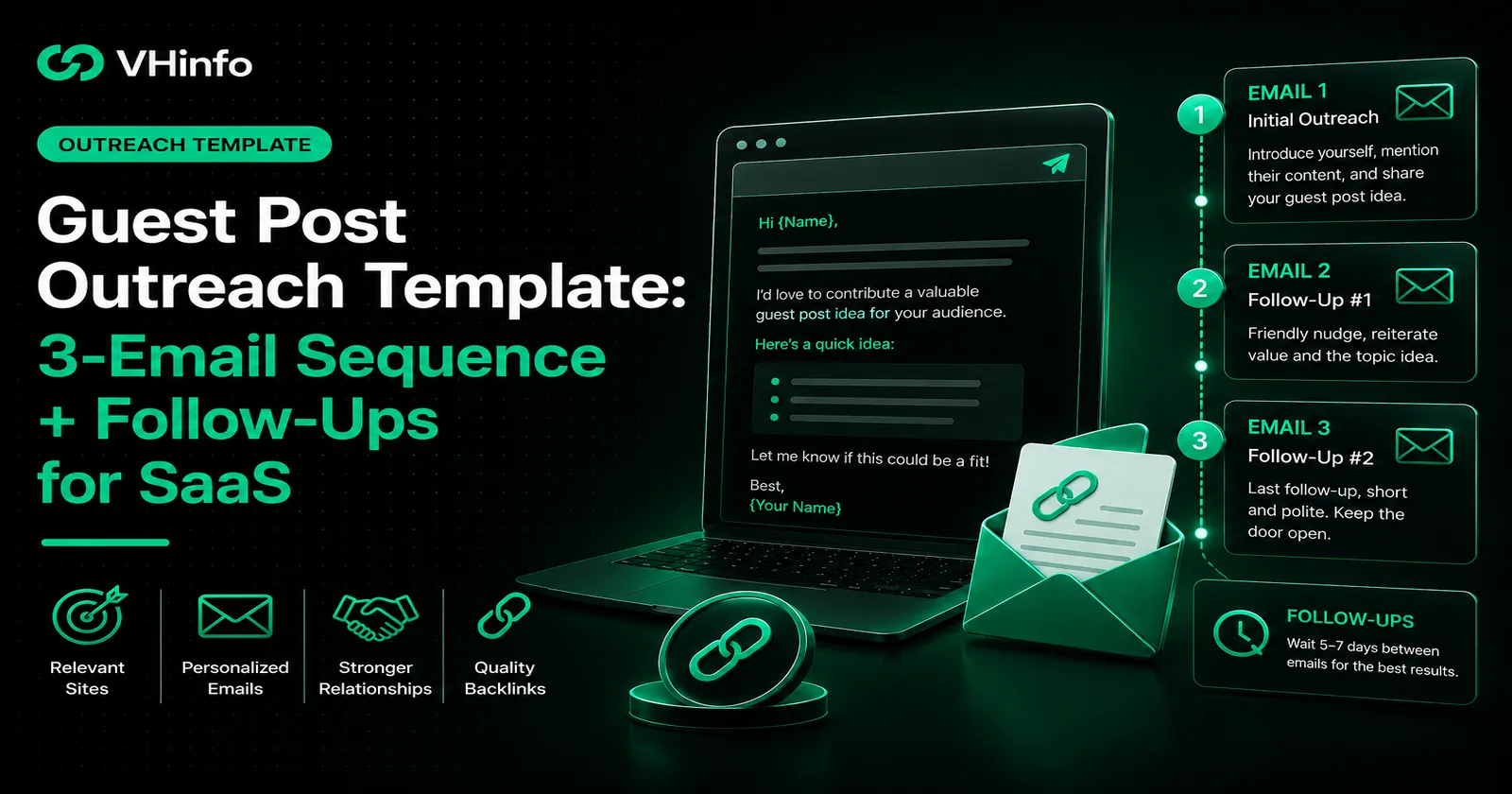
TL;DR Use 3 emails: This guest post outreach template uses 1 pitch and 2 follow-ups over about 10 days…
 Vishal ambani
November 14, 2026
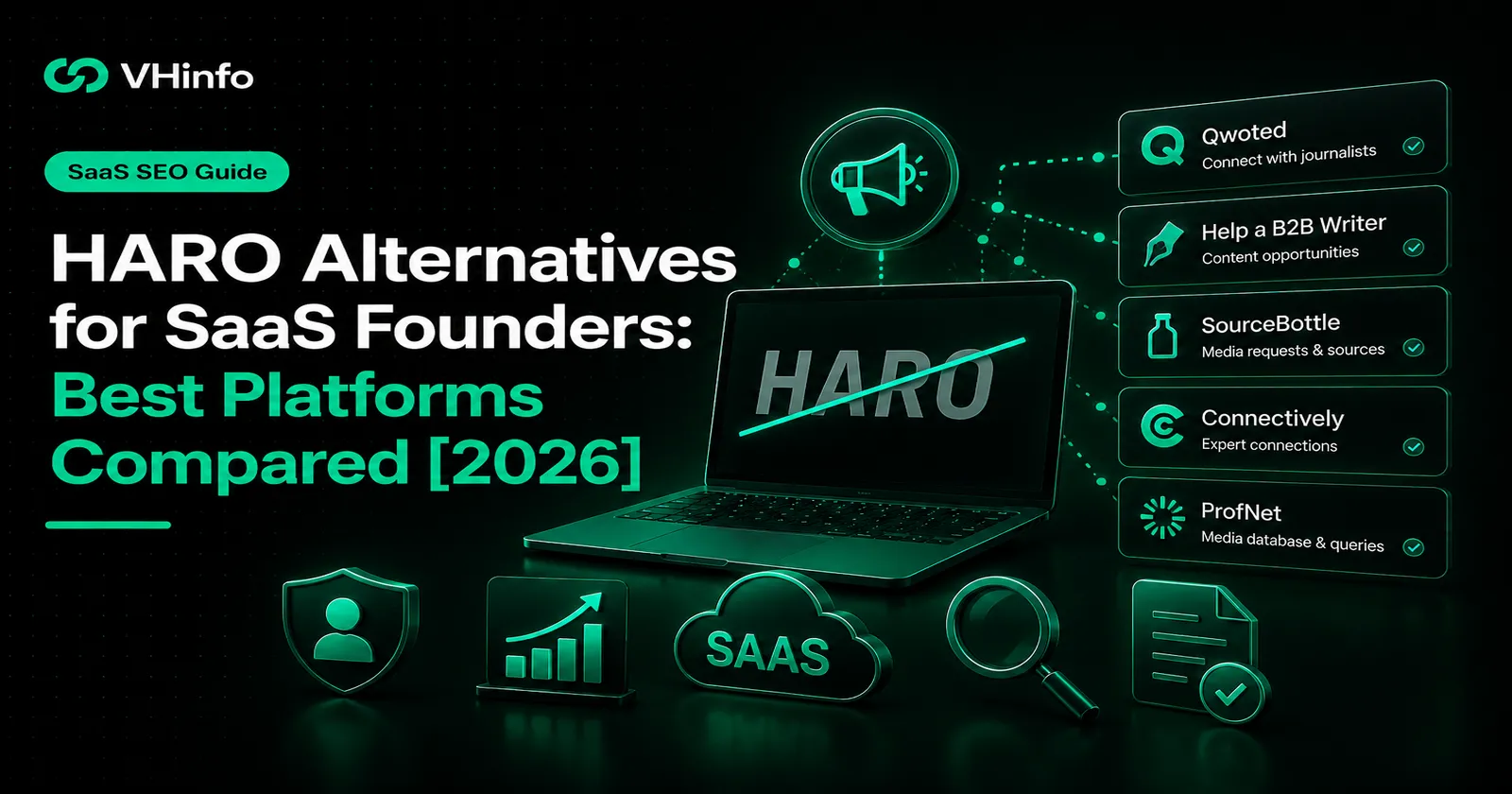
TL;DR HARO is back: Featured bought it in April 2025, and the daily query email is free again …
Vishal ambani
November 13, 2026
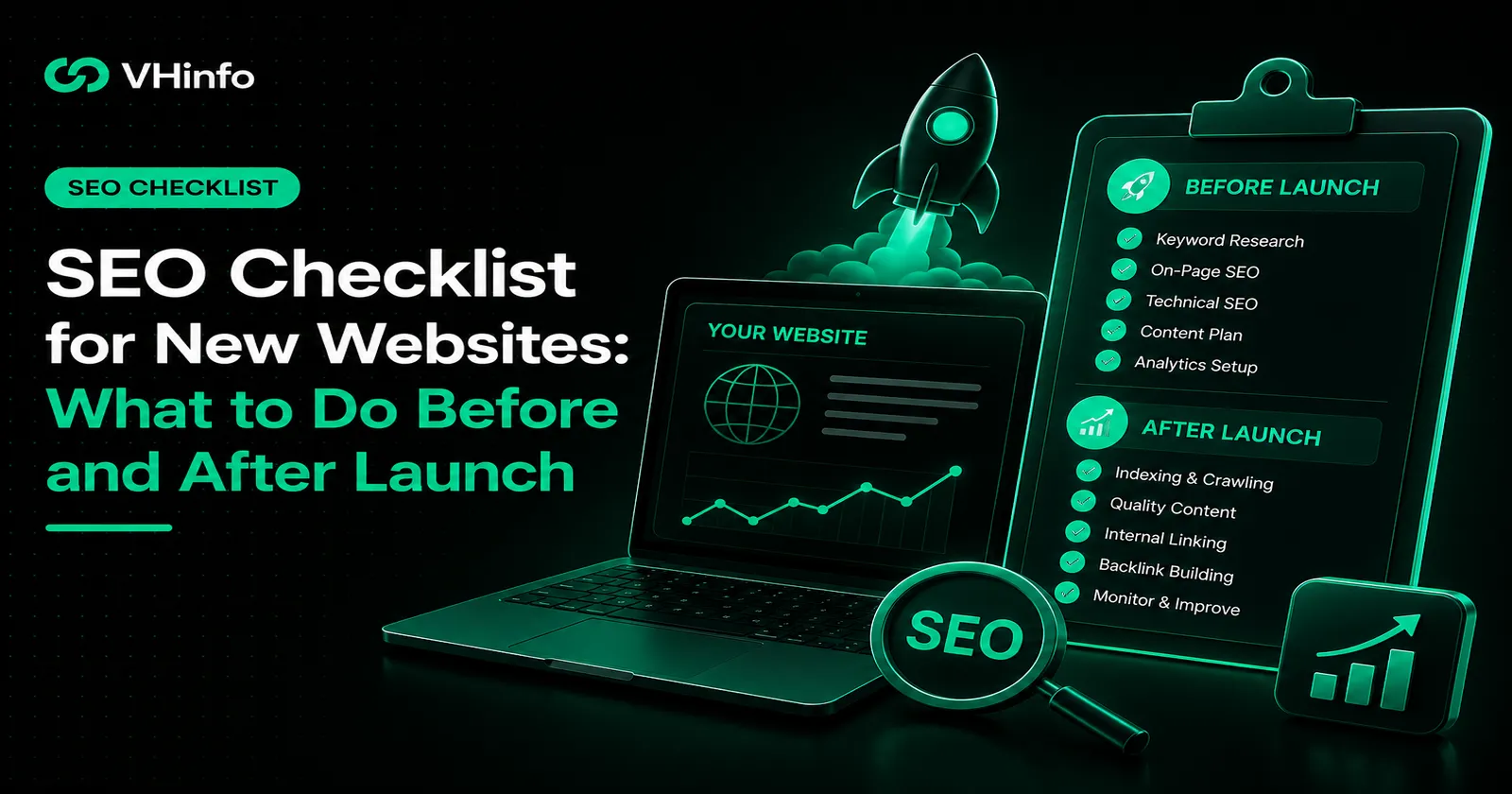
TL;DR Fix crawling and indexing first: Search Console, one HTTPS domain, and no leftover no-index tags. Give every…
Vishal ambani
November 12, 2026

Find quick answers to your questions.
Questions and answers will appear here soon.
 Share