
Link Building Strategies can look simple from the outside: find relevant websites, earn backlinks, and improve organic visibility. In practice, strong results depend on where those links come from, how closely they relate to the business, and whether each placement adds genuine value.
A campaign may combine local publishers, technology websites, industry media, regional platforms, and international publications. These opportunities are central to SEO Link Building in Ukraine, where publisher relevance and contextual placement can matter as much as the backlink itself.
That makes choosing the right approach more important than simply pursuing more backlinks. This guide explores practical Link Building Strategies for Ukraine in 2026, including outreach, contract requirements, reclamation, tools, measurement, agency considerations, and approaches that should be treated with caution.
Link Building Strategies are structured methods businesses use to identify, earn, and maintain backlinks from external websites. A strategy normally connects business goals with target pages, relevant publishers, useful content, outreach, and measurement.
Google explains that links can help its systems discover pages and understand relationships between web content. At the same time, its spam policies address links created primarily to manipulate search rankings.
The following points explain how Link Building Strategies work and what businesses should consider before choosing an approach.
Links can create pathways between related websites and help users discover useful resources. Search engines can also discover URLs through links found on pages they have already crawled.
For example, a Ukrainian cybersecurity company mentioned by a technology publication may gain a relevant referral path while giving readers access to a useful company resource.
Quality depends on more than a website’s domain metrics. Relevance, audience fit, editorial standards, content quality, placement, and the destination page should all be reviewed before accepting an opportunity.
A smaller industry publication with a highly relevant audience may make more sense for a specialist business than a large but unrelated website.
Different businesses need different Link Building Strategies. A SaaS company may prioritize technology publications and expert content, while a local service business may need regional media, associations, and community resources.
Before starting, define the target market, audience, target pages, available content assets, publisher requirements, and measurable campaign goals.
Different Link Building Strategies vary in research requirements, content needs, outreach effort, scalability, and execution time.
The table below provides a practical comparison.
| Strategy | Primary Approach | Best Use Case | Effort Level | Link Quality | Scalability | Typical Time to Execute |
| Guest Blogging | Expert content contributions | SaaS and B2B expertise | Medium | Medium–High | High | 2–6 weeks |
| Skyscraper Technique | Improve an existing resource | Content-rich websites | High | High when relevant | Medium | 3–8 weeks |
| Digital PR | Research and media outreach | Newsworthy businesses | High | High when editorial | Medium | 1–8 weeks |
| Broken Link Building | Replace outdated resources | Established websites | Medium | Medium–High | Medium | 2–5 weeks |
| Competitor Research | Identify competitor-linked domains | Competitive markets | Medium | Varies | High | 1–4 weeks |
| Local Outreach | Build regional relationships | Local businesses | Medium | Medium–High | Medium | 2–6 weeks |
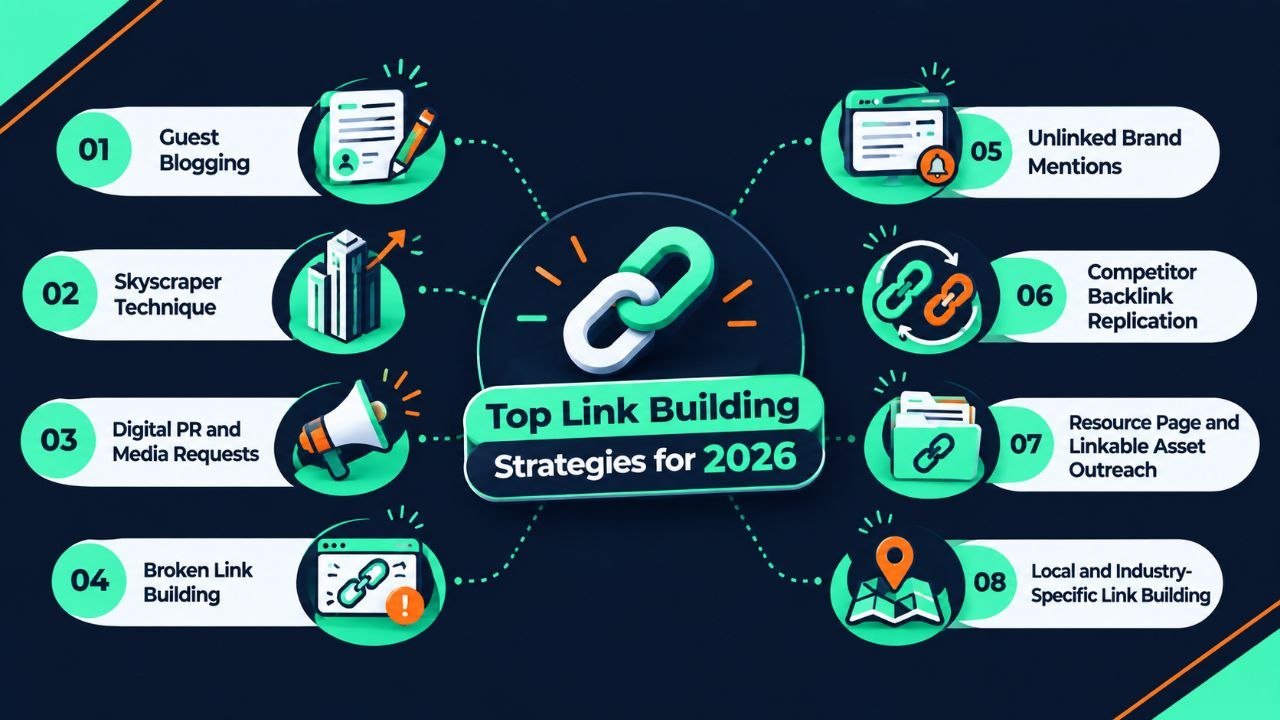
The most practical Link Building Strategies use several acquisition channels instead of depending on one technique. Each approach creates opportunities under different conditions, so the right combination depends on the business and its available assets.
For SaaS companies specifically, reviewing how best SaaS link building agencies structure specialist outreach campaigns can provide useful context when evaluating different approaches to link acquisition.
Below are eight strategies that Ukrainian businesses can adapt for local and international campaigns.
Guest blogging involves contributing useful, original content to a relevant publication. The article should fit the publisher’s audience and provide genuine information rather than existing mainly to accommodate a backlink.
A Ukrainian SaaS company, for example, could contribute an article explaining a specific technology problem faced by its target audience.
The Skyscraper Technique starts with an existing resource that has earned backlinks and creates a more useful alternative. The new resource may add current data, clearer explanations, original examples, or better organization.
Outreach can then focus on websites already referencing similar information. The method works best when the replacement genuinely improves the resource.
Digital PR connects companies with journalists and publishers through original research, expert commentary, industry data, surveys, reports, and timely insights.
For example, a Ukrainian cybersecurity company could publish research about security trends affecting businesses and offer relevant findings to technology journalists. Editorial coverage can then generate mentions and links naturally.
A broken link building strategy identifies relevant pages containing links that no longer work and suggests a suitable replacement resource.
The replacement should closely match the original subject. For example, if a Ukrainian technology publication links to an outdated software report, a current research page covering the same subject may provide a useful alternative.
A broken link building strategy is most useful when the replacement resource genuinely helps the publisher and its readers.
Unlinked mentions happen when a website discusses a company, product, research report, or expert without linking to the relevant page.
Businesses can review these mentions and prioritize cases where adding a link would improve the reader’s access to supporting information. A concise, personalized request is usually more appropriate than a generic backlink message.
Competitor backlink research identifies websites that already reference similar businesses. The goal is not to copy every competitor link but to discover publishers that may also be relevant to your own content.
Review each prospect for subject relevance, audience, content quality, organic visibility, editorial context, and placement standards before adding it to an outreach list.
Resource outreach works when a useful asset naturally belongs on an existing resource page. Suitable assets can include original research, industry reports, calculators, datasets, templates, detailed guides, or benchmark studies.
For example, a Ukrainian SaaS company could create an industry benchmark and contact relevant resource pages where the research adds information their audience needs.
Local and industry-specific acquisition focuses on publishers and organizations connected to the business’s market.
Potential sources include:
These relationships can support Link Building Strategies because the link has a legitimate business or editorial context.
Contracts define what a campaign should deliver and how quality will be judged. Clear terms are particularly useful when businesses work with external link building services or a link building agency.
A campaign agreement should cover publisher requirements, target URLs, content responsibilities, approvals, reporting, timelines, and replacement rules.
Below are the key areas to define before work begins.
Define acceptable website relevance, audience, content standards, placement types, target pages, anchor requirements, and excluded industries.
For example, a SaaS company may exclude unrelated directories, adult websites, gambling sites, automated networks, and publishers with extremely thin content.
Deliverables should explain how many placements, prospects, content pieces, or outreach activities are expected during each campaign period.
The agreement should also clarify who provides content, who approves publishers, what happens when a placement is rejected, and whether replacement opportunities are included.
Reporting should make completed work easy to verify. Useful fields include linking domain, published URL, destination page, anchor text, publication date, and placement status.
Performance reporting can also include referral traffic, referring domains, impressions, ranking changes, and leads. These metrics provide more context than backlink count alone.
Outreach is one of the most important parts of practical Link Building Strategies because publisher selection and communication directly affect the opportunities a campaign can create.
For Ukrainian campaigns, research should consider geography, language, industry, target audience, and whether the publisher actually reaches the market being targeted.
Below are the main steps for developing relevant publisher relationships.
Start with websites already covering your industry, audience, or market. Potential prospects include Ukrainian technology publications, business media, specialist blogs, professional communities, associations, and regional resources.
A Ukrainian fintech company, for example, could research financial publications, startup websites, technology platforms, and business communities before beginning outreach.
Personalized outreach gives publishers a clear reason to consider the proposed content or reference.
Mention a relevant article, identify the audience fit, and explain why your resource or expertise could improve the publication. Avoid sending identical messages to every prospect because generic pitches provide little evidence of genuine research.
Publisher relationships can create opportunities beyond one backlink. A trusted contributor may later provide expert commentary, interviews, research citations, guest contributions, or editorial mentions.
Consistent communication also helps businesses understand each publisher’s content standards, preferred topics, and editorial expectations, making future outreach more relevant.
Not every backlink opportunity requires new prospecting. Existing links can disappear, URLs can change, and brand mentions can remain unlinked.
Reclamation therefore complements broader Link Building Strategies by recovering opportunities that already have a relationship with the website.
The following three activities are particularly useful for established websites.
Lost backlinks can result from deleted pages, URL changes, redesigned websites, or publisher updates.
Start by identifying the previous link and checking whether the referring page still exists. If the placement remains relevant, contact the publisher with the correct destination URL and explain the change clearly.
Search for publications that mention the company without linking to an appropriate page. Prioritize mentions where the link would provide additional information for readers.
For example, a publication discussing a company’s research could link directly to the original study, allowing readers to verify the information without searching for it separately.
Broken destinations can reduce the value of existing references. Check important pages for deleted URLs, incorrect redirects, changed slugs, and technical errors.
If another website still references the old destination, restore the relevant resource or provide a closely matching replacement page where appropriate.
Tools can make research and monitoring faster, but they should support human evaluation rather than replace it.
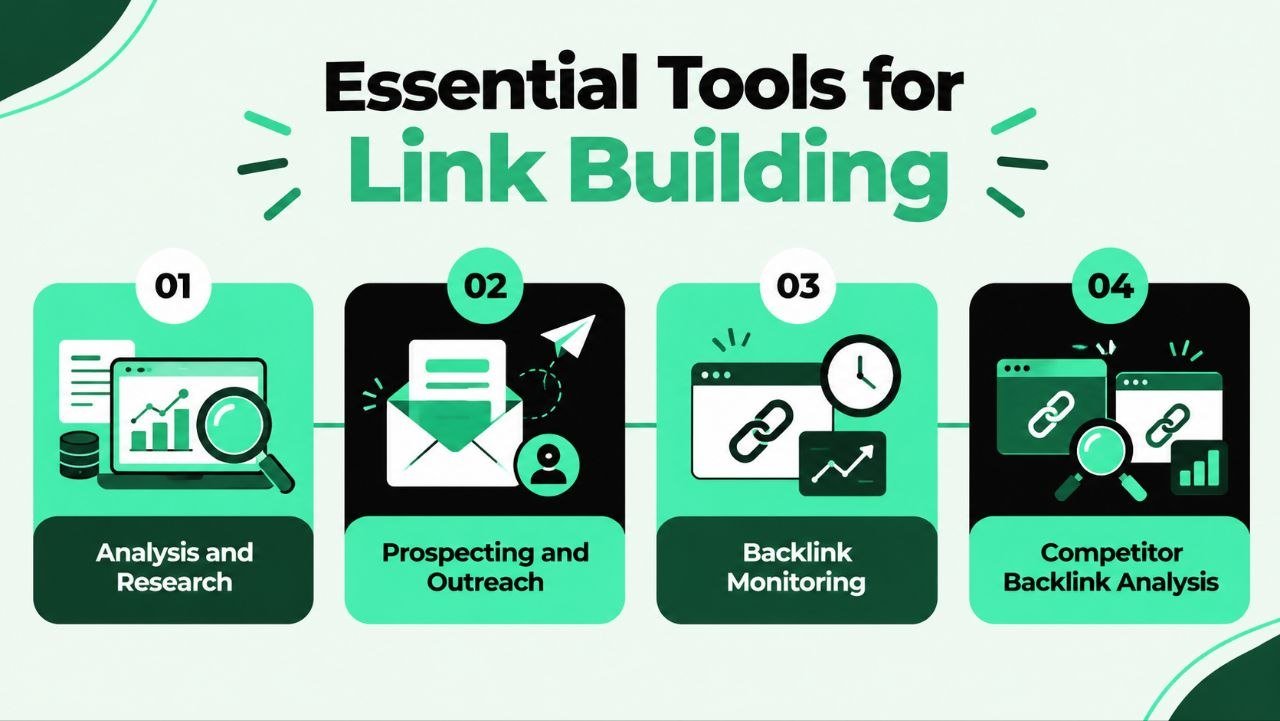
A practical toolkit usually covers backlink analysis, prospecting, outreach management, monitoring, and competitor research. For teams considering outsourced support, exploring White Label Agencies in Ukraine can also provide useful context on external link building delivery.
Below are the main tool categories used in a campaign.
Analysis tools can show referring domains, backlink sources, anchor text, organic visibility, and competing websites.
The useful part is not simply collecting metrics. The team should use the data to identify relevant publishers and then manually review whether each website fits the campaign.
Prospecting tools help discover websites, contacts, publications, and content opportunities. Outreach systems can organize messages, follow-ups, replies, and campaign status.
However, sending more messages does not automatically create better results. A smaller, well-qualified prospect list can make the outreach process more manageable.
Monitoring tools can identify new and lost backlinks, referring domains, destination URLs, and anchor text.
Regular monitoring helps teams spot lost placements, unexpected domains, broken destinations, and changes in important backlinks. It also provides useful information for campaign reporting.
Competitor backlink analysis reveals websites that already reference similar businesses. These domains can provide ideas for publisher research, resource outreach, industry content, and editorial opportunities.
Each domain still needs manual qualification. A backlink in a competitor profile is a research signal, not automatic evidence that the same website is suitable.
A repeatable process makes Link Building Strategies easier to manage because every stage has a defined purpose. The campaign should move from business goals to qualified prospects, useful assets, outreach, and measurement.
These successful link building strategy steps can be used as a practical campaign framework.
Start by deciding what the campaign needs to support. Goals may include increasing visibility for a product page, promoting research, reaching a new market, or generating qualified referral traffic.
Then identify the target pages, audience, geographic market, and publisher types that match those goals.
Build prospects through competitor research, industry searches, resource pages, publisher databases, existing relationships, and relevant communities.
Next, qualify each website based on relevance, audience, content quality, organic visibility, editorial standards, and placement context. Remove websites that do not meet the campaign requirements.
The asset should give publishers a genuine reason to reference the website.
Useful assets can include:
The strongest assets match the needs of the publication’s audience.
Send personalized pitches with a relevant idea, useful resource, and clear explanation of why the proposal fits the publisher.
Track prospects, responses, approvals, content status, publication dates, live URLs, follow-ups, and rejected opportunities. This creates a clear record of campaign activity.
Do not measure the campaign only through backlink volume. Track referring domains, referral visits, target-page visibility, ranking changes, conversions, and qualified leads where attribution is possible.
For B2B companies, lead generation for link building can include demo requests, contact forms, product inquiries, research downloads, and other meaningful actions.
A second lead generation for link building measurement layer can compare which referring publications produce engaged visitors rather than simply counting acquired links.
VH Info’s supplied brand information describes a SaaS-focused link-building model serving B2B and B2C SaaS brands, technology businesses, and agencies looking for white-label fulfillment.
The stated approach includes competitor-gap research, white-hat link building, client approval, transparent placement information, and dedicated project management.
This makes the relevant comparison less about generic agency claims and more about how the delivery process fits a company’s niche, targets, approval requirements, and internal resources.
Below are the main areas relevant to that model.
VH Info focuses on SaaS and technology niches, including AI, cybersecurity, VPN, antivirus, CRM, development, hosting, sales, and marketing technology.
Its supplied brand information states that the company serves both B2B and B2C SaaS businesses. This specialization can be relevant when publisher research needs to match a technical product or SaaS audience.
VH Info’s stated approach includes competitor-gap research and relevant placement opportunities. Under its done-for-you model, clients provide target URLs and anchor texts while VH Info handles outreach and presents placement propositions for approval.
This gives the client an opportunity to review proposed placements before links are created.
VH Info states that it has served 50+ clients, has more than five years of experience, and has built more than 20,000 links for clients. Its main markets are listed as the USA and Europe.
For smaller internal teams, an external workflow can reduce the amount of prospect research, outreach, placement coordination, and reporting handled internally.
Backlinks can contribute to lead generation when the referring publication reaches a relevant audience and the destination page gives visitors a useful next step.
For SaaS companies, lead generation for link building may involve sending qualified visitors to product pages, comparison pages, research assets, or demo pages rather than treating link volume as the final business objective.
External support can make sense when a business needs more prospecting, outreach, publisher communication, and campaign management than its internal team can handle.
It can also be useful when the campaign requires specialist knowledge. For businesses evaluating broader outsourcing models, link building services in Ukraine can be considered alongside internal capabilities and campaign requirements.
The following situations can indicate that outside support is worth evaluating.
A link building consultant can be useful when the internal team understands SEO but lacks experience with publisher qualification, outreach, backlink analysis, or campaign planning.
A consultant can also help establish prospect criteria, review opportunities, develop outreach processes, and determine which Link Building Strategies fit the business.
Outreach requires prospect research, contact discovery, personalization, follow-ups, negotiation, content coordination, and reporting.
If those tasks compete with technical SEO, content marketing, product marketing, or client work, external support can provide additional execution capacity.
Scaling requires more than sending a higher number of emails. Publisher qualification, content quality, approval processes, and reporting standards must remain consistent as campaign volume grows.
A scalable system should therefore define who researches prospects, who approves them, who manages content, and how completed placements are recorded.
Consistent reporting becomes increasingly important when several people need visibility into campaign progress.
Before starting, agree on reporting fields such as linking domain, published URL, destination page, anchor, publication date, placement status, and other quality criteria.
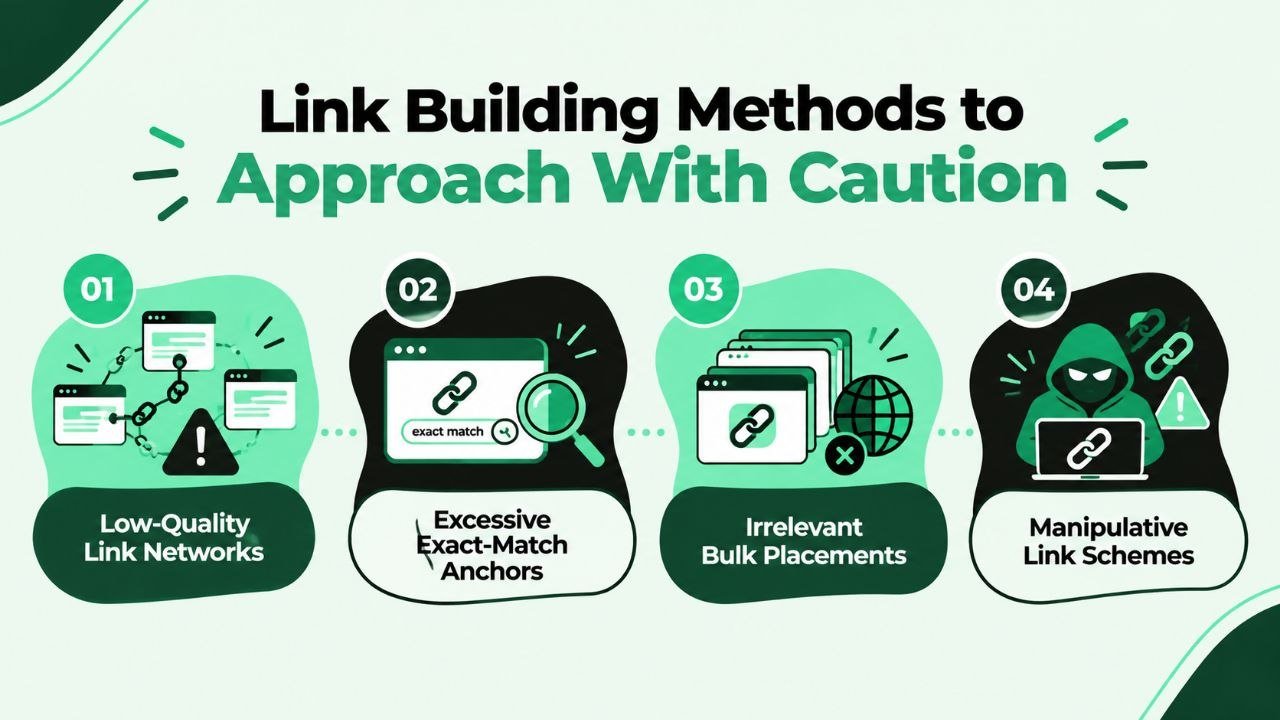
Some acquisition methods create unnecessary quality or policy risks. Google’s Search policies address practices such as paid links intended to manipulate rankings, automated link creation, excessive exchanges, and other manipulative schemes.
Sustainable Link Building Strategies should therefore emphasize relevance, editorial value, and legitimate relationships.
Link networks built mainly to manufacture backlinks often provide little independent value to readers.
Before accepting a network placement, review the website’s purpose, content depth, audience, outbound links, publishing history, and topical relevance. A large number of connected websites does not automatically make the opportunity useful.
Repeating the same commercial anchor across many placements can create an unnecessarily engineered backlink profile.
A natural profile can include brand names, URLs, descriptive phrases, partial matches, and other contextual variations. Anchor text should therefore fit the surrounding article and destination page.
Bulk packages can become problematic when websites are selected mainly to satisfy a numerical target.
A Ukrainian SaaS company, for example, gains limited strategic value from dozens of unrelated websites simply because they offer inexpensive placements. Publisher relevance should remain a basic qualification standard.
Automated links, hidden links, excessive reciprocal arrangements, and paid links intended to pass ranking credit can conflict with Google’s spam policies.
Businesses should instead focus on useful resources, genuine editorial relationships, relevant publishers, and content that gives readers a reason to follow the reference.
Effective Link Building Strategies in Ukraine focus on relevance, useful content, publisher quality, and consistent outreach rather than collecting every available backlink.
The go-to link building method depends on the business, while the right go-to link building method can change as campaign data reveals which channels deliver better opportunities.
For businesses seeking external support, VH Info helps SaaS and technology companies with prospect research, publisher outreach, placement management, and campaign execution. Clear goals, target pages, publisher standards, and reporting expectations provide a strong foundation for sustainable link building.
Link building in Ukraine often requires attention to local publishers, Ukrainian audiences, regional organizations, technology media, and industry communities. Businesses targeting international customers may also need publishers in the USA or EU. The basic principles remain the same: relevance, editorial context, audience fit, useful content, and a legitimate reason for the link.
Useful methods include guest blogging, digital PR, competitor research, broken link building, unlinked mention reclamation, resource outreach, and local industry relationships. Their suitability depends on the business, audience, content assets, and target market. A balanced campaign usually combines several relevant approaches instead of depending entirely on one acquisition method.
Evaluate the referring website’s relevance, audience, content quality, organic visibility, editorial standards, placement context, destination page, and anchor text. Also ask whether the link genuinely helps readers understand the subject. Domain-level metrics can support the review, but they should not be the only reason for accepting a placement.
SaaS companies, technology businesses, professional services, e-commerce brands, local companies, publishers, and organizations competing for organic visibility may use link building. The need depends on the site’s goals, content assets, competitive environment, and available resources. Businesses should first determine whether they have useful pages worth referencing before scaling acquisition.
The main difference is publisher and audience selection rather than a separate SEO rulebook. Ukrainian campaigns may emphasize local media, regional resources, Ukrainian-language publications, and domestic industry organizations. Companies targeting US or EU customers may also need international publishers whose audiences match their target markets and commercial objectives.
Common tactics include guest blogging, digital PR, competitor backlink research, local industry outreach, resource-page outreach, broken link building, and unlinked mention reclamation. Their results depend on publisher relevance and content quality. Strong campaigns normally combine several tactics, then adjust the mix according to placement quality, referral traffic, and business outcomes.
Google applies its general Search policies to websites in Ukraine. Links created primarily to manipulate rankings can fall under its spam policies, while useful editorial references can serve legitimate users. Businesses should therefore prioritize relevant content, genuine publisher relationships, and appropriate practices rather than automated or manipulative link acquisition.
Every article dives deep into what works, why it works, and how to use it.
TL;DR SEO Link Building in Ukraine focuses on earning relevant backlinks from Ukrainian publishers, industry websites, business resources, and international…
 Vishal ambani
September 18, 2026
Vishal ambani
September 18, 2026
TL;DR Ukraine has agencies covering web design, WordPress development, SEO, link building, marketing, and content support, giving client-facing teams several…
Vishal ambani
September 17, 2026
TL;DR Link building services help Ukrainian businesses earn relevant mentions through outreach, guest content, digital PR, resource pages, and other…
Vishal ambani
September 16, 2026

 Share
Share