
A growing share of software research now happens inside AI chats. A buyer asks ChatGPT which project management tool fits a remote team, gets three names, and books a demo with one of them. If your product wasn’t mentioned, that deal never reached your pipeline.
Analysts saw this coming. In 2024, Gartner predicted that traditional search engine volume would drop 25% by 2026 as AI chatbots take over more queries. Its analysts described generative AI tools as becoming “substitute answer engines.”
That’s the gap AI brand monitoring fills. These tools show when AI engines recommend you, when they pick a competitor instead, and which sources shape their answers.
This guide compares six leading tools for SaaS teams, grouped by what each does best. You’ll also find a side-by-side comparison, the capabilities worth paying for, and practical steps to improve your AI brand visibility.
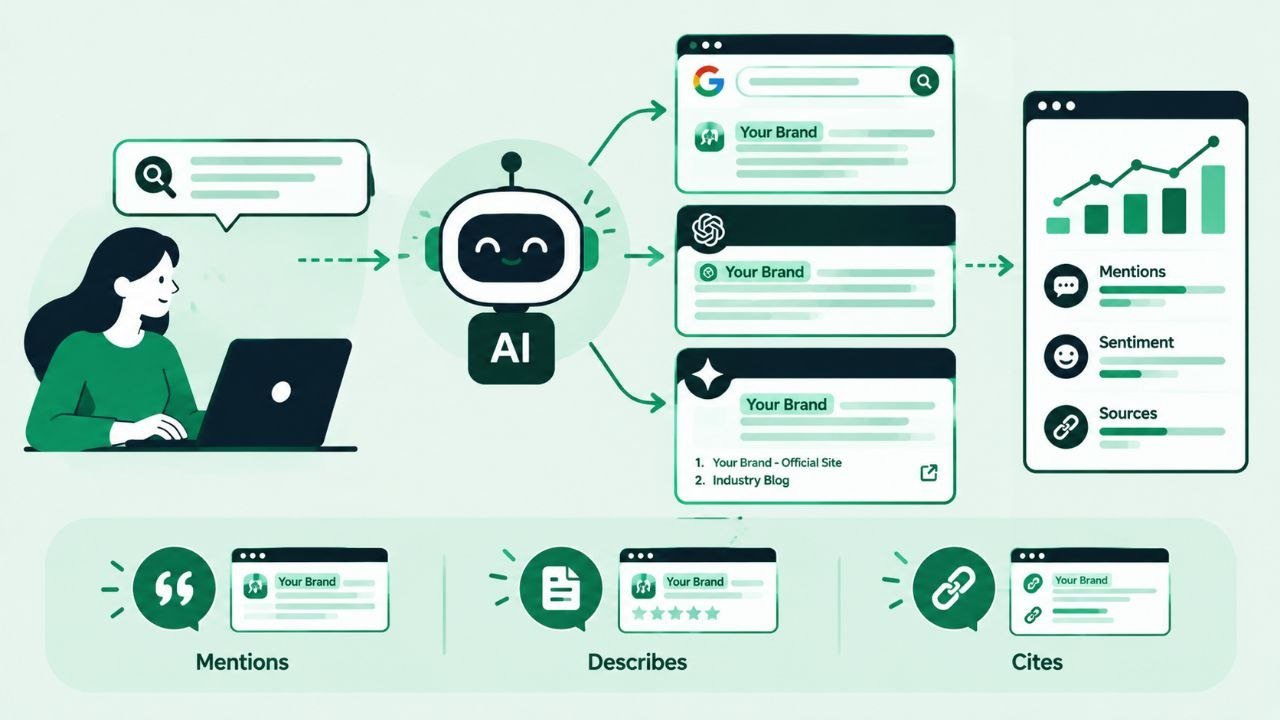
AI brand monitoring is the process of tracking how AI engines mention, describe, and cite your brand for the prompts your buyers use. It measures how often you appear, the sentiment behind those answers, and the sources AI relies on. Below are two ideas that explain why it matters.
Online brand monitoring tracks mentions on websites, news, and social media. AI brand monitoring tracks what AI engines say when someone asks a question. The first shows what people publish; the second shows what AI repeats back. Most SaaS teams need both.
AI brand visibility affects whether your product appears when buyers ask for tool recommendations. In an Ahrefs study of 75,000 brands, 26% had no AI Overview mentions at all. For SaaS, missing from those answers often means missing shortlists.
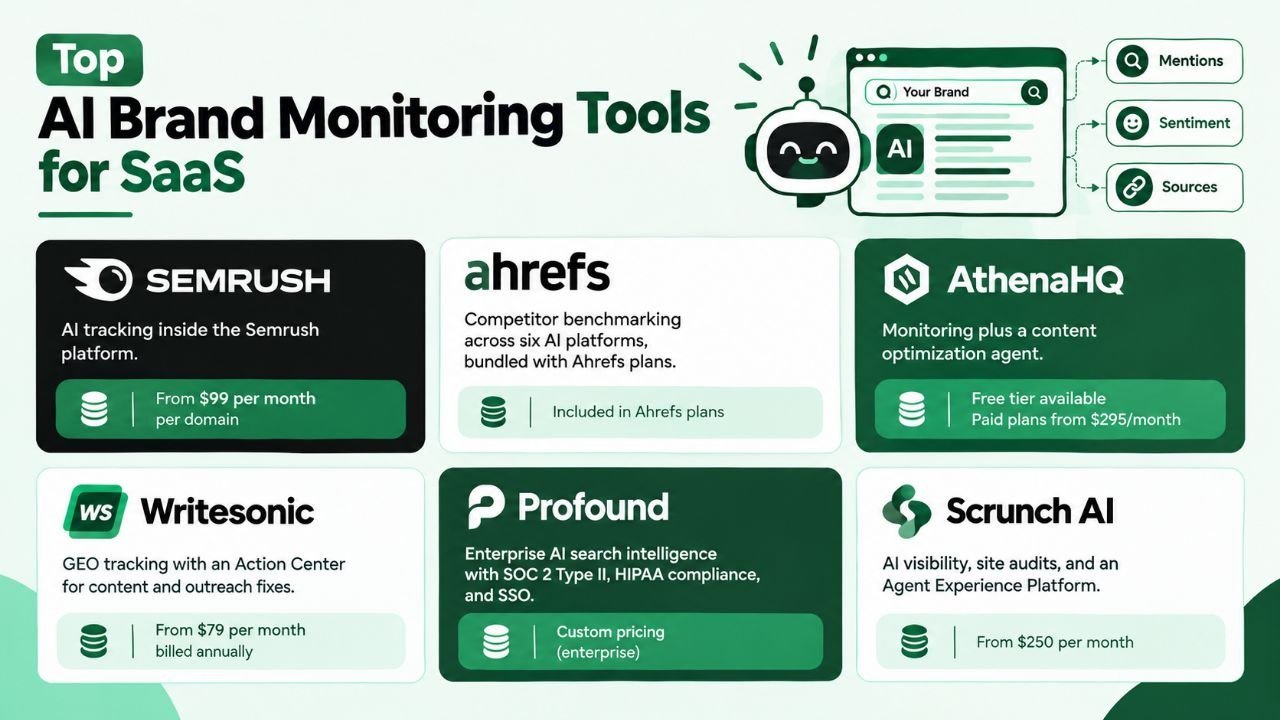
The top AI brand monitoring tools for SaaS fall into three groups: all-in-one SEO suites, GEO optimization platforms, and enterprise intelligence tools. Each group solves a different problem. Prices were checked against vendor pages and independent 2026 reviews, but they change often, so confirm before buying. Below is a quick overview of the six tools covered in this guide.
Here’s how the six tools stack up side by side. Use the table to shortlist two or three options, then test them with your own prompts during a trial.
| Tool | Category | AI Engines Tracked | Starting Price | Optimization Features | Best For |
| Semrush AI Visibility Toolkit | All-in-one SEO & AI | ChatGPT, Google AI, Gemini, Perplexity | $99/mo per domain, billed annually | Audits and recommendations | Existing Semrush users |
| Ahrefs Brand Radar | All-in-one SEO & AI | 6, including AI Mode and Copilot | Bundled from $129/mo; all platforms $699/mo | Reporting only | Competitor benchmarking |
| AthenaHQ | GEO | 5 on free plan; more on paid | Free; Starter $295/mo | Content optimization agent | GEO and content teams |
| Writesonic | GEO | Up to 10 on Enterprise | From $79/mo, billed annually | Action Center | Lean content teams |
| Profound | Enterprise | Up to 10 | Trial, then custom | Agents and workflows | Enterprise and regulated SaaS |
| Scrunch AI | Enterprise | 4 on Core; up to 9 on Enterprise | $250/mo | Site audits; AXP on Enterprise | Site-level AI readiness |
All-in-one trackers add AI brand monitoring to SEO platforms many SaaS teams already use. They make sense if you want AI visibility data next to rankings, backlinks, and keyword research. Below are the two leading options.
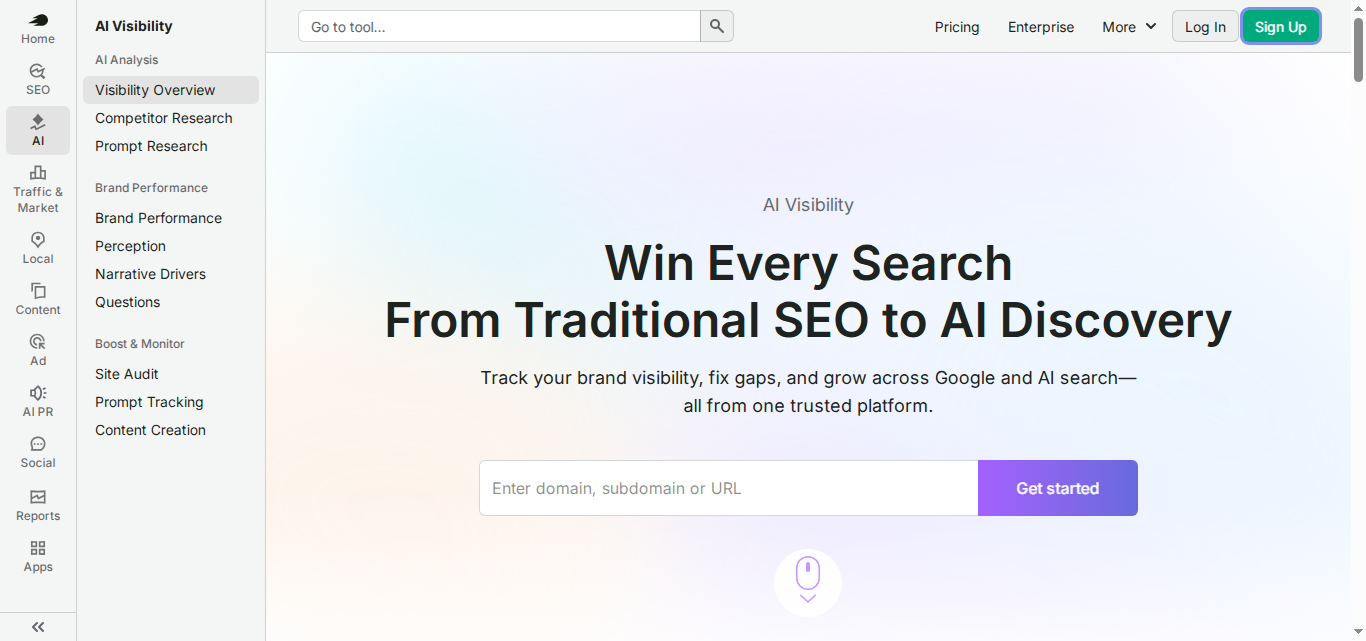
Semrush AI Visibility Toolkit is the simplest choice for SaaS teams already using Semrush. It adds AI tracking to the platform you know, so AI mentions sit beside your keyword and competitor data. There’s no new tool to learn and no separate login.
ChatGPT, Google AI, Gemini, and Perplexity.
$99 per month per domain, billed annually, with 25 daily-tracked prompts.
Audits and recommendations alongside visibility reports.
SaaS teams already paying for Semrush.
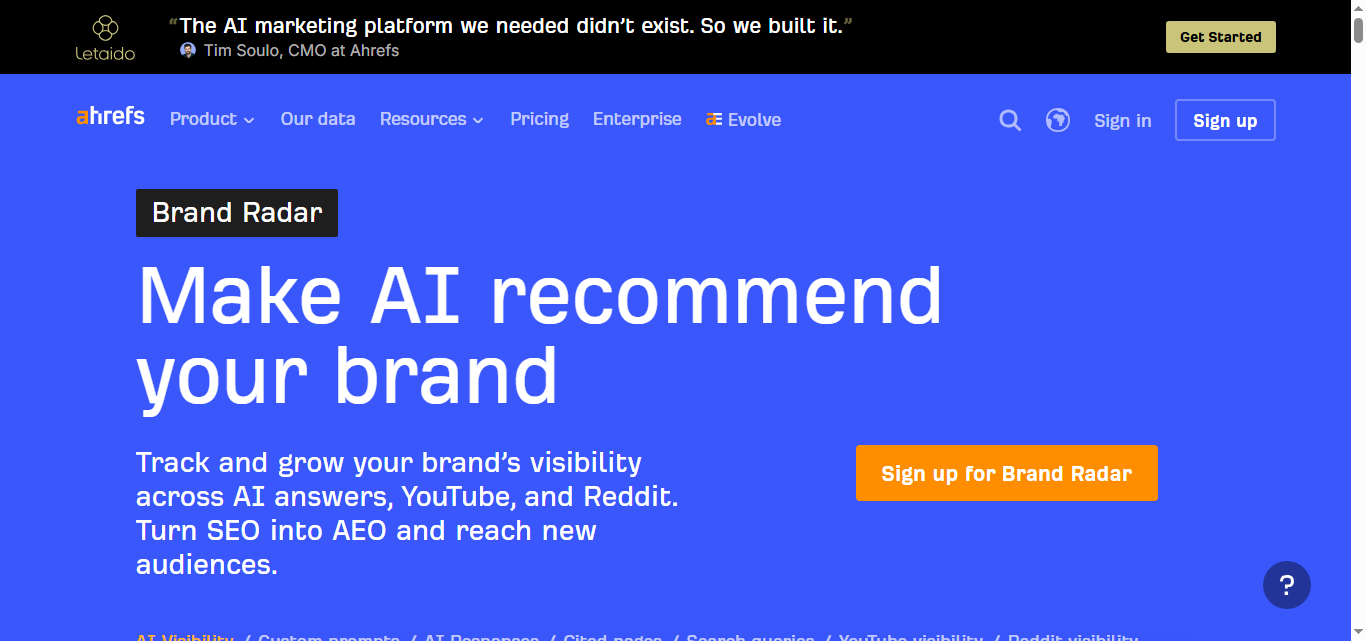
Ahrefs Brand Radar is built for competitor benchmarking in AI search. It shows how often your brand appears next to rivals across six AI platforms. Custom prompt tracking then lets you see exactly how AI answers describe you for the questions buyers ask.
AI Overviews, AI Mode, ChatGPT, Perplexity, Copilot, and Gemini.
Bundled into Ahrefs plans, starting with 5 tracked prompts on Lite at $129 per month. The all-platform plan is listed at $699 per month.
Brand Radar data can be pulled into AI tools through the Ahrefs MCP.
Teams that want competitor share-of-voice data.
GEO tools go a step further than monitoring. They spot content and citation gaps, then help you fix them with recommendations or AI agents. Below are two platforms built around that idea.
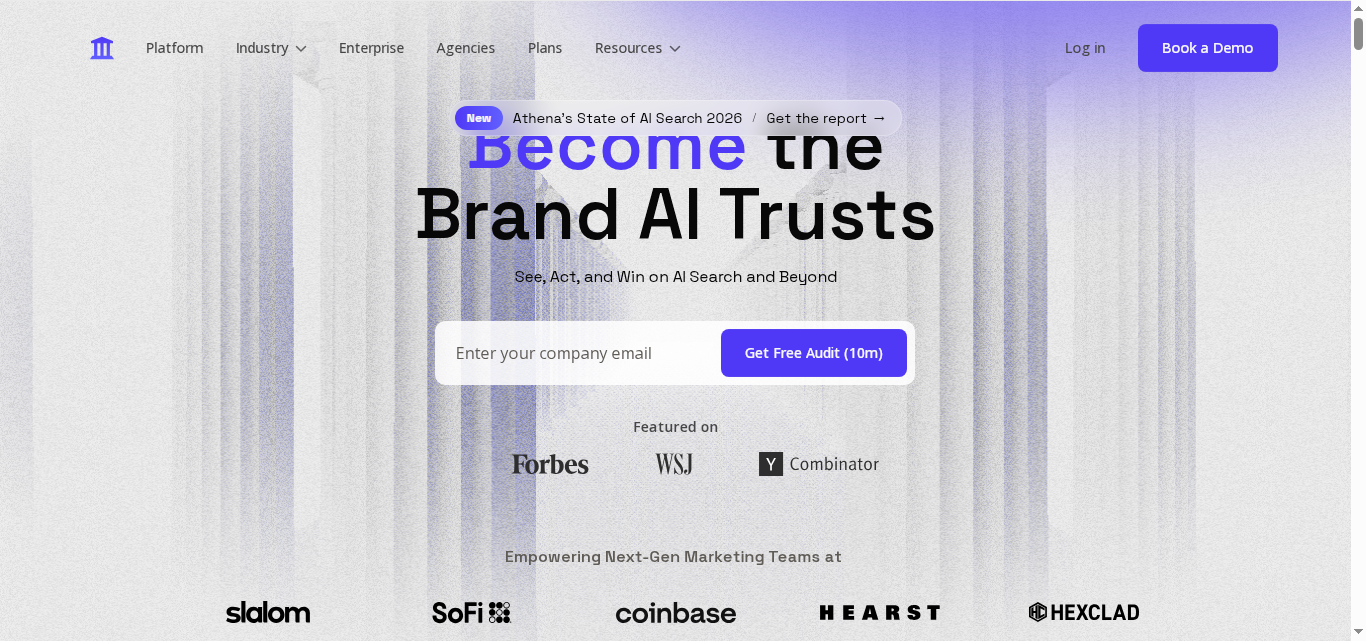
AthenaHQ combines AI brand monitoring with a content optimization agent. You can find gaps and act on them in one place. The agent recommends on-page and off-page fixes. It also flags inaccurate claims AI engines make about your product or pricing.
Five on the free plan (ChatGPT, Perplexity, Google AI Overviews, Gemini, and Copilot), with more on paid plans.
The free Essential plan includes 300 credits. Starter costs $295 per month for 3,600 credits.
Integrations with Shopify, Webflow, GA4, and Google Search Console. Enterprise adds the Athena Citation Engine and SSO.
Content and GEO teams that want monitoring and action in one workflow.
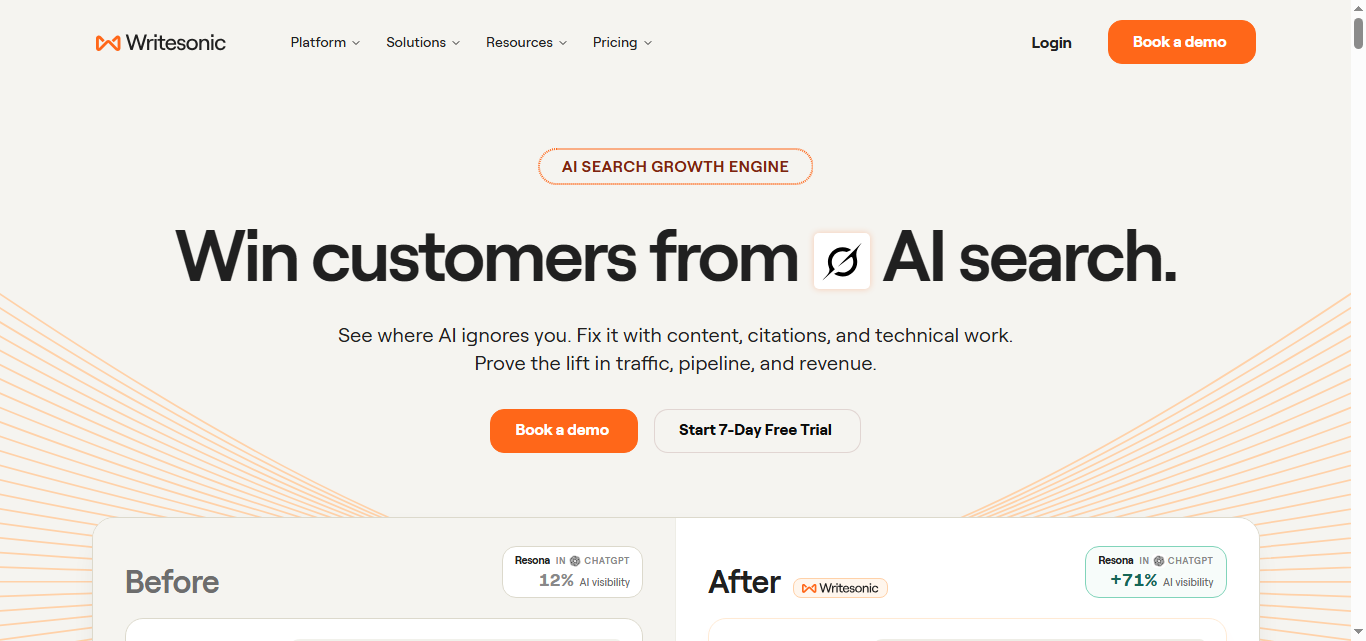
Writesonic is an AI writing tool turned AI search platform. Its standout feature is the Action Center, which turns visibility gaps into clear tasks. These include new content, page refreshes, and outreach to authors of third-party pages that cite your competitors.
Lower plans focus on ChatGPT, Gemini, and Google AI Overviews. Enterprise covers all 10 tracked platforms.
Starter from $79 per month, billed annually. Growth at $399 per month adds limited Action Center access.
Content creation and GEO tracking in one platform.
Lean SaaS content teams that want to act on gaps quickly.
Enterprise SaaS companies need more than dashboards. Security reviews ask for SOC 2 reports, single sign-on, and access controls, and leadership wants AI traffic tied to revenue. Below are two platforms built for those requirements.
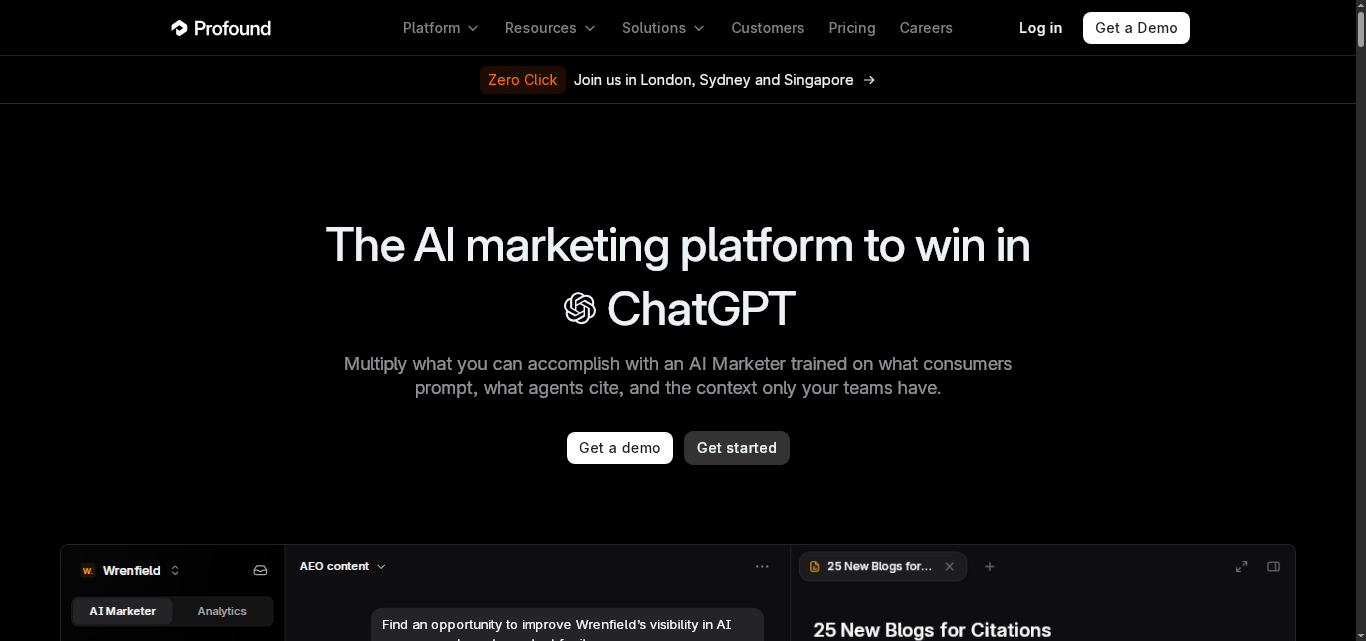
Profound is an enterprise AI search intelligence platform for large brands that need depth and strict security. Its Agent Analytics reads CDN logs to reveal AI crawler and referral traffic. Its agents then turn those insights into content workflows your team can review.
Up to 10 on Enterprise, including ChatGPT, Perplexity, Gemini, Claude, Copilot, and Google AI Overviews.
SOC 2 Type II, HIPAA compliance, SSO via SAML/OIDC, and role-based access control.
A 7-day trial, then custom Enterprise pricing.
Enterprise and regulated SaaS companies.
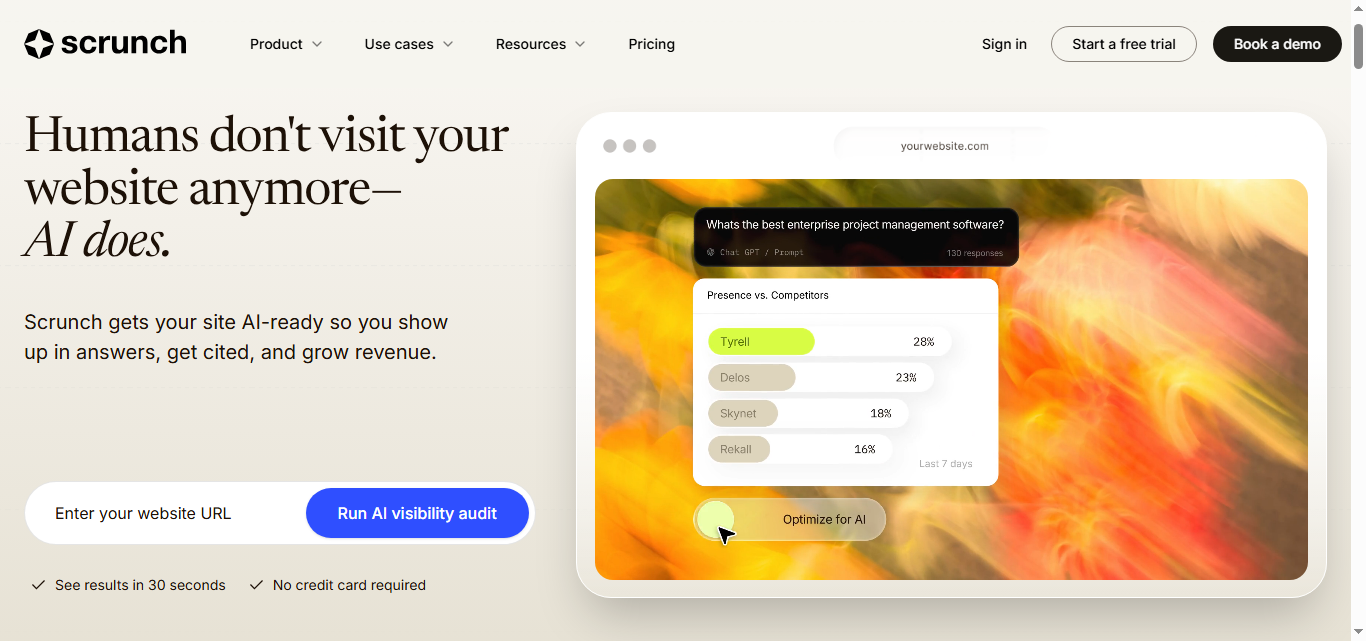
Scrunch AI connects AI visibility to your actual website. Along with tracking brand mentions, it analyzes AI bot traffic and runs site audits. Its Agent Experience Platform goes further by serving AI-readable versions of your pages directly to AI crawlers.
Four on Core (ChatGPT, Perplexity, Google AI Overviews, and Copilot), and up to nine on Enterprise.
SOC 2 Type II, SSO, and role-based access.
Core costs $250 per month with 125 prompts and a 7-day trial. Enterprise is custom.
Sitecore acquired Scrunch in June 2026, and AXP is available on the Enterprise tier.
Mid-market and enterprise SaaS brands focused on site-level AI readiness.
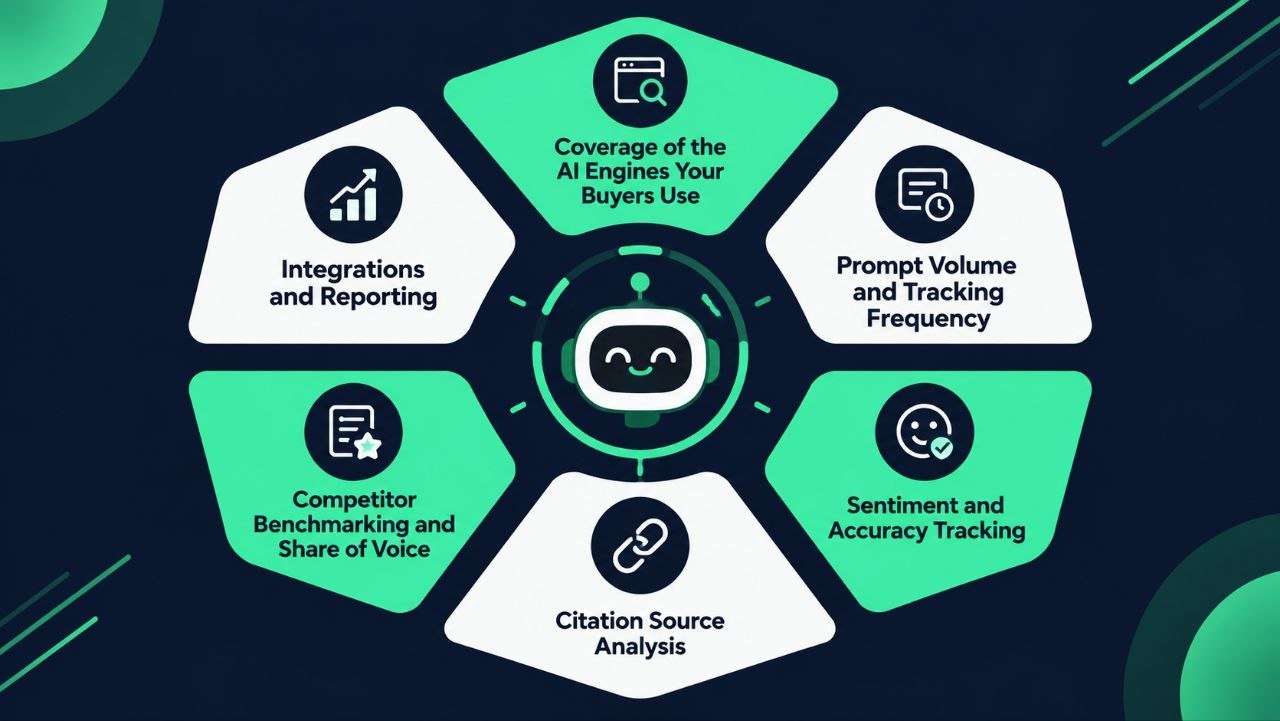
Not every feature matters equally. The right AI search monitoring tools for your team are the ones that match how you’ll actually use the data. Below are the six key capabilities worth checking before you buy.
Check which engines each plan covers, not just the top tier. Several tools track only three or four engines on entry plans. If your buyers use Claude or Copilot, confirm those are included.
Prompts are the questions a tool runs through AI engines. More prompts give a fuller picture of your category. Daily tracking shows trends faster, which matters when AI answers shift from week to week.
An AI brand visibility tracker should show how often you appear compared with competitors for the same prompts. Share of voice turns raw mentions into a clear competitive score you can report monthly. For example, a CRM brand can see which rivals ChatGPT recommends instead.
Knowing which pages AI engines cite matters as much as knowing whether you’re mentioned. Source analysis shows the review sites, blogs, and forums shaping AI answers. Those sources become your outreach and content priorities.
AI engines sometimes describe products inaccurately, listing old pricing or missing features. Sentiment and accuracy tracking flag these errors so you can correct the source content. This protects trust before a buyer ever reaches your site.
Look for exports, APIs, and connections to GA4, Google Search Console, or BI tools. These let you tie AI visibility to traffic and pipeline. Without them, AI brand monitoring stays a separate report nobody acts on.
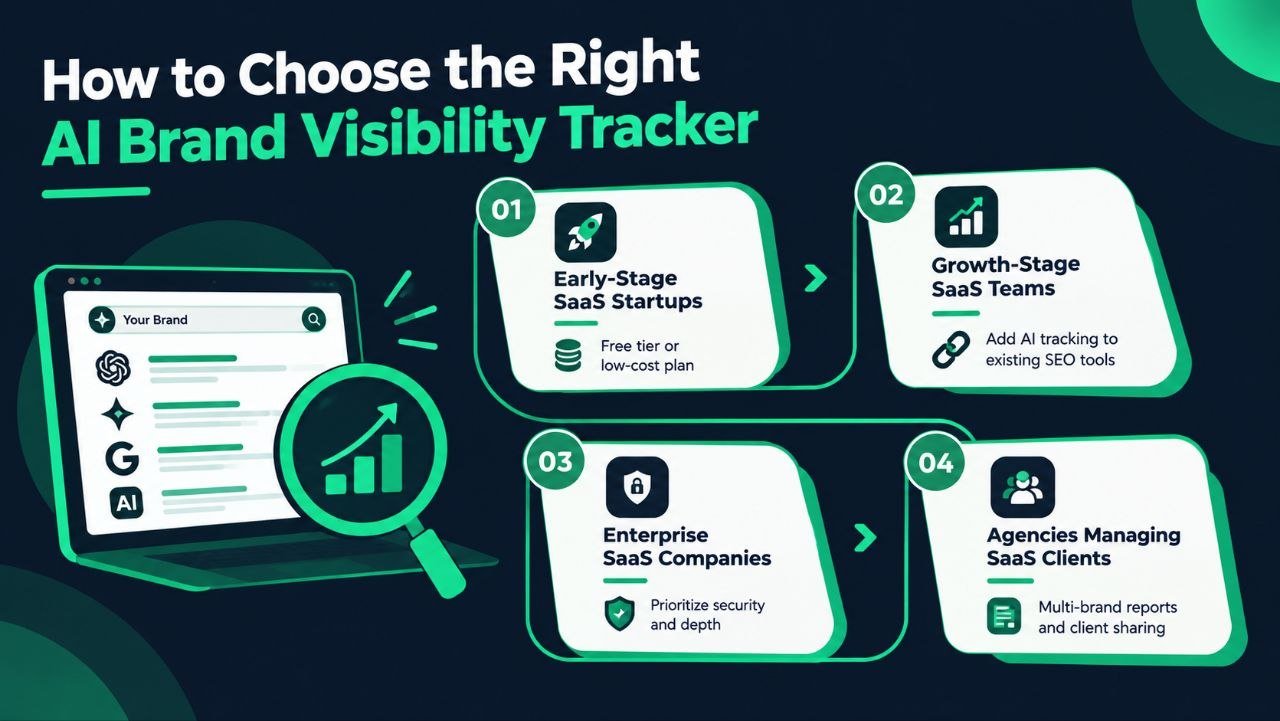
The right choice depends on your team size, budget, and what you plan to do with the data. Below are the factors to weigh for different kinds of SaaS teams.
Start with a free tier or low-cost plan, like AthenaHQ’s free Essential plan or Writesonic’s Starter plan. Track 20 to 50 core prompts about your category before paying for more coverage. That’s enough to spot the biggest gaps.
If you already use Semrush or Ahrefs, add their AI tracking first. Keeping SEO and AI data together saves time. Move to a GEO platform when you need help acting on gaps, not just finding them.
Prioritize security and depth. Profound and Scrunch AI both carry SOC 2 Type II and SSO, which enterprise procurement teams often require. Ask for a trial with your real prompts before signing an annual contract.
Agencies need multi-brand projects and reports they can share with clients. Teams that outsource link building can use AI brand monitoring reports to show how new placements affect AI visibility. It turns link building work into results clients can see.
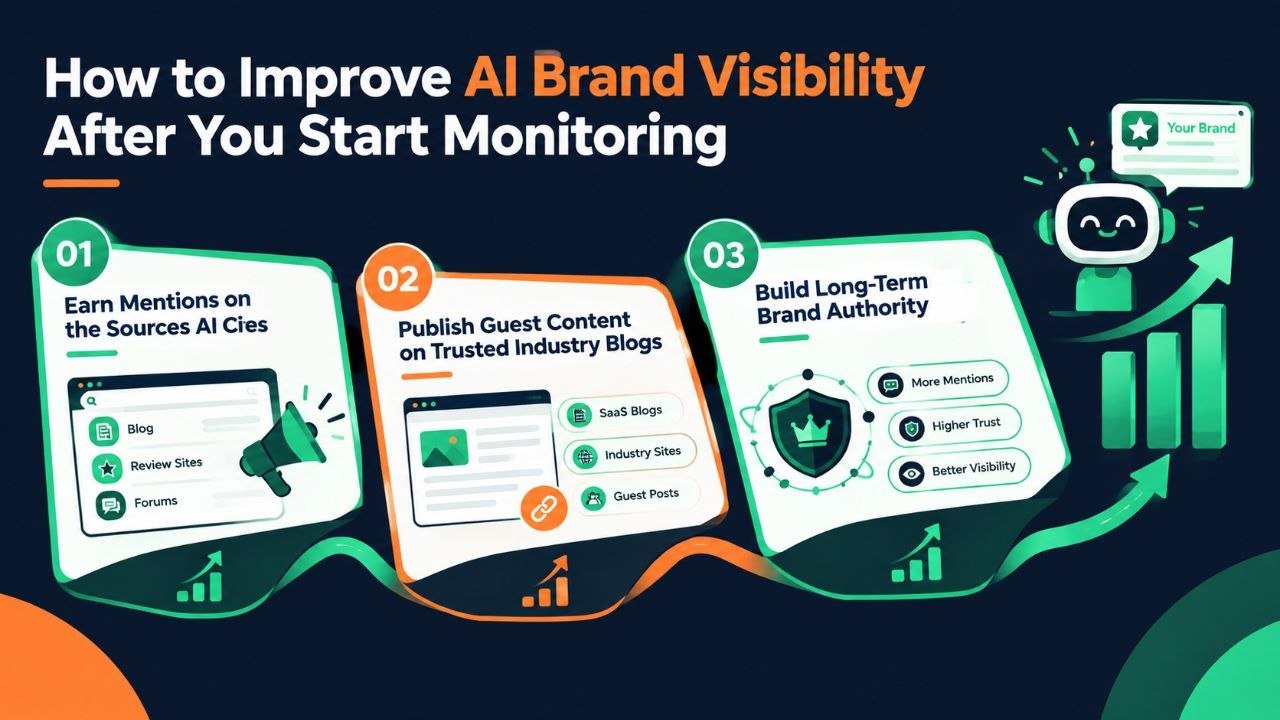
Monitoring tells you where you stand, but it doesn’t change the answers. To improve AI brand visibility, you need more trusted sources talking about your brand. Below are three practical ways to close the gaps your tool finds.
Your citation reports show which blogs and review sites AI engines trust in your category. Those are the places to pitch first. Earned brand mentions for SEO can help AI connect your product to the problems it solves.
Guest articles on respected SaaS blogs create new sources AI engines can cite. Focus on useful, data-backed topics for each publisher’s readers. Teams short on time often use a guest posting service to handle outreach and placement.
AI engines lean toward brands that are widely trusted across the web. Ahrefs found that branded web mentions had the strongest correlation with AI Overview visibility, at 0.664. A focused authority plan grows those signals over time.
AI brand monitoring gives SaaS teams a clear view of how AI engines describe their product. The tool you pick matters less than using it consistently. Choose one that fits your budget and engines, track a focused set of prompts, and review the results every month.
Then act on what you learn. Monitoring shows where competitors get cited and you don’t. Closing that gap is part of building brand authority. It comes down to earning mentions and links on sites AI already trusts.
If that outreach feels like a full-time job, VH Info can help. We’re a SaaS-focused link building agency. Our brand mention link building service gets your brand featured in relevant industry articles, and you approve every placement before it goes live.
Ready to show up in more AI answers? Let’s talk.
AI brand monitoring tracks how AI engines like ChatGPT, Perplexity, Gemini, and Google AI Overviews mention your brand. It measures how often you appear, how you’re described, which sources get cited, and how you compare with competitors. Teams use it to guide outreach.
Online brand monitoring tracks mentions on websites, news sites, forums, and social media. AI brand monitoring tracks what AI engines say when users ask questions. Both matter, because the web content you earn helps shape the answers AI tools generate.
The best AI brand visibility tracker depends on your needs. Semrush and Ahrefs suit teams already using those SEO suites. AthenaHQ and Writesonic suit teams focused on content optimization. Profound and Scrunch AI suit enterprises needing SOC 2 Type II security and SSO.
AI search monitoring tools range from free plans to custom enterprise contracts. AthenaHQ offers a free tier, and Writesonic starts at $79 per month billed annually. Semrush’s toolkit costs $99 per month per domain. Profound and Scrunch Enterprise use custom pricing.
Start with ChatGPT, Google AI Overviews, Perplexity, and Gemini, since these are the engines entry plans most often cover. If your buyers work in Microsoft tools, add Copilot. Enterprise plans often add Claude, AI Mode, Grok, and Meta AI for broader coverage.
Many tools track prompts daily, but weekly reviews are usually enough for SaaS teams. Look for trends rather than single changes, since AI answers vary between sessions. Do a deeper monthly review to compare share of voice and plan outreach.
Monitoring alone doesn’t improve AI brand visibility, but it shows you what to fix. Use citation data to find sites AI trusts, then earn mentions, guest posts, and links there. Updating inaccurate content also helps AI describe your product correctly.
Every article dives deep into what works, why it works, and how to use it.
A small agency signs a new SaaS client for $1,500 a month in link building. It feels like a big…
 Vishal ambani
October 22, 2026
Vishal ambani
October 22, 2026
You’re three months into a link building campaign. The report looks good, with twenty new links and rankings slowly going…
Vishal ambani
October 19, 2026
Do you remember HARO? For years, Help a Reporter Out was the easiest way to win links from journalists. Then…
Vishal ambani
October 16, 2026

 Share
Share