
A SaaS founder spends forty minutes talking on a small industry podcast. She shares how she handles a problem her customers face every day. A week later, the episode goes live with a show notes page. That page links to her product, and trial sign-ups start coming in.
This works because podcasts now reach a huge audience. Edison Research found that 80% of Americans have tried podcasts, counting everyone aged 12 and older. Every show needs guests, and most publish an episode page that links back to them.
That’s the basic idea behind podcast link building. A good first step is listening to the best SEO podcasts to follow, so you learn how strong guests pitch and present. In this guide, you’ll see how it works, how to earn backlinks from podcasts, and how to pitch the right shows. You’ll also get a step-by-step playbook and a realistic timeline.
TL;DR
Podcast link building means earning backlinks by appearing on shows that link to you from episode pages.
Most links come from show notes, guest pages, and blog posts that hosts publish for each episode.
The two main approaches are being a guest on other shows or running your own podcast.
A strong podcast link building strategy targets niche SaaS shows, offers a clear angle, and asks for specific links.
Links usually go live two to eight weeks after recording, and SEO impact builds over a few months.
Beyond links, podcasts build trust, bring in engaged visitors, and give you content to reuse.
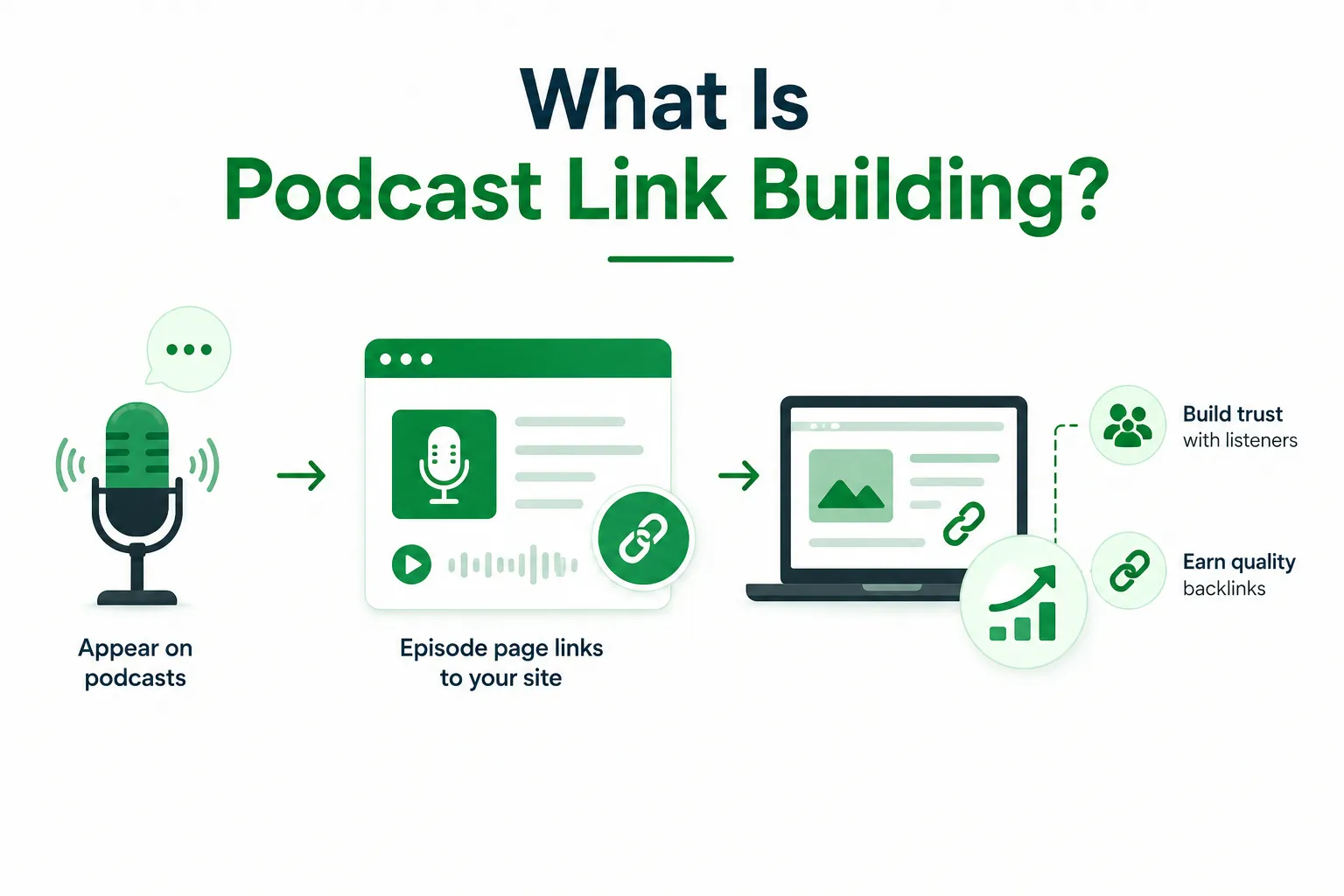
Podcast link building is a way to get backlinks by appearing on podcasts or teaming up with podcast hosts. When you join a show as a guest, the host usually creates a page for that episode. That page often links to your website, your product, or a resource you talked about.
It’s a natural fit for SaaS brands. Founders and product leaders already know things that hosts want their listeners to hear. Instead of writing a long guest post, you just share what you know in a conversation. You earn backlinks from podcasts and build trust with listeners at the same time.
Want your SaaS brand on the right podcasts?
Book a quick call. We’ll find shows your buyers listen to and pitch you for links.
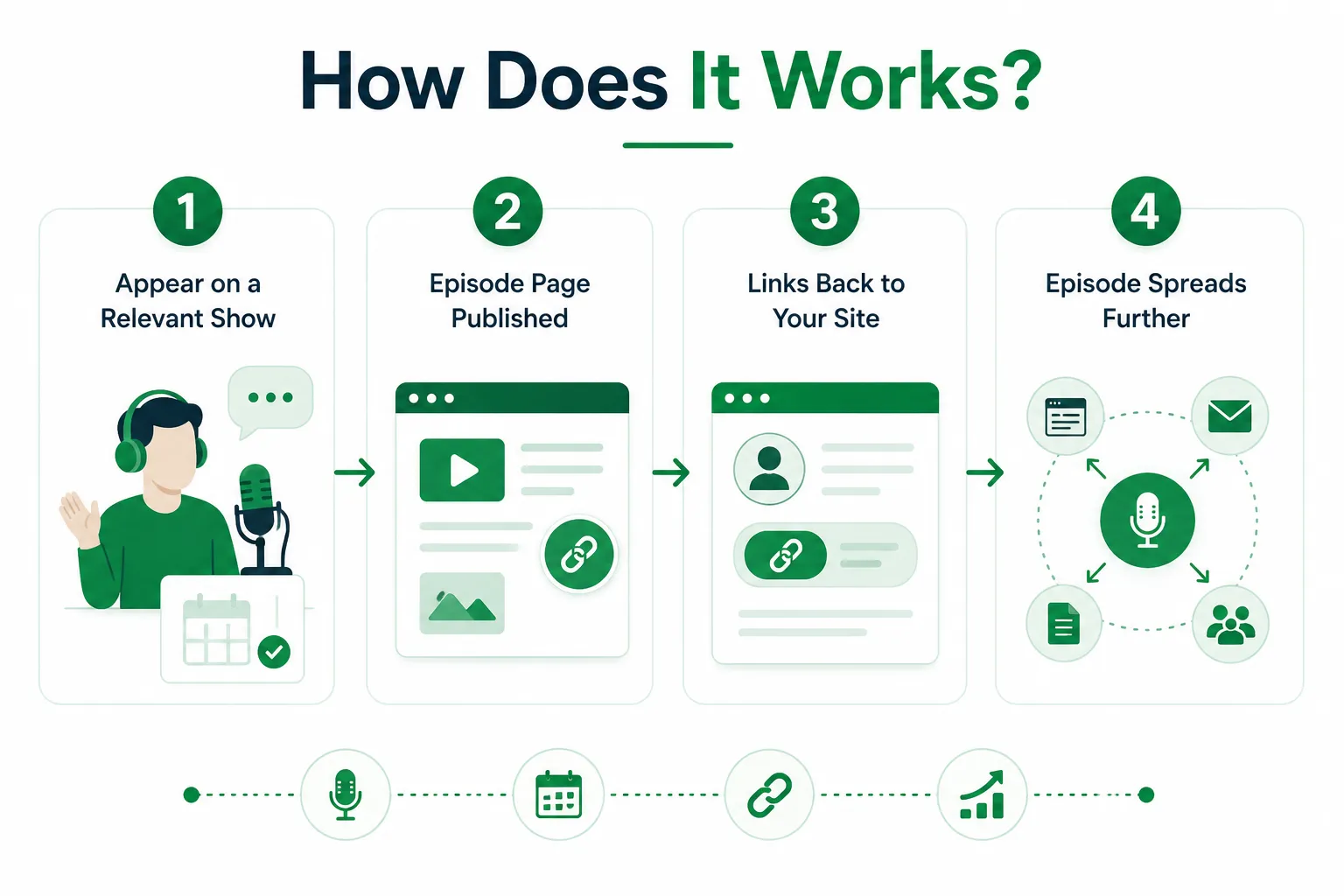
Podcast link building follows a simple path from a conversation to a backlink. You bring the know-how, the host brings the listeners, and the episode page ties it all together. Below are the main stages that turn one interview into links back to your site.
It all starts with getting booked on a podcast your buyers already listen to. You send the host a clear topic idea and explain why their audience will care. Once they agree, you record the episode, usually over a video call.
Most shows create a web page for every episode. It usually has a short summary, show notes, and links to the guest’s website and social profiles. This page is where your main backlink normally sits.
Show notes often link to your homepage, a product page, or a resource you talked about. Some hosts also add a short guest bio with a link. You can improve your chances by sending one or two helpful links before the episode goes live.
Many shows share their episodes on blogs, newsletters, and partner sites. Some also post full transcripts or written summaries. Each new page can add another mention or link, so one good interview can keep earning links over time.
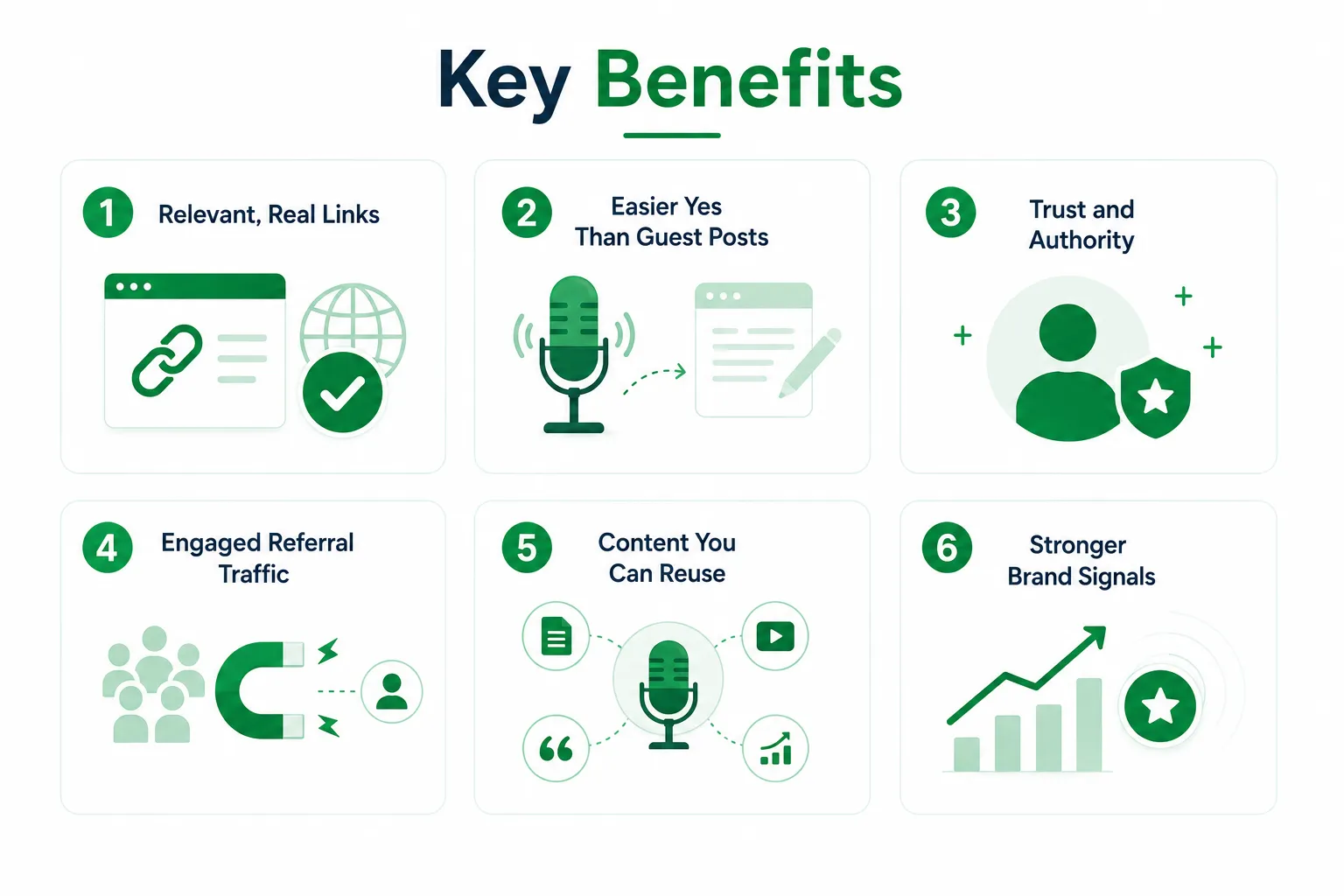
Podcast link building gives you much more than a backlink. It builds your reputation, gets your voice in front of buyers, and gives you content you can use for months. Below are the main benefits that make it worth the effort for SaaS brands.
Podcast websites usually focus on one topic, like SaaS, marketing, or startups. That makes their links highly relevant to your brand. Many shows also have loyal listeners and real traffic, so their links are often worth more than links from generic blogs.
Many podcast hosts need a new guest every week. So they’re often more open to a good pitch than busy blog editors are. You also save the hours you’d spend writing guest blogging content, because you share your ideas by talking instead.
Hearing a founder explain a problem builds trust faster than reading a blog post. Listeners get a feel for your voice, the way you think, and your product. That trust often leads them to search for your brand later.
Podcast listeners are usually focused and genuinely interested in the topic. When they click through from the show notes, they already know a bit about you. That makes them more likely to start a trial or book a demo.
Each episode can be turned into blog posts, short social clips, quotes, and newsletter content. You can also embed the episode on your own site or add it to a media page. One recording can keep your content going for weeks.
Every appearance makes your brand more visible across the web. Like other brand mentions on trusted sites, these signals help both people and search engines see you as an expert. They may also help your brand appear in AI-generated answers.
There are two main ways to use podcasts for link building. You can be a guest on other people’s shows, or you can start your own podcast and invite guests. Below is a side-by-side comparison, followed by a closer look at each option.
| Factor | Being a Guest on Other Shows | Running Your Own Podcast |
|---|---|---|
| How you get links | Hosts link to you from their episode pages | Guests link to their episodes on your site |
| Time and effort | Low, around an hour per episode plus some prep | High, with regular recording and editing |
| Cost | Usually free | Costs for equipment, editing, and hosting |
| Speed of first links | A few weeks after you’re booked | Several months before it picks up |
| Control over content | Low, since the host runs the show | Full control over topics and format |
| Best for | Quick links and reaching new audiences | Long-term authority and relationships |
Podcast guest link building means showing up as a guest on other people’s shows. It’s the quickest and cheapest way to get started. You reach an audience that’s already there and earn links from their episode pages. Most SaaS brands start here, because podcast guest link building is easy to try.
Starting your own show takes more time and money. But it lets you bring in industry leaders, build strong relationships, and grow a library of content. Guests often share and link to their own episodes, which can bring you links over time.
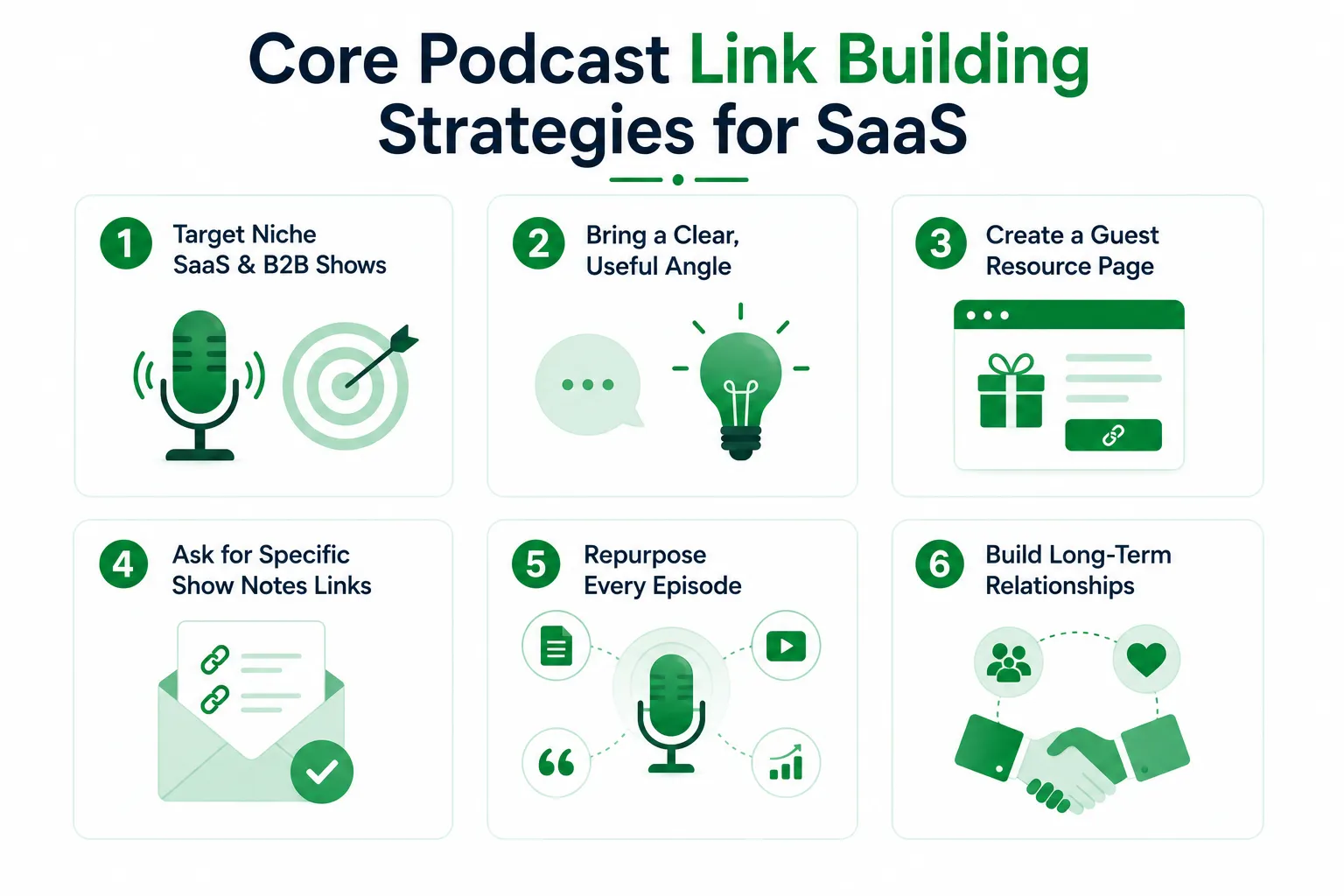
A good podcast link building strategy comes down to picking the right shows and making every appearance count. Random bookings rarely bring strong links or real leads. Below are the core strategies that make a podcast link building strategy work for SaaS brands.
Big, general podcasts are hard to get on, and many don’t link to their guests. Smaller shows in your niche are much easier to book. Their listeners are also closer to your buyers, so each link and mention counts for more.
Hosts want guests who can teach something specific. Pitch a topic only you can speak about, like lessons from your own data or a mistake you learned from. A clear angle makes the episode more useful and more likely to get shared.
Set up a simple page on your site just for podcast listeners. Add a free resource, a special offer, or a quick summary of what you talked about. Hosts are much happier to link to a helpful page than to your homepage.
Don’t leave your links up to chance. After the recording, send the host a short list of one or two links to add. Make it easy by including the exact URLs and a one-line note about each.
Turn each episode into a blog post, short social clips, and quotes. Link to the episode from your own site. This sends more visits to the episode page, and every share can lead to extra mentions and links.
See hosts as partners, not one-time link sources. Share their episode, thank them, and keep in touch. Hosts often recommend good guests to other shows, which can open new doors without more pitching.
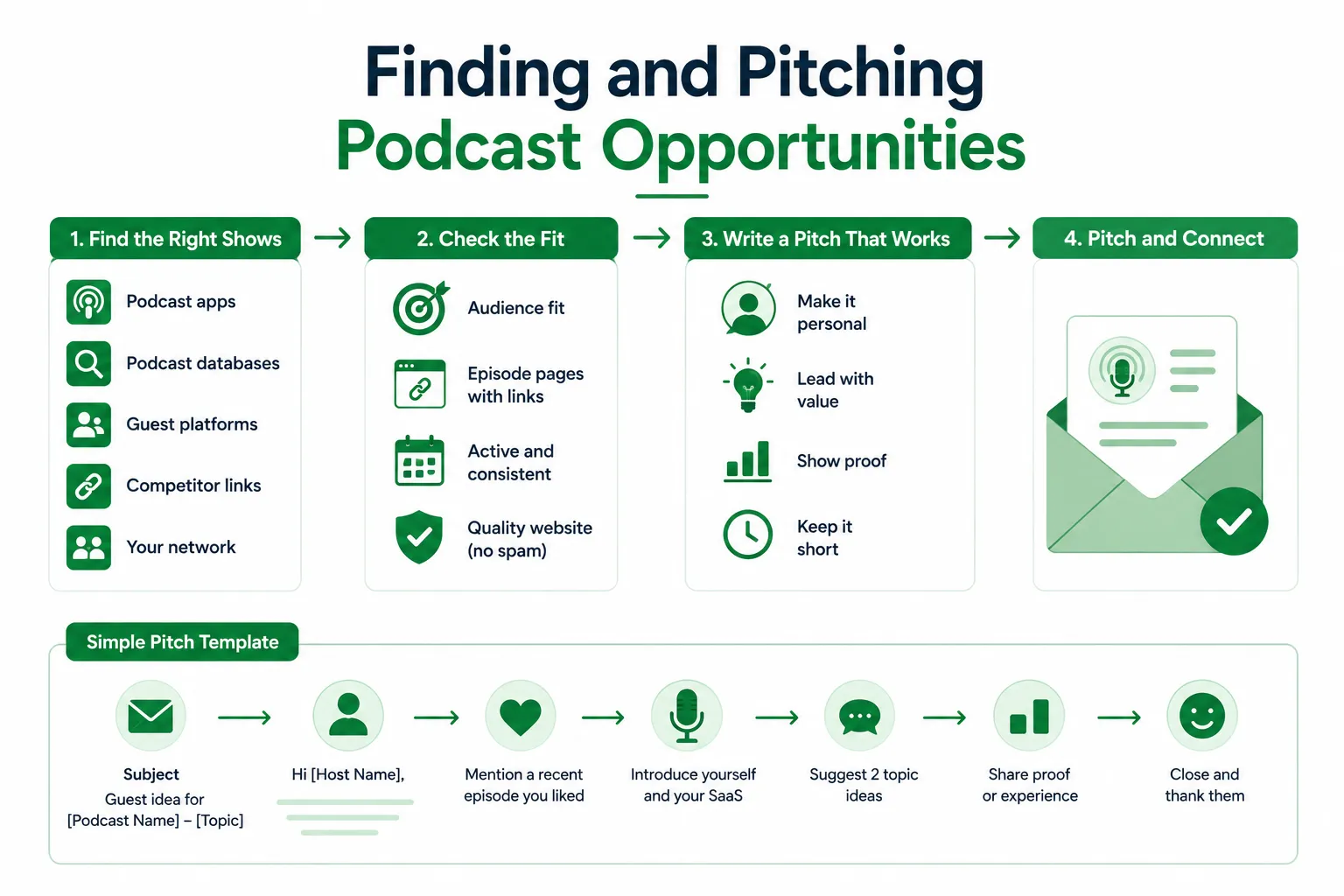
Finding the right shows and pitching them well is where most of the podcast guest link building work happens. Just like manual link building outreach, having a clear process saves time and gets you more replies. Below is how to find podcasts, check whether they’re a good fit, and write a pitch hosts actually want to answer.
Start by looking where your buyers and competitors already hang out. These sources make it easy to build a solid list of shows that match your niche and your audience.
Not every podcast is worth your time. A quick check before you send a pitch helps you stay focused. Look for shows that can bring you useful links, real listeners, and new leads.
A good pitch is short, personal, and all about the host’s audience. It shows that you’ve really listened to the show and know what kind of guest its listeners would enjoy.
Use this short template as a starting point. Change the details for each show, so every pitch feels personal and proves you know the podcast.
Subject: Guest idea for [Podcast Name] – [Topic]
Hi [Host Name],
I really enjoyed your recent episode on [topic], especially when you talked about [detail].
I’m [Name], the founder of [SaaS Brand]. We help [audience] deal with [problem]. I think your listeners would get a lot out of a chat about [Topic Idea 1] or [Topic Idea 2].
I’ve talked about this before on [Show or Event]. If it sounds like a good fit, I’m happy to send over more details.
Thanks so much,
[Name]
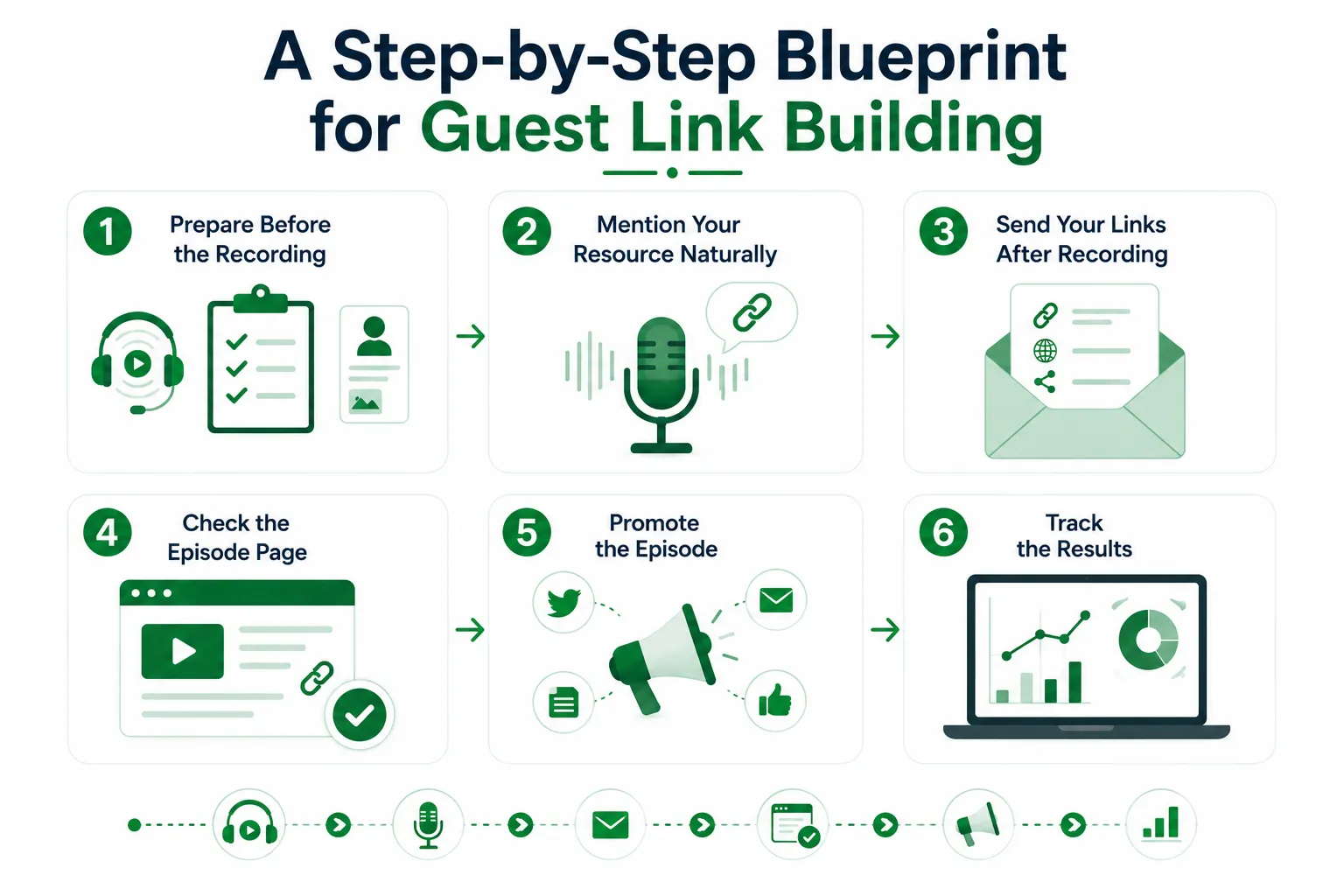
Getting a yes from the host is only the beginning. How you prepare, show up, and follow up decides whether you actually get a link. Below is a simple step-by-step plan for turning each guest spot into a backlink that lasts.
Learn a little about the host and listen to a few episodes. Plan three to five key points, each with a clear example. Keep your bio, headshot, and preferred links ready in case the host asks for them.
During the episode, bring up one helpful resource, like a guide, template, or free tool. Keep it natural, as part of the conversation. This gives the host a good reason to link to it in the show notes.
Within a day, thank the host and send a short list of links. Include your website, your resource page, and one social profile. Keep it simple, so the host can just copy and paste them.
Once the episode is live, look at the page to find your links. Note whether each one is followed, nofollow, or missing. If a link isn’t there, kindly ask the host to add it.
Share the episode on your social media, in your newsletter, and on your blog. Tag the host and thank them in public. More listens help the show, and hosts remember guests who help spread the word.
Add the episode and its page to your tracking sheet. Keep an eye on referral visits, new referring domains, and searches for your brand name. Tracking the right link building metrics shows you which shows bring the most value.
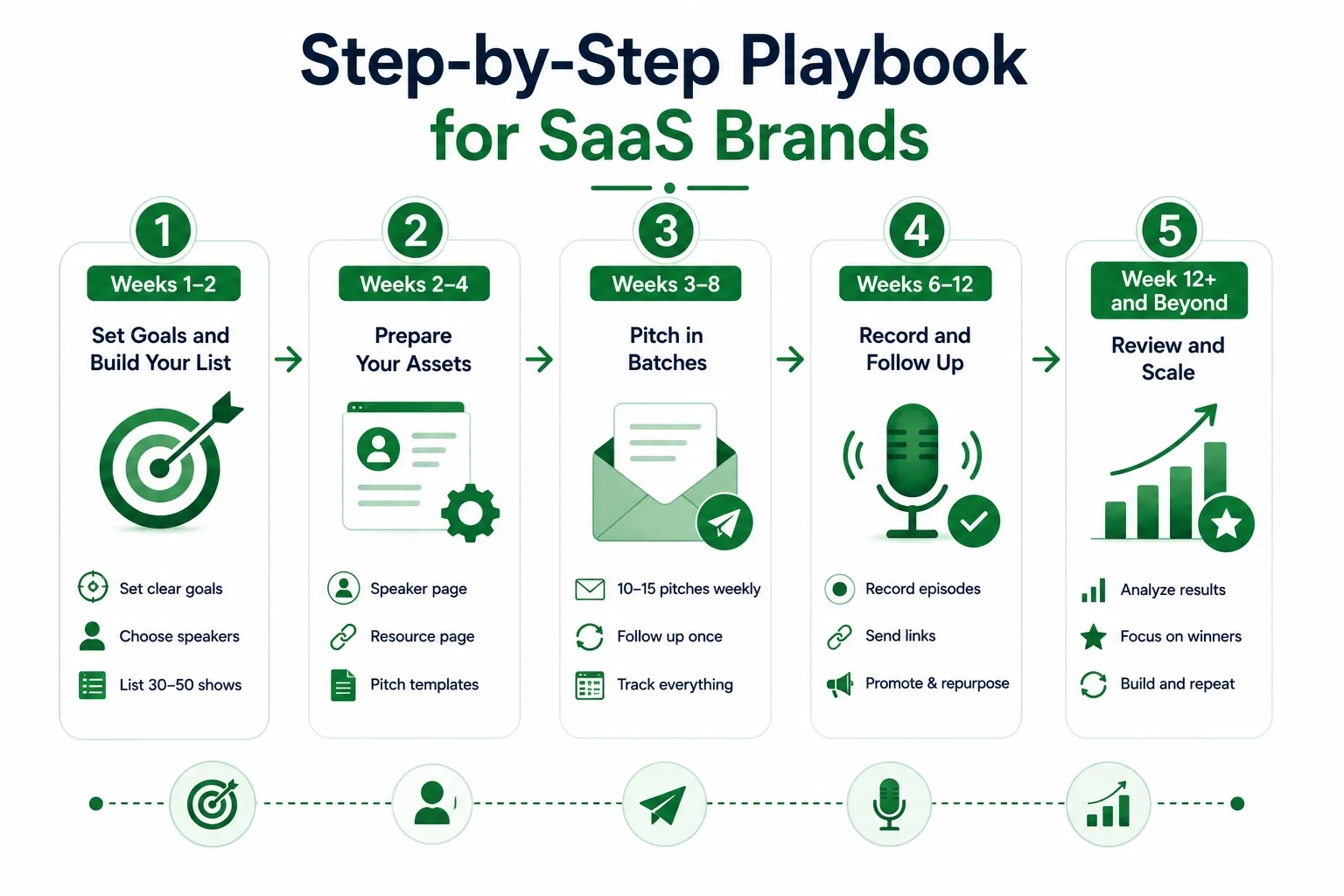
The plan above covers a single episode. This playbook turns it into a 90-day podcast link building strategy you can run again and again. It keeps you consistent and helps you build momentum. Below are the main stages of a simple plan you can repeat.
First, decide what you want most, whether that’s links, leads, or brand awareness. Choose one or two people from your team with strong expertise to be your speakers. Then list 30 to 50 relevant shows and rate each one on audience fit and website quality.
Put together a short speaker page with your bio, headshot, and topic ideas. Build a resource page made just for listeners. Write two or three pitch templates that you can tweak for each show.
Send 10 to 15 personal pitches every week. Follow up once if you haven’t heard back in five to seven days. Keep track of every pitch, reply, and booking in a simple spreadsheet, so nothing gets missed.
Record the episodes you’ve booked and send your links to each host within a day. Check each episode page once it goes live. Promote every episode and turn the best moments into blog posts and social content.
Look at which shows brought in links, traffic, and leads. Put more effort into the topics and types of shows that worked best. Then start again with a new list, adding bigger shows as your name grows. If you’re short on time, SaaS link building services can handle the outreach for you.
Podcast link building doesn’t happen overnight, but it’s quicker than many other tactics. It’s also one of the more reliable ways to earn backlinks from podcasts and similar media. Each step takes a bit of time, from booking to publishing to ranking. Below is a realistic timeline, followed by the SEO results you can expect.
| Stage | Typical Timing | What Happens |
|---|---|---|
| Pitching and booking | 1 to 4 weeks | Hosts reply and set up recording dates |
| Recording | 2 to 8 weeks after booking | You record the episode |
| Episode goes live | 2 to 8 weeks after recording | The episode page and show notes go live |
| Links get indexed | A few days to a few weeks | Google finds and counts your new links |
| SEO impact | 3 to 6 months | Rankings and searches for your brand start to grow |
Most shows record episodes weeks before they release them. So expect your first links about one to three months after you start pitching. The exact timing depends on each show’s schedule, so keep new bookings coming in.
Every link adds authority, especially when it comes from a relevant and trusted show. The biggest gains usually come from a steady flow of links over several months. Paired with other tactics, podcasts can help your target pages move up in search.
Some shows mark guest links as nofollow, and paid sponsorships should be tagged as sponsored under Google’s rules on outbound links. These links may pass less ranking value. But they still bring in visitors, brand searches, and trust.
Podcast link building is fairly simple, but a few common mistakes can waste a lot of your time. If you avoid them, you’ll get better links from fewer appearances. Below are the mistakes SaaS brands make most often.
Podcasts are one channel. Grow beyond them.
We also earn your SaaS links from tech blogs, roundups, and industry sites.
Podcast link building lets SaaS brands earn links just by sharing what they know. Instead of writing guest post after guest post, you have real conversations that build trust with the right people. The links, traffic, and brand awareness come naturally after that.
Start small, with a short list of niche shows, one clear topic, and a simple resource page. Keep pitching, follow up after every recording, and keep track of what works. Over a few months, those episodes add up to steady growth in your SEO.
At VH Info, we help SaaS brands earn links through outreach that fits their audience, and podcasts are a big part of that. When podcast appearances run alongside other white-hat methods, each one helps the others work even better.
Yes, many podcasts give backlinks to their guests. Most shows create an episode page with show notes that link to the guest’s website or resources. Some also add guest bios, transcripts, or blog summaries, which can bring in more links over time.
Podcast backlinks can be either dofollow or nofollow, depending on the show. Many hosts use normal followed links in their show notes, while others mark guest links as nofollow. Both types still help, since they bring visitors and build trust in your brand.
The best way to get booked is to pitch smaller niche shows with a clear, helpful topic their listeners will enjoy. Make each pitch personal, mention a recent episode, and keep it short. Tools like Listen Notes and PodMatch help you find good-fit shows.
Yes, podcast link building is usually worth it for SaaS brands with real expertise. It brings relevant links, reaches listeners who care, and builds trust with buyers. It also needs far less writing than guest posts, which makes it a great fit for busy founders.
Podcast link building usually takes one to three months to bring in your first links, because shows often record weeks before publishing. SEO results, like higher rankings and more searches for your brand, usually build over three to six months of regular appearances.
No, most podcasts don’t charge guests to come on the show. Some do offer paid guest spots or sponsorships. Under Google’s rules, paid links should be tagged as sponsored, so they pass little ranking value. Free, earned appearances are usually better for SEO.
Every article dives deep into what works, why it works, and how to use it.
A SaaS team publishes fifty blog posts in one year. The writing is good, the topics are useful, and the…
 Vishal ambani
October 23, 2026
A small agency signs a new SaaS client for $1,500 a month in link building. It feels like a big…
Vishal ambani
October 22, 2026
You’re three months into a link building campaign. The report looks good, with twenty new links and rankings slowly going…
Vishal ambani
October 19, 2026

 Share