

Getting your website found on the internet can feel like a big job. You want people to see your business name when they search for services you offer. One of the oldest and most reliable ways to do this is through directory link building.
At VH-info, we know that building links is not just about getting more clicks. It is about building trust. Think of a directory like a phone book for the internet. When your website is listed in a trusted place, search engines like Google see you as a real, safe business.
This helps your online visibility grow. Many people think directories are old news.
But if you pick the right ones, they are a powerful part of a smart SEO strategy. In this guide, we will break down exactly how to do it right. We will look at how to find quality directories, avoid bad ones, and use directory backlinks to help your site climb the search rankings.
What Is Directory Link Building?
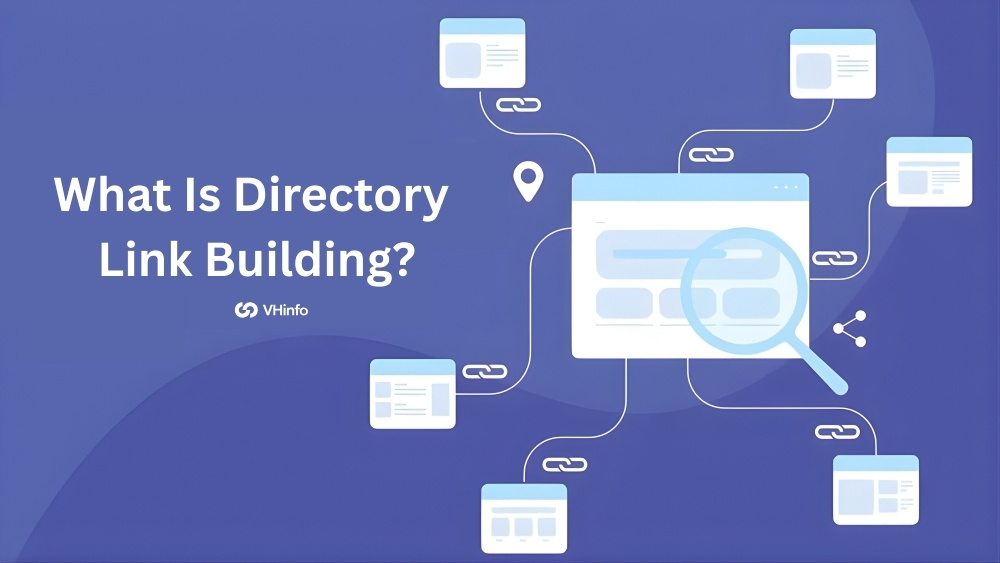
Directory link building is the process of placing your website link and business details on web directories. These are special websites that list businesses by category, location, or niche. Years ago, people used big physical books like the Yellow Pages to find a plumber or a pizza shop.
Today, we use online directories. When you add your site to these lists, you get a link back to your website. This is called a backlink. Directory links tell search engines that your business exists and is active. It helps verify your information, like your address and phone number.
This is very important for local businesses that want to be found by people nearby.
How Directory Links Impact Search Rankings?
You might wonder, do these links really help? Yes, they do.
When a high DA (Domain Authority) website links to you, it passes a little bit of credit to your site. We call this “link juice” or authority.
If you get directory backlinks from reputable directories, Google starts to trust your website more. When trust goes up, your search engine rankings often go up too. It is not just about the link, though. These directories also show up in search results.
So, if someone searches for “best marketing agency,” a directory list might pop up, and if you are on that list, you get more organic traffic.
How Does Directory Link Building Work?
The process is simple but needs care.
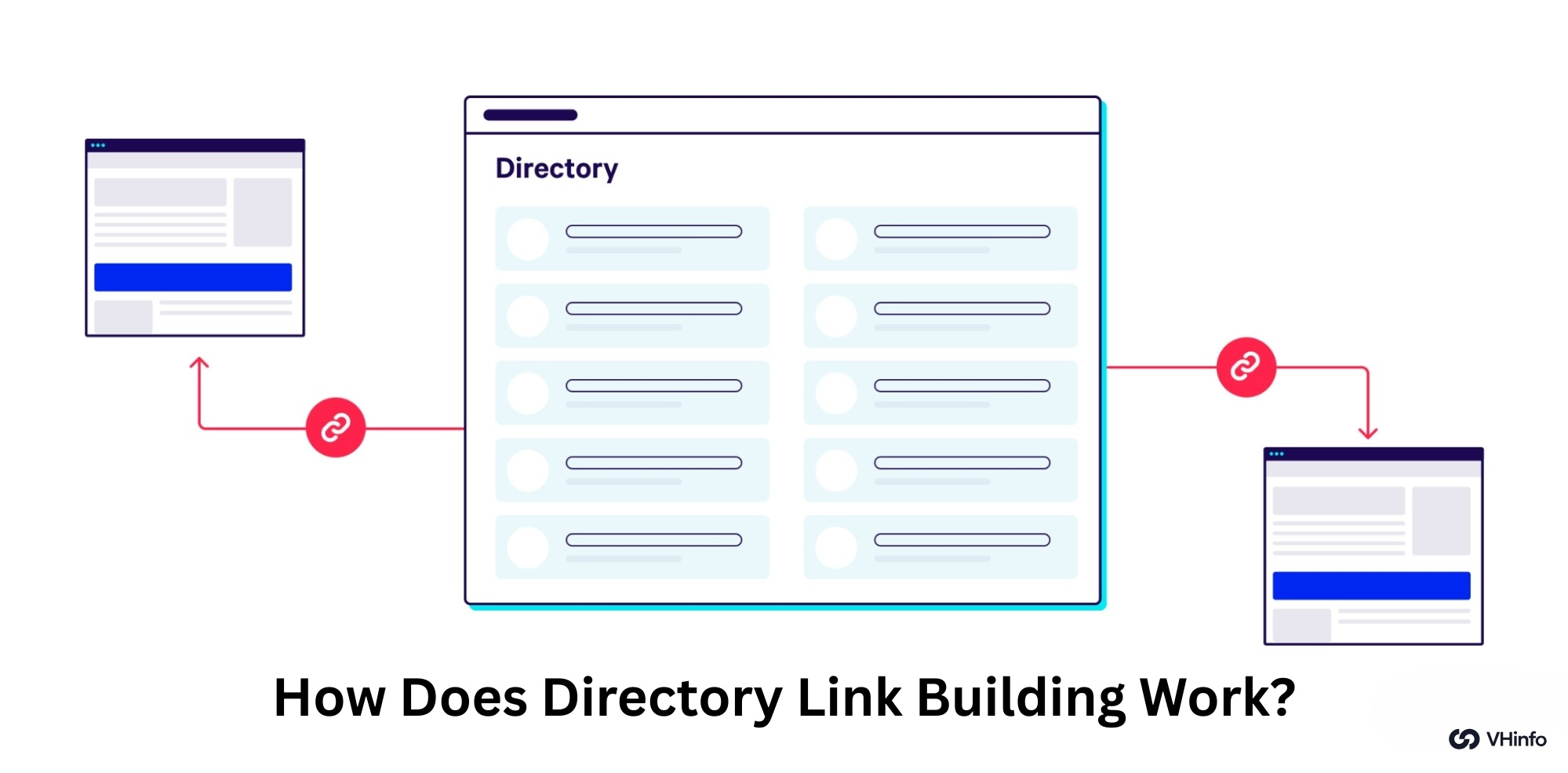
First, you find a website that lists businesses like yours. These are called directory submission sites. You create an account or claim your listing. Next, you fill in your business information. This usually includes your name, address, and phone number (we call this NAP). You also add your website URL. Some directories let you write a description, add photos, or list your services.
Once you submit this, the directory reviews it. If approved, your listing goes live. Now, you have a new backlink. When search engines crawl the web, they find this link pointing to you. This signals that your business is legitimate.
At VH-info, we emphasize that consistency is key here. If your info is different on every site, it confuses Google.
Why Directory Link Building Still Matters?

Some people say directories are dead. We disagree. While you should not rely only on them, they are a strong foundation for any digital marketing plan.
Boosting Domain Authority and Trust
Domain authority is a score that predicts how well a website will rank.
Quality backlinks from trusted sites help boost this score. General directories with high traffic and trust are great for this. When a site like the Better Business Bureau links to you, it tells Google you are a serious business. This increases your SEO value.
Driving Targeted Referral Traffic
Search engine optimization is great, but direct clicks are also valuable. People visit directories to find specific things.
If you are a lawyer listed in a legal directory, the people looking there are already interested in hiring a lawyer. This brings referral traffic to your site. These visitors are more likely to become customers because they are your target audience.
Enhancing Local SEO Visibility
For local SEO, directories are essential.
Local directories like Google My Business (now Google Business Profile) or Bing Places help you show up in map searches. When someone searches for “coffee shop near me,” local searches rely on directory data to show the right results.
Correct directory submissions ensure you show up on the map.
Types of Directories For Effective Link Building
Not all directories are the same. Choosing the right type helps your SEO efforts.
- General Web Directories: These cover all kinds of topics. They are not focused on one industry. Examples include Yellow Pages or Superpages. They are good for getting your name out there, but make sure they are quality directories. Avoid ones that look messy or spammy.
- Niche Relevant Directories: These are specific to your industry. For example, if you are in real estate, you want to be on sites like Zillow or Trulia. If you are in SaaS, you look for software lists. Niche directories are very powerful because relevant directories carry more weight with Google. They show you are a leader in your specific field.
- Free Directories: Many sites let you list for free. Free directories are a good starting point for small business owners with a tight budget. Google My Business and Facebook are famous examples. They offer great value without a cost.
- Paid Directories: Some high-quality sites charge a fee. You might pay for a faster review or a better spot on the list. Should I pay for directory listings? Sometimes, yes. If the site has lots of traffic and high authority, it can be worth the investment for the potential customers it brings.
- Business Directories: These focus purely on company data. They verify that you are a real company. Chamber of Commerce sites are a great example. They build massive trust because they verify their members.
How Can You Identify A Good Directory?
You do not want your link on a bad site. That can hurt you. Here is how VH-info spots a winner:
- Check Domain Authority: Use a tool to see if the site has a high DA. Higher is usually better.
- Relevance: Is the site relevant to what you do? A real estate site shouldn’t link to a bakery.
- Traffic: Does the directory get visitors? If no one visits, the link has less value.
- Editorial Standards: Do they review listings? If they accept anything automatically, it might be a spam farm. Good directory submission websites have humans checking the data.
- Clean Design: A good directory cares about user experience. If the site is covered in pop-up ads, stay away.
Step-by-Step Directory Link Building Strategy
Ready to start? Here is a simple plan we use at VH-info.
How to Find High-Quality Directories?
Start with the big names like Google and Bing. Then, search for your competitors. See where they are listed. You can use search queries like “keyword + directory” or “keyword + submit site.” Look for lists of the “best [your industry] directories.”
Analyzing Directory Authority and Relevance
Before you submit, look at the site.
Is it filled with relevant keywords? Does it look professional? Check if the links are “dofollow.” Dofollow links pass authority, while nofollow links do not pass as much, though both are natural to have. Prioritize quality directories that align with your content marketing goals.
Best Practices For Submission (NAP Consistency)
NAP stands for Name, Address, Phone Number. This must be exactly the same everywhere. Do not write “Street” on one site and “St.” on another. Pick one format and stick to it. This consistency helps search engines trust your data. Also, ensure your website URL is correct.
Common Directory Link Building Mistakes to Avoid
Even experts make mistakes. Here is what to watch out for.
- Submitting to Spammy Or Low-Quality Sites: Quality beats quantity. Do not pay someone five dollars to submit your site to 1,000 directories. Most of those will be spammy directories. These can get your site penalized. Stick to reputable directories.
- Over-Optimizing Anchor Text: Anchor text is the clickable text in a link. Don’t stuff it with keywords like “Best SaaS Tool” every time. Use your business name or the URL itself. Natural links look better to Google.
- Inconsistent Business Information: If your contact information varies, Google gets confused. It won’t know which phone number is right. This hurts your chances of showing up in local searches. Keep your business listings updated.
The Top 15 Directories For Every Business

These are the heavy hitters. We recommend these for almost every business to build a strong online presence.

Google is the most important directory of all. It was formerly known as Google My Business, but now it is called Google Business Profile.
When you search for a business, this is the big box that shows up on the right side or in the map pack. It is completely free. It allows you to add your hours, photos, posts, and contact details. It connects directly to Google Search and Google Maps.
For local SEO, this is your number one priority. You must verify your address to get listed. Once you are live, customers can leave reviews, which helps your search engine results even more. It is the first place potential customers look.
Bing Maps
Bing is the second largest search engine. While smaller than Google, millions of people still use it.
Bing Places is their version of a business listing. It connects to Bing Maps, so people using Windows computers or Microsoft devices can find you easily. It is very similar to Google’s profile. You can even import your data from Google to Bing, which saves time.
Having a listing here ensures you are not missing out on that chunk of the audience. It provides a solid directory backlink and helps verify your business location. For a complete SEO strategy, you should not ignore Bing just because Google is bigger.
Better Business Bureau
The Better Business Bureau (BBB) is one of the most trusted names in business.
It has been around for a very long time. Getting listed here is a huge signal of trust. It shows customers that you are an honest business. While they have paid accreditation, you can often get a free profile.
A link from the BBB has a very high DA. Search engines respect this site a lot. It is great for managing your reputation, too. If a customer has a complaint, handling it through the BBB shows you care about user engagement and service. It is a gold standard for business directories.
Yellow Pages

The Yellow Pages used to be a big yellow book delivered to your door.
Now, it is a powerful online directory (YP.com). It is still one of the first places people think of when looking for a business.
It has high authority and millions of visitors. A listing here provides a valuable citation for your local SEO. It categorizes businesses very well, so it helps with relevant directory matching. You can add your phone number, address, and a link to your site. It helps reinforce your NAP consistency across the web. Even in the digital age, the Yellow Pages brand remains a strong player for online visibility.
Yelp

Yelp is famous for reviews, but it is also a massive directory.
It is especially important for restaurants, shops, and local services. People go to Yelp specifically to decide where to spend money.
A profile here helps you capture those potential customers. The backlinks from Yelp are strong. However, you need to manage your profile actively. Respond to reviews, add great photos, and keep your hours updated. User experience on Yelp is all about social proof.
Even if you are a B2B company, having a presence here can help your brand image. It appears very high in search results for brand names.
Tripadvisor
If your business is related to travel, hospitality, or entertainment, Tripadvisor is a must. Hotels, restaurants, and attractions rely on this. It is the biggest travel site in the world. A listing here puts you in front of tourists and locals alike. It is heavily focused on user reviews.
Good reviews here can drive massive amounts of referral traffic to your website.
The links are authoritative. It operates globally, so it is great for online presence beyond just your town. Even if you are a small local museum or cafe, this directory helps you compete with big chains by showcasing real customer experiences.

You might think of Facebook as social media, but its “Facebook Business Page” acts like a directory listing. It has a high domain authority. When you create a page, you enter your location, website, and hours. This counts as a citation.
Because almost everyone is on social media, it makes your business easy to find. It allows for direct user engagement through comments and messages. Your page can rank in Google search results, too. It is a free and easy way to build a quality backlink.
Plus, people can “check in” to your location, which spreads the word to their friends, boosting your organic traffic.

Owned by Facebook (Meta), Instagram is vital for visual businesses. While it is an app, your profile is visible on the web. You can put your website URL in your bio. For local businesses, adding your location tag is like a directory entry.
People search Instagram for products and local spots. It helps build a brand identity. While the link-building value is different from a standard directory, the social signals it sends are valuable. It helps potential clients see what you do.
Make sure your bio description includes relevant keywords and your correct city to help with local searches.
LinkedIn is the professional directory.
If you are in B2B or SaaS like VH-info, this is important. You create a Company Page. This ranks very well in Google. It tells people you are a legitimate company with real employees. You can post updates and articles here. It is perfect for content marketing distribution.
The link back to your site is high quality.
It helps establish authority in your industry. Make sure your “About” section is detailed and uses your keywords. It is the modern version of a business card and company dossier rolled into one, making it a key part of directory link building.
Foursquare

Foursquare started as a check-in app but is now a major data provider. Many other apps and map services use Foursquare’s data to find businesses. If you are listed here, your info spreads to other places automatically. This amplifies your online visibility.
It is great for local businesses like cafes and stores. It helps confirm your location data for search engines. The platform focuses on city guides and recommendations. Having a clean, accurate profile here protects your data across the web.
It is a hidden gem in directory submissions because of how much data it feeds to other services.
Apple Business Connect

Apple users use Apple Maps on their iPhones. To show up there, you need to use Apple Business Connect. This is Apple’s version of Google My Business. It lets you control how your business looks in Apple Maps, Siri, and other Apple apps.
Since millions of people use iPhones, missing this means missing a huge audience. You can add photos, headers, and actions like “order food.” It ensures your contact information is correct for anyone asking Siri for help.
This is a critical part of local SEO that many people forget. It drives foot traffic and clicks from mobile users.
Apple Maps
This goes hand-in-hand with Apple Business Connect. Apple Maps is the default map app for iPhones. When you list your business, you appear on the map when people drive or walk by. It provides driving directions and direct links to your site.
This is vital for the local directories strategy.
If your PIN is in the wrong place, customers get lost. claiming your spot ensures accuracy. It acts as a powerful trust signal. While it doesn’t give a traditional “web” backlink in the same way a blog does, the citation value for local searches is immense.
It connects your digital presence to the physical world.
Chamber of Commerce

Your local Chamber of Commerce is a powerhouse for links. You usually have to pay a membership fee, but it is worth it.
These sites have very high trust. They are strictly for legitimate businesses. A link from a .org or a trusted local chamber site tells Google you are a pillar of the community. It is one of the best quality backlinks you can get. Besides SEO, it opens doors for networking in the real world.
It shows you are invested in your local economy. For small business owners, this is a strategy that pays off in reputation and rankings.
Hotfrog
Hotfrog is a global business directory. It is active in many countries. It lets you add a lot of detail, including products, services, and news.
It is more than just a name and address; it is like a mini-profile for your brand. It is great for directory submissions because it is free and easy to use. The site has good authority. It helps with brand voice consistency because you can upload your own press releases or updates. It is a general directory that still maintains good quality standards. Adding your listing here adds another layer of proof that your business exists.
Superpages
Superpages is another classic directory related to the Yellow Pages network. It focuses on helping consumers find local services and retailers.
It offers information like weather, lottery numbers, and business listings. For you, it is a source of a stable citation. It helps broaden your online directories footprint. The more consistent places your name appears, the better.
It allows for user reviews and ratings. Having a presence here helps catch traffic that might not use Google. It is a solid, reliable site for directory backlinks that supports your overall SEO efforts without much effort to maintain.
Future Trends in Directory Link Building

The web changes fast. Here is where things are going.
- Quality Vs. Quantity: The Shift in Strategy: In the past, people wanted 10,000 links. Now, 10 links from amazing sites are better. Search engines are smarter. They ignore spam. The future is about finding niche directories that really matter to your topic. VH-info recommends focusing on sites that real humans actually use.
- The Role of Directories in Voice Search: When you ask Alexa or Siri, “Find a plumber,” they look at online directories. If your info isn’t on sites like Yelp, Google, or Bing, these voice assistants won’t find you. As more people use voice, accurate directory listings become even more important for local SEO.
Best Practices For Directory Submissions

To win at this, follow these rules.
- Focus on Quality, Not Quantity: Do not waste time on sites that look broken. Aim for high DA sites. One good link is worth 50 bad ones.
- Keep Your Listings Consistent: We cannot say this enough: check your NAP (Name, Address, Phone). If you move offices, you must update every single directory. Inconsistent data hurts your search rankings.
- Use Unique, Keyword-Rich Descriptions: Do not copy-paste the same text everywhere. Write a fresh description for each site. Use your relevant keywords naturally. This makes each listing unique and valuable.
- Monitor Your Backlinks: Sometimes, directories shut down or change. Use tools to check your links. If a link breaks, fix it. If a strange site links to you, you might need to disavow it.
- Avoid Spammy Directories: If a site asks for a link back to them (reciprocal linking) or looks sketchy, skip it. Spammy directories can get your site punished by Google.
FAQ’s:
Is Directory Link Building Still Effective For SEO?
Yes, absolutely. While it is not the only thing you should do, it is a key part of digital marketing. It builds trust, authority, and helps with local searches.
What is the Difference Between Niche and General Directories?
General directories list all kinds of businesses (like the Yellow Pages). Niche directories list only specific types (like a directory just for doctors). Niche ones are often better for relevance.
Should I Pay For Directory Listings?
Only if the directory is of very high quality and sends real traffic. For most, the free version is fine. But for top business directories like the Chamber of Commerce, paying is often worth it.
Do Directory Links Pass “Link Juice” (Dofollow Vs. Nofollow)?
Most directories give “nofollow” links, which means they don’t pass full authority. However, they still bring traffic and trust. Some paid, or high-quality ones, give “dofollow” links. A natural profile has both.
How Does Directory Link Building Help Local SEO?
It confirms your location for Google. When your address is on many trusted sites, Google is confident showing you to people nearby. This is vital for local businesses.
How Many Directories Should I Submit Per Month?
There is no magic number. Start with the top 15 listed above. Then, add a few high-quality niche directories each month. Don’t rush; focus on accuracy.
How Can Local Businesses Benefit From Relevant Directory Link Building?
By showing up where locals look. If you are a plumber, being on a “Home Services” list helps you get found by people who need repairs now. It drives referral traffic.
Should Directory Link Building Be My Primary SEO Strategy?
No. It should be part of your strategy. You also need good content, technical SEO, and other types of links (like guest posting). Think of directories as the foundation.
Conclusion
Directory link building is a classic strategy that still delivers results. It helps build the trust your website needs to rank higher. By focusing on quality directories, keeping your information consistent, and avoiding spam, you can boost your online visibility and attract more customers.
At VH-info, we believe in doing things the right way. We focus on strategies that bring long-term success, not quick fixes.
Whether you are a small local shop or a large SaaS company, getting listed in the right places is a smart move. Start with the top 15 directories we shared, check your business listings, and watch your search engine rankings grow. It is time to get your business on the map.


 Vishal ambani
  Share
Share
 VH Info