

When people look for something on a search engine, they have a specific goal in mind. Sometimes they just want to read and learn.
Other times, they want to buy a specific product or sign up for a service.
When they are ready to buy, they use transactional keywords. Knowing how to find and use these search terms is a very big part of any digital marketing plan. If you want to sell more, you need these words.
At VH-Info, we help SaaS companies grow through smart link building. We know that getting organic traffic to your product pages can completely change your business. To get the best organic search results, you need to focus on the right search intent.
You want to bring in people who are ready to take action.
In this article, we will talk about what these keywords are, why they matter for your SEO strategy, and how they help your business goals. We will also give you a clear transactional keywords example so you know exactly what to look for when you do your own keyword research.
What Are Transactional Keywords?
Transactional keywords are the exact words people type into a search engine when they are ready to take an immediate action.
This action could be buying a product, signing up for a free trial, or paying for a service. When potential customers type these specific terms, they have a very high purchase intent. They are past the research phase. They no longer want to read long informational content.
Instead, they want to go to dedicated landing pages to finish their task quickly and easily. If you want to make money online, targeting transactional search is the best way to do it. You are catching people at the exact moment they want to spend money.
Understanding User Search Intent
User intent or search intent means the real reason why someone is looking for something online. Do they want to learn? Do they want to find a specific website? Or do they want to buy? Knowing the keyword intent helps you build a better content strategy.
If you know the exact search intent, you can create website content that gives the user exactly what they want without wasting their time.
This leads to a much better user experience and higher conversion rates.
At VH-Info, our SaaS link building agency helps push pages with high intent to the top of the search engine results. When you give users what they want, search engines reward you with better rankings and more visitors.
Informational Vs. Navigational Vs. Transactional Intent
To make a good keyword strategy, you must know the different types of keywords. Let us look at the three main types.
First, we have informational keywords. People use informational searches when they want answers. They have informational intent. For example, “how to fix a bike” is an informational query. These search queries usually bring people to blog posts.
Second, there are navigational keywords. People use these when they want to go to a specific website or find a brand name. If someone types “Facebook login,” they are using navigational keywords to get to a place they already know.
Third, we have the main topic: transactional search intent.
People use transactional terms when they want to spend money right now. If someone searches for “buy project management software,” that is a transactional query. They are ready to act. You need to send them to transactional pages, not just informational pages.
Why Transactional Keywords Are the Secret to Higher Conversions?

Getting a lot of traffic is nice, but traffic alone does not pay the bills. You need people to buy your products or services.
This is why transactional keywords are the real secret to higher conversion rates. When you focus on these search terms, you are talking to people who already have their wallets out. They have done their reading, they know what they want, and they just need a place to buy it.
If your SEO efforts focus only on informational content, you will get readers, but you might not get buyers. By putting your time into transactional search, you get the best return on your work.
Attracting Bottom-of-the-Funnel Buyers
In marketing strategies, we talk about the “funnel.” The top of the funnel is where people are just learning.
The bottom of the funnel is where people are ready to buy. Transactional keywords pull in these bottom-of-the-funnel buyers. These potential customers have high intent. They do not need to be convinced that they need a product; they just need to decide who to buy it from.
When you target the right keywords, you bring these eager buyers straight to your service pages or product pages. At VH-Info, we focus on building strong backlinks to these bottom-of-the-funnel pages because that is where the real money is made for SaaS companies.
Maximizing ROI in Paid Search (PPC)
If you are paying for ads, you want to make sure you get your money back. In Google Ads, paying for clicks can be expensive. If you bid on informational queries, you might pay a lot of money for people who just want to read and leave. That wastes your money.
Instead, you should spend your Google Ads budget on transactional keywords.
Since these people have strong purchase intent, they are much more likely to buy. This means the money you spend on ads turns into actual sales. It is always better to pay for clicks from people who are ready to take immediate action.
Streamlining the Customer Journey
The customer journey is the path a person takes from finding your brand name to buying your specific product. A good SEO strategy makes this journey very smooth. When a user types in a transactional query, they want a fast and easy next step.
If you use transactional terms well, you send the user directly to the right dedicated landing pages. They do not have to click around your site to find the “buy” button. A fast, simple customer journey means a much better user experience.
When the process is easy, conversion rates go up.
Top Modifiers and Examples of Transactional Keywords
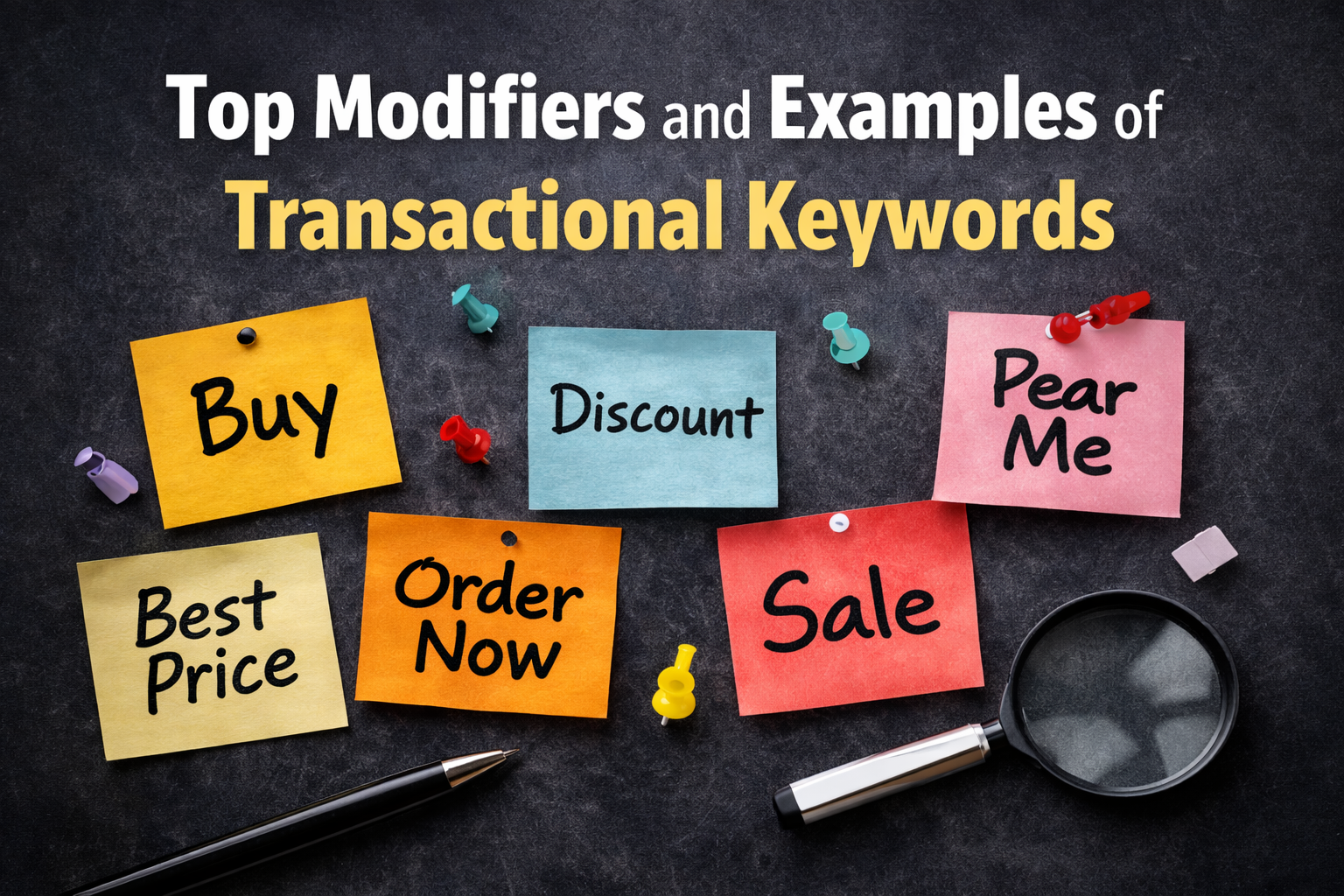
A modifier is a word you add to a search term to change its meaning.
Adding certain words changes a normal search into a transactional search. If you look at examples of transactional keywords, you will see the same modifiers used again and again. These modifiers show that the user has commercial intent.
When you do keyword research, you need to look for these specific modifiers. They are the easiest way to spot high intent searches.
Let us look closely at the different types of modifiers you should be looking for.
Exact Product and Brand Searches
Sometimes, people search for the exact name of a specific product. This is a very strong signal.
For example, if someone searches for “buy iPhone,” that is a clear transactional keywords example. They do not want to read about the history of phones; they want to buy iPhone right now. Another example is when they search for a brand name along with a product.
If someone types “VH-Info SaaS Link Building Services,” they are looking for us specifically to help them. These exact matches have a lot of commercial intent because the user knows exactly what they want to buy.
Action-Oriented Modifiers (Buy, Order, Download)
Action words are the most common signs of transactional intent. Words like “buy,” “order,” “download,” “get,” or “hire” tell you that the user wants to do something immediately.
For instance, a search for “download project management software” means the user is ready to install the program.
A search for “hire SEO expert” means they are ready to pay for services. When you use keyword research tools, you should filter your lists to find phrases that include these action words. These are the golden search queries that lead directly to sales.
Financial Modifiers (Cheap, Discount, Price)
Money words also show that a person is ready to buy. When a user adds words like “cheap,” “discount,” “price,” “coupon,” or “free shipping,” they are in the buying mood. They are just looking for the best deal before they pay.
For example, a search for “cheap SEO tools” means the person wants to buy, but they are comparing prices. A search for “shoes free shipping” means the user is ready to check out if the shipping costs nothing.
Targeting these specific terms on your pricing pages or sales pages is a very smart move for your business goals.
Localized Buying Queries (Near Me, [City] Services)
For many businesses, location is everything. When people add a place to their search, they usually have high intent to go there and buy. Words like “near me” or the name of a city are very strong modifiers.
If someone searches for “pizza near me,” they are hungry and want to buy food right now.
If someone searches for “plumber in London,” they need a service immediately. These localized searches are mostly transactional queries. Making sure your website content matches these local terms will bring you local buyers.
How to Find the Best Transactional Keywords For Your Niche?
Now you know what these words are, but how do you find them? Finding the best search terms for your specific website takes a little bit of work. You need to do proper keyword research. You cannot just guess what people are typing into the search engine.
You need to look at data to see actual search volume and keyword intent. Finding the right keywords will completely shape your content marketing and SEO efforts. Here are the best ways to find the exact words your potential customers are using.
Using Keyword Research Tools (Semrush, Ahrefs, Keyword Planner)
The fastest way to find good words is to use keyword research tools. Tools like Semrush, Ahrefs, or Google Keyword Planner give you lots of data. They show you the search volume, which tells you how many people search for a word each month.
When you use keyword tools, you can filter the results by search intent. You can tell the tool to only show you words with transactional intent or commercial intent. This saves you a lot of time.
If you run a SaaS company, you can type in your main topic and use these SEO tools to find the exact phrases that lead to a free trial or a sale.
Conducting Competitor Keyword Gap Analysis
A great way to find new search terms is to look at your competitors. A competitor keyword gap analysis means you compare your specific website to another website in your industry. You look for the words they are ranking for, but you are not.
If your competitor is getting lots of organic traffic from transactional searches, you need to target those same words. Keyword tools let you put in your website and your competitor’s website to see the “gap.”
Once you find these missing words, you can create new landing pages to steal some of that valuable organic search traffic.
Mining Google Autosuggest and “People Also Ask”
You do not always need expensive tools to find good keywords. The search engine itself gives you hints. When you start typing a word into Google, it suggests longer phrases. This is called Google Autosuggest. These suggestions are real search queries that people often use.
Also, look at the “People Also Ask” box on the search engine results page.
These questions show you what potential customers want to know before they buy. By looking at these free hints, you can find great transactional keywords and build your content strategy around what real humans are actually typing.
Best Practices For Integrating Transactional Keywords on Your Site
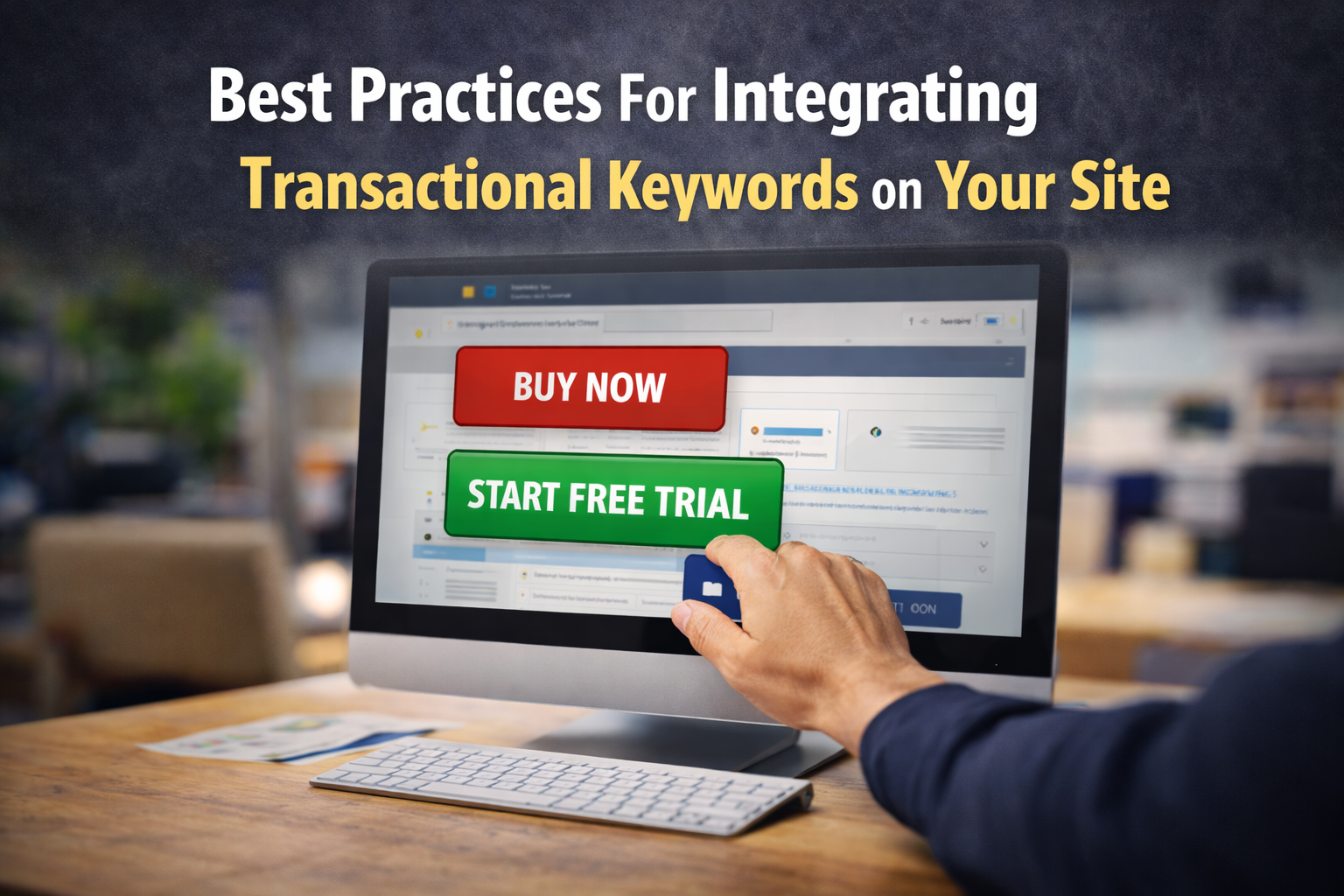
Finding the keywords is only the first step. The next step is putting them on your website in the right way. If you just throw words onto a page, search engines will not like it, and users will leave. You have to weave the words into your website content naturally.
Your goal is to guide the user to take action. Every page must have a clear purpose. Let us look at the best ways to put these powerful words on your site to get the highest conversion rates possible.
Optimizing Product, Service, and Pricing Pages
Transactional keywords belong on transactional pages. Do not put your main buying keywords into informational blog posts.
Instead, put them on your product pages, service pages, and pricing pages.
If your keyword is “buy project management software,” that exact phrase needs to be on the page where people actually buy it.
Put the words in the main headings, in the text, and in the image names. At VH-Info, we help SaaS businesses build powerful backlinks directly to these service pages. When your optimized pages get good links, your organic traffic will grow fast.
Creating High-Converting Title Tags and Meta Descriptions
Before a user ever sees your webpage, they see your link in the search engine results. What they see are your title tags and meta descriptions. These are the short pieces of text that describe your page. You must put your transactional keywords here.
If a user searches for “affordable SEO tools,” they will click on the result that has “Affordable SEO Tools” in the title. Make your meta descriptions clear and exciting. Tell the user exactly what they will get if they click.
Good title tags get more clicks, which brings more high intent buyers to your site.
Pairing Keywords with Strong Calls to Action (CTAs)
A keyword gets the user to your page, but a Call to Action (CTA) gets them to buy. A CTA is a button or a link that tells the user what to do next.
Examples of a CTA are “Buy Now,” “Sign Up,” or “Start Free Trial.”
You must pair your transactional terms with a strong CTA. If a user lands on a page optimized for “download project management software,” there must be a big, bright “Download Now” button right in front of them.
Never make the user guess what the next step is. Make the action easy, and your conversion rates will climb. Keep adding good internal links to your sales pages too. Internal links help users find your best pages easily.
FAQ’s:
What is the Difference Between Commercial and Transactional Keywords?
Commercial intent keywords are used when people are still comparing products and reading reviews. They want to buy soon, but need more facts. Transactional keywords are used when the user has finished comparing and is ready to spend money immediately.
One is for researching the best option, and the other is for making the final purchase.
What Makes A Keyword Transactional, and How Does It Improve Conversions?
A keyword is transactional when it includes action words like “buy,” “order,” or “discount.”
This shows the user has a very high intent to purchase. It improves conversions because you are bringing people to your site who already have their credit cards out, skipping the long research phase completely.
How Do I Research Transactional Keywords For My Business?
You should use keyword research tools like Semrush or Ahrefs to filter words by search intent.
Look for search queries that include your product name plus modifiers like “buy” or “price.” You can also look at your competitors to see which high-intent words bring them the most organic traffic.
Should I Use Transactional Keywords in my Blog Posts?
Most of the time, blog posts are meant for informational content.
You should use informational keywords in blogs to answer questions. However, you can use a few transactional terms inside your blogs as internal links to point readers to your dedicated landing pages and product pages when they are ready.
Are Transactional Keywords More Expensive in Google Ads?
Yes, they are usually more expensive in Google Ads because they are very valuable.
Every business wants clicks from people who are ready to buy immediately. Even though they cost more per click, they often give you a better return on your money because the conversion rates are much higher than informational searches.
How Many Transactional Keywords Should I Target Per Page?
You should target one main transactional keyword per page, along with two or three very close variations. If you try to stuff too many different types of keywords onto one page, it will confuse the search engine and the user.
Keep your focus tight so the specific product page ranks well for its main search terms.
Conclusion
Understanding how to use transactional keywords is a huge part of running a successful online business. When you focus on these high intent search queries, you connect directly with your target audience at the exact moment they want to buy.
By moving away from just informational searches and focusing on action-based search terms, you will see a big change in your sales. Make sure you optimize your product pages, write clear title tags and meta descriptions, and use strong calls to action.
If you run a SaaS company, getting organic traffic to these important pages is what we do best. At VH-Info, our SaaS link building services help your most important transactional pages climb to the top of the search engine results.
When you use keyword research tools to find the right keywords, and we build the links to support them, your business goals become much easier to reach. Start looking for those buying words today, and watch your conversions grow.


 Vishal ambani
  Share
Share
 VH Info