
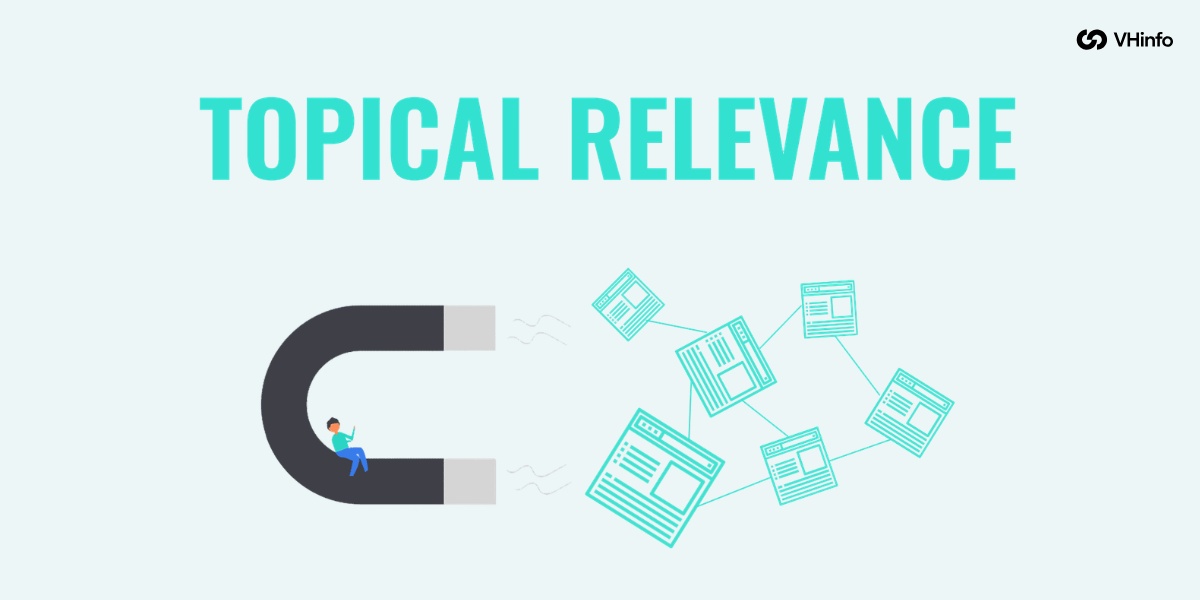
Have you ever wondered why some websites show up at the top of Google while others get lost? You might think it is all about having the most keywords or the most links. But there is a secret ingredient that search engines love. It is called topical relevance SEO.
Imagine you walk into a bakery. You expect to find bread, cakes, and cookies.
If that bakery suddenly started selling car tires, you would be confused, right? You probably wouldn’t trust them to fix your car, and you might even stop buying their bread. Google works the same way. It wants to show users websites that are experts on a specific subject.
At VH-info, we see this every day. We help SaaS companies build their reputation online. We know that just throwing keywords onto a page is not enough. You need to prove to the search engine that you are a true expert.
This article will guide you through exactly how topical relevance works and how you can use it to get more organic traffic.
What Is Topical Relevance SEO and How Does It Work?
Topical relevance is a fancy way of saying “sticking to the subject.” It measures how well your website’s content covers a particular topic. When you cover a subject deeply and clearly, Google sees you as a helpful resource.
Moving Beyond Simple Keywords to Semantic Search
In the past, SEO efforts were simple. If you wanted to rank for “best running shoes,” you just wrote those words many times. This was called keyword stuffing, and it made reading articles very annoying.
Today, search engines are much smarter. They use something called semantic search. This means they try to understand the meaning behind the words. They look for related keywords and related topics to see the full picture.
For example, if you write about “Apple,” does Google know if you mean the fruit or the iPhone? It figures this out by looking at the other words on the page. If you mention “pie,” “tree,” and “juice,” it knows you mean the fruit. If you mention “phone,” “screen,” and “app,” it knows you mean the brand. This is why writing quality content that covers a whole topic is better than just repeating one keyword.
The Relationship Between Topical Authority and Google Rankings
When you write many articles about different parts of the same subject, you build topical authority.
Think of topical relevance as a single puzzle piece, and topical authority as the whole finished puzzle. When Google sees that you have answered many questions about a niche, it trusts you more. This trust leads to higher search engine rankings. At VH-info, we often tell our clients that building links is easier when your site already has strong authority. When your content is good, other websites want to link to you.
Why Topical Relevance SEO Is Essential For High Rankings?

You might ask, “Why can’t I just write about whatever is trending?” The answer lies in how Google judges value.
Boosting E-E-A-T (Experience, Expertise, Authoritativeness, and Trust)
Google uses a set of rules called E-E-A-T to decide if a page is good. This stands for Experience, Expertise, Authoritativeness, and Trust.
Topical relevance SEO directly helps with the “Expertise” and “Authoritativeness” parts.
If you have 50 articles about “email marketing software,” you look like an expert. If you have one article about email marketing and one article about dog food, you do not look like an expert.
By keeping your content strategy focused, you show Google that you know your stuff. This improves your SEO performance because the search engine feels safe sending users to your site.
How Context Helps Google Understand Your Content?
Context is everything. When you create topically relevant content, you give Google clues. Let’s say you write a blog post about “Link Building.” If your website also has pages about “guest posts,” “anchor text,” and “outreach,” Google understands exactly what you do.
It sees the connection between these web pages. This context helps Google show your pages for the right search queries. It ensures you reach the target audience that is actually looking for what you offer.
Reducing Reliance on Off-Page Backlinks
Backlinks (links from other sites to yours) are very important. As a SaaS Link Building Agency, VH-info knows the power of quality backlinks. However, getting links is hard work. If your topical relevance is very high, you might rank well even with fewer backlinks.
This is because your content is so good and complete that Google pushes it up. While you will always need external links to compete for the biggest keywords, having great relevance creates a strong foundation. It makes every backlink you do get more powerful.
Topical Relevance Vs. Topical Authority

These two terms sound the same, but they are slightly different. Knowing the difference helps you plan your digital marketing better.
Key Differences Every Marketer Should Know
- Topical Relevance: This happens at the page level. It asks, “Does this specific piece of content fully answer the user’s question?” It is about depth on one page.
- Topical Authority: This happens at the domain (website) level. It asks, “Is this whole website an expert on this big subject?” It is about the breadth of your whole site.
You need relevance to get authority. You cannot have authority if your individual pages are thin or off-topic.
When to Prioritize Relevance Over Authority
If you are a new website, you cannot have authority yet. It takes time.
So, you must start with relevance. Focus on writing one amazing, comprehensive content piece at a time. Make sure every article is the best answer for that search intent. Once you have many relevant pages, authority will come naturally.
At VH-info, we advise starting small. Pick one specific subject and write everything about it before moving to the next one.
How to Build A Winning Topical Relevance SEO Strategy?

Creating a strategy sounds hard, but it is just like making a plan for a school project. Here is how to do it step-by-step.
Identifying Core Topics and Entities
First, you need to know what you want to be known for. This is your main topic. For a SaaS company, this might be “project management.”
Do not just guess. Use keyword research to find out what people are asking. You can use tools like Google Keyword Planner or just look at Google search suggestions. Look for “entities.” Entities are the people, places, or things related to your topic. For “project management,” entities might be “tasks,” “teams,” “deadlines,” and “software.” Your goal is to mention these entities naturally in your writing.
Creating Pillar Pages and Topic Clusters
This is the most popular method for building relevance. It is called the “Hub and Spoke” model.
- Main Pillar Page: This is a long, big page that covers the main topic broadly. It touches on everything but doesn’t go too deep into small details.
- Cluster Pages: These are smaller blog posts that explain the details mentioned in the pillar page.
For example:
- Pillar Page: “The Ultimate Guide to SaaS Marketing.”
- Cluster Page 1: “How to use social media for SaaS.”
- Cluster Page 2: “Best email strategies.”
- Cluster Page 3: “How to get organic search traffic.”
You then link all these cluster pages back to the main pillar page. This tells Google, “Look, these pages are all related!”
Mapping Content Gaps in Your Niche
Sometimes, your competitors miss things. Maybe they wrote about “how to bake a cake,” but forgot “how to frost a cake.” These are content gaps. If you fill these gaps with relevant information, you can win traffic that they are missing.
Look at the search results for your competitors. What questions are they not answering? If you answer them, you build trust with your target audience. VH-info often helps clients find these gaps so they can build links to pages that no one else has.
Best Practices For Improving Topical Relevance SEO On-Page

Once you have your plan, you need to write the pages correctly. Here are some best practices.
Optimizing Internal Linking Structures
Internal linking is when you link from one page on your site to another page on your site. This is super important. It connects your content clusters together. Think of internal links as bridges. If you have a bridge, the Google bot can travel from one page to another easily.
If there is no bridge, the bot might get stuck and leave.
- Always link your cluster pages back to the pillar page.
- Link cluster pages to other cluster pages if they are related.
- Use descriptive anchor text. Instead of “click here,” use “content marketing strategy” as the link text.
Using Semantic Keywords and Variations Naturally
Do not just repeat your main keyword. Use synonyms and variations. If you are writing about “SEO,” also use terms like search engine optimization, online visibility, and search rankings.
This helps with user intent. Sometimes people search for the same thing using different words. If you use semantic keywords, you can show up for all those different searches. It makes your writing sound more natural to humans, too.
Updating and Refreshing Old Content For Depth
Google loves fresh information. If you wrote an article two years ago, it might be outdated. Maybe the facts changed. Maybe there are new search terms people use now. Go back to your old posts. Add more quality content. Add new sections. Check if your internal links are still working. Updating content is often faster than writing new content, and it gives you a quick boost in SERP (search engine results page).
Common Mistakes That Hurt Your Topical Relevance SEO

Even smart people make mistakes. Here are things you should avoid to keep your SEO strategy safe.
Cannibalizing Your Own Keywords
Keyword cannibalization is when two of your own pages try to rank for the same keyword. This confuses Google. It doesn’t know which page is the “boss.” For example, if you have two articles titled “Best SEO Tips” and “Top SEO Advice,” they might fight each other.
Google might choose to show neither of them on the first page. To fix this, combine them into one strong piece of content.
Straying Too Far From Your Core Niche
It is tempting to write about popular news to get clicks. But if you run a SaaS company, writing about a celebrity scandal will hurt you.
It dilutes your topical authority. Google will get confused about what your site is actually about. Stick to your subject matter. If you sell accounting software, write about money, taxes, and business. Do not write about video games just because they are popular.
Neglecting the Depth of Content
Short, thin content rarely ranks well anymore. If you write 300 words that state the obvious, users will bounce (leave quickly).
This hurts your user experience. You need comprehensive content. This means answering the question fully. If a user asks “how to tie a tie,” show them pictures, give them a video, and explain the steps clearly. Don’t just say “cross the ends and pull.”
VH-info believes that helpful content is the best way to earn links naturally.
Tools and Methods to Measure Topical Relevance

How do you know if you are doing a good job? You need to measure your results.
Practical Ways to Audit Your Content for Relevance
You don’t always need expensive software. You can do a manual audit.
- List all your pages.
- Group them by category.
- Ask yourself: “Do I have enough pages in this category to look like an expert?“
- Check your links. Are the pages linking to each other?
If you find a page that has no links and doesn’t fit a category, it might be hurting your topical relevance. You should either delete it, improve it, or write more related content to support it.
Recommended SEO Tools For Tracking Topical Relevance
While VH-info is an agency and not a tool, we use various tools to help our clients. You can use tools like:
- Google Search Console: To see what search queries you are ranking for.
- SEMrush or Ahrefs: To see your keyword rankings and content gaps.
- Surfer SEO: To check if you are using enough related keywords in your articles.
These tools help you see data, but remember, the most important tool is your brain. Always write for the human reader first.
FAQ’s:
What is the Difference Between Domain Authority and Topical Relevance?
Domain Authority (often a score from tools) guesses how strong your whole site is based on backlinks. Topical Relevance is about how well your content matches a specific subject. You can have high relevance even with low domain authority, but having both helps you rank best.
How Do I Choose Keywords That Increase Topical Relevance?
Start with your main topic and look for questions people ask about it. Use Google Keyword Planner or look at “People also ask” in search results. Pick related keywords that help explain your main topic in more detail, rather than just picking random high-traffic words.
How Many Articles Do I Need to Establish Topical Relevance?
There is no magic number. It depends on how big the topic is. For a small topic, 10 articles might be enough. For a huge topic like “marketing,” you might need hundreds. Focus on covering the subject completely rather than counting the articles.
Can Topical Relevance Replace Backlinks?
Not entirely, but it helps a lot. If you have amazing topical relevance, you can rank for smaller keywords without many links. However, to rank for very competitive terms, you usually need both great content and quality backlinks from authoritative sites.
Can Internal Linking Help Improve My Topical Relevance?
Yes, absolutely! Internal links tell Google how your pages are related. By linking a specific article to a main category page, you show the structure of your expertise. It helps the search engine understand that you cover the topic deeply.
How Long Does It Take to See Results From A Topical Relevance Strategy?
SEO is a slow game. It usually takes a few months to see big changes. As you add more content clusters and interlink them, Google slowly trusts you more. Consistency is key; keep publishing quality content and the results will come.
What Are the Best Tools to Measure Topical Relevance in SEO?
Tools like Clearscope, MarketMuse, or Surfer SEO are great for checking on-page relevance. They compare your text to the top results. For site-wide structure, site audit tools like Screaming Frog help you visualize your internal linking and clusters.
Conclusion
Building topical relevance SEO is not a quick trick. It is a long-term commitment to quality. It means becoming a true resource for your audience. When you focus on creating helpful content that answers real questions, you build trust.
Remember to organize your work into topic clusters, use internal links wisely, and always keep your user’s needs in mind. Do not just chase search terms; chase solutions.
At VH-info, we believe that when you combine deep, relevant content with a solid link-building strategy, you become unstoppable. We are here to help you navigate the world of SaaS link building.
Focus on being the expert in your niche, and the search engine rankings will follow. Start today. Look at your website. Are you an expert, or are you just a collection of keywords? Pick your topic, go deep, and watch your organic traffic grow.

 Vishal ambani
  Share
Share
 VH Info