
Imagine you are trying to find a specific book in a library that has millions of books, but there is no catalog. You would never find what you are looking for, right? The internet is just like that giant library.
There are billions of websites, and finding the right ones to help your business grow can feel impossible without a map. This is where a backlink database comes in. It is the map of the internet.
If you are a site owner, you know that getting other websites to link to you is very important. These links are called backlinks. When a high-quality website links to you, it tells search engines like Google that your site is trustworthy. This helps you climb the search engine rankings.
But how do you find these link-building opportunities? You cannot just guess. You need a tool that has a list of all the links on the web. At VH-Info, we help SaaS companies grow by building these links every day.
We use these powerful databases to find the best spots for our clients.
In this ultimate guide, we will explain what a backlink database is in very simple words. We will look at the best tools for 2026 and show you how to use them to get more organic traffic. We want to make link building easy for you to understand.
What Is A Backlink Database (And How Is It Built)?

Defining A Backlink Database Vs. A Simple Backlink Checker
A lot of people think a backlink database and a backlink checker are the same thing, but they are quite different.
Think of a simple backlink checker like a flashlight. It can shine a light on one specific spot. You can put in a website address, and it will show you a list of links for that one page. It is useful for a quick look at a link profile, but it does not see the whole picture.
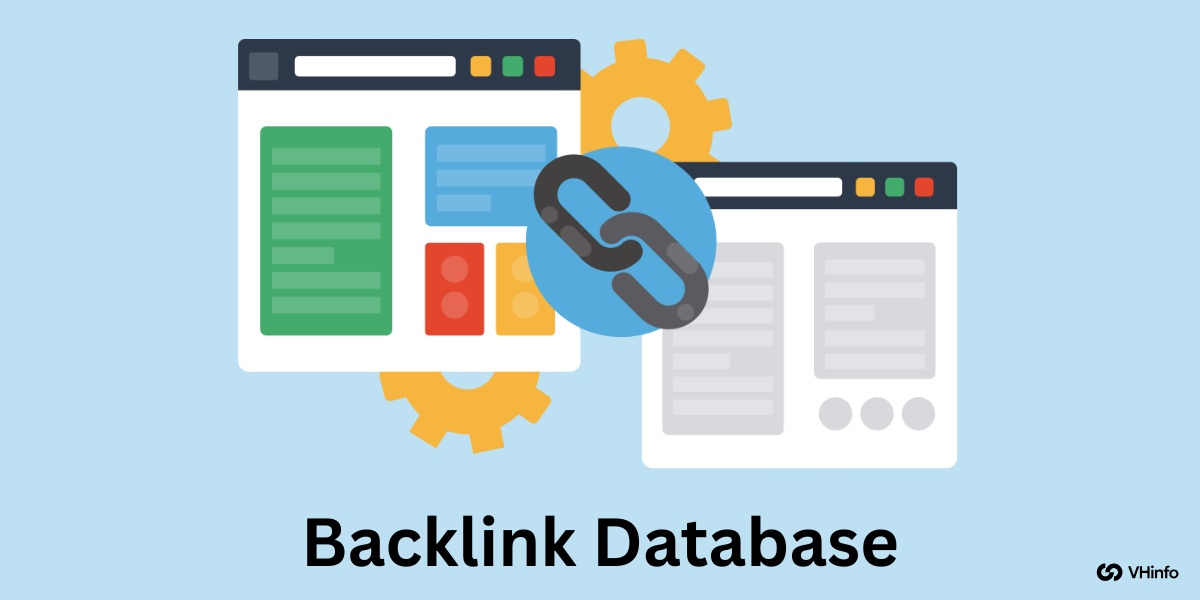
A backlink database is like the sun. It shines light on everything at once. It is a massive storage system that holds information about trillions of links across the entire internet. It remembers which page links to which page, what words they used, and when the link was made.
When SEO professionals want to build a real SEO strategy, they need the full database, not just a quick checker. They need to see the number of backlinks across the whole web to understand who is winning the race.
How Search Engines and SEO Tools Crawl the Web to Build Their Index?
Have you ever wondered how these tools find all this information? They use something called “crawlers” or “spiders.”
Imagine a tiny robot spider that visits a website. It reads the text on the page and looks for links. When it finds a link, it clicks on it and travels to the next page. Then it reads that page and finds more links. It keeps doing this all day, every day, visiting billions of pages.
This process is called “crawling.”
The search engines (like Google) and SEO tools (like Ahrefs or Semrush) have armies of these robot spiders. They bring all the data back home and save it in a giant list called an “index.”
This index is the backlink database. It tells us:
- Source URL: Where the link is coming from.
- Target URL: Where the link is going.
- Anchor Text: The clickable words used in the link.
Without these crawlers working hard to find new backlinks, we would have no backlink data to analyze.
Key Metrics You’ll Find in Every Backlink Database (DA/DR, Anchor Text, Link Type)
When you look inside a database, you will see a lot of numbers and terms.
Here are the most important ones you need to know to measure quality backlinks:
- Domain Authority (DA) or Domain Rating (DR): Think of this as a score from 0 to 100. A site with a score of 90 is very famous and powerful (like a major newspaper). A site with a score of 10 is usually new or small. High authority sites pass more power to your website. We call this power link equity.
- Anchor Text: This is the clickable text you see in a link. For example, if a link says “click here,” the anchor text is “click here.” If it says “best pizza,” the anchor text is “best pizza.” This tells Google what the linked page is about.
- Link Type (Dofollow vs. Nofollow): A Dofollow link is a vote of confidence. It tells Google, “I trust this site, please count this vote.” A Nofollow link tells Google, “I am linking to this, but do not count it as a vote.” For SEO success, you usually want more Dofollow links.
Why A Powerful Backlink Database Is Your Most Critical SEO Asset?

Spying on Your Competition’s Link Building Strategy
If you are playing a game, you want to know what the winner is doing, right? A backlink database lets you see exactly what your competitors are doing. You can type your competitor’s website into the tool, and it will show you their entire backlink profile.
You can see who is linking to them. Did they get a guest post on a popular blog? Did they get mentioned in the news?
By seeing their external links, you can figure out their secret strategy. If they are getting quality links from technology blogs, maybe you should try to get links from those blogs too. This gives you valuable insights that you cannot find anywhere else.
Discovering Thousands of New Link Opportunities
Finding places to get links is the hardest part of link building. You cannot just ask everyone. You need to ask the right people. A database helps you find these link-building opportunities quickly. You can search for websites that talk about your topic, but do not link to you yet.
For example, if you sell dog food, you can search the database for blogs that use the specific keywords “healthy puppy snacks.” The tool will give you a list of hundreds of quality websites. Then, you can reach out to them and ask if they would like to see your product.
This turns a hard search into an easy list of targets.
Auditing Your Own Backlink Profile For Toxic Links
Not all links are good links. Some links can actually hurt your website. These are called “toxic links” or “spam.”
Bad links usually come from spammy websites, gambling sites, or sites that have been hacked. If you have too many of these, Google might think you are trying to cheat. This can lower your search rankings.
A good database lets you perform a backlink audit. You can look through your own list of links and find the bad ones. Most tools will even give you a spam score to help you spot them. Once you find them, you can tell Google to ignore them. This keeps your website healthy.
Understanding Your Website’s True Authority
How do you know if your SEO is working? You can look at your organic traffic, but that changes every day.
A more stable way to measure your success is by looking at your authority score. Your domain authority goes up when you get more inbound links from good sites. By checking your score in a backlink database every month, you can see if you are growing.
At VH-Info, we track this for our clients to prove that our link building strategies are working. It is like a report card for your website.
The Best Backlink Database Tools Compared 2026
Ahrefs: The Largest and Freshest Backlink Database?
Ahrefs is one of the most famous names in the world of SEO. It is very popular because its robot crawlers are incredibly fast.
In fact, Ahrefs says they are the second most active crawler on the internet, right after Google! This means their backlink database is updated very often. If you get a new link today, Ahrefs might find it within a few hours.
For a site owner, this speed is great because you can see your new backlinks almost instantly.
Ahrefs also gives you very clear metrics like Domain Rating (DR). The charts are easy to read, so you can see if your organic traffic is going up or down. They have a huge index of live links, making it a favorite for finding link opportunities.
However, it is not cheap, so it is mostly used by SEO professionals who need the best data every single day.
SEMrush: The All-in-One Marketing Toolkit

Semrush is not just a database for links; it tries to do everything.
It is a complete digital marketing suite. While its backlink database is massive and claims to have over 43 trillion links, people love it because it connects that data to other things. It helps with keyword research, social media, and even paid ads.
If you want to see how your keywords rankings connect to your links, Semrush is very helpful. It has a great tool called “Backlink Gap” which shows you which websites link to your competitors but not to you.
It also has a very strong backlink audit tool that helps you find toxic links that could hurt your SEO performance. It is a great choice if you want one tool to handle your SEO strategy, content marketing, and social media all in one place. It offers a lot of deep insights for the price.
Majestic: The Specialist’s Link Intelligence Database

Majestic is different because it only focuses on links. It does not do keyword research or ads. It is a pure backlink checker and map maker. because they specialize, they have created some unique ways to measure links that no one else has.
They use terms like “Trust Flow” and “Citation Flow.”
“Trust Flow” is really cool. It creates a map of trust. If a trustworthy site links to you, your Trust Flow goes up. This helps you separate high-quality links from just “popular” links. Majestic also has a “Historic Index,” which is like a time machine.
It remembers links from many years ago, even if they are gone now. This is great for SEO professionals who want to analyze the history of a website. It might look a bit complicated for a beginner (5th or 6th grade), but the data is very powerful if you want to check link equity.
Moz: The Power of Domain Authority and Link Explorer
Moz is the company that invented the term Domain Authority (DA). Almost everyone in the SEO industry uses DA to talk about how strong a website is. Their tool, called “Link Explorer,” is very friendly for beginners. It is easy to look at and understand.
Moz has worked hard to make their backlink database bigger and fresher in recent years. They are very good at filtering out spam, so the lists you see are usually quality websites. They also have a “Spam Score” that is very famous. It tells you if a site is safe or dangerous.
If you are just starting with search engine optimization and want a tool that feels like a helpful teacher, Moz is a great pick. It guides you to make the right choices for your link profile. It is a very trusted tool for checking the authority score.
Are Free Backlink Database Options Worth Using?
You might be wondering, “Can I get this data for free?” There are some free backlink checker tools out there.
Ahrefs and Semrush even have free versions, but they are very limited. A free tool might show you the top 10 or 100 links to your site, but it will hide the rest. It is like seeing only the first page of a book. You cannot see the full story. For a small website owner or a student, a free tool is okay to just check your number of links or see your top anchor text. However, for real SEO success, free tools are usually not enough.
They won’t let you export data, they won’t show you all your link building opportunities, and they might not update often. If you are serious about growing, you usually need a paid tool or an agency like VH-Info to help you see the full backlink data.
Step-by-Step: How to Use A Backlink Database For Link Building?

Now that we know what the tools are, let’s talk about how to use them. At VH-Info, we follow steps like these to help our clients win.
Step 1: Performing A “Link Gap” Analysis
This is the smartest way to start. Most databases have a “Link Gap” tool. You put your website in one box, and two or three of your competitors in the other boxes. The tool will look at all the databases and compare them.
It will show you a list of websites that link to your competitors but do not link to you. Why is this good?
Because these websites already link to businesses like yours. They are much more likely to say “yes” if you ask them for a link. It is like finding a group of friends who already like your type of music.
Step 2: Finding Your Competitors’ Most Authoritative Links
You don’t need every link your competitor has. You only want the best ones. Go to the database and look at your competitor’s backlink profile.
Sort the list by Domain Authority (or DR). Look at the top of the list. These are their most powerful inbound links. If they have a link from a big site like Forbes or TechCrunch, click on it to see how they got it. Did they write a guest post? Did they give a quote for an article?
Once you understand how they got the link, you can try to do the same thing. This helps you build high authority links that boost your rankings.
Step 3: Filtering the Database For “Dofollow” & Contextual Links
When you download a list of link opportunities, it will be very long. You need to clean it up. Use the filters in the database tool.
First, filter for dofollow links. Remember, these are the ones that pass value to your site. Next, look for “contextual” links. These are links that are inside the paragraphs of an article, not in the footer or sidebar. Google loves links that are inside real sentences. By filtering, you save time. You stop wasting energy on weak links and focus only on quality backlinks that will improve your search engine rankings.
Step 4: Finding Broken Link Building Opportunities At Scale
This is a classic trick. Websites change all the time. Sometimes pages get deleted, but other people still link to them. These are called “broken links.” You can use a backlink database to find broken links on a topic you know about.
- Search for a big website in your niche.
- Use the tool to find their “Broken Pages” (pages that show a 404 error).
- See who is linking to those broken pages.
Now, you can write an email to those site owners: “Hey, I saw you have a broken link on your page. I have an article that is very similar and is working perfectly. Want to swap it?” This helps the site owner fix their error, and you get a free link. It is a win-win for user experience.
Step 5: Identifying Resource Pages and Link Roundups
Some pages exist just to list helpful links. These are called “Resource Pages.” You can use the database keyword research tool to find them.
Search for terms like:
- “Best [Your Topic] tools”
- “[Your Topic] resources”
- “Weekly roundup”
The database will show you pages that list many resources. If you have a great tool or article, you can ask to be added to the list. Since these pages are designed to link out, the user intent is perfect for link building.
FAQ’s:
How Do Backlink Databases Improve Website SEO and Rankings?
They improve rankings by giving you the data you need to find quality links. Without a database, you are blind. With one, you can see where to get links that increase your authority score and help you rank for specific keywords.
Which SEO Tool Has the Biggest Backlink Database?
It is a close battle. Ahrefs and Semrush both claim to be the biggest. Ahrefs is often praised for having the freshest data (finding new backlinks fast), while Semrush often claims the highest total number of links.
For most users, both are big enough to be excellent SEO software.
Can I Access A Backlink Database For Free?
Yes, but it is limited. Tools like Ahrefs Webmaster Tools or the free version of Semrush let you see some data for your own site. But to see full data for other websites or to see deep insights across the web, you usually have to pay.
Can I Access Backlink Data For Any Website Using These Tools?
Yes, mostly. You can enter any URL—like a competitor or a famous blog—and see their backlink analytics. However, you cannot see data for private pages that are password-protected. You can only see what the “crawlers” can find publicly on the google search results.
Conclusion
A backlink database is not just a tool for computer experts. It is the most valuable asset for anyone who wants to succeed online. It helps you understand your backlink profile, spy on competitors, and find the best places to grow.
Whether you use Ahrefs, Semrush, or Moz, the goal is the same: to build high quality connections that tell Google your website is important.
We know that looking at millions of rows of SEO data can be tiring. It takes a lot of time to filter, analyze, and reach out to people. That is why VH-Info exists. We are a SaaS Link Building Agency. We have the tools, the experts, and the experience to handle the database work for you.
We use these link building strategies every day to help our clients get more referral traffic and better rankings. If you want the results without the headache of learning the software, we are here to help. Let’s build your authority together!

 Vishal ambani
  Share
Share
 VH Info