Every website owner wants to be at the top of Google search results. When you search for something, you usually click on the first few links. You trust them more. Have you ever wondered why Google picks those websites? It is often because those sites have high authority.
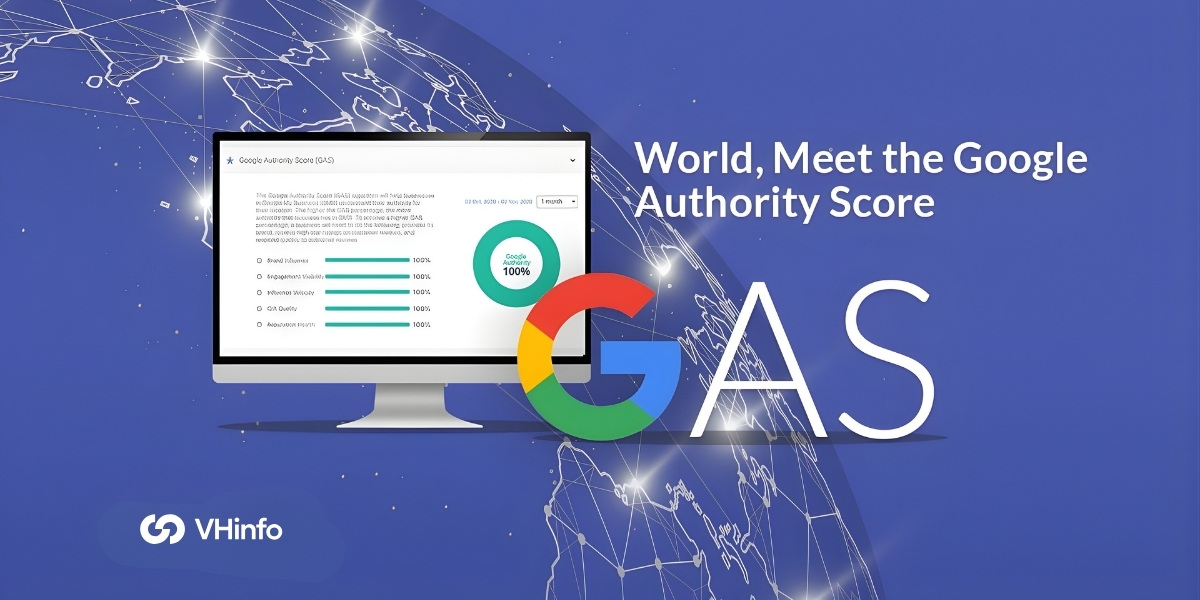
Many people talk about a “Google Authority Score.” They think Google gives every website a specific number, like a grade in school. This topic can be confusing. Is there really a score inside Google’s system? How do you find it?
In this guide, we will clear up the confusion. We will explain what website authority really means. We will look at how search engines decide which sites are trustworthy. We will also show you how to check your site’s strength using popular SEO tools.
Most importantly, we will share the best ways to get a higher authority score.
At VH-info, we help SaaS companies grow by building strong connections. We know that getting high-quality backlinks is the best way to prove your site is important. We don’t just talk about it; we help you do it.
Let’s dive in and learn how to make your website strong and trusted.
What is the Google Authority Score and Does It Exist?

First, let’s answer the biggest question. Does Google have a secret “Authority Score” that they show to people? The short answer is no.
Google does not have a single “Google Authority Score” that you can look up.
You cannot log into a Google tool and see a score from 0 to 100. However, authority is still very important. Google wants to show the best results to its users. To do this, it uses complex systems to judge if a website is good or bad.
Even though there is no official scorecard, the concept of “authority” is real. It means how much Google trusts your website. If Google trusts you, you have a better chance of getting more organic traffic.
Understanding Google PageRank Vs. Third-Party Metrics
Years ago, Google had something called PageRank. It was a visible bar on your browser that showed a score from 0 to 10. It was based on the number of links pointing to your site. Think of links as votes. If many sites linked to you, Google thought you were popular.
Today, PageRank still exists inside Google’s brain (the algorithm), but the public cannot see it anymore. Google uses machine learning to look at links, but it is much smarter now. It looks at the quality of backlinks, not just the number.
Because we cannot see Google’s score, other companies made their own tools. These are called third-party metrics. Companies like Moz, Ahrefs, and Semrush created their own scores to guess how Google sees your site.
These are very useful, but remember, they are not from Google directly. They are estimates of your ranking potential.
The Role of E-E-A-T (Experience, Expertise, Authoritativeness, and Trustworthiness)
Google uses a set of rules called E-E-A-T to decide if a page is good. This stands for Experience, Expertise, Authoritativeness, and Trustworthiness.
- Experience: Does the writer have real-life experience with the topic?
- Expertise: Is the writer an expert? Do they know their facts?
- Authoritativeness: Is the website known as a leader in its field?
- Trustworthiness: Is the site safe and honest?
This is very important for your SEO strategy. If you write great content that helps people, your authority grows.
Google wants to see that you are a trusted expert. At VH-info, we focus on getting you links from other sites that have high E-E-A-T. When a trusted site links to you, it tells Google that you are trusted, too. This improves your site’s authority over time.
How to Check Your Website’s Authority (Google Authority Score Alternatives)
Since we cannot ask Google for our score, we use other tools. These tools are like an authority score checker. They give you a number, usually from 0 to 100. A higher number is better. These scores help you understand your SEO strength compared to other websites.
Moz Domain Authority (DA)
Moz is a famous SEO company. They created a metric called Domain Authority, or DA score.
This is one of the most popular scores used by digital marketing pros. The DA score predicts how well a website will rank on search engine result pages. It is based on your link profile. This includes the number of backlinks and the quality of those links. It uses a logarithmic scale.
This means it is easier to grow your score from 10 to 20 than it is to grow from 70 to 80.
What is a good domain authority score?
- Below 30: New sites or small businesses.
- 30 to 50: Average but growing sites.
- 50 to 60: Good, strong sites.
- Over 60: Very high authority sites.
Ahrefs Domain Rating (DR)
Ahrefs is another powerful tool. Their score is called Domain Rating (DR). It focuses heavily on your backlink profile.
It looks at how many unique domains link to you. If you have links from many different websites, your DR will go up. But if you have many links from just one website, it won’t help as much. Ahrefs DR is great for checking the “link power” of a website.
When we at VH-info look for places to get links for you, we often check the DR to make sure the site is strong.
Semrush Authority Score
Semrush has its own metric called the Semrush Authority Score. This score is very smart. It looks at three main things:
- Link Power: The quality and quantity of backlinks.
- Organic Traffic: How many people visit the site from search results?
- Spam Factors: If the site looks fake or spammy.
The Semrush Authority Score is helpful because it looks at real traffic, not just links. What is a good authority score on Semrush?
- 0-20: New websites.
- 20-40: Growing websites.
- 40-60: Established business websites.
- 60+: Very popular websites with high authority.
Using an authority score checker helps you track your progress. If your score goes up, your SEO efforts are working.
Proven Strategies to Increase Your Google Authority Score
Now comes the fun part. How do you get a high score? How do you make your website strong? Increasing your authority takes time and hard work. There is no magic button. You need a solid plan.
Here are the best strategies to improve your authority score and get more organic traffic.
Building High-Quality Backlinks From Reputable Sites
This is the most important step. Backlinks are like votes. When a high authority website links to your page, they are “voting” for you.
They are telling Google, “This website is good!” However, not all votes are equal. A link from a famous newspaper or a big university is worth much more than a link from a tiny, unknown blog. You want quality backlinks. At VH-info, this is exactly what we do.
We specialize in SaaS link building. We help you get relevant backlinks from reputable sites in your industry.
- Don’t buy cheap links. These can hurt you.
- Focus on relevance. If you sell software, you want links from technology sites.
- Be patient. Building a strong backlink profile takes time.
Creating “Link-Worthy” Content and Research Studies
Why would someone link to your website? Usually, it is because you have something valuable to share. You need to create valuable content.
One of the best ways to get links is to publish research studies or data. People love facts and numbers. If you write an article with new data, other writers will use your data and link back to you as the source. This is a great way to get inbound links naturally.
“Link-worthy” content can be:
- In-depth guides: Articles that explain everything about a topic.
- Infographics: Pictures that explain data simply.
- Free tools: Calculators or checkers that help people.
- Original research: Surveys or experiments you did yourself.
When you have great content, other website owners will want to share it. This brings you higher authority.
Removing Toxic Links and Fixing Broken Pages
Sometimes, bad links can point to your website. These are called toxic links or spammy links. They might come from low-quality or fake sites.
If you have too many of these, your spam score might go up. This can hurt your ranking potential. You should check your link profile regularly.
If you see bad links, you can ask Google to ignore them. This keeps your site healthy. Also, check for broken pages on your site. If a user clicks a link and sees a “404 Error,” it is bad for user experience. It breaks the flow. Fixing these errors helps keep your site’s authority strong.
Improving Internal Linking Structure
Internal links are links that go from one page on your site to another page on your site. They are very useful. They help Google understand the structure of your website.
Imagine your website is a house. Internal links are the hallways connecting the rooms. If you have a strong page with high authority, you can link from that page to a newer page. This passes some of the “link juice” or authority to the new page.
- Link to your most important pages often.
- Use clear words for the link (anchor text).
- Make sure the links are relevant and helpful to the reader.
Implement Technical SEO
Technical SEO is about how your website is built. It helps search engine robots read and understand your site. If your site is slow or broken, robots cannot read it well.
Key technical SEO best practices include:
- Speed: Your site should load very fast.
- Mobile-friendly: It must look good on phones.
- Security: Use HTTPS to keep user data safe.
- Sitemap: A map of your site for Google.
Good technical SEO creates a solid foundation. It ensures that your high-quality content and backlinks can actually help you rank. If your technical SEO is bad, even the best content might not rank well in search engine results.
Can Better Rankings Boost Your Authority Score?

This is like the chicken and the egg. Do rankings bring authority, or does authority bring rankings? The answer is: they help each other.
When you rank high in Google search results, more people see your site. You get more search traffic. When more people see your site, more people might link to it. As we learned, getting more links increases your authority score.
So, yes, better rankings can help boost your score over time. When you appear at the top, you look like a leader. People trust leaders. Writers and bloggers often search for sources on Google. They usually click the top results.
If you are there, they will link to you. This creates a cycle of success. At VH-info, we help you start this cycle. By building the initial links you need, we boost your authority metrics, which helps you rank, which brings you even more natural links later.
Why A High Google Authority Score Matters For Rankings?

You might ask, “Why should I care about a number on a tool?” While the score itself isn’t a direct Google ranking factor, it correlates with success.
The Correlation Between Authority and Search Visibility
Studies show that pages with high domain authority tend to rank better. It is not a rule, but it is a strong pattern.
- High DA sites often take the top spots for hard keywords.
- Low DA sites struggle to rank for popular terms.
If you want to compete for competitive keywords, you need higher scores. A high score means your site has “weight.” It has power. When you publish a new article on a high authority site, it often ranks quickly. On a low-authority site, it might take months.
Building Brand Trust With Users
A high score is also a sign of trust. When users see your site at the top of the search engine, they trust you. They see you as a serious business.
Think about it. Would you trust a medical advice site that is on page 10 of Google? Probably not. You trust the ones on page 1. Building your website authority builds your brand’s reputation. It tells the world that you provide value.
FAQ’s:
Does Google Have An Official Website Authority Score?
No, Google does not have a single public authority score. They use many signals like E-E-A-T and PageRank to judge sites. The scores you see like DA or DR come from third-party SEO tools, not Google itself.
Is Domain Authority A Google Ranking Factor?
Domain authority (DA) from Moz is not a direct Google ranking factor. Google does not look at your Moz score to decide your rank. However, the things that improve DA, like quality backlinks, are very important for Google rankings.
What Is Considered A Good Authority Score?
A good authority score depends on your competition. Generally, a score of 40-50 is average, 50-60 is good, and anything over 60 is excellent. You should aim to have a higher score than your direct competitors.
How Long Does It Take to Increase My Google Authority Score?
Increasing your authority score is a slow process. It takes time. You might see small changes in a few months, but significant growth can take a year or more. Consistency in publishing content and link building is key.
Can I Improve My Authority Score Without Backlinks?
It is very difficult to improve authority scores like DA or DR without backlinks. These scores are calculated primarily based on link data. However, you can improve your Google rankings with just great content and technical SEO, but your “score” on tools might not move much.
Why Did My Authority Score Drop?
Your score might drop if you lose some good backlinks. It can also drop if your competitors gained a lot of links and you did not. Sometimes, the tools (like Moz or Semrush) change how they calculate the score, causing a temporary drop.
How Reliable Are Authority Score Checker Tools?
Authority score checker tools are reliable for comparing sites. They give you a good estimate of relative strength. However, they are not 100% perfect. You should use them as a guide, but always focus on real traffic and user experience first.
Conclusion
Understanding the Google Authority Score is a big step in your digital marketing journey. While Google doesn’t give you a printed report card, the authority of your website is real and vital. It is built on trust, quality content, and strong connections with other sites.
Remember, scores like Domain Authority (DA) and Domain Rating (DR) are just tools to help you measure progress. They are not the final goal. The real goal is to provide value to your users and earn their trust.
To grow your website authority, focus on the basics. Create amazing content that helps people. Fix your technical SEO so your site runs smoothly. And most importantly, build a strong backlink profile with relevant backlinks. This is where VH-info shines.
We understand that link building is hard work. It takes research, outreach, and relationships. As a dedicated SaaS Link Building Agency, we take that burden off your shoulders. We use our expertise to secure the high-quality links that move the needle for your business.
Don’t obsess over the daily number changes. Focus on building a brand that deserves to rank. With consistent effort and the right strategy, your authority will rise, your organic traffic will grow, and your business will succeed.
Start building your authority today, and watch your website climb the search rankings.
 Share
Share