Buyers’ journeys, consumer expectations, and buying behaviors are consistently evolving. And as we enter 2026, these changes will only become more impactful in terms of affecting the typical business growth timeline.
You see, operating in the SaaS industry — and particularly in competitive niches — has never been more challenging.
In 2025, there was a surge in demand for high-quality SaaS solutions, leading to impressive revenue growth. This year, the growth trend is likely to continue. In fact, experts project SaaS revenue to reach $512.27 billion in 2026.
However, most business owners and marketers forget that market expansion inevitably leads to increased competition. And when the goal is profitable business growth, that can pose a real challenge for smaller brands trying to stand out from well-established competitors.
The good news is that there are effective business growth strategies you can implement in 2026 — even when operating in competitive markets. The following are the best tactics to build brand and product awareness, attract new leads, and convert more prospects into loyal customers of your business.
Pay Even More Attention to Customer Wants
Regardless of whether your target audience consists of B2B or B2C buyers, one thing is for certain. In 2026, consumers demand next-level personalization.
The important thing to understand, however, is that this doesn’t mean you should collect more data about your prospects. Instead, the trend signals the importance of paying attention to customer wants and needs and incorporating meaningful personalization features into the typical buyer’s journey.
One of the main reasons for this is that, in 2025, 81% of consumers ignored irrelevant marketing messages. On the other hand, 96% were more likely to buy from brands that used personalization.
When exploring growth strategies to help your brand stand out in competitive niches, think about personalization opportunities to make your solutions more attractive than those of your competitors.
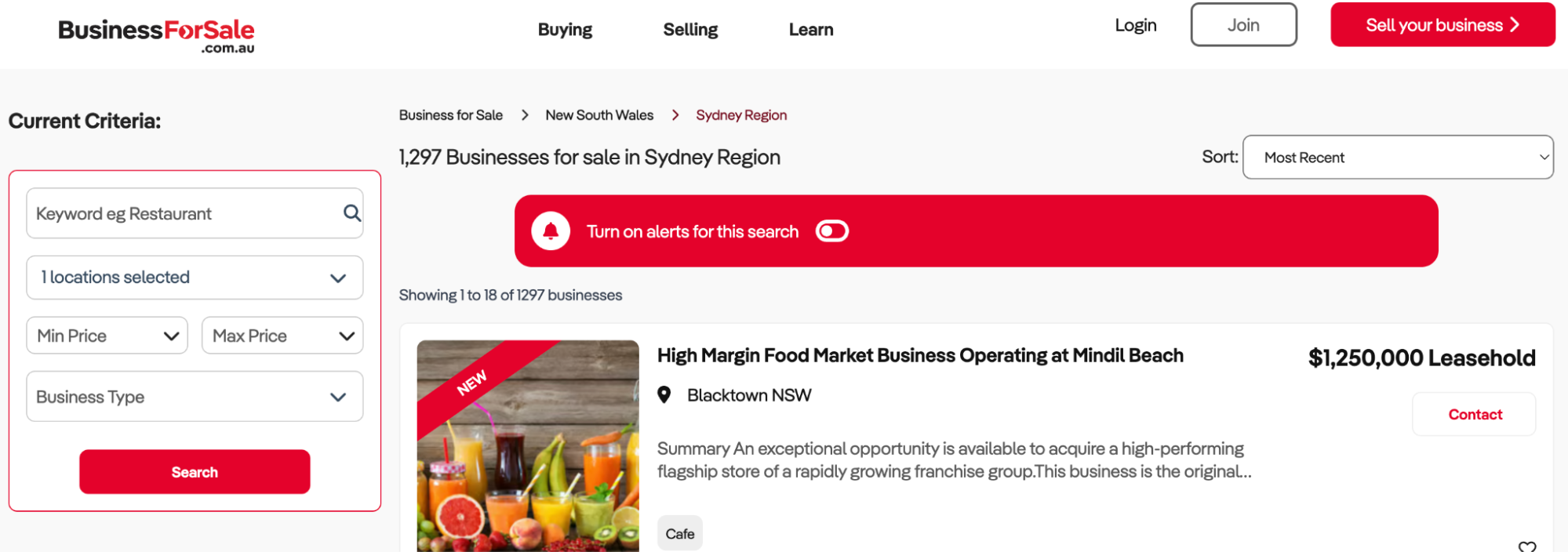
For example, Sydney based Business for Sale uses website cookies to optimize its returning visitors’ user experience. By allowing prospects to jump back into previous searches, the brand effectively caters to the inherently complex buyer’s journey of acquiring businesses. Furthermore, this strategy shows that Business for Sale perfectly understands what buyers want and need from an efficient platform, automatically elevating its reputation as one of the best destinations for serious business investors.
Invite Ideal Customers Into Your Development Process
Personalization makes customers feel seen (and more open to a conversion). But being heard by their favorite brands makes them feel valued, which is even more impactful when trying to drive growth.
Now, if you’re looking for strategies to help your brand stand out in a competitive niche, you have one crucial task. You need to develop a unique solution that perfectly aligns with your ideal customers’ needs.
One way to tackle this task is to conduct extensive research and development until you’ve landed on a solution that’s new and relevant to your target audience.
Another (more budget-friendly option) is to ask your existing customers for feedback and work towards making your product a better fit for their specific requirements.
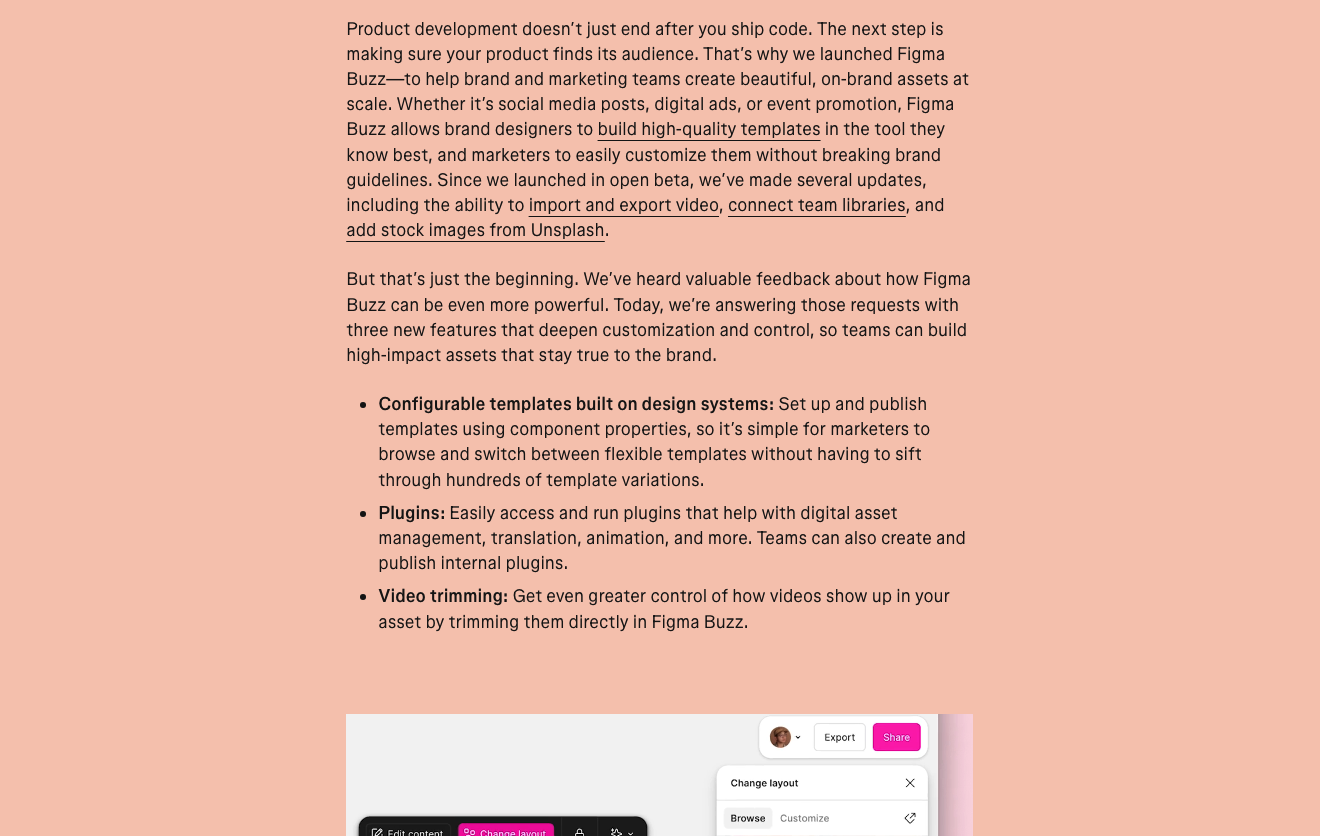
For example, Figma regularly considers customer feedback when developing new product features. By doing so, it actively stays ahead of its competitors by continuously giving users exactly what they want. Additionally, the brand positions itself as a user-centric business, which is increasingly important in 2026 and beyond — especially as consumers turn away from faceless, profit-oriented businesses and choose smaller service providers instead.
Run Year-Round Awareness Campaigns
Here’s something about buyer behavior that many businesses don’t comprehend.
The majority of consumers are not actively moving through the buyer’s journey at all times. By only creating marketing strategies for active shoppers, you’re missing out on valuable opportunities to engage future customers.
To grow your business in 2026 and stand out in competitive markets, one of the best things you can do is run year-round awareness campaigns.
On the one hand, these will help you reach qualified leads and slowly draw them into your marketing funnel. On the other hand, such campaigns will consistently widen your reach, ensuring that you don’t miss out on sales opportunities due to a lack of brand or product awareness.
To make this approach work for your specific brand and audience, explore opportunities to deliver relevant value to potential customers who are not yet aware that they might need your solutions.
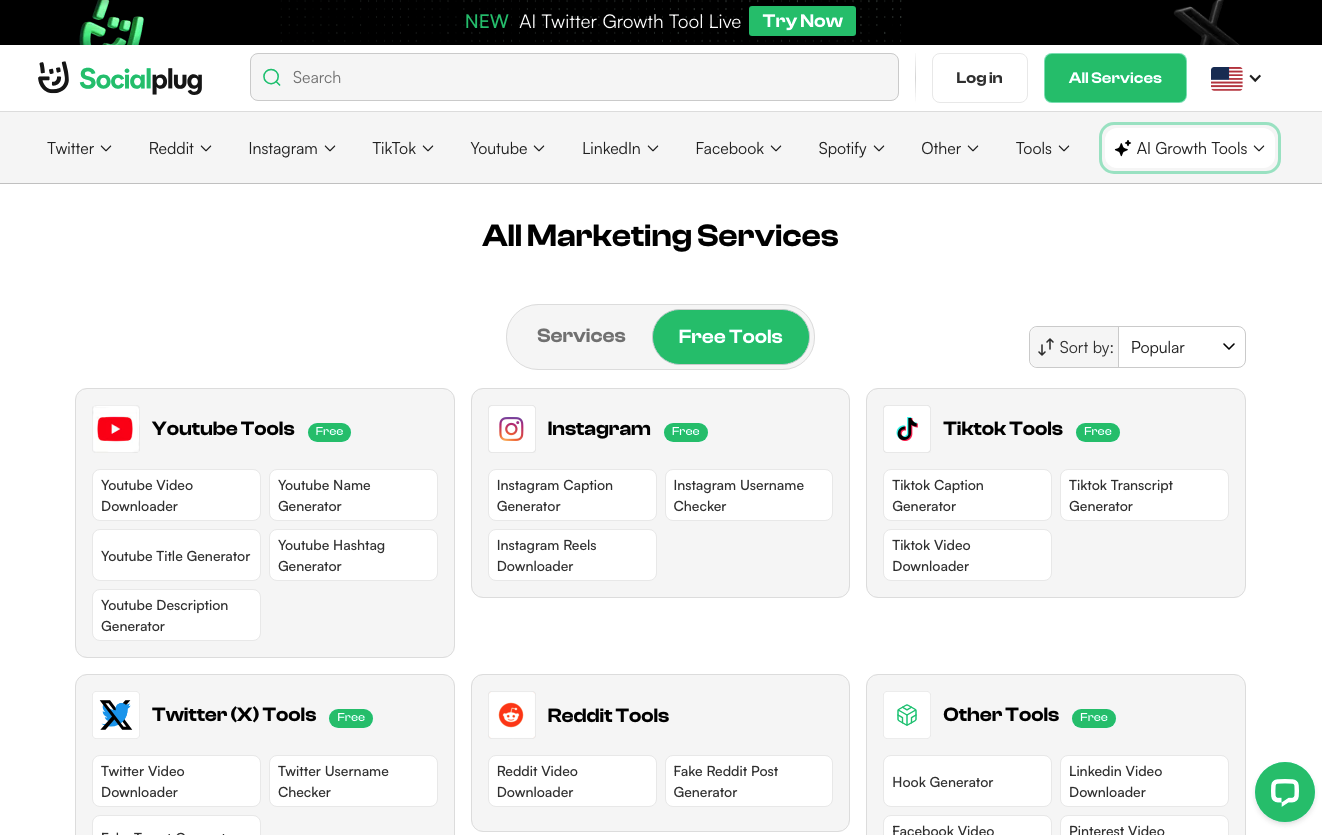
For example, Socialplug, a social media engagement service, offers a variety of highly specific marketing tools. However, it also knows that those are niche SaaS solutions, which may not appeal to everyone who’s a potential customer. To guarantee brand awareness and engage potential leads, this brand offers a variety of free tools that appeal to a wide range of user personas and are the perfect asset for attracting awareness-stage prospects with a high chance of converting into customers.
Optimize Pricing Strategies for Value and Flexibility
One of the biggest sales (and business growth) challenges of 2025 had to do with buyers’ price sensitivity. And while some resources suggest that consumers have gotten accustomed to financial volatility (and are responding to it with intentional spending and value-based buying decisions), it’s still worth noting that unjustified price hikes won’t go over that easily in the coming year.
To grow your brand — particularly in competitive industries — you need to communicate the unique and exceptional value your solutions deliver.
An interesting way to do this is to revamp your pricing strategies in a way that delivers sought-after flexibility while still emphasizing user value.
Something as simple as allowing your target audience to choose the pricing model that best aligns with their needs could be an answer to conversion optimization in 2026, especially in highly saturated markets.
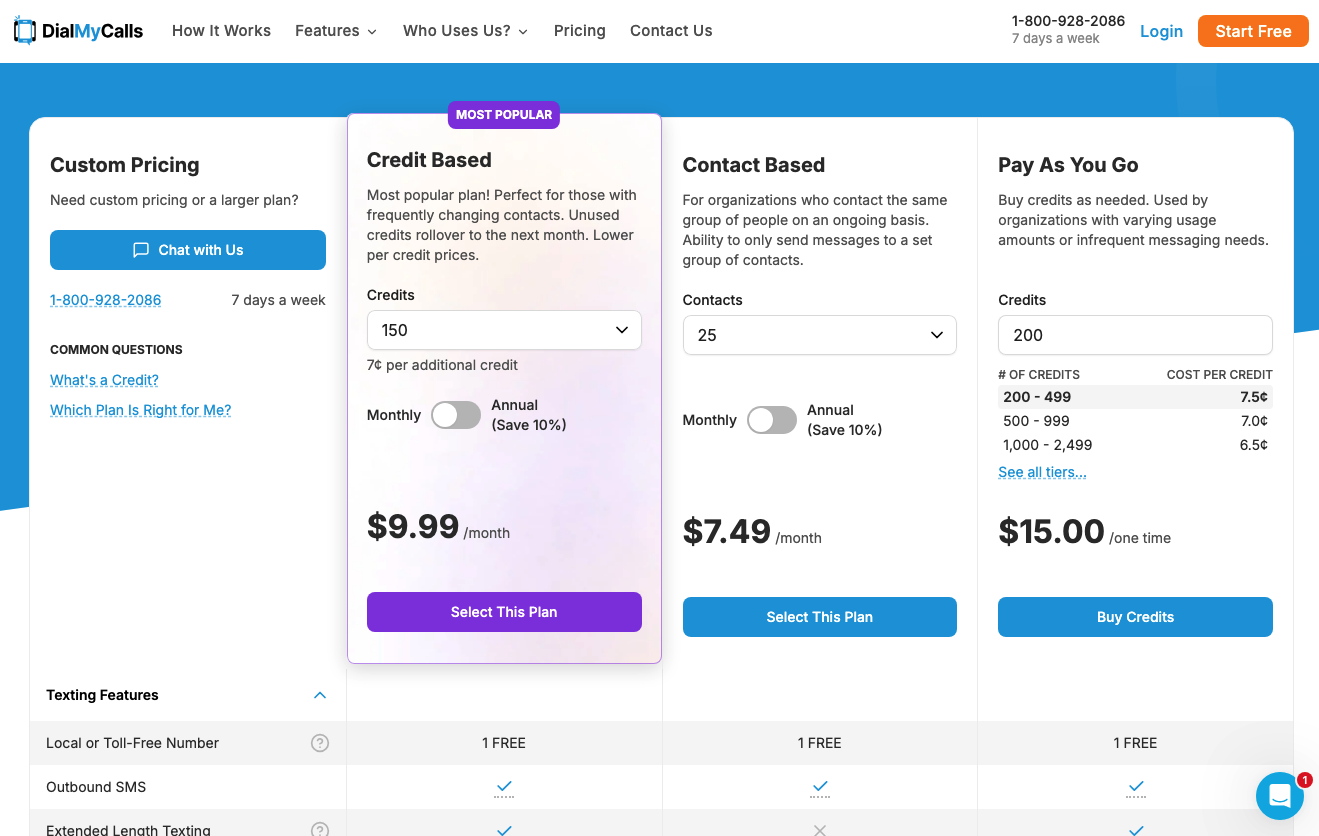
For instance, if you check out the Employee Notification Service page on DialMyCalls, you’ll find that this SaaS brand has “flexible pricing options”. They allow customers to choose if they want to be charged based on credits, contacts, or if they’re most happy with a “pay as you go” model. Sure, at first glance, this type of pricing strategy may depart from tradition. Nevertheless, it’s an effective conversion-optimization tactic for 2026, seeing that it gives buyers precisely what they want: value and flexibility.
Overcome Market Saturation-Related Growth Barriers
In many cases, the biggest obstacle stopping your brand from standing out in a competitive niche isn’t that your marketing strategies aren’t good enough. Instead, it’s that your branding isn’t sufficiently focused on differentiation.
The thing about running a SaaS business is that there’s practically endless competition, regardless of what your solution does.
So, the primary goal when aiming for growth isn’t to educate your target audience on what’s possible with your solution. Instead, it’s to convince your ideal customers that your offer works way better than anything else in the market.
Naturally, the key to accomplishing this lies in a strategic approach to branding and differentiation. However, while there are many ways to say that your business is unique, showing it works much better.
Naturally, there is more than one approach to overcoming growth barriers in competitive niches.
On the one hand, innovation — especially when it’s user-centric — can be a great way to stand apart from competitors and win over more customers to your brand. On the other hand, if you need a slightly more practical way of establishing your business as a go-to in your niche, it’s worth considering the comparison positioning approach.
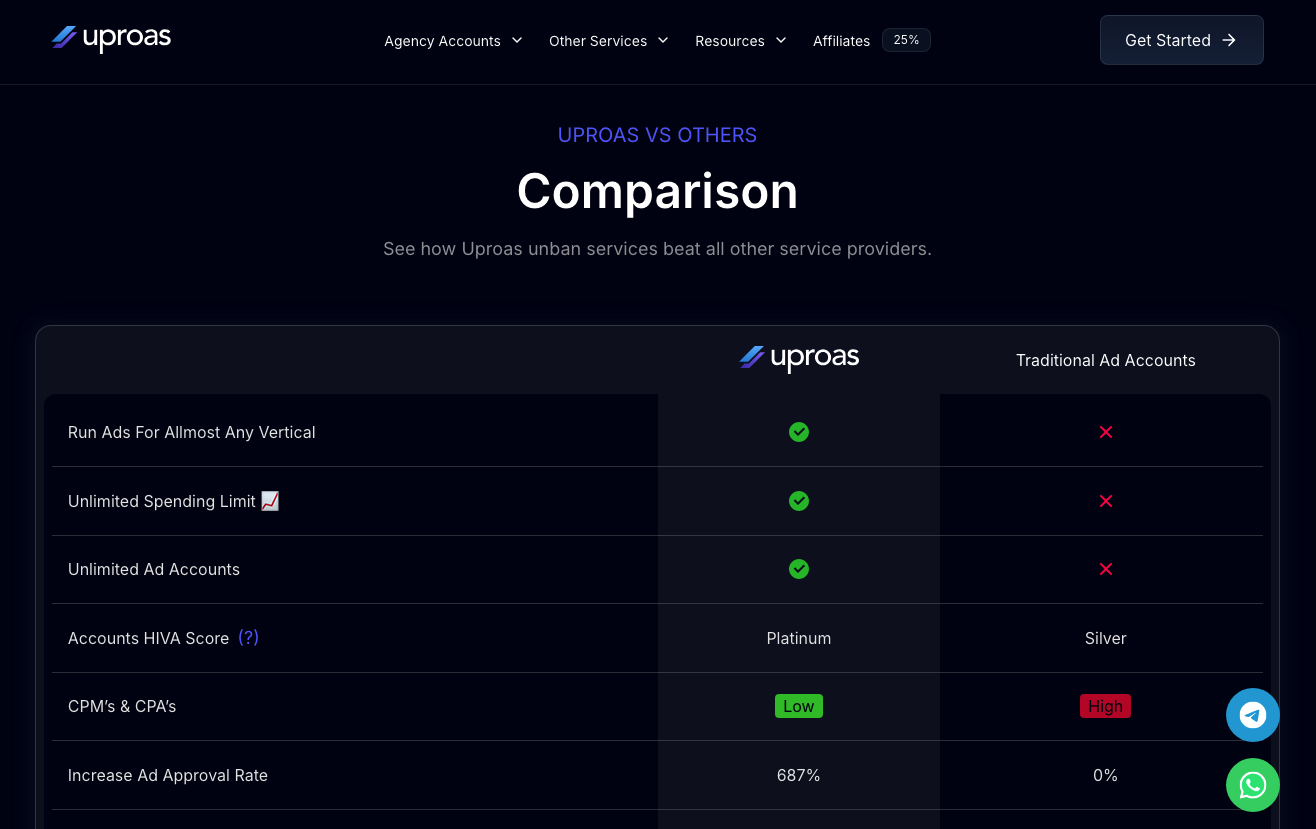
If you look at Uproas, a service for premium agency ad accounts, you’ll find that the brand explicitly addresses the product features that set its product apart from similar solutions. Alternatively, if you want to expand on this tactic, you could even create dedicated “versus” content pages that cover the precise differences between your offer and alternative options.
Sure, it may seem scary — calling your ideal customers’ attention to competitor products. But it’s a great opportunity to position your brand as the better SaaS provider as well as to manage your prospects’ expectations from the early stages of the buyer’s journey (which inevitably leads to higher customer satisfaction and loyalty rates).
Invest in Both SEO and GEO
Finally, if you want to invest your business budget in high-ROI strategies that will grow your brand and help win competitive markets, you’ll need to allot sufficient funds for SEO and GEO (generative engine optimization).
Why? Because product discovery still happens primarily through search. However, with AI-powered search results becoming increasingly prevalent, it’s evident that optimizing for LLMs will be crucial for building brand awareness in 2026.
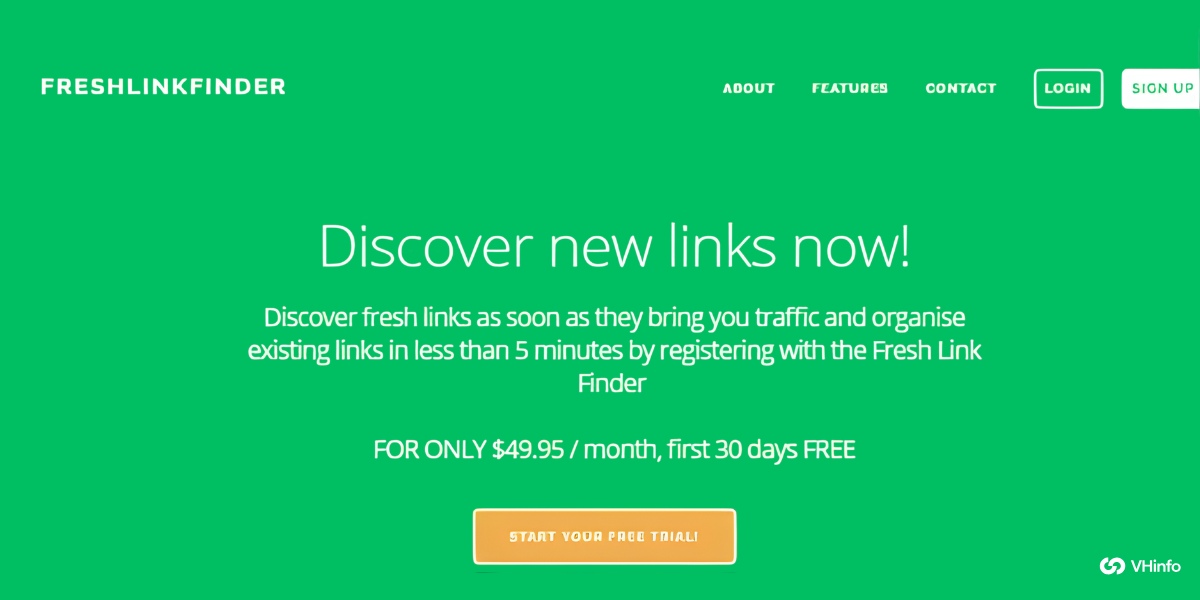
The good news is that doing this can be as simple as finding the right SEO professionals to help you boost SERP rankings. VH-info offers result-oriented SEO strategies for startups, which are based on extensive expertise and experience to ensure exceptional outcomes and next-level brand differentiation.
Final Thoughts
Growing your brand in a competitive niche can seem like a daunting task. But the right tactics can genuinely make it an attainable goal.
So, don’t hesitate to give the strategies outlined in this guide a go. They’re hyper-relevant in 2026, seeing as they align with current consumer behaviors. And they’re all rooted in branding and marketing best practices, preventing you from wasting your budget on campaigns that simply don’t work.
Of course, always test your outcomes. It’s more than just a method to find out whether your approach is working. Extensive KPI tracking helps uncover opportunities for improvement, giving you even more material to work with when aiming to grow your brand.
 Share
Share