
The world of cybersecurity is growing very fast. Every day, new cybersecurity companies appear.
They all want to sell their security solutions to businesses that need protection. But there is a big problem. The competition is extremely high. How do you make sure people find your company first? The answer is cyber security SEO.
At VH Info, we talk to many SaaS founders and marketing teams.
We know that having the best endpoint protection or cloud security software is not enough. You also need to be seen. You need search engines like Google to love your website. If potential customers cannot find you in search results, they will buy from someone else.
Search engine optimization (SEO) is the process of fixing your website so it shows up higher in Google search. When you do this right, you get more organic traffic. This means people visit your site without you paying for ads.
In this guide, we will break down exactly how to do this. We will look at the best SEO strategies and how to find cybersecurity SEO keywords.
Let’s get started on building your online presence.
What is SEO For Cybersecurity?
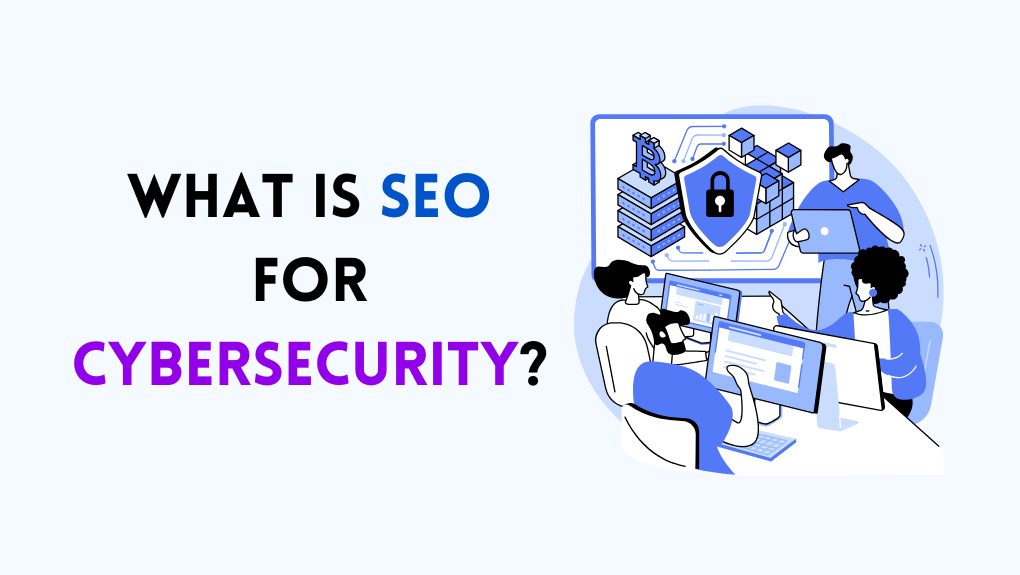
SEO stands for Search Engine Optimization. For a cybersecurity business, this means making your website easy for search engines to read and understand. When Google understands what you do, it can show your website to people looking for help.
Think about a specific problem, like data breaches.
A company might worry about losing sensitive data. They go to Google and type in “how to stop data breaches.” If your cybersecurity website has a good article about this, you might show up at the top of the search engine results.
Cybersecurity SEO is a bit different from regular marketing. You are not selling shoes or toys. You are selling trust and safety. Your target audience includes smart tech people, like IT managers. They want facts. They want to know you can handle cyber threats.
So, your SEO needs to show that you are an expert. It involves:
- Finding the right search terms.
- Creating high-quality blog posts.
- Fixing technical errors on your site (Technical SEO).
- Getting other sites to link to you.
When you do these things, your search engine rankings go up. This brings more visitors to your site. More visitors can turn into qualified leads.
Why Cyber Security SEO Is Critical For B2B Growth?

Marketing for B2B (Business to Business) has changed. In the past, sales teams would cold-call people.
Now, buyers do their own research first.
The Shift From Outbound Sales to Inbound Search
Years ago, a salesperson might call a company to sell network security. Today, that doesn’t work as well. Most cybersecurity professionals do not answer cold calls. They are busy stopping hackers.
Instead, they use search engines. When they have a problem, like needing better threat detection, they search for it. If your company appears in the search results, you have a chance to sell to them. This is called “inbound marketing.”
You want potential customers to come to you. Effective SEO makes this happen. It puts your security solutions in front of people at the exact moment they are looking for them. This creates a steady stream of organic traffic that creates business growth.
Building Trust In A Zero-Trust Industry
Trust is the most important thing in the cybersecurity industry. Your clients are trusting you to keep their business safe.
If they don’t trust you, they won’t buy. Content marketing helps build this trust. When you write helpful articles about security measures or ransomware, you show you know your stuff. You become a helpful guide.
At VH Info, we believe that quality content proves your expertise. If a user sees you answering their hard questions in search rankings, they respect you. They see you as an authority. This is much better than just saying “we are the best” in an ad.
Understanding the Buyer’s Journey For CISOs and IT Managers
The people buying your software are usually Chief Information Security Officers (CISOs) or IT managers.
They follow a specific path before buying:
- Awareness: They realize they have a problem (e.g., “new cyber threats”).
- Consideration: They look for options (e.g., “best endpoint security tools”).
- Decision: They pick a vendor.
Your SEO efforts must cover all three steps. You need blog posts for the first step. You need case studies for the second step. You need product pages for the last step.
If you only target “buy cybersecurity software,” you miss everyone in the first two steps. You need a full marketing strategy that talks to the buyer at every stage.
Keyword Research Strategies For Cyber Security SEO

Keyword research is the foundation of SEO. You need to know what words your customers type into Google. These are your cyber security SEO keywords.
Using E-E-A-T (Experience, Expertise, Authoritativeness, Trustworthiness)
Google cares a lot about E-E-A-T. This stands for Experience, Expertise, Authoritativeness, and Trustworthiness. For cybersecurity sites, this is very important. Google calls this “YMYL” (Your Money or Your Life) content. Bad advice here can hurt a company badly.
To show E-E-A-T in your keywords:
- Don’t just use basic terms. Use specific, technical terms.
- Target keywords that show you are an expert.
- Instead of just “cyber security,” try “penetration testing for healthcare.”
- Show that real experts write your content.
When we help clients at VH Info, we look for keywords that prove the writer has real experience.
Transforming Technical Documentation Into Searchable Content
Many cybersecurity companies have great technical manuals. But these are often hidden in PDF files. Search engines have a hard time reading PDFs. You can turn this info into searchable content.
- Take a manual about threat detection.
- Turn it into a series of blog posts.
- Use headers and specific keywords related to the topic.
This helps you rank for very specific technical questions. It brings in high-quality traffic from people looking for detailed answers.
Using Whitepapers and Case Studies to Capture Leads
Whitepapers and case studies are powerful. They show how you solved a real problem for a client.
For SEO, you can optimize the landing pages for these documents. Use keywords like:
- “Fintech security case study”
- “Cloud security whitepaper”
These keywords might not have huge search volume. But the people searching for them are very close to buying. They want proof. These pages are great for lead generation.
Optimizing For “Zero-Click” Searches and Featured Snippets
Sometimes, a user searches for something and gets the answer right on the results page. They don’t even click a link. This is a “zero-click” search. This happens with Featured Snippets. It is the box at the top of Google.
To get there:
- Find questions your audience asks (e.g., “What is endpoint protection?”).
- Write a clear, short definition (40-60 words).
- Put it at the top of your article.
If you win the snippet, you get to be the top authority. It boosts your brand awareness a lot.
Content Strategy: The Heart of Cyber Security SEO

You cannot have good SEO without a content strategy. Content is the vehicle that carries your keywords. It is what your users read.
Navigating Complex Technical Content
Writing for cybersecurity professionals is tricky. You cannot be too simple, or they will think you are a beginner. But you cannot be too boring, or they will stop reading.
- Be Clear: Explain security solutions simply but accurately.
- Use Visuals: Diagrams of network security help explain things better.
- Structure: Use many headers (H2, H3).
You want to solve their pain points. If they are struggling with compliance, write a guide that makes it easy. Valuable insights keep people on your page longer. This tells Google your page is good.
Tackling SEO Poisoning in Cybersecurity
There is a bad trend called “SEO poisoning.” Hackers try to rank malicious sites for popular keywords.
As a legitimate company, you must fight this with quality content. You need to publish good, safe information. You also need to protect your own brand name. Make sure you rank #1 for your own company name. If you don’t, a hacker might try to steal your traffic.
Overcoming Industry Competition in Search Rankings
The cybersecurity industry is crowded. Big companies dominate the main keywords. It is hard to rank for just “antivirus.”
At VH Info, we suggest going niche. Look for long-tail keywords.
- Instead of “cyber security,” try “cyber security services for small law firms.”
- Instead of “firewall,” try “cloud firewall for remote teams.”
These specific keywords have less competition. You can rank faster. Also, the traffic is more relevant. People searching these terms know exactly what they want.
Technical SEO Considerations For Cybersecurity Websites

Technical SEO is about the backend of your website. If your site is broken, search engines won’t rank it, no matter how good your content is.
Site Speed and Core Web Vitals For Heavy Tech Stacks
Cybersecurity websites often look very high-tech. They have fancy animations and graphics. But these can slow down your site.
Google looks at Core Web Vitals. This measures how fast your site loads and how stable it is.
- Load Speed: Does the page open in under 2 seconds?
- Responsiveness: Does it react quickly when clicked?
If your site is slow, users will leave. This increases your bounce rates. High bounce rates are bad for SEO performance. You must compress images and clean up code to keep the site fast.
Implementing Structured Data (Schema) For Software and FAQs
Structured data (or Schema) is code you put on your site to talk to Google. It tells Google, “This is a software product” or “This is a FAQ.”
For a cybersecurity business, use:
- SoftwareApp Schema: For your product pages. It can show star ratings and price in the search results.
- FAQ Schema: For your Q&A pages.
This helps you take up more space in search engine results. It makes your listing look more professional.
Ensuring SSL and Security Compliance Signals
It would be ironic if a security site was not secure!
- SSL: You must have HTTPS. The padlock icon in the browser is mandatory.
- Compliance: Show badges like SOC2 or ISO 27001 in your footer.
These are security signals. They tell Google and users that your site is safe. Website security is a direct ranking factor. If Google thinks your site is unsafe, it will hide it.
Off-Page Cyber Security SEO: Building Authority

Off-page SEO is everything that happens outside your website. Mostly, this means backlinks. A backlink is when another site links to yours.
Google sees this as a vote of confidence. At VH Info, this is our specialty. We help SaaS companies build these important connections.
Digital PR: Using Data Reports to Earn High-Quality Backlinks
Journalists love data. As a security company, you have access to data about cyber threats and attacks.
- Create a report on “The top ransomware trends of 2024.”
- Share this with news sites and tech blogs.
When they write about your report, they will link back to your site. These are very strong links. They show you are a leader in threat detection.
Guest Posting on Reputable Tech and InfoSec Publications
Writing articles for other websites is a great strategy. This is called guest posting.
- Find industry publications that CISOs read.
- Offer to write an article about a hot topic, like cloud security.
- Include a link back to your site.
This puts your brand in front of a new target audience. It also gives you a valuable backlink. VH Info helps companies find the right places to post to ensure the links are powerful.
Using Industry Partnerships and Awards
Do you have partners? maybe you work with Microsoft or AWS.
Ask them to list you on their partner page. Did you win an award? Make sure the award website links to you. These links prove you are a real, respected business. They boost your domain authority. Higher authority makes it easier to rank for competitive SEO keywords.
Measuring the Success of Your Cyber Security SEO Campaign

How do you know if your plan is working? You need to track data.
Key Performance Indicators (KPIs) Beyond Organic Traffic
Traffic is good, but money is better. Don’t just look at organic traffic numbers. Look at:
- Keyword Rankings: Are you moving up for your main terms?
- Click-Through Rate (CTR): Are people clicking your link in Google?
Use Google Search Console to see this data. It shows you exactly which queries bring people to your site.
Tracking Demo Requests and MQLs (Marketing Qualified Leads)
The best metric is leads.
- MQLs: These are Marketing Qualified Leads. People who downloaded a whitepaper or signed up for a newsletter.
- Demo Requests: People who want to see your product.
Connect your SEO data to your CRM. See if the people coming from Google are actually buying. If you get traffic but no leads, you might be targeting the wrong keywords. You need relevant keywords that bring in buyers, not just readers.
FAQ’s:
How is Cybersecurity SEO Different From Regular SEO?
Cybersecurity SEO is harder because the topics are complex. You need to show very high levels of trust (E-E-A-T). The audience is also very technical. You cannot use fluff; you must provide real value and accurate technical details about things like network security.
How Long Does It Take to See Results From A Cybersecurity SEO Strategy?
SEO is a long-term game. Usually, it takes 3 to 6 months to see significant movement in search rankings. For very new websites, it might take up to a year. But once you rank, the organic traffic is free and steady.
What Are the Best Keywords to Target For Cybersecurity Companies?
The best keywords depend on what you sell.
- Start with “Problem” keywords: “how to stop data breaches.”
- Use “Solution” keywords: “endpoint protection software.”
- Use “Comparison” keywords: “YourTool vs CompetitorTool.” Focus on specific keywords that show intent to buy.
Can I Do Cybersecurity SEO In-House, Or Should I Hire an Agency?
You can do it in-house if you have a team of writers and technical experts. However, hiring an agency like VH Info can speed things up. We have relationships for link building and know the best practices.
It often saves time to work with experts who know the cybersecurity industry.
How Important is Content Marketing in Cybersecurity SEO?
It is vital. Content marketing is how you target keywords. Without content creation, you have no pages to rank. Blogs, whitepapers, and guides are the tools you use to attract potential customers.
Does Website Security Affect My SEO Rankings?
Yes. Website security is a ranking factor. Google prefers HTTPS sites. Also, if your site gets hacked, Google will put a “This site may be hacked” warning on it. This kills your traffic instantly. Keep your site safe to protect your SEO rankings.
Conclusion
Cyber security SEO is not just about keywords. It is about building a reputation as a trusted expert. It is about helping IT managers and CISOs solve difficult problems.
To succeed, you need a mix of things:
- Technical SEO: A fast, secure website.
- Content Strategy: Helpful articles that answer real questions.
- Off-Page SEO: Building authority through backlinks and PR.
Make sure your top priority is the user: always write for people before considering search engines.
Provide valuable, pertinent information to help guide them throughout their purchasing process—from understanding cyber threats all the way to selecting their cybersecurity solutions—so you’re present at every stage.
At VH Info, we understand the challenges of the SaaS world. We know that getting high-quality backlinks and building authority takes time and effort. But the results are worth it. A strong SEO strategy turns your website into a 24/7 salesperson.
It brings in qualified leads while you sleep. Start small. Fix your meta descriptions. Write one great guide on penetration testing. Check your core web vitals. Step by step, you will climb the rankings. The digital world is dangerous, but your marketing strategy doesn’t have to be.
Use these tips to secure your spot at the top of the search results.
 Share
Share