


Big companies spend a lot of money on marketing. When you run a large company, you need to know if that spending is working. This is where enterprise SEO comes in. It is not just about getting people to visit your website. It is about making sure those visits turn into money.
At VH-info, we understand that SEO efforts need to show real results.
As a SaaS Link Building Agency, we help businesses grow their authority. We know that executives want to see proof. They want to know that for every dollar they spend, they get more back. This is what we call SEO ROI (Return on Investment).
Calculating enterprise SEO ROI can be tricky. Large websites have thousands of pages. They have many different teams working on them. But if you cannot measure it, you cannot improve it.
In this guide, we will look at how to measure the value of SEO.
We will explain how to use an enterprise SEO ROI calculator method. We will also show you how organic traffic helps your business grow. We will keep things simple and clear, just like we do when we help our clients with SaaS SEO.
Understanding Enterprise SEO ROI In A Competitive Landscape

The world of search is very busy. Many companies are fighting for the top spots in search results. For a big company, this fight is even harder. You are not just competing with small shops. You are competing with other giants.
To win, you need a strong enterprise SEO strategy. You need to know exactly what works and what does not. This is why understanding the ROI of SEO is so important. It helps you make smart choices about where to put your marketing budget.
How Enterprise SEO Differs From Traditional SEO?
You might wonder how enterprise SEO is different from regular SEO. The main difference is size.
A small business might have a website with 50 pages. An enterprise website might have 50,000 pages or more. Managing SEO campaigns for a site that big is a huge job. You are not just looking at a few keywords. You are looking at thousands of target keywords. You have to deal with complex technical issues. You also have to work with many different people, like the content team, the developers, and the SEO team.
In traditional SEO, you might change a title tag and see results quickly. In enterprise SEO, changes take time.
The search engines have a lot more content to read. Because the site is so big, even small mistakes can cause big drops in organic visitors. This is why you need experts. At VH-info, we focus on building quality backlinks because we know that for big sites, authority is everything.
Why ROI is the Key Metric For C-Suite Buy-In?
The people who run the company (the C-Suite) care about numbers. They care about total revenue and profit.
They do not always care about keyword rankings or how many people saw a blog post. If you tell a CEO that organic search traffic went up by 10%, they might ask, “So what?” But if you tell them that SEO activities brought in $1 million in extra revenue, they will listen.
To get approval for a bigger SEO budget, you must speak their language.
You need to show that SEO investment leads to positive ROI. You need to prove that organic search is a money-maker, not just a cost. When you can show a clear ROI calculation, it is much easier to get the resources you need for things like link building and content creation.
Key Metrics That Influence Enterprise SEO ROI

To calculate ROI, you need good data. You cannot just look at one number. You need to look at several SEO metrics to get the full picture.
Here are the most important ones to watch.
Organic Traffic Quality Vs. Quantity
Many people think that more traffic is always better. This is not true. You could have a million visitors, but if none of them buy anything, you have zero revenue.
In enterprise SEO, quality is more important than quantity. You want qualified leads. These are people who are actually interested in what you sell. At VH-info, we focus on getting links from relevant sites. This helps bring in visitors who care about your specific software or service.
When you look at your Google Analytics, do not just look at the total number of visits. Look at who is staying on the site. Look at who is filling out forms. High-quality organic traffic drives real business goals.
Conversion Rates and Customer Lifetime Value (CLV)
Getting people to your site is step one. Step two is getting them to take a desired action. This could be signing up for a demo, buying a product, or downloading a guide. The percentage of people who do this is your conversion rate.
Small changes in conversion rates can make a huge difference in ROI. If you have 100,000 visitors and a 1% conversion rate, you get 1,000 leads. If you improve that to 2%, you get 2,000 leads without needing more traffic.
You also need to think about Customer Lifetime Value (CLV). This is how much money a customer spends with you over time.
In SaaS, this number is very important. A customer might pay a monthly fee for years. When you calculate enterprise SEO ROI, you should look at the total value of the customer, not just the first payment.
Branded Vs. Non-Branded Search Performance
There are two main types of search queries: branded and non-branded.
- Branded: Someone searches for your company name (e.g., “VH-info link building”).
- Non-Branded: Someone searches for a solution (e.g., “SaaS link building agency”).
Non-branded traffic is often more valuable for growth. These are new people who did not know about you before. Ranking well for non-branded terms shows that your SEO strategy is working. It means you are capturing new market share. However, branded traffic usually converts better because they already know you. You need to track both to understand your true SEO performance.
Attribution Models: First-Touch Vs. Multi-Touch
Tracking where a sale comes from can be hard. A customer might visit your site five times before they buy. They might find you through a blog post (organic search), then see an ad, and then type in your website name directly.
- First-Touch: Giving all the credit to the first way they found you.
- Last-Touch: Giving credit to the last click before buying.
- Multi-Touch: Sharing the credit across all the steps.
For accurate enterprise SEO ROI, multi-touch is usually best. It shows how content marketing and SEO efforts help start the journey, even if the final click comes from somewhere else.
Step-by-Step Guide to Calculating Enterprise SEO ROI

Now, let’s get into the math. Do not worry, we will keep it simple. You can build your own enterprise SEO ROI calculator using a spreadsheet.
Defining Your Total SEO Investment Costs (Agency, Tools, In-House)
First, you need to know how much you are spending. This is your total SEO investment. You must include everything.
- In-House Team: The salaries of your SEO team, writers, and developers.
- Agency Costs: Fees paid to an SEO agency like VH-info for strategy and link building.
- SEO Tools: The cost of software like Ahrefs, SEMrush, or other SEO tools.
- Content Costs: Money spent on freelance writers or graphics.
Add all these numbers up. This gives you your total SEO costs for a specific time, like a month or a year.
Estimating the Value of Organic Traffic
Next, you need to know what your traffic is worth. One way to do this is to look at PPC (Pay-Per-Click) data. How much would you have to pay Google to get the same traffic using ads?
Another way, which is better for ROI, is to look at revenue.
- Take your monthly organic traffic.
- Multiply it by your conversion rate.
- Multiply that by your Average Order Value (AOV).
This tells you how much organic revenue you are making. For SaaS, you might use Lifetime Value instead of order value.
The Formula:
Here is the formula to calculate your ROI.
ROI = (Revenue from SEO – Cost of SEO) / (Cost of SEO) * 100
For example:
- You make $500,000 in revenue from organic search.
- Your total monthly SEO investment is $100,000.
ROI = (500,000 – 100,000) / 100,000 * 100
ROI = 400,000 / 100,000 * 100 = 400%
A 400% ROI means for every $1 you spent, you got $5 back ($1 cost + $4 profit). That is a very positive ROI.
Forecasting Future Returns For Stakeholders
SEO is a long-term game. The work you do today might not show results for six months. When you talk to stakeholders, you need to forecast.
You can say, “Based on our current traffic growth, we expect revenue to double next year.” Use past data to predict the future. Show them that SEO services build value that lasts a long time. Unlike ads, which stop working when you stop paying, SEO success compounds over time.
Common Challenges In Proving Enterprise SEO ROI
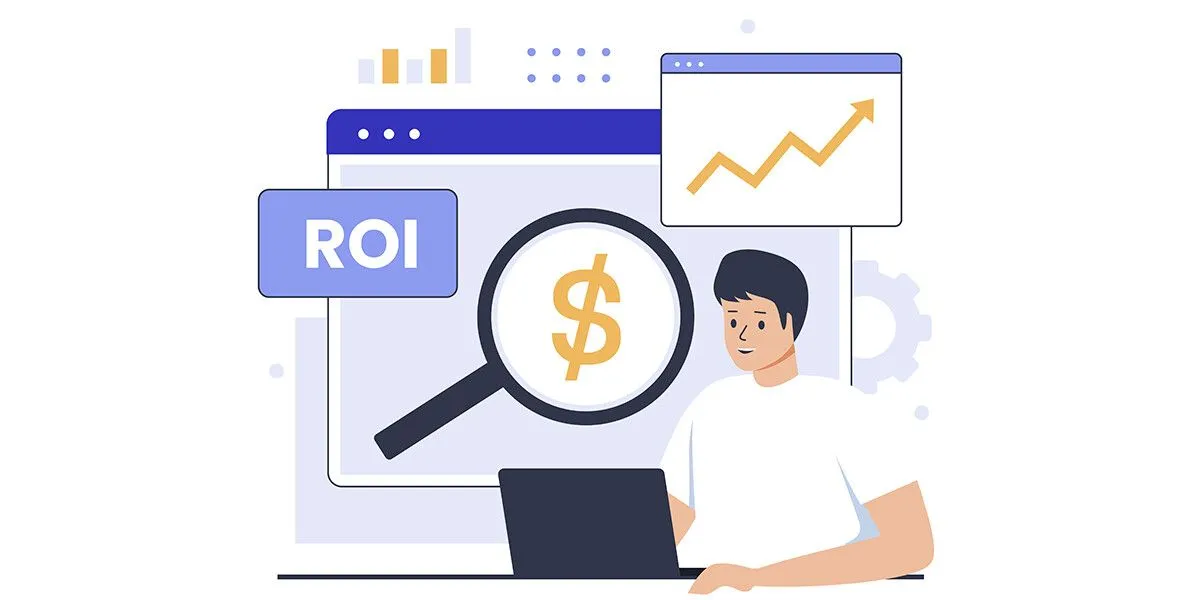
Even with a good formula, proving ROI can be hard. Big companies face specific roadblocks.
Navigating Data Silos and Tracking Issues
In a big company, data is often hidden in “silos.” The sales team has one set of data. The marketing team has another.
The web team has a third. If these systems do not talk to each other, you cannot see the full picture. You might see a lead come in through organic search, but you never know if they actually bought the product because the sales data is locked away.
Fixing this requires connecting your Google Analytics with your CRM (Customer Relationship Management) software.
The Impact of Long Sales Cycles on Attribution
For a SaaS company, the sales cycle can be long.
A person might search for “best enterprise software” in January. They read your blog. But they might not buy until July. Six months is a long time. It is easy to lose track of that user. By the time they buy, the system might forget that they first found you through an SEO strategy.
This makes it look like SEO didn’t help, even though it started the whole process. This is why tracking qualified leads over time is vital.
Accounting For “Soft” ROI (Brand Awareness and Reputation)
Not all ROI is cash. There is also “soft” ROI. This includes things like brand trust and reputation.
When your company appears at the top of google search results for important terms, people trust you more. They see you as a leader. VH-info helps clients build this authority through strategic link building.
It is hard to put a dollar sign on trust. But it matters. High visibility leads to more partnerships, better press coverage, and easier hiring. These are all benefits of enterprise SEO that might not show up in a standard ROI calculator.
Proven Strategies to Improve Your Enterprise SEO ROI

If your ROI is not where you want it to be, do not worry. There are ways to fix it. Here are some strategies we recommend at VH-info.
Scaling Content Production with Governance
To rank for more keywords, you need more content. But you cannot just write junk. You need a content strategy that ensures quality.
Create a system for producing content. Use templates. Train your writers. Make sure every piece of content answers a user’s question. Good content attracts quality backlinks, which boosts your rankings.
Technical SEO: Fixing Crawl Budget and Architecture
Big sites have technical problems. If search engines cannot crawl your site efficiently, they will miss your content. This is a waste of your content marketing budget. Focus on technical SEO. Fix broken links. Improve your site speed. Make sure your site structure is logical.
This helps Google find and rank your pages. Better rankings mean more organic visitors without spending more on content.
Aligning PPC and SEO Data For Efficiency
Your PPC (Paid Search) and SEO teams should work together. PPC data is great for testing. You can buy ads for a keyword to see if it converts. If it does, then you can invest in SEO campaigns to rank for that keyword organically. This saves money.
You stop wasting SEO efforts on keywords that do not bring in money. Sharing data helps both teams improve their marketing channels.
FAQ’s:
What Is A Good ROI For Enterprise SEO?
A good ratio is usually 5:1.
This means for every dollar you spend, you get five dollars back in revenue. However, anything above 100% is technically a positive ROI. For successful enterprise SEO, returns can often be much higher over time because organic traffic is free once you rank.
How Long Does It Take to See ROI From Enterprise SEO?
It usually takes 6 to 12 months to see a significant ROI. Enterprise SEO is like a large ship; it takes time to turn. However, the results last a long time. Strategies like link building and fixing technical SEO build a foundation that pays off for years.
How Do I Calculate the ROI of SEO If I Don’t Have Direct E-commerce Sales?
If you don’t sell directly on your site (like many B2B companies), you must assign a value to your leads.
Calculate your Average Order Value or the lifetime value of a customer. Then, figure out how many leads turn into customers. If a lead is worth $500 on average, and SEO brings in 100 leads, your value is $50,000.
Can I Project Enterprise SEO ROI Before Starting A Campaign?
Yes, you can make an estimate. You can look at the search volume for your target keywords. Then, estimate how much traffic you can capture if you rank in the top 3. Apply your conversion rate and order value to guess the total revenue. This helps justify the monthly SEO investment.
How Can Executives Use SEO ROI Data to Justify Greater Investment?
Executives can use the data to compare SEO to other channels. If PPC costs $50 per lead and SEO costs $10 per lead, the math is clear. Showing the long-term annual revenue growth from organic traffic growth proves that increasing the SEO budget is a smart business move.
Why Is Tracking Enterprise SEO ROI More Difficult Than Small Business SEO?
It is harder because of the scale.
There are more pages, more keywords, and more people involved. Data is often scattered across different tools and departments. Also, the sales cycle is longer, making attribution tricky. You need a robust enterprise SEO ROI calculator approach to handle all these moving parts.
Conclusion
Measuring enterprise SEO ROI is not just about checking boxes. It is about proving the value of your work. It is about showing that organic search drives real profit for the company.
By tracking the right SEO metrics, like conversion rates and revenue, you can see what is working. By using an enterprise SEO ROI calculator formula, you can show clear numbers to your bosses.
Remember, SEO is an investment. It requires time, money, and expertise. But the returns can be massive. Organic traffic growth leads to sustainable revenue that ads cannot match.
If you need help building authority and driving results, VH-info is here for you.
As a dedicated SaaS Link Building Agency, we specialize in the strategies that boost your search engine rankings and improve your ROI. We help you navigate the complex world of digital marketing so you can focus on growing your business.
Understanding your ROI is the first step to mastering enterprise SEO strategy. Start measuring today, and watch your success grow.


 Vishal ambani
  Share
Share
 VH Info